
How to Compare HDPE Pipe Welding Equipment Suppliers for Mining Projects
Table of Contents
This guide explains how to compare an HDPE pipe welding equipment supplier for mining projects, covering machine types, diameter and SDR capacity, standards compliance, data logging, total cost, lead time, and remote-site support to reduce weld failure risk.
What Does an HDPE Pipe Welding Equipment Supplier Provide for Mining Projects?
Partnering with a qualified HDPE pipe welding equipment supplier means acquiring much more than a piece of machinery. Top-tier suppliers deliver an entire fusion ecosystem that natively integrates global engineering standards like ISO 21307 and DVS 2207. You aren’t just getting a welder. You are securing automated fusion machines, tamper-proof data loggers, heavy-duty pipe handling gear, localized spare parts, and specialized operator training built specifically for the brutal realities of a mining environment.
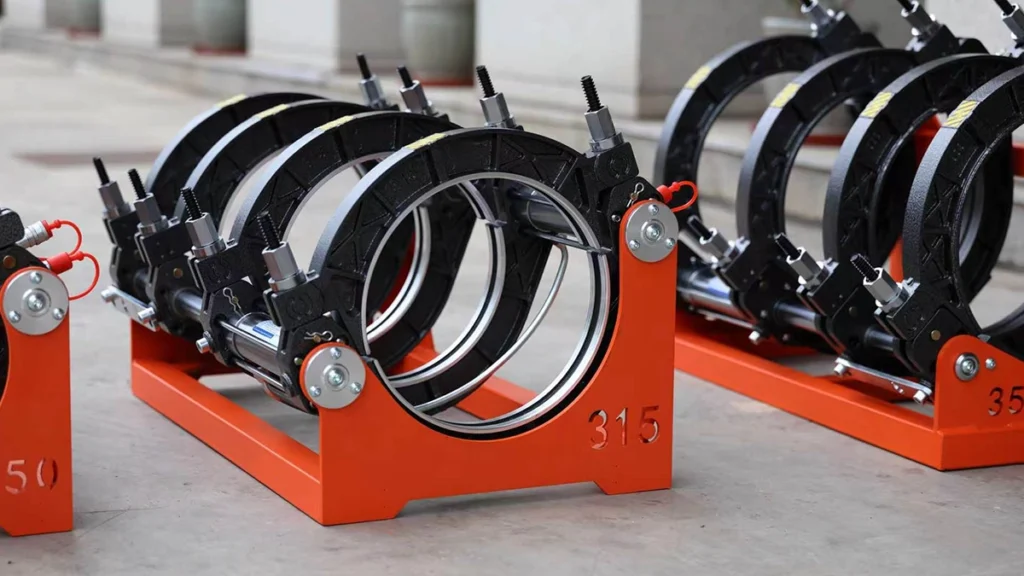
Definition: What Counts as a Qualified HDPE Pipe Welding Equipment Supplier
A qualified supplier operates on a completely different level than a standard plumbing vendor. They manufacture or distribute industrial-grade fusion machinery engineered for heavy-duty, high-pressure applications. Real mining equipment features CNC automation, native data logging that fully complies with ISO 12176-4, and automatic drag pressure compensation. These technical capabilities aren’t optional upgrades. They are mandatory requirements to guarantee joint integrity on the massive, thick-walled polyethylene pipes running through high-pressure mine sites.
Equipment Supply vs Full Project Support: What Is the Difference?
Basic HDPE pipe welding equipment supply is exactly what it sounds like: dropping the hardware off at the site boundary. Full project support, however, takes a lifecycle approach to your pipeline construction. This includes dispatching technicians for certified operator training, executing preventative maintenance, stocking a localized critical spare parts inventory, and pushing out regular firmware updates. Taking a comprehensive approach keeps your site compliant with shifting engineering standards and slashes downtime during your most critical pipe-laying phases.
Who Typically Buys This Equipment: EPC Contractors, Mine Operators, and Pipeline Installers
Engineering, Procurement, and Construction (EPC) contractors generally drive the procurement of heavy-duty fusion fleets when managing large-scale mine developments. Direct mine operators also buy these machines to handle ongoing maintenance, water network expansions, and tailings line shifts. Specialized pipeline installation subcontractors round out the buyer pool. They typically look for highly versatile, easily transportable machines that can bounce between remote, rugged job sites.
Common Mining Pipeline Applications: Tailings, Slurry, Dewatering, Process Water, and Heap Leach
Mining operations lean heavily on HDPE pipelines to keep critical fluids moving. Every single application throws a unique challenge at the HDPE pipe welding equipment.
| Application | Fluid Characteristics | Welding Equipment Challenge |
|---|---|---|
| Tailings | Highly abrasive, high volume | Requires large-diameter machines capable of handling heavy drag forces. |
| Slurry | High pressure, heavy particulates | Demands precise fusion of low SDR (thick-walled) pipes to prevent blowouts. |
| Dewatering | Variable flow, acidic water | Needs highly mobile machines to navigate deep open-pit terrains. |
| Process Water | Continuous flow, temperature variations | Requires consistent weld quality to ensure zero-leak plant operations. |
| Heap Leach | Corrosive chemicals (cyanide/acid) | Mandates strict adherence to data logging for environmental compliance. |
Why Mining Pipelines Demand More from Welding Equipment Suppliers
Mining environments take no prisoners. The HDPE pipe welding equipment deployed here has to perform flawlessly in blistering heat, freezing cold, and punishing terrain while handling highly abrasive materials like iron ore tailings. Standard construction gear won’t survive. Mining sites require heavy-duty butt fusion welding equipment armed with reinforced steel chassis, dust-proof hydraulic systems, and weather-sealed electronics.
How Do Harsh Site Conditions Affect Fusion Weld Quality?
High winds, airborne dust, and extreme ambient temperatures actively work to destroy fusion joint integrity. Freezing weather causes the heater plate to cool too rapidly. Blowing dust easily contaminates freshly faced pipe ends. High-end HDPE pipe welding equipment fights back against these elements using enclosed heating elements, advanced temperature recovery sensors, and aggressive clamping mechanisms that refuse to let a pipe slip—even when it’s caked in mud.
What Does a Failed Joint Cost on a Mining Pipeline?
Treating a failed joint as a simple maintenance hiccup is a massive mistake. It is a catastrophic revenue leak. While maintaining steel pipes can easily burn through $50,000 per kilometer every year, HDPE Pipeline maintenance is practically zero—but only if the fusion joints are perfect. A single blowout on a high-pressure tailings line instantly shuts down mineral processing. That kind of stoppage triggers massive production losses stretching into hundreds of thousands of dollars a day, not to mention the threat of severe environmental fines.
Hydraulic Butt Fusion Machines for Mainline Pipe Joining
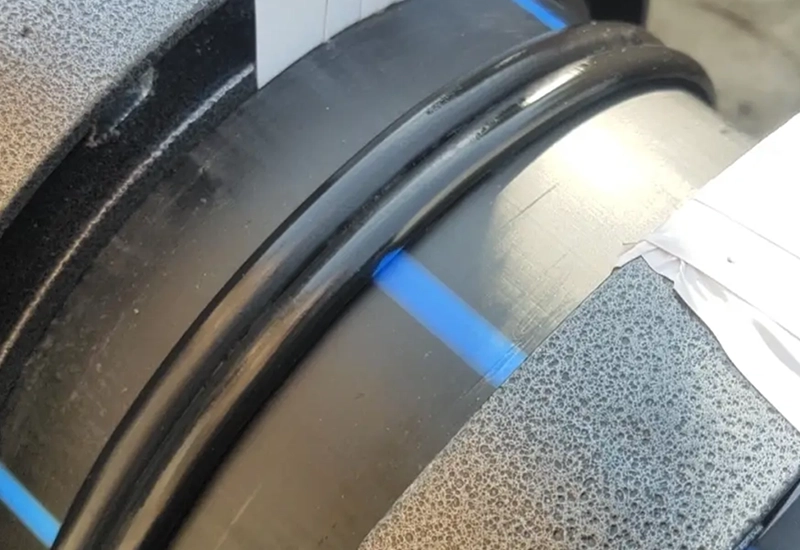
Hydraulic butt fusion machines serve as the undisputed workhorses for mainline pipe joining. They leverage heavy-duty hydraulic cylinders to apply precise interfacial pressure (such as 0.15 N/mm² for DVS 2207-1 or 60–90 psi for ASTM F2620) while simultaneously heating and fusing the pipe ends. The resulting joint boasts the immense tensile strength needed to survive the dynamic, constant stresses of slurry transport.
Electrofusion Units for Repairs, Tie-ins, and Fittings
When you need to navigate tight spaces, manage complex network layouts, or execute emergency repairs, electrofusion units step in. They function by pushing a highly controlled electrical current through a wire coil hidden inside a specialized fitting, melting the surrounding polymer to create the weld. If a bulky hydraulic butt fusion machine simply cannot fit into a trench for a critical tie-in, electrofusion is the only viable answer.
Factory-direct pricing with technical consultation included
Get Your Free QuoteTypes of HDPE Pipe Welding Equipment Used on Mining Sites
Large-diameter mainline joining relies almost entirely on hydraulic butt fusion machines, while electrofusion control units handle the intricate tie-ins and repair work. A truly capable HDPE pipe butt fusion machine supplier for mining will also bundle essential auxiliary handling gear to keep pipeline installations moving safely and efficiently across broken terrain.
Is Butt Fusion or Electrofusion Better for Mining Pipelines?
Choosing between electrofusion and butt fusion isn’t about which is objectively better; it’s about the specific application. Butt fusion easily wins out for long, straight runs of large-diameter mainline pipe. It delivers unmatched tensile strength and eliminates the need for costly fittings. Electrofusion, on the other hand, excels during in-plant piping, tight directional changes, and emergency repairs where trench space is at a premium and you need surgical control.
Auxiliary Equipment Suppliers Should Also Offer
Moving fast on a pipeline installation takes more than just a great fusion carriage. Suppliers need to provide robust pipe handling systems, like roller racks or the PolyHorse system. Properly staging the pipe slashes drag pressure and can easily boost crew productivity from 20 joints a day up to 29. Heavy-duty facers and pipe saws are also non-negotiable for cutting perfectly clean, square pipe ends before the heating cycle begins.
Pipe Diameter Range and SDR / Wall Thickness Capacity
Mining pipes are massive. A large diameter HDPE pipe welding machine built for tailings lines generally handles outside diameters from 500mm all the way up to 1600mm. Beyond just sheer size, the HDPE pipe welding machine has to grip thick-walled pipes (low SDR, like SDR 7 or SDR 9) used to move high-pressure slurry. If the clamping mechanisms and hydraulic pumps aren’t rated for the immense weight of these thick walls, the pipe will slip during fusion.
Heater Plate, Facer, and Hydraulic System Performance
Weld quality lives and dies by the performance of the machine’s core components. The heater plate must hold a precise, perfectly uniform temperature—usually hovering between 210°C and 230°C—across every square inch of its surface. The facer has to shave the pipe ends until they are flawlessly parallel. Finally, the hydraulic system must deliver raw clamping force while accurately compensating for drag pressure during the heat soak and cooling phases, locking that pressure in automatically to remove human error from the equation.
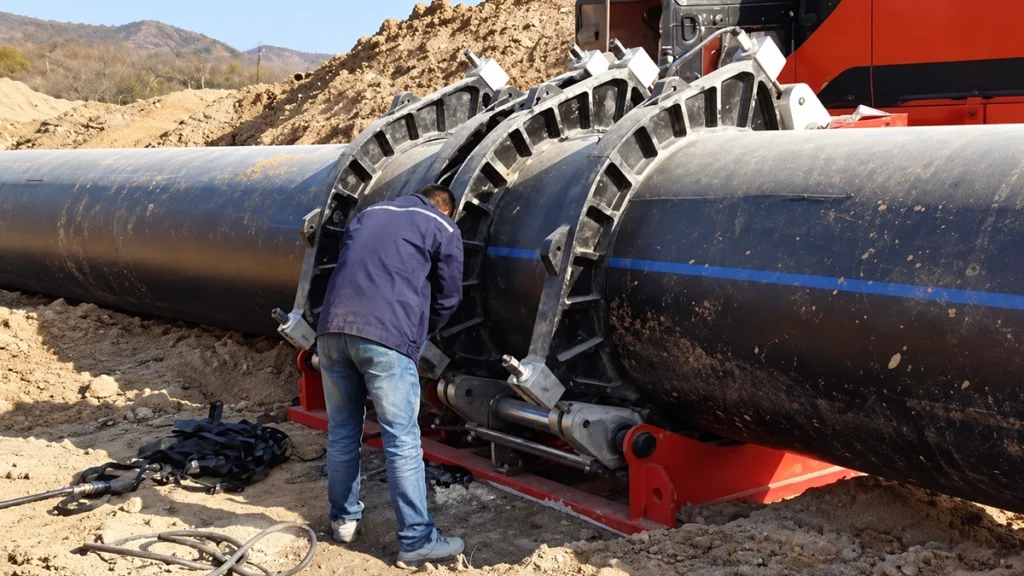
Key Technical Specifications to Compare Across Suppliers
You have to dig deep into the spec sheets to accurately compare suppliers. Keep your focus locked on diameter capacity, hydraulic pressure stability, heater plate uniformity, and native data logging. Double-check that the machine can actually handle the specific SDR required by your project and run smoothly on the power available at your remote site.
| Parameter | Why It Matters for Mining | What to Ask the Supplier |
|---|---|---|
| Diameter Range | Determines if the machine can weld your specific mainline and branch pipes. | Does this model cover our entire OD range without requiring multiple chassis? |
| Max SDR / Wall Thickness | Thick pipes require higher hydraulic pressure and longer heat soak times. | What is the maximum clamping force and hydraulic pressure rating? |
| Data Logging | Essential for QA/QC and proving compliance with client specifications. | Is data logging native to the machine, or is it an aftermarket add-on? |
| Power Requirements | Remote sites rely on generators; mismatched power causes downtime. | What is the total kW draw and required generator kVA sizing? |
| Mobility | Heavy machines must traverse mud, rocks, and steep inclines. | Is the machine track-mounted or wheeled, and what is its ground clearance? |
Why Does Automatic Data Logging Matter for Mining Contractors?
Deploying an HDPE pipe butt fusion welding machine with data logger for mining projects is absolutely non-negotiable. Data logging delivers ironclad traceability. It guarantees your quality control records align perfectly with ISO 12176-4 standards. The machine spits out tamper-proof, encrypted PDF reports proving that the operator strictly met every single temperature, pressure, and time parameter for every joint. If a pipeline ever fails, this data is the only thing protecting the contractor from massive liability.
Power Supply, Generator Sizing, and Site Mobility
Large-diameter fusion gear pulls a lot of juice. A standard 800mm hydraulic unit often demands a 380V, 3-phase supply with a total power draw hitting 49 kW. If you don’t properly size the site generator, you risk severe voltage drops that will instantly kill the heating cycle. Site mobility is just as critical. Self-propelled, track-mounted machines dominate the mining sector because they can actually navigate the steep, rocky, uneven terrain of an active pit.
Manufacturer vs Distributor vs Rental Company: Which Should You Work With?
Deciding between an HDPE pipe welding equipment manufacturer vs distributor comes down to the size and scope of your project. Partnering directly with manufacturers (like McElroy, Ritmo, or Ekberg) gives you a direct line to custom engineering modifications, firmware updates, and high-level technical support. Distributors shine when you need localized inventory and fast shipping for standard replacement parts. Rental companies work well for short-term fixes but usually lack the deep technical accountability you need to survive a multi-year mine development.
How to Verify Mining Project References and Case Studies
Never accept generic commercial construction references. Demand proof that the butt fusion welding machine survives in harsh environments. Push the supplier for data on high-altitude copper slurry lines in South America or gold-mine tailings retrofits in West Africa. You need hard evidence that their butt fusion welding machines successfully handled the exact abrasive, high-pressure conditions your upcoming project will face.
Get detailed specs and custom configuration options
Request Technical SpecificationsSupplier Evaluation Criteria: A Side-by-Side Comparison Framework
Don’t just look at the bottom line. Build a structured scoring matrix that heavily weights automation capabilities, native data logging, standard compliance, and after-sales support over the initial capital cost. Figuring out how to choose HDPE pipe welding equipment for slurry pipelines means prioritizing the total integrity of the weld above finding the cheapest butt fusion welding machine on the market.
Supplier Scoring Matrix: Weighting Criteria for Mining Projects
| Criterion | Suggested Weight % | What Good Looks Like | Evidence to Request |
|---|---|---|---|
| Automation & Data Logging | 30% | CNC control, native ISO 12176-4 logging, tamper-proof PDFs. | Sample weld data report, software interface demo. |
| Standard Compliance | 20% | Natively supports ISO 21307, DVS 2207-1, ASTM F2620. | Equipment specification sheets, compliance certificates. |
| Robustness & Mobility | 20% | Track-mounted, dust/water sealed hydraulics, high clamping force. | IP ratings, field operational videos in harsh terrain. |
| After-Sales Support | 15% | 24/7 technical support, on-site training, localized spare parts. | Service Level Agreement (SLA), training syllabus. |
| Capital Cost & Lead Time | 15% | Transparent pricing, reasonable delivery for large machines. | Itemized quote, guaranteed delivery schedule. |
Scenario: Choosing a Supplier for a Remote Tailings Line vs an In-Plant Water Line
Your criteria weights will shift wildly depending on the job. A remote tailings line demands a rugged, track-mounted, large-diameter butt fusion machine armed with advanced drag pressure compensation to physically drag heavy pipes through the dirt. An in-plant water processing line is a completely different story. Here, you likely just need smaller electrofusion units with a compact footprint, where maneuverability in tight, concrete spaces matters far more than off-road capabilities.
Which Welding Standards Apply to Mining HDPE Pipelines?
Suppliers have to provide machinery that natively supports the exact engineering standards dictated by your client.
- ISO 21307: The international standard covering both high and low-pressure fusion parameters.
- DVS 2207-1: The European standard outlining low-pressure techniques requiring an interfacial fusion pressure of 0.15 N/mm².
- ASTM F2620: The North American standard requiring a high-pressure technique demanding 60–90 psi of interfacial pressure.
Documents to Request: Calibration Certificates, Test Reports, and Manuals
Demand a full documentation package before you sign any procurement contract. This package must include recent calibration certificates for the pressure transducers and heater plate, comprehensive factory test reports, detailed operating manuals, ISO 9001 quality management certifications for the factory itself, and CE declarations of conformity.
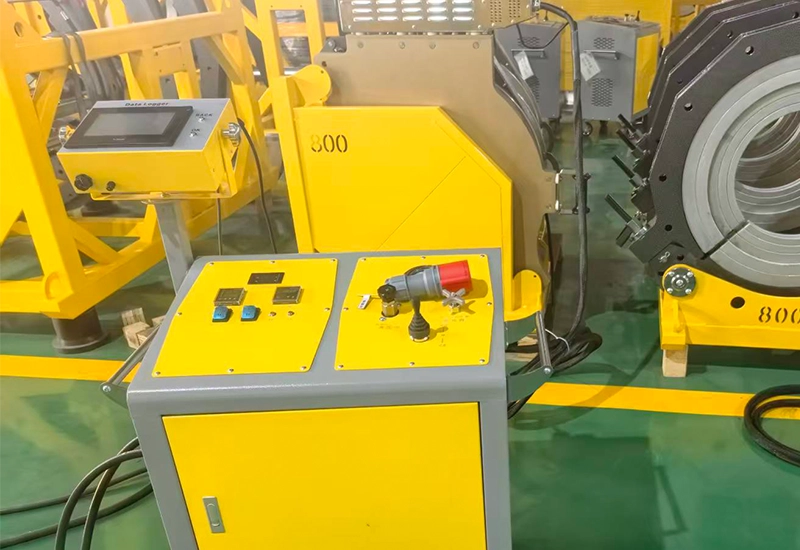
Compliance, Certifications, and Weld Quality Traceability
In HDPE pipeline construction, compliance is entirely dependent on meticulous documentation. Weld data records are the definitive proof that every single joint hits the engineered specifications. They safeguard the project against future liability and guarantee a smooth, frictionless handover to the mine owner.
How Weld Data Records Support Project QA/QC and Client Acceptance
Encrypted, tamper-proof PDF weld reports are the backbone of project QA/QC. They prove to the client that the interfacial pressure, fusion temperature, heat soak time, and cooling parameters were executed flawlessly. Without this digital traceability, site inspectors can—and often will—reject the pipeline. That forces you into costly destructive testing or mandates complete joint cut-outs before commissioning can even begin.
What Drives the Price of HDPE Pipe Welding Equipment?
HDPE pipe welder costs are driven heavily by ongoing research and development into CNC automation, tamper-proof recording tech, and firmware updates. Building a butt fusion welding machine with precision-machined aluminum heater plates, heavy-duty hydraulic cylinders, and ruggedized off-road track systems adds massive manufacturing costs compared to slapping together a basic manual welder.
Buy vs Rent: Which Makes More Sense for a Mining Project?
Renting heavy-duty fusion gear runs about $275 a day. If your project lasts longer than six months, buying makes far more financial sense. Automatic butt fusion machines generate massive labor savings—often hitting $20,000 to $30,000 over a six-month window—because they allow a single Master Welder to supervise multiple units simultaneously. This efficiency quickly offsets the initial purchase price and drives down your Total Cost of Ownership (TCO).
Typical Lead Time Factors for Standard and Large-Diameter Machines
Standard butt fusion machines (under 315mm) are often sitting in stock, ready for immediate deployment. Large-diameter butt fusion welding machines (like those over 800mm) and heavily automated units are a different story. Expect extended lead times stretching from 8 to 16 weeks. These HDPE pipe welders require specialized manufacturing, custom hydraulic assembly, and highly rigorous factory calibration before they can ship.
Cost, Lead Time, and Total Cost of Ownership
When analyzing HDPE pipe welding equipment price and lead time, you have to look right past the initial sticker price. A true cost analysis factors in maintenance requirements, labor efficiencies, and the massive financial risk of butt fusion welding machine downtime. Normalizing quotes is the only way to ensure you are comparing equivalent technologies, especially when it comes to automation and data tracking.
How to Normalize Supplier Quotes for Fair Comparison
- Check for Native Data Logging: Is data logging built into the machine, or are they hiding a multi-thousand-dollar aftermarket add-on in the fine print?
- Assess Drag Pressure Software: Ensure the system features automated drag pressure compensation, not just a laminated manual calculation chart tied to the chassis.
- Include Auxiliary Gear: Verify if pipe racks, stub-end holders, and facers are included in the base quote.
- Verify Shipping Terms: Find out if the price is Ex-Works (EXW) or Delivered Duty Paid (DDP) directly to your remote site.
- Evaluate Warranty: Compare the exact duration and specific environmental inclusions of the warranty coverage.
What Should an Operator Training Program Include?
A real training program certifies operators to safely oversee automated machinery. The syllabus has to cover parameter input (ASTM/ISO/DVS), visual joint inspection, drag pressure calculation, and basic field troubleshooting. Proper training empowers a single certified “Master Welder” to supervise multiple automated units run by lower-cost operators, which drastically cuts your overall labor spend.
Recommended Critical Spare Parts to Keep On Site
Mine sites must maintain a localized inventory of critical spare parts to avoid crippling downtime. Your on-site spares kit should include replacement facer blades, heater plates, hydraulic cylinder seals, hydraulic hoses, data logger connection cables, and temperature sensors. Waiting five days for a $50 sensor to clear international customs can easily cost you tens of thousands of dollars in idle crew time.
How Fast Should a Supplier Respond to Equipment Breakdowns?
Suppliers need to guarantee rapid response times when a butt fusion welding machine goes down. Push them on their Service Level Agreements (SLAs). Do they provide 24/7 remote phone support? Can they get a field technician out to your remote site within 48 hours? Idle pipe-laying crews cost thousands of dollars an hour. Rapid support isn’t a luxury; it’s a critical evaluation metric.
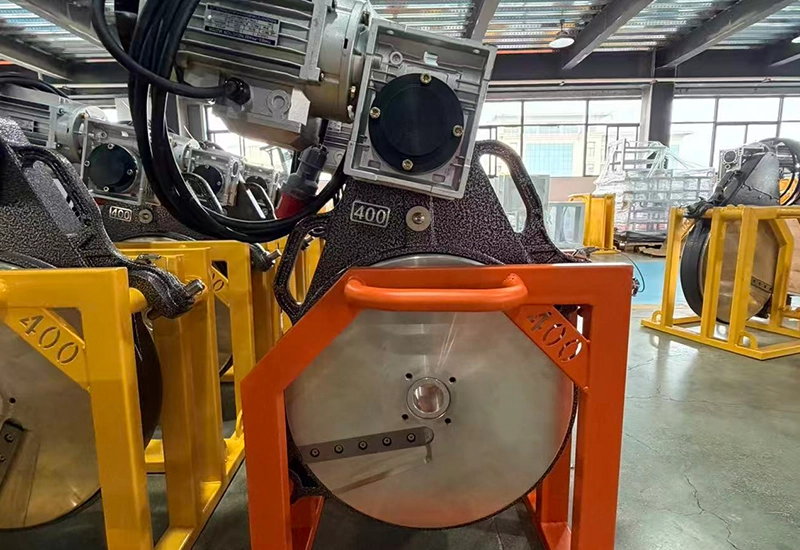
After-Sales Support, Training, and Spare Parts for Remote Mine Sites
Robust HDPE pipe welding equipment after-sales support for remote mine sites acts as the ultimate safety net keeping your project on schedule. Your supplier has to provide comprehensive training programs, immediate access to technical troubleshooting, and clear warranty terms that actually hold up in harsh environments.
Warranty Terms That Matter in Harsh Mining Environments
Standard warranties are often packed with loopholes. Make sure your warranty explicitly covers usage in harsh mining environments without voiding the coverage. This means it must protect against exposure to heavy dust, high altitudes, and extreme ambient temperatures. Specifically look for guarantees covering the electronic data logger components and the lifespan of the heater plate coating.
Warning Signs in Supplier Quotes and Technical Documents
- Missing Data Logging: Any quote that fails to explicitly list ISO 12176-4 compliant data logging leaves your project exposed to massive liability.
- Manual Disguised as Automatic: Watch out for machines labeled “semi-automatic” that still force the operator to manually lock in the hydraulic pressure during the cooling phase.
- Mixed Standard Charts: Reject any supplier handing out generic “HDPE welding parameter charts” that blend values from ISO, DVS, and ASTM. This will inevitably lead to improper fusion.
Mistake: Selecting Machines Based on Diameter Alone
Buying a butt fusion welding machine based strictly on pipe diameter is a rookie mistake. You must account for the pipe’s SDR (wall thickness) when analyzing HDPE welding machine specifications for thick wall SDR pipe. A butt fusion welding machine might easily fit a 630mm pipe, but completely lack the hydraulic clamping force required to secure a heavy SDR 7 pipe against high off-road drag pressures.
Why Do Low-Price Machines Often Cost More on Mining Projects?
Cheap, manual butt fusion machines inevitably cost you more in the long run. They lack automated pressure locks and compliance software, opening the door wide for human error. Failing to account for drag pressure is a classic manual error that under-pressurizes the joint on heavy mining pipes. The result? Failed welds, catastrophic blowouts, and massive downtime costs that make the initial savings on the HDPE pipe fusion machine look like a rounding error.
Red Flags and Common Mistakes When Choosing a Supplier
Spotting red flags early in procurement saves you from devastating delays. Consider this hypothetical scenario: A contractor chooses a supplier based purely on the lowest capital cost. The HDPE pipe welders show up without native data logging. The client’s inspector rejects the entire first week of welds due to a lack of traceability. The contractor is then forced to rent compliant HDPE pipe welders at a massive premium and cut out 50 completed joints, completely destroying their profit margin.
Step-by-Step Process to Shortlist and Select Your Supplier
Step 1–3: Define Pipe Specs, Site Conditions, and Project Timeline
1. Define Pipe Specifications: Write down the exact Outside Diameter (OD) range and the SDR (wall thickness) requirements for every mainline and branch pipe on the project.
2. Assess Site Conditions: Log the terrain types, altitude, and ambient temperature extremes to figure out exactly what mobility and environmental enclosures you need.
3. Establish Project Timeline: Lock in the required delivery date to the site, making sure to factor in international shipping and customs clearance delays.
Step 4–6: Issue RFQ, Score Suppliers, and Verify Claims
4. Issue Detailed RFQ: Send out a Request for Quotation that demands hard proof of native data logging capabilities and ISO/DVS/ASTM standard compliance.
5. Score Suppliers: Run the responses through a weighted matrix, prioritizing automation, traceability, and after-sales support heavily over the base price.
6. Verify Case Studies: Call the supplier’s previous mining clients. Confirm their breakdown response times and equipment reliability in environments similar to yours.
Step 7–8: Factory Acceptance Test, Contract, and Commissioning
7. Conduct Factory Acceptance Test (FAT): Demand a virtual or in-person FAT to verify data logger functionality, hydraulic stability, and machine calibration before it ever gets loaded onto a ship.
8. Finalize Contract & Commissioning: Sign the contract locking in strict warranty terms, and schedule on-site operator training and commissioning for the moment the equipment arrives.
Final Recommendation: What the Best-Fit Supplier Looks Like
The best-fit HDPE pipe welding equipment supplier delivers CNC automatic butt fusion machines armed with native data logging, robust after-sales support tailored for remote terrain, and strict adherence to global engineering standards. They operate as a technical partner, ensuring the machinery perfectly matches your drag pressure and SDR requirements. Ultimately, they safeguard your mining project against catastrophic joint failures and project-killing downtime.
FAQ
Q1: What size HDPE pipe can a butt fusion machine weld?
Hydraulic butt fusion machines handle a massive range of pipe sizes. Small, agile units take care of pipes from 63mm to 200mm, while heavy-duty mining machines fuse large-diameter pipes ranging from 500mm up to 1600mm. The exact capacity always depends on the specific machine chassis and the pipe’s SDR.
Q2: Is electrofusion welding machine strong enough for mining slurry pipelines?
Yes, electrofusion welding machine provides plenty of strength for mining slurry pipelines when applied correctly to tie-ins, repairs, and fittings. However, for long, straight runs of high-pressure mainline slurry pipe, butt fusion remains the preferred method because it offers higher overall joint strength and is far more cost-effective over long distances.
Q3: How much does an HDPE butt fusion machine cost?
Pricing swings wildly based on automation levels, size, and data logging features. Small manual units might only cost a few thousand dollars. Conversely, large-diameter (800mm+), CNC automatic butt fusion machines featuring track mounting and native ISO-compliant data logging require a capital investment in the tens of thousands of dollars.
Q4: Should mining contractors buy or rent HDPE pipe welding equipment?
If the project stretches beyond six months, buying is highly recommended. Renting costs roughly $275 per day. Purchasing automatic butt fusion welding machines lets contractors realize massive labor savings (often up to $30,000) and secure a much lower Total Cost of Ownership across the lifespan of multi-year mine developments.
Q5: What certifications should an HDPE pipe welding machine have?
An industrial-grade HDPE pipe welding machine needs CE manufacturing certifications and should be built in an ISO 9001 certified facility. On the functional side, the machine’s software must natively support global welding parameters like DVS 2207-1, ISO 21307, and ASTM F2620, while featuring data logging that fully complies with ISO 12176-4.
Q6: How long does it take to weld large-diameter HDPE pipe?
Welding time relies heavily on the applied standard and the pipe’s wall thickness (SDR). A massive, thick-walled pipe (like an 800mm SDR 9) demands significant heat soak and cooling time under pressure. Completing a single joint properly can take anywhere from 45 minutes to well over an hour.
Q7: Can HDPE pipe be fusion welded in extreme cold or hot weather?
Yes, but you have to mitigate the extreme temperatures. Heating plates lose temperature rapidly in cold weather, so you will need welding tents or environmental enclosures. In extreme heat, you must strictly monitor cooling times. High-end automated machines will actually compensate for ambient temperature fluctuations to keep the weld compliant.
Q8: What causes HDPE butt fusion joints to fail in the field?
Field failures almost always trace back to environmental contamination or human error. The most common culprits are inadequate pipe facing, failing to account for drag pressure (which under-pressurizes the joint), moisture or dust on the melted pipe ends, and cutting cooling times short. CNC automatic butt fusion machines eliminate the vast majority of these variables.
Conclusion
Selecting the right HDPE pipe welding equipment supplier stands as a critical strategic decision that will directly dictate the safety and profitability of your mining pipeline project. High-pressure tailings, abrasive slurry, and brutal site conditions demand heavy-duty fusion equipment that completely removes human error from the equation. Procurement teams need to look past initial capital costs and judge suppliers entirely on their ability to deliver CNC automation, robust drag pressure compensation, and ISO 12176-4 compliant native data logging.
The line between a successful project and crippling downtime is usually drawn by the quality of a supplier’s after-sales support. Rapid technical response times, localized critical spare parts inventories, and comprehensive operator training are absolute requirements for keeping remote mining environments productive. By relying on a structured scoring matrix that heavily weights total weld traceability and standard compliance (ASTM F2620, ISO 21307, DVS 2207-1), mine operators and contractors can guarantee flawless joint integrity, stop revenue-leaking blowouts, and secure the lowest possible Total Cost of Ownership for their pipeline infrastructure.
Let our experts help you choose the right equipment for your project
Contact Our Engineering Team