
HDPE Pipe Welding Equipment for Municipal Water Projects
Table of Contents
HDPE pipe welding equipment for municipal water projects helps buyers compare fusion methods, technical specifications, compliance needs, and supplier options to choose reliable, code-ready equipment.
What Is HDPE Pipe Welding Equipment and Why It Matters in Municipal Water Projects
HDPE pipe welding equipment involves specialized machines built to join high-density polyethylene pipes. They use precisely controlled heat and pressure to forge monolithic, leak-proof systems. For municipal water projects, this hardware is an absolute necessity. It secures the structural integrity of both potable water and wastewater networks. When you fuse a pipe at the molecular level, the resulting joint becomes just as strong—if not stronger—than the original pipe itself. This process completely removes the need for mechanical fittings, which are notorious for failing over a 50- to 100-year lifecycle.
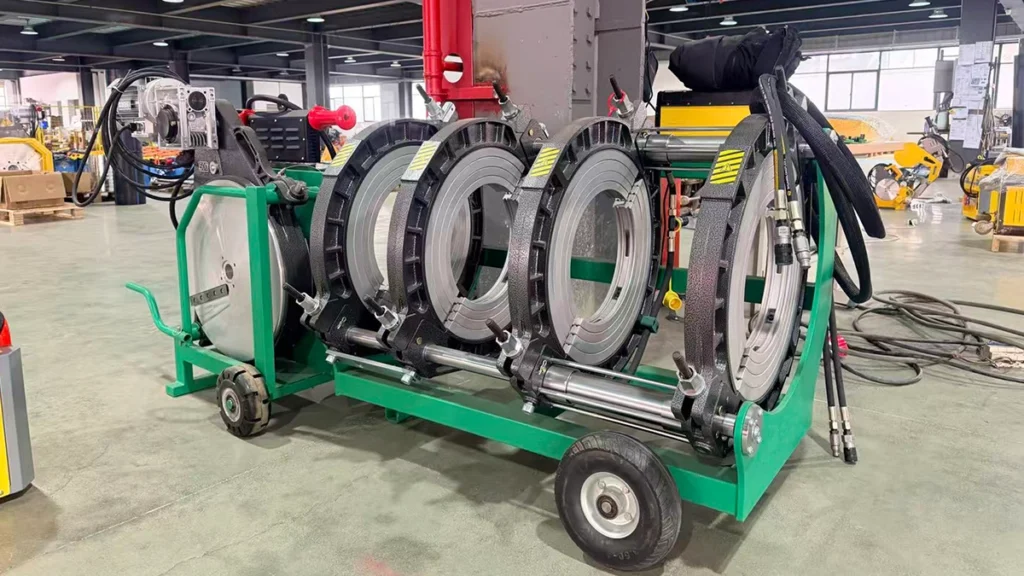
What does a standard HDPE fusion setup include?
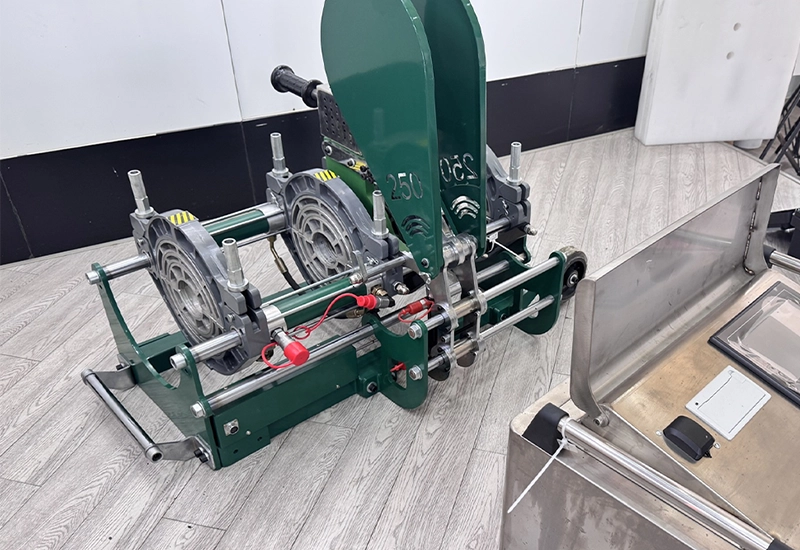
A typical butt fusion setup relies on a few core components. You need a precision heating plate, a specialized facing tool to shave the pipe ends perfectly flat, and heavy-duty clamps to keep everything aligned. A hydraulic or manual pressure unit then drives the actual fusion process. Electrofusion setups take a different approach. They run on an electric heating melt head paired with a computerized control unit. This computer dictates the exact current sent to heating coils embedded right inside the fitting.
Why do municipal water projects depend on proper pipe fusion?
Urban water supply and drainage grids rely heavily on HDPE pipes. Why? Because the material offers incredible corrosion resistance at a highly competitive price point. Yet, the overall safety and efficiency of the grid come down entirely to connection quality. Just one compromised joint in a high-pressure transmission line can trigger catastrophic flooding. We are talking about severe water loss and millions of dollars wasted on emergency excavation and repairs.
What problems does reliable welding help prevent?
Executing a proper fusion creates a seamless, leak-proof pipeline. You instantly eliminate the inherent failure risks and weak points found in mechanical connectors like flanges, Bauers, and camlocks. Solid welding stops tree roots from intruding into sewer lines. It prevents untreated wastewater from exfiltrating into the local groundwater. Most importantly, it guarantees zero pressure loss across potable water distribution networks.
What Types of HDPE Pipe Welding Equipment Are Used on Water Infrastructure Jobs?
Getting a grip on the different categories of HDPE pipe welding machinery is crucial. You have to match the hardware to the unique demands of your infrastructure site.
| Welding Method | Machine Type | Typical Pipe Diameter | Primary Municipal Application |
|---|---|---|---|
| Butt Fusion | Manual / Hydraulic / CNC | DN 63mm to 2250mm | Large-diameter transmission mains, force mains |
| Electrofusion | Control Unit & Melt Head | DN 20mm to 1200mm | Confined trenches, emergency repairs, complex layouts |
| Socket Fusion | Manual Handheld | DN 20mm to 125mm | Indoor plumbing, small-scale utility connections |
Butt fusion vs electrofusion: how do they differ?
Contractors generally prefer butt fusion for large-diameter HDPE pipes. It delivers massive joint strength and top-tier sealing performance by heating two flat pipe ends and pressing them together under force. Electrofusion, on the other hand, relies on specialized fittings packed with built-in heating coils. Crews typically deploy this method for small-diameter pipes or complicated layouts. Because the butt fusion welding machine footprint is much smaller, it excels when you need precision in tight, unforgiving spaces.
When is socket fusion the better choice?
Socket fusion works by simultaneously heating the exterior of a pipe and the interior of a fitting before pushing the two together. You will usually see this technique reserved for smaller diameter jobs and indoor plumbing networks. Municipal infrastructure rarely uses it. Instead, city grids heavily favor butt fusion and electrofusion to handle larger pipe diameters (frequently exceeding DN 315mm) alongside the intense pressure demands of underground water mains.
Should you use manual, semi-automatic, or hydraulic equipment?
If your infrastructure project involves pipes DN40mm and above, manual butt fusion welding machines simply will not cut it. Hydraulic butt fusion machines dominate as the industry standard. They easily maintain the precise contact pressure (0.2MPa to 0.4MPa) and heavy jointing force that thick-walled pipes require. Beyond that, municipal authorities are increasingly demanding CNC and fully automated machines. These advanced units guarantee exact pressure control while providing a digital, traceable record for every single weld.
Factory-direct pricing with technical consultation included
Get Your Free QuoteHow Does HDPE Fusion Welding Work?
The entire fusion process hinges on a strict thermodynamic cycle. You melt the plastic to a highly specific viscosity, then compress it under exact pressure so the polymer chains can actively intertwine.
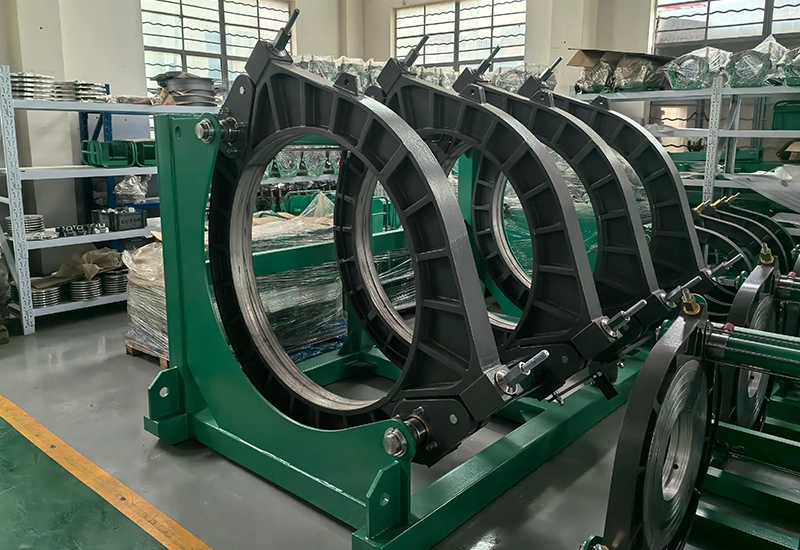
What are the main steps in a butt fusion cycle?
A standard butt fusion cycle follows five non-negotiable phases:
1. Preparation: Inspect, face (cut), and clean the pipe ends. You must remove all traces of oil, moisture, and dirt.
2. Heating: Apply the heating plate to the pipe ends at a strict 220°C–240°C.
3. Fusing: Let the material melt. A good rule of thumb for melting time is the wall thickness in millimeters multiplied by 10 seconds.
4. Connecting: Pull the heater out and immediately press the pipe ends together using hydraulic pressure.
5. Cooling: Hold that pressure steady while the joint cools down. This ensures full structural integrity before the pipe takes on any stress.
Which parts of the machine control heat, pressure, and alignment?
The heating plate manages the temperature. Under ISO 21307 standards, it needs to remain incredibly stable—within a ±3°C window. The hydraulic unit steps in to hold a constant interfacial pressure (usually between 0.2MPa and 0.4MPa). This ensures the molten plastic makes full contact and cures without leaving dangerous voids. Finally, heavy-duty steel or aluminum clamps lock the pipe in place. They prevent angular misalignment and guarantee the pipe ends meet perfectly flush.
How does operator skill affect weld consistency?
Advanced machinery helps, but you still need a highly skilled operator. Balancing temperature, pressure, and time takes expertise—especially when weather conditions turn ugly. Apply too little pressure, and you get voids and a weak molecular bond. Leave the heating plate in place too long, or run it too hot, and you trigger oxidation. That thermal degradation ruins the PE material, leaving you with a brittle, failure-prone joint.
What Technical Specifications Should Municipal Buyers Evaluate?
Procurement teams have a tough job. They must weigh technical specifications against the rigid compliance mandates set by municipal water authorities.
| Specification | Target Parameter | Relevance to Municipal Projects |
|---|---|---|
| Diameter Range | e.g., 160mm–630mm or up to 2000mm | Must match the project's specific SDR and OD requirements. |
| Temperature Control | 210°C–230°C (±3°C stability) | Prevents cold welds and material degradation. |
| Interfacial Pressure | 0.15 N/mm² (DVS) or 60–90 psi (ASTM) | Ensures proper molecular bonding without voids. |
| Traceability | ISO 12176-4 Data Logging | Provides digital proof of compliance for accountability. |
Which pipe diameter, SDR, and pressure rating matter most?
Your HDPE pipe welding equipment has to match the project’s specific outside diameter (OD). In municipal environments, this often scales massively—up to 1200mm, 1600mm, or even 2000mm. Additionally, the HDPE pipe welding machine’s clamping force and hydraulic power must handle the pipe’s Standard Dimension Ratio (SDR) and pressure rating. Thicker-walled pipes (which have a lower SDR) demand substantially higher hydraulic pressure to hit the correct fusion force.
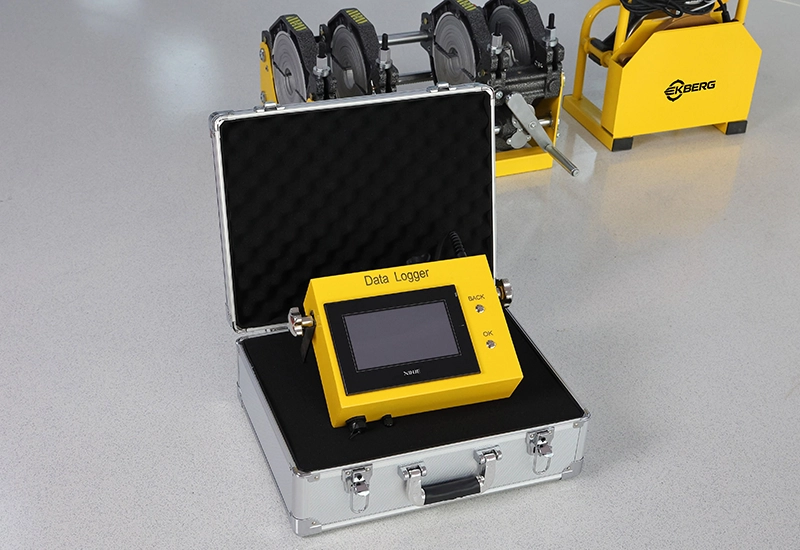
Do you need data logging or traceability records?
Absolutely. Municipal accountability demands rigorous traceability. Buyers need to confirm that their chosen HDPE pipe welder supports ISO 12176-4 compliant data logging. This technology captures the exact temperature, pressure, drag force, and cooling time for every single weld. The resulting digital report protects contractors from massive liability claims if a pipeline happens to fail years down the road.
What power, clamp force, and heater performance should be checked?
Heating plates need sufficient wattage to rapidly hit the 220°C–240°C sweet spot and maintain that heat evenly across the entire surface. Clamp force is equally critical—it must be strong enough to overcome the heavy drag of long pipe strings. Pressure requirements shift depending on your region. The hydraulic system must sustain 0.15 N/mm² for DVS 2207-1 in Europe, or 60–90 psi for ASTM F2620 in the US, with absolutely zero pressure drop during the cooling phase.
Which standards and certifications should be verified?
Municipalities don’t mess around with global engineering standards; adherence is mandatory. HDPE pipe welding equipment must align with ISO 21307 for general gas and water applications, DVS 2207-1 for European municipal frameworks, or ASTM F2620 for North American builds. Buying non-compliant hardware is a fast track to getting disqualified from bidding on regulated utility contracts.
Get detailed specs and custom configuration options
Request Technical SpecificationsWhere Is HDPE Pipe Welding Equipment Used in Municipal Water Projects?
The sheer versatility of HDPE pipe welding equipment means crews can deploy it across a massive spectrum of infrastructure projects. It easily adapts to shifting pressure requirements and unpredictable trench conditions.
Potable water transmission and distribution lines
Large-diameter butt fusion is the undisputed gold standard for main potable water transmission lines. These critical lines operate under relentless high pressure to serve thousands of residents. To prevent catastrophic water loss and dangerous contamination, the extreme joint strength and zero-leak performance of a butt-fused connection are non-negotiable.
Force mains, sewer rehabilitation, and stormwater systems
Engineers specify HDPE heavily for wastewater force mains and stormwater bypass systems because the plastic easily shrugs off hydrogen sulfide corrosion. Fused joints also provide excellent flexible alignment. This makes them perfect for trenchless installation techniques like Horizontal Directional Drilling (HDD), where massive rigs pull the pipe string underground with immense force.
Treatment plants, pump stations, and emergency repairs
Space gets tight inside treatment plants and pump stations. For complex manifold construction, small-scale renovations, and emergency repairs, electrofusion welding takes the lead. It enables a rapid response and slashes construction costs because crews can execute the welds in confined trenches without wrestling a massive hydraulic carriage into the dirt.
How Do You Choose the Right Equipment for Pipe Size, Site Conditions, and Crew Skill?
Picking the right HDPE pipe welding equipment means finding the perfect balance between the physical demands of the pipeline and the gritty, logistical realities of the job site.
HDPE Pipe Welding Equipment Selection Decision Flow:
1. Identify Maximum Pipe OD: Pick a HDPE pipe fusion machine chassis built for the largest pipe diameter on the plans (for example, a 630mm machine for DN 315-630mm pipes).
2. Assess Site Access: Got an open trench? Bring in wheeled hydraulic butt fusion machines. Staring down a confined urban excavation? Specify electrofusion units instead.
3. Evaluate Crew Skill: If you deal with high operator turnover, mandate CNC or automated butt fusion machines. This takes manual calculation errors out of the equation.
4. Determine Reporting Needs: When the municipality demands detailed weld reports, make sure integrated data logging comes standard.
How do you match machine capacity to pipe size and production rate?
Sizing the HDPE pipe welding equipment to your specific outer diameter range (like 160mm, 630mm, or 1200mm) is step one. Running a butt fusion welding machine that handles a broad diameter range gives you great flexibility across different project phases, preventing costly delays. Keep in mind, though, that drastically oversizing a butt fusion machine for small pipes can actually throttle your production. Heavy clamps and oversized heaters are cumbersome to maneuver on smaller lines.
Should you buy, rent, or outsource fusion work?
The answer depends on your pipeline volume and the project’s overall duration. For a one-off repair, renting the gear or outsourcing the job to a specialized fusion contractor makes total financial sense. But for long-term municipal contracts, purchasing automated CNC units usually delivers a positive ROI within the first three years. Ownership wipes out rental fees, drastically cuts down on rework, and lowers the cost of third-party testing.
What accessories and spare parts should be included?
Showing up with just a bare HDPE pipe fusion machine guarantees a bad day in the field. Essential accessories include data loggers for strict traceability, pipe rollers to knock down drag force, and internal debeaders to keep fluid flowing smoothly. You also need heavy-duty alignment clamps and specialized cutting tools for clean end faces. Always keep spare hydraulic seals and backup Teflon coatings for the heating plate stocked directly on-site.
How do you compare supplier quotes fairly?
Never compare quotes based solely on the upfront capital cost. Look at the total value. Does the quote include operator training programs? Are spare parts available locally? What do the warranty terms look like for critical components like heaters and hydraulic cylinders? Can they document compliance with regional standards? A cheap HDPE pipe welder backed by zero local support will burn through your budget the second it breaks down.
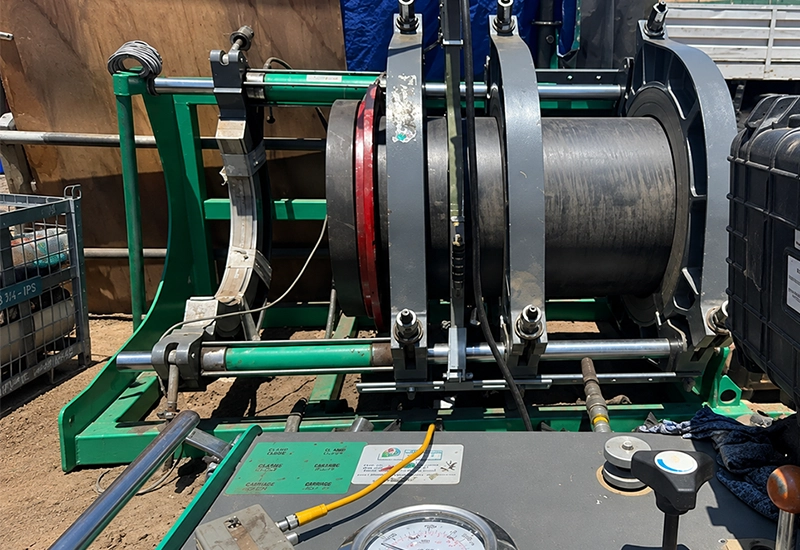
What Do HDPE Pipe Welding Equipment Costs Include?
Procurement managers have to look way past the initial invoice to grasp the true financial impact fusion machinery will have on municipal budgets.
Cost Breakdown Table:
| Cost Category | Impact on Budget | Mitigation Strategy |
|---|---|---|
| Capital Equipment | High initial cost (especially CNC) | Amortize over a 3-5 year equipment lifespan. |
| Accessories & Consumables | Moderate (Teflon, facing blades) | Purchase bulk spares with the initial machine order. |
| Training & Calibration | Low initial, high value | Mandate supplier-provided training to prevent rework. |
| Downtime & Maintenance | Severe (hidden cost) | Invest in premium brands with immediate parts availability. |
What line items make up total ownership cost?
Total Cost of Ownership (TCO) wraps in the base butt fusion welding machine, necessary accessories, annual calibration, operator training, and ongoing maintenance. Fully CNC sutomatic butt fusion machines might hit you with a 30–50% higher upfront price tag compared to manual hydraulic units. However, they deliver a radically superior ROI over a three-year project lifecycle. They achieve this by accelerating cycle times, slashing destructive testing costs, and practically eliminating catastrophic joint failures.
How do lead time and logistics affect project schedules?
Long lead times for machinery put an immediate halt to trenching and pipe laying. When crews sit idle, you bleed thousands of dollars a day. During procurement, securing guaranteed delivery dates and confirming the proximity of spare parts depots is just as critical as analyzing the butt fusion welding machine’s technical specs.
What hidden costs are often missed in procurement?
HDPE pipe welding equipment downtime is the ultimate budget killer. If a hydraulic pump blows and replacement parts are three weeks away, your entire project grinds to a halt. Proactive maintenance, strict annual calibration, and investing in durable, high-tier machinery will drastically cut these repair costs. It keeps your project schedule firmly on track throughout the lifespan of the HDPE pipe welding equipment.
What Common Welding Errors and Quality Risks Should You Avoid?
Even if you roll out premium HDPE pipe welding equipment, bad weather and procedural mistakes can easily compromise the pipeline’s integrity.
Quality Risk Checklist:
- Temperature Check: Is the heating plate holding perfectly stable at 220°C–240°C?
- Contamination Check: Are the pipe ends 100% free of mud, oil, and moisture?
- Alignment Check: Are the pipes clamped tightly enough to stop high-low misalignment?
- Pressure Check: Did the operator calculate the drag force and add it to the final fusion pressure?
What causes cold welds, misalignment, and contamination?
Cold welds happen when temperatures drop too low, stopping the plastic molecules from fully integrating. Misalignment rears its head when clamps aren’t tightened correctly or when the pipe lacks proper roller support. Contamination is usually operator error—skipping the crucial cleaning phase. Even a single fingerprint or a rogue drop of sweat on the melted face will create a void and destroy the weld.
How do weather and trench conditions affect fusion quality?
Welding requires a clean, controlled environment. Wind-blown dust, dirt, and oil on the pipe ends will sabotage the molecular bond. Cold ambient temperatures are just as dangerous, rapidly sucking heat away from the heating plate. This is where advanced CNC automatic butt fusion machines shine; they automatically adjust the welding cycle and heating times based on the outside temperature to lock in consistent fusion quality.
Which inspection and training steps reduce rework?
Post-weld visual inspections must verify a uniform double-bead formation all the way around the pipe’s circumference. Inspectors are hunting for cracks, air bubbles, and asymmetrical beads. Beyond the visual once-over, hydrostatic pressure tests are absolutely mandatory to confirm connection integrity before anyone backfills the trench. Ultimately, rigorous, hands-on operator training remains the best defense against these defects.
How Should You Evaluate Suppliers, Compliance, and Service Support?
Selecting the right supplier carries just as much weight as picking the right HDPE pipe welding machine. Municipal projects simply cannot afford to team up with vendors who vanish the moment the check clears.
Supplier Procurement Checklist:
- Provides documented ISO/DVS/ASTM compliance certificates.
- Includes detailed heating plate stability metrics directly in the technical quote.
- Guarantees local availability for spare parts and facing blades.
- Offers comprehensive on-site or virtual operator training.
- Provides crystal-clear warranty terms that cover both hydraulic and electrical systems.
What should a technical quote include?
A professional technical quote leaves no room for ambiguity. It must explicitly state the butt fusion machine’s compliance with major regional standards (ISO, DVS, or ASTM). It should break down heating plate stability metrics, the maximum pressure output of the hydraulic system, total power draw (kW), and the specific data logging capabilities needed for municipal handover paperwork.
Which compliance documents, warranty terms, and service options matter?
Confirm that the HDPE pipe welding equipment meets ISO 21307 (Global), DVS 2207-1 (Europe), or ASTM F2620 (USA). Warranty terms need to throw a wide net over the most vulnerable components: the hydraulic cylinders, the facing tool motor, and the heating element. Service options must include annual calibration. Without it, your data loggers will quickly fall out of compliance with ISO 12176-4.
What procurement questions should be answered before purchase?
Buyers need to ask the tough questions upfront. What is the actual lead time for critical spares like hydraulic seals and Teflon plates? Do you operate a local distributor network for rapid field service? Will you provide comprehensive operator training to close our crew’s skill gaps? Getting these answers early prevents agonizing downtime during high-stakes municipal installations.
What Is the Best Final Recommendation for a Municipal Water Project?
The smartest butt fusion welding machine strategy perfectly aligns the hardware’s capabilities with the scale, risk profile, and long-term longevity targets of the municipal water authority.
Which setup fits small, medium, and large municipal projects?
For tight pump station layouts and small-scale repairs, electrofusion machine is incredibly efficient. Medium-sized projects tackling distribution lines run best on semi-automatic hydraulic butt fusion machines. But when you move up to large municipal transmission projects (DN 630mm and above), heavy-duty hydraulic butt fusion machines equipped with massive clamp force and pipe rollers become non-negotiable.
When is a turnkey package the safest choice?
A turnkey package is almost always the safest route for municipalities. By bundling the fusion machine, inserts, facing tools, pipe rollers, and integrated data logging into one purchase, you guarantee that every component matches perfectly. This ensures all welds remain traceable, fully compliant with safety-critical standards, and ready to pass brutal third-party inspections.
What should the final decision prioritize?
When it comes down to the final call, prioritize automated and CNC HDPE pipe welding equipment. Yes, the initial capital expenditure stings a bit more. However, that cost is quickly offset by the guarantee of zero-leak performance and the total elimination of manual logging errors. You are securing a long-term ROI driven by a pipeline that will remain maintenance-free for 50 to 100 years.
FAQ
Q1: What type of HDPE pipe welding equipment is best for municipal water projects?
Hydraulic butt fusion machines dominate large-diameter transmission lines because they deliver the intense pressure required for thick-walled pipes. Meanwhile, electrofusion machine is the go-to choice for emergency repairs, confined trench environments, and small-diameter distribution lines where bulky hydraulic carriages simply won’t fit.
Q2: How do I choose between butt fusion and electrofusion machine?
Opt for butt fusion when dealing with long, straight runs of large-diameter pipe (DN 90mm+) where cost-efficiency per weld and sheer joint strength matter most. Pivot to electrofusion for complex pipe manifolds, tight spaces, emergency fixes, or when joining pipes of slightly different materials or SDRs.
Q3: What pipe sizes and SDR ranges can one HDPE welding machine handle?
A single machine covers a specific range by utilizing reducing inserts (for instance, a 630mm chassis can weld anything from 315mm up to 630mm). Just ensure the hydraulic system packs enough punch to handle low SDR (thick-walled) pipes, which demand a much higher interfacial pressure for a successful fuse.
Q4: Do municipal water projects require data logging and traceability?
Absolutely. The vast majority of municipal authorities now require ISO 12176-4 compliant data logging. This tech captures the time, pressure, and temperature of every single weld. It leaves a digital footprint proving the contractor met strict engineering standards, offering a massive shield against future liability.
Q5: How much does HDPE pipe welding equipment cost?
Pricing covers a wide spectrum. Manual hydraulic setups for medium pipes might run a few thousand dollars, whereas fully CNC automatic butt fusion machines for massive diameters (up to 2000mm) can easily push past $100,000. That said, CNC units often deliver a rapid 22-month ROI by wiping out manual testing costs and costly rework.
Q6: What standards should HDPE pipe welding equipment meet for potable water lines?
HDPE pipe welding equipment needs to meet ISO 21307 on a global scale, DVS 2207-1 across Europe, or ASTM F2620 in North America. These rigid standards dictate the exact cooling times, pressure application rates, and heating plate temperatures (220°C–240°C) required to keep potable water transmission safe.
Q7: What maintenance is required to keep fusion quality consistent?
Daily upkeep involves checking the facing tool blades for sharpness and cleaning the Teflon-coated heating plate with approved solvents. Annually, you must bring in professionals to calibrate the temperature sensors and hydraulic pressure gauges. This keeps the butt fusion welding machine fully compliant with data logging standards.
Q8: Should a city contractor buy or rent HDPE pipe welding equipment?
If a contractor holds continuous, multi-year municipal contracts, buying is the smart move; the three-year ROI heavily favors ownership. Renting makes much more sense for short-term emergency repairs, one-off jobs, or when a project temporarily requires highly specialized, ultra-large diameter gear (like 1600mm+).
Conclusion
Pulling off a successful municipal water project hinges on choosing the right HDPE pipe welding equipment. The long-term structural integrity of sewer force mains and potable water networks relies entirely on fusion precision. When procurement teams understand the deep thermodynamic requirements of both electrofusion and butt fusion, they can specify machinery that consistently hits that crucial 220°C–240°C temperature window and holds exact hydraulic pressure.
Evaluating this hardware goes far beyond a quick glance at the initial price tag. It requires a deep dive into the Total Cost of Ownership. That calculation heavily favors automated CNC machines, simply because they stamp out manual errors and drastically reduce rework. Plus, locking in compliance with global standards like ISO 21307—while utilizing ISO 12176-4 data logging—delivers the ironclad traceability that today’s municipal authorities demand. At the end of the day, prioritizing data-driven, robust HDPE pipe welding equipment guarantees a zero-leak pipeline. It mitigates the risk of catastrophic failure and builds a resilient infrastructure lifecycle designed to last for generations.
Let our experts help you choose the right equipment for your project
Contact Our Engineering Team