
HDPE Pipe Welding Equipment for Copper Mining Projects in Peru: Buyer’s Guide
Table of Contents
An HDPE pipe welding equipment buyer's guide for copper mining projects in Peru, covering butt fusion and electrofusion machine types, diameter and SDR matching, high-altitude operation, ISO 12176 calibration, cost, lead time, and supplier evaluation.
What Is HDPE Pipe Welding Equipment and What Does It Include?
HDPE pipe welding equipment is the heavy-duty machinery you need to fuse high-density polyethylene (HDPE) pipes using precise heat and pressure. In the context of a Peruvian copper mine, this gear works overtime. It has to tackle massive pipe diameters, handle high-pressure slurry lines, and survive a brutal operating environment—all while producing joints you can verify and trust.
What does a complete HDPE pipe welding equipment package contain?
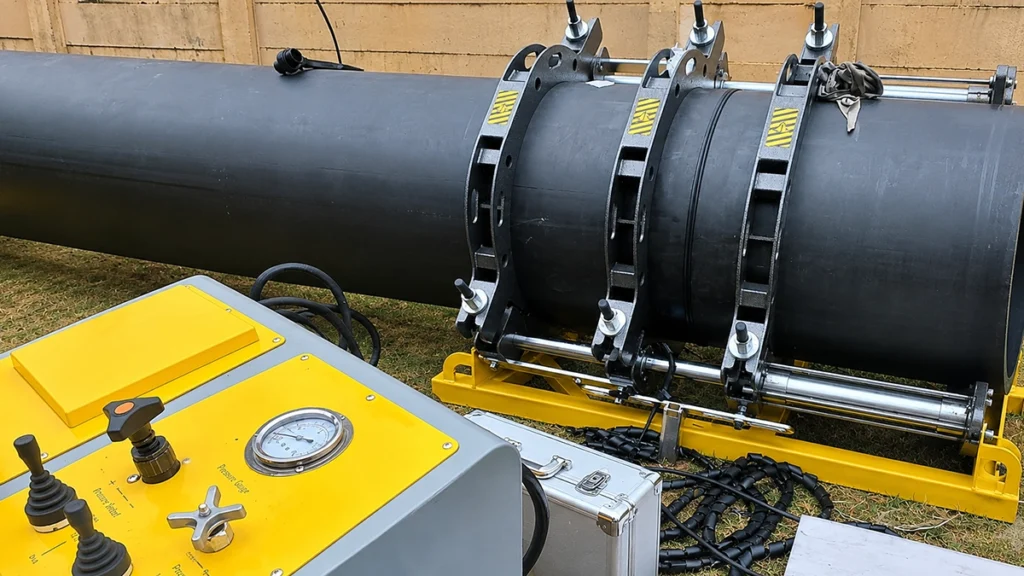
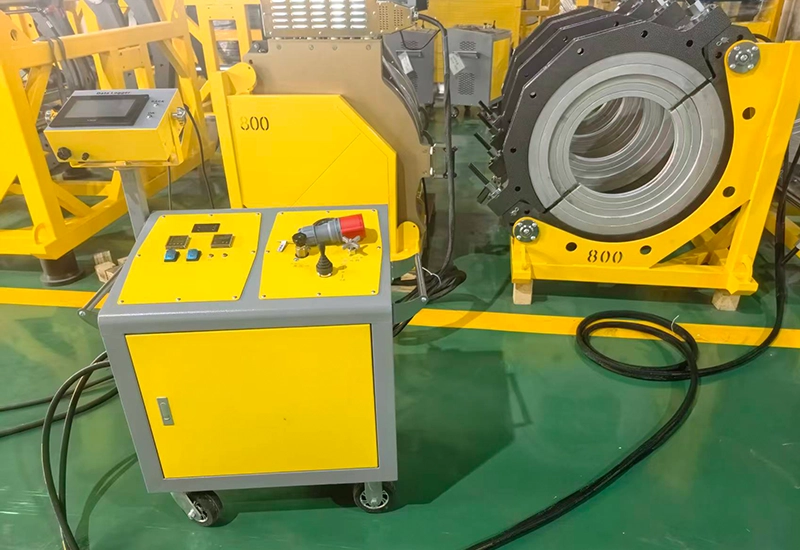
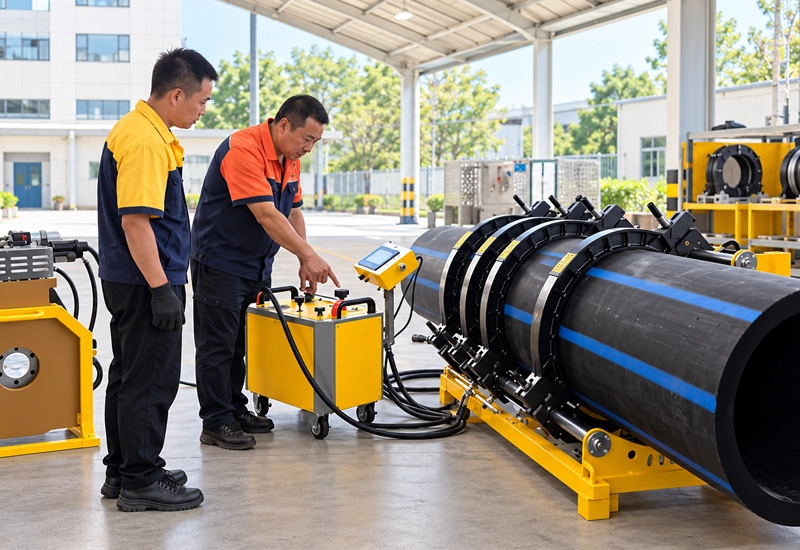
Setting up a mining spread requires more than just a single butt fusion welding machine; you need an integrated system. At the core sits the butt fusion welding machine, powered by a hydraulic unit, a PTFE-coated heating plate, a motorized facer (or trimmer), and industrial-grade chassis clamps. But that’s just the start. A fully loaded package also brings electrofusion control units for pipeline tie-ins, socket fusion tools for the smaller fittings, and extrusion welders to patch up liners. You’ll also need the right support gear. Think reduction inserts to swap between pipe sizes, heavy-duty rollers to keep everything aligned, and ISO 12176-4 compliant data loggers to capture every single fusion parameter.
Butt fusion vs. electrofusion vs. socket fusion: which methods are used on mine sites?
Butt fusion dominates large-bore mining pipelines. We’re talking diameters anywhere from DN90 up to DN1200 and beyond. Crews rely on it for critical infrastructure like primary slurry transport and dewatering networks. To give you an idea of speed, a DN200 joint takes about eight minutes from start to finish. Electrofusion, on the other hand, tackles the smaller stuff (DN20 to DN630). It’s the go-to method for complex tie-ins and tight underground repairs where a massive chassis simply won’t fit. Fusing a DN200 pipe this way takes roughly five minutes. Finally, socket fusion handles the small-diameter plumbing or chemical dosing lines, usually in the ½” to 4” CTS or IPS range.
What makes mining-grade welding equipment different from standard contractor equipment?
Standard contractor gear simply can’t survive the mechanical stress of a mine site. Mining-grade machinery is built for non-stop punishment. Take HDPE pipe welding machines like the V1200SHP. They pack high-pressure hydraulic systems designed specifically to muscle the thick-walled HDPE pipes used for abrasive slurry. Compare that to basic utility equipment, which often leans on manual pressure gauges and weaker hydraulic pumps. Those lower-tier pumps quickly stall out against the drag forces of heavy-wall pipe. Plus, mining operations demand strict traceability. Automated data logging comes standard on mining equipment to verify every weld, something standard utility gear frequently skips.
Why Fusion Joint Integrity Drives Uptime, Safety, and Lifecycle Cost on Peruvian Copper Sites
How does one failed fusion joint affect a slurry or tailings pipeline?
Welded joints are inherently the weakest points in any pipeline. If a fusion joint is compromised, high operational pressures will eventually trigger creep rupture and slow crack growth. When a tailings line bursts, the fallout is catastrophic. You face massive operational downtime, severe environmental contamination, and cleanup costs that can quickly run into the millions. Fixing a ruptured large-diameter slurry line isn’t cheap or easy, either. It forces you to shut down the entire transport network and perform expensive emergency extrusion or electrofusion repairs in incredibly harsh conditions.
What do EPCM contractors and mine owners audit in welding documentation?
EPCM (Engineering, Procurement, and Construction Management) contractors don’t take pipeline safety lightly. They strictly audit ISO 12176-4 compliant data logs to certify the network. Auditors want hard proof that the exact temperature, pressure, and cooling times were nailed for every single joint. They will cross-reference bead inspection logs and check that the HDPE pipe fusion machine’s drag pressure sensor was calibrated to a variance of less than 0.2 bar. If a joint lacks this cryptographic PDF documentation, expect it to be rejected. You’ll have to cut it out and weld it again.
Why is joint failure risk higher at altitude and in remote Andean locations?
Copper mines in Peru, like Las Bambas and Zafranal, sit at punishing elevations—often between 3,800 and 4,900 meters above sea level. This high altitude wreaks havoc on ambient temperatures and oxygen levels, which directly changes how polyethylene heats up and cools down. The thin mountain air also chokes diesel generators, causing significant power loss. To maintain the stable hydraulic pressure and heating plate voltage required for a perfect weld, you have to severely derate your power supply.
Factory-direct pricing with technical consultation included
Get Your Free QuoteMain Types of HDPE Pipe Welding Equipment Used in Mining Projects
Hydraulic butt fusion welding machines: where do they fit in a mining spread?
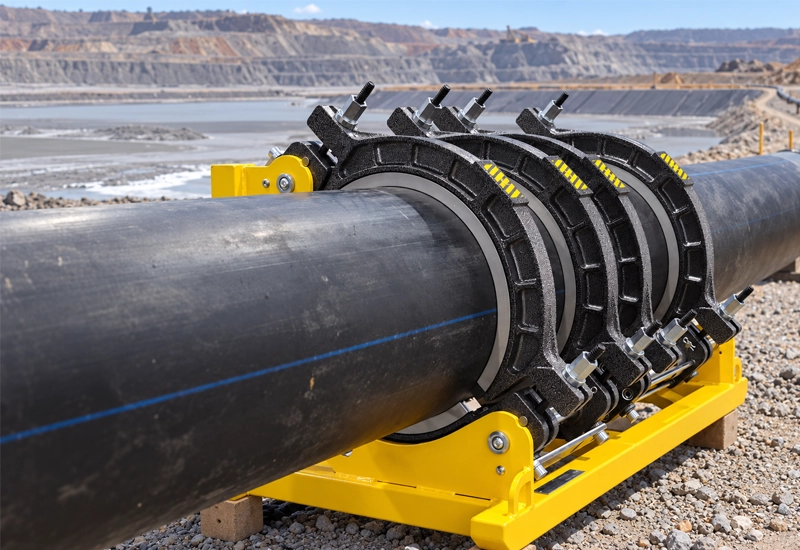
When it comes to primary infrastructure, hydraulic butt fusion welding machines do the heavy lifting. A hydraulic butt fusion machine with a 315mm to 1200mm capacity is the industry standard for large-diameter slurry, tailings, and dewatering lines. These units deliver the massive, sustained interface pressure (0.15 to 0.3 N/mm²) needed to force thick-walled pipe ends together. The result? A homogeneous bond strong enough to handle highly abrasive mining flows.
Semi-automatic and fully CNC automatic butt fusion machines: when is automation worth the cost?
CNC (Computer Numerical Control) technology takes human error out of the equation. It completely automates the pressure and time phases of the welding cycle. If you’re working on heavily regulated projects where ISO 21307 compliance is mandatory, this automation easily justifies the capital investment—especially if your operators have varying skill levels. By locking in the parameters and disabling manual overrides, CNC automatic butt fusion machines secure joint integrity and practically eliminate the risk of failing an EPCM audit.
Electrofusion and socket fusion equipment for tie-ins, repairs, and confined spaces
Sometimes a primary tailings line needs a branch connection, or a damaged section requires a fast repair inside a narrow trench. That’s when electrofusion welding machine steps in. Electrofusion control units push precise electrical currents into resistance wires embedded inside specialized fittings. This melts the pipe and fitting together seamlessly. Maintenance crews love this setup because it lets them execute safe, reliable connections in tight underground spots without having to sever the main line or drag a massive hydraulic chassis into the mud.
Ancillary equipment: rollers, facers, heating plates, generators, and data loggers
A successful weld doesn’t happen in a vacuum; it relies heavily on support gear. Heavy pipe sections need to rest on low-friction rollers outside the HDPE pipe welder clamps. This eliminates drag and keeps the joint perfectly aligned. Your generators must also be sized accurately to handle both the running and starting electrical loads, factoring in the inevitable altitude power loss. Add high-quality facers to guarantee perfectly parallel pipe ends, and integrated data loggers to capture the entire process for your EPCM handover.
How Butt Fusion Works: Process Steps, Parameters, and Key Components
What are the eight stages of a butt fusion joint?
1. Preparation: Inspect, clean, and secure the pipe ends into the machine clamps.
2. Clamping & Alignment: Tighten the chassis clamps to secure the pipe and prevent slippage.
3. Trimming/Facing: Insert the motorized facer to shave the pipe ends until they are perfectly parallel and clean.
4. Alignment Check: Remove the facer, bring the pipe ends together, and check for high-low misalignment, ovality, and gaps.
5. Heating: Insert the PTFE-coated heating plate and press the pipe ends against it to form an initial melt bead, then reduce pressure for the heat soak phase.
6. Fusion: Remove the heating plate quickly and force the melted pipe ends together under specific joining pressure.
7. Cooling/Curing: Hold the joint under pressure until the material cools and solidifies completely.
8. Quality Inspection: Visually inspect the double rollback bead for uniformity and correct size.
Which welding parameters must be controlled and recorded?
| Parameter | Standard Requirement | Mining Application Notes |
|---|---|---|
| Temperature | 210–230°C (±3°C variance) | Heating plate stability is critical; wind shields are required at altitude. |
| Interface Pressure | 0.15 N/mm² (ISO/DVS) or 0.3 N/mm² (ASTM) | Must account for machine drag force before calculating total gauge pressure. |
| Heat Soak Time | Wall thickness × 10 seconds | Thicker SDR pipes require extended soak times to ensure a deep material melt. |
| Cooling Time | Dictated by pipe wall thickness | Must remain under full hydraulic pressure; do not artificially accelerate cooling. |
How do data logging and joint traceability work under ISO 12176-4?
ISO 12176-4 is the global benchmark for fusion joint traceability. During a weld, the data logger captures the operator’s ID barcode, the specific butt fusion welding machine ID, ambient weather conditions, and the exact pressure, temperature, and time curve of the cycle. Once the joint finally cools, the system spits out a tamper-proof, encrypted PDF report. Think of it as a digital fingerprint. It proves beyond a doubt that the weld hit every engineering spec and is ready for EPCM approval.
Get detailed specs and custom configuration options
Request Technical SpecificationsMatching Equipment to Pipe Diameter, Pressure Class, and Andean Site Conditions
Which machine size range do you need: 90-315 mm, 315-800 mm, or 800-1600 mm?
Picking the right chassis size will make or break your pipeline installation efficiency.
| Diameter Range | Typical Machine Class | Primary Mining Application |
|---|---|---|
| 90-315 mm | SWT-V315/90H | Secondary water lines, drip irrigation networks, and camp plumbing. |
| 315-800 mm | SWT-V800H | Medium slurry transport, heap leach pad headers, and chemical dosing. |
| 800-1600 mm | Mazinger 1200i / 1600 | Primary tailings discharge, heavy concentrate pipelines, and main dewatering. |
How do SDR and pressure rating change welding parameters?
The Standard Dimension Ratio (SDR) tells you the pipe’s wall thickness compared to its outer diameter. A lower SDR means a thicker wall built for higher pressure. When you weld heavy-wall pipe, you have to extend the heat soak times significantly to reach the right melt depth. On top of that, high-pressure welding standards like ASTM F2620 demand 0.3 N/mm² of interface pressure. That’s roughly double the ISO standard, but it’s absolutely necessary to guarantee complete molecular fusion when field conditions get unpredictable.
What changes when welding at 3,800-4,900 m altitude?
Running an HDPE pipe fusion machine high in the Andes is a logistical nightmare. For every 1,000 meters you climb above sea level, diesel generators lose about 10% of their rated power. To get the 220V or 380V you need for the heating plate and hydraulic unit, you must heavily derate and oversize your generator. The environment fights you, too. Biting cold and high winds mean you have to use insulated welding tents or wind shields so the heating plate doesn’t lose temperature. You also have to watch cooling times like a hawk to prevent the joint from crystallizing too fast and becoming brittle.
Which HDPE pipe welding equipment packages suit leach pad, tailings, and concentrate pipeline duty?
Tailings and concentrate pipelines move incredibly abrasive, high-density materials. You need large-diameter hydraulic butt fusion machines (up to 1200mm or even 1600mm) that can handle thick-walled PE100 pipe. Heap leach pads are a different story. They rely on massive, sprawling networks of much smaller pipes. So, HDPE pipe welding equipment package for slurry tailings and leach pad pipelines has to be a hybrid setup. You want heavy hydraulic chassis machines tackling the main headers, backed up by agile electrofusion units and medium-sized butt fusion machines (90-315mm) to handle the intricate drip lines and valve manifolds.
Technical Specifications, Standards, and Calibration Requirements Buyers Should Verify
Which standards apply: ISO 12176, ASTM F2620, AWWA C906, and project specs?
You have to select your HDPE pipe welding equipment based on international compliance standards. ISO 21307 is the global baseline for low-pressure (0.15 N/mm²) water and gas networks. If you’re looking at strict defect control and parameter management for industrial jobs, the rigorous German standard DVS 2207-1 is your guide. Over in North America, ASTM F2620 dictates high-pressure welding (0.3 N/mm²), and EPCM firms heavily specify this for safety-critical mining systems. Lastly, ISO 12176-4 sets the rules for traceability and data logging on those fusion joints.
What does a valid calibration certificate contain?
Think of an ISO 12176 calibration certificate as the legal passport for your butt fusion machinery on a mine site. It proves that the heating plate’s temperature remains perfectly stable within a tight ±3°C tolerance across its entire surface. It also verifies that the hydraulic drag pressure sensor and system gauges have been tested against a master gauge, showing a variance of less than 0.2 bar. If you show up without a valid, in-date certificate, EPCM inspectors will shut down your welding operations on the spot.
Which specifications should appear in an HDPE pipe fusion equipment RFQ?
When putting together a Request for Quotation (RFQ), procurement managers need to be relentlessly specific. Lay out the exact outside diameter (OD) range you need (for instance, DN630-1200), the pipe SDR classes involved, and the required standard compliance (like ASTM F2620 or DVS 2207). Don’t forget to mandate ISO 12176-4 data logging capabilities. Finally, spell out the exact voltage, phase, and frequency requirements, and explicitly state the altitude where the gear will operate. This allows the supplier to accurately size the power unit.
Comparison and Selection Guide: Which Machine Class Fits Your Project?
Comparison table: manual, hydraulic, semi-automatic, and fully automatic machines
Figuring out how to choose an HDPE pipe welding machine for large diameter pipe means looking closely at automation levels and what the HDPE pipe welding equipment can actually do in the field.
| Machine Class | Diameter Range | Operator Skill Required | Traceability | Typical Application |
|---|---|---|---|---|
| Manual (Lever/Wheel) | Up to 250mm | Moderate | None (Manual logging) | Low-pressure camp plumbing, small irrigation. |
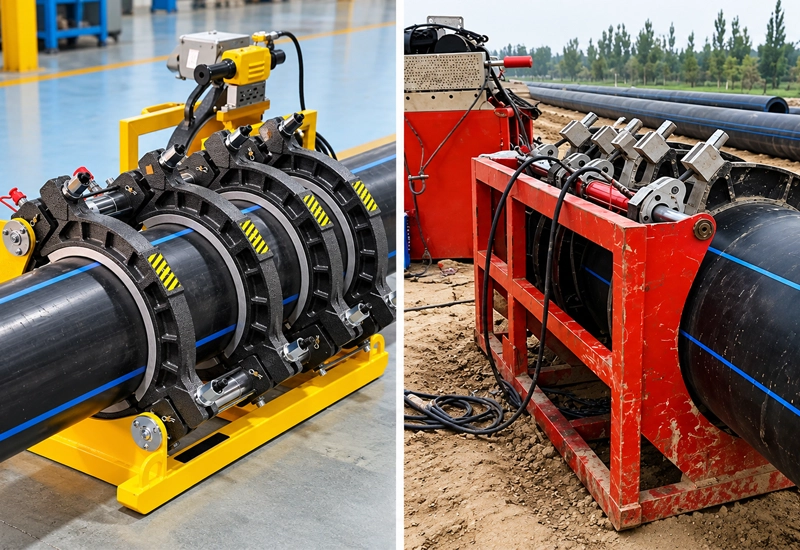
| Hydraulic (Standard) | 63mm – 2000mm+ | High (Must read DVS/ASTM tables) | Add-on Data Logger | Primary mining pipelines, tailings, dewatering. |
| Fully Automatic (CNC) | 63mm – 630mm | Low (Machine controls cycle) | Integrated (ISO 12176-4) | Strictly regulated EPCM projects, zero-defect tolerance. |
| Electrofusion Unit | 20mm – 1200mm | Moderate (Scanning barcodes) | Integrated | Tie-ins, tight trench repairs, confined spaces. |
Which machine class matches your project scale and crew skill level?
Fully automatic CNC butt fusion machines are the heavy favorites for strictly regulated projects, mostly because they offset lower crew skill levels. The CNC system takes over the critical pressure and time phases so operators can’t take shortcuts. On the flip side, standard hydraulic butt fusion welding machines demand highly trained, certified operators who can manually calculate drag force and flawlessly read DVS or ASTM tables. If you have an experienced crew but your project involves massive slurry lines, a standard hydraulic butt fusion welding machine paired with an integrated data logger hits the sweet spot between capital cost and performance.
New vs. used HDPE pipe welding equipment: what are the real trade-offs?
Buying used HDPE pipe welding equipment looks great on a spreadsheet, but it opens the door to massive compliance risks. Used HDPE pipe welding machines usually lack modern ISO 12176-4 data logging and almost never come with valid calibration certificates. To make matters worse, the heating plates on older units often have degraded PTFE coatings. That causes pipe adhesion and ruins welds. If you deploy uncalibrated used HDPE piep welding equipment on a Peruvian copper project, EPCM auditors will almost certainly reject your welds. The resulting rework costs will instantly wipe out whatever money you saved upfront.
Cost, MOQ, Lead Time, and Spare Parts Planning
What drives the price of an HDPE Pipe butt fusion machine?
Three main factors dictate the HDPE pipe welding equipment price and cost breakdown for mining projects. First is diameter capacity. A butt fusion welding machine built to weld 1200mm pipe requires exponentially more steel, massive hydraulic cylinders, and a heavy-duty power setup compared to a 315mm unit, which drives the price up fast. Second is automation. Expect to pay a premium for CNC systems over manual hydraulic units. Finally, there’s the brand premium. North American brands generally carry higher capital costs than factory-direct alternatives that offer the exact same hydraulic robustness.
MOQ, mixed containers, and package purchasing for contractors and distributors
Pipeline contractors and industrial distributors can easily optimize Minimum Order Quantities (MOQ) through package purchasing. Instead of buying machines one at a time, smart buyers consolidate complete packages into mixed 20-foot or 40-foot shipping containers. You can pack in large butt fusion machines, electrofusion units, socket tools, and essential spare parts all at once. This approach slashes the per-unit freight cost to South America and guarantees the site receives a fully compatible welding spread in a single drop.
Lead times, shipping to Callao, and customs documentation
Managing HDPE pipe fusion machine lead time shipping to Callao Peru and spare parts planning takes serious logistical coordination. Standard manufacturing lead times usually run 3 to 6 weeks ex-works. After that, expect 30 to 45 days of ocean freight to the Port of Callao. Since Callao is Peru’s main logistics hub, clearing customs demands flawless paperwork. Suppliers have to provide commercial invoices, packing lists, CE/ISO manufacturing certificates, and origin certificates. Missing a single document will cause massive delays before the gear even starts its long inland journey to the Andes.
Which spare parts and consumables should be stocked on site?
When a butt fusion welding machine goes down in a remote Andean location, you simply can’t wait weeks for parts. You need essential stock on site from day one. That means keeping replacement PTFE-coated heating plates (or PTFE fabric covers), spare facer blades, hydraulic cylinder seals, and quick-release couplings ready to go. You should also stock a complete set of reduction inserts. This ensures your crews can instantly adapt the machine to different pipe diameters as the pipeline network evolves during construction.
Supplier Evaluation, Operator Training, and After-Sales Support in Peru
Which questions separate a real manufacturer from a trading company?
Telling a direct HDPE pipe welding equipment supplier in Peru apart from a middleman trading company is crucial if you want long-term support. Ask them straight up: Can you customize the CNC software interface for our specific mine site? Request detailed technical schematics of their hydraulic power unit. Ask if they back their gear with a comprehensive 24-month warranty and direct technical support, rather than passing the buck to a third party. A true manufacturer controls their own engineering and can answer those deep technical questions without hesitating.
How important are operator training and on-site commissioning?
You can buy the best machine in the world, but without proper operator training, it’s useless. Operators need explicit instruction on how to navigate CNC menus, input the correct SDR ratings, and manually verify that pressure outputs align with DVS 2207 or ASTM F2620 standards. On-site commissioning is just as vital. It ensures the HDPE pipe welding equipment properly integrates with your derated site generators and that the crew knows exactly how to handle thick-walled pipe safely using rollers and lifting gear.
What warranty, calibration, and response-time terms should be negotiated?
Your procurement contracts need teeth. Negotiate a minimum 24-month warranty that covers all major hydraulic and electrical components. Make the supplier guarantee spare parts availability for at least five years after the purchase. You also need to lock in terms for annual recalibration support. Ensure the supplier provides clear procedures, master gauge specifications, or localized service partnerships right there in Peru. This keeps your machinery compliant and ready for EPCM audits year after year.
Common Buying Mistakes, Hidden Risks, and Final Recommendation
What are the most common HDPE pipe welding equipment buying mistakes?
- Ignoring altitude derating: Failing to size generators for 4,000m+ elevations results in pressure drops and cold welds.
- Skipping data logging: Buying manual machines without ISO 12176-4 capabilities guarantees EPCM audit failures on critical slurry lines.
- Underestimating drag force: Purchasing a machine with weak hydraulics that cannot overcome the drag friction of heavy-wall PE100 pipe.
- Poor spare parts planning: Failing to stock facer blades and hydraulic seals, leading to weeks of downtime at remote sites.
- Buying strictly on price: Selecting uncertified trading company HDPE pipe welder that lacks valid calibration certificates.
What preventive maintenance and recalibration schedule should be planned?
| Maintenance Task | Frequency | Action Required |
|---|---|---|
| Heating Plate Cleaning | Daily / Before each weld | Clean with a lint-free cloth and approved solvent to prevent contamination. |
| Facer Blade Inspection | Weekly | Check for dullness or chipping; replace if shaving ribbons are uneven. |
| Hydraulic Fluid Check | Monthly | Verify fluid levels and inspect hoses for micro-leaks or abrasion. |
| Sensor Recalibration | Annually | Recalibrate temperature controllers and pressure transducers to ISO standards. |
Final recommendation: a pre-purchase checklist for Peruvian copper projects
1. Verify the HDPE pipe welding equipment natively supports ASTM F2620 high-pressure requirements (0.3 N/mm²).
2. Ensure integrated ISO 12176-4 data logging is included for EPCM traceability.
3. Confirm the electrical requirements and size site generators specifically for Andean altitude derating.
4. Secure a comprehensive spare parts package (PTFE plates, blades, seals) in the initial order.
5. Demand valid, verifiable calibration certificates before authorizing shipment to Callao.
Choosing the right fusion machinery ultimately dictates the lifecycle safety of your entire pipeline infrastructure. If you prioritize hydraulic robustness, strict data traceability, and altitude-specific power planning, you can effectively eliminate joint failures. Do it right, and your mining operation will enjoy decades of uninterrupted slurry and tailings transport.
Conclusion
Equipping high-altitude Peruvian copper mines with HDPE pipe welding gear is a balancing act. You need heavy-duty mechanical performance, but you also have to satisfy strict data traceability requirements. The brutal Andean environment means your HDPE pipe welding equipment must run on properly derated generators and stay protected from the weather to hit those precise heating and cooling cycles. EPCM auditors won’t accept anything less than fully documented, ISO 12176-4 compliant joints. Because of this, deciding between a manual, hydraulic, or fully automatic CNC machine will directly impact your project approval rates. Verify your standard compliance (whether that’s ASTM F2620 or DVS 2207-1), demand valid calibration certificates, and proactively stock critical parts like PTFE plates and facer blades. Take these steps, and you’ll safeguard your site against catastrophic tailings line failures and massive operational downtime.
FAQ
How much does an HDPE pipe welding machine cost for a mining project?
Pricing swings wildly depending on diameter capacity and the level of automation. A standard 315mm hydraulic machine offers great cost efficiency, whereas a 1200mm fully automatic CNC machine for primary tailings lines is a significant capital investment. Ultimately, you pay for hydraulic robustness, integrated data logging, and brand premiums.
What is the largest HDPE pipe diameter a single butt fusion welding machine can weld?
Standard large-scale mining machines handle up to 1200mm or 1600mm in outside diameter (OD). While specialized mega-chassis butt fusion welding machines exist for massive pipes (up to 2000mm+), 1200mm is generally the ceiling for primary slurry and dewatering pipelines on copper sites.
Do HDPE pipe fusion machines need to be derated for high altitude in Peru?
The fusion machines themselves don’t actually lose power, but the diesel generators running them certainly do. At 4,000 meters, generators can lose up to 40% of their rated capacity. You have to heavily oversize your generator to make sure the heating plate and hydraulic pump get a stable voltage supply.
Is butt fusion or electrofusion better for large-diameter HDPE mining pipelines?
Butt fusion wins outright for large-diameter primary pipelines. It creates a seamless, homogenous joint that handles high-pressure abrasive slurry without relying on expensive fittings. Electrofusion is much better suited for tight underground repairs, branch tie-ins, and confined spaces where a massive hydraulic chassis simply won’t fit.
What certifications and calibration documents should HDPE pipe welding equipment carry?
Your HDPE pipe welding equipment needs an ISO 12176 calibration certificate proving the heating plate temperature stability stays within ±3°C and the drag pressure sensor variance is under 0.2 bar. It also needs to comply with ISO 21307, DVS 2207-1, or ASTM F2620 welding standards, depending on what your project specs dictate.
How long does delivery to Peru take, and how are spare parts supplied?
Standard manufacturing takes about 3 to 6 weeks, followed by 30 to 45 days of ocean freight to the Port of Callao. Because remote Andean sites deal with severe logistical delays, you must purchase critical spare parts—like facer blades, PTFE plates, and hydraulic seals—and ship them in the initial container.
How often does an HDPE butt fusion machine need to be recalibrated?
Industry standards and EPCM auditors require annual recalibration for HDPE butt fusion machines. The temperature controllers, hydraulic pressure transducers, and data logging sensors all need to be tested against master gauges. This ensures they continue delivering exact parameters even after enduring harsh field conditions.
Can one fusion machine weld PE100, PE100-RC, and different SDR pressure classes?
Yes, a single hydraulic butt fusion machine is versatile enough to weld various polyethylene grades (like PE100 and PE100-RC) as well as different SDR classes. Just remember that the operator—or the CNC system—must adjust the heat soak time, interface pressure, and cooling time calculations to perfectly match the specific wall thickness of the pipe.
Let our experts help you choose the right equipment for your project
Contact Our Engineering Team