
Manual Butt Fusion Machine: Best Uses, Limitations and Buying Tips
Table of Contents
A manual butt fusion machine is a cost-effective tool for welding HDPE and PE pipes up to 160-250mm. This guide explains best uses, technical limits, manual vs hydraulic comparison, pricing, supplier evaluation, and practical buying tips for B2B contractors and distributors.
What Is a Manual Butt Fusion Machine?
Think of a manual butt fusion machine as the workhorse of small-diameter plastic pipe joining. This frame-style welding equipment relies on a pull-out plate design and electric heating elements to fuse pipes together. Instead of complex hydraulic cylinders, operators use a simple hand-crank or lever mechanism. For contractors handling smaller pipelines, it delivers dependable thermal fusion without the hefty price tag or maintenance headaches of fully automated systems.
[H2-1] Definition and Core Working Principle
Fundamentally, this equipment builds a seamless, homogeneous joint between two thermoplastic pipes. How? By combining precise heat with controlled physical pressure. The process itself is straightforward. First, you secure the pipe ends. Next, you face them off to guarantee perfectly parallel alignment. You then heat those ends until they reach a molten state—usually hovering right around 210°C ± 10°C. Finally, the operator manually drives the melted ends together, holding that pressure steady while the polymer chains permanently interlock and cool down.
[H2-1] Key Components: Clamps, Heater Plate, Trimmer, Manual Lever
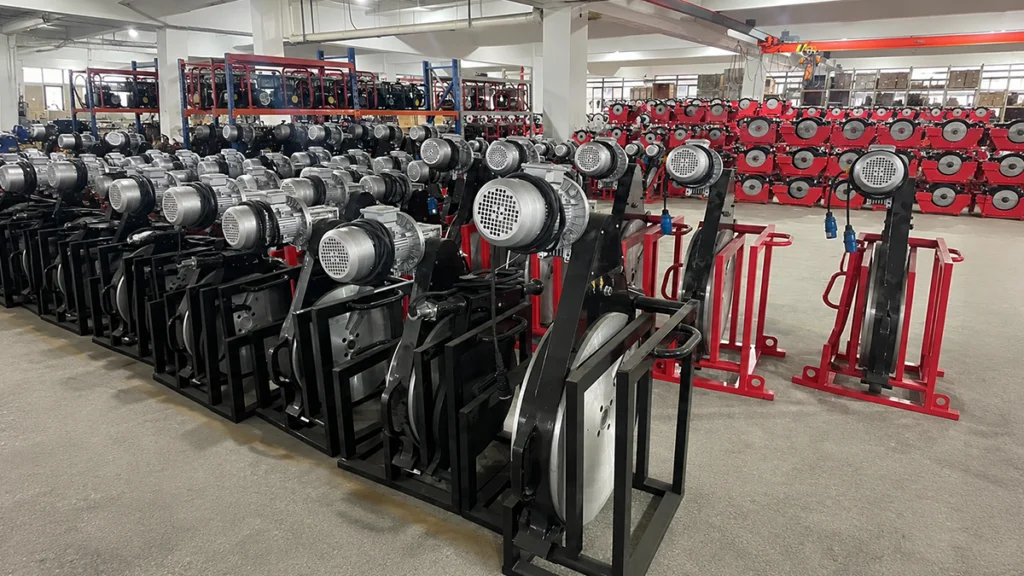
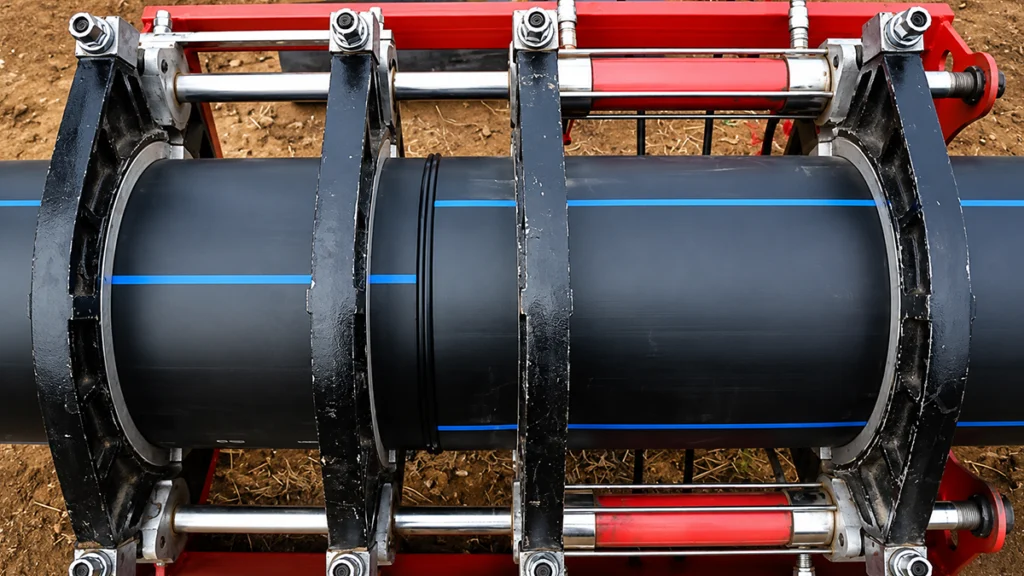
Manufacturers design these butt fusion machines with intentional simplicity. Fewer parts mean fewer breakdowns. The main setup features upper and lower platens (the clamps) that lock the pipe firmly in place. You’ll also find an electric milling cutter—often called a trimmer—used to shave the pipe ends perfectly flat. A PTFE-coated heater plate handles the melting phase. Finally, a manual lever or hand-crank gives the technician full control over carriage movement and interfacial pressure.
[H2-1] How Does Manual Operation Differ from Hydraulic Butt Fusion?
It all comes down to how you generate and control pressure. Manual models depend 100% on human muscle. The operator pushes a mechanical lever to build the right clamping and interfacial pressure. Hydraulic models take a different route, using an electric hydraulic station and cylinders to deliver semi-automatic, highly measurable force. Because of this, manual rigs are beautifully simple, yet they lean heavily on the physical strength and “feel” of the person running them.
[H2-2] Cost Efficiency for Small Contractors and Distributors
If you run a small contracting business, manage a plumbing crew, or distribute equipment, manual welders offer a low-risk entry into the HDPE pipe market. You won’t deal with software glitches. You won’t have to swap out messy hydraulic fluids. With barely any electronic parts to fail, these butt fusion machines deliver a massive return on investment. They are perfect for low-pressure installations where buying a high-end CNC automated rig simply doesn’t make financial sense.
Why Manual Butt Fusion Machines Still Matter in 2026
Automated pipeline tech advances at a blistering pace. Yet, manual equipment holds its ground globally. Why do crews still rely on them? A few key reasons drive their ongoing popularity:
- Zero reliance on heavy power packs: You completely eliminate the hassle of dragging around external hydraulic units.
- Minimal maintenance: Fewer moving parts drastically cut down on unexpected field breakdowns.
- Rapid deployment: Crews can set up and tear down much faster, especially in cramped trenches.
- Capital efficiency: Procurement costs are a fraction of what you’d pay for a hydraulic setup.
[H2-2] Portability and Off-Grid Field Use
You can’t overstate the value of portability out in the dirt. Industry metrics reveal that roughly 80% of field crews heavily favor pipe fusion machines under 200kg for mobile jobs. Many manual units actually hit the scales between just 20kg and 60kg, often rolling on wheeled frames. When you’re working off-grid and hauling heavy generators or hydraulic stations feels like a logistical nightmare, these lightweight frames become lifesavers.
[H2-2] When Is a Manual Machine More Practical Than a Hydraulic One?
Manual rigs easily beat their hydraulic counterparts when you’re tackling small-diameter pipes—usually anything under 160mm. At these sizes, a technician can safely and comfortably generate the necessary interfacial pressure by hand. If you try using a hydraulic rig for these small jobs, the setup alone often takes longer than the actual weld. For firing off rapid, back-to-back joints, manual is simply faster.
[H2-3] HDPE Water Supply and Irrigation Pipe Jointing
Agricultural and municipal crews lean on these butt fusion machines constantly. They excel at fusing HDPE pipes for drinking water networks, drainage lines, and sprawling farm irrigation systems. Since these setups typically run at much lower pressures than gas mains, a manual fusion weld easily hits the structural benchmarks needed to guarantee leak-free water transport.
[H2-3] Gas Distribution Pipe Welding (PE Pipes ≤160mm)
High-pressure gas lines absolutely demand strict automation. However, for low-pressure PE gas distribution networks (160mm and under), manual butt fusion machines still see plenty of action in certain regional jurisdictions. That said, there is no room for sloppy technique here. Operators have to follow local regulatory codes to the letter, ensuring every manual weld can survive brutal destructive testing.
Factory-direct pricing with technical consultation included
Get Your Free QuoteBest Uses and Application Scenarios
Versatility keeps manual welders relevant across a huge cross-section of industries. Whether a crew is patching up municipal plumbing or handling routine factory maintenance, the ability to drop a welder into a trench without calling in a crane gives contractors a massive operational edge.
[H2-3] Field Repair and Remote-Site Construction
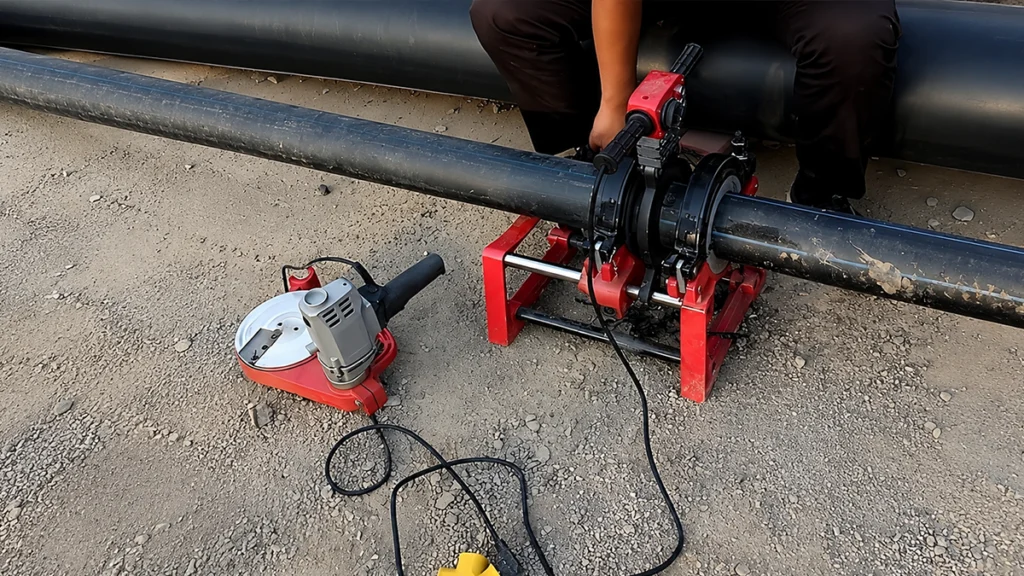
When emergencies strike or you’re building in the middle of nowhere, having the right manual butt fusion machine for field repair literally saves days of downtime. Take a recent rural water project in Southeast Asia, for example. Contractors hauled portable 160mm manual units straight through dense jungle terrain. It proved exactly why this equipment thrives in rough topography where heavy butt fusion machinery just sinks in the mud.
[H2-3] Which Industries Benefit Most from Manual Butt Fusion?
A handful of sectors pull massive ROI from manual fusion. Municipal water and wastewater management, farm irrigation crews, and residential plumbers top the list. Mining operations also love them for stringing together temporary dewatering lines. Interestingly, even manufacturing plants that produce small plastic appliances often modify manual frames to help assemble custom components on the factory floor.
[H2-4] Typical Diameter Range: 63mm, 110mm, 160mm, 200mm, 250mm
Walk into any distributor, and you’ll notice manufacturers group these manual butt fusion machines by their maximum outer diameter (OD) capacity. The heavy hitters in the standard lineup include the 160 unit (handling 63mm up to 160mm), the 200 unit (63mm to 200mm), and the larger 250 unit (90mm to 250mm). You absolutely must match the butt fsuion welding machine size to your pipe’s OD. Getting this right guarantees you’ll have the correct clamping force and a stable frame during the weld.
[H2-4] Compatible Materials: HDPE, PP, PPR, PVDF
Standard high-density polyethylene (HDPE) is just the beginning. Industrial-grade manual units easily tackle Polypropylene (PP), Polypropylene Random Copolymer (PPR), Polyvinylidene Fluoride (PVDF), and Polyethylene of Raised Temperature Resistance (PERT). Because they handle such a wide spectrum of plastics, these rigs are incredibly valuable for chemical plant maintenance and complex industrial fluid transport systems.
Supported Pipe Sizes, Materials and Technical Specifications
Before signing a purchase order, take a hard look at the manual butt fusion machine specifications and parameters. Buyers need to scrutinize both the electrical draw and thermal accuracy. If the butt fusion welding machine can’t hold a precise temperature, you risk degrading the polymer right in the middle of the heating phase.
| Model Size | Diameter Range (mm) | Voltage (V) | Power (kW) | Heating Plate Max. Temp(°C) | Approx. Weight (kg) |
|---|---|---|---|---|---|
| 160 | 40 – 160 | 220V AC | 1.5 | 270 | 35 |
| 200 | 63 – 200 | 220V AC | 2.2 | 270 | 45 |
| 250 | 63 – 250 | 220V AC | 3.0 | 270 | 60 |
[H2-4] Heater Plate Temperature, Voltage and Power Parameters
Most standard units plug into 220V AC power and pull anywhere from 1.5kW to 3.0kW, depending on how large the heater plate is. The real magic happens inside the thermostat. It needs a high-precision control system locked in at exactly 210°C ± 10°C across every inch of that PTFE-coated surface. If the temperature drops in one corner, you get cold spots, which ultimately leads to a weak weld.
[H2-4] What Standards Should the Machine Comply With (ISO 21307, DVS 2207)?
Procurement teams can’t afford to guess here. The equipment you buy has to execute welds that pass strict international codes. Mechanically, the frame and clamps must hold tolerances tight enough to meet ISO 21307 (the global benchmark for HDPE butt welding), DVS 2207-1 (the rigorous German standard for heated tool welding), and ASTM F2620 if you’re operating in North America.
[H2-5] Diameter Ceiling and Pressure Limitations
Let’s talk physical limits. The absolute ceiling for a manual butt fusion machine sits right around 250mm to 315mm. Once pipes get that large, human muscle simply can’t generate the consistent interfacial pressure (often around 60 bar) needed to roll a proper, structurally sound bead. If you try to force a manual rig past this diameter threshold, you are actively inviting a catastrophic pipeline failure.
[H2-5] Operator Skill Dependency and Joint Consistency Risk
CNC automatic butt ffusion machines do the heavy lifting by automatically tweaking pressure and time. Manual fusion, on the other hand, lives and dies by the technician’s skill level. The person running the lever has to physically feel the plastic yield while keeping a close eye on the clock for heating and cooling phases. Naturally, if your crew lacks proper training, this heavy reliance on human judgment drastically increases the risk of inconsistent joints.
Get detailed specs and custom configuration options
Request Technical SpecificationsLimitations You Must Know Before Buying
Safe pipeline engineering demands total transparency about what your gear can and cannot do. Before cutting a check, buyers need to fully grasp the manual butt fusion machine limitations on large diameter pipe, along with the natural constraints of relying on human-operated butt fusion welding machine.
[H2-5] Productivity and Cycle Time Constraints
By its very nature, manual operation slows down your cycle times. Since a technician has to physically muscle through every transition, fusing thick-walled pipes (like SDR 17 or SDR 11) might take 10 to 15 minutes longer per joint than it would on an automated rig. If you’re laying pipe across several kilometers, those extra minutes stack up quickly and can seriously threaten your project deadlines.
[H2-5] Why Manual Butt Fusion Machines Are Not Suitable for High-Pressure Gas Mains
Regulated high-pressure gas jobs—like those falling under Title 49 CFR Part 192.285 in the US—play by a strict set of rules. They require bulletproof data logging, total traceability, and closed-loop pressure control. Manual butt fusion machines don’t have the sophisticated sensors or PLCs needed to map out pressure graphs or record exact cooling times. Legally and technically, they just don’t belong on high-pressure gas mains.
[H2-6] Side-by-Side Comparison: Cost, Diameter, Productivity, Operator Skill
| Feature | Manual Butt Fusion | Hydraulic Butt Fusion | Automatic (CNC) Fusion |
|---|---|---|---|
| Capital Cost | Low ($500 – $2,000) | Moderate ($2,000 – $6,000) | High ($10,000+) |
| Max Diameter | ≤ 250mm (Max 315mm) | Up to 2000mm+ | Up to 2000mm+ |
| Productivity | Slower cycle times | Medium cycle times | Fast (Optimized cycles) |
| Operator Skill | Highly dependent | Moderately dependent | Low dependency (PLC driven) |
| Data Logging | None | Optional add-ons | Fully integrated |
[H2-6] Which Type Offers the Best ROI for Your Project Scale?
Imagine a contractor tackling a six-month run of 110mm water lines. Here, a manual butt fusion machine delivers unbeatable ROI because the upfront cost is tiny and maintenance is virtually zero. Switch gears to a massive, high-volume municipal contract, however, and the math changes. On a big job, an automatic butt fusion welding machine could easily shave $20,000 to $30,000 off your labor bill, paying for its expensive initial price tag in record time.
Manual vs Hydraulic vs Automatic Butt Fusion Machines
Choosing between a manual vs hydraulic butt fusion machine forces you to look hard at your daily project scope. Manual frames win on budget and portability. Hydraulic butt fusion machines step in to bridge the gap, utilizing cylinders to offer semi-automatic pressure control. Once you start dealing with medium-to-large diameter pipes, that hydraulic assist goes from a luxury to a necessity.
[H2-6] When to Upgrade from Manual to Hydraulic
Make the jump to hydraulic the second your contracts start calling for pipes larger than 250mm OD. Size isn’t the only trigger, though. If a project engineer demands verifiable pressure logs, or if your crew is getting so fatigued that defect rates on small pipes start climbing, upgrading to a hydraulic unit becomes absolutely mandatory.
[H2-7] Typical FOB Price Range by Diameter Capacity
The manual butt fusion welding machine price swings based on two things: diameter capacity and the ruggedness of the frame. Entry-level models handling 40mm to 160mm usually run between $500 and $800 USD FOB. Step up to a mid-range 63mm to 200mm unit, and you’re looking at $800 to $1,200. For a heavy-duty 250mm capacity frame, expect to budget somewhere between $1,200 and $2,000 USD.
[H2-7] MOQ, Packaging and Shipping Considerations
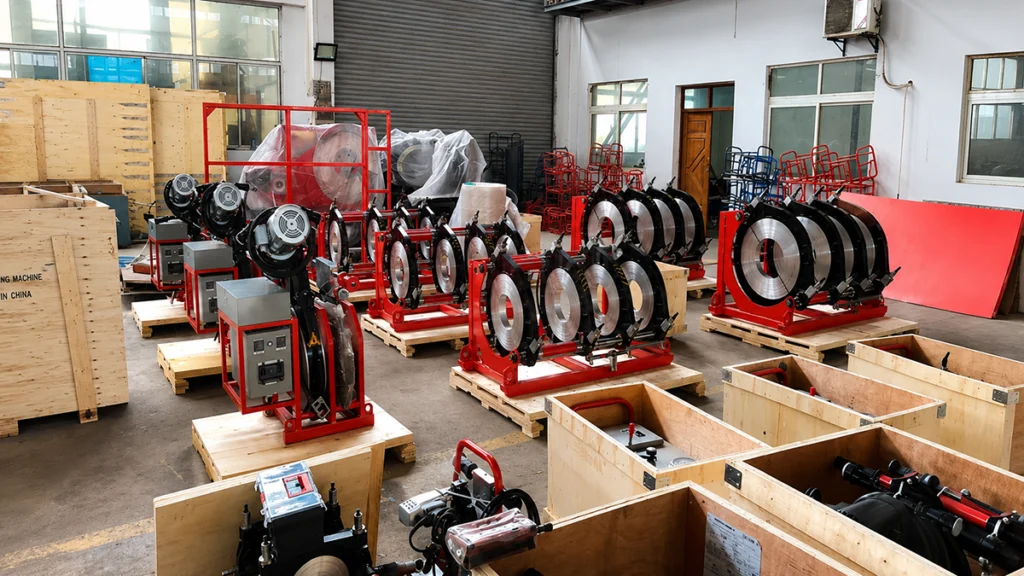
Importing equipment means navigating the manual butt fusion machine supplier terms and their MOQ (Minimum Order Quantity). Fortunately, most solid manufacturers set their MOQ at just a single unit so you can run sample tests. Shipping requires care, too. Because heater plates and trimmers are precision instruments, factories must pack them in heavy-duty, shock-absorbing wooden crates. Otherwise, the butt fusion machine’s calibration will drift before it ever reaches your trench.
[H2-7] How to Evaluate a Manual Butt Fusion Machine Supplier
Any supplier worth doing business with will hand over their CE and ISO 9001 certifications without hesitation. But don’t stop there. Procurement teams need to dig into warranty terms and standard lead times. Most crucially, ask about their spare parts network. If a PTFE plate scratches or a trimmer blade dulls, can they ship replacements globally within 48 hours? If not, you risk catastrophic project delays.
Cost, MOQ, Lead Time and Supplier Evaluation
The procurement phase is a minefield if you aren’t paying attention. The market is absolutely flooded with cheap knock-offs that cut corners on metal quality and electrical safety. Smart buyers know to prioritize structural durability over a bargain-basement price tag. It’s the only way to guarantee the rig survives years of heavy field use.
[H2-7] Red Flags: Counterfeit Heater Plates and Low-Grade Aluminum Frames
Keep an eye out for counterfeit heater plates wrapped in cheap PTFE coatings. Molten plastic sticks to them instantly, ruining the joint and forcing your crew to waste hours scraping it clean. Another massive red flag? Flimsy, non-hardened aluminum frames. Once you apply heavy clamping pressure, these cheap frames warp. When that happens, the butt fusion machine loses its ability to align pipes concentrically, rendering it completely useless.
[H2-8] Step 1: Pipe Alignment and Clamping
Start off by laying your pipe ends into the butt fusion welding machine’s fixture. Lock down the upper platens, but don’t over-tighten them—crushing the pipe out of round (ovality) is a rookie mistake. Check that both pipes are perfectly concentric. Finally, run a test strip or a piece of pressure-sensitive paper between the faces to confirm you have absolutely zero gap.
[H2-8] Step 2: Facing and Cleaning the Pipe Ends
Drop the electric milling cutter (the trimmer) down between the clamped pipes and turn it on. Ease the pipes into the spinning blades with light pressure until continuous, unbroken ribbons of plastic peel off both sides. Pull the trimmer out and verify your safety switches are clear. Crucially, never touch the freshly milled pipe faces. The natural oils on your fingers will contaminate the fusion zone and weaken the final bond.
[H2-8] Step 3: Heating, Fusion and Cooling Cycle
Slide the heater plate—double-checking it sits right at 210°C—between your prepared pipe ends. Push the pipes against the plate until an initial bead rolls back. Once it forms, drop the pressure and let the heat soak deep into the pipe wall, tracking the exact times listed in the DVS 2207-1 charts. When the timer pops, pull the plate out fast (you have less than 5 seconds for the changeover). Slam the melted ends together, apply fusion pressure, and hold that lever dead steady until the cooling cycle finishes completely.
How to Operate a Manual Butt Fusion Machine Correctly
Figuring out how to use a manual butt fusion welder correctly is your best defense against catastrophic pipeline leaks. These butt fusion machines don’t have automated fail-safes to catch mistakes. Out in the trench, the operator acts as both the raw power source and the ultimate quality control inspector.
[H2-8] Common Operator Mistakes That Cause Weak Joints
Trying to pull the lever with one hand ranks as the most dangerous mistake out there. It’s unsafe and practically guarantees uneven interfacial pressure. Other frequent blunders include forgetting to wipe down the heater plate with a lint-free cloth to remove old residue. Technicians also tend to get impatient and release the clamping pressure before the joint cools. Doing that instantly introduces hidden micro-fractures into the weld bead.
[H2-9] Match Diameter Range to Your Project Pipeline
Pick your butt fusion machine model (be it a 160, 200, or 250) based entirely on the maximum outer diameter your project demands. Never try to force a manual butt fusion machine 63-160mm to weld a 200mm pipe by rigging up custom clamps. Doing so shatters the frame’s structural integrity and immediately voids every safety warranty on the unit.
[H2-9] Verify Heater Plate Coating and Temperature Stability
Before sending the rig out to the job site, thoroughly inspect the PTFE coating for deep scratches. If you’re doing a pre-purchase walkthrough, grab a digital multimeter to check the resistance and temperature stability across the heater plate. If the readout bounces around by more than ±10°C, you’re looking at a bad thermostat. Left unchecked, it will inevitably leave you with brittle, cold welds.
[H2-9] Check Frame Material, Clamp Quality and Spare Parts Availability
Any solid manual butt fusion machine buying guide for contractors will scream about frame metallurgy. You want high-pressure, surface-hardened aluminum die-casting. Furthermore, check the clamp knobs. They should feature heavy-duty thrust bearings. These bearings drastically reduce the physical effort it takes to lock down and round out pipes that have warped slightly in the sun.
Buying Tips: How to Choose the Right Manual Butt Fusion Machine
Putting your money into the right equipment takes a bit of strategy. If you systematically audit both the mechanical parts and the supplier’s background, you can secure a rig built to survive decades of brutal field service.
[H2-9] What Warranty, Training and After-Sales Support Should You Expect?
Demand a minimum 12-month warranty covering both electrical components and the frame’s structural integrity. A truly professional supplier won’t stop there. Expect them to hand over comprehensive digital training materials, detailed operational manuals outlining DVS 2207 parameters, and a dedicated support hotline that can help troubleshoot electrical faults while you’re standing in the trench.
[H2-10] Who Should Buy a Manual Butt Fusion Machine
Small-to-medium contractors, local municipal plumbers, and budget-conscious field techs are the perfect demographic for this gear. If you spend most of your time laying low-pressure water mains, agricultural drainage lines, or irrigation networks using pipes 250mm or smaller, manual rigs provide an unbeatable mix of cost-efficiency and portability.
[H2-10] Who Should Consider a Hydraulic Upgrade Instead
Massive construction outfits laying high-pressure gas lines or miles of municipal water grids shouldn’t even look at manual equipment. The same goes for anyone working with pipes larger than 250mm. The financial and legal liability of a high-pressure blowout is simply too high. You need the immense clamping force and the verifiable data logging that only hydraulic or fully automated CNC automatic butt fusion machines provide.
[H2-10] Recommended Models by Project Scale
If you stick to residential plumbing and light yard irrigation, a 160mm model is your best portable friend. Tackling rural water supplies or general civil engineering? The 200mm unit hits the perfect sweet spot. For heavy industrial maintenance or large-scale drainage work, the 250mm model gives you the absolute maximum capacity you can safely handle before needing hydraulic cylinders.
Final Recommendation and Next Steps
Manual butt fusion frames aren’t going anywhere. They remain a massive cornerstone of the global plastics industry, giving crews an incredibly functional, straightforward way to join small-diameter pipes. If you match the butt fusion machine’s specs directly to your pipe sizes and pressure requirements, you’ll slash your capital expenses without violating international welding codes. Keep your procurement focused on hardened aluminum frames, high-end PTFE coatings, and rock-solid supplier warranties. Do that, and your equipment will perform flawlessly for years to come.
FAQ
Q1: What is the maximum pipe diameter a manual butt fusion machine can weld?
The practical ceiling for a manual butt fusion machine taps out between 250mm and 315mm. Pushing past that size means human muscle just can’t consistently produce the interfacial pressure (roughly 60 bar) needed to forge a tough, compliant joint. If your pipes are larger, you absolutely must use a hydraulic butt fusion machine.
Q2: How much does a manual butt fusion machine cost?
Expect to pay anywhere from $500 to $2,000 USD FOB for a well-built manual butt fusion machine. Lightweight models designed for pipes up to 160mm sit comfortably at the lower end of that range. Conversely, rugged, heavy-duty frames built to tackle 250mm pipes command prices closer to the top tier.
Q3: Is a manual butt fusion welder suitable for gas pipelines?
In most cases, no. Manual welders lack the automated pressure control and data logging required for high-pressure gas mains (like those under Title 49 CFR Part 192.285). You might see them deployed on low-pressure PE gas distribution lines (160mm or smaller), but only in regions where local codes explicitly allow manual fusion.
Q4: What is the difference between manual and hydraulic butt fusion machines?
It boils down to how the butt fusion machine applies interfacial pressure. Manual rigs depend entirely on the operator pulling a lever or spinning a hand-crank to push the pipes together. Hydraulic butt fusion machines take the human element out of the heavy lifting, using an electric hydraulic station and cylinders to deliver highly consistent, measurable pressure.
Q5: How long does it take to make a butt fusion joint manually?
Total cycle time hinges on the pipe’s diameter and wall thickness. The actual physical changeover (pulling the heater plate out) has to happen in under 5 seconds. However, the full sequence—facing, heating, pushing the joint together, and holding pressure until it cools completely—usually takes between 10 and 30 minutes per weld.
Q6: What standards should a manual butt fusion machine comply with?
Any trustworthy manual butt fusion machine needs the mechanical precision to meet major global standards. This includes ISO 21307 (the international benchmark), DVS 2207-1 (the strict German code for heated tool welding), and ASTM F2620, which governs plastic pipe joining across North America.
Q7: Can a manual butt fusion machine weld PP and PVDF pipes?
Absolutely. While HDPE is the most common, manual butt fusion machines easily weld Polypropylene (PP), Polypropylene Random Copolymer (PPR), Polyvinylidene Fluoride (PVDF), and PERT. You simply have to calibrate the heater plate’s temperature to match that specific material’s melting point.
Q8: How do I choose a reliable manual butt fusion machine supplier?
Start by checking their CE and ISO 9001 certifications. Next, demand transparency about the frame’s metallurgy—you want hardened die-cast aluminum—and verify they use premium PTFE coatings on their heater plates. Finally, only partner with suppliers who offer strong technical support and can guarantee rapid, global shipment of spare parts.
Conclusion
Manual butt fusion frames remain an incredibly smart, highly practical investment for crews handling small-to-medium diameter pipes. Their staying power in the industry isn’t a mystery. They offer fantastic portability, eliminate the need for heavy hydraulic power packs, and deliver massive cost savings on low-pressure water, drainage, and irrigation projects.
Getting reliable, leak-free joints out of manual gear means respecting its boundaries. Crews must strictly observe the 250mm maximum diameter ceiling. Human muscle simply can’t generate the intense interfacial pressure required to safely fuse larger infrastructure. Beyond that, the final weld quality leans heavily on the operator. Technicians need proper training to monitor heating times, nail rapid changeovers, and hold sustained pressure during the cooling cycle, all while adhering to DVS 2207-1 and ISO 21307 guidelines.
As you move through the procurement phase, keep your focus on the hardware. Prioritize surface-hardened aluminum frames, precision thermostats, and premium PTFE coatings. Steer clear of cheap, counterfeit equipment. If you match the butt fusion machine’s true capacity to your daily project needs, you’ll guarantee decades of solid field performance and squeeze every ounce of value out of your investment.
Let our experts help you choose the right equipment for your project
Contact Our Engineering Team