
Table of Contents
HDPE pipe welding machine selection for gas pipeline projects requires strict compliance with ISO 12176, precise hydraulic control, and full weld traceability. This guide helps B2B buyers evaluate types, technical specs, certifications, costs, and suppliers to ensure safe, defect-free fusion joints in gas distribution networks.
What Is an HDPE Pipe Welding Machine for Gas Pipeline Projects?
When dealing with gas pipeline projects, an HDPE pipe welding machine isn’t just standard equipment—it’s a highly specialized industrial asset built to fuse polyethylene pipes using strictly regulated heat and pressure. Gas distribution networks demand zero-leak, high-integrity joints. These connections must handle high-pressure natural gas flows effortlessly, completely eliminating the risk of rapid crack propagation.
Definition and core function in gas pipeline construction
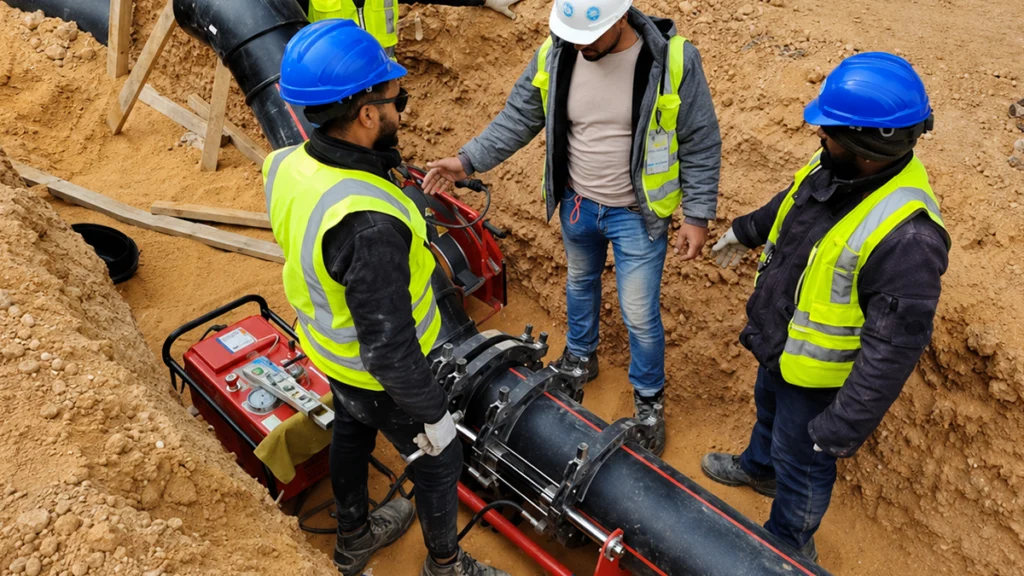
At its core, this butt fusion welding machinery performs butt fusion welding on PE pipes. The process works by heating the precisely butt fusion machined ends of two pipes until the plastic molecules melt. Once the faces reach that critical optimal temperature, the equipment applies exact hydraulic pressure to force the ends together, allowing the molecular structures to interlock. As the newly formed joint cools under continuous pressure, it transforms into a seamless, end-to-end bond that frequently outlasts and outperforms the pipe itself.
How is it different from a water or industrial HDPE welding machine?
Water lines and general industrial setups leave a little room for minor tolerances. Gas pipelines do not. They require absolute zero leak tolerance and massive safety margins. Joints created by gas-grade fusion equipment face the constant stress of volatile, high-pressure distribution. Standard water pipe welders simply don’t pack the advanced data logging capabilities or the micro-pressure controls necessary to stop slow crack growth or rapid crack propagation. In a natural gas network, those flaws are fatal.
Key terminology: butt fusion, electrofusion, and socket fusion
Pipeline engineers need a firm grasp of these specific methodologies:
- Butt fusion (hot plate fusion): This method uses a carefully calibrated heating plate to melt the pipe ends. Once molten, calculated hydraulic force presses them together.
- Electrofusion: Here, an electric heating coil sits inside a specialized fitting. Applying electrical current heats the internal coils, melting both the pipe and the fitting into one solid piece.
- Socket fusion: Mostly reserved for smaller PP-R and PE materials, this portable technique uses hand-held tools to simultaneously heat the pipe’s exterior and the fitting’s interior.
Safety risks of poor fusion joints in gas distribution
A bad fusion joint in a gas network paves the way for catastrophic failure. Look at reports from the NTSB (National Transportation Safety Board) regarding natural gas leaks. They frequently point to voids or cold welds—often the direct result of sloppy temperature or pressure control—as the root cause of massive leaks and explosions. Using precision equipment isn’t merely an operational choice; it’s an absolute public safety mandate.
Why Gas Pipeline Projects Demand Stricter Welding Machine Requirements
Volatile materials demand uncompromising standards. That’s why gas pipeline operations enforce rigid, zero-tolerance policies for weld defects. Every piece of equipment on site must align with tough international benchmarks to completely remove the threat of structural failure under heavy pressure.
Regulatory drivers: ISO 12176, EN 12007, ASTM F2620
International regulatory frameworks heavily govern gas pipeline welding. The heavy hitters include ISO 12176, which locks down equipment performance parameters; EN 12007, which details standards for gas infrastructure pipelines; and ASTM F2620, the go-to for high-pressure welding procedures. On top of that, ISO 21307 and DVS 2207-1 lay out the exact low-pressure parameters needed for safe polyethylene jointing.
What happens when non-certified machines are used on gas projects?
Bringing non-certified HDPE pipe jointing machinery onto a gas project is a massive liability. Equipment operating outside strict temperature windows or pressure tolerances consistently leaves voids inside the weld joint. In gas applications, those compromised connections are ticking time bombs. A failure doesn’t just trigger catastrophic leaks; it instantly voids project warranties and exposes EPC contractors to severe legal penalties.
Factory-direct pricing with technical consultation included
Get Your Free QuoteMain Types of HDPE Welding Machines Used in Gas Pipeline Projects
Contractors working on gas pipelines generally rely on four primary categories of fusion equipment. These range from small, compact units built for cramped spaces to massive, fully automated trench welders designed for mainline work.
| Machine Category | Diameter Range | Automation Level | Gas Project Suitability |
|---|---|---|---|
| Manual Butt Fusion | DN40 – DN250 | Manual force | Very Low (Not recommended for mainlines) |
| Hydraulic Semi-Auto | DN40 – DN3200 | Hydraulic control | High (Standard field operations) |
| CNC Fully Automatic | DN63 – DN630 | Fully automated | Very High (Mandatory for strict compliance) |
| Electrofusion Units | DN20 – DN1200 | Automated cycle | High (Fittings, repairs, tight spaces) |
Manual butt fusion machines (DN40–DN250)
Manual butt fusion machine setups rely on levers or handwheels to apply force. While they work fine for smaller diameters (DN40–DN250) handling low-pressure water or irrigation flows, they fall incredibly short for natural gas distribution. They simply lack the pinpoint pressure control and data logging capabilities required. As a result, gas projects heavily restrict their use.
Hydraulic semi-automatic machines (DN40–DN3200)
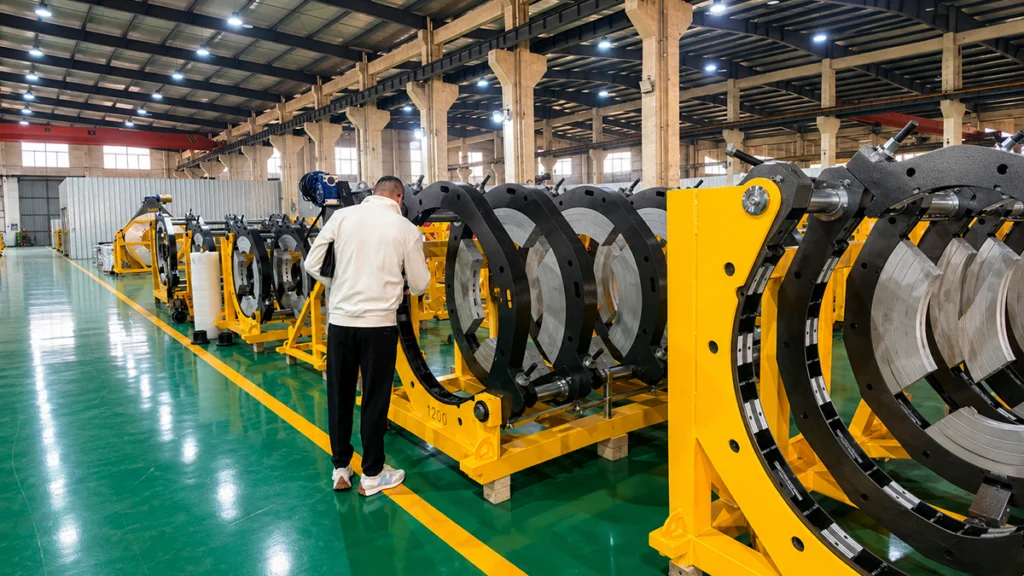
Armed with robust hydraulic power units, these high-performance fusion welders thrive on rugged construction sites. Take a 315mm hydraulic butt fusion machine, for instance. It delivers the brute force necessary to overcome pipe drag while maintaining precise interfacial pressure. Their trailer-mounted mobility makes them a staple for active trench-side operations.
CNC fully automatic butt fusion machines with data logging
The CNC automatic butt fusion machine is the undisputed gold standard for gas pipelines. Automated controllers take the guesswork right out of the operator’s hands by capturing time, temperature, and pressure parameters for every individual joint. This creates an unalterable digital footprint for QA teams, guaranteeing complete compliance with strict gas utility regulations.
Electrofusion units for fittings and tight spaces
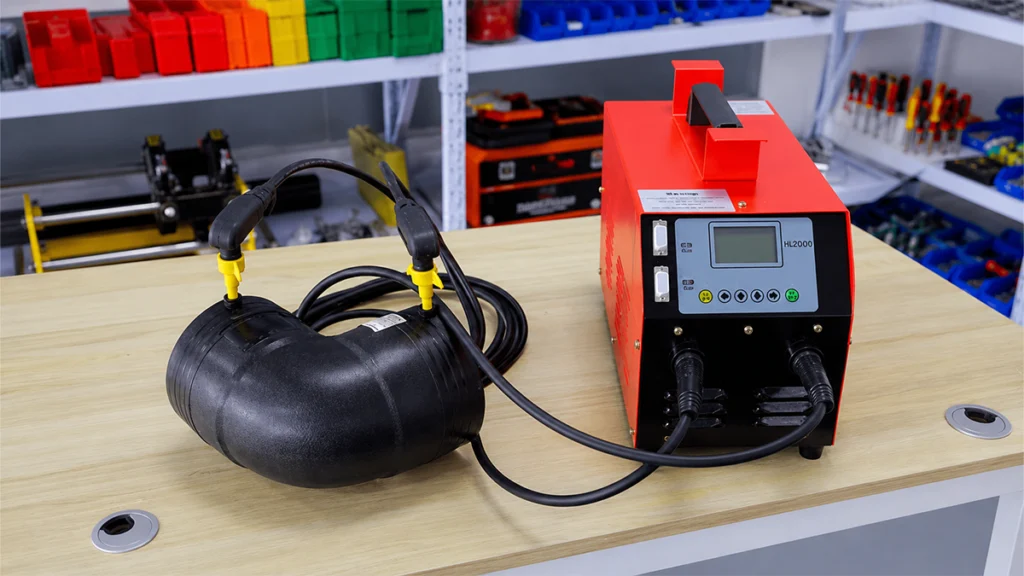
When dealing with complex network layouts, branch tie-ins, or tight-space repairs, an electrofusion welding machine for HDPE gas pipe becomes indispensable. These intelligent units scan barcode data right off the electrofusion fittings. They then apply the exact voltage and time cycles needed to execute a flawless weld in areas where bulky butt fusion rigs just won’t fit.
Key Technical Requirements for Gas-Grade HDPE Welding Machines
Any gas-grade HDPE pipe welding machine has to deliver flawless parameter control. That means pinpoint heating plate temperatures, highly accurate hydraulic pressure compensation, and exhaustive data logging capabilities.
| Technical Parameter | Gas-Grade Requirement | Standard Reference |
|---|---|---|
| Plate Temperature | 220°C – 240°C (up to 270°C) | DVS 2207-1 / ASTM F2620 |
| Low-Pressure Welding | 0.15 N/mm² (approx. 1.5 bar) | ISO 21307 |
| High-Pressure Welding | 60 – 90 psi | ASTM F2620 |
| Data Logging | Mandatory digital weld reports | ASTM F3124 |
Heating plate temperature accuracy and PTFE coating standards
Operators must keep heating plate temperatures on a tight leash, typically between 220°C and 270°C. Run it too hot, and the PE100 material suffers thermal degradation and oxidation. Run it too cold, and the plastic molecules won’t fully integrate. Furthermore, a high-grade, scratch-resistant PTFE coating is non-negotiable. It stops molten polyethylene from sticking to the plate and ruining the weld zone.
Hydraulic pressure control and drag pressure compensation
Holding a specific interfacial pressure during both the heating and cooling phases is vital. ISO and DVS standards demand 0.15 N/mm² for low-pressure welding, while ASTM guidelines require 60–90 psi for high-pressure applications. The butt fusion machine’s hydraulic system has to actively calculate and offset drag pressure—the heavy frictional resistance caused by pulling long pipe segments through a dirt trench.
Data logging, traceability, and weld report generation
ASTM F3124 lays down the law on data recording to ensure every single joint aligns with ASTM F2620 specs. In the gas sector, data logging is a hard requirement for managing liability. The equipment must generate locked, unalterable weld reports that track the operator’s ID, ambient weather conditions, heater temperatures, fusion pressures, and exact cooling times.
Power supply, IP rating, and operating temperature range
Field butt fusion machinery takes a beating. Mid-sized units usually run on 110V/220V (50/60Hz) power supplies, drawing around 2.95 kW. Since they sit in active, dirty trenches, their electrical panels and data loggers need robust IP ratings—IP54 or better—to block out dust and moisture. They also need to maintain dead-on accuracy across wild temperature swings.
Get detailed specs and custom configuration options
Request Technical SpecificationsMandatory Certifications and Standards for Gas Pipeline Welding Equipment
Procurement engineers carry the heavy responsibility of verifying that any HDPE pipe welding machine slated for a gas project holds valid certifications. This step satisfies regulatory compliance and actively shields the project from massive liability.
ISO 12176-1 and ISO 12176-2 explained
Securing an ISO 12176 certified HDPE welding machine is the absolute baseline for gas utilities.
- ISO 12176-1: This lays out the exact structural, performance, and control mandates for equipment performing butt fusion on PE piping systems using electrically powered heating plates.
- ISO 12176-2: This dictates the performance benchmarks for electrofusion control units (ECU) paired with PE fittings, guaranteeing precise voltage delivery and reliable safety cut-offs.
CE, GOST, SASO, and other regional approvals
Stepping beyond ISO standards, regional compliance and global market entry demand specific marks. You need CE certification to operate in the European Economic Area, GOST for Eurasian markets, and SASO for Saudi Arabia. These specific certifications prove the butt fusion machine meets aggressive standards for mechanical hazards, electrical safety, and electromagnetic compatibility.
How to verify a supplier’s certification documents
Buyers have to ruthlessly verify supplier documents to dodge counterfeit claims. Always ask for the actual certificate numbers and cross-reference them directly with the issuing body’s database. Take it a step further by checking if the manufacturer complies with ISO 3834 (Quality Management System for Welding). This ensures their internal production processes are just as locked-down as the pipe fusion machines they sell.
How to Select the Right HDPE Welding Machine for Your Gas Project
Picking the right gear means perfectly aligning your pipe specifications with the electrofusion welding machine’s capacity, automation level, and the physical realities of the job site.
Matching Butt Fusion machine capacity to pipe OD and SDR
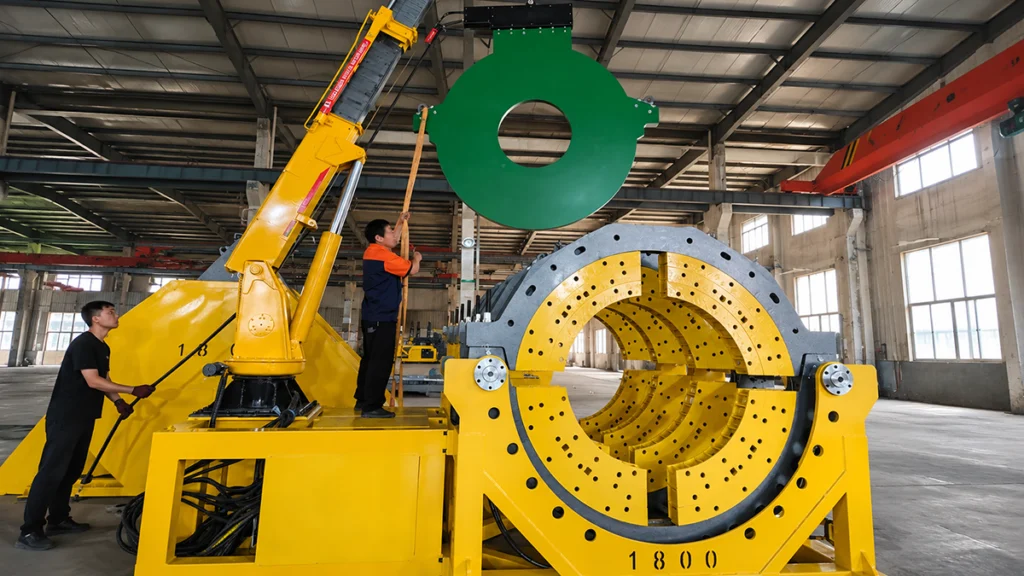
Your butt fusion machine’s hydraulic cylinders and clamps must correspond exactly to the pipe’s Outside Diameter (OD) and Standard Dimension Ratio (SDR). Throwing an undersized pipe fusion machine at thick-walled PE100 gas pipe guarantees weak melt pressure and sloppy alignment. The smartest move is selecting a plastic pipe welding machine where your target pipe diameter sits right in the sweet spot of its stated welding range.
Manual vs. hydraulic vs. CNC: which fits your project?
Manual butt fusion machines have zero place in natural gas distribution. Period. Hydraulic machines serve as the reliable baseline for standard field work, delivering the brute force required for a clean fusion. However, CNC automatic butt fusion machines are strongly recommended—and frequently mandated by major utility companies. Because they automate data logging and computerize pressure controls, they completely remove human error from the site.
Onsite vs. workshop welding: equipment trade-offs
Built for the brutal realities of onsite pipeline trenches, trailer-mounted hydraulic and CNC automatic butt fusion machines boast all-terrain mobility and ruggedized frames. On the flip side, compact CNC units shine in controlled workshop environments where teams fabricate complex fittings like tees and elbows. Your project scope will ultimately decide whether you prioritize workshop precision or trench-side mobility.
Checklist: 10 questions to ask before purchasing
1. Does the butt fusion machine comply fully with ISO 12176-1/2?
2. Is the hydraulic pressure range compatible with both ISO and ASTM standards?
3. Does the data logger meet ASTM F3124 requirements?
4. What is the temperature accuracy of the PTFE-coated heating plate?
5. How does the system calculate and apply drag pressure compensation?
6. Is the plastic pipe welding machine rated for the specific SDR of our PE100 gas pipe?
7. What is the IP rating of the electrical control box?
8. How frequently does the hydraulic system require calibration?
9. Are spare parts stocked locally or shipped internationally?
10. Does the supplier provide certified operator training?
Cost, MOQ, and Lead Time: Procurement Insights for B2B Buyers
Looking at the HDPE pipe welding machine price for a gas project requires a long-term perspective. You have to look past the initial capital outlay and calculate the true total cost of ownership over the equipment’s entire lifecycle.
Typical price ranges by machine type and diameter
You can generally pick up an entry-level 2″ to 6″ hydraulic butt fusion machine for roughly $4,900. But as your diameter capacity scales up, so does the need for a reinforced chassis and heavier hydraulic power. Large-diameter units, especially those outfitted with fully automated CNC controllers and integrated data loggers, command significantly higher prices. For EPC contractors, these represent a major—but necessary—capital investment.
Lead time, MOQ, and spare parts availability
Top-tier manufacturers keep local hubs and distribution warehouses well-stocked. Standard units frequently ship out within two business days from European or US locations. While the Minimum Order Quantity (MOQ) for heavy butt fusion machinery usually sits at just one unit, buyers need to dig deeper. You must ensure your supplier guarantees lightning-fast access to critical spare parts, like replacement PTFE plates, temperature sensors, and hydraulic seals.
Total cost of ownership: consumables, calibration, training
The sticker price is just the beginning of the Total Cost of Ownership (TCO). Smart buyers budget for recurring consumables (like renewing those PTFE coatings), mandatory annual calibrations for the temperature and hydraulic systems, and continuous operator training. Bargain-bin pipe fusion machines almost always carry a higher TCO because of constant breakdowns and the devastating financial fallout of a failed gas weld.
Common Mistakes and Hidden Risks in Gas Pipeline HDPE Welding
Premium equipment won’t save you from poor maintenance or operational blunders. Recognizing these hidden risks early is the only way to prevent catastrophic joint failures.
Why incorrect heating time causes long-term joint failure
Pipe wall thickness dictates the exact melting time (a common rule of thumb is wall thickness multiplied by 10 seconds). Leave the pipe on the heater too long, and you degrade the polymer chains, severely weakening the joint. Cut the heating cycle short, and the plastic molecules never fully integrate. That leaves you with a brittle connection practically guaranteed to snap under gas pressure.
Hidden risks of using uncalibrated hydraulic systems
Over time, hydraulic systems naturally suffer from wear and pressure drift. Running an uncalibrated butt fusion machine guarantees that the pressure shown on the gauge doesn’t match the actual interfacial pressure hitting the pipe. Weak pressure creates microscopic voids inside the weld. In a gas line, those tiny voids act as superhighways for rapid crack propagation, eventually leading to a massive gas leak.
Operator certification gaps that void project warranties
Only highly trained, qualified personnel should ever touch an HDPE welding machine on a PE100 gas pipe. A shocking number of contractors still let uncertified laborers run complex CNC fusion gear. This massive oversight spikes the risk of joint failure. Worse, if an incident triggers an audit, that lack of certification instantly voids manufacturer guarantees and project warranties.
Supplier Evaluation: How to Choose a Reliable HDPE Welding Machine Manufacturer
Teaming up with a proven HDPE pipe welding machine supplier for utility projects demands thorough factory audits. You also need rock-solid confirmation that they have the support infrastructure to back you up in the field.
Factory audit criteria: R&D, production, QC capability
When you audit a manufacturer, demand proof of strict ISO 3834 compliance. Dig into their R&D department to ensure they actively integrate the latest data logging and CNC technologies. You also need to validate their production consistency. Before any electrofusion welding machine hits the shipping dock, they should be running brutal QC protocols, including ultrasonic joint inspections and destructive split sample testing.
After-sales support: training, calibration, spare parts
A great supplier operates as a long-term partner, not just a vendor. They need to offer comprehensive, fully certified operator training programs. Plus, since gas utility regulations mandate annual equipment certification, your supplier must provide easy access to calibration services and hold a massive inventory of spare parts to keep your downtime at absolute zero.
Red flags when sourcing from low-cost suppliers
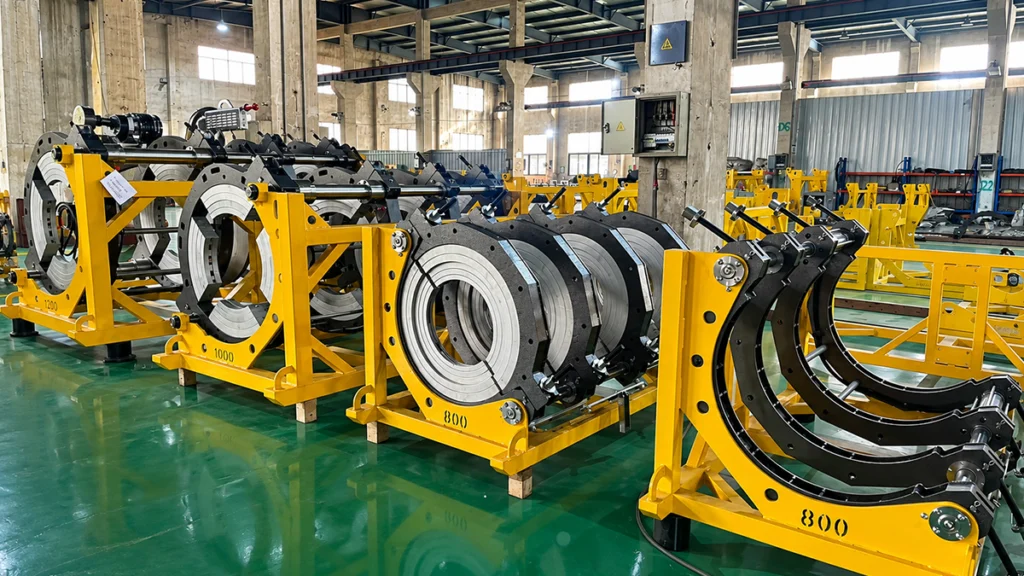
Procurement teams need to stay sharp. Massive red flags include suppliers who can’t produce verifiable ISO 12176 test reports, electrofusion welding machines lacking integrated data logging, or equipment that struggles to hold pressure and temperature during a live demo. Cheap butt fusion welding machines frequently rely on low-grade aluminum alloys for their clamps. Under high hydraulic pressure, those cheap clamps bend, causing pipe slippage and disastrously misaligned welds.
Final Recommendation and Next Steps for Gas Pipeline Project Buyers
Locking down the right equipment guarantees regulatory compliance and total pipeline integrity. Smart buyers use a structured matrix to finalize their specifications long before they start firing off emails to suppliers.
Quick-reference summary table of key requirements
| Project Requirement | Recommended Specification |
|---|---|
| Compliance Standard | ISO 12176-1 / ASTM F2620 |
| Temperature Control | 220°C – 240°C (±5°C accuracy) |
| Pressure Capability | 0.15 N/mm² (ISO) & 60-90 psi (ASTM) |
| Quality Assurance | Integrated digital data logger (ASTM F3124) |
| Environmental Protection | IP54 or higher control box |
Recommended machine configurations by project type
If you’re running main gas lines through dense urban infrastructure, CNC automatic hydraulic butt fusion machines with integrated data loggers are the undisputed standard for achieving 100% traceability. For municipal tie-ins and complex branch connections, you’ll need to run a high-precision electrofusion welding machine featuring barcode scanning right alongside your mainline butt fusion rigs.
How to request a technical proposal and quote
Don’t just email a supplier asking for a price list. Demand a full technical proposal that explicitly outlines the butt fusion machine’s compliance with ASTM F2620 and ISO 12176-1/2. Force them to detail their data logging export formats, hydraulic pressure ranges, specific warranty terms, and exactly how they plan to handle local calibration services for the lifespan of the HDPE pipe welding machine.
FAQ
Q1: Can a standard HDPE welding machine be used for natural gas pipelines?
Absolutely not. General industrial or water-grade butt fusion machines consistently lack the mandatory data logging, exact temperature stability, and micro-pressure controls needed for volatile gas networks. Gas lines demand zero-leak tolerance. That means your equipment has to meet rigid ASTM F2620 and ISO 12176 standards to eliminate the risk of catastrophic joint failure.
Q2: What certifications must an HDPE welding machine have for gas projects?
AnyHDPE pipe welding machine touching a gas project needs ISO 12176-1 (for butt fusion) or ISO 12176-2 (for electrofusion) certification. On top of that, the gear should align with regional safety marks like SASO, GOST, or CE. Ideally, the manufacturer building the butt fusion welding machine should also hold an active ISO 3834 certification for welding quality management.
Q3: What is the difference between butt fusion and electrofusion for gas pipe?
Butt fusion relies on a removable, PTFE-coated heating plate to melt the pipe ends before heavy hydraulic cylinders press them together. Electrofusion takes a different route, using specialized fittings packed with embedded electrical coils. The HDPE pipe welding machine sends voltage to heat those coils, melting the pipe and fitting into one solid unit. You’ll typically see electrofusion used for repairs and tight-space tie-ins.
Q4: How much does a CNC HDPE pipe welding machine cost?
Pricing swings wildly depending on automation levels and pipe diameter capacity. A basic 2″ to 6″ hydraulic unit might start around $4,900. However, fully automated CNC automatic butt fusion machines boasting large-diameter capabilities and digital data loggers require a much heavier capital investment. That higher price tag directly reflects the advanced safety and compliance technology packed inside.
Q5: What pipe diameter range is required for gas distribution welding equipment?
Gas networks cover a massive range of pipe sizes. Equipment needs generally stretch from small DN63 lines for residential tie-ins all the way up to DN630 (or larger) for heavy municipal mainlines. You need to pick a electrofusion welding machine where your specific project diameters sit comfortably within the unit’s optimum hydraulic and clamping range.
Q6: How often should a gas pipeline HDPE welding machine be calibrated?
To stay compliant with strict international utility standards, you must professionally calibrate the data logging modules, heating plate thermostats, and hydraulic pressure sensors at least once a year. Skipping calibration means risking incorrect interfacial pressure, which creates hidden voids and eventually leads to severe gas leaks.
Q7: Is data logging mandatory for HDPE welding on gas pipeline projects?
Yes, absolutely. Frameworks like ASTM F3124 require strict data recording to prove every single joint hits the required fusion parameters. These loggers track cooling times, pressure, and temperature, spitting out locked digital reports. In the gas infrastructure world, this level of traceability is vital for liability protection, regulatory compliance, and overall quality assurance.
Q8: Which is better for gas pipelines: hydraulic or CNC butt fusion machines?
CNC automatic butt fusion machines win this contest easily. While standard hydraulic butt fusion machines supply the physical force needed, CNC units automate the entire heating, soaking, and cooling process. This completely removes human error, guarantees you hit exact ASTM/ISO pressure parameters, and automatically logs the data you need for mandatory compliance reports.
Conclusion
Sourcing an HDPE pipe welding machine for gas pipeline construction demands uncompromising engineering precision and strict adherence to international safety standards. Natural gas networks push high pressure with absolutely zero tolerance for leaks, meaning your chosen equipment must deliver repeatable, flawless welds every single time. Project leaders have to prioritize pipe fusion machines that bring immutable data logging, dynamic hydraulic pressure compensation, and pinpoint heating plate accuracy to the trench, fully satisfying ISO 12176 and ASTM F3124 mandates.
Looking past the initial purchase order, a winning procurement strategy factors in the true total cost of ownership. That means budgeting for rigorous operator training, annual calibration services, and rapid spare parts availability. Fully automatic CNC pipe fusion machines stand as the undisputed industry standard for mainline work because they strip the human error right out of manual pressure calculations. By demanding verifiable test reports and ruthlessly auditing suppliers for ISO 3834 compliance, utility companies and EPC contractors can shield themselves from liability, safeguard their infrastructure, and guarantee decades of safe, reliable gas distribution.
Let our experts help you choose the right equipment for your project
Contact Our Engineering Team