
HDPE Pipe Welding Machine in Canada: Buying Guide for Cold Weather Pipeline Work
Table of Contents
HDPE Pipe Welding Machine in Canada helps buyers compare fusion methods, cold-weather specs, and procurement tradeoffs so they can choose reliable machines for winter pipeline work and remote job sites.
Buying the right HDPE Pipe Welding Machine in Canada isn’t just about picking a tool off a shelf. You need a solid grasp of what goes into a field-ready setup and how those components hold up under punishing conditions. A true fusion system operates as a synchronized unit. It faces, aligns, heats, and presses thermoplastic pipe ends together, ultimately forging a monolithic joint that outlasts the pipe itself.
What HDPE Pipe Welding Machine Covers and How It Works
[H2-1] What is included in a complete HDPE fusion setup?
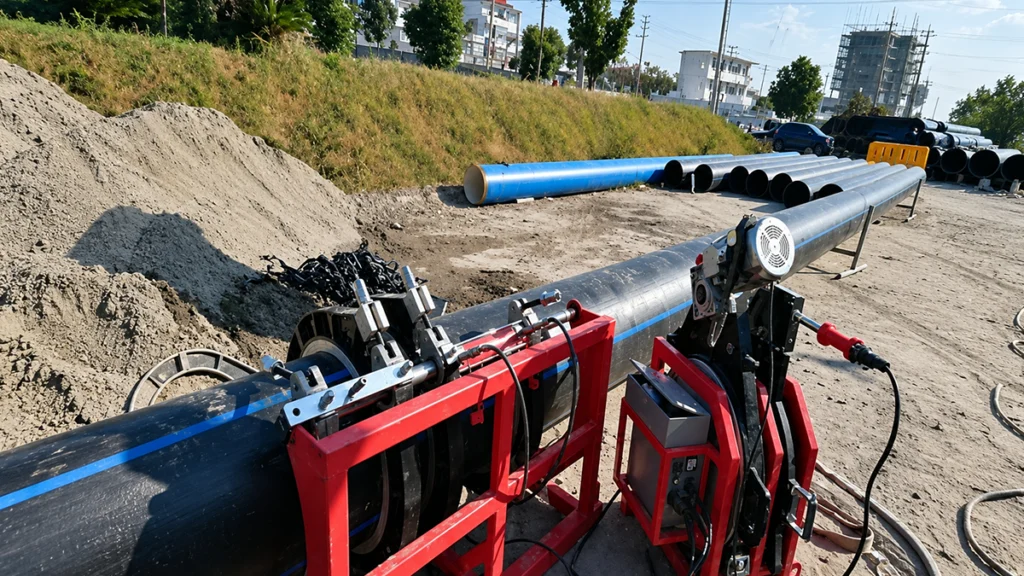
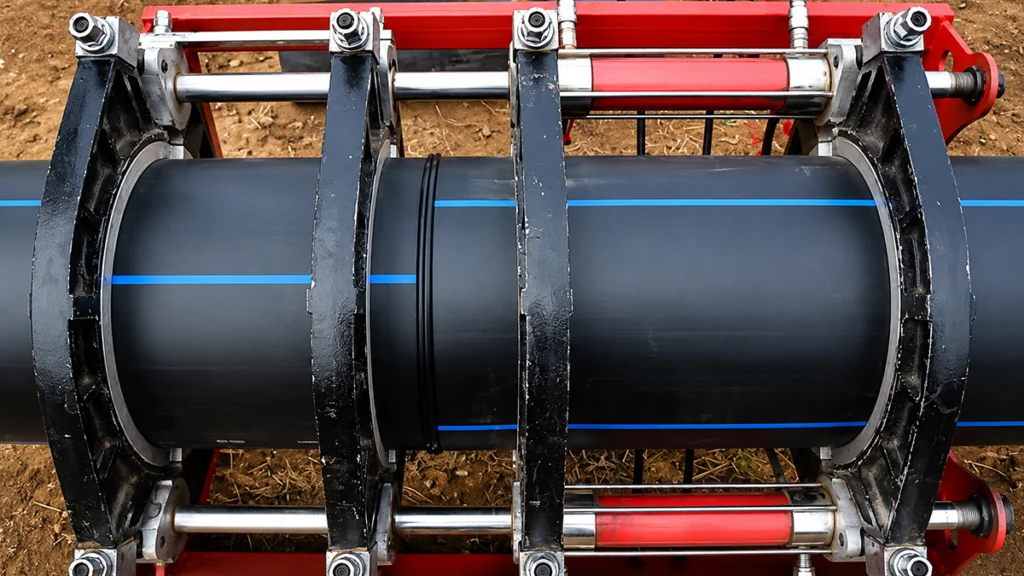
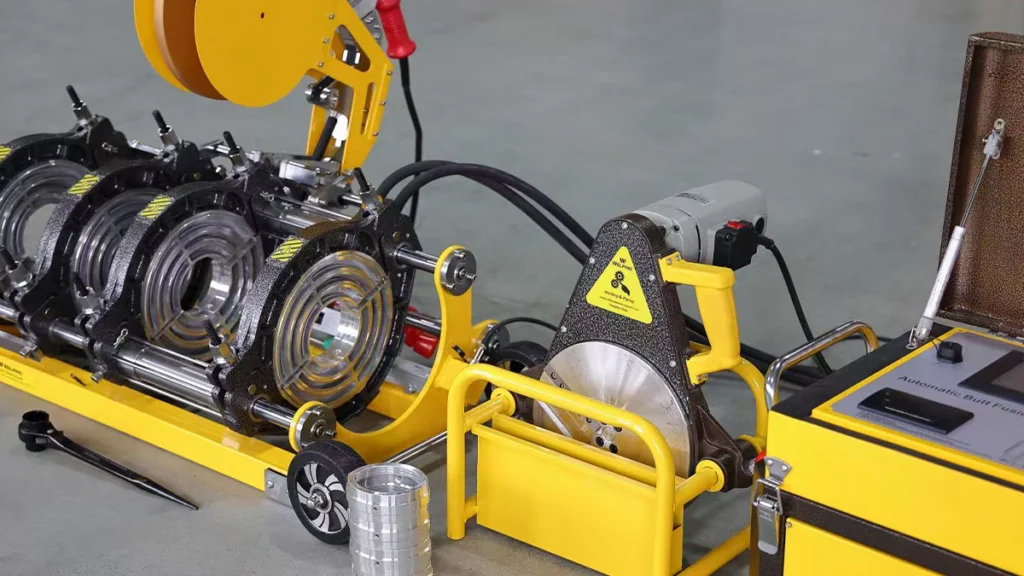
A standard hydraulic butt fusion rig relies on four main pieces of hardware. First, the chassis (or carriage) grips the pipe tight, using interchangeable aluminum inserts to match specific outer diameters (OD). Next, the electric facer shaves the pipe ends down so they are clean and perfectly parallel. Then comes the PTFE-coated heater plate, which brings those ends up to the critical melt temperature—usually sitting between 200°C and 220°C. Finally, the hydraulic power unit (HPU) drives the entire operation, applying exact pressure through the heating, joining, and cooling stages. Keep in mind, a real-world field setup also demands a reliable power generator and material handling gear like pipe stands.
[H2-1] Butt fusion vs electrofusion: which jobs use each method?
Contractors have to match the fusion method to the trench conditions, pipe diameter, and project specs. Here is a breakdown of when to use what.
| Fusion Method | Primary Use Case | Pipe Range | Field Suitability |
|---|---|---|---|
| Butt Fusion | Mainline pipeline construction, long straight runs | DN50 to DN2000+ | Requires space for carriage and pipe movement; highly efficient for continuous welding. |
| Electrofusion | Tie-ins, confined trench repairs, saddle fittings | DN20 to DN1200 | Ideal for tight spaces where a carriage cannot fit; requires highly controlled pipe scraping and alignment. |
| Socket Fusion | Indoor plumbing, geothermal loops, small service lines | DN20 to DN110 | Fast and manual; limited to smaller diameters and specific fitting types. |
[H2-1] Which accessories are commonly required on a pipeline crew?
You can’t run a pipe fusion machine in a vacuum. Crews depend on specific add-ons to keep the job moving while maintaining strict quality control. Pipe rollers are a must—they cut down drag friction so the hydraulic unit can pull massive pipes without blowing past pressure limits. If you’re doing electrofusion, rotary pipe scrapers aren’t optional; you need them to strip away the oxidized outer layer of the HDPE. Alignment clamps step in to prevent high-low mismatches during tricky tie-ins. On top of that, data loggers have become the industry standard for municipal and industrial projects, capturing pressure and temperature data to keep everything ISO 12176 compliant.
[H2-2] How do freezing temperatures affect pipe ends and heat transfer?
Cold weather throws a wrench into the thermal dynamics of HDPE. When the thermometer dips below freezing, the material stiffens and shrinks. Suddenly, getting a perfect alignment becomes a wrestling match. Worse, the frigid air acts like a giant heat sink, aggressively stealing thermal energy from both the heater plate and the pipe ends. Following DVS 2207-1 guidelines, sub-zero welding means you need extended heat soak times. You also have to lock down environmental controls to keep the pipe ends from chilling before the hydraulic carriage even gets a chance to press them together.
Why Cold Weather Changes HDPE Fusion Requirements in Canada
Running HDPE Pipe Welding Machine in Canada during the dead of winter brings a host of environmental hurdles that can ruin a weld. If you try to run a standard summer fusion protocol in -20°C weather, you are going to fail.
[H2-2] Why do wind, snow, and moisture increase weld risk?
Wind chill is a weld killer. It strips heat off the plate too fast, leaving you with an uneven melt across the pipe face. Snow and moisture are even worse. If a single water droplet or ice crystal hits the heated pipe ends, it instantly flashes into steam. That steam gets trapped inside the molten polymer as the pipes join, leaving behind microscopic voids—porosity—that destroy the joint’s mechanical strength. To fight this, crews have to set up heated welding tents to completely block out wind and precipitation.
[H2-2] Which winter conditions create the highest chance of rework?
You face the highest risk of a busted weld when temperatures fluctuate wildly alongside high humidity or blowing snow. Once the ambient temperature plummets past -15°C, the hydraulic fluid inside standard butt fusion machines starts turning to sludge. This leads to sluggish carriage movements and dangerous pressure drops. If the HDPE pipe welding machine takes too long to hit the required interfacial pressure after pulling the heater plate (the changeover time), you get a “cold joint.” It might look fine to the naked eye, but without proper molecular entanglement, it will blow apart during a hydrostatic pressure test.
[H2-3] When is butt fusion the right choice for mainline pipe?
For mainline pipeline construction, butt fusion is still the undefeated champion of cost and reliability. It’s the obvious choice when your crew is laying thousands of feet of pipe across wide-open terrain, like a remote mining site or a massive municipal water install. Since butt fusion doesn’t rely on extra couplers or fittings, it dramatically slashes material costs on long stretches while delivering a seamless, leak-proof system.
[H2-3] When should a crew use electrofusion equipment for tie-ins or repairs?
Electrofusion steps in when you need to make final tie-ins between massive pipe segments or handle live repairs down in an existing trench. Picture a northern Canadian utility job: digging a hole big enough to drop in a DN400 butt fusion carriage is practically impossible thanks to frozen ground and a maze of existing underground utilities. Electrofusion processors solve this. They need barely any clearance. As long as the operator has enough room to scrape the pipe, slide on the coupling, and hook up the electrical leads, you can get the job done.
Factory-direct pricing with technical consultation included
Get Your Free QuoteMain Types of HDPE Pipe Welding Machine for Pipeline Work
The equipment architecture you choose dictates how fast your crew moves and exactly what kind of bids you can realistically win.
[H2-3] What roles do socket fusion and specialty tools play on smaller pipe?
Socket fusion gear uses handheld or bench-mounted heating elements to melt the outside of a pipe and the inside of a fitting at the exact same time. This technique is strictly for smaller stuff—usually under DN110. You’ll see it all the time in commercial plumbing, geothermal loop setups, and agricultural irrigation. Meanwhile, specialty gear like saddle pipe fusion machines let operators weld branch connections directly onto active mainline pipes without having to sever the main line at all.
[H2-3] How do manual, automatic, and hydraulic systems differ?
Manual butt fusion machines rely on manual mechanical force applied by the operator to generate joining pressure. They are commonly used for small-diameter pipelines, repair work, and projects where portability and cost efficiency are important.
Hydraulic butt fusion machines use a hydraulic power unit (HPU) to provide accurate and stable fusion pressure, making them suitable for medium and large-diameter pipelines where consistent welding force is required.
CNC or automatic fusion systems further improve process control by automatically managing parameters such as pressure, heating time, and cooling cycles. They are ideal for large-scale infrastructure projects that require repeatable welding quality and detailed operation records.
[H2-4] Which pipe diameter and SDR ranges must the machine support?
A butt fusion machine’s true capability comes down to its clamping range and pressure output. The equipment has to handle the specific Standard Dimension Ratio (SDR) your project calls for. A rig built for thin-walled SDR 41 pipe might completely lack the hydraulic muscle needed to forge thick-walled SDR 7.4 pipe, even if the outer diameter fits perfectly in the carriage. Before cutting a check, buyers need to confirm that the butt fusion welding machine’s total cylinder area can pump out enough interfacial pressure for the heaviest pipe on the job.
[H2-4] How important are heater plate control and calibration accuracy?
Temperature control is hands-down the most critical factor in thermoplastic welding. Your heater plate needs to hold a rock-steady temperature across its entire face—usually 210°C with a tight ±4°C margin of error. If those internal thermocouples drift out of calibration, you’re in trouble. An overheating plate degrades the polymer and leaves you with brittle welds. An underheating plate prevents the molecules from fusing together. Top-tier butt fusion welding machines rely on advanced PID controllers to lock in those strict temperature tolerances, even when blasted by freezing Canadian winds.
Technical Specifications That Matter Before You Buy
Checking the max pipe diameter is just the starting line. Procurement managers have to dig into the mechanical and electrical specs that actually dictate how a HDPE pipe jointing machine performs in the dirt.
[H2-4] What do alignment, hydraulic force, and facer quality affect?
Alignment accuracy depends entirely on chassis rigidity. If the carriage flexes under heavy hydraulic pressure, the pipe ends will suffer a high-low mismatch, baking stress points right into the finished pipeline. The hydraulic system itself must push smooth, relentless pressure to beat pipe drag and form a perfect double-roll bead. And don’t ignore the facer. It needs high-torque motors and hardened steel blades to peel off continuous ribbons of HDPE. A weak facer will chatter and bounce, leaving behind a jagged surface that traps air when the pipes come together.
[H2-4] Should data logging, traceability, and power requirements be part of the comparison?
Today’s pipeline contracts across the municipal and energy sectors demand absolute traceability. You can’t just promise a good weld; you have to prove it.
| Technical Parameter | Specification to Look For | Impact on Field Operations |
|---|---|---|
| Data Logging | ISO 12176 compliance, GPS tagging | Generates automated weld reports; required for QA/QC sign-off. |
| Hydraulic Force | Maximum operating pressure (bar/MPa) | Determines ability to weld heavy-wall (low SDR) pipe and overcome drag. |
| Heater Control | PID temperature control, ±4°C variance | Ensures uniform melt; prevents polymer degradation or cold joints. |
| Power Input | 220V/380V, specific kW rating | Dictates generator sizing; underpowered units will stall or fail to heat. |
[H2-5] What makes a fusion machine field-ready in freezing weather?
Surviving a winter deployment requires serious mechanical upgrades. The HPU needs to run on ISO VG 32 or a specialized synthetic cold-weather hydraulic fluid so it doesn’t turn into jelly. Heater plates must be stored in insulated thermal bags to lock in heat between welds, which also takes the strain off your generator. Electrical cables are another failure point. They must feature cold-weather jacketing—like SOOW or extreme-temp polyurethane—that stays flexible at -30°C. Try unrolling a standard PVC cable in the freezing cold, and it will snap right in your hands.
[H2-5] Should portability or production capacity take priority?
That answer depends entirely on the ground you’re covering. Tracked pipe fusion machines dominate when it comes to production capacity and mobility. They crawl over mud, snow, and rough right-of-ways under their own power, completely removing the need for heavy lifting equipment. The catch? They carry a hefty price tag and are tough to transport. On the flip side, wheeled or trench-ready machines—where you can detach the carriage from the main chassis—are built for portability. Crews can drop the unit straight into a tight excavation for confined-space welding.
Get detailed specs and custom configuration options
Request Technical SpecificationsHow to Choose Machine for Winter Job Sites
Picking the right HDPE Pipe Welding Machine in Canada for a winter job means taking a hard look at your site logistics, power setup, and backup plans.
[H2-5] How do generator compatibility and power efficiency affect uptime?
HDPE pipe fusion machines pull massive amounts of electricity, especially when they first start heating up. Hook up an undersized generator, and the resulting voltage drop will stall out your facer motor or keep the heater plate from ever reaching its target temp. Running extra-long extension cords across a field only makes that voltage drop worse. Buyers need to calculate the exact kilowatt (kW) draw of the HPU, facer, and heater plate combined, then spec a generator with a 20% to 30% buffer to absorb cold-start power surges.
[H2-5] What spare parts and consumables should travel with the crew?
When a pipe fusion machine goes down on a remote Canadian site, you bleed thousands of dollars an hour. Smart crews never travel without a dedicated winter spares kit. We’re talking replacement facer blades, extra thermocouple sensors, and backup PTFE Teflon fabric (or spray) for the heater plate. You also need spare hydraulic quick-disconnect fittings, which are notorious for leaking in extreme cold. Honestly, throwing an entire spare heater plate into the truck is a brilliant move. If a plate’s coating gets gouged in the field, you can’t fix it out there.
[H2-6] Which standards, project specs, or manufacturer procedures should be verified?
Before you pull the trigger on a purchase, make sure the gear can actually execute the fusion standards demanded by the project engineers. Up in Canada, you’re usually looking at CSA Z662 for oil and gas work, ASTM F2620, or the European DVS 2207-1 standard, which lays out very specific rules for cold-weather welding. The butt fusion machine’s hydraulic charts have to align perfectly with these standards so the operator can calculate and dial in the correct interfacial pressure.
[H2-6] What operator training should be in place before field use?
The best equipment in the world is useless in the hands of an untrained operator. Crews need manufacturer-specific training to know how to calculate drag pressure, tweak cooling times for ambient temperatures, and navigate the data logging software. That training has to cover cold-weather survival tactics, too. For example, operators must know to run a “dummy weld” on a scrap piece of pipe at the start of a freezing shift. This burns off microscopic frost and stabilizes the heater plate’s temperature zones.
Compliance, Training, and Quality Control in Canada
Quality control isn’t just a box to check at the end of the day; it is the core product a pipeline contractor delivers. Modern butt fusion welding machines automate a lot of the heavy lifting, but staying compliant still demands rigid discipline.
[H2-6] What records should be kept for each weld and inspection?
Inspectors want to see bulletproof documentation for every single joint. Data loggers step up here, capturing the exact date, time, ambient temp, operator ID, pipe material, and a detailed pressure/temperature graph of the entire fusion cycle. On the physical side, operators have to log their visual inspections of the double-roll bead, confirming it is uniform, sized correctly, and completely free of dirt or moisture. Together, these digital and physical records build the turnover package you need to get the system commissioned.
[H2-7] When does renting make more sense than buying?
Renting is a highly strategic move if you are tackling a short-term job, doing a one-off large diameter install (like DN800 and up), or testing the waters in a new geographic market. When you rent, you push the headaches of winter maintenance, calibration, and capital depreciation onto the rental house. Buying, however, makes total financial sense for core contractors who run their butt fusion welding machines more than 120 days a year. Once you are operating in the DN110 to DN315 range that frequently, the ROI of ownership blows rental costs out of the water.
[H2-7] What factors drive the price of HDPE fusion equipment in Canada?
Three main things dictate the price tag: the level of automation, the pipe diameter range, and the brand’s support infrastructure. Fully automatic or CNC automatic butt fusion machines cost a premium over manual hydraulic units because you are paying for advanced sensors and software. Larger chassis require massive hydraulic cylinders and high-kW heaters, which scales the cost up exponentially. Finally, buying gear backed by a massive Canadian distribution network costs more on day one, but it saves you an absolute fortune in freight costs and downtime when things break.
[H2-7] Which accessories, calibration, repairs, and consumables should be budgeted?
Procurement teams have to look past the initial sticker shock. The total cost of ownership includes mandatory annual calibrations for the HPU and data logger, which usually means shipping the unit off to a certified service center. Your budget also needs to absorb the cost of heavy-duty pipe rollers, rotary scrapers, weather shelters (welding tents), and a never-ending supply of consumables like hydraulic fluid and facer blades.
Cost, Rental, and Ownership Tradeoffs
Balancing the financial side of equipment procurement means lining up the butt fusion machine’s lifecycle with your company’s actual project pipeline.
[H2-8] What after-sales support should a supplier provide?
You find out what a supplier is really worth when a butt fusion machine dies at -25°C in northern Alberta. A good partner provides immediate technical phone support, instant access to detailed hydraulic pressure charts, and a massive inventory of spare parts physically sitting on Canadian soil. If you rely on a supplier who has to drop-ship parts from overseas, you are guaranteeing unacceptable project delays.
[H2-8] How fast should calibration, repairs, and replacement parts be available?
The industry standard is clear: replacement parts for common wear items—like sensors, blades, and seals—must be available for overnight shipping. Calibration services shouldn’t take more than 72 hours to turn around. The truly elite suppliers will even offer loaner HPUs or data loggers so your crew can keep the carriage running in the dirt while the electronics are in the shop.
[H2-8] What questions should procurement ask before issuing a purchase order?
Before anyone signs off on a PO, procurement managers need to ask some hard questions:
1. Is the data logger software a one-time purchase, or am I locked into a subscription?
2. Are these hydraulic quick-disconnects actually rated for extreme cold-weather operations?
3. What is the guaranteed lead time for the pipe fusion machine and all the specific pipe inserts we need?
4. Does the manufacturer offer certified, hands-on training for our operators here in Canada?
[H2-9] Which mistakes lead to the most expensive weld rework?
The single most expensive blunder a crew can make is forgetting to calculate and add drag pressure to the fusion pressure. If a heavy stretch of pipe requires 10 bar of pressure just to get the carriage moving, the operator has to add that 10 bar on top of the baseline joining pressure. Ignore this, and you get low interfacial pressure and a dangerously weak joint. Another massive mistake? Skipping the scraping process during an electrofusion weld. That shortcut almost always leads to catastrophic blowouts during hydrostatic testing.
How to Evaluate a Canadian Supplier Before You Place an Order
Vetting your supplier is pure risk management. When you find the right partner, they basically function as an extension of your own fleet maintenance department.
[H2-9] What should be checked before each winter shift?
Before the crew strikes the first arc of the morning, they have to run a strict winter pre-start check. First, check the hydraulic fluid viscosity and hunt for weeping seals caused by overnight thermal contraction. Next, grab an independent infrared pyrometer to shoot the heater plate across multiple zones. This proves the internal thermocouples aren’t lying to you. Finally, run a dummy weld on a piece of scrap pipe. This cleans off the plate and warms the entire chassis up to operating temperature.
[H2-9] When is it smarter to upgrade instead of repair?
Upgrading is the right call when your older gear can no longer meet modern compliance rules. If you have an aging hydraulic butt fusion machine with zero data logging capabilities, and retrofitting an aftermarket logger costs a fortune, it’s time to buy new. The same logic applies to worn-out hardware. If a chassis has warped after years of being dragged through the mud, it will constantly cause high-low alignment issues. No amount of hydraulic tweaking will fix bad steel, so cut your losses and upgrade.
Common Mistakes and the Final Winter Buying Checklist
To lock down the right HDPE Pipe Welding Equipment in Canada, run through this final procurement checklist before making a move:
- Verify Pipe Specs: Make sure the butt fusion machine covers the exact OD and SDR range for your upcoming bids.
- Assess Winter Readiness: Confirm the unit handles cold-weather hydraulic fluids and comes wrapped in extreme-temperature cabling.
- Check Generator Sizing: Do the math on the peak kW draw and make sure your field generators can handle the surge.
- Mandate Traceability: Do not compromise here—ensure the system features ISO 12176 compliant data logging with built-in GPS.
- Confirm Support Logistics: Verify that your supplier holds physical spare parts in Canada and can turn around calibrations fast.
- Budget for Accessories: Roll the cost of pipe rollers, alignment clamps, rotary scrapers, and heated welding tents right into the initial PO.
FAQS
Q1: What HDPE pipe welding equipment is best for cold weather in Canada?
For cold-weather projects in Canada, hydraulic or CNC HDPE fusion machines are often preferred because they provide stable pressure control and accurate temperature management. Equipment should be suitable for low-temperature operation, protected from moisture, and selected according to the pipe diameter, SDR, power supply, and project requirements.
Q2: Do I need butt fusion or electrofusion for pipeline work?
In most cases, both methods may be required. Butt fusion is ideal for long, straight pipelines because it creates strong joints without additional fittings. Electrofusion is better suited for repairs, tie-ins, branch connections, and confined installation areas where traditional butt fusion equipment is difficult to use.
Q3: How do you keep HDPE welds reliable in freezing temperatures?
Reliable HDPE welding in freezing conditions requires proper site protection, including wind shielding, temperature control, dry pipe surfaces, and correct fusion parameters. Operators should follow approved welding procedures and adjust heating, pressure, and cooling times according to the environmental conditions.
Q4: What pipe sizes and pressure ratings should the machine support?
The welding machine should match the pipe Outside Diameter (OD), Standard Dimension Ratio (SDR), and project pressure requirements. Municipal projects commonly use medium-diameter pipes, while industrial and mining applications may require larger machines for heavy-wall HDPE pipes. Always confirm that the hydraulic system can provide sufficient fusion force for the selected pipe size.
Q5: Is it better to rent or buy HDPE fusion equipment in Canada?
Buying is usually more economical for contractors with frequent HDPE welding projects, while rental can be suitable for occasional or short-term jobs. The decision depends on project frequency, pipe diameter range, equipment utilization, maintenance requirements, and long-term operating costs.
Q6: What standards or project requirements should Canadian buyers check?
Contractors should confirm that the equipment meets applicable welding standards, such as ISO 21307 or DVS 2207-1 where required by the project. Buyers should also check technical documentation, calibration records, operation manuals, and any traceability features required by municipal, industrial, or utility projects.
Q7: How much does HDPE pipe welding equipment cost in Canada?
HDPE fusion machine prices vary significantly depending on pipe capacity, automation level, configuration, and accessories. Manual machines are generally more affordable, while hydraulic and CNC systems require higher investment. For Canadian projects, the final cost may also be affected by shipping, import requirements, spare parts, and technical support.
Q8: What maintenance does a fusion machine need in winter?
Winter maintenance includes using suitable hydraulic fluid, checking hoses and connections for leaks, verifying heater plate calibration, protecting electronic components from moisture, and properly storing the equipment after operation. Regular inspection helps maintain welding accuracy and extend machine service life.
Conclusion
Successful HDPE pipe welding projects in Canada’s cold climate depend on selecting suitable equipment, controlling site conditions, and following proper fusion procedures. The welding machine should provide stable pressure control, accurate temperature management, and reliable performance under the required pipe size, SDR, and project conditions.
Before choosing equipment, contractors should evaluate key factors such as machine capacity, cold-weather operation, maintenance requirements, spare parts availability, calibration support, and operator training. Working with an experienced supplier helps reduce installation risks, improve welding consistency, and support reliable pipeline performance throughout the project lifecycle.
Let our experts help you choose the right equipment for your project
Request a Machine Recommendation