
500mm HDPE Pipe Welding Machine: Guide for Large PE Pipe Contractors
Table of Contents
500mm HDPE Pipe Welding Machine buyers will learn how the equipment works, which specifications matter most, how to compare configurations, and how to choose a contractor-ready model for large PE pipe projects.
What Is a 500mm HDPE Pipe Welding Machine?
What pipe diameter does 500mm cover?
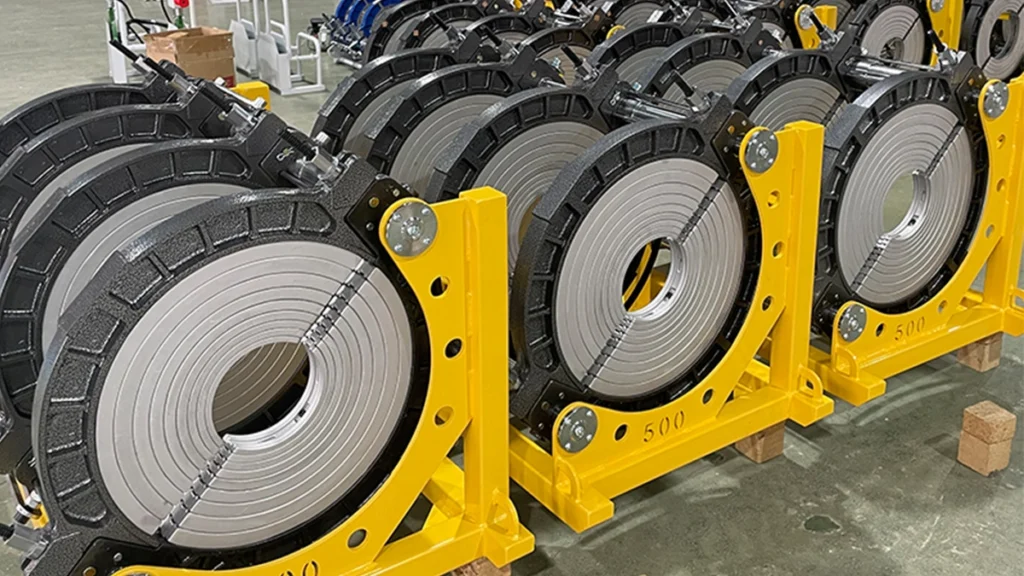
You’ll find that a 500mm HDPE pipe welding machine generally handles outer diameters (OD) spanning 180mm all the way up to 500mm. Certain models narrow this focus to a 250mm–500mm window. Pipeline contractors know that equipment sizes often bracket these dimensions tightly. Take the EKY450 series (180mm to 450mm) or the EKY630 series (315mm to 630mm) as prime examples. By categorizing a machine under the 500mm umbrella, crews can confidently tackle mid-to-large dimension ratios. They simply swap out the inner clamp blocks—also known as inserts—to grip whatever specific pipe size they need within that continuous range.
Is this usually a butt fusion machine or a different welding method?
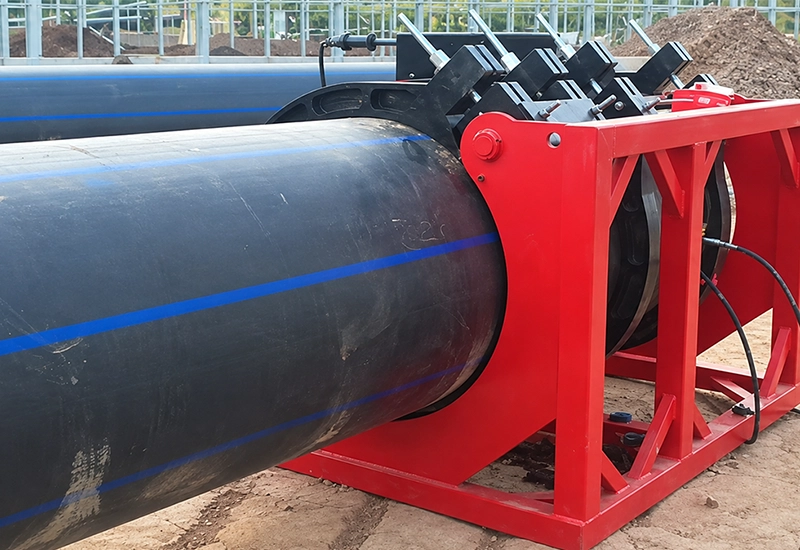
This gear relies exclusively on the hot-plate butt fusion method. Electrofusion requires external conductive couplings, but a 500mm HDPE pipe butt fusion welding machine joins the host pipes directly together. How does it work? Built-in electrical heating elements melt the precise surfaces of the pipe. Once the material reaches a molten state, controlled hydraulic pressure forces the ends together. The result is a seamless, homogeneous joint. In fact, this connection often outlasts and outperforms the tensile strength of the original pipe itself.
Which projects typically require this size?
Heavy civil and industrial infrastructure projects lean heavily on pipelines in the 500mm diameter range. Think urban water supply networks, massive municipal gas transmission mains, and sprawling agricultural irrigation systems. You’ll also see them frequently in mining slurry lines and complex industrial chemical processing plants. Because a 500mm pipe boasts immense volumetric capacity, engineers treat it as the gold standard for primary distribution headers before the system branches off into smaller lateral lines.
What are the main machine components?
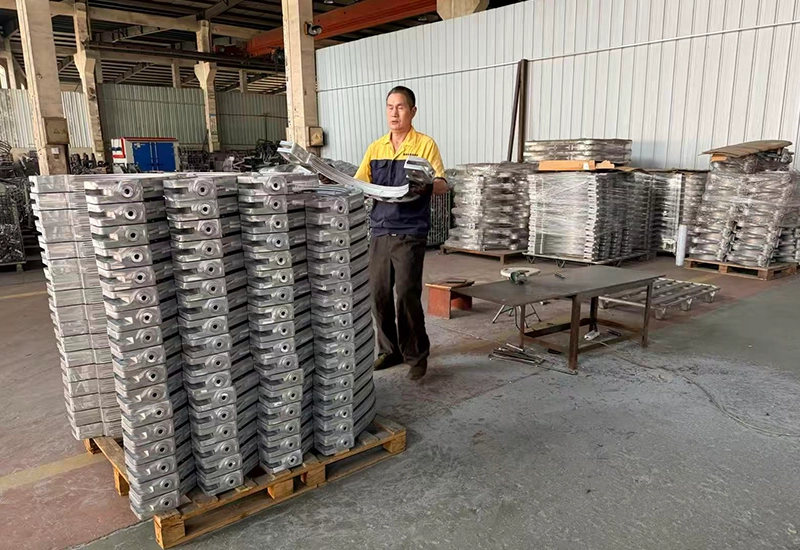
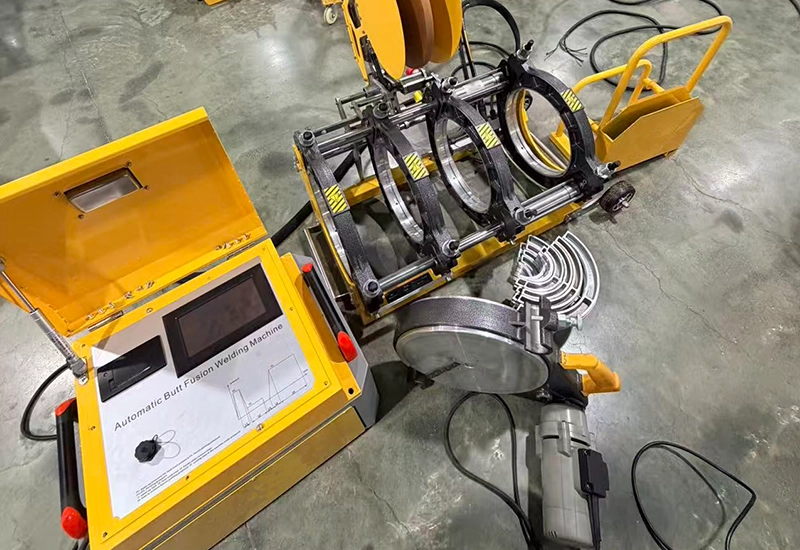
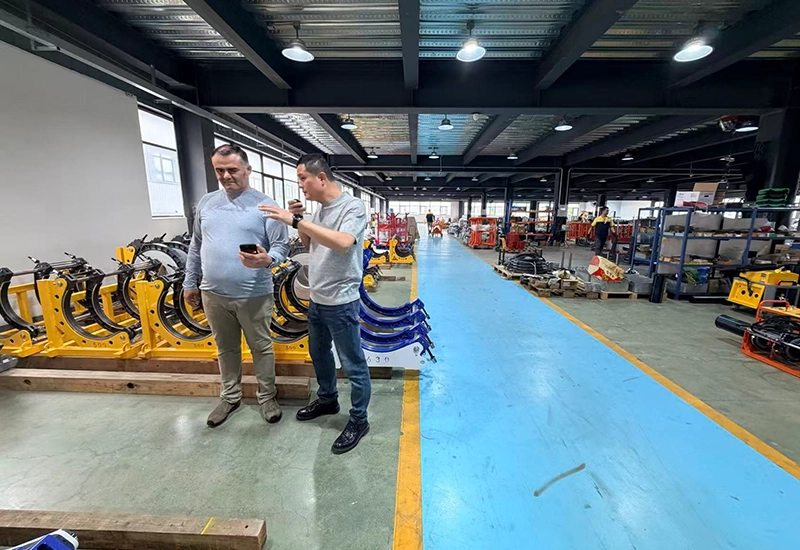
Break down a standard hydraulic 500mm HDPE pipe welding equipment setup, and you’ll find four vital components. First, there’s the clamping device—or frame. Built with rugged aluminum alloy clamps, it holds the heavy pipes in flawless axial alignment. Next comes the milling cutter (often called the facer), which shaves down the pipe ends so they mate perfectly. Then, a PTFE-coated heating plate melts those ends at highly specific temperatures. Finally, you have the operating platform. Housing both the hydraulic station and the electronic control box, this command center regulates the pressure, temperature, and timing throughout the entire fusion cycle.
How the 500mm HDPE Welding Process Works
How do heating, facing, and pressure control work?
Creating a flawless weld demands three tightly controlled mechanical actions. First, the milling cutter steps in. Driven by a sturdy 1.5kW to 3.0kW motor, it faces the pipe ends until they shed continuous ribbons of polyethylene, guaranteeing zero gaps when pushed together. Second, the heating plate takes over. Drawing up to 17.5kW on larger units, it melts the pipe surface at exacting temperatures—usually sitting right between 204°C and 232°C to meet ASTM F2620 standards. Finally, the hydraulic station applies a steady, unyielding axial pressure (adjustable from 0 to 16 MPa). This forces the molten ends together to form a robust, uniform bead.
What does a standard weld cycle look like on site?
Out in the field, a standard butt fusion cycle adheres to a rigid sequence. Skipping steps ruins joint integrity.
1. Preparation: Crews clamp, face, and align the heavy pipes.
2. Heating: The operator inserts the heating plate, pressing the pipe ends against it until a specific bead size forms (the bead-up phase). This transitions into a heat-soak phase under reduced pressure.
3. Changeover: Operators rapidly withdraw the heating plate, taking care not to damage or contaminate the molten surfaces.
4. Fusion & Cooling: The hydraulic system applies axial compression to fuse the components together. After that, a mandatory cooling period under pressure takes place until the joint fully solidifies.
Which specs most affect weld quality?
HDPE pipe welding machine calibration and environmental control dictate your final weld quality. Critical tolerances leave no room for guesswork. For instance, the heating plate temperature must stay within a razor-thin error margin of exactly ±3°C. Uneven heat distribution creates brittle, unreliable joints. Additionally, the maximum butt joint deviation (often called high-low misalignment) cannot exceed 0.2mm. Pushing past this misalignment tolerance shrinks the cross-sectional area of the fusion zone. Ultimately, that creates a weak point highly vulnerable to stress cracking once internal pipeline pressure builds.
What power supply and site conditions are required?
You can’t run a 500mm HDPE pipe welding machine on standard power. This equipment demands heavy-duty industrial electricity—specifically a stable 380V, 50Hz three-phase supply. Total power draw for butt fusion welding machines covering the 450mm to 800mm range sits anywhere from 12.2kW to 23.5kW. If you’re working on remote sites, adequately sized generators are non-negotiable. Moreover, site conditions must remain dry. Moisture and high winds act as heat sinks, rapidly pulling temperature away from the plate and pipe. The result? Dangerous, incomplete welds.
Factory-direct pricing with technical consultation included
Get Your Free QuoteKey Technical Specifications to Check Before Buying
Should you choose manual, hydraulic, or CNC control?
Let’s get one thing straight: manual operation is completely off the table for 500mm pipes. Generating the massive axial pressure needed to move and fuse heavy-wall PE100 pipes by hand is physically impossible. Hydraulic control acts as the baseline requirement to precisely adjust pressure, temperature, and time. However, if your project demands strict compliance and bulletproof traceability, CNC (fully automatic) control steps up as the elite choice. It strips operator variability out of the equation and fully automates the complex pressure ramping sequence.
| Specification Category | Standard Requirement for 500mm Machines |
|---|---|
| Working Range | 180mm-500mm |
| Power Supply | 380V / 50Hz (Three-phase) |
| Hydraulic Pressure Range | 0 – 16 MPa |
| Heater Max Temperature | 270°C (Operating target 204–232°C) |
| Temperature Deviation | ±3°C |
| Total Power Consumption | ~12.2kW to 15kW (varies by specific model) |
Manual vs hydraulic vs fully automatic: what changes?
Basic hydraulic butt fusion welding machines force the operator to manually track timers and tweak pressure valves during the crucial heat-soak and fusion phases. Fully CNC automatic butt fusion machines operate on an entirely different level. They utilize an advanced displacement detection system that precisely governs preheating and beveling during the initial T1 stage. This guarantees incredibly repeatable procedures across hundreds of joints. Furthermore, CNC units feature automated hot plate lift-off. This shaves precious seconds off the changeover time and prevents the molten pipe ends from cooling prematurely.
Skid-mounted, trailer-mounted, or workshop configuration?
Your mounting configuration heavily dictates daily operational efficiency. Standard trench work generally calls for HDPE pipe welding machines featuring separate clamping frames and operating systems. This modular approach lets crews lower the heavy frame directly into tight excavations. On the flip side, wheeled or trailer-mounted configurations rule cross-country field mobility, allowing teams to jump rapidly between joints. Then there are 4-column setups. These massive, stationary configurations stay bolted down, used exclusively for workshop fabrication to build custom fittings like massive tees and elbows.
When is a data logger worth the upgrade?
Investing in an automatic HDPE pipe fusion machine with data logger becomes mandatory the moment you tackle municipal gas mains, nuclear facilities, or high-pressure water networks. The logger meticulously archives vital welding data, tracking drag pressure, fusion pressure, and exact temperature curves. It even prints initial parameters right on site for immediate review. This isn’t just a nice feature to have; it is a strict requirement for remaining compliant with TSG D2002-2006 and a host of other international pipeline safety standards.
500mm Machine Types and Configuration Options
Municipal water and drainage projects
Municipal water and drainage projects tolerate zero margin for error; contractors need equipment that guarantees a 50-year joint lifespan. A dedicated butt fusion welding machine for municipal water pipelines must process thick-walled PE100 pipes designed to operate under relentless hydrostatic pressure. To handle this, manufacturers typically configure these HDPE pipe welders with heavy-duty ZL104 standard aluminum clamps. These robust clamps absorb the daily abuse of chaotic urban construction sites while refusing to compromise on strict alignment tolerances.
Gas, mining, irrigation, and industrial pipework
Stepping into gas transmission, mining, and industrial pipework means demanding absolute high-stress resilience. Mining slurry lines and corrosive chemical transport systems endure brutal internal abrasion and relentless chemical attacks. HDPE pipe welding machines deployed in these brutal environments feature premium hydraulic seals and high-torque facing motors. They power through thick SDR 9 or SDR 11 pipes without stalling or stuttering. This raw power ensures the fusion bead remains perfectly uniform, eliminating the risk of internal flow turbulence.
Why contractors choose HDPE for large-diameter lines
Why do contractors gravitate toward HDPE for large-diameter infrastructure? It boils down to excellent deformation plasticity, extreme toughness, and absolute corrosion resistance. Unlike traditional steel, HDPE remains incredibly lightweight and completely bypasses the need for costly cathodic protection. Its superior weldability is the real game changer. When fused by a reliable 500mm HDPE pipe welding machine, the resulting pipeline becomes a monolithic structure. This eliminates the headache of installing mechanical thrust blocks and drastically slashes long-term maintenance budgets.
How do you match the machine to pipe OD and SDR?
Properly matching your butt fusion welding machine to the pipe relies on two primary factors: Outer Diameter (OD) and Standard Dimension Ratio (SDR). To accommodate different pipe ODs, operators secure specific inner clamp blocks directly into the main frame. SDR, which dictates the pipe’s wall thickness, directly influences your hydraulic pressure settings. Thicker walls (indicated by a lower SDR) require significantly higher fusion pressure alongside extended heating and cooling times. Operators must always cross-reference the HDPE pipe fusion machine’s pressure chart to accurately translate the required interfacial pressure into the correct gauge pressure for that specific SDR.
Get detailed specs and custom configuration options
Request Technical SpecificationsWhere 500mm HDPE Pipe Welding Machines Are Used
Which accessories should be included in the package?
A comprehensive 500mm PE100 pipe welding machine supplier package needs to bundle specific heavy-duty accessories to be field-ready. Standard inclusions should feature high-pressure hydraulic hoses equipped with flat-type quick-connect fittings. These fittings are crucial for preventing dirt and mud from penetrating the system on messy job sites. The package must also supply interchangeable aluminum spacers (inserts) to cover the full 180-500mm spectrum, a dedicated storage stand to protect the heater and facer, and a set of replacement high-speed carbon steel milling cutter blades.
What should procurement teams ask before ordering?
Before signing off on a purchase order, procurement teams must nail down their project parameters. Key questions include: What is the maximum pipe diameter and wall thickness (SDR)? What is the target daily joint quantity? Are the primary application scenarios taking place in deep trenches or on flat surface terrain? Finally, teams need to honestly assess their crew’s skill levels. This determines whether a basic hydraulic unit will suffice, or if a fully CNC automatic butt fusion welding machine is critical to safeguard against costly operator errors.
How do site conditions affect the final model choice?
Site conditions heavily dictate your equipment configuration and ultimate fusion success. High winds act as an invisible enemy, rapidly stripping heat from the heating plate and causing incomplete, “cold” welds. If a project lands in a harsh coastal or high-altitude mountainous region, contractors must prioritize models equipped with heavily insulated heating plates and over-engineered hydraulic systems. On-site corrective actions also become mandatory, such as plugging both pipe ends to stop cold air from tunneling through the pipe and erecting temporary wind shelters directly over the HDPE pipe welding machine.
What drives the price of a 500mm machine?
Three core factors drive the 500mm HDPE pipe welding machine price. First up is automation. A fully automated CNC butt fusion machine outfitted with integrated data logging will naturally cost significantly more than a stripped-down hydraulic model. Second, brand origin shifts the price tag; established US and EU brands command steep premiums compared to budget-friendly alternatives from China. Finally, structural materials play a massive role. Machines built with high-grade ZL104 cast aluminum frames and premium PTFE heater coatings inherently carry higher manufacturing costs, which reflects in the final invoice.
How to Choose the Right Model for Your Project
Should contractors buy or rent for short-term projects?
Deciding whether to buy or rent hinges entirely on calculating your breakeven point against the project timeline. Renting offers excellent short-term flexibility and wipes out maintenance overhead, making it a smart play for quick, one-off jobs. However, purchasing becomes essential if you want long-term control over continuous pipeline contracts. Consider the math: comparing a $15,000 purchase price against a $3,000 monthly rental fee reveals a fast 5-month utilization breakeven point. After those five months, equipment ownership turns highly profitable.
How do shipping, training, and spare parts change total cost?
Don’t let the initial sticker price fool you; it represents just a fraction of your Total Cost of Ownership (TCO). Investing in high-quality benchmark construction lowers long-term TCO by slashing breakdown rates. Yet, international shipping for heavy 500mm equipment tacks on massive freight bills. Beyond logistics, access to robust technical support and operator training is critical. Skipping training guarantees expensive job site downtime. Savvy buyers must also budget for stocking vital spare parts, such as hydraulic seals and sensitive temperature sensors, right from day one.
What MOQ and lead time should export buyers expect?
When managing international procurement, expect the standard export Minimum Order Quantity (MOQ) to sit comfortably at 1 set. Basic 180-500mm hydraulic butt fusion machines generally start between $2,500 and $3,800. On the higher end, premium or fully automated CNC models range from $13,800 up to $20,000 or more. Lead times fluctuate depending on the manufacturer. Standard hydraulic models usually ship within 15 to 30 days. Custom CNC configurations, however, demand up to 45 days to account for intricate manufacturing, precise calibration, and secure export crating.
What causes weak or uneven fusion joints?
Weak or uneven fusion joints in 500mm HDPE pipe welding usually trace back to mechanical misalignment. This happens when crews execute poor pipe clamping or ignore the use of proper roller stands. Environmental factors inflict massive damage as well. Wind exposure or wet conditions sap the joint’s temperature, compromising the crucial molecular bond. Furthermore, sloppy facing that leaves visible gaps, or dropping the ball on maintaining the correct hydraulic pressure throughout the entire cooling cycle, guarantees a compromised, uneven fusion joint.
Price, MOQ, Lead Time, and Total Cost of Ownership
How do temperature, cleanliness, and alignment affect results?
A butt fusion joint’s integrity rests entirely on strict parameter adherence. Butt joint deviation must remain strictly ≤0.2mm to guarantee full wall-thickness bonding. Meanwhile, the heating plate needs to hold a uniform surface temperature, allowing for a maximum ±3°C error margin. Cleanliness cannot be overstated. Even a speck of dust, mud, or oil contamination on the faced pipe ends will directly trigger a weld failure. These contaminants physically block the polyethylene chains from entangling properly during the high-pressure fusion phase.
What should operators check before each shift?
Every shift must begin with a rigorous pre-weld inspection checklist. Operators need to verify the 380V power connection and confirm that the generator output stays rock-solid under heavy load. They should inspect all hydraulic and air hoses, ensuring secure attachments and zero visible leaks. Next up is the heating plate; any deep scratches in the PTFE coating spell trouble. Finally, crews must test the emergency stop mechanisms and confirm that the two-handed operation of the “green button” functions perfectly, keeping hands safe during the dangerous high-pressure compression cycle.
Which documents, drawings, and certifications should suppliers provide?
Partnering with a reputable 500mm PE100 pipe welding machine supplier means receiving a mountain of comprehensive documentation. This paperwork proves compliance with rigid international standards. Buyers should explicitly request certificates showing adherence to ISO 21307, DVS 2207-1, and ASTM F2620. For automated setups, TSG D2002-2006 compliance is an absolute must. Reputable suppliers will also hand over detailed hydraulic schematics, complex electrical wiring diagrams, precise calibration certificates for the pressure gauge and heating plate, and a thoroughly translated English operation manual.
What after-sales support matters most on large PE projects?
When equipment fails on massive PE projects, entire pipeline crews grind to a halt, burning through thousands of dollars daily. Therefore, the absolute most critical after-sales support factor is direct, immediate access to technical experts who can troubleshoot complex hydraulic or electronic fusion glitches remotely. Rapid spare parts availability ranks right alongside it. Suppliers capable of overnighting replacement heating elements, hydraulic valves, or facing motors via DHL within 48 hours deliver immense, tangible value compared to those bogged down by slow response times.
Common Mistakes and Quality Risks
When should you request a customized quote?
While standard HDPE pipe welding machines effortlessly handle 90% of field applications, certain extreme scenarios justify requesting a customized quote. Contractors should demand custom engineering when a project involves highly specialized welding parameters that fall outside standard ISO/ASTM presets. You’ll also need a customized approach if you require unique fusion head configurations to navigate incredibly tight trench constraints. Additionally, integrating proprietary data logging software to satisfy rigid municipal gas compliance mandates always warrants a tailored equipment package.
Supplier Evaluation and Final Buying Advice
Properly evaluating a manufacturer means looking far beyond the glossy specification sheet. Procurement teams need to dig deep into market research, prioritizing real-world performance parameters, pricing transparency, and verifiable user reviews. Whenever feasible, demand on-site or live video-call testing. Use this opportunity to verify the butt fusion machine’s clamping force under extreme load and confirm the heating plate’s temperature uniformity using a digital pyrometer. Finally, guarantee that the supplier relies on industrial-grade components—like standard ZL104 aluminum—rather than cheap recycled alloys prone to warping under intense, high-pressure fusion cycles.
FAQ
Q1: Can a 500mm HDPE pipe welding machine handle smaller pipe sizes?
Absolutely. A 500mm HDPE pipe welding machine generally spans a working range from 180mm all the way up to 500mm (some models focus strictly on 250mm to 500mm). It accomplishes this flexibility through a set of interchangeable aluminum reduction inserts, commonly called clamp blocks. These fit snugly inside the main 500mm frame, empowering operators to securely grip and weld significantly smaller diameters without needing a separate butt fusion welding machine.
Q2: What power supply is required for a 500mm HDPE pipe welding machine?
Due to the massive power draw generated by the hydraulic station and the oversized heating plate, a 500mm unit demands an industrial 380V, 50Hz three-phase power supply. Total power consumption usually hovers between 12.2kW and 15.0kW. If you are operating out in remote field sites, deploying a heavy-duty, voltage-regulated generator is strictly mandatory.
Q3: How long does a typical 500mm HDPE butt fusion weld take?
Total cycle time relies entirely on the pipe’s wall thickness, or SDR. When dealing with a thick-walled 500mm pipe, the heating and soaking phase alone eats up several minutes. This is immediately followed by a mandatory cooling phase under pressure, which frequently stretches from 30 to 45 minutes. Trying to cut corners and rush this cooling phase will permanently destroy the joint’s structural integrity.
Q4: Is butt fusion better than electrofusion for 500mm HDPE pipe?
When tackling long, straight pipeline runs, butt fusion easily wins out. It proves vastly more cost-effective since you avoid purchasing expensive electrofusion fittings for every single joint. Butt fusion effectively creates a seamless, homogeneous pipeline. Conversely, electrofusion is usually kept in reserve for cramped trench repairs or executing final tie-ins where a bulky butt fusion machine simply cannot physically fit.
Q5: What should be included in a supplier quote for a 500mm HDPE pipe welding machine?
A comprehensive, professional quote needs to itemize the HDPE pipe welding machine frame, hydraulic station, heating plate, and milling cutter. Furthermore, it should explicitly list the specific reduction inserts provided, detail the exact type of quick-connect hydraulic hoses, and include spare milling blades. Don’t forget to look for clear warranty terms, optional data logger pricing, and precise shipping dimensions and weights to ensure accurate freight calculations.
Q6: How do I verify weld quality on site after fusion?
Visual inspection serves as your first line of defense. The fusion bead must look perfectly uniform, fully rolled over to the pipe surface, and completely devoid of pores or visible contamination. Additionally, high-low misalignment cannot exceed 10% of the pipe’s wall thickness (staying ≤0.2mm). For highly critical pipelines, contractors take it a step further by deploying ultrasonic testing or conducting destructive tensile testing on sample welds.
Q7: How much does a 500mm HDPE pipe welding machine usually cost?
Pricing fluctuates dramatically based on brand reputation and automation levels. A solid, basic hydraulic 500mm HDPE pipe welding machine sourced from a reputable Chinese manufacturer typically runs between $2,500 and $3,800. On the other end of the spectrum, premium brands or fully automated CNC models—complete with displacement detection systems and advanced data loggers—can set you back anywhere from $13,800 to well over $20,000.
Conclusion
Securing the right 500mm HDPE pipe welding machine stands as a pivotal procurement decision. It directly dictates your pipeline’s integrity, project timelines, and ultimate profitability. Buyers have to meticulously evaluate their unique project demands, ensuring the butt fusion welding machine’s capabilities perfectly match the pipe’s outer diameter and standard dimension ratio. Grasping the unforgiving parameters of the butt fusion process—namely axial pressure, temperature management, and microscopic alignment tolerances—underscores exactly why robust, hydraulically controlled equipment is non-negotiable. Whether you select a reliable basic hydraulic model for standard water mains or heavily invest in a fully automated CNC unit for strict municipal gas applications, your priority must be unshakeable equipment reliability.
Ensure strict compliance with global standards like ASTM F2620 and ISO 21307, and confirm that rapid after-sales technical support is readily available. By focusing on the true total cost of ownership instead of getting distracted by the initial sticker price, contractors guarantee they are deploying machinery capable of producing flawless, 50-year joints in the harshest field conditions imaginable.
Let our experts help you choose the right equipment for your project
Contact Our Engineering Team