
Top 10 Butt Fusion Machine Suppliers Worldwide: Buyer Guide for Contractors
Table of Contents
Butt fusion machine suppliers vary widely in quality, price, and support. This guide helps contractors and procurement managers compare the top 10 global suppliers, evaluate specs, and make a confident sourcing decision.
What Is a Butt Fusion Machine and Why Supplier Choice Matters
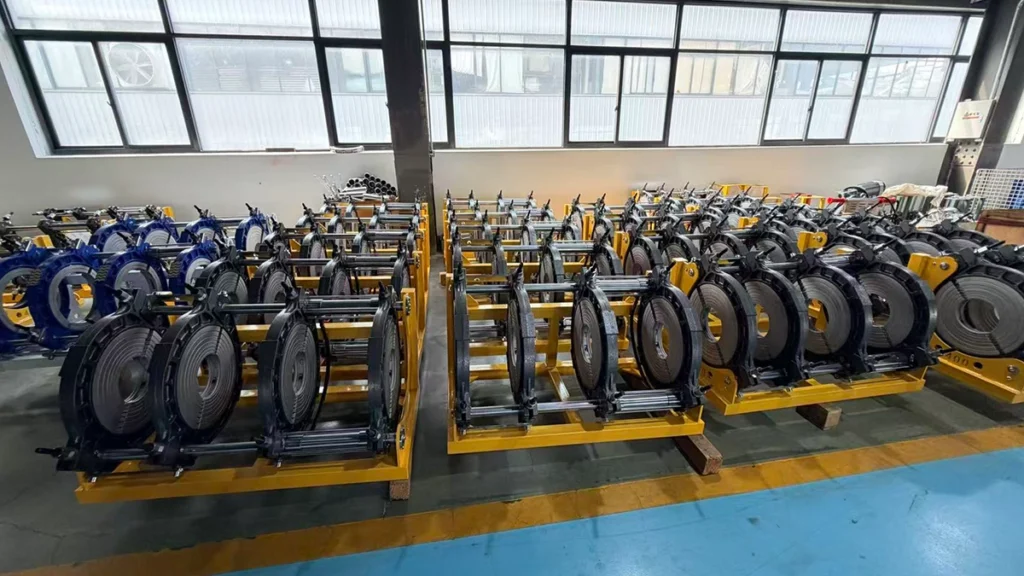
How does a butt fusion machine work?
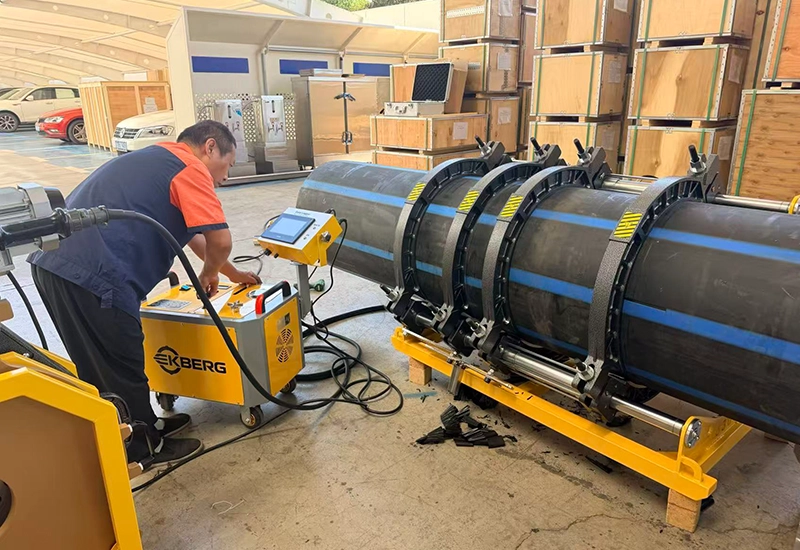
At its core, butt fusion welding seamlessly joins thermoplastic pipes. It relies on electric heating to push thermal energy directly from a heating plate into the squared-off ends of the plastic pipes. Precision is everything here. The heating head has to hold a steady 260±5°C to melt those surfaces perfectly. Once the pipe ends hit that ideal molten state, the operator swiftly pulls back the heating plate. The two softened surfaces are then driven together and allowed to cool under strict pressure parameters. The result? A solid, homogeneous joint that simply won’t leak.
Key components that define machine quality and supplier accountability
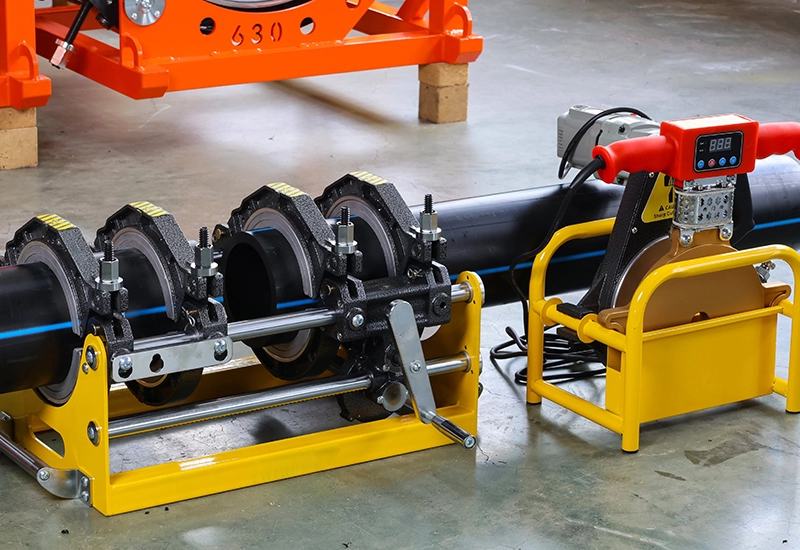
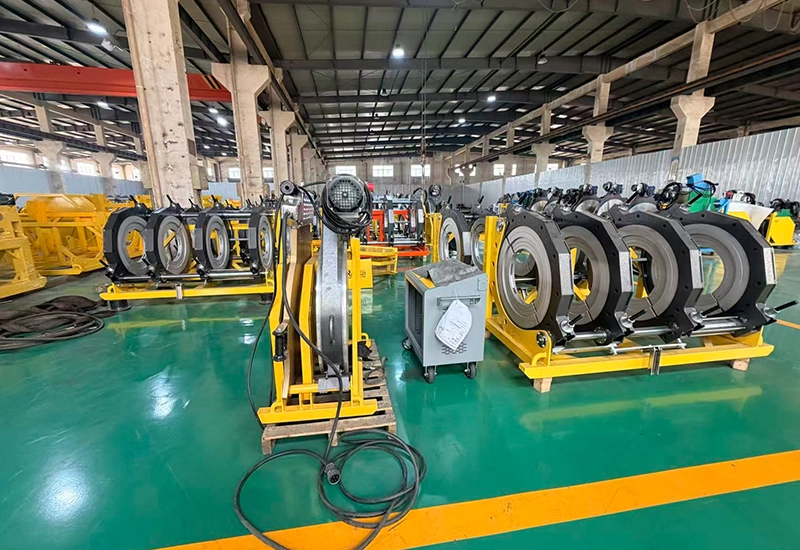
True industrial-grade quality hinges on the durability of an HDPE pipe welding machine’s core parts. When you look at the top butt fusion machine suppliers globally, you’ll notice a trend. They build their gear using highly accurate temperature sensors, robust controllers, and three-phase solid-state relays. On the physical side, the hardware demands a flawlessly machined heating plate alongside a sharp, perfectly balanced milling cutter. Just as importantly, the heavy-duty hydraulic station needs to hold rock-solid pressure through the entire cooling cycle.
Why the wrong supplier choice creates project liability
Handing your pipeline project over to an unverified equipment manufacturer is a fast track to financial and safety disasters. If a compromised HDPE pipe fusion machine drops temperature or loses pressure, you get weak welds. It’s that simple. And just one failed weld usually means a blown pipeline pressure test—an incident that costs contractors around $15,000 on average to fix. Making a poor choice in your supplier doesn’t just cause headaches; it triggers catastrophic project liabilities, wrecks your timelines, and ultimately threatens the integrity of the infrastructure itself.
European butt fusion machine manufacturers: precision and certification heritage
European manufacturers currently pump out roughly 33% of the world’s supply. The industry respects them heavily for their unwavering commitment to DVS 2207-1 certification standards. Brands rooted in Italy and Switzerland have spent decades obsessing over precision engineering. Because of this rich heritage, their equipment easily meets the brutal standards required for high-pressure water networks and municipal gas lines.
Global Butt Fusion Machine Market Overview: Who Are the Major Suppliers?
The international market for pipeline fusion technology basically splits down the middle. On one side, legacy Western manufacturers dominate the high-compliance infrastructure space. On the other, rapidly scaling Asian manufacturers are aggressively capturing the agricultural and commercial sectors.
Chinese butt fusion welding machine suppliers: cost competitiveness and scale
China claims roughly 15% of the global market share right now. This surge stems from massive domestic industrial growth combined with a fierce export strategy. Suppliers based here deliver unmatched cost competitiveness backed by massive production scale. The leading Chinese builders ship to more than 60 countries. They produce highly capable rigs that can tackle enormous pipe diameters—up to 3000mm—while keeping capital costs at a fraction of what legacy brands charge.
How regional supply chains affect delivery timelines and spare parts availability
The Asia-Pacific region consumes more fusion equipment than anywhere else, driving about 35% of total global demand. Across the board, direct sales rule the distribution channels, making up 52.1% of the market. Buying directly from the manufacturer usually guarantees faster technical support and better access to spare parts. Still, buyers have to weigh the benefits of a direct butt fusion machine supplier against the convenience of local distributor networks. You need to know exactly how fast you can get replacement parts deployed to a remote job site if things go wrong.
Comparison table: top 10 butt fusion machine suppliers at a glance
| Supplier Name | Headquarters | Machine Types | Certifications | Price Tier | Best For |
|---|---|---|---|---|---|
| McElroy | USA | Hydraulic, CNC, Tracked | ASTM, ISO, CE | Premium | High-pressure gas, large infrastructure |
| Ekberg | China | Manual, Hydraulic, Automatic CNC, Electrofusion | ISO, CE | Competitive | Cost-effective HDPE pipe welding, large-diameter projects, OEM/ODM solutions |
| Ritmo S.p.A. | Italy | Manual, Hydraulic, CNC | DVS, ISO, CE | Premium | European municipal networks |
| Georg Fischer (GF) | Switzerland | Hydraulic, Automated | DVS, ISO, CE | Premium | Precision industrial piping |
| Widos | Germany | Hydraulic, CNC | DVS, ISO, CE | Premium | Heavy-duty civil engineering |
| Fusion Group | UK | Hydraulic, Semi-Auto | WIS, ISO, CE | Mid-High | UK/EU water distribution |
| Hürner | Germany | CNC, Data-logging | DVS, ISO, CE | Mid-High | Smart pipeline data tracking |
| Rothenberger | Germany | Manual, Hydraulic | DVS, ISO, CE | Mid-Tier | Commercial plumbing, HVAC |
| Connectra | USA | Hydraulic, Manual | ASTM, ISO | Mid-Tier | North American contractors |
| Riyang | China | Manual, Hydraulic, CNC | ISO, CE, GB/T | Entry-Mid | Cost-effective large diameter |
Global suppliers: McElroy, Ritmo, Ekberg
McElroy Manufacturing Inc. is a leading North American supplier of HDPE pipe fusion equipment, while Ritmo S.p.A. is known for its Italian engineering and thermoplastic welding solutions. Ekberg focuses on factory-direct HDPE butt fusion welding machines, offering a wide welding range, customized solutions, and export support for global pipeline projects. Together, these suppliers represent different strengths in the global HDPE pipe fusion equipment market, from established international brands to flexible manufacturing partners.
Factory-direct pricing with technical consultation included
Get Your Free QuoteTop 10 Butt Fusion Machine Suppliers Worldwide
established suppliers: Rothenberger, Connectra, Hürner
Fusion Group Limited secures an 8.7% slice of the market, while Hürner Schweisstechnik GmbH takes 7.9% by leaning heavily into CNC automation and smart data-logging. Rothenberger delivers highly versatile gear that remains a staple in commercial plumbing and mid-sized civil projects. Meanwhile, Connectra caters to standard contractor needs. They build rugged, dependable machinery without slapping on the premium price tags associated with brands.
Emerging and cost-competitive suppliers: Chinese and Asian manufacturers worth evaluating
Riyang stands out as one of the fastest-growing suppliers on the global stage. They export aggressively priced machines that can seamlessly weld massive 3000mm pipes. Wuxi Baoda and Fangli (a veteran brand founded in 1993) also present fantastic alternatives. If your crews are laying low-pressure water mains or sprawling irrigation systems, these brands offer massive capital savings—especially when deploying large equipment fleets.
Manual vs. hydraulic butt fusion machines: when to choose each
Manual butt fusion welding machines run purely on elbow grease. They fit tight budgets perfectly and handle low-pressure pipes up to 160mm without breaking a sweat. Hydraulic models, on the other hand, pack a motorized hydraulic station to deliver exact, sustained pressure. When evaluating a hydraulic butt fusion machine supplier, you need to verify their unit can hold 2-4 MPa for 63-315mm pipes, and push 4-6 MPa for heavier 400-800mm lines. Hitting those numbers is absolutely mandatory for structural, high-integrity welds.
CNC and data-logging butt fusion machines: which suppliers offer them?
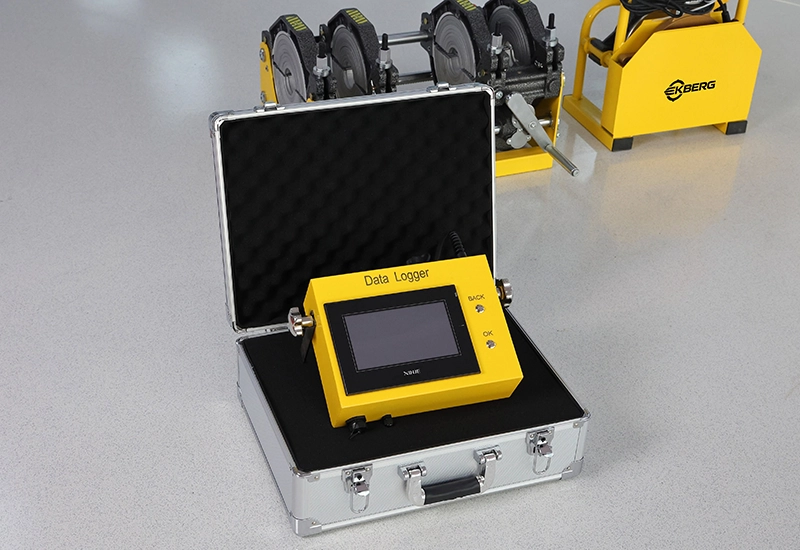
Roughly half of today’s pipeline construction crews now require CNC (Computer Numerical Control) automatic butt fusion machines. These advanced units handle fault diagnosis and support remote monitoring right out of the box. Heavyweights like McElroy, Ritmo, and Hürner dominate this space. Their systems completely automate the heating and cooling cycles while spitting out flawless data traceability to keep municipal engineering inspectors happy.
Types of Butt Fusion Machines and What Each Supplier Specializes In
| Automation Level | Pipe Diameter Range | Typical Use Case | Price Range | Supplier Examples |
|---|---|---|---|---|
| Manual | 40mm – 250mm | Small plumbing, low budget | $600 – $18,000 | Ekberg, Rothenberger, Riyang |
| Semi-Automatic (Hydraulic) | 63mm – 2600mm | Standard water/gas mains | $25,000 – $55,000 | Ritmo, Ekberg |
| Fully Automatic (CNC) | 63mm – 630mm | High-pressure, regulated gas | $45,000 – $95,000 | McElroy, Ekberg, GF, Hürner |
Pipe diameter range coverage: matching machine type to project spec
Standard hydraulic units are classified by their maximum capacity. You’ll see designations like Model 160 (covering 63-160mm), Model 315 (160-315mm), or Model 800 (630-800mm). Procurement teams absolutely must align the butt fusion welding machine specs directly with the project blueprints. Specialized suppliers handle the truly massive infrastructure jobs. McElroy, for instance, builds rigs for up to 2000mm pipe, while Riyang frequently engineers custom chassis to tackle staggering 3000mm diameters.
Essential machine parameters: pressure, temperature, pipe diameter range
No matter whose logo is on the chassis, the heating head must hold a temperature range of 0-270°C, tight to an accuracy of ±5°C. Voltage requirements scale up as the HDPE pipe welding machines get bigger. A standard 220V setup runs smaller units just fine. However, once you start welding pipe diameters of 450mm and above, 380V three-phase power becomes non-negotiable. You need that heavy current to keep the heating plate thermally stable during long melt cycles.
Which international standards should a compliant butt fusion welding machine meet?
Don’t even think about putting the HDPE pipe fusion machine in the trench if it doesn’t meet regional welding codes. ISO 21307 acts as the global baseline, covering dual-low, single-low, and single-high pressure procedures. If you are working in Europe, DVS 2207-1 compliance (mandating a single low pressure of 0.15 N/mm²) is the law of the land. Over in North America, projects demand ASTM F2620, requiring a single high interfacial pressure between 60 and 90 psi.
What certifications should you require from a supplier before purchase?
Never buy pipeline equipment without verifying the manufacturing and safety paperwork. Certified butt fusion machine suppliers operating ISO approved facilities won’t hesitate to hand over CE marking documents. They will also supply ISO 12176 compliance certificates for their plastic pipe welders, along with regional approvals like GB/T 32434-2015 for China or WIS 4-32-08 for the UK market.
Get detailed specs and custom configuration options
Request Technical SpecificationsKey Technical Specifications to Request from Any Butt Fusion Machine Supplier
After-sales service and spare parts: the hidden cost most buyers ignore
That initial invoice is merely a fraction of your total cost of ownership. What really matters is what happens after the sale. You need rapid repair services, thorough operator training, and instant access to HDPE pipe welder spare parts. Think about the brutal financial penalty of a stalled pipeline project. Waiting on a blown relay or a shattered milling cutter will quickly wipe out whatever cash you saved by choosing a discount manufacturer upfront.
How to verify a supplier’s certification claims independently
Take marketing brochures with a grain of salt. To truly assess a supplier’s manufacturing and R&D muscle, demand third-party testing certificates or independent facility audit reports. Furthermore, get written guarantees that they will support future maintenance. You need to know they’ll calibrate your pressure gauges and push software upgrades to your CNC models years down the line.
Questions to ask a butt fusion machine supplier before signing a purchase order
1. What is the exact duration of the warranty, and does it explicitly cover hydraulic pump failure?
2. Can this specific model switch seamlessly between ASTM (high pressure) and DVS (low pressure) parameters?
3. What is the realistic butt fusion machine supplier lead time, and how does the warranty handle overseas transit?
4. Do you maintain localized spare parts depots anywhere near our project region?
5. Does the data-logging software operate freely, or will we get hit with a recurring licensing fee?
Price range by machine type: manual, semi-auto, fully hydraulic
Capital expenditure swings wildly depending on the automation level you need. Basic manual butt fusion welding machines start around $600 and peak at $1,500, though heavy-duty industrial manuals can hit $18,000. Stepping up to semi-automatic hydraulic systems will set you back anywhere from $25,000 to $55,000. If you require fully automated CNC rigs, expect to pay between $45,000 and $95,000. Need to weld ultra-large diameters? Those specialized units easily clear the $200,000 mark.
How to Evaluate Butt Fusion Machine Suppliers: 7 Criteria That Matter
1. Standard Compliance Capability: Demand concrete proof that the machine supports DVS 2207-1, ISO 21307, and ASTM F2620.
2. Hydraulic Stability: The pump must hold pressure drops to virtually zero while the pipe cools.
3. Heating Plate Uniformity: Ask for thermal imaging that proves the plate holds 260±5°C from edge to edge.
4. Data Traceability: Ensure the system logs pressure, time, and temperature for every single joint.
5. Spare Parts Network: Map out exactly how far replacement parts are from your actual job site.
6. Manufacturing Scale: Partner with companies doing real R&D, not just generic assembly shops.
7. Total Cost of Ownership (TCO): Look past the sticker price. Factor in expected lifespan and maintenance intervals.
Why the cheapest butt fusion machine supplier is rarely the lowest total cost
Bargain-bin butt fusion welding machines are notorious for sensor drift, uneven heating plates, and blown hydraulic seals. Investing in benchmark construction slashes your total cost of ownership. It prevents catastrophic weld failures, keeps maintenance downtime to an absolute minimum, and ensures the equipment survives multiple multi-year deployments.
MOQ, payment terms, and bulk order discounts: what suppliers typically offer
When negotiating butt fusion machine price and MOQ from supplier networks, standard cross-border terms usually apply (think 30% T/T deposit, with the remaining 70% cleared before shipment). Many Asian suppliers excel at OEM/ODM customization for massive fleet orders. If you are a distributor or a major contractor ready to buy three or more units at once, you can unlock serious unit cost reductions.
Butt fusion machine suppliers for HDPE water and gas pipeline contractors
ISO 21307 compliance is absolutely non-negotiable for critical water and municipal gas distribution. Consequently, HDPE butt fusion machine suppliers for pipeline projects face intense scrutiny in this sector. Utility companies overwhelmingly favor giants (like GF, Ritmo, and McElroy) because their CNC technology eliminates human error and guarantees the integrity of every joint.
Which suppliers serve large-diameter or high-pressure pipeline projects?
Mining operations and high-pressure industrial sites require serious firepower—specifically, machines that can generate 4-6 MPa of interfacial pressure across 400-800mm pipes. Suppliers such as Widos and McElroy build heavy-duty tracked monsters for these exact environments. They engineer the chassis to withstand extreme hydraulic loads without flexing an inch.
Butt Fusion Machine Pricing: What to Expect from Different Supplier Tiers
Renting vs. buying: do suppliers offer rental or leasing programs?
Daily rental rates generally hover between $150 and $350. Renting makes perfect sense for short-term contracts, or if you want to field-test a specific brand before dropping heavy capital on a purchase. To help offset those initial procurement costs, many authorized distributors also offer attractive rent-to-own agreements.
Overlooking after-sales infrastructure in remote project locations
Ignoring support logistics in remote areas is a rookie mistake that can ruin a project. Imagine blowing a hydraulic seal on a pipeline deep in the mining sector. If you have to wait three weeks for a proprietary part to ship from an overseas factory, your budget and schedule will be completely devastated.
Buying a machine that cannot meet the project’s pipe standard compliance
One of the most common procurement blunders is buying a machine built for European DVS standards (0.15 N/mm²) and trying to deploy it on a North American ASTM site that requires 60-90 psi. The machine simply won’t have the hydraulic muscle to hit the correct interfacial pressure. The result? Every single weld will be rejected.
How to avoid counterfeit or non-certified butt fusion machines from unknown suppliers
The market is flooded with cheap, unbranded clones painted to look exactly like equipment. To dodge these counterfeits, bypass shady third-party sellers. Buy exclusively from the manufacturer or a listed regional distributor. Always demand the factory’s ISO 9001 certificate and take the time to verify the machine’s serial numbers with the parent company.
Application Scenarios: Matching the Right Supplier to Your Project Type
| Project Type | Recommended Machine Type | Recommended Supplier Tier |
|---|---|---|
| Municipal Gas Networks | CNC / Fully Automated | McElroy, Ritmo, Ekberg, GF) |
| Standard Water Mains | Hydraulic Semi-Auto | Fusion Group, Hürner, Ekberg |
| Agricultural Irrigation | Manual / Basic Hydraulic | Riyang, Ekberg, Welping |
Decision matrix: choosing a supplier based on project scale and budget
Start with a ruthless needs analysis. Pinpoint your maximum pipe diameter, wall thickness (SDR), available capital, and the technical skill of your crew. Run thorough market research and demand on-site testing. You want to ensure the machine’s performance justifies its price tag and aligns perfectly with the risk profile of your specific project.
When a global brand is worth the premium vs. when a regional supplier is sufficient
Paying a premium for a global brand makes sense when you are tackling large-scale infrastructure or highly regulated gas lines where strict data-logging is mandatory. On the flip side, emerging Asian or regional suppliers pack incredible value. They are more than sufficient for agricultural irrigation, standard water distribution, and low-pressure industrial effluent systems.
Next steps: how to request quotes and compare supplier proposals effectively
When you reach out for quotes, hand the suppliers your exact parameters—including welding standards, OD, and SDR. Don’t just look at the bottom-line unit price. Compare the warranty terms, guaranteed delivery schedules, and the inclusion of vital accessories like stub end holders.
Common Mistakes Contractors Make When Choosing a Butt Fusion Machine Supplier
1. Ignoring Drag Pressure Calculations: Purchasing an underpowered hydraulic pump that physically cannot overcome the drag resistance of long, heavy pipe strings.
2. Prioritizing Price Over Support: Going with the absolute cheapest overseas builder without checking if local service technicians even exist in your area.
3. Mismatched Power Requirements: Having a 380V three-phase machine delivered to a residential job site that only supplies 220V single-phase power.
4. Skipping CNC for Regulated Jobs: Trying to slip manual or semi-auto units onto municipal gas projects where automated data-logging is legally required.
5. Buying Uncertified Equipment: Bringing machines lacking ISO 12176 or CE certifications onto a site, only to have them immediately red-tagged by safety inspectors.
Final Recommendation: How to Choose the Best Butt Fusion Machine Supplier for Your Business
To nail down the best butt fusion machine brands comparison for your company, take a hard look at your pipeline portfolio. If you consistently bid on high-pressure, high-risk utility contracts, you need to spend the money on CNC equipment. It protects your liability and guarantees compliance. However, if your crews mainly handle standard water transport, mining, or agriculture, hydraulic butt fusion welding machines will give you a massive ROI and rapid capital recovery.
Always lock in your procurement with an ironclad purchase contract. Spell out the exact equipment model, delivery timeline, standard compliance, and the full scope of after-sales support.
FAQ
Q1: What is the difference between a manual and a hydraulic butt fusion machine?
Manual units force the operator to use a handwheel or lever to physically apply and hold pressure. They are great for small-diameter, low-pressure jobs. Hydraulic machines, however, rely on motorized pumps and cylinders to deliver exact, unwavering pressure—often hitting up to 6 MPa. If you are joining large-diameter pipes on high-pressure infrastructure projects, hydraulic is mandatory.
Q2: Which butt fusion machine brand is most trusted for HDPE pipeline projects?
For heavily regulated municipal and high-pressure jobs, butt fusion machine manufacturers like Georg Fischer (GF), Ritmo, and McElroy lead the pack. Their precision and strict standard compliance make them globally trusted. If you’re running agricultural or standard water lines, emerging brands like Riyang provide reliable, highly cost-effective solutions.
Q3: How much does a butt fusion machine cost from a reputable supplier?
Pricing scales with automation and size. Industrial manual units cost anywhere from $8,000 to $18,000. For standard pipeline work, semi-automatic hydraulic models range from $25,000 to $55,000. If you need fully automated CNC rigs for major infrastructure, expect to pay between $45,000 and $95,000, while custom ultra-large machines cost considerably more.
Q4: What certifications should a butt fusion machine supplier have?
Any reputable builder should hand over ISO 9001 manufacturing certificates and CE marking. The hardware itself must meet ISO 12176 (standards for fusion welding equipment) and align with regional codes like ASTM F2620 (North America), DVS 2207-1 (Europe), or ISO 21307.
Q5: Can I rent a butt fusion machine instead of buying from a supplier?
Absolutely. Authorized distributors and equipment rental yards frequently lease out fusion machines. Depending on automation and size, daily rates run from $150 to $350. Renting is a brilliant strategy for short-term work or if you want to test a machine before buying it outright.
Q6: How long is the typical lead time when ordering a butt fusion machine from overseas?
For standard hydraulic units, expect a factory lead time of 15 to 30 days. Add another 20 to 40 days for ocean freight, depending on your port. If you are ordering specialized CNC units or custom-built mega machines (over 1200mm), manufacturing alone can take 60 to 90 days.
Q7: What pipe diameter range do most butt fusion machine suppliers cover?
Most builders offer standard hydraulic lineups that weld pipes from 63mm up to 800mm (commonly split into categories like 63-160mm, 160-315mm, and 400-800mm). However, specialized global and emerging manufacturers build massive, heavy-duty rigs that can fuse infrastructure pipes ranging from 1000mm all the way up to 3000mm.
Q8: How do I verify that a butt fusion machine supplier is legitimate and not selling counterfeits?
Always ask for third-party testing certificates and independent ISO audit reports. Take the serial numbers on the machine and verify them directly with the parent company’s headquarters. Steer clear of unverified third-party marketplace sellers; buy only from the manufacturer or their officially recognized regional distributors.
Conclusion
Picking the right equipment partner isn’t just a basic purchasing task; it is a high-stakes decision that dictates your project timelines, financial liability, and pipeline integrity. Contractors need to understand the distinct strengths of different supplier tiers. Whether you need the premium compliance of a Western legacy brand or the aggressive pricing of an emerging Asian manufacturer, aligning your capital investment with your specific project demands is crucial.
To succeed, you have to look past the initial sticker price. Focus heavily on total cost of ownership, standard compliance (ASTM, DVS, ISO), heating plate precision, hydraulic stability, and the actual strength of the supplier’s after-sales network. Whether you are buying robust hydraulic units for farm irrigation or outfitting a massive fleet for municipal gas lines, partnering with certified butt fusion machine suppliers guarantees top-tier weld quality. It keeps costly rework at bay and ultimately maximizes your operational ROI over the long haul.
Let our experts help you choose the right equipment for your project
Contact Our Engineering Team