
Large Diameter Butt Fusion Welding Machine for HDPE Pipeline Construction
Table of Contents
Large Diameter Butt Fusion Welding Machine guide for HDPE pipeline construction, covering working principles, key specs, selection criteria, cost factors, and supplier evaluation so buyers can choose the right equipment with confidence.
What Is a Large Diameter Butt Fusion Welding Machine?
A Large Diameter Butt Fusion Welding Machine is heavy-duty industrial equipment built to connect high-density polyethylene (HDPE) and other thermoplastic pipes. It relies on precise thermofusion. By aligning, heating, and pressing pipe ends together under controlled hydraulic pressure, the machine creates a continuous, homogenous, and completely leak-proof pipeline system.
How does butt fusion differ from electrofusion?
Butt fusion directly melts the pipe ends using a PTFE-coated heating plate. Once molten, the butt fusion machine presses the ends together to forge a permanent bond. Since this process relies entirely on the pipe’s own material, you do not need extra consumables. This creates a massive cost advantage for sprawling pipeline networks. Electrofusion, on the other hand, relies on specialized fittings containing embedded electrical heating coils. Applying an electrical current melts the plastic. Electrofusion works brilliantly for small diameters, quick repairs, or cramped spaces where massive butt fusion machinery simply will not fit. Yet, butt fusion stands as the undisputed champion for primary mainline construction. It delivers exceptional structural integrity at a much lower cost per joint.
What pipe sizes are usually considered large diameter?
In pipeline construction, “large diameter” generally means any pipe with an outside diameter (OD) exceeding 315mm. Heavy-duty fusion equipment scales up aggressively to handle major infrastructure demands. Standard large-capacity butt fusion machines routinely manage ranges up to 1200mm, 1600mm, 2000mm, 2500mm, and even staggering 3000mm dimensions.
Which HDPE materials and pipe standards can it weld?
You can use this equipment to weld PE, HDPE, and PP plastic pipes. Three primary international standards govern the fusion process to guarantee global compliance and structural safety: ISO 21307 (International), DVS 2207-1 (Europe), and ASTM F2620 (USA). Any industrial pipe welding machine must flawlessly execute the specific heating and pressure parameters outlined by these stringent codes.
Why joint integrity matters in long-distance pipelines
A correctly fused joint effectively turns multiple pipes into one continuous run that shares the exact physical properties of the original material. The result? A 100-year design life. Rigorous testing shows that premium large diameter HDPE pipe joints easily survive up to 2 million surge pressure cycles ranging from 125 psi to 188 psi without failing. This completely wipes out the steep maintenance costs tied to corrosion inspections, repairs, or recoating that plague traditional steel pipelines.
Why It Matters in HDPE Pipeline Construction
How onsite fusion improves construction efficiency
Onsite fusion welding works by melting and bonding the pipes at a molecular level. You completely eliminate auxiliary welding supplies like wire, flux, or specialized shielding gases. Dropping these consumables slashes costs and streamlines supply chain logistics, especially along remote pipeline corridors. Pair the process with efficient pipe handling systems, and contractors watch their production rates skyrocket. You can save thousands of dollars every single week in labor and equipment rentals.
What happens when fusion quality is inconsistent?
Shoddy fusion quality opens the door to severe structural vulnerabilities. If the pipes misalign during the clamping phase, you get uneven fusion beads and distorted material flow. This weakens the joint and magnifies stress concentrations across the pipeline axis. Subject these weak points to operational pressure or thermal expansion, and they can trigger catastrophic pipeline failure. The fallout includes devastating environmental damage and crippling rework costs.
What are the main components of the machine?
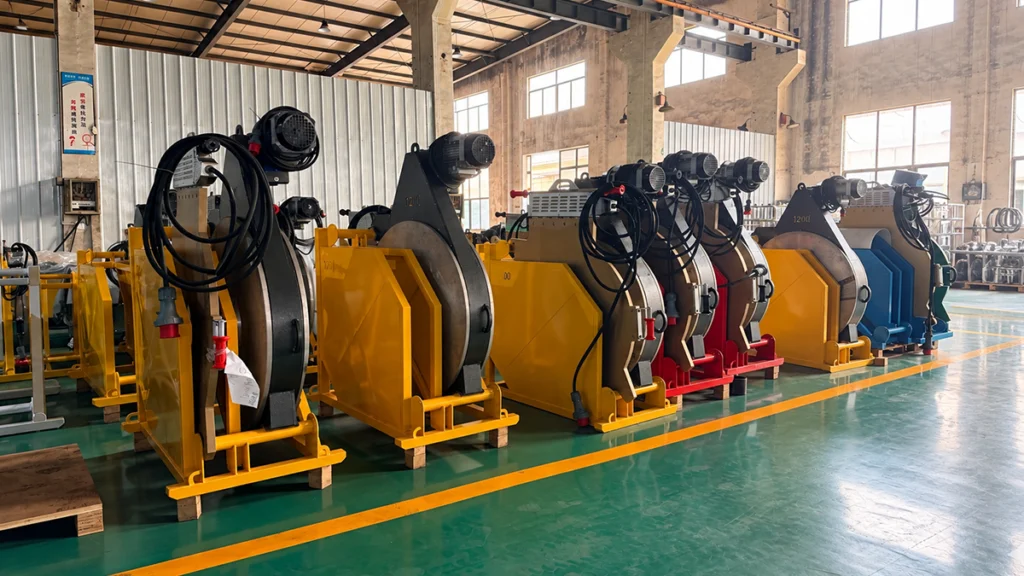
To pull off flawless onsite welds, a large diameter butt fusion welding machine for HDPE relies on four core components:
1. Operating Platform: The hydraulic and electronic brain that controls pressure and timing.
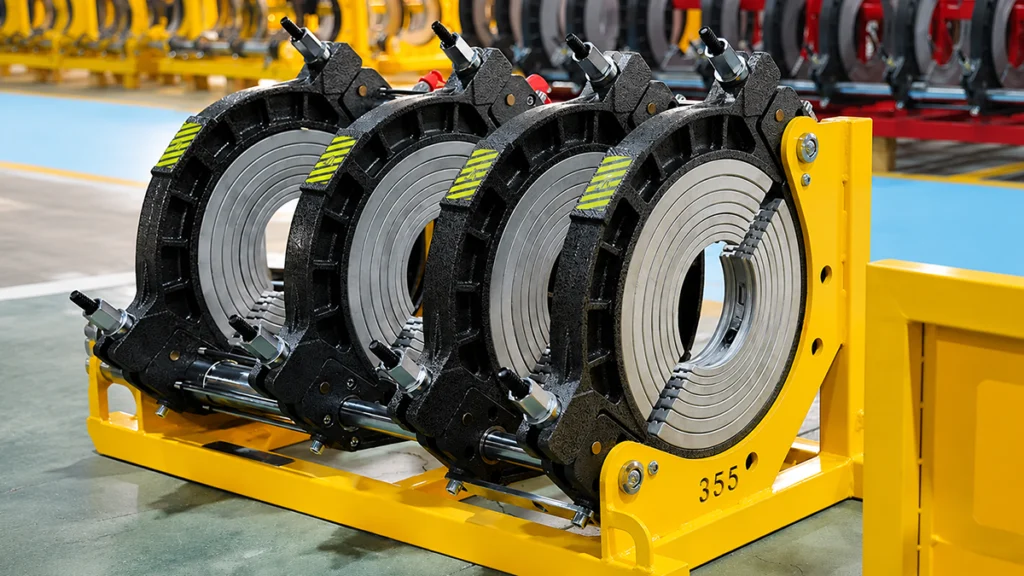
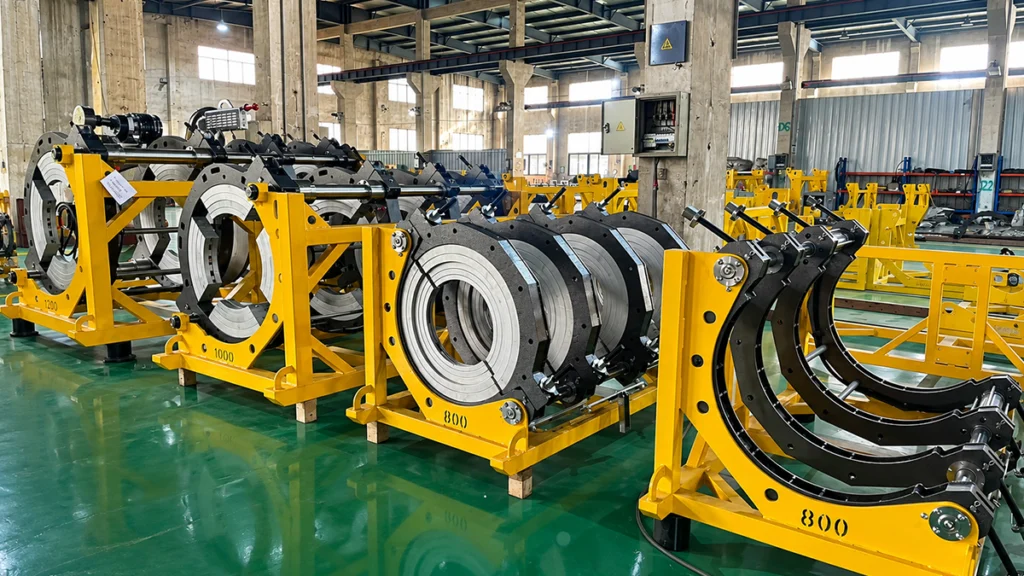
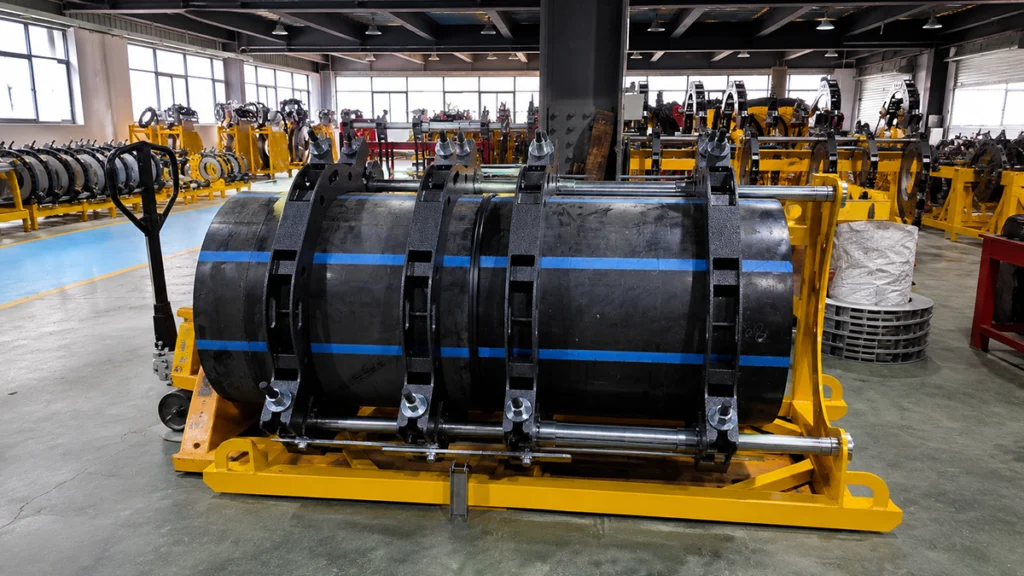
2. Clamping Device (Fixture): The rugged, heavy-duty chassis responsible for holding and aligning massive pipes.
3. Heating Plate: A precisely temperature-controlled, non-stick element that melts the pipe ends.
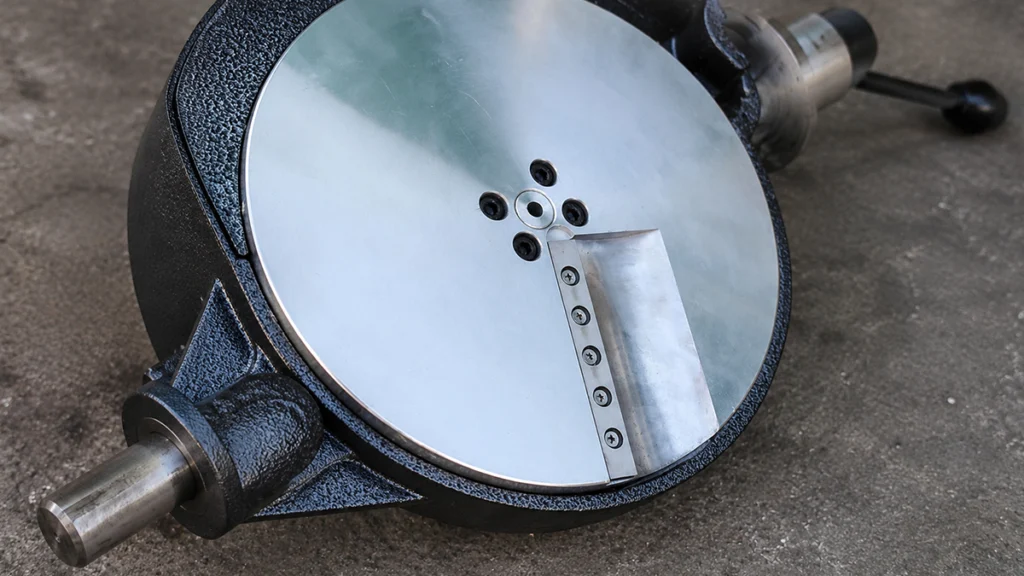
4. Milling Cutter (Facer): A motorized rotating blade designed to shave the pipe ends until they are perfectly flat, parallel, and stripped of surface oxidation.
How does the butt fusion cycle work step by step?
The butt fusion cycle demands a strict, sequential workflow:
1. Positioning: Operators clamp the pipes securely into the heavy-duty fixture.
2. Milling: The facer shaves away the oxidized surface layer, exposing clean, virgin plastic underneath.
3. Alignment: Operators bring the pipe ends together to inspect for gaps or misalignment.
4. Heating: The heating plate drops into place. The HDPE pipe welding machine gauges the drag pressure (the force needed to drag the pipe) and applies the initial bead-up pressure. A heat-soak phase follows.
5. Fusing: The operator quickly pulls the heating plate out and drives the pipe ends together at the exact required interfacial pressure.
6. Cooling: The butt fusion machine holds the joint under steady pressure until the plastic fully solidifies, locking in a permanent bond.
Factory-direct pricing with technical consultation included
Get Your Free QuoteHow the Welding Process Works: Main Components and Cycle
Why temperature, pressure, and alignment control matter
Nailing a successful thermofusion weld demands absolute control over three variables: temperature, pressure, and alignment. Heating plate stability is paramount, usually hovering strictly between 210–230°C for HDPE. You also need precisely calculated hydraulic pressure to overcome the pipe’s drag resistance and apply the correct interfacial force. Finally, alignment cannot be ignored. The twist angle during connection must stay under 5 degrees to guarantee a uniform fusion bead.
Which diameter and SDR range does the machine support?
Manufacturers rate machines for specific OD ranges, like DN315-630 or massive frames up to 3000mm. But diameter only tells half the story. The butt fusion machine for pipeline must pack enough clamping force and structural rigidity to manage the pipe’s Standard Dimension Ratio (SDR). Lower SDR numbers translate to thicker pipe walls. Moving and fusing these heavy-duty pipes requires substantially more hydraulic muscle.
How much hydraulic pressure and clamping force are needed?
Your hydraulic system has to generate sufficient force to hit the interfacial pressure dictated by your chosen welding standard. Take ASTM F2620, for example. It demands a single, high interfacial pressure of 60–90 psi throughout the cycle. In contrast, the European DVS 2207 standard calls for a pressure of 0.15 N/mm². A proper hydraulic butt fusion machine must feature a cylinder capacity mathematically capable of meeting these exact benchmarks based on the pipe’s cross-sectional area.
What heater, facer, and power supply specifications should you verify?
Harsh industrial environments require bulletproof electrical specs. Standard input voltage generally falls between AC 176V and 245V (50±1Hz), though massive units demand 3-phase 380V/400V power. The heating head needs to hit a peak temperature of 260±5°C without wavering. Safety specs leave no room for compromise. Always verify that insulation resistance sits at ≥1MΩ and leakage current remains ≤5mA. This protects your operators in damp, muddy trench conditions.
Key Technical Parameters to Check Before Buying
Should you require data logging or CNC control?
Modern utility and municipal projects increasingly treat data logging as a mandatory requirement. Your data logging systems must comply with ISO 12176-4 to guarantee full traceability. This ensures you capture the exact temperature, pressure, and time for every specific weld joint number. Upgrading to a CNC automatic butt fusion welding machine for large diameter PE pipe pushes this a step further. The CNC system automatically calculates parameters and drives the hydraulic valves, effectively eliminating human error during the critical pressure and timing phases.
Which industries use large diameter HDPE pipe?
Critical infrastructure sectors heavily deploy large diameter HDPE pipelines. You will find them dominating municipal water supply networks, high-pressure gas distribution, agricultural irrigation systems, urban district heating, mining slurry transport, and industrial effluent conduits. Every single one of these industries enforces specific regulatory standards that dictate exactly what your equipment must handle.
How do trench conditions, weather, and site access affect machine choice?
Site realities dictate your equipment configuration. Trench width needs to clear the pipe’s Outside Diameter (O.D.) while offering an extra 24 inches of breathing room for large pipes (24-63″). Weather throws another curveball into the mix. Cold, rainy, or windy conditions rapidly drain heat from the heating plate and pipe ends. To combat this, crews must deploy protective welding tents and utilize machines equipped with rapid plate-removal mechanisms.
When is a portable field machine better than a workshop setup?
You absolutely need a portable large diameter HDPE pipe fusion machine for pipeline installations. Field butt fusion machines separate the clamping chassis from the operating platform, linking them with flexible hydraulic hoses and quick-connect fittings. This modular approach delivers incredible flexibility. Crews can drop the heavy clamping unit directly into tight trench operations while the operator safely manages the process from ground level. Workshop setups offer superior rigidity, but they belong indoors for pre-fabricating segmented fittings like elbows and tees.
Get detailed specs and custom configuration options
Request Technical SpecificationsTypical HDPE Pipeline Applications and Project Conditions
How do you match the machine to pipe diameter and wall thickness?
Finding the right match means evaluating both the maximum OD and the heaviest SDR your project will face. Thick-walled pipes absorb massive amounts of heat. They often require HDPE pipe welding machines capable of executing Dual Low Pressure (DLP) cooling phases, as outlined in ISO 21307. Try to weld thick-walled pipe on a machine with undersized hydraulic cylinders, and you will inevitably face insufficient interfacial pressure and failed welds.
What automation level do you actually need?
Your automation needs tie directly to the scale of the project and its compliance requirements. Manual butt fusion machines fit tight budgets but rely heavily on seasoned operator skill. Hydraulic butt fusion machines step in as a mandatory upgrade for large pipes, delivering the sheer physical pressure required. CNC automation becomes essential when you face strict defect control, manage large professional teams, or work on projects demanding digital weld records for municipal inspectors.
Which accessories are worth specifying?
Spending a little on the right accessories dramatically boosts your ROI. Specifying pipe handling systems—like a PolyHorse or hydraulic pipe rollers—cuts down drag resistance and shields the pipe exterior from damage. Pair these handling systems with your primary fusion equipment, and you can push daily productivity from 10-16 joints per day up to 18-20 joints per day for 20-24″ pipes.
What questions should you ask the supplier?
Vet your large diameter butt fusion machine supplier with highly specific operational questions. Ask about the warranty duration; 24 months is a standard benchmark. Dig into their training programs to see if they provide onsite or remote operator instruction. Most importantly, confirm the immediate availability of replacement heating plates and milling cutter blades. Waiting on these wear parts can completely paralyze a project.
How to Choose the Right Machine for Your Project
What are the real differences in precision and labor demand?
Manual butt fusion machines offer coarse temperature adjustments and require intense physical labor, forcing operators to pump handles or pull levers to manage pressure. Hydraulic models take the heavy lifting out of the equation, using motorized pumps to generate the massive pressure large diameters require. However, operators still manually track the clock and adjust valves. CNC models rewrite the rules. They automatically generate parameters based on pipe inputs and prompt operators at every step. This drastically cuts labor intensity, slashes human error, and maximizes precision.
Which type is better for contractors, fabricators, and utilities?
Independent contractors watching their bottom line usually gravitate toward reliable hydraulic semi-automatic models. They strike a practical balance between cost and capability. Utilities, municipal water departments, and large-scale fabricators operate in a different reality. They generally demand CNC automatic butt fusion machines to guarantee consistent, repeatable operations and to satisfy the strict regulatory requirements surrounding weld data logging.
When does CNC justify the extra cost?
CNC technology easily pays for itself in high-pressure or safety-critical applications, such as gas distribution networks that mandate ASTM F2620 compliance. These environments enforce zero-tolerance defect control. A single catastrophic failure—or the staggering cost of excavating and reworking a busted joint—will quickly dwarf the initial premium you paid for a CNC automatic butt fusion machine.
What drives the total machine price?
Automation levels, maximum size capacity, and brand legacy drive the price tag of a large diameter butt fusion machine. Premium Western brands slap massive markups on their equipment to cover marketing overhead and legacy branding. On the flip side, direct factory OEM/ODM options deliver comparable CNC automation, heavy-duty hydraulics, and identical specifications at highly attractive wholesale price points.
| Feature | Hydraulic (Semi-Auto) | CNC (Fully Automated) |
|---|---|---|
| Pressure Control | Manual valve adjustment | Automated via software |
| Data Logging | Optional / Add-on | Integrated (ISO 12176-4) |
| Labor Intensity | Moderate | Low |
| Best For | Independent contractors | Utilities & EPC firms |
| Price Tier | Moderate | Premium |
Manual vs Hydraulic vs CNC: Which Large-Diameter Machine Fits Your Project?
How long is typical lead time for large equipment?
Lead times for large diameter plastic pipe butt fusion equipment swing wildly based on the manufacturer, machine dimensions, and your customization requests. While standard HDPE pipe welding machines up to 630mm often sit ready in stock, massive 2000mm or 3000mm frames usually require custom builds. Buyers need to factor in several weeks—or even a few months—to accommodate manufacturing, rigorous factory testing, and international shipping logistics.
What MOQ and customization terms matter for distributors?
Equipment distributors must pay close attention to Minimum Order Quantity (MOQ) and customization terms to position themselves effectively in the market. Vital customization options include private labeling (OEM), regional voltage and socket adaptations, tailored frame sizes for local pipe standards, and local language integration for the CNC control panels.
How do you evaluate after-sales support and spare parts?
Judge suppliers by the strength of their comprehensive support infrastructure. A 24-month warranty provides a solid baseline, but rapid repair capabilities and deep spare parts availability actually keep your project moving. Verify that the supplier delivers thorough operator training and keeps an accessible inventory of crucial items like hydraulic seals, facer blades, and PTFE plate coatings.
What causes misalignment, cold joints, or overheating?
Welding defects usually trace back to sloppy site control or botched parameters. Dialing in a low temperature produces thin or short fusion columns. Misalignment happens when crews battle uneven terrain, work in cramped trenches, or simply fail to secure the pipe properly in the clamps. Cold joints strike if someone moves the pipe or applies external force during the highly sensitive cooling stage.
Cost, Delivery Time, MOQ, and Supplier Evaluation
How should operators inspect each weld?
Quality assurance relies on sequential, step-by-step verification. Operators must complete the milling process, run an alignment check, and verify inherent stroke (drag pressure) *before* the heating plate ever touches the pipe. Once the cooling phase wraps up, a visual inspection of the fusion bead is mandatory. A flawless joint displays a uniform, double roll-back bead wrapping around the entire circumference of the pipe.
Which on-site controls reduce rework and scrap?
Enforcing strict environmental and procedural controls will practically eliminate rework. Operators have to scrub pipe surfaces clean, ensure the facer shaves off all oxide scale, and deploy protective tents to hold plate temperatures steady in harsh weather. Above all, operators must rigorously follow the time and pressure values detailed in the butt fusion machine’s manual or CNC prompts. Taking shortcuts during the cooling phase is a guaranteed recipe for failure.
What should you confirm before placing an order?
Never issue a purchase order without signing a detailed contract first. That document must specify the exact equipment model, maximum OD and SDR capacity, total quantity, final price, and a hard delivery timeline. Clarify the complete scope of supply to guarantee that all essential inserts (reducing liners), lifting tools, and data logging modules actually make it into the shipping crate.
Which documents and test records should the supplier provide?
A trustworthy supplier hands over a complete stack of documentation. Demand CE/ISO certifications, factory acceptance test (FAT) reports, and compliance paperwork for welding procedure specifications (like TSG D2002-2006). If you paid for data logging, double-check that the system meets ISO 12176-4 standards to ensure global traceability.
Common Welding Problems, Quality Risks, and How to Prevent Them
How do you compare two machines with similar specs?
When you stack up two HDPE pipe welding machines boasting identical diameter capacities and hydraulic specs, pivot your focus to the Total Cost of Ownership (TCO). Scrutinize the user-friendliness of the control system. Look closely at the structural weight of the clamping chassis—a heavier build usually delivers superior rigidity to fight twisting. Finally, evaluate the supplier’s training infrastructure and the reliability of their parts availability.
Final Buying Checklist for HDPE Pipeline Projects
Use this checklist to guarantee your equipment aligns perfectly with your pipeline project requirements:
- Pipe Specifications: Confirm the butt fusion machine accommodates your maximum Outside Diameter (OD) and packs the hydraulic force necessary to handle your heaviest wall thickness (SDR).
- Standard Compliance: Verify the equipment executes the precise parameters for ISO 21307, DVS 2207-1, or ASTM F2620, depending on what your project engineer demands.
- Automation Requirements: Choose between a hydraulic semi-automatic or a fully automated CNC system based on your budget and data logging necessities.
- Electrical Compatibility: Check that your site generator handles the HDPE pipe welding machine’s voltage (e.g., 220V single-phase versus 380V three-phase) and peak kW draw.
- Site Conditions: If you are dropping into tight trenches, ensure the machine features a modular, portable design equipped with extended hydraulic hoses.
- Supplier Support: Demand a minimum 24-month warranty, guaranteed access to spare parts (heaters, facers, seals), and robust operator training programs.
FAQ
Q1: What pipe sizes can a large diameter butt fusion welding machine handle?
Large diameter butt fusion welding machines typically tackle HDPE pipes starting at 315mm in outside diameter. Depending on the specific model and frame architecture, these heavy-duty industrial units can scale up to fuse massive 1200mm, 1600mm, 2000mm, 2500mm, and even 3000mm pipes for sprawling municipal and industrial projects.
Q2: How does butt fusion welding work for HDPE pipeline construction?
The process requires clamping and aligning two pipe ends, milling them perfectly flat, and heating them with a PTFE-coated plate to a precise temperature (usually 210–230°C). Once the plastic melts, operators remove the plate and use hydraulic pressure to drive the ends together. As the plastic cools under sustained pressure, it creates a permanent, homogenous, and leak-proof bond.
Q3: What is the difference between hydraulic and CNC butt fusion machines?
Hydraulic butt fusion machines rely on motorized pumps to provide clamping force, but they still require the operator to read charts, adjust pressure valves manually, and watch the clock for heating and cooling phases. CNC machines fully automate this workflow. The operator simply inputs the pipe size and SDR, and the onboard computer calculates, applies, and records the exact pressure and time required.
Q4: How do I choose the right butt fusion machine for my project?
Start by matching the HDPE pipe welding machine’s capacity to your project’s maximum pipe OD and wall thickness (SDR). Next, evaluate your site conditions to see if a portable field machine makes sense. Finally, check local municipal requirements to determine if CNC data logging (ISO 12176-4) is mandatory for pipeline compliance and final inspection.
Q5: What factors affect the price of a large diameter butt fusion welding machine?
Pricing hinges primarily on the butt fusion machine’s maximum diameter capacity, the level of automation (manual, hydraulic, or CNC), and brand positioning. Premium Western brands command higher retail prices. Meanwhile, direct OEM/ODM manufacturers deliver comparable heavy-duty specifications and CNC capabilities at much more accessible wholesale price points.
Q6: How can I avoid poor weld quality on HDPE pipelines?
Lock in strict alignment before you start heating. Meticulously clean the pipe ends and completely shave away the oxidized layer during the milling phase. Deploy welding tents to shield the heating plate from wind and cold temperatures. Most importantly, strictly follow the pressure and cooling time parameters mandated by standards like ASTM F2620 or DVS 2207-1 without cutting corners.
Q7: Is a portable field machine suitable for large diameter HDPE pipe installation?
Absolutely. Portable field butt fusion machines are engineered specifically for onsite installations. They utilize a modular design that allows crews to lower the heavy clamping chassis directly into the trench. Meanwhile, the hydraulic operating platform and power supply stay safely above ground, connected by flexible hydraulic hoses and quick-connect fittings.
Conclusion
Selecting the ideal Large Diameter Butt Fusion Welding Machine represents a pivotal procurement decision. It directly dictates the safety, efficiency, and ultimate lifespan of an HDPE pipeline network. True success hinges on accurately matching the equipment’s hydraulic clamping force and heating capacity to the specific diameter and SDR of your pipe. Furthermore, you must ensure uncompromising compliance with global standards such as ISO 21307, DVS 2207-1, or ASTM F2620.
Whether you are outfitting a remote mining operation with a rugged semi-automatic hydraulic unit or supplying a municipal utility contractor with a fully traceable CNC system, precision is non-negotiable. Prioritizing exact temperature control, alignment rigidity, and rock-solid after-sales support drastically reduces the risk of catastrophic joint failure. By rigorously evaluating the Total Cost of Ownership, site logistics, and required automation levels, contractors and distributors can secure equipment that accelerates daily joint production and guarantees a flawless, 100-year pipeline lifespan.
Let our experts help you choose the right equipment for your project
Contact Our Engineering Team