
Butt Fusion Welding Machine in Paraguay: PE Pipe Welding Equipment Buying Guide
Table of Contents
Butt Fusion Welding Machine in Paraguay helps buyers compare PE pipe welding options, technical specifications, local applications, supplier factors, and buying risks so they can choose the right equipment with confidence.
What Is a Butt Fusion Welding Machine?
A butt fusion welding machine is a heavy-duty industrial tool built to seamlessly join thermoplastic pipes using a strict combination of heat and pressure. If you are a contractor or utility provider sourcing a Butt Fusion Welding Machine in Paraguay, grasping how this equipment actually works is your starting point for constructing high-pressure, leak-proof pipeline networks. Forget about standard mechanical fittings. This machinery forges a permanent molecular bond right between the two pipe ends. The result? A fused joint that matches—or even exceeds—the structural strength of the original pipe.
How does butt fusion welding work?
The entire process hinges on exact thermal and mechanical control. First, the butt fusion machine securely clamps two identical, flat pipe interfaces. A PTFE-coated heating plate drops between them, radiating intense heat until the plastic ends reach a highly viscous, molten state. Once that optimal melting temperature hits, the operator (or automated system) retracts the plate. The butt fusion welding machine then drives the HDPE pipe ends together using specific hydraulic or manual pressure. Holding that joint under steady pressure as it cools locks in a flawless molecular bond.
Which pipe materials are compatible with butt fusion?
You can only use this equipment on thermoplastic materials. Polyethylene (PE), High-Density Polyethylene (HDPE), Polypropylene (PP), and Polyvinylidene Fluoride (PVDF) all weld beautifully. However, there is a hard rule for structural integrity: your pipes need a minimum wall thickness of 2.3mm. Try to weld thinner pipes, or throw an incompatible plastic like PVC into the mix, and you will face immediate material degradation and catastrophic joint failure.
Why is butt fusion preferred for PE pipe systems?
Butt fusion dominates the PE and HDPE industry because it essentially erases the interface between two joined components. You get a permanent, homogeneous bond at the molecular level. From a cost perspective, it is unbeatable. You use absolutely zero consumables. Think about electrofusion for a moment—every single joint requires an expensive coupler running anywhere from $20 to $200. Butt fusion simply uses the pipe material itself. On massive pipeline networks, this slashes long-term material expenses to the bone.
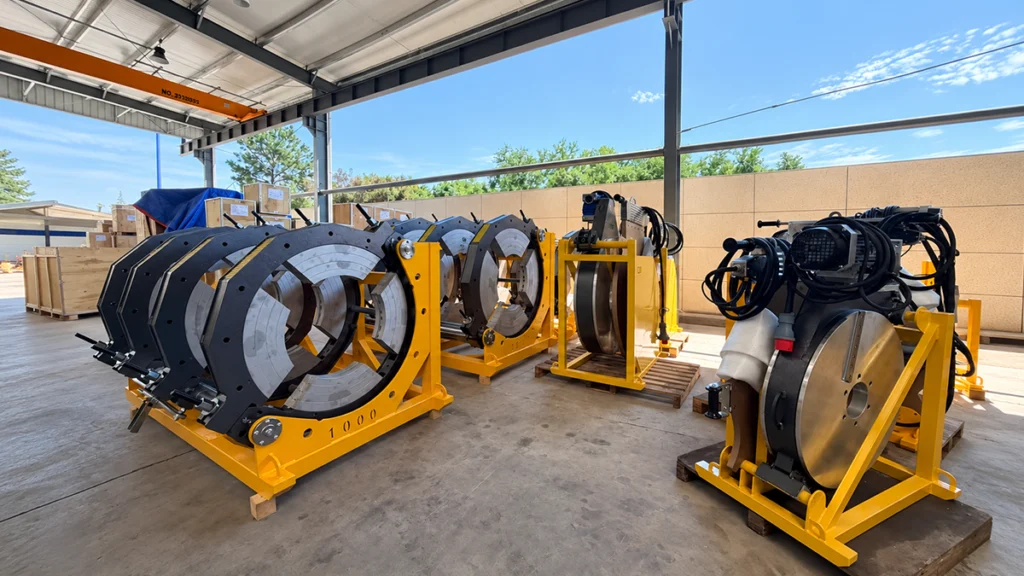
Which industries use butt fusion welding most often?
High-pressure, leak-proof fluid transport is non-negotiable for many sectors, and that is exactly where this technology shines. Municipal water distribution, expansive gas transmission networks, heavy agricultural irrigation, and rugged mining operations all rely on these butt fusion machines. Any operation moving high-volume water, volatile chemicals, or pressurized gas trusts butt fusion to guarantee zero joint leaks across a 50 to 100-year service lifespan.
Why Butt Fusion Equipment Matters for Projects in Paraguay
Paraguay is pushing hard through a massive wave of infrastructure modernization. This makes your choice of pipeline welding equipment a high-stakes procurement decision. Contractors simply cannot absorb equipment failures that derail tight project schedules or threaten the integrity of a newly laid pipeline.
What local project conditions affect equipment selection?
Massive infrastructure upgrades are actively reshaping Paraguay right now. The standout example is the $350 million water treatment and sewage network project near Asunción, spearheaded by ESSAP. Currently, the country battles a staggering 47% drinking water loss rate due to compromised, aging infrastructure. Replacing hundreds of thousands of meters of critical piping demands machinery that can handle relentless, high-volume operation under brutal field conditions.
Why do buyers in Paraguay need reliable joint quality?
Properly fused PE pipes easily last 50 to 100 years. Paraguay’s booming agricultural sector heavily utilizes efficient drip irrigation, while municipalities desperately race to modernize water grids. In both arenas, leak-proof joints are an absolute must. A single blown joint on a high-pressure municipal line triggers devastating local flooding, astronomical excavation costs, and shuts down essential public services.
Manual, semi-automatic, and fully automatic models
Your operational efficiency lives or dies by your equipment selection. Manual butt fusion machines offer a cost-effective, single-cycle action perfect for 63mm to 160mm pipes that only require low start-up pressure. Step up to semi-automatic hydraulic models, and you get automated pressure application alongside motorized heating plate insertion. These are the undisputed standard for medium-diameter municipal water lines (90mm – 315mm). Finally, fully automatic or CNC butt fusion machines bring touchscreen displays, continuous parameter monitoring, and meticulous data logging to the trench. For critical gas pipelines or massive diameters up to 3000mm, CNC capabilities are strictly mandatory.
Hydraulic vs. non-hydraulic machines
Manual (non-hydraulic) units depend entirely on human muscle. Naturally, this limits them to small-diameter jobs. Anything larger requires hydraulic power. Milling, heating, and cooling heavy-duty pipes demands massive, sustained pressure—sometimes hitting 16 MPa. Deploying a hydraulic Butt Fusion Welding Machine in Paraguay guarantees that this intense pressure applies evenly and consistently. Expecting a manual operator to muscle a 315mm or 630mm pipe into alignment is a physical impossibility.
Factory-direct pricing with technical consultation included
Get Your Free QuoteMain Types of Butt Fusion Welding Machines
Grasping the distinct categories of fusion hardware empowers procurement teams to match their capital expenditure directly with real-world field demands.
| Machine Type | Pressure Generation | Ideal Pipe Range | Best Application | Data Logging |
|---|---|---|---|---|
| Manual | Human Force (Lever/Wheel) | 63mm – 160mm | Indoor plumbing, light agriculture | No |
| Semi-Automatic Hydraulic | Hydraulic Pump Unit | 90mm – 630mm | Municipal water, drainage, standard infrastructure | Optional |
| Fully Automatic (CNC) | Automated Hydraulic System | 315mm – 3000mm | Gas transmission, mining, high-spec industrial | Yes (Standard) |
How pipe diameter range affects machine choice
The pipe’s outer diameter (OD) dictates everything: chassis size, clamp configuration, and required hydraulic power. Standard hydraulic models generally handle the 110-250mm range using interchangeable reducer inserts. Meanwhile, heavy-duty models are custom-built for massive 710-1000mm pipes and feature reinforced alignment frames. Do not try to cut corners. Attempting to weld a 315mm pipe on a chassis rated for 250mm guarantees insufficient clamping force and an immediate, catastrophic weld failure.
Pipe diameter range and applicable material
HDPE pipe welding machine in Paraguay specifications must perfectly match your deployed field materials. Here is a standard technical breakdown outlining typical machine capacities.
| Specification | Standard Hydraulic Model | Heavy-Duty CNC Model |
|---|---|---|
| Pipe Diameter Range | 90mm – 315mm | 710mm – 1000mm |
| Compatible Materials | PE, HDPE, PP, PVDF | PE, HDPE, PP |
| System Pressure | 0 – 6.3 MPa | 0 – 16 MPa |
| Total Power Required | 4.21 kW | 23.5 kW |
Heating plate temperature and temperature control accuracy
Your heating plate is the single most critical factor for weld integrity. Standard plates operate between 0 and 270°C. But the metric you really need to watch is the surface temperature differential. It absolutely must remain within ≤ ±3°C to ±5°C across the entire face of the plate. Budget plates suffer from terrible temperature distribution. They create cold spots, which ultimately forge weak molecular bonds. Furthermore, the plate needs a premium Polytetrafluoroethylene (PTFE) coating to stop molten plastic from sticking to the bare metal.
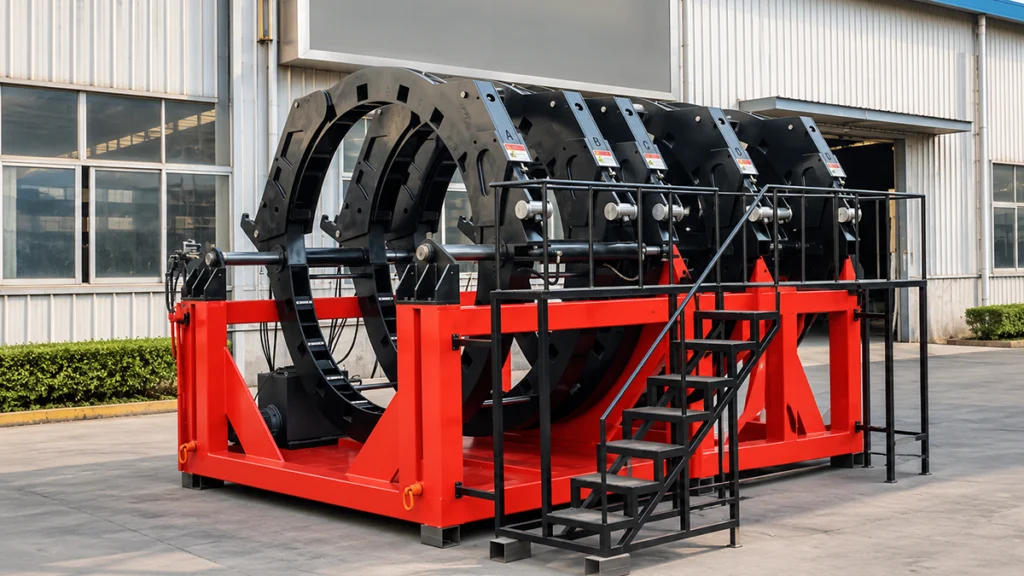
Hydraulic pressure, clamping force, and alignment stability
Flawless welds demand perfect pipe alignment. The butt fusion welding machine’s chassis must be exceptionally rigid so it won’t flex when maxing out the clamping force. System pressure adjustment usually ranges from 0 to 6.3 MPa for standard municipal duties, skyrocketing to 16 MPa for thick-walled mining pipes. If your machine lacks stable alignment and sustained clamping force, the pipes will physically shift during the critical cooling phase. That shift instantly destroys the joint.
Key Technical Specifications to Check Before Buying
Securing a competitive butt fusion machine price in Paraguay means looking well past the initial invoice. You have to scrutinize the technical specifications that actually guarantee performance in the dirt.
Power supply, voltage, and portability requirements
Electrical specs determine if a butt fusion machine can even power on at your job site. Total power draw scales aggressively with butt fusion welding machine size. A 250mm machine might pull 4.21 kW on a standard 220V single-phase supply. Jump to a 1000mm pipe welding machine, and you suddenly need 23.5 kW running on a 380V three-phase grid. Portability matters just as much. Units heading into rural zones require rugged mobile frames with self-aligning capabilities to conquer punishing terrain.
Water distribution and municipal pipelines
High-stakes projects like the Asunción network overhaul require mid-to-large hydraulic rigs (usually 160mm to 630mm). Municipal environments punish equipment. You need pipe fusion machines capable of grinding out high daily output while strictly adhering to DVS or ISO welding standards. This is the only way to prevent nightmare underground leaks down the road.
Agricultural irrigation and drainage systems
Rural Paraguay relies heavily on smaller diameter pipes for drip irrigation and agricultural drainage. These specific projects are a perfect match for portable manual butt fusion machines or compact hydraulic units (63mm – 160mm). The system pressure requirements are lower, and these models respect tighter agricultural budgets.
Mining, industrial, and utility pipeline projects
Industrial and mining sectors pump highly abrasive slurries and aggressive chemicals through incredibly thick-walled HDPE pipes. These brutal applications demand heavy-duty CNC automatic butt fusion machines. The equipment must exert maximum hydraulic pressure (up to 16 MPa) and log precise, unalterable weld data to comply with unforgiving environmental safety regulations.
Get detailed specs and custom configuration options
Request Technical SpecificationsBest Use Cases for Paraguay Buyers
Nailing down the perfect butt fusion machine for PE pipes comes down to analyzing your operational environment and the exact demands of your pipeline network.
How to match the machine to pipe size and workload
Buyer Checklist for Model Selection:
- Pipe Size: Are you topping out under 160mm (manual), hitting 315mm (standard hydraulic), or pushing past 315mm (heavy hydraulic/CNC)?
- Workload Volume: Are you executing 5 welds a day or 50? High-volume jobs demand hydraulic automation to eliminate severe operator fatigue.
- Wall Thickness (SDR): Lower SDR numbers mean thicker walls, which require substantially higher clamping forces.
- Site Environment: Do you have reliable access to 380V three-phase power, or are you tethered to 220V field generators?
When should you choose a portable model?
Wheeled mobile frames are an absolute necessity for agricultural contractors and rural water crews. When you are navigating rough Paraguayan terrain and hauling long pipe sections back to a central fabrication shop is out of the question, your HDPE piep welding machine in Paraguay has to maneuver easily right down in the trench.
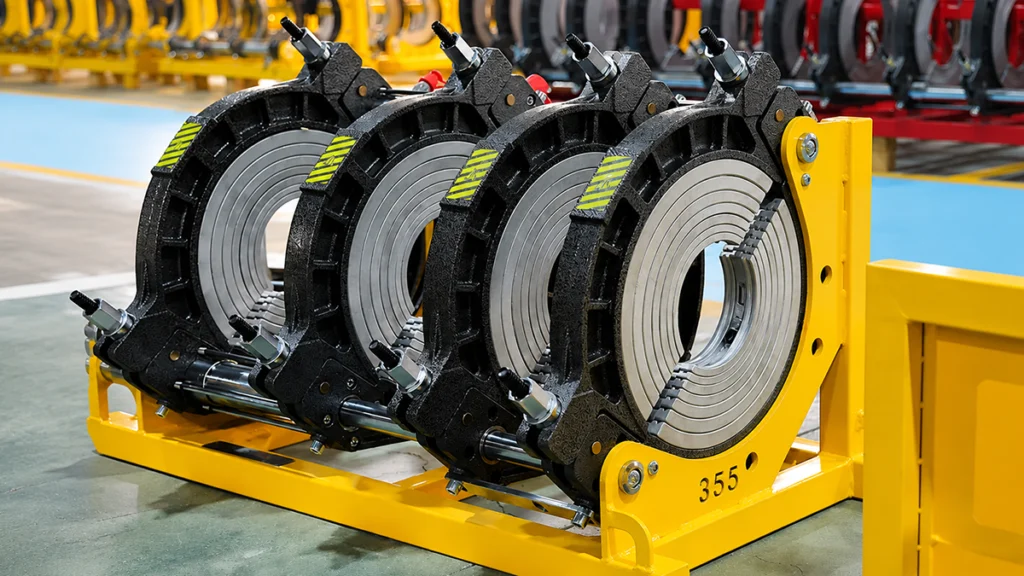
What level of automation is enough for your team?
Today, about 60% of modern construction crews demand built-in weld quality detection or automated data logging. If you are just laying agricultural water lines, a standard semi-automatic hydraulic rig does the job perfectly. But if you are bidding on lucrative ESSAP municipal tenders or handling gas transmission lines, CNC automation equipped with operator code logging isn’t just nice to have—it is a mandatory compliance hurdle.
What factors influence butt fusion machine price?
Capital costs swing wildly based on your required diameter capacity and automation level. Basic manual butt fusion machines (63-160mm) will set you back between $500 and $1,500. Standard hydraulic units (90-315mm) range from $2,799 to $5,700. Step up to large hydraulic models (up to 630mm) and you are looking at $8,500 to $14,000. Fully automated CNC pipe fusion machines scale rapidly from $15,000 to well over $90,000. Premium western brands like McElroy (USA) or GF (Switzerland) hit the highest price points. Conversely, high-ROI Asian OEMs like Ekberg deliver the exact same hydraulic capabilities at a 40-60% reduction in capital expenditure.
How to Choose the Right Model for Your Project
Vetting a Paraguay PE pipe welding equipment importer and distributor means evaluating their long-term operational support, rather than just staring at the upfront price tag.
How do MOQ and spare parts availability affect procurement?
Minimum Order Quantities (MOQ) almost never apply to massive hydraulic butt fusion machines, but suppliers frequently enforce them on smaller manual units or spare part kits. Spare parts availability is critical—specifically replacement PTFE heating plates, hydraulic seals, and milling blades. A butt fusion welding machine sitting dead in the dirt for three weeks waiting on a replacement seal from overseas will paralyze your entire pipeline project.
What should buyers ask about warranty and after-sales support?
A 12-month warranty is standard across the industry. However, premium wholesale suppliers step up with 3-year warranties that cover non-human damage, backed by lifetime maintenance support. Always ask the supplier directly if they offer digital troubleshooting, comprehensive video operational training, and the rapid deployment of replacement electrical components.
Why cheap machines can create higher project risk
Buying ultra-low-budget butt fusion welding machinery injects catastrophic risk into your project. Cheap units notoriously suffer from erratic temperature control, frequently fluctuating by more than ±5°C across the heating plate. This directly causes cold fusion—a severe defect where the plastic looks joined on the outside but completely lacks molecular integration. Once you bury and pressurize that pipe, those weak joints will blow out, triggering astronomical excavation and repair bills.
What happens when voltage or pipe standards do not match?
Voltage mismatches destroy equipment in seconds. Hook up 380V to a rig rated for 220V, and you will instantly fry the internal electrical coils and pump motors. Beyond power, your butt fusion welding machine must align with the specific engineering standard outlined in your project tender. The North American ASTM F2620 standard mandates high interfacial pressure (0.41–0.62 MPa). In contrast, the European DVS 2207-1 standard utilizes a single low pressure (0.15 N/mm²). Your HDPE pipe welding machine’s hydraulic system must actually be capable of executing the required standard.
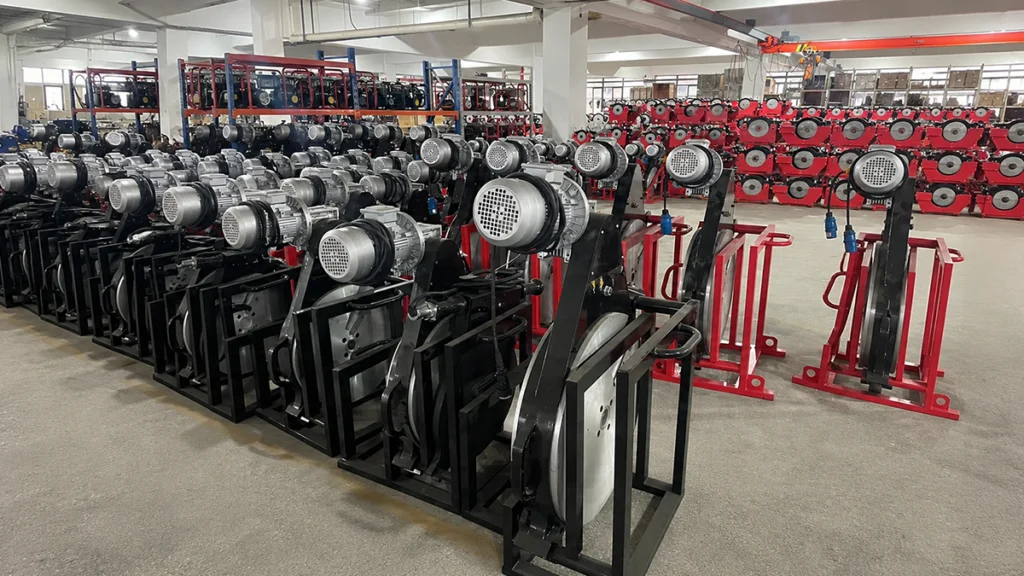
Price, MOQ, Lead Time, and Supplier Evaluation
Upgrading from a manual setup to a hydraulic butt fusion system delivers a massive 20-25% boost in operational efficiency over a 3-to-5-year window. This rapid productivity increase easily offsets the initial capital investment.
How can poor operator training affect weld quality?
Field data reveals that proper parameter monitoring can eliminate 75% of all welding mistakes. Operators routinely make severe errors: they fail to scrape the pipe adequately (leaving the oxidized plastic layer intact), skip cleaning the pipe ends with isopropyl alcohol, or completely ignore mandatory cooling times under pressure. You can buy the most advanced CNC pipe fusion machine on the market, but if the operator skips basic surface preparation, you will still get a failing joint.
What does a typical butt fusion workflow look like?
1. Pipe Clamping/Positioning: Lock both pipe ends securely into the HDPE pipe welding machine chassis, ensuring flawless axial alignment.
2. Milling: Drop in the facer to shave the pipe ends. Keep milling until continuous ribbons of plastic peel away, leaving perfectly parallel surfaces.
3. Heating: Insert the PTFE heating plate. Apply initial pressure to form a bead, then back off the pressure so the heat soaks deep into the pipe walls until they reach a viscous state.
4. Cooling: Pull the plate out, drive the pipe ends together at the exact specified hydraulic pressure, and hold that position until the joint fully cools.
Which routine checks improve machine life?
Strict preventative maintenance adds years to your butt fusion machine’s lifespan. Operators need to grab a multimeter regularly to measure the heating element resistance, catching failing coils before they blow. You must keep guide pillars and chassis rods well-lubricated with machine oil to stop the hydraulics from binding. Lastly, inspect the oil-gas separator on the hydraulic unit and drain out any accumulated water to shield the sensitive internal valves.
How should teams store and transport the equipment?
Hydraulic butt fusion welding machines are heavy, precision-calibrated pieces of engineering. Transport them securely on their engineered mobile frames or strap them down hard to heavy-duty pallets. When running the equipment, enforce strict safety protocols. Hydraulic clamping demands mandatory two-handed operation—meaning the operator must press both activation buttons simultaneously. This guarantees their hands remain safely outside the crush zone.
Common Buying Mistakes and Hidden Risks
Do not buy equipment based on the absolute largest pipe diameter you *might* theoretically weld five years from now. This mistake forces you to overpay for a massive, cumbersome HDPE pipe welding machine in Paraguay that is a nightmare to maneuver for daily, smaller-diameter tasks.
Which machine profile fits most Paraguay buyers?
Looking closely at Paraguay’s current infrastructure and agricultural trends, a 160mm-315mm semi-automatic hydraulic butt fusion machine running on 220V offers the best versatility. It handles the vast majority of municipal water distribution lines and heavy agricultural mains, while staying highly portable and perfectly compatible with standard job site generators.
What information should you prepare before requesting a quote?
To get an accurate, actionable quote, your procurement team needs to hand the supplier four vital pieces of data:
1. Pipe Diameter Range: Define the absolute minimum and maximum OD (for example, 90mm to 315mm).
2. Wall Thickness (SDR): Provide the Standard Dimension Ratio of your pipes.
3. Local Site Voltage: Verify whether your site runs on 220V single-phase or requires 380V three-phase.
4. Welding Standard: Clearly state if the project tender demands compliance with ISO 21307, DVS 2207, or ASTM F2620.
When is it worth consulting a technical specialist?
Bring in a technical specialist the moment you start bidding on major government tenders—like the massive ESSAP water networks—or when you are outfitting a remote mining operation. A specialist will map out the exact hydraulic pressure curves needed for thick-walled pipes. They also verify that your chosen CNC equipment hits every single data-logging compliance metric required for high-stakes public works.
Installation, Operation, and Maintenance Basics
Flawless installation and rigorous ongoing maintenance hold just as much weight as your initial procurement strategy. Training your crew to master hydraulic controls, temperature calibration, and strict alignment procedures will drastically slash field downtime and protect your pipeline network from devastating joint failures.
Final Buying Advice for Paraguay Projects
Procuring a Butt Fusion Welding Machine in Paraguay is a balancing act between managing upfront capital and guaranteeing long-term reliability. Always prioritize hydraulic pipe fusion machines equipped with uncompromising temperature control (variance of ≤ ±5°C) and heavily reinforced alignment frames. Finally, lock in a supplier that delivers robust after-sales support, transparent warranty terms, and lightning-fast spare parts availability. This ensures your pipeline projects push forward without costly interruptions.
FAQ
Q1: What size butt fusion welding machine do I need for PE pipe projects?
Your necessary size is dictated entirely by the pipe’s outer diameter (OD). If you are tackling indoor plumbing or light agricultural lines, a 63-160mm manual butt fusion machine does the job perfectly. For standard municipal water and gas installations, you will need a 90-315mm hydraulic unit. Heavy civil infrastructure and mining pipelines demand massive machines rated anywhere from 315mm up to 1000mm and beyond.
Q2: Is a manual or hydraulic butt fusion machine better for my job?
Manual butt fusion machines only make sense for pipes under 160mm, where basic human force can actually achieve the necessary fusion pressure. Once you move past 160mm, or if you are doing high-volume daily welding, a hydraulic machine becomes strictly mandatory. Only hydraulics can provide the sustained, even pressure (hitting up to 16 MPa) required to forge a secure molecular bond.
Q3: What voltage should I check before buying equipment for Paraguay?
You absolutely must verify the power capabilities of your specific job site. Smaller butt fusion machines (up to 250mm) generally operate on standard 220V single-phase power, drawing roughly 4.21 kW. In contrast, heavy-duty machines (up to 1000mm) demand 380V three-phase power and can pull upwards of 23.5 kW. Supplying the wrong voltage will instantly destroy your equipment.
Q4: How much does a butt fusion welding machine usually cost?
Pricing heavily depends on capacity and technological features. Basic manual butt fusion machines run between $500 and $1,500. Standard semi-automatic hydraulic models (90-315mm) range from $2,799 to $5,700. Larger hydraulic units (up to 630mm) will cost between $8,500 and $14,000. Fully automated CNC machines built for critical gas or mining pipelines start around $15,000 and go up from there.
Q5: Can one machine handle different pipe diameters and materials?
Absolutely. Butt fusion machines utilize interchangeable aluminum reducer inserts (clamps) to lock in various pipe sizes within their specific rated range. For instance, a 315mm machine can easily weld 90mm, 110mm, and 160mm pipes. They confidently weld PE, HDPE, PP, and PVDF materials, as long as the pipe wall thickness hits the 2.3mm minimum.
Q6: What should I ask a supplier before placing an order?
Make sure to ask about the heating plate temperature variance; it absolutely must be ≤ ±5°C. Next, inquire about the warranty length (12 months is standard, but premium suppliers offer up to 3 years). Finally, confirm their inventory of spare parts—like PTFE plates and hydraulic seals—and ask if they provide active technical troubleshooting support for your field operators.
Q7: How do I know if the welding result is strong enough for field use?
A robust weld is initially verified through visual inspection of the fusion bead. It needs to be completely uniform, smooth, and rolled over perfectly around the entire circumference of the pipe. For highly critical projects, CNC HDPE pipe welding machines remove the guesswork by providing unalterable data logging. This confirms that the exact temperatures, pressures, and cooling times were executed according to strict ISO, DVS, or ASTM standards.
Conclusion
Securing the correct pipeline welding equipment is a high-stakes move for any infrastructure, agricultural, or municipal project. Choosing between manual, semi-automatic, and fully automatic CNC systems ultimately comes down to your pipe diameter range, daily workload demands, and the rigidity of your project’s compliance standards. By demanding precise heating plate temperature control, unyielding hydraulic clamping force, and accurate voltage matching, contractors can completely eliminate the threat of cold fusion and joint blowouts. When you evaluate suppliers based on rapid spare parts availability and rock-solid warranty support, you guarantee that your equipment delivers a massive return on investment while keeping field operations moving smoothly for years to come.
Let our experts help you choose the right equipment for your project
Contact Our Engineering Team