
Table of Contents
Butt fusion machine manufacturers in China offer a wide range from manual to CNC models. This guide helps HDPE pipe project buyers compare top suppliers by specs, certifications, pricing, and after-sales support to make a confident sourcing decision.
What Is a Butt Fusion Machine and Why It Matters for HDPE Pipe Projects
A butt fusion machine seamlessly connects high-density polyethylene (HDPE) pipes. It does this by heating the pipe ends to an exact temperature and driving them together under strictly controlled hydraulic pressure. The result? A perfectly homogeneous, leak-proof weld. Think of it as a mandatory piece of infrastructure equipment for high-pressure environments where pipeline integrity simply cannot fail. For procurement managers, partnering with a reliable butt fusion machine manufacturer isn’t just a box to check. It is the frontline defense against joint failure, ensuring project safety and strict compliance with global welding standards.
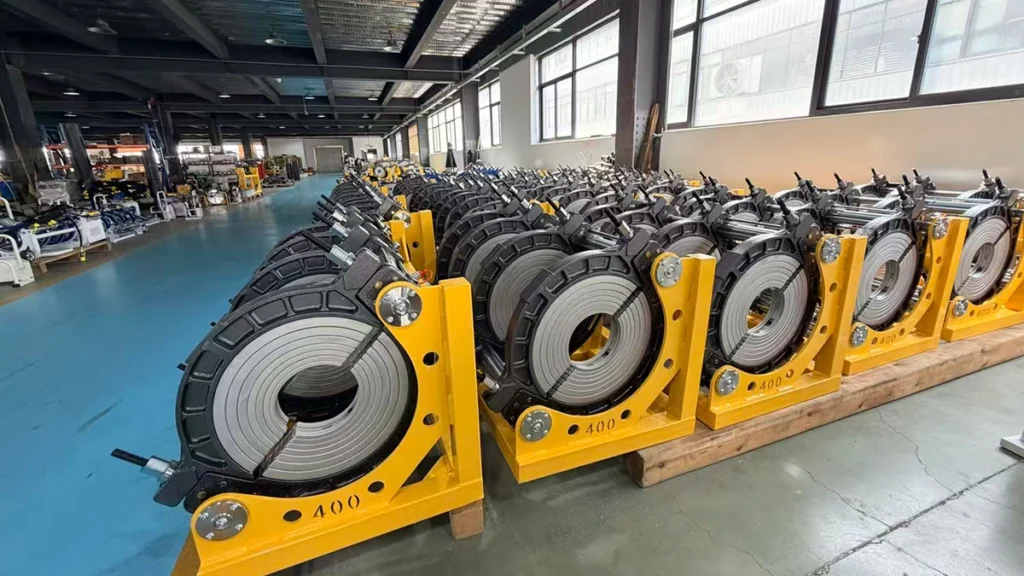
How does a butt fusion machine work? The basic welding process explained
Heat-fusion leverages highly accurate temperature and pressure parameters to fuse thermoplastic materials at a molecular level. The standard operation follows four distinct steps:
1. Milling: Clamps lock the pipe ends firmly in place. A high-speed carbon steel planer then shaves the faces, guaranteeing they are completely parallel and stripped of any surface oxidation.
2. Heating: Operators insert a PTFE-coated heating plate—usually running between 200°C and 220°C—between the freshly milled ends. The machine applies initial pressure to melt the material, followed by a dedicated heat-soak phase.
3. Changeover: The heating plate retracts rapidly. Speed is vital here; if the transition takes too long, the molten pipe ends will cool down and ruin the bond.
4. Fusion and Cooling: The system engages precise hydraulic pressure, driving the molten ends together to create a uniform, solid bead. The joint stays under pressure until it completely cools down.
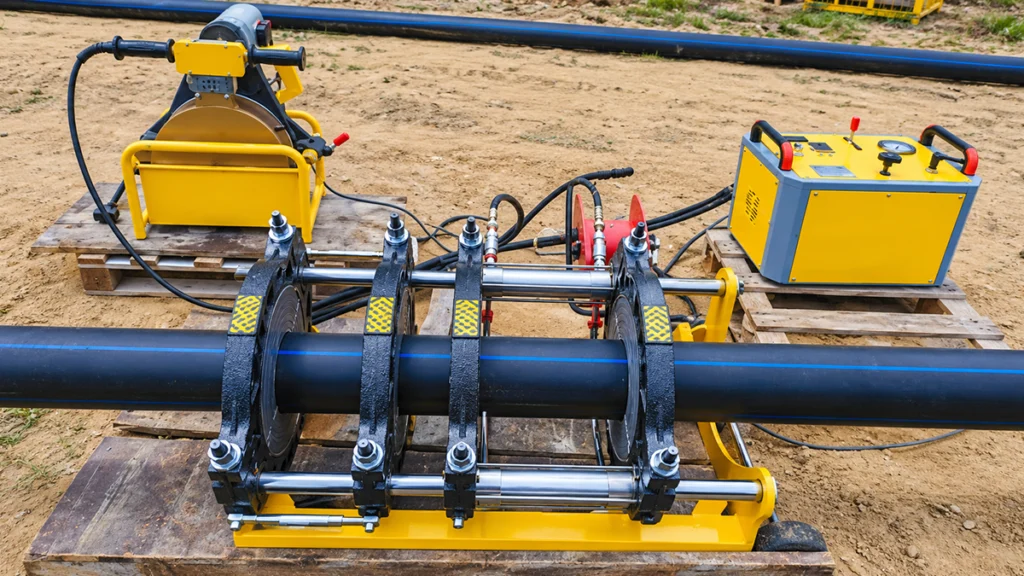
Which HDPE pipe applications require butt fusion welding machines
You need butt fusion welding anytime a project demands zero leaks and massive tensile strength. Major municipal water conservancy systems rely on it. High-pressure natural gas grids and volatile chemical transport lines depend on it entirely. In the mining sector, engineers use these machines to construct heavy-duty slurry lines, while large-scale agricultural operations use them to build massive irrigation networks. Even fire protection systems require butt fusion to guarantee pipes won’t burst during a sudden, violent pressure surge.
Butt fusion vs. electrofusion: when to choose each method
| Attribute | Butt Fusion | Electrofusion |
|---|---|---|
| Primary Application | Long, straight pipeline runs | Confined spaces, repairs, tie-ins |
| Pipe Size Suitability | ≥ 63mm up to 2600mm | ≤ 63mm (standard), up to 1200mm (specialized) |
| Equipment Complexity | High (requires hydraulic/CNC control) | Low (requires compact control box) |
| Cost Efficiency | High material savings on large projects | Higher cost per joint due to consumable fittings |
| Weld Strength | Monolithic joint, equal to pipe strength | Excellent, but relies on fitting integrity |
Key Types of Butt Fusion Machines Chinese Manufacturers Produce
Factories across China categorize their equipment based on two main factors: the level of automation and the pipe diameter capacity. Getting a grip on these classifications helps engineers pair the right hardware with their specific site realities and the skill level of their crew.
| Machine Type | Typical Diameter Range | Operator Skill Required | Output Speed | Price Tier | Best-Fit Application |
|---|---|---|---|---|---|
| Manual | 63mm – 200mm | High (manual pressure control) | Moderate | Low | Small-scale plumbing, low-pressure irrigation |
| Semi-Automatic (Hydraulic) | 63mm – 1200mm | Moderate | Fast | Medium | Standard municipal water and gas pipelines |
| CNC / Fully Automatic | 90mm – 1600mm | Low (automated parameters) | Very Fast | High | Heavily regulated high-pressure gas projects |
Manual vs. hydraulic butt fusion machines: cost and capability differences
Manual units operate entirely on human muscle. Operators use a lever or handwheel to generate the required fusion pressure. While exceptionally budget-friendly, they only work for small-diameter pipes where physical force is enough. Hydraulic models, on the other hand, pack an integrated hydraulic station that pushes between 0 and 6.3 MPa of pressure. If you are dealing with larger diameters or thick Standard Dimension Ratio (SDR) pipes, a hydraulic butt fusion welding machine is an absolute necessity. The milling and fusion forces needed for those heavy-duty pipes go far beyond what a human can manually apply.
CNC and fully automatic butt fusion Welding machines for large-diameter pipeline projects
Fully automated CNC systems handle the entire milling, heating, and pressurization cycle without a single manual input. These advanced units boast independent dual-channel timers, real-time ambient temperature compensation, and closed-loop hydraulic controls. They also log the data for every single weld, easily storing up to 1,000 records onboard. For high-pressure gas installations, this level of traceability isn’t just nice to have. It’s a strict, non-negotiable requirement for quality assurance and compliance audits.
Pipe diameter range classifications: from 63mm units to 1600mm production machines
Manufacturers categorize equipment capacity by the maximum outer diameter (OD) the chassis can hold. Small, portable units tackle the 63mm to 200mm range. Mid-range models manage 315mm to 630mm and dominate municipal utility projects. Large-diameter machines handle massive 630mm to 1200mm pipes and typically require a trailer for on-site mobility. For extreme specialized industrial or marine outfall jobs, custom production rigs can handle pipes up to an astonishing 2600mm.
Factory-direct pricing with technical consultation included
Get Your Free QuoteCritical Technical Specifications to Evaluate Before Choosing a Manufacturer
Buying a butt fusion welding machine just because it fits your pipe size is a classic procurement trap. Engineers need to dig into the mechanical and electrical tolerances to confirm the equipment can consistently deliver welds that pass international standards.
| Technical Parameter | Industry Standard Requirement | Critical Function |
|---|---|---|
| Temperature Control | ≤ ±3°C accuracy | Prevents material degradation or cold joints |
| Hydraulic Pressure | 0 – 6.3 MPa range | Ensures sufficient force for high SDR pipes |
| Drag Pressure (P0) | Measurable and compensable | Adjusts for pipe weight and friction during fusion |
| Heating Plate Coating | High-grade PTFE | Prevents molten PE from sticking during changeover |
| Data Logging | Minimum 1000 records (CNC) | Provides QA/QC documentation for inspectors |
Heater plate temperature accuracy and control system standards
Your heating plate dictates the integrity of your weld. It needs a premium PTFE coating so molten polymer doesn’t stick to the surface. Beyond that, the electronic thermostat must run on a PID (Proportional-Integral-Derivative) control system. This ensures the temperature never fluctuates more than ±3°C across the entire plate. Poor heat distribution creates localized cold spots, which will aggressively undermine the pipeline’s overall tensile strength.
Hydraulic pressure range, drag pressure compensation, and fusion force specifications
A high-quality hydraulic system holds steady working pressure between 0 and 6.3 MPa without a hint of pressure droop. The equipment must let operators measure drag pressure (P0)—the actual force needed to overcome friction when moving heavy pipe segments. The HDPE pipe welding machine’s control unit then compensates for this drag by adding it to the theoretical fusion pressure. This calculates the exact total force required to secure the joint.
Certification requirements: CE, ISO 12176, and DVS 2207 compliance explained
Don’t buy anything without ISO 12176-1 certification. This standard sets the mechanical and electrical baseline for butt fusion welding machines worldwide. Additionally, the machine’s software and hydraulics must align with specific regional welding parameters. The European DVS 2207-1 standard mandates a low interfacial pressure of 0.15 N/mm², whereas the US ASTM F2620 standard calls for a high interfacial pressure of 60 to 90 psi. A CE certified butt fusion welding machine guarantees the unit passes strict European electrical and safety directives.
Top 10 Butt Fusion Machine Manufacturers in China: Company Profiles and Strengths
Global supply chains lean heavily on Chinese butt fusion machine manufacturers. Why? They offer massive production scalability backed by aggressive pricing. Below is a breakdown of the leading factories currently dominating the global export market.
Manufacturer selection criteria used in this ranking
We didn’t base this evaluation on flashy marketing brochures. Instead, we looked at hard, verifiable B2B procurement metrics. That includes total manufacturing footprint, international export volumes, strict compliance with ISO 12176-1 and CE standards, CNC automation capabilities, and the overall range of pipe diameters supported.
Profiles: leading Chinese butt fusion machine factories by production scale and export record
1. Ekberg Welding
Ekberg Welding stands out as a top-tier technical manufacturer dedicated to heavy-duty pipeline hardware. Famous for their uncompromising quality control, they build HDPE pipe welders designed to tackle massive industrial jobs with flawless hydraulic stability.
| Attribute | Detail |
|---|---|
| Location | zhuji, Zhejiang |
| Key Products | Butt Fusion Welding Machines, Electrofusion machine |
| Diameter Range | 63mm up to 2600mm |
| Certifications | ISO 9001, CE, ISO 12176-1 |
| Export Markets | Global (Europe, Middle East, South Americas) |
| Core Strength | Custom hydraulic units up to 2600mm |
2. MM-Tech
MM-Tech (Mingtang) has earned serious international recognition for its V Series lineup. They dominate the standard municipal pipeline tool sector and hold a massive inventory, allowing for incredibly fast deployment.
| Attribute | Detail |
|---|---|
| Location | Hebei Province |
| Key Products | V Series Hydraulic Machines, Trailer Units |
| Diameter Range | 63mm to 1600mm |
| Certifications | CE, ISO 9001 |
| Export Markets | Southeast Asia, Africa, South America |
| Core Strength | High-volume production of trailer machines |
3. Wuxi Baoda Plastic Pipe Welding Equipment
Operating as one of the oldest and most established factories in the region, Wuxi Baoda pushes massive export volumes. Distributors love them because they deliver reliable, standard-spec machines and maintain consistent stock levels.
| Attribute | Detail |
|---|---|
| Location | Wuxi, Jiangsu |
| Key Products | Standard Hydraulic, Fitting Fabrication Machines |
| Diameter Range | 63mm to 1600mm |
| Certifications | CE, ISO 9001 |
| Export Markets | Global (Over 80 countries) |
| Core Strength | Extensive export history and reliability |
4. Riyang Welding
Riyang Welding aims directly at the premium market segment in China. Their V630 and V1200SHP models are built to satisfy rigorous European standards, positioning them as a fierce competitor to established Western brands.
| Attribute | Detail |
|---|---|
| Location | Wuxi, Jiangsu |
| Key Products | Premium CNC and Hydraulic Machines |
| Diameter Range | 63mm to 1200mm |
| Certifications | CE, DVS compliant parameters |
| Export Markets | Europe, Australia, Middle East |
| Core Strength | Advanced CNC data logging integration |
5. Sunplast
Sunplast takes a comprehensive approach, manufacturing both HDPE pipes and the welding equipment used to join them. This dual expertise means they rigorously test their machines on their own proprietary piping products.
| Attribute | Detail |
|---|---|
| Location | Ningbo, Zhejiang |
| Key Products | Manual and Hydraulic Fusion Machines |
| Diameter Range | 63mm to 800mm |
| Certifications | CE, ISO 9001 |
| Export Markets | South America, Africa |
| Core Strength | Deep understanding of pipe-to-machine compatibility |
6. Welping
Welping prioritizes compact engineering and highly intuitive user interfaces. Contractors who jump from site to site love this equipment because it offers superb mobility without compromising an ounce of hydraulic power.
| Attribute | Detail |
|---|---|
| Location | Foshan, Guangdong |
| Key Products | Compact Hydraulic Machines |
| Diameter Range | 63mm to 800mm |
| Certifications | CE, ISO 9001 |
| Export Markets | Southeast Asia, Middle East |
| Core Strength | Lightweight frame engineering |
7. Suda Plastic Pipe Machinery
Suda Plastic Pipe Machinery builds rugged, heavy-duty frames specifically engineered to survive brutal trench environments. Thanks to their robust designs, they serve as a trusted OEM supplier for several major international brands.
| Attribute | Detail |
|---|---|
| Location | Qingdao, Shandong |
| Key Products | Heavy-duty Hydraulic Welders |
| Diameter Range | 90mm to 1200mm |
| Certifications | CE, ISO |
| Export Markets | Russia, Central Asia, South America |
| Core Strength | Exceptional frame rigidity and durability |
8. Bada Pipe Machinery
Bada Pipe Machinery delivers aggressively priced solutions for standard water supply infrastructure. By running lean manufacturing operations, they keep capital costs highly accessible for buyers in emerging markets.
| Attribute | Detail |
|---|---|
| Location | Wenzhou, Zhejiang |
| Key Products | Economy Hydraulic and Manual Machines |
| Diameter Range | 63mm to 630mm |
| Certifications | ISO 9001 |
| Export Markets | Africa, Southeast Asia |
| Core Strength | Aggressive pricing for standard units |
9. Huajin Weler
Huajin Welder pours its resources into continuous technological R&D. They specifically focus on upgrading hydraulic station efficiency and drastically cutting power consumption during large-diameter welding operations.
| Attribute | Detail |
|---|---|
| Location | Zhuji, Zhejiang |
| Key Products | Energy-efficient Hydraulic Machines |
| Diameter Range | 63mm to 1000mm |
| Certifications | CE, ISO 9001 |
| Export Markets | Middle East, Eastern Europe |
| Core Strength | Optimized hydraulic power units |
10. BDR Pipe Welding
BDR Pipe Welding excels at engineering tailored solutions for highly specialized industrial jobs. If you need custom clamp designs for non-standard pipe fittings or complex flanges, this is the factory to call.
| Attribute | Detail |
|---|---|
| Location | Wuxi, Jiangsu |
| Key Products | Custom Fusion Equipment |
| Diameter Range | 63mm to 1200mm |
| Certifications | CE, ISO |
| Export Markets | Domestic China, Southeast Asia |
| Core Strength | High flexibility in custom clamp manufacturing |
Which manufacturers specialize in large-diameter or CNC butt fusion equipment
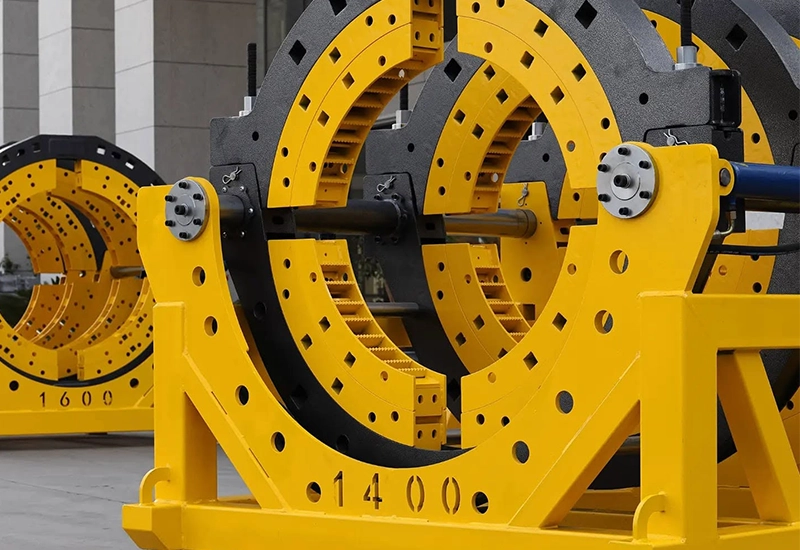
When a project calls for a butt fusion welding machine for large diameter HDPE pipe (anything over 800mm), Ekberg Welding, Riyang, and MM-Tech are the go-to suppliers. These companies have the heavy machining infrastructure required to build massive, distortion-free steel chassis. They also integrate advanced CNC modules boasting IP54 protection ratings. This ensures the flawless automated pressure control and accurate data logging required to execute DVS 2207-1 compliant welds on critical infrastructure.
Get detailed specs and custom configuration options
Request Technical SpecificationsHow Chinese Butt Fusion Machine Manufacturers Compare to European Brands
International procurement teams constantly weigh the upfront cost savings of Chinese machinery against the legacy reputations of European and American brands like Georg Fischer, Ritmo, and McElroy. To budget accurately, you need to understand the actual technical differences between the two.
| Comparison Metric | Top-Tier Chinese Brands | European / US Brands |
|---|---|---|
| Price Range (Standard) | $1,000 to $4,000 | $6,000 to $25,000 |
| Price Range (CNC/Large) | $10,000 to $25,000 | $45,000 to $95,000 |
| Certification Level | CE, ISO 12176-1 | CE, ISO, heavily localized certs |
| Weld Precision Tolerance | ≤ ±3°C, stable pressure | ≤ ±2°C, ultra-stable pressure |
| Lead Time | 7 to 14 days | 30 to 90 days |
| Proprietary Ecosystem | Open data formats | Closed, proprietary software |
Price gap between Chinese and European butt fusion machines: what you actually get
The price difference is staggering. A fully automatic European unit can easily run past $95,000, while a Chinese model with equivalent capabilities costs a fraction of that. When you buy Western brands, you are largely paying for closed proprietary data logging ecosystems, massive local dealership networks, and heavy on-site training initiatives. Chinese manufacturers strip away the bloat. They give you the raw mechanical and hydraulic power needed to execute the weld perfectly, utilizing standardized, easily replaceable components that keep your capital expenditure low.
Are Chinese butt fusion machines CE certified and DVS compliant?
Absolutely. Top-tier Chinese equipment carries full CE certification, clearing it for export into European markets. More importantly, the control units on these HDPE pipe welders ship pre-loaded with parameters that meet both DVS 2207-1 and ASTM F2620 standards. As long as the operator inputs the correct pipe material and SDR on the digital panel, the butt fusion welding machine automatically calculates the exact heating times and pressure phases required for compliance.
When does it make sense to choose a Chinese manufacturer over a European one
When comparing a China butt fusion welding machine vs European brand, the Chinese manufacturer almost always wins for standard water, agricultural, and municipal gas projects. In these sectors, cost efficiency and fast deployment rule the day. You generally only need a European brand if the project owner strictly mandates integration into a specific, proprietary digital pipeline management network, or if local laws require operators to hold brand-specific certifications.
Pricing, MOQ, and Lead Time: What to Expect from Chinese Suppliers
Smart procurement planning demands accurate data on capital requirements and shipping timelines. Fortunately, Chinese factories offer transparent pricing structures and highly flexible manufacturing terms for overseas buyers.
| Machine Category | Typical Diameter | Indicative Factory Price (USD) | Standard Lead Time |
|---|---|---|---|
| Manual / Portable | 63mm – 200mm | $100 – $300 | 3 – 7 Days |
| Hydraulic Mid-Range | 315mm – 1000mm | $2,890 – $3,270 | 7 – 14 Days |
| Hydraulic Large | 1200mm – 2600mm | $5,500 – $9,500 | 15 – 25 Days |
| CNC / Automatic | Up to 630mm | $10,000+ | 25 – 35 Days |
Typical price ranges by machine type and pipe diameter capacity
An HDPE pipe welding machine price China factory quote hinges on two main things: the capacity of the hydraulic station and the thickness of the steel frame. Standard hydraulic setups for 315mm to 630mm pipes usually land between $2,890 and $3,270. If you want to add CNC automation modules, expect to pay roughly 30% to 50% more on top of the base hydraulic frame price.
Standard MOQ policies and OEM/ODM availability from Chinese factories
The butt fusion machine MOQ and lead time from Chinese manufacturer facilities are incredibly buyer-friendly. For hydraulic and CNC machines, the Minimum Order Quantity (MOQ) is almost always just one set. For smaller, highly portable manual units, a factory might ask for an MOQ of five pieces. Additionally, most Tier 1 suppliers operate as a CNC automatic butt fusion machine OEM manufacturer. This means you can customize paint schemes, slap your own proprietary logo on the chassis, and tweak hydraulic layouts for larger bulk orders.
Production lead time and shipping logistics for international butt fusion machine orders
Standard inventory models—like a classic 315mm hydraulic unit—move fast, boasting production lead times of just 7 to 14 days. Custom CNC rigs or massive 1200mm units take a bit longer, usually requiring 25 to 35 working days for full machining and assembly. Because these chassis are incredibly heavy, shipping almost exclusively happens via sea freight (LCL or FCL). Depending on your destination port, expect a 20 to 40-day transit time. Air freight only makes financial sense for urgent spare parts or tiny manual welders.
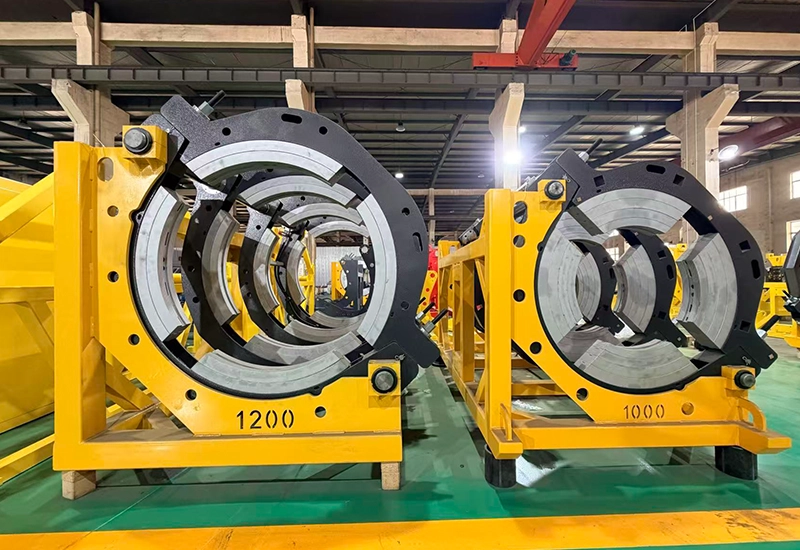
Quality Control and Factory Audit Standards for Butt Fusion Machine Suppliers
Verifying a manufacturer’s true capabilities before signing a purchase order is the best way to prevent catastrophic equipment failures in the trench. Running a structured factory audit is your strongest risk mitigation tactic.
What to check during a factory audit of a butt fusion machine manufacturer
- ISO Certification: Confirm active ISO 9001 documentation covering their manufacturing floor.
- Hydraulic Testing: Watch a live pressure hold test to guarantee the system locks in at 6.3 MPa without dropping a single bar.
- Temperature Calibration: Use a pyrometer on the heating plate to prove the temperature variance stays at ≤ ±3°C.
- Component Sourcing: Trace the origins of their hydraulic seals, milling motors, and electrical relays.
- Data Accuracy: Run a test weld to ensure the CNC module exports the record flawlessly.
- Chassis Rigidity: Closely inspect the welding seams on the main steel frame.
- Coating Quality: Do a visual check of the PTFE coating to verify uniform thickness.
- Export History: Ask to see bills of lading for past international shipments.
Third-party inspection options: SGS, BV, and pre-shipment quality checks
If you can’t fly out for an in-person audit, you need to mandate third-party inspections. Global agencies like SGS or Bureau Veritas (BV) excel at pre-shipment quality checks. Their inspectors will walk the floor, physically verify the butt fusion welding machine against your RFQ specs, test the hydraulic accumulator, and confirm the equipment holds the required pressure and temperature tolerances—all before it ever gets loaded into the shipping container.
Key quality red flags when sourcing butt fusion machines from new Chinese suppliers
The biggest, most dangerous red flag is a missing accumulator in the hydraulic system. Without it, you get “pressure droop” during the critical cooling phase, leading to dangerously weak joints. Other massive warning signs include fake PTFE coatings (often just cheap non-stick paint), an outright refusal to allow SGS or BV audits, and the use of analog pressure gauges instead of digital ones for calibration.
After-Sales Support, Spare Parts, and Technical Service from Chinese Manufacturers
Pipeline construction schedules do not tolerate equipment downtime. Evaluating a manufacturer’s after-sales infrastructure is arguably just as critical as inspecting the HDPE pipe welding machine itself.
| Support Category | Standard Tier 1 Factory Offering |
|---|---|
| Warranty Duration | 12 to 24 months |
| Coverage | Free replacement of non-human-induced component failure |
| Spare Parts Lead Time | 3 to 5 days via DHL/FedEx |
| Remote Support | Video troubleshooting, CNC data transmission analysis |
| On-Site Service | Available for large-scale procurement contracts |
Standard warranty terms and what they cover for butt fusion machines
Top-tier manufacturers back their equipment with a standard 12 to 24-month warranty that covers all major hydraulic and electrical components. This protects you against defects in the hydraulic pump, temperature controllers, and the structural integrity of the main chassis. Naturally, consumables and operator-induced damage are off the table. Once the warranty expires, these factories typically offer lifetime maintenance support, charging only the base raw material cost for replacement parts.
Spare parts availability: heating plates, clamps, and hydraulic components
Critical wear parts need to be on standby to prevent project bottlenecks. Smart buyers ensure their factory holds a deep reserve of PTFE-coated heating plates, high-speed carbon steel milling blades, temperature sensors, and hydraulic seals.
If a hydraulic seal blows out six months into a remote job, a premium Chinese manufacturer will use the butt fusion welding machine’s serial number to instantly identify the exact part. They will then dispatch a replacement via DHL or FedEx within 48 hours, complete with a video tutorial showing your crew how to swap it out in the field.
Does the manufacturer provide operator training and on-site commissioning support?
The best factories supply highly detailed digital training assets, from video manuals to step-by-step troubleshooting guides. For complex CNC setups or massive 1600mm hydraulic butt fusion welding machines, they frequently provide remote data transmission support to actively monitor the machine’s health. While on-site commissioning and in-person operator training are certainly available for major contracts, the buyer is generally expected to cover the engineer’s travel and accommodation costs.
Common Mistakes Buyers Make When Sourcing Butt Fusion Machines from China
Making a procurement mistake with pipeline equipment triggers massive financial penalties. Just one failed DN400 joint can easily cost your company upwards of $15,000 in excavation rework and liquidated damages.
Choosing on price alone: hidden costs of low-grade heating elements and hydraulic components
The Mistake: Buying the absolute cheapest butt fusion welding machine you can find on a B2B portal.
The Consequence: Rock-bottom prices mean inferior heating elements that generate cold spots and cheap hydraulic seals that blow out under pressure. The result? Joints that fail hydrostatic pressure testing and ruin the project.
The Prevention: Set a realistic baseline budget based on standard market rates for Tier 1 hydraulic hardware. Automatically reject quotes that fall suspiciously below the standard cost of raw components.
Mismatching machine capacity to pipe diameter range on project specifications
The Mistake: Ordering hardware without double-checking the exact SDR and pressure ratings of the pipes you are welding.
The Consequence: The butt fusion welding machine might physically fit the pipe’s outer diameter, but the hydraulic system might lack the muscle needed to hit the required drag and fusion pressures for thick-walled pipes.
The Prevention: Always feed the manufacturer your exact pipe diameter (DN) and SDR requirements so they can properly size the hydraulic station.
Neglecting after-sales infrastructure when selecting a low-cost Chinese supplier
The Mistake: Skipping over the spare parts agreement during the initial PO phase.
The Consequence: When a milling cutter inevitably dulls—it needs to produce 0.2 to 0.5mm thick continuous chips—or a motor capacitor fails, your entire site shuts down for weeks waiting for a mystery replacement part.
The Prevention: Hard-bake a comprehensive spare parts package (extra blades, seals, and sensors) directly into your initial purchase order.
How to Choose the Right Butt Fusion Machine Manufacturer for Your HDPE Project
Finding the perfect supplier demands a ruthless, systematic approach. You need to weigh technical capability, quality assurance, and long-term commercial viability.
Step-by-step supplier evaluation checklist for butt fusion machine procurement
1. Define Project Scope: Nail down the exact pipe diameter range (e.g., 315mm to 630mm) and your specific SDR requirements.
2. Determine Automation Level: Figure out if your project allows for manual logging (standard hydraulic) or strictly demands automated digital records (CNC).
3. Shortlist Suppliers: Pick 3 to 5 factories that possess verifiable ISO 12176-1 certification.
4. Request Technical Data: Demand granular spec sheets proving hydraulic pressure ranges and temperature accuracy.
5. Verify Export History: Ask for real references or export paperwork for shipments to your specific region.
6. Evaluate After-Sales: Lock in the lead times for critical spare parts and confirm warranty terms in writing.
7. Conduct Audit: Set up a third-party SGS or BV inspection before authorizing final payment.
Questions to ask a Chinese manufacturer before placing your first order
- Does your HDPE pipe welding machine’s control software natively support both DVS 2207-1 and ASTM F2620 parameters?
- Is the hydraulic system outfitted with an accumulator to stop pressure droop during the cooling phase?
- Can you produce a third-party SGS or BV inspection report for this exact model?
- What is the maximum temperature variance across the surface of your PTFE-coated heating plate?
- Do you fabricate the chassis in-house, or are you strictly an assembly shop?
Sample RFQ template: key technical and commercial details to specify
To get accurate, actionable quotes, you need to submit a hyper-specific Request for Quotation (RFQ):
- Equipment Type: Hydraulic Butt Fusion Machine (or CNC)
- Pipe Material & SDR: HDPE, SDR 11 / SDR 17
- Diameter Range: DN315 to DN630
- Input Voltage: 380V, 50Hz, 3-Phase (Always specify your local grid requirements)
- Protection Level: IP54 Minimum
- Required Certifications: CE, ISO 12176-1
- Additional Requests: Include a 2-year spare parts package and ask them to quote FOB Ningbo/Shanghai.
Conclusion
Buying reliable pipeline welding equipment means looking way past the initial price tag. You have to evaluate the core engineering. The survival of an HDPE pipeline rests entirely on a butt fusion welding machine’s ability to hold a temperature accuracy of ≤ ±3°C and push stable, compensable hydraulic pressure up to 6.3 MPa. By partnering with manufacturers that carry ISO 12176-1 certification, offer CNC automation for strict DVS 2207 compliance, and back their gear with serious after-sales support, project engineers can virtually eliminate the threat of catastrophic joint failure. Stick to a systematic factory audit process and write airtight RFQ specifications. That is how you ensure your capital investment delivers flawless, standard-compliant welds for decades to come.
FAQ
Q1: What is the price range for a hydraulic butt fusion welding machine from a Chinese manufacturer?
Standard hydraulic units for mid-range pipes (315–630mm) generally run between $2,890 and $3,270 when sourced from Tier 1 Chinese factories. Compact manual units are highly affordable, sitting between $100 and $300. On the other end of the spectrum, massive butt fusion welding machines (up to 1200mm) or fully automated CNC rigs can cost anywhere from $10,000 to well over $25,000, depending on your exact specifications.
Q2: Which Chinese butt fusion welding machine manufacturers hold CE and ISO 12176 certification?
Industry leaders like Ekberg Welding, MM-Tech, Riyang Welding, and Wuxi Baoda all maintain active CE and ISO 12176-1 certifications. These credentials prove that their hardware meets the strict European safety directives and international mechanical standards necessary for building high-pressure HDPE pipelines.
Q3: What pipe diameter range can Chinese-made butt fusion machines handle?
Factories in China build equipment for every conceivable HDPE pipe size. Portable manual butt fusion welding machine tackle the 63mm to 200mm range, mid-range hydraulic rigs handle 315mm to 630mm, and heavy-duty chassis manage 630mm to 1600mm. If you need something bigger, custom production units can be engineered to fuse massive pipes up to 2600mm in diameter.
Q4: How long does it take to receive a butt fusion machine order from a China factory?
If you order standard inventory—like a 315mm hydraulic butt fusion welding machine—production takes about 7 to 14 days. Custom CNC models or large-diameter rigs require a longer build time of 25 to 35 days. Once built, sea freight shipping adds another 20 to 40 days, depending on where your destination port is located.
Q5: Are Chinese butt fusion machines reliable enough for large-scale water and gas pipeline projects?
Absolutely. Top-tier Chinese equipment is incredibly reliable for major infrastructure work. They use heavy-duty steel frames, highly accurate PID temperature controllers, and rock-solid hydraulic accumulators. When upgraded with CNC modules, these butt fusion welding machines easily meet the strict DVS 2207-1 and ASTM F2620 welding standards demanded by high-pressure gas networks.
Q6: What is the difference between a manual butt fusion welding machine and a CNC butt fusion machine?
A manual unit requires an operator to pull a lever to apply fusion pressure and manually track the heating and cooling times with a stopwatch. A CNC automatic butt fusion welding machine automates the whole operation. It calculates the exact pressure and timing based on the pipe’s SDR, compensates for drag force automatically, and digitally records the data for every single weld.
Q7: How do I verify the quality of a butt fusion machine manufacturer before placing an order?
Start by asking for their ISO 9001 and ISO 12176-1 certificates. From there, demand a factory audit that specifically checks the hydraulic pressure hold capabilities and verifies that the heating plate temperature variance is ≤ ±3°C. It is highly recommended to hire a third-party inspection firm like SGS or Bureau Veritas to conduct pre-shipment testing before the container leaves the factory.
Q8: Can Chinese manufacturers provide OEM or custom-branded butt fusion machines?
Yes, most Tier 1 factories in China provide excellent OEM and ODM services. You can easily request specific paint colors, custom-branded digital interfaces, unique hydraulic layouts, and specialized clamp reductions. The best part? The Minimum Order Quantity (MOQ) for a customized hydraulic unit is usually just one butt fusion welding machine.
Let our experts help you choose the right equipment for your project
Contact Our Engineering Team