
Best Butt Fusion Welding Machine Manufacturer for Large Diameter HDPE Pipelines
Table of Contents
Butt fusion welding machine manufacturer selection directly affects HDPE pipeline weld quality and project cost. This guide covers machine types, key specs, manufacturer evaluation criteria, pricing benchmarks, and a step-by-step sourcing process for large diameter applications.
What Is a Butt Fusion Welding Machine and Why Manufacturer Selection Matters
A butt fusion machine is a highly specialized piece of industrial equipment built to join thermoplastic pipes. It does this by applying exact amounts of heat and hydraulic pressure to the pipe ends. When you’re tackling large-scale infrastructure projects, picking the right butt fusion welding machine manufacturer for large diameter HDPE pipe isn’t just another box to check—it’s a make-or-break procurement decision. The quality of your welding equipment directly dictates the pipeline’s structural integrity. Ultimately, it determines how long the project lasts and how safely it operates.
How does a butt fusion welding machine work on large diameter HDPE pipe?
The equipment runs through a strictly controlled, four-stage thermal fusion cycle: preheating, fusion butt welding, pressure holding, and cooling solidification. First, a heavy-duty milling cutter planes the pipe ends so they are perfectly parallel. Next, a PTFE-coated heating plate brings the high-density polyethylene (HDPE) edges up to a precise melting point. Depending on your governing standards (like ASTM F2620), this usually sits between 200°C and 232°C. Once you hit the perfect melt, the heating plate retracts rapidly. Hydraulic cylinders then force the pipe ends together under tightly regulated pressure, forging a single, monolithic joint.
Why does the manufacturer directly affect weld joint quality and project safety?
A manufacturer’s engineering standards determine whether a butt fusion machine can actually maintain sustained hydraulic pressure and uniform temperatures. Cheap, low-quality machines often experience micro-pressure drops during the cooling phase. The result? Brittle cold joints and internal voids. Large diameter pipes typically transport high-pressure, hazardous materials like natural gas or volatile chemicals. If a substandard weld fails, you’re looking at a disastrous blowout. Sourcing equipment from a verified butt fusion welding machine manufacturer guarantees that your interfacial pressure stays rock-solid throughout the entire cooling cycle.
What diameter range defines ‘large diameter’ in HDPE butt fusion applications?
In the pipeline engineering world, we usually classify “large diameter” as anything ranging from 26 inches up to 65 inches and beyond (630mm to 1600mm+). Pipes of this size demand massive clamping forces. They require incredibly rigid heavy-duty chassis and high-wattage heating elements that dwarf the specs needed for standard municipal water lines.
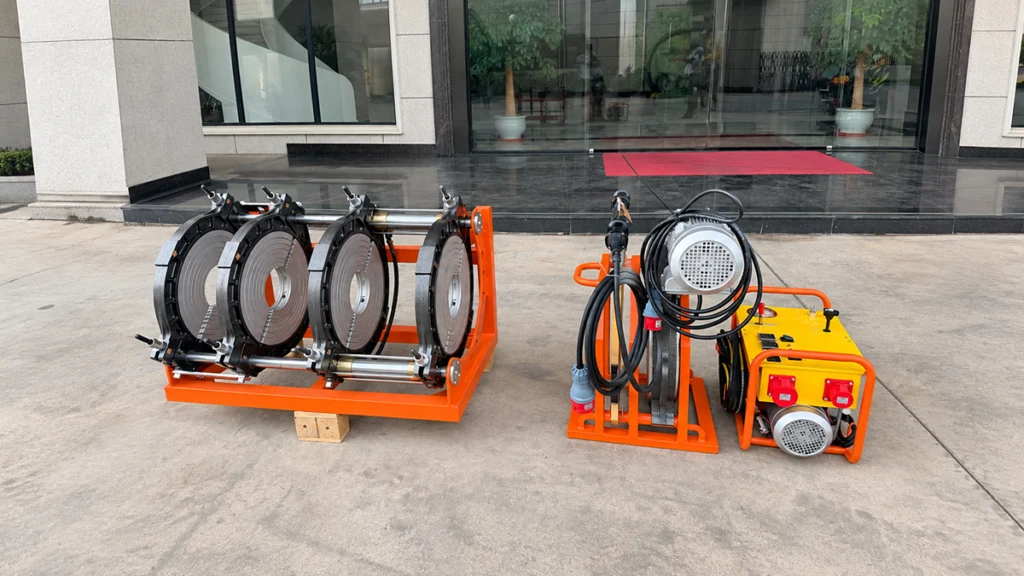
Key Types of Butt Fusion Welding Machines by Diameter and Drive System
Knowing the functional categories of fusion equipment helps you align your procurement strategy with actual field demands. Here is a breakdown of HDPE pipe welding machine types based on their drive systems and best-fit applications.
| Machine Type | Typical Diameter Range | Drive System | Operator Skill Level Required | Best-Fit Application |
|---|---|---|---|---|
| Manual | 40mm – 315mm | Lever / Hand-wheel | High | Small residential plumbing, low-pressure irrigation |
| Hydraulic | 315mm – 1200mm+ | Hydraulic (Electric Pump) | Medium-High | Heavy infrastructure, mining slurries, gas mains |
| CNC / Automatic | 160mm – 1600mm+ | Closed-loop Hydraulic CNC | Low-Medium | High-stakes gas transmission, mega-infrastructure |
Manual vs. hydraulic butt fusion welding machines: which suits large diameter pipe?
Manual butt fusion machines max out at small diameters (around 315mm) simply because of human physical limits. For large diameters, hydraulic machines aren’t just an option—they are absolutely mandatory. Milling, heating, and cooling massive HDPE pipes require relentless, sustained interfacial pressure. The DVS 2207-1 standard, for example, strictly mandates 0.15 MPa. A manual hand-lever can never reach or hold that kind of force. That makes hydraulic drive systems the only realistic choice for commercial pipeline contractors.
CNC and fully automatic butt fusion welders: when are they worth the investment?
Fully CNC automatic butt fusion machines rely on closed-loop numerical control systems. These advanced setups automatically adjust for ambient temperature swings and lock in your welding parameters during the fusion process. A CNC butt fusion welding machine for 630mm 800mm 1200mm HDPE pipe can reliably push out three to four large-diameter joints every hour. Because they take human error out of the equation and boast a 99.2% weld success rate, they eliminate the need for highly skilled operators. That initial capital expense pays for itself incredibly fast through slashed labor costs and zero rework.
Diameter classification: machines for 315mm, 630mm, 800mm, and 1200mm+ HDPE pipe
Manufacturers group HDPE pipe jointing machine chassis classifications to cover specific operational bandwidths. Standard heavy-duty tiers generally include 160-315mm, 450-800mm, and 630-1200mm setups. You need to select a HDPE pipe welding machine with the right chassis classification to ensure the hydraulic cylinders have enough piston area. That area is what generates the heavy drag pressure compensation required to move the largest, heaviest pipes in that specific tier.
Factory-direct pricing with technical consultation included
Get Your Free QuoteCore Technical Specifications to Evaluate When Sourcing a Butt Fusion Welding Machine
Procurement engineers have to dig into exact mechanical and thermal parameters to guarantee the equipment actually meets project specs.
| Specification | Typical Range for Large Diameter (630-1200mm) | Critical Requirement |
|---|---|---|
| Hydraulic Working Pressure | 0 – 6.3 MPa | Must hold pressure without drops during cooling |
| Heating Plate Temperature | 0 – 300°C | Error margin must be ≤±3°C across entire surface |
| Power Supply Options | 380V / 50Hz (3-Phase) | Customizable based on regional grid requirements |
| Coating Material | Polytetrafluoroethylene (PTFE) | Prevents polymer adhesion and surface burning |
| Certifications | CE, ISO 12176 | Ensures international safety and data compliance |
Critical hydraulic and mechanical parameters for large diameter butt fusion welders
Whether you are sourcing from a hydraulic butt fusion machine manufacturer China or a European brand, always verify that the maximum hydraulic system working pressure hits at least 6.3 MPa. Cylinder piston areas need to scale up precisely with the machine’s overall size to deliver enough clamping force. For example, a 450mm machine uses a piston area of roughly 2,237 mm². Step up to an 800mm chassis, and you suddenly need 23,179 mm² to overcome the immense drag resistance of those massive pipe sections.
Heating plate specifications: temperature uniformity, coating material, and power rating
Your heating plate needs a premium Polytetrafluoroethylene (PTFE) coating. This prevents the melted polymer from sticking to the metal and ruining the joint interface. The temperature control system must cover a 0-300°C range while maintaining a strict error margin of ≤±3°C across the entire surface. Power ratings also have to scale aggressively for larger pipes. Expect a 450mm HDPE pipe welding machine to draw 5.2KW, a 630mm unit to need 9.2KW, and an 800mm setup to push 12.5KW to ensure fast, perfectly uniform heat distribution.
What certifications should a butt fusion welding machine manufacturer hold?
Regulatory compliance is absolutely non-negotiable on public works projects. A qualified butt fusion welding machine CE certified manufacturer must produce equipment compliant with ISO 12176 (the standard for equipment used in the fusion jointing of polyethylene systems). This certification proves the HDPE pipe welding machine’s electrical safety, hydraulic stability, and structural integrity align with rigorous global benchmarks.
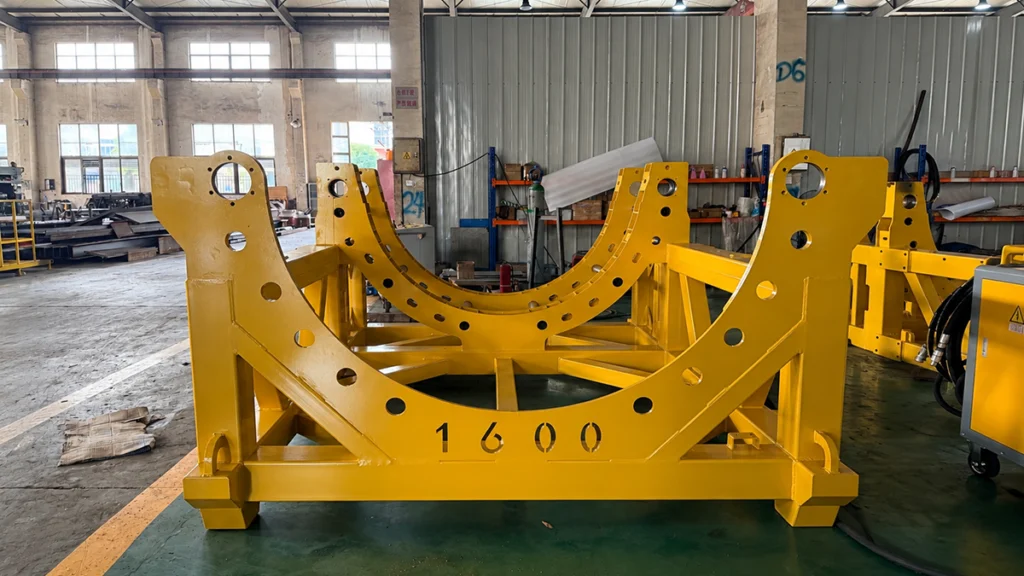
How to Evaluate a Butt Fusion Welding Machine Manufacturer: 7 Criteria That Matter
Choosing the right industrial butt fusion welder OEM manufacturer demands a hard look at their actual production capabilities and corporate infrastructure.
1. Independent R&D Capabilities: Make sure the manufacturer actually designs their own CNC logic boards and hydraulic blocks, rather than just bolting together off-the-shelf parts.
2. Chassis Machining Standards: Confirm the factory uses ZL104 standard aluminum and handles precision CNC machining for the main clamps in-house. This guarantees structural rigidity.
3. Hydraulic Sealing Origins: Check where the hydraulic seals come from. Imported seals (from places like Germany or Japan) are critical to stop pressure leaks during the cooling phase.
4. Cylinder Cross-Section Labels: Legitimate manufacturers will clearly label cylinder cross-sections. This proves they’ve done the exact math required for clamping force.
5. Customization Flexibility: Your butt fusion machine supplier should easily adapt voltage, frequency, and data-logging outputs to fit the unique requirements of your regional project grid.
6. Spare Parts Inventory: The factory needs a massive, ready-to-ship inventory of consumable wear parts—like PTFE plates and milling blades—for immediate global dispatch.
7. Verifiable Reference Projects: Always ask for case studies or Factory Acceptance Test (FAT) reports from comparable large-diameter infrastructure deployments.
Factory audit checklist: what to verify before signing a supply contract
If you’re conducting a factory audit, put your focus on raw materials and machining tolerances first. Look for in-house CNC milling centers actively carving out aluminum chassis components. Next, walk the hydraulic assembly line. Verify that they are installing imported sealing systems. These high-end seals vastly outperform domestic alternatives when it comes to preventing micro-leaks under extreme pressure loads.
Does the manufacturer offer OEM and custom configuration for project-specific requirements?
The best manufacturers thrive on custom configurations. Depending on the trench environment, you might need highly specific fusion head setups or customized electrical adaptations (like 415V/50Hz for remote mining sites). Municipal compliance might also demand integrated data-logging modules programmed to record specific operator IDs and exact GPS coordinates.
How to assess after-sales support quality for overseas butt fusion machine buyers
Pipeline construction never sleeps. Roughly 90% of contractors need 24-hour online technical support. You have to assess whether the manufacturer can actually deliver remote monitoring, live video troubleshooting, and fast-tracked international shipping for spare parts. A butt fusion welding machine manufacturer proves its true worth the moment a machine faults in the mud and you need immediate diagnostic help to avoid missing a project deadline.
Get detailed specs and custom configuration options
Request Technical SpecificationsTop Application Scenarios for Large Diameter HDPE Butt Fusion Welding Machines
Every infrastructure sector throws different challenges at thermal fusion equipment. Understanding these specific application scenarios will help you spec out the exact butt fusion welding machine build you need.
Municipal water and gas pipeline infrastructure: machine requirements and standards
Municipal gas transmission jobs demand ruthless adherence to data-logging standards, especially ISO 12176-4. Every single joint requires a traceable digital record showing the operator ID, machine ID, and precise Time, Temperature, and Pressure (TTP) graphs. Finding the best butt fusion welding machine brand for water pipeline projects means partnering with a supplier whose CNC machines natively export this tamper-proof data. That is how you secure zero-leak certification before anyone backfills the trench.
Mining and industrial HDPE pipeline projects: why large diameter capacity is critical
Mining sites rely on massive HDPE pipes to move highly abrasive solid materials, chemical slurries, and raw tailings. These environments are incredibly punishing. Welding machines deployed here must carry high ingress protection ratings (IP54 or better) to withstand relentless dust and moisture. Furthermore, the sheer drag force of dragging heavy-wall mining pipes requires maximum hydraulic cylinder capacity just to reach the correct fusion pressure.
Trenchless and directional drilling pipeline projects: special machine configuration needs
Horizontal directional drilling (HDD) and trenchless pipe bursting force crews to execute tie-ins in incredibly tight spaces. These jobs call for specialized butt fusion machine setups featuring separate clamping and operating systems. The hydraulic power unit and the electronic control platform need to be fully detached from the main carriage. This allows your operators to position the heavy clamps down in a cramped trench while safely managing the fusion process from ground level.
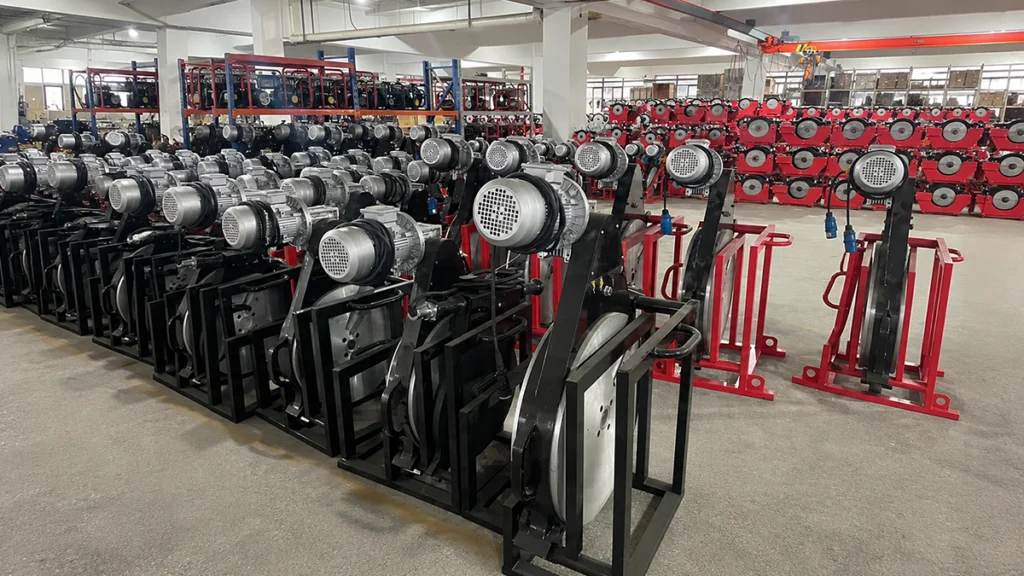
Butt Fusion Welding Machine Manufacturer Comparison: China vs. European vs. Local Suppliers
Procurement teams constantly juggle capital expenditure against project risk. Here is a comparative look at the primary sourcing channels available today.
| Sourcing Channel | Price Range Index | Typical Lead Time | CE Certification | Customization | Best For |
|---|---|---|---|---|---|
| European/US Brands | Very High ($$$$) | 4 – 8 Weeks | Yes | Low | Specialized track-mounted jobs, massive budgets |
| Top Chinese Factories | Medium ($$) | 2 – 4 Weeks | Yes | High | High ROI infrastructure, EPC contractors |
| Local Distributors | High ($$$) | Immediate | Varies | None | Emergency replacements, small contractors |
Price and lead time comparison: Chinese manufacturers vs. European brands
When you run a butt fusion welding equipment manufacturer comparison, the difference in CapEx is impossible to ignore. US and European brands (like McElroy or Ritmo) demand a massive upfront premium, though they deliver high productivity for very specialized, track-mounted operations. On the flip side, top-tier Chinese manufacturers (such as Ekberg) build incredibly rigid, heavy-duty machines at a fraction of that cost. For standard infrastructure projects, these butt fusin welding machines deliver a vastly superior return on investment without compromising a single metric of joint integrity.
Quality and certification gap: is CE-certified Chinese equipment reliable for international projects?
That old historical quality gap has virtually vanished at the premium end of the market. So, is CE-certified Chinese equipment reliable for international projects? Absolutely—as long as the manufacturer insists on using imported hydraulic seals, ZL104 aluminum, and high-speed carbon steel milling blades. Today, many Chinese CNC automatic butt fusion machines generate fully traceable welding data that perfectly matches European specs, making them completely reliable for the strictest international public works.
When does sourcing from a local distributor make more sense than buying direct from the factory?
Purchasing directly from the factory will save you serious capital, but local distributors offer something money can’t always buy: immediate access to wear parts like temperature sensors and PTFE heating plates. Sourcing locally is the smartest move for emergency HDPE pipe jointing machine replacements. It’s also ideal for contractors working in remote areas who simply can’t wait for international air freight. However, if you are planning bulk procurement well in advance, buying factory-direct remains the best financial strategy.
Pricing, MOQ, Lead Time, and Payment Terms: What to Expect from a Butt Fusion Welding Machine Manufacturer
Sound procurement planning runs on accurate commercial data. Large diameter HDPE pipe welding machines (handling 630mm to 1200mm+ pipe) generally run anywhere from $38,900 to $108,900. Your final price tag depends heavily on the specific hydraulic configurations, data logging capabilities, and the level of CNC automation you require.
| Machine Category | Diameter Range | Indicative FOB Price Range (USD) | Standard MOQ | Typical Lead Time |
|---|---|---|---|---|
| Mid-Range Hydraulic | 315mm – 630mm | $12,000 – $25,000 | 1 Set | 10 – 15 Days |
| Heavy-Duty Hydraulic | 630mm – 1000mm | $38,900 – $65,000 | 1 Set | 15 – 25 Days |
| Fully Automatic CNC | 800mm – 1600mm+ | $75,000 – $108,900+ | 1 Set | 30 – 45 Days |
What is the typical price range for large diameter hydraulic butt fusion welding machines?
Locking in an HDPE butt fusion welding machine factory direct price cuts out the middleman markup. For a standard 800mm hydraulic unit, you should expect base pricing to hover around $40,000 to $50,000. If you need highly automated 1200mm CNC systems, that number will easily push past the $100,000 mark. Keep in mind that prices shift based on raw material costs (like steel and aluminum) and the addition of custom data-logging hardware.
MOQ policies and bulk order discounts: what manufacturers typically offer
Large diameter equipment is a major capital investment, so the industry-standard Minimum Order Quantity (MOQ) is strictly one set. While discount percentages fluctuate from factory to factory, procurement managers buying multiple units for mega-projects hold real leverage. You can usually negotiate favorable bulk pricing or lock in complementary wear-part packages—like extra heating plates and milling blades—as part of your final contract.
Standard lead times and how project deadlines should shape your order timeline
Grasping a butt fusion welding machine manufacturer MOQ and lead time is vital for keeping your project on schedule. Standard manufacturing lead times run between 15 and 45 days, heavily dependent on your customization requests. A reliable manufacturer can often expedite production schedules and secure fast ocean freight bookings for urgent deadlines. Even so, buyers need to start the procurement conversation a minimum of 60 days before the first trench is dug.
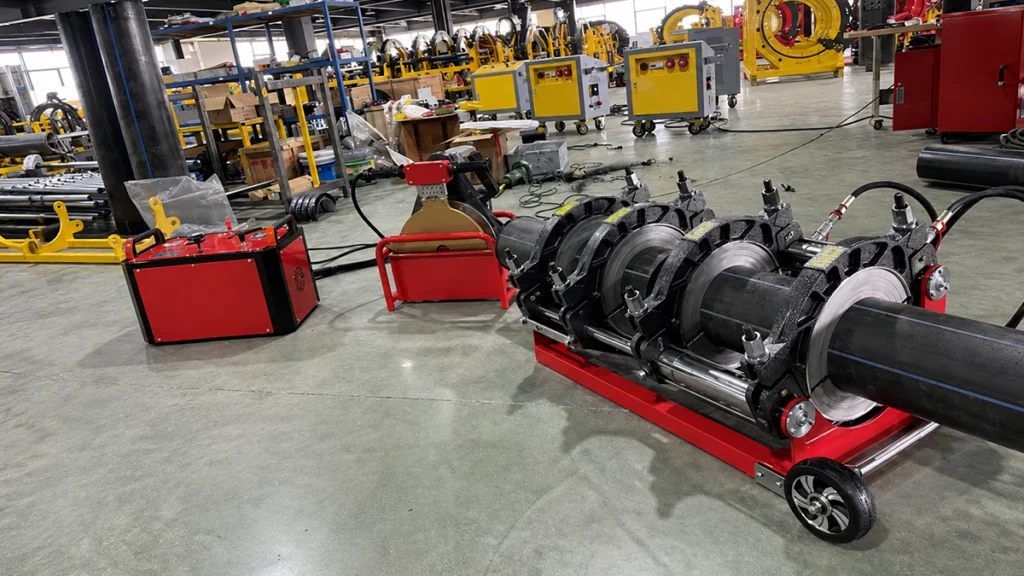
Common Mistakes When Selecting a Butt Fusion Welding Machine Manufacturer
Procurement mistakes in the pipeline industry lead to catastrophic field failures. Avoid these expensive missteps when vetting your suppliers.
1. Ignoring Hydraulic Seal Origins: Settling for cheap domestic seals practically guarantees pressure loss while the pipe cools.
2. Overlooking Heating Plate Tolerances: Accepting plates with a variance greater than ±3°C results in wildly uneven polymer melting.
3. Neglecting Data Logging: Purchasing manual butt fusion machines for municipal gas lines will result in failed compliance audits.
4. Skipping the FAT: Failing to demand a live Factory Acceptance Test allows defective units to be crated and shipped overseas.
5. Underestimating Spare Parts Needs: Forgetting to order backup PTFE plates guarantees immediate downtime the second a plate gets scratched on-site.
Why buying on price alone leads to weld joint failures in the field
Budget HDPE pipe welding machines are notorious for losing hydraulic pressure during the critical cooling phase. If that pressure drops even slightly, the polymer chains won’t entangle correctly, leaving you with a brittle cold joint. The financial fallout is brutal. A single failed DN400 joint costs roughly $15,000 in wasted HDPE materials, excavation labor, and re-welding time. That instantly wipes out whatever money you saved by buying cheap equipment.
The hidden cost of poor after-sales support: spare parts, downtime, and project delays
Wear parts inevitably degrade. Milling blades dull, temperature sensors fail under heavy abuse, and heating plates lose their non-stick coating. If your manufacturer cannot supply rapid spare parts, pipeline construction grinds to a halt. The daily burn rate of idle heavy machinery and excavation crews completely dwarfs the price of the welding machine itself. That makes aggressive after-sales support a critical financial safety net.
What technical documentation should you always request before finalizing a manufacturer?
Never wire a deposit without reviewing comprehensive paperwork. Always demand the detailed Operation Manual, Standard Operating Procedures (SOPs), and Welding Procedure Specifications that comply with TSG D2002-2006 (or your local equivalent) before signing anything. Solid documentation proves the manufacturer actually understands pipeline engineering and isn’t just bolting generic parts together in a warehouse.
Step-by-Step Buying Guide: How to Source a Large Diameter Butt Fusion Welding Machine
Use this structured procurement workflow to lock down reliable equipment from a verified large diameter pipe butt fusion welder supplier.
Step 1 to Step 5: from project spec to verified manufacturer shortlist
1. Define Project Specifications: Map out the exact pipe diameter range (e.g., 630-1200mm), the SDR rating, and the required welding standard (ASTM/ISO).
2. Conduct Market Research: Filter out suppliers who lack CE certification and ISO 12176 compliance.
3. Request Technical Documentation: Scrutinize the manufacturer’s heating plate power ratings and hydraulic cylinder parameters.
4. Perform Factory Audits: Verify their in-house CNC machining capabilities for aluminum chassis components and check for independent R&D.
5. Sign Comprehensive Contracts: Lock in the exact delivery timeline, required after-sales support terms, and a comprehensive spare parts package.
Factory acceptance testing (FAT): what to inspect before machines leave the facility
Before anyone crates the HDPE pipe welding machine for export, demand a live video FAT. Inspect the flatness of the heating plate and ensure the hydraulic control system reacts instantly without any micro-pressure drops. Test the timer to ensure it operates flawlessly. Finally, test the safety systems—specifically, verify that releasing the hydraulic fixtures prematurely triggers a loud, immediate audible alarm.
Shipping, customs, and on-site commissioning: what a reliable manufacturer should provide
Premium manufacturers take the headache out of international heavy butt fusion welding machinery logistics. They should supply all the necessary customs clearance paperwork, including the Commercial Invoice, Bill of Lading, Packing List, and Certificate of Origin. On top of that, they should offer on-site or remote commissioning, walking your technicians through daily maintenance, parameter locking, and safe operation.
Choosing the Right Butt Fusion Welding Machine Manufacturer: Final Recommendations
Choosing the best butt fusion welding machine manufacturer means carefully balancing capital expenditure against technical compliance and long-term operational support. By demanding CE/ISO certifications, rigorously evaluating hydraulic parameters, and verifying after-sales infrastructure, procurement teams can secure equipment that maximizes project ROI and guarantees pipeline integrity.
Summary checklist: the five non-negotiable criteria for selecting a manufacturer
- CE and ISO 12176 Certification to ensure international regulatory compliance.
- PTFE-coated heating plates boasting a strictly controlled ≤±3°C temperature variance.
- Imported hydraulic sealing systems that guarantee zero pressure loss as the pipe cools.
- Traceable data logging capabilities (ISO 12176-4) for municipal water and gas compliance.
- 24/7 after-sales technical support backed by rapid global spare parts dispatch.
Which type of buyer should prioritize which manufacturer profile?
Small and mid-sized contractors working on standard water distribution should focus on mid-range hydraulic butt fusion machines from top-tier Chinese factories to maximize their ROI and cost-efficiency. Conversely, gas utility companies, heavy mining operators, and mega-infrastructure EPCs need to prioritize fully automatic CNC machines. These advanced systems eliminate operator error, generate tamper-proof joint data, and guarantee 99.2% weld success rates.
Ready to source? How to get a customized quote and technical specification package
Generic catalog pricing simply doesn’t work for heavy infrastructure procurement. Buyers need to build a technical specification package that details their required automation level, maximum SDR rating, exact pipe diameter range, and specific welding standard (like DVS 2207). Handing this precise data to a qualified manufacturer ensures they will engineer a HDPE pipe welding machine configuration perfectly tailored to your pipeline project.
—
FAQ
Q1: What is the difference between a hydraulic and a CNC butt fusion welding machine for large diameter HDPE pipe?
A hydraulic butt fusion welding machine relies on an operator to manually adjust the hydraulic pump valves and track cooling/heating times against a reference chart. A CNC machine, however, utilizes a closed-loop computer system. It automatically calculates, applies, and locks in the precise pressure, temperature, and time parameters, completely removing human error and securely logging the data.
Q2: Which butt fusion welding machine manufacturer certifications should I verify for international infrastructure projects?
For international projects, you absolutely must verify CE certification to ensure mechanical and electrical safety. Beyond that, the equipment needs to comply with ISO 12176 standards. This specific standard dictates the data-logging specifications and performance requirements for polyethylene thermal fusion equipment used on global public works.
Q3: How much does a large diameter butt fusion welding machine cost from a factory-direct manufacturer?
If you buy factory-direct, large diameter hydraulic butt fusionn welding machines (capable of handling 630mm to 1200mm+ pipes) typically range from $38,900 to well over $108,900. Your final cost is heavily influenced by the maximum pipe diameter, the required rigidity of the chassis, and whether you opt for a standard hydraulic setup or a fully automated CNC drive system.
Q4: What pipe diameter range can a single butt fusion welding machine typically handle?
A single machine uses reducing inserts to accommodate a specific range of pipe sizes. The most common heavy-duty chassis classifications are 160mm-315mm, 450mm-800mm, and 630mm-1200mm. You obviously can’t weld a 160mm pipe on a massive 1200mm large diameter HDPE welding machine, so contractors have to choose a chassis range that covers the specific dimensions of their project.
Q5: How long does it take a manufacturer to deliver a custom-configured butt fusion welding machine?
Standard production lead times for large diameter equipment usually fall between 15 and 45 days, largely depending on voltage customizations and the complexity of the CNC integration. Keep in mind that ocean freight shipping will add another 20 to 40 days depending on your destination port. That makes early procurement planning absolutely essential.
Q6: Can butt fusion welding machines be used for pipe materials other than HDPE, such as PP or PVDF?
Yes, they can. While these HDPE pipe welding machines are primarily built for High-Density Polyethylene (HDPE), a high-quality butt fusion machine can easily weld Polyvinylidene Fluoride (PVDF) and Polypropylene (PP) pipes. The operator just needs to adjust the hydraulic pressure parameters and heating plate temperatures on the control unit to match the specific melting points of those polymers.
Q7: What after-sales support should I expect from a reputable butt fusion welding machine manufacturer?
A trustworthy manufacturer will offer live video diagnostics, comprehensive operation manuals, and 24/7 remote technical troubleshooting. More importantly, they should keep a deep inventory of consumable parts—like sensors, milling blades, and PTFE heating plates—ready for immediate international air freight to keep your downtime to an absolute minimum.
Q8: How do I verify a butt fusion welding machine manufacturer’s production quality before placing a bulk order?
Before placing a massive order, request detailed Factory Acceptance Test (FAT) reports. Verify that they use imported hydraulic seals and check their in-house CNC machining capabilities for the aluminum chassis. You should also ask for sample time-temperature-pressure (TTP) data logs generated by their CNC automatic butt fusion machines, and request verifiable references from comparable large-diameter pipeline projects.
—
Conclusion
Selecting equipment for large-diameter HDPE pipelines requires careful consideration of pipe size, SDR, project conditions, welding standards, and long-term service requirements. The performance of a butt fusion welding machine can directly influence joint consistency, installation efficiency, and overall project reliability.
For large-diameter applications, buyers should evaluate frame rigidity, hydraulic pressure control, heating plate temperature stability, clamping accuracy, and compliance with applicable standards such as ASTM F2620 and DVS 2207. CNC and automatic systems can also provide more consistent parameter control and welding data recording where traceability is required.
Factory capability, FAT documentation, spare parts availability, technical support, and operator training should also be reviewed before purchase. A well-matched machine and reliable supplier can help reduce rework, improve welding consistency, and support long-term HDPE pipeline performance.
Let our experts help you choose the right equipment for your project
Contact Our Engineering Team