
Butt Fusion Machine in Argentina: Selection Guide for PE Pipe Contractors
Table of Contents
Butt Fusion Machine in Argentina helps PE pipe contractors choose the right fusion equipment by comparing machine types, specifications, project fit, supplier support, and pricing factors for reliable pipeline installation.
What Is a Butt Fusion Machine and How Does It Work?
What components make up a butt fusion machine?
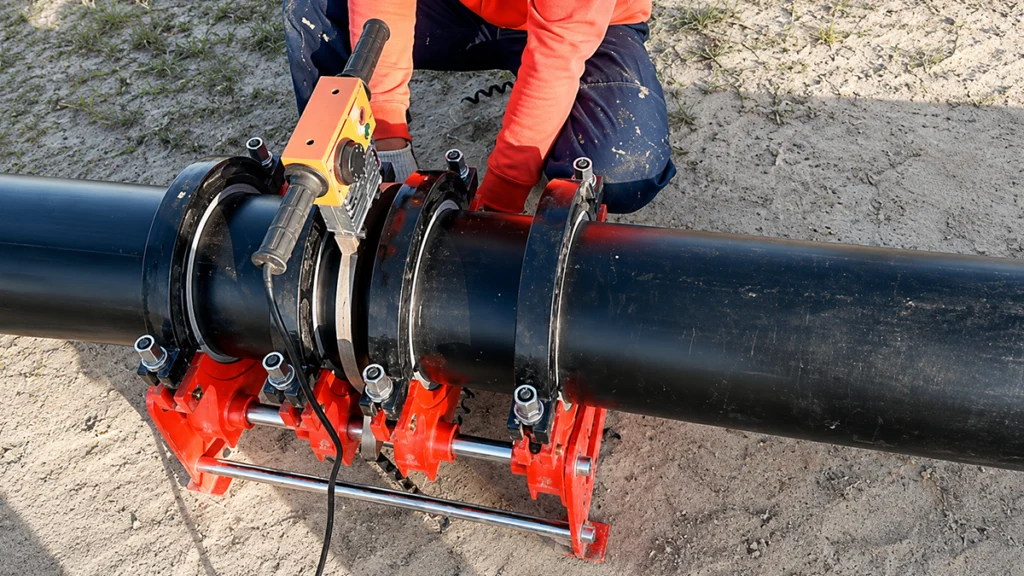
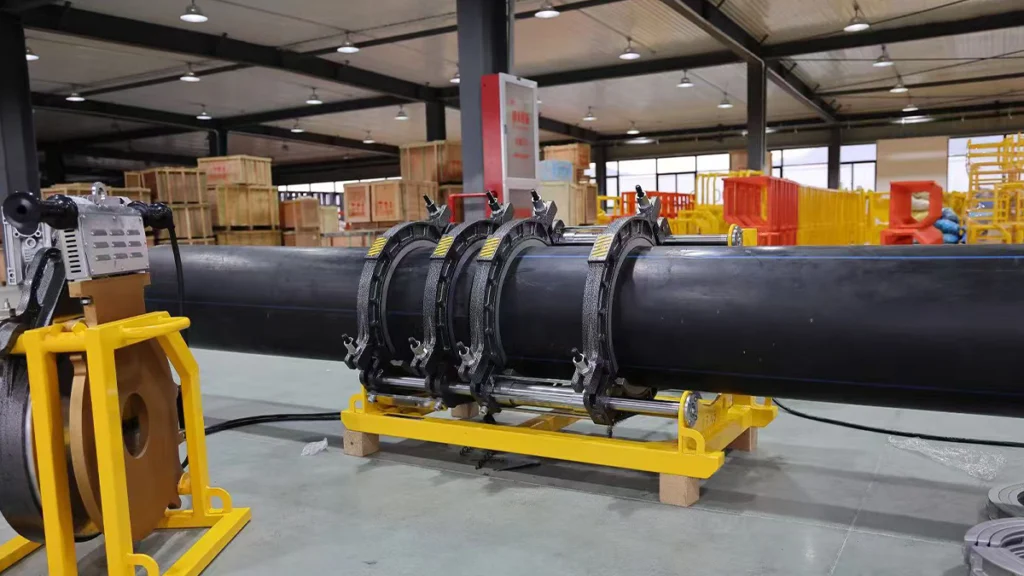
A butt fusion machine is made up of several key components that work together to prepare, heat, align, and join thermoplastic pipes. The heating plate provides controlled heat to soften the pipe ends and typically features a PTFE-coated surface to reduce sticking. The trimmer or milling cutter prepares the pipe ends by creating flat, parallel surfaces before fusion.
The machine frame and clamping system hold the pipes securely and maintain accurate alignment throughout the welding cycle. On hydraulic models, the hydraulic system provides controlled fusion pressure during heating, joining, and cooling. A temperature control system helps maintain stable heating plate temperature and supports consistent welding conditions.
How does heat fusion create a leak-free joint?
Thermodynamics meets controlled mechanical force. That is the secret behind heat fusion. The equipment channels electric thermal energy directly into the squared ends of two thermoplastic pipes. As soon as the polymer hits its optimal melt state, the operator quickly pulls the heating plate out of the way. Immediately, the hydraulic system drives the molten surfaces together under a heavily regulated force. As the plastic cools and hardens under this constant pressure, the polymer chains physically interlock. The result? A monolithic joint that often boasts a higher burst pressure rating than the original pipe itself.
Which PE pipe materials are commonly fused with this method?
Engineers built this welding methodology specifically to handle thermoplastic piping systems. Out in the field, contractors primarily rely on this gear to fuse High-Density Polyethylene (HDPE) and Medium-Density Polyethylene (MDPE). However, the technology also works exceptionally well with Polypropylene (PP) and Polypropylene Random Copolymer (PPR) lines. Because these plastics share similar molecular structures that react predictably to heat cycles, they readily form homogeneous bonds when exposed to the right mix of temperature and pressure.
Why is fusion quality more important than machine price alone?
Modern HDPE pipe infrastructure needs to last anywhere from 50 to 100 years. A single joint failure can trigger catastrophic leaks, forcing immediate utility shutdowns, massive environmental damage, and excavation repair bills that instantly wipe out whatever money you saved buying cheap equipment. Flawless welded joints extend the operational life of the entire pipeline and virtually eliminate long-term maintenance headaches. By investing in highly accurate butt fusion machine in Argentina, contractors ensure they meet strict municipal codes while drastically cutting down on the financial liabilities tied to pipeline blowouts.
Why Butt Fusion Matters for PE Pipe Projects in Argentina
Where do PE pipe contractors in Argentina use butt fusion most often?
Across Argentina, contractors lean heavily on butt fusion technology to build out critical infrastructure. You will see these butt fusion welding machines driving major municipal water upgrades, like the Buenos Aires Water Supply System, and laying down massive natural gas distribution networks for utility giants like Camuzzi, which rely heavily on PE 100 pipe. Beyond city limits, heavy-duty fusion rigs prove indispensable in the Andean mining sector. Up in the mountains, thick-walled HDPE slurry lines must survive highly abrasive materials and brutal weather conditions, making flawless welds an absolute necessity.
What failures can happen if the fusion process is inconsistent?
Straying from established standards—like ISO 21307 or DVS 2207—creates dangerous structural vulnerabilities. If pipes misalign during clamping, stress distributes unevenly across the finished joint. If the heating plate temperature dips below the mandatory 260±5°C threshold, you get cold fusion, meaning the polymer chains simply refuse to bond. Dust or moisture contamination will leave microscopic voids right at the weld interface. Meanwhile, dialing in the wrong hydraulic pressure squeezes out too much molten plastic, starving the joint of material. These mistakes inevitably lead to blown hydrostatic tests and catastrophic operational failures.
Manual vs hydraulic machines: what is the practical difference?
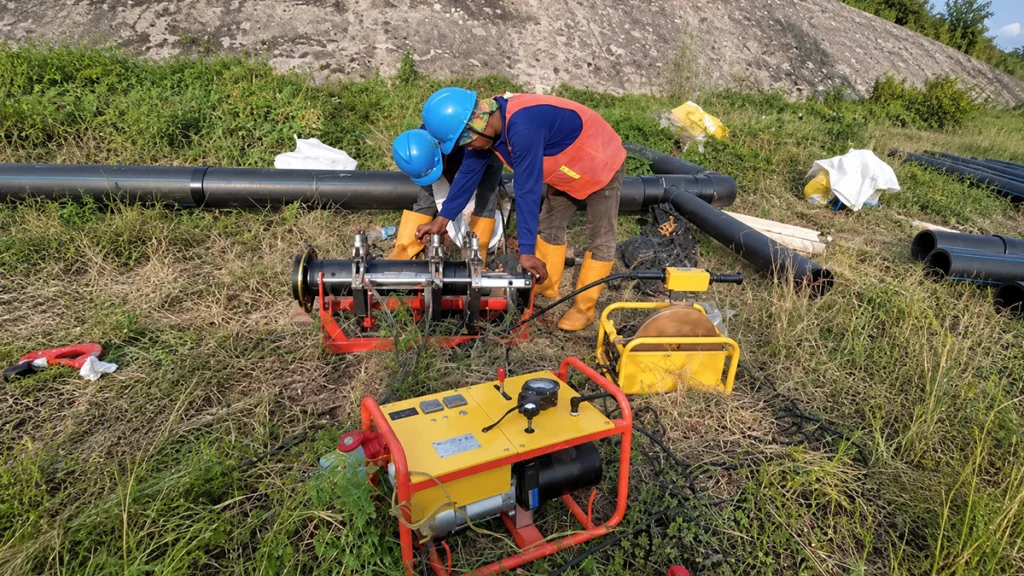
Manual butt fusion machines are highly portable—often weighing less than 20kg—and cost-effective. They actuate clamping force through a basic mechanical lever. While perfect for smaller diameters (63-200mm), they rely entirely on the operator’s physical strength and best judgment to hold the right pressure. Hydraulic machines take a different approach. They feature an integrated hydraulic power unit (HPU) that fully automates the guiding and clamping force. This setup guarantees consistent, measurable interfacial pressure (such as the 0.15 N/mm² mandated by DVS 2207-1), which you absolutely need to securely fuse larger pipes.
When is a hydraulic machine worth the extra investment?
You need a semi-automatic setup the moment a project demands flawless quality assurance and highly repeatable results. These units take over the heating and fusion cycles, using digital controls to manage time and pressure perfectly, leaving only the physical pipe loading to the crew. For medium-diameter gas and municipal water lines that require strict weld data logging, the semi-automatic system completely removes human error from the most sensitive heating and cooling phases. The result is a massive boost in daily production rates and guaranteed regulatory compliance.
Factory-direct pricing with technical consultation included
Get Your Free QuoteMain Types of Butt Fusion Machines Contractors Should Compare
Should you choose a workshop model or a portable field unit?
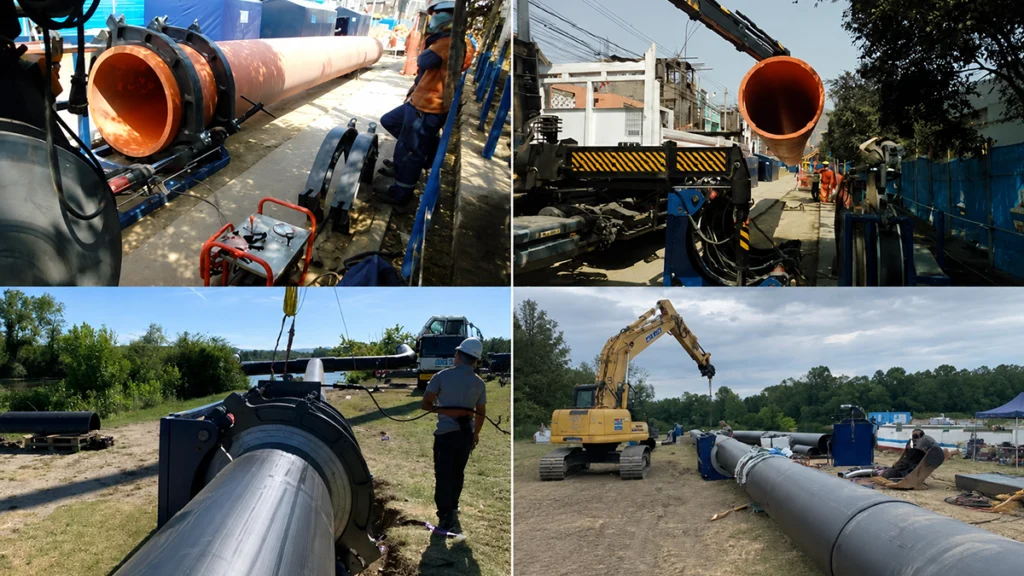
Your fabrication environment dictates this choice. Portable field units roll on wheeled chassis and feature ruggedized parts explicitly designed for trench work. They let contractors weld pipes right in the dirt, exactly where they will be buried. Workshop models—like massive four-column frame butt fusion welding machines—are a different story. These bulky, stationary beasts are engineered for high-precision pre-fabrication. Crews use them indoors to build complex segmented bends, fittings, and customized spools in a perfectly controlled setting before trucking the finished pieces out to the job site.
Which pipe diameter range should the machine support?
Equipment sizing boils down to its effective fusion dimensions, which directly dictate the size of the hydraulic cylinders and the surface area of the heating plate. Small units handle anything under 90mm or 110mm. Medium-capacity HDPE pipe jointing machines generally tackle the 160-250mm range, the sweet spot for secondary municipal distribution lines. Large industrial rigs support everything from 315mm up to 1600mm. For extreme heavy industrial or mining operations, highly specialized pipe fusion machines can even weld pipes reaching 3000mm in diameter.
Why do heating plate temperature control and pressure accuracy matter?
Thermoplastic welding leaves no room for guesswork; it is an exact science governed by strict standards like ASTM F2620. Heating heads must hold highly precise temperatures—often up to 320°C depending on the specific plastic—to hit the perfect melt flow index without burning the material. Pressure accuracy is just as critical. It ensures the molten plastic compresses at the exact interfacial pressure required (usually 0.41–0.62 MPa for high-pressure fusion). Even minor fluctuations in either metric will ruin the weld bead formation, guaranteeing the joint will fail its mandatory ultrasonic testing.
What power supply, voltage, and frequency should be confirmed for Argentina?
Sourcing a butt fusion machine in Argentina means matching the equipment strictly to the local electrical grid, which runs at 50 Hz. Contractors have to double-check voltage specs before buying anything. Smaller portable or manual units generally run fine on a standard 220V single-phase supply. However, medium and large hydraulic rigs pull massive amounts of electricity to power the hydraulic pump and the heavy-duty heating plate. These pipe fusion machines demand a rock-solid 380V three-phase power supply. Plugging into the wrong voltage or frequency will fry the solid-state relays and instantly void your warranty.
| Machine Type | Typical Diameter Range | Automation Level | Best Application | Power Requirement (Argentina) |
|---|---|---|---|---|
| Manual Butt Fusion Machine | 40mm – 250mm | Manual operation | Small-diameter pipelines, irrigation, repair work, and confined job sites | 220V / 50-60Hz (Single-phase) |
| Hydraulic Butt Fusion Machine | 40mm – 2000mm | Hydraulic pressure control with manual parameter setting | Municipal water supply, mining, industrial pipelines, and medium-to-large diameter projects | 380V / 50Hz, 1PH or 3PH depending on model |
| Automatic (CNC) Butt Fusion Machine | 63mm – 630mm | Automatic parameter control and welding-cycle management | Projects requiring higher welding consistency, process control, and repeatable fusion quality | 220V or 380V, depending on model |
Key Technical Specifications to Check Before Buying
Which accessories and clamps should be included in the package?
A proper procurement package needs to include all the operational accessories required to get the job done. Make sure your supplier throws in a complete set of inner clamp blocks (reducer inserts) so you can actually weld the HDPE pipe jointing machine’s entire advertised pipe range. Beyond that, the package needs a dedicated heating mold, a sturdy storage stand for the milling cutter and heating plate, and a premium oil-gas separator for the HPU. If you are missing just one size of reducer insert, production stops dead the second the pipe diameter changes on site.
What machine is suitable for small-diameter PE pipe work?
When you are dealing with PE pipes under 90mm or 110mm, dragging out heavy hydraulic equipment is a massive waste of time and energy. Contractors should stick to socket butt fusion welding machines or manual butt fusion units. These highly portable tools run efficiently between 220°C and 260°C, and they offer more than enough manual leverage to hit the required clamping force. Their lightweight footprint makes them the perfect choice for cramped residential trenches, indoor plumbing retrofits, and smaller agricultural irrigation taps.
What should contractors use for medium and large diameter pipelines?
Once pipeline diameters scale up from 160mm to 1600mm, the required interfacial pressure pushes far past what a human can physically achieve. At this stage, contractors must roll out semi-automatic or fully automatic hydraulic rigs. These pipe fusion machines pack heavy-duty hydraulic cylinders that generate and hold immense pressure throughout the long cooling phase. Furthermore, their rigid steel chassis prevents the pipe from deflecting under heavy loads, ensuring those massive pipe ends stay perfectly aligned during the most critical moments of the fusion window.
How do water, gas, mining, and irrigation projects change the selection?
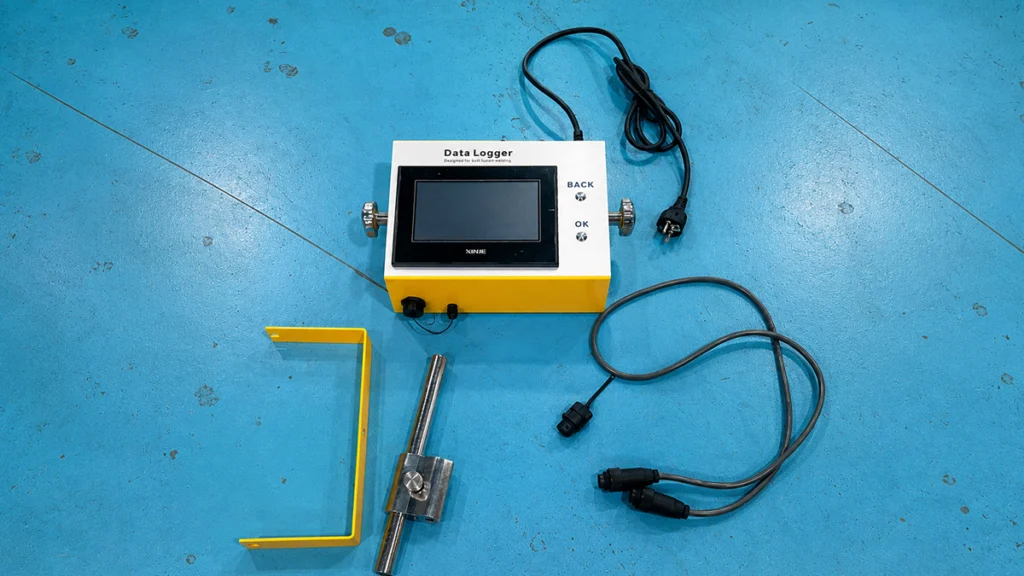
The specific application dictates the tier of equipment you need to buy. Natural gas distribution networks carry strict ISO 21307 and ISO 12176-3 compliance rules, mandating butt fusion machines with built-in data loggers that record every single weld parameter for municipal audits. Water infrastructure projects focus on hydraulic reliability and high daily throughput. Mining operations demand rugged, heavy-duty machines built to survive extreme weather and abrasive dust while fusing thick-walled HDPE slurry pipes. Conversely, agricultural irrigation projects usually value cost-efficiency and portability over high-end digital tracking.
Get detailed specs and custom configuration options
Request Technical SpecificationsHow to Match the Machine to Pipe Diameter, Material, and Project Type
How important is after-sales service and local technical support?
Equipment downtime bleeds money. A stalled pipeline project can easily cost thousands of dollars a day in missed deadlines and idle labor. Industry metrics reveal that 90% of construction crews rely on 24/7 online technical support and nationwide warranty networks. Having access to local technicians who actually understand the unique challenges of running a butt fusion machine in Argentina is vital. On top of that, 75% of contractors need detailed video tutorials and comprehensive operation manuals to train field crews that constantly rotate in and out of the job site.
What should be checked in a supplier quotation?
A solid B2B quotation leaves absolutely no room for interpretation. It should be exhaustive to stop procurement disputes before they start. Look for the exact equipment model, total unit quantity, individual pricing, and an itemized breakdown of every included accessory (especially clamp sizes). The document must clearly define delivery lead times, warranty terms, and specific after-sales service commitments. If you receive a vague quote missing power supply details or technical specifications, you are likely dealing with a middleman, not a direct manufacturer.
How do lead time, warranty, and spare parts affect total project risk?
Supply chain reliability dictates your procurement risk. Long lead times push back project kickoffs, and weak warranties leave contractors footing the bill for expensive repairs. Spare parts availability is the real dealbreaker here. While replacing parts on a manual butt fusion machine might cost 80% less than fixing a hydraulic unit, the hydraulic models deliver unmatched reliability for massive projects. If an HPU pump blows out and your supplier cannot get a replacement part to the site within 48 hours, your entire pipeline installation grinds to a halt.
What factors change the final machine price?
The base sticker price is just the beginning. Final costs swing wildly based on maximum pipe diameter capacity, the level of automation (manual versus CNC), and whether data-logging hardware is included. You also have to budget for generator sizing. Contractors need to calculate a 30% surplus capacity just to handle the heating plate’s massive initial power spike. Adding upgraded components—like specialized crane hoists for larger rigs or titanium-coated milling blades—will also drive up the final capital expenditure.
| Specification Category | Minimum Standard Requirement | Premium / Industrial Grade |
|---|---|---|
| Diameter Support | Single range (e.g., 160-315mm) | Multi-range with full reducer sets |
| Temperature Control | Analog dial or basic digital | PID digital control (±2°C accuracy) |
| Data Logging | None (Manual recording) | ISO 12176-3 compliant integrated logger |
| Chassis Build | Standard steel frame | Reinforced aluminum / heavy-duty steel |
Selection Criteria for Contractors in Argentina
What hidden costs should be included beyond the base unit?
Figuring out the total cost of ownership means looking way past the initial invoice. Contractors have to budget for a dedicated mobile generator robust enough to handle the butt fusion machine’s peak electrical draw. Then come the routine maintenance expenses: reapplying the PTFE coating on the heating plate, replacing hydraulic fluids, and sharpening the milling blades. Above all, contractors must calculate the devastating cost of potential downtime if their chosen pipe fusion machine lacks a reliable local spare parts network inside Argentina.
When does a higher-priced machine save money over time?
Dropping capital on a CNC or automatic hydraulic butt fusion machine delivers a massive return on investment (ROI) by slashing labor intensity and practically eliminating human error. Premium machines take total control of the heating and cooling cycles, stopping the costly weld failures that force crews to dig up and re-weld buried pipe. Furthermore, automated systems generate digital QA records, which dramatically speed up municipal approvals and inspections. A manual crew might finish 2 to 3 joints per hour on DN315 pipe, but an automated machine guarantees that every single joint passes ultrasonic testing the very first time.
Why is choosing by price alone a mistake?
Buying the cheapest equipment on the market is a catastrophic procurement error. Bargain butt fusion machines usually rely on cheap hydraulic seals that blow out under sustained pressure. They also feature thin PTFE coatings that wear off quickly, leaving molten PE permanently stuck to the heating plate. Worse still, budget suppliers notoriously abandon you after the sale. When a cheap butt fusion welding machine inevitably breaks down in the middle of a trench, the resulting project delays will cost you exponentially more than whatever you saved by skipping the premium machine.
What happens if the machine does not match the pipe range?
Trying to butt fuse the wrong sized pipe is a direct violation of engineering standards. Generally, you cannot use butt fusion for pipes under 63mm in diameter or with wall thicknesses below 6mm. The surface area is just too small to hold structural integrity under high pressure, meaning you have to use socket or electrofusion instead. On the flip side, forcing a massive pipe fusion machine to clamp down on a pipe below its minimum rated limit will cause severe pipe ovality, crushing and ruining the pipe ends before the welding even starts.
Butt Fusion Machine Price, Cost Factors, and ROI
Which quality checks should be done before accepting delivery?
The second the equipment arrives, contractors need to run a rigorous technical inspection. Grab a digital multimeter and measure the electrical resistance of the heating elements to ensure they align perfectly with the manufacturer’s spec sheet. Check the hydraulic unit’s oil-gas separator for poor sealing or subtle leaks. Confirm that the chassis guide pillars are adequately lubricated and perfectly parallel. Finally, power up the milling cutter for a dry run to verify the blades spin smoothly without any dangerous lateral vibration.
What should be verified before placing the order?
Do not sign a purchase order without digging into the manufacturer’s engineering pedigree. Confirm their technical expertise in thermoplastic welding and their overall R&D capabilities. Make sure they can actually provide future software updates for data loggers, system upgrades, and routine calibration services for your hydraulic gauges. A trustworthy supplier should gladly hand over detailed references or case studies from similar pipeline infrastructure builds across Latin America.
Which documents and technical data should the supplier provide?
For industrial and municipal projects, compliance documentation is absolutely non-negotiable. The supplier has to deliver comprehensive maintenance and operation manuals in either English or Spanish. They must also provide ISO and CE certifications to prove the pipe fusion machinery meets strict international manufacturing standards. If you are buying a CNC or semi-automatic rig, demand the data logging specifications proving full compliance with ISO 12176-3 for weld traceability.
How can a contractor compare two machines side by side?
To judge competing models fairly, ignore the marketing fluff and focus strictly on engineering metrics. Look at the maximum pipe size capacity and the true level of automation. Run the numbers on the hydraulic cylinder’s effective area to figure out the actual clamping force. Compare the heat-up time and the kW power consumption of the heating plates. Finally, evaluate their data-logging features and confirm whether they have local service centers ready to dispatch technicians to your job sites butt fusion machine in Argentina.
Common Buying Mistakes and Hidden Risks to Avoid
Procurement teams constantly underestimate how much electricity industrial fusion equipment actually draws. Buying a massive rig without checking the on-site generator capacity inevitably leads to voltage drops during the critical heating phase. The result? Cold welds and a pile of rejected joints. Another frequent mistake is ignoring the reality of the job site environment. Sending a standard indoor workshop butt fusion machine out to a high-altitude, dust-choked mining project is a guaranteed recipe for premature hydraulic failure. In those harsh conditions, heavy-duty, shielded equipment is non-negotiable.
Contractors also invite massive project delays when they ignore standard compliance. If you buy a butt fusion machine that struggles to hold the 0.15 N/mm² interfacial pressure demanded by DVS 2207-1, your finished pipeline will fail independent third-party inspections. On top of that, failing to lock down a written guarantee for local spare parts availability leaves you entirely at the mercy of international shipping delays. If a single proprietary hydraulic valve snaps, waiting three weeks for a replacement part from overseas can easily bankrupt a tightly scheduled municipal water project.
Recommended Buying Checklist for PE Pipe Contractors
To lock in a secure, profitable procurement process, PE pipe contractors need to run through this technical checklist before signing off on any new equipment:
- Verify Pipe Specifications: Make sure the butt fusion welding machine’s diameter range easily covers both your current and future project needs (for example, DN160 up to DN315).
- Check Power Compatibility: Confirm that the frequency and voltage (220V/380V, 50 Hz) perfectly match the local grid and your fleet of mobile generators.
- Assess Hydraulic Capability: Ensure the hydraulic pump can hold the exact interfacial pressure mandated by ASTM F2620 or ISO 21307 without any pressure bleed-off.
- Confirm Accessory Inclusion: Comb through the quotation to guarantee all necessary tool kits, heating molds, and reducer inserts are baked into the base price.
- Evaluate Data Logging: For municipal water and gas jobs, double-check that the pipe fusion machine packs an ISO 12176-3 compliant data logger with Bluetooth or USB export features.
- Validate Supplier Support: Demand a hardcopy service level agreement (SLA) that clearly defines spare parts lead times, warranty length, and the availability of on-the-ground technical support in Argentina.
FAQ
Q1: What size butt fusion machine do I need for PE pipe projects?
The size you need is directly tied to the pipe’s outer diameter (OD). Small units cap out at 110mm, medium HDPE pipe jointing machines handle the 160mm to 315mm range, and massive hydraulic rigs can weld pipe up to 1600mm. Always pick a machine where your most frequently used pipe sizes sit right in the middle of its operating range.
Q2: How do I choose between manual and hydraulic butt fusion machines?
Go with a manual butt fusion machine if you are working with small diameter pipes (under 110mm) on a tight budget where pinpoint pressure control is not strictly enforced. Hydraulic butt fusion machines become mandatory for anything over 160mm. They deliver the automated, sustained clamping force you need to pass strict DVS and ISO welding standards.
Q3: What voltage and power supply should I confirm for Argentina?
The industrial power grid in Argentina runs at 50 Hz. You need to know if your butt fusion machine takes 220V single-phase (common for manual/portable gear) or 380V three-phase power (mandatory for large hydraulic units). Always make sure your site generators pack a 30% surplus capacity to handle the heating plate’s massive initial power draw.
Q4: How much does a butt fusion machine cost in Argentina?
Pricing swings wildly depending on size and automation. Basic manual butt fusion machines usually run between $1,500 and $12,000. Semi-automatic hydraulic units sit in the $8,000 to $35,000 range. If you need a fully automatic CNC machine for a massive industrial build, expect prices to start at $18,000 and easily push past $100,000 based on the spec sheet.
Q5: Can one machine handle both water and gas pipeline projects?
Absolutely, as long as it is a CNC or semi-automatic hydraulic butt fusion welding machine fitted with a data logger. Gas projects mandate severe traceability and strict adherence to ISO 12176-3 standards. If a machine meets those intense gas specifications, it will easily overpower the standard requirements for municipal water lines.
Q6: What accessories should be included with a butt fusion machine?
A standard procurement package needs the main chassis, a high-speed milling cutter, a PTFE-coated heating plate, a storage stand, an oil-gas separator, a hydraulic power unit (if applicable), and a complete set of inner clamp reducer inserts covering every advertised pipe diameter.
Q7: How do I check if a supplier is reliable before buying?
Dig into their technical documentation, ask for CE/ISO certifications, and demand detailed case studies from past Latin American infrastructure projects. A solid supplier will hand over transparent quotes, promise 24-hour technical support, and lay out crystal-clear terms regarding local spare parts and warranty coverage.
Conclusion
Selecting the right butt fusion machine in Argentina requires more than comparing purchase prices. Buyers should evaluate pipe diameter range, hydraulic performance, heating plate temperature control, automation level, power supply compatibility, and the technical requirements of the project.
For mining, municipal water, gas distribution, and industrial pipeline applications, the machine configuration should match the actual working conditions and required level of process control. Hydraulic machines are suitable for a wide range of field projects, while CNC systems can provide more consistent parameter control and welding data recording where traceability is required.
Procurement teams should also consider supplier experience, spare parts support, warranty terms, technical service, and compliance with applicable standards such as ISO 21307. Careful equipment selection can help improve welding consistency, reduce rework, and support long-term pipeline performance.
Let our experts help you choose the right equipment for your project
Contact Our Engineering Team