
Table of Contents
This butt fusion welding machine buying guide compares Ekberg and Ritmo for South American projects, covering pipe diameter ranges, hydraulic vs manual options, key specifications, cost, lead time, import logistics and after-sales support.
What Is a Butt Fusion Welding Machine and Why Does the Brand Choice Matter?
Butt Fusion Welding Machine: A Direct Definition
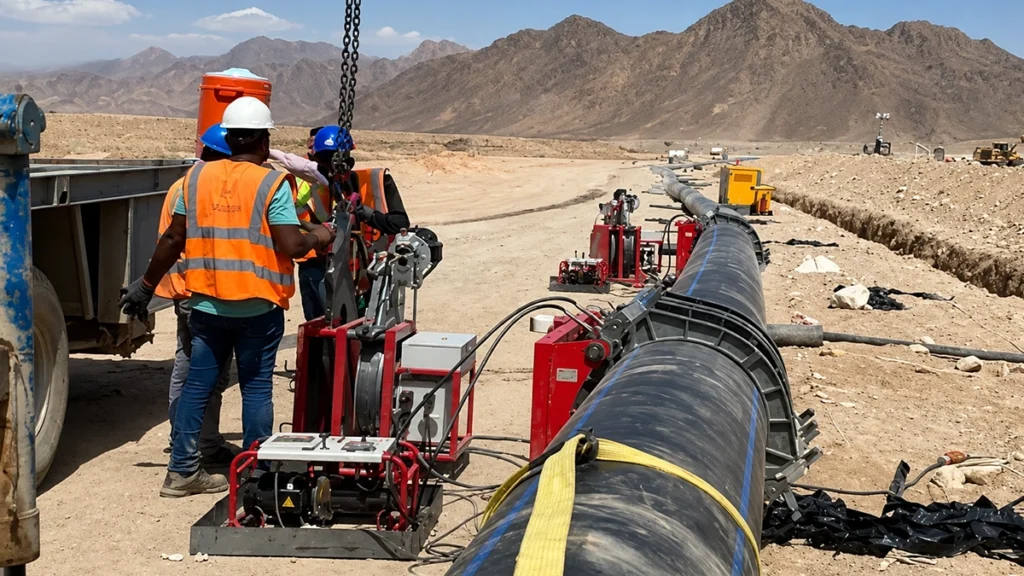
A butt fusion welding machine is a specialized thermofusion device designed to join thermoplastic pipes, particularly HDPE and PP. It heats the prepared pipe ends using a temperature-controlled heating plate, typically set according to the applicable welding standard and procedure. For HDPE pipes, common heating plate temperatures are around 200–230°C. The softened ends are then joined under controlled fusion pressure and held until sufficiently cooled. When performed correctly, butt fusion creates a strong, homogeneous joint without adhesives or solvents. Manufacturers such as Ekberg and Ritmo offer equipment with different welding ranges, control systems, and automation levels to meet diverse project requirements.
How Butt Fusion Differs from Electrofusion and Mechanical Pipe Joints
Electrofusion relies on expensive HDPE electrofusion fittings packed with embedded heating coils and barcode readers to dial in welding parameters. While that technology shines in tight trench repairs or complex tie-ins, the sheer cost of those fittings makes electrofusion a budget-killer for long-distance pipelines. Mechanical joints, on the other hand, use physical flanges and couplings. The problem is that they inherently degrade, settle, and eventually leak. Butt fusion skips the extra hardware entirely by heating the pipe ends directly. This approach makes it the most structurally sound and cost-effective method for massive, long-distance trunk lines.
Why Brand Selection Changes Project Risk in South America
South American operating environments are brutal. Contractors navigate everything from high-altitude Andean pipelines to isolated Atacama mining sites, and these conditions demand extreme equipment durability. The brand you choose directly impacts your access to regional spare parts, calibration services, and technical support. A breakdown in a remote location can trigger catastrophic project downtime. Choosing a proven brand also guarantees strict compliance with international pipeline standards (ISO 21307, DVS 2207, ASTM F2620), directly slashing the risk of environmental contamination and joint failure.
Ekberg vs Ritmo: Side-by-Side Comparison for South American Projects
Comparison Table: Pipe Diameter Range, Hydraulic System, Data Logging, and Voltage
| Feature | Ekberg Welding | Ritmo |
|---|---|---|
| Pipe Diameter Range | DN63 to 2600mm (Heavy-duty focus) | Up to 1600mm (Alfa line), 400-1200mm (RED series) |
| Hydraulic System | 4-column design, separate clamping/operating | Self-aligning hydraulic gearcases (BASIC series) |
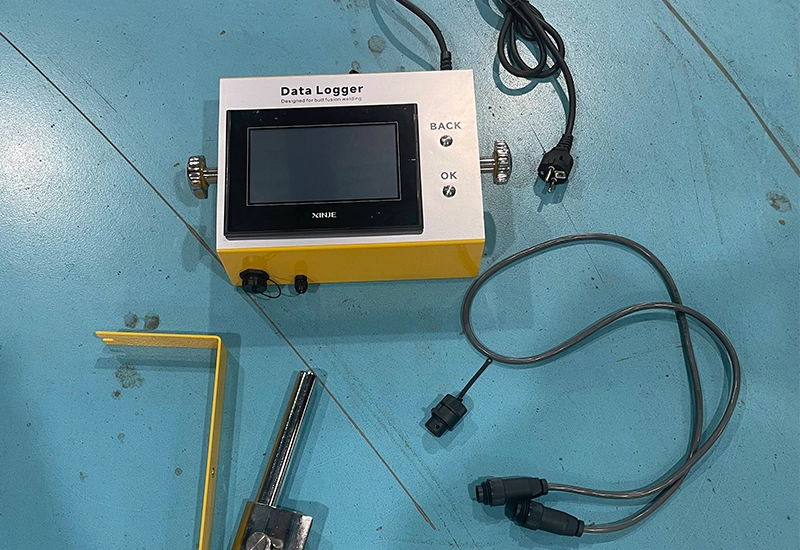
| Data Logging & Tech | Closed-loop control, built-in Beidou/GPS | EASY LIFE system, SET & GO! PRO App, CNC memory |
| Voltage Requirements | 220V (up to 315mm), 380V (450mm+) | 220V (up to 315mm), 380V (large diameter) |
| Primary Market Strength | High-capacity mining, rapid ROI | Regulated municipal utilities, extreme portability |
| Standards Compliance | ISO, CE, SGS | ISO, ASTM F2620, CE |
Which Brand Wins on Portability and Which on Large-Diameter Capacity?
When it comes to extreme portability, Ritmo takes the lead. Their compact hydraulic and manual units, like the Delta 160 M and 200 M, strip the machine body weight down to a mere 30 to 35 kg. This lightweight footprint is a lifesaver for steep mountain slopes and tight urban trenches. Ekberg, however, dominates the large-diameter heavy-duty space. Engineered with rigid 4-column hydraulic frames, Ekberg rigs handle the massive drag pressures of 1200mm mining and infrastructure pipes without a hint of frame deflection.
Total Cost of Ownership: Purchase Price vs Spare Parts and Service Reach
Thanks to the massive scale of Chinese manufacturing, Ekberg offers a significantly lower initial purchase price. This translates to a rapid return on investment for large-scale contractors and mining outfits. Ritmo carries a premium European price tag, justified by advanced CNC automation designed to eliminate operator error and slash rework costs. But Total Cost of Ownership (TCO) in South America hinges heavily on import logistics. Chinese exports often secure highly favorable ocean freight rates to Pacific ports in Peru and Chile, drastically cutting the landed cost of heavy Ekberg machinery.
Factory-direct pricing with technical consultation included
Get Your Free QuoteEkberg Butt Fusion Welding Machines: Product Range and Real-World Strengths
Ekberg Machine Classes: Manual, Hydraulic, and Semi-Automatic
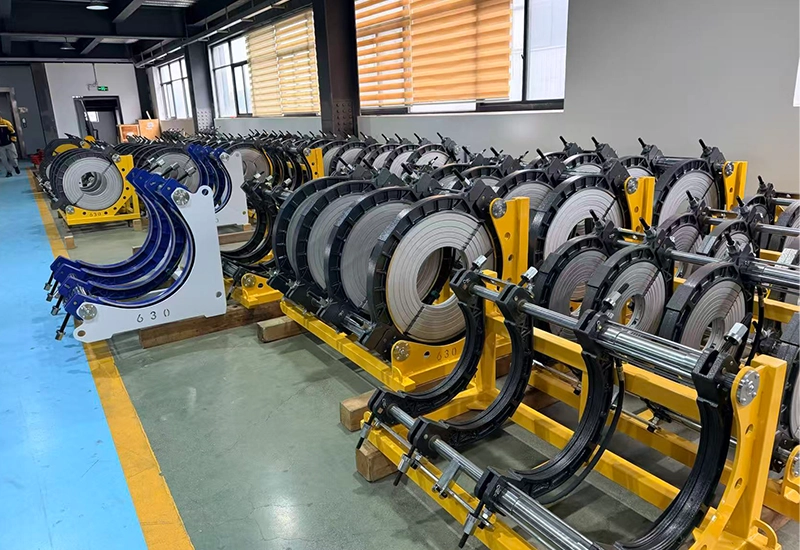
Ekberg divides its lineup into manual, hydraulic, and fully automatic categories. Manual rigs offer a budget-friendly fix for small-diameter pipes where basic human force gets the job done. Step up to the hydraulic class, and you get a rigid 4-column frame pushing the 4 to 6 MPa of pressure necessary for medium and large pipelines. The fully automatic models take it a step further, utilizing closed-loop control over time, temperature, and pressure. These advanced units automatically gauge drag pressure to lock in consistent weld quality.
Where Ekberg Welding Machines Perform Best in South American Field Conditions
Heavy-duty, unforgiving environments are where Ekberg equipment truly thrives. The design features separate clamping and operating systems, granting crews the flexibility needed for awkward in-trench welding around existing underground utilities. Managing remote operations? Built-in Beidou/GPS positioning lets project managers track machine coordinates across sprawling South American mining sites. On the mechanical side, robust aluminum alloy heating plates and high-speed carbon steel milling cutters easily shrug off abrasive, dust-choked field conditions.
Known Limitations and Service Considerations for Ekberg Equipment
Raw power comes with a demanding electrical appetite. A massive 1000mm Ekberg unit pulls up to 24.5KW of total power (17.5KW for the heater, 3KW for milling, and 4KW for hydraulics), requiring heavy-duty on-site generators. Furthermore, any machine sized 450mm or larger strictly mandates a 380V three-phase power supply. In off-grid locations, this requires serious logistical foresight. Also, while automatic versions exist, Ekberg’s manual and semi-automatic rigs still lean heavily on an experienced operator to dial in precise pressure and temperature adjustments.
Ritmo Butt Fusion Welding Machines: Product Range and Real-World Strengths
Ritmo Machine Classes: From Compact Field Units to High-Capacity Hydraulic Rigs
Ritmo’s product architecture covers everything from ultra-portable manual units to highly sophisticated CNC systems. The manual Delta series minimizes weight and dimensions, offering extreme mobility for tight spaces. Moving up, the BASIC hydraulic line brings welded steel frames, four sturdy clamps, and drip-free quick couplings for dependable field performance. At the pinnacle sits the Delta Dragon CNC gearcases. Available in semi-automatic and fully automatic configurations, these top-tier machines effectively remove human error from the fusion equation.
Where Ritmo Machines Perform Best in South American Field Conditions
If you are bidding on highly regulated utility projects, Ritmo is the gold standard. Their EASY LIFE system and SET & GO! PRO App automatically generate detailed PDF reports. This satisfies the strict digital traceability mandates enforced by municipal water and gas networks in Colombia and Brazil. Ritmo builds its equipment to meet uncompromising international parameters, including ASTM F2620 and ISO 21307 High Pressure, securing regulatory compliance for critical infrastructure. Additionally, the Alfa Line gives contractors the flexibility to fabricate custom fittings right on the job site.
Known Limitations and Service Considerations for Ritmo Equipment
The biggest hurdle with Ritmo is the upfront capital expenditure. Premium Italian engineering and proprietary software push the initial purchase price significantly higher. Beyond cost, the electronic complexity of Wi-Fi modules and advanced CNC gearcases means field repairs often demand specialized technicians. Finding one in the high Andes or the remote Amazon basin is a major logistical headache. Finally, the standard composition weight for large models like the Delta 1600 HDR tops 700 kg, making mountainous transport incredibly difficult.
Get detailed specs and custom configuration options
Request Technical SpecificationsHow a Butt Fusion Welding Machine Works: Components and the Welding Cycle
Core Components: Heating Plate, Hydraulic Power Unit, Facing Tool, and Clamps
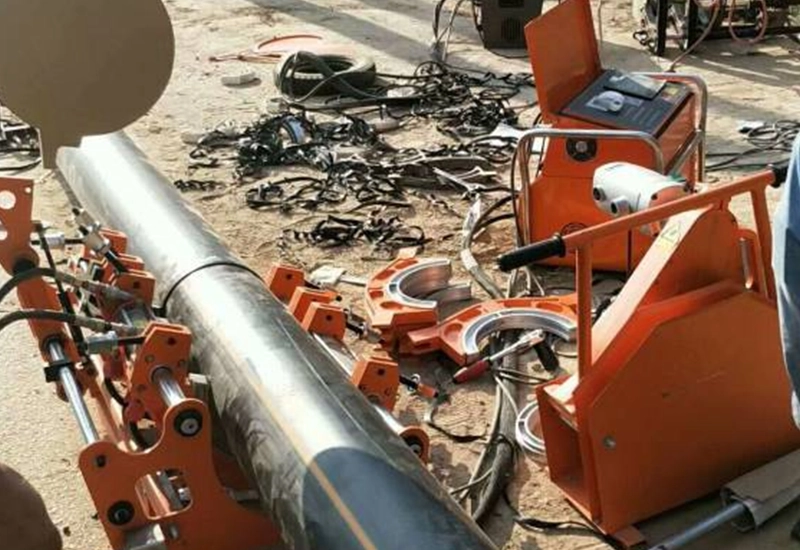
Four critical components drive a butt fusion welding machine. First, the clamping device—usually featuring four steel or aluminum clamps—secures the pipes and holds reducing inserts for smaller diameters. Next, the facing tool (or milling cutter) deploys high-speed carbon steel blades to shave the pipe ends perfectly flat, stripping away the oxidized plastic layer. The PTFE-coated heating plate, armed with an independent thermometer, then brings those pipe ends to exactly 210±5°C. Finally, the hydraulic power unit drives the facer and applies the exact interfacial pressure needed to fuse the joint.
The Butt Fusion Welding Cycle, Step by Step
Pulling off a flawless weld means following a strict thermofusion sequence.
1. Preparation & Clamping: Operators load, align, and lock the HDPE pipes into the fusion machine, tweaking the clamps to fix any high-low misalignment.
2. Milling/Facing: The facing tool simultaneously shaves both pipe ends. Once continuous plastic ribbons emerge, the surfaces are perfectly parallel.
3. Alignment Check: Crews remove the facer and push the pipe ends together to confirm zero gaps and flawless alignment.
4. Heating & Bead Formation: Operators drop in the heating plate. The pipe ends press against it under initial pressure until a specific melt bead forms. Pressure is then reduced, allowing the heat to deeply soak into the pipe walls.
5. Fusion: The heating plate is yanked out quickly. The hydraulic system immediately slams the molten pipe ends together under calculated interfacial pressure.
6. Cooling: The joint remains completely static under hydraulic pressure until it cools, solidifies, and forms a monolithic bond.
What Causes a Failed Butt Fusion Weld?
Failed welds rarely happen by accident; they are almost entirely preventable. Poor milling leaves the plastic oxide layer intact, blocking molecular entanglement. Incorrect pressure application is another common culprit. If an operator fails to calculate and apply the “drag pressure” needed to physically drag heavy pipe through the dirt, the interfacial bond will be weak. Finally, temperature drops—often caused by excessively long extension cords or undersized generators—stop the heating plate from holding that mandatory 210°C. The result? A brittle, cold weld.
Technical Specifications That Actually Decide the Right Machine
Pipe Diameter Range, SDR, and Working Pressure Requirements
| Specification | Why It Matters | How to Verify in a Quote |
|---|---|---|
| Diameter Range | Dictates the maximum and minimum pipe sizes the machine can physically secure. | Check the base frame capacity and ensure all necessary reducing inserts are included. |
| SDR (Standard Dimension Ratio) | Thick-walled pipes (low SDR) demand significantly higher fusion pressure to bond correctly. | Confirm the hydraulic cylinder's maximum force output aligns with your pipe's SDR. |
| Working Pressure | Ensures the machine possesses the raw power to overcome drag resistance in the field. | Verify the system pushes 2-4 MPa for 160-315mm, or 4-6 MPa for 450-800mm pipes. |
Hydraulic vs Manual vs Semi-Automatic: Which Control System Do You Need?
Manual control systems only make sense for small diameters under 160mm, where plain human leverage creates enough fusion pressure. Step up to large-diameter pipes, and a hydraulic or semi-automatic butt fusion welding machine becomes non-negotiable. The sheer physical force required to mill, heat, and cool large pipes is simply impossible to generate by hand. For municipal gas and water contracts that demand zero-leak guarantees and digital traceability for government inspectors, fully automatic or CNC systems are strictly required.
Voltage, Generator Compatibility, and Weld Data Logging Requirements
Power specs dictate whether a machine survives in the field. Rigs up to 315mm generally run on a standard 220V single-phase supply. However, a EKY630 hydraulic butt fusion welding machine 315mm to 630mm and larger absolutely requires 380V three-phase power. Generator sizing is equally critical; run an undersized generator, and your heating plate will fail to reach temperature. Data logging is the final puzzle piece. Modern infrastructure projects increasingly mandate Wi-Fi connectivity, Beidou/GPS coordinates, and PDF report generation to log the time, temperature, and pressure of every single joint.
Application Scenarios Across South America: From Andean Pipelines to Mining and Irrigation
Water and Sanitation Networks in Brazil, Colombia, and Peru
Municipal utility departments mandate HDPE butt fusion for securing high-pressure sewage systems and potable water mains. These urban environments force crews to navigate narrow, heavily congested trenches, making HDPE pipe butt fusion welding machines with separate clamping systems incredibly valuable. Furthermore, South American municipalities now heavily enforce data logging. If your HDPE pipe fusion machine cannot instantly generate a digital PDF report detailing the weld parameters, you will likely be disqualified from bidding on 50-year municipal pipeline contracts.
Mining Slurry and Tailings Pipelines in Chile and Peru
Because of its unmatched chemical and abrasion resistance, HDPE pipe is the backbone of mining slurry transport. These brutal sites demand a heavy-duty butt fusion welding machine for mining HDPE pipelines in Chile and Peru, often scaling all the way up to 1200mm. The equipment must push massive hydraulic force while surviving dusty, abrasive conditions. Thermofusion’s leak-proof nature is critical here. A single failed joint could dump toxic tailings and devastate local groundwater supplies.
Gas Distribution and High-Altitude Pipeline Work in the Andes
Natural gas networks operate under zero-tolerance safety margins. These projects demand strict compliance with ASTM F2620 or ISO 21307 standards, requiring an HDPE pipe fusion machine for gas pipelines equipped with advanced CNC automation. High-altitude work in the Andes introduces severe environmental chaos. Thin air causes significant power loss in generators (altitude derating), forcing contractors to oversize their power units by up to 30% just to keep heating plates hot. The HDPE pipe welding machines must also boast rugged environmental tolerances to survive ambient swings from -10°C to 40°C.
Step-by-Step Buying Guide: Matching the HDPE Pipe Welding Machine to Your Project
Step 1 to Step 5: From Pipe Spec to Machine Shortlist
1. Define Pipe Specifications: Pinpoint the maximum Outside Diameter (OD) and the lowest SDR (the thickest wall) your upcoming project demands.
2. Verify Standard Compliance: Check if your client mandates ASTM F2620 (High Pressure) or ISO 21307 (Low Pressure) welding parameters.
3. Select Control Level: Decide between Manual, Hydraulic, or CNC based on your working budget and the client’s data traceability requirements.
4. Calculate Power Supply: Confirm whether you have 220V or 380V power available. Calculate the exact generator size needed, making sure to factor in altitude derating.
5. Evaluate Total Cost of Ownership: Weigh the initial sticker price against the expected operational lifespan and the local availability of calibration services and spare parts.
Scenario Check: Small Contractor, National Utility, or Mining Operator?
- Small Contractors: Semi-automatic, manual, or highly portable butt fusion welding machines in the 160mm to 315mm range are your best bet. They offer low capital risk, fast setup times, and fit easily in the back of a standard pickup truck.
- National Utilities: You need CNC or Fully Automatic rigs. Generating PDF reports, logging GPS coordinates, and securing digital data are non-negotiable requirements to pass strict government infrastructure audits.
- Mining Operators: You require massive, heavy-duty hydraulic rigs (630mm to 2000mm). These HDPE pipe fusion machines must deliver high-pressure fusion, mechanical durability, and rapid deployment across rugged, uneven terrain.
Buyer Checklist Before Approving a Butt Fusion Welding Machine Quote
- Verify that the facing tool and heating plate cover the full diameter range, not just the base frame.
- Confirm the exact combined KW power draw for the hydraulic unit, facer, and heater.
- Calculate your required generator size, adding a 20-30% buffer to handle altitude derating.
- Check for clear certification data (ISO 12176-1, CE) so the machine passes rigorous site inspections.
- Ensure the quote actually includes all the required reducing inserts for your specific pipe sizes.
- Verify the hydraulic cylinder pressure is strong enough to fuse your lowest SDR pipe.
- Confirm warranty terms and pinpoint the exact location of the nearest authorized service center.
- Request a line-item cost breakdown for consumable spares, specifically milling blades and PTFE heating plates.
Cost, Lead Time, Import Logistics, and After-Sales Support
Typical Price Bands and What Drives Them
The butt fusion welding machine price in South America fluctuates based on manufacturing origin, automation level, and diameter capacity. A standard cost breakdown factors in the base machine, reducing inserts, import duties, ocean freight, and operator training. Because of massive Chinese manufacturing scale, Ekberg delivers highly cost-effective pricing, offering exceptional value for heavy-duty hydraulic rigs. Ritmo, meanwhile, commands premium pricing fueled by brand legacy, proprietary EASY LIFE software, and European manufacturing costs.
Import Duties, Customs Clearance, and Delivery Times by Country
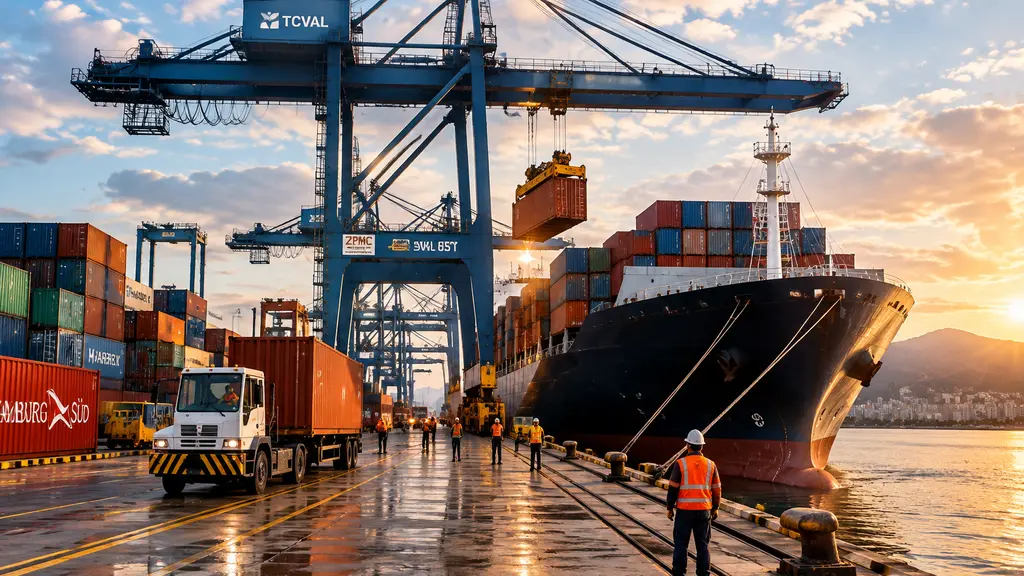
Bringing equipment across borders under HS Code 85152900 takes serious logistical planning. Fortunately, Chinese exports to South America are highly streamlined. Favorable trade agreements between China and countries like Peru and Chile frequently lower the butt fusion welding machine import duty and lead time to Brazil and neighboring nations. Equipment typically ships in 20ft or 40ft ocean containers. Depending on local customs efficiency and shipping schedules, lead times generally hover between 30 and 60 days.
Spare Parts, Calibration, and Operator Training Availability
A butt fusion machine only makes money when it is running. Carbon steel milling blades and PTFE-coated heating plates are standard consumables; having them available locally prevents weeks of agonizing downtime. Before pulling the trigger on a purchase, buyers must confirm butt fusion welding machine spare parts and service support in South America. Data-logging and CNC automatic butt fusion machines also demand periodic calibration to maintain ASTM/ISO compliance. Finally, both brands require proper operator training. Manual butt fusion machines demand physical finesse with pressure application, while CNC rigs require a solid grasp of software navigation.
Common Mistakes, Hidden Risks, and Final Recommendation
Five Costly Mistakes Buyers Make When Importing Fusion Equipment
1. Undersizing the Generator: Forgetting to account for altitude derating and total KW draw leads to unstable heater temperatures and brittle, cold welds.
2. Ignoring Data Logging Requirements: Buying a basic manual machine for a municipal utility project that legally mandates GPS coordinates and digital weld reports.
3. Buying for “Every Possible Future Size”: Paying for excess capacity unnecessarily spikes energy consumption, machine weight, and transport difficulty.
4. Overlooking SDR Limits: Purchasing a butt fusion welding machine that fits the pipe OD, only to discover the hydraulic cylinder lacks the brute force to fuse thick-walled (low SDR) pipes.
5. Focusing Only on Initial Price: Ignoring Total Cost of Ownership—which includes the financial hit of project downtime and the landed cost of spare parts.
Hidden Risks: Undersized Machines, Unverifiable Certificates, Missing Service Networks
Cutting corners on procurement introduces massive hidden risks. Undersized heating plates cause uneven melting, and weak facers fail to shave pipe ends perfectly parallel. Unverifiable certificates are a fast track to disaster; site inspectors will immediately reject a butt fusion welding machine that fails to genuinely meet ISO 12176-1 standards. But missing service networks are the ultimate threat. A fried CNC motherboard or a blown hydraulic seal can completely paralyze a multi-million dollar pipeline project if replacement parts have to be shipped one by one from Asia or Europe.
Final Recommendation: Ekberg or Ritmo for Your Project?
- Choose Ekberg if you are a large pipeline contractor or mining operator who needs cost-effective, heavy-duty hydraulic muscle for massive pipes. Ekberg provides rugged mechanical reliability, integrated GPS tracking, and a rapid ROI built for unforgiving environments.
- Choose Ritmo if you tackle highly regulated municipal water or gas utility contracts. When government inspectors legally demand advanced PDF data logging, premium European certification, and flawless CNC automation, Ritmo is the undisputed choice.
FAQ
Q1: Is Ekberg or Ritmo better for HDPE pipe welding in South America?
Both brands are exceptional, but they target entirely different project needs. Ekberg is the go-to for heavy civil contractors and mining sites needing rugged, large-diameter hydraulic power with a fast ROI. Ritmo fits perfectly into highly regulated municipal utility jobs that require advanced CNC data logging, extreme portability in tight trenches, and premium European certifications.
Q2: How much does a butt fusion welding machine cost in South America?
Pricing swings wildly depending on automation and diameter capacity. Compact manual units might run a few thousand dollars, while a fully 1200mm hydraulic rig requires a massive capital investment. Ekberg brings a lower initial purchase price thanks to Chinese manufacturing scale, whereas Ritmo charges a premium for proprietary software and Italian engineering.
Q3: What pipe diameter range should I choose for a hydraulic butt fusion welding machine?
Aim for a range that covers roughly 80% of your current and upcoming pipeline projects. The 160-315mm range is standard for urban utilities, while transmission mains typically require 450-800mm. Do not buy a massive 1200mm machine if you only fuse 315mm pipe; the extreme weight and heavy power draw will crush your field mobility.
Q4: Do I need a hydraulic or a manual butt fusion welding machine for my project?
Manual machines are strictly meant for small pipes (under 160mm) where human leverage can easily produce the required fusion pressure. If you are handling thick-walled low SDR pipes or anything larger than 160mm, a hydraulic machine is absolutely mandatory to generate the 2 to 6 MPa of pressure needed for a safe thermofusion bond.
Q5: What voltage do butt fusion welding machines require in Brazil, Chile, and Peru?
Smaller rigs (up to 315mm) generally run on standard 220V single-phase power. However, large-diameter hydraulic machines (450mm and up) draw massive amounts of energy to run the hydraulic pump and heating plate. These larger units strictly require a 380V three-phase power supply and heavily sized industrial generators.
Q6: How long does it take to import a butt fusion welding machine into South America?
Expect lead times to fall between 30 and 60 days. This window covers manufacturing, ocean freight (usually in 20ft or 40ft containers), and local customs clearance. Favorable trade routes linking China to Pacific ports in Peru and Chile often speed up the import process for Ekberg machinery.
Q7: Are spare parts and technical service available for Ekberg and Ritmo machines regionally?
Yes, though availability changes depending on the specific country and the local distributor network. Before buying, verify that your supplier stocks essential consumables locally—specifically carbon steel milling blades, hydraulic seals, and PTFE-coated heating plates. Waiting on international shipping for basic parts will grind your project to a halt.
Q8: Can one butt fusion welding machine handle different SDR pipe sizes?
Yes, a single machine can fuse various SDR (Standard Dimension Ratio) sizes, as long as its hydraulic cylinders can push enough force. Thick-walled pipes (low SDR) demand significantly higher interfacial pressure to bond correctly. Always check the machine’s maximum hydraulic pressure output against the exact requirements of your lowest SDR pipe.
Conclusion
Securing the right butt fusion welding machine in South America comes down to matching equipment specs with the brutal realities of your job site. When tackling highly regulated municipal utility projects that require European certifications and strict digital traceability, Ritmo’s EASY LIFE system and advanced CNC automation offer unmatched compliance. On the flip side, for massive agricultural irrigation, rugged mining operations, and contractors hunting for a rapid ROI, Ekberg provides heavy-duty hydraulic power, cost-effective mechanical reliability, and a massive diameter capacity stretching up to 1200mm.
Procurement success hinges on a few critical steps: accurately defining your lowest SDR and maximum pipe OD, calculating exact generator sizes to fight high-altitude power derating, and locking in compliance with ASTM F2620 or ISO 21307 standards. By weighing the Total Cost of Ownership—factoring in spare parts availability, import logistics, and required control systems—buyers can effectively eliminate costly downtime and secure decades of flawless, leak-proof pipeline performance.
Let our experts help you choose the right equipment for your project
Contact Our Engineering Team