

HDPE Pipe Welding Machine: 24/7 Warranty & Service Support
Table of Contents
Introduction
A HDPE pipe welding machine holding steady at 220°C with a precise 0.15 MPa fusion pressure isn’t just equipment; it is the pulse of any HDPE infrastructure project. However, that pulse is only as good as the butt fusion machine‘s uptime. For pipeline contractors and municipal utility directors, the math is unforgiving: a single day of silence on a DN600 hdpe pipe for water supply can hemorrhage upwards of $5,000 in idle crew wages and contractual penalties. While procurement teams often fixate on the initial spec sheet, the true long-term profitability of a project is dictated by the support network that keeps the arc lit and the hydraulics pressurized.
In this guide, we dive into the critical architecture of after-sales support. We will explore compliance with ISO 21307 standards, why remote diagnostics are non-negotiable for modern CNC units, and how to audit a manufacturer’s warranty fine print. We will walk you through the technical lifecycle of fusion equipment—from the moment it is commissioned to its annual calibration—ensuring your operations satisfy rigorous ASME B31.3 requirements. By the end, you will have a clear framework for selecting a supplier that offers not just machinery, but a guaranteed uptime strategy for your mission-critical infrastructure.
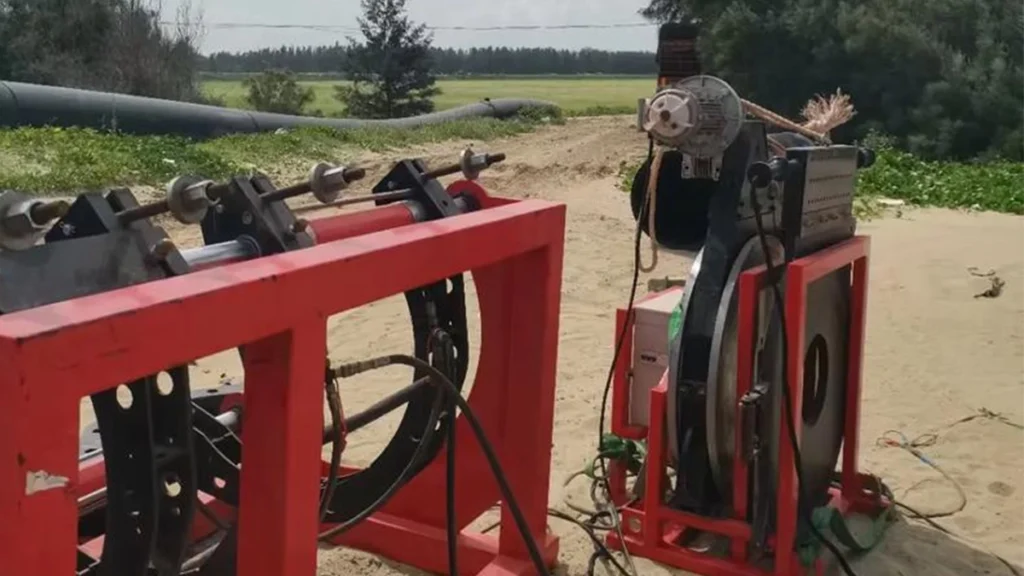
The ROI of Reliability: Why Support Matters for Automatic Pipe Welding Machines
Analyzing the Cost of Downtime vs. Machine Investment
When procurement officers look at capital equipment, the “sticker price” usually dominates the conversation. But out in the field, the “burn rate” of a stalled project makes the butt fusion welding machine cost look negligible. Consider a standard installation scenario on a 500mm (DN500) HDPE pipeline. The daily operational burn for a fusion crew—certified welders, heavy equipment operators, excavator rentals, and crane leasing—can easily eclipse $3,500. If an automatic butt fusion machine goes down due to a blown hydraulic seal or a software glitch, and the replacement part is five days away in an overseas factory, the direct loss hits $17,500 immediately.
And that figure doesn’t even touch on reputational damage or the penalties for missed milestones, which are standard in municipal water and gas distribution contracts. Ekberg Welding’s 24/7 support architecture is engineered specifically to mitigate these risks. We treat support as an insurance policy against downtime. A support network that resolves issues in hours rather than days effectively pays for the hdpe pipe welding machine’s capital cost within the first year simply by preventing project paralysis.
Technical Complexity of Automatic vs. Manual Systems
Moving from manual butt fusion machines to automatic CNC systems is a massive technological leap that demands a different tier of maintenance. A manual butt fusion welding machine is a mechanical beast relying on the operator’s muscle and eyes; when it fails, you usually see a leak or a crack. In contrast, an automatic hdpe pipe welding machine is a mechatronic ecosystem. It relies on a CNC control unit, linear displacement sensors (accurate to 0.1mm), hydraulic pressure transducers, and complex algorithms to manage the fusion cycle.
Because “automatic” implies removing human error, the butt fusion machine relies entirely on sensor calibration and software integrity. A minor drift in a temperature sensor—reading 215°C when the plate is actually at 205°C—can cause the system to lock out to prevent a non-compliant weld. This complexity demands a support team capable of software troubleshooting, firmware updates, and sensor recalibration. Sending a mechanic isn’t enough anymore; manufacturers need to provide access to software engineers who understand the interplay between hydraulic pressure curves and digital control logic.
The Role of Remote Diagnostics in Modern Welding
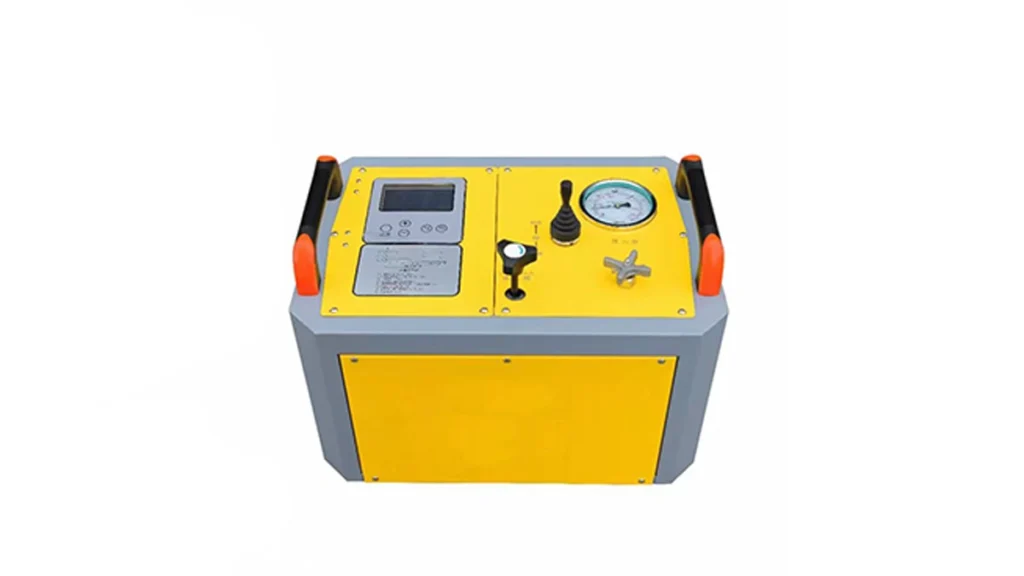
Modern infrastructure projects rarely happen in convenient locations. They happen in the Andes mining belts or agricultural irrigation zones in the Australian Outback. In these environments, waiting for a technician to fly in isn’t a strategy; it’s a liability. This is where the IoT capabilities of modern automatic hdpe pipe welding machine systems change the game. Ekberg butt fusion machines come equipped with integrated data loggers featuring cloud connectivity and GPS positioning, enabling real-time remote diagnostics.
When a fault occurs—say, the plastic pipe butt welder fails to build drag pressure—the operator can upload the error log directly to the Ekberg cloud. Our engineers analyze the pressure-over-time curves to distinguish between a hardware failure (like a hydraulic pump) and a sensor error. We can identify the root cause within minutes. Instead of shipping a whole new unit, we dispatch the specific solenoid valve needed, or in some cases, resolve the issue via a remote firmware patch. This drastically reduces the Mean Time to Repair (MTTR).
Navigating Standards: CE, ASME, and Compliance Requirements
Automatic Pipe Welding Machine CE Certification Explained
For contractors operating within the European Economic Area (EEA) and global markets aligning with EU safety standards, CE certification isn’t a badge of quality—it’s a mandatory legal requirement. For plastic pipe welding equipment, this falls under the EU Machinery Directive 2006/42/EC. This directive mandates rigorous safety protocols, specifically regarding crushing injuries from clamping jaws and thermal hazards from the heating plate.
The relevant harmonized standard here is ISO 12176-1 (“Plastics pipes and fittings — Equipment for fusion jointing polyethylene systems”). A hdpe pipe welding machine without a valid Declaration of Conformity is a massive liability. If an accident occurs on a job site with non-certified equipment, insurance coverage is frequently voided, and project managers can face criminal negligence charges. Ekberg Welding ensures every unit leaving our factory carries full CE certification, verified by third-party testing, ensuring your project meets the highest global safety benchmarks.
ASME Standards for Automatic Pipe Welding in Industrial Sectors
In the industrial, petrochemical, and power generation sectors, the ASME B31.3 (Process Piping) code rules all. Unlike general utility work, ASME codes demand rigorous traceability and equipment validation. The “Owner’s Inspector” on an industrial site will demand proof that the welding equipment can maintain process parameters within strict tolerances.
To satisfy ASME B31.3, the automatic hdpe pipe welder must demonstrate temperature stability across the entire heating plate surface (typically ±3°C) and pressure accuracy within 2.5% of the set value. Ekberg’s support includes providing annual, traceable calibration certificates that validate these parameters. Furthermore, our machines are designed to generate the specific data logs required by ASME inspectors, documenting that every joint was fused according to the qualified Welding Procedure Specification (WPS).
Meeting ISO 21307 and DVS 2207 Welding Parameters
Global welding standards such as ISO 21307 (covering Single Low, Dual Low, and Single High Pressure fusion) and the German DVS 2207 guideline dictate precise recipes for fusing HDPE. An automatic butt fusion machine’s core function is to execute these recipes without deviation. For instance, ISO 21307 High Pressure fusion requires an interfacial pressure of up to 0.52 MPa—significantly higher than older standards—demanding robust hydraulic power.
Critical parameters like heat soak time (often 10 seconds per mm of wall thickness) and cooling time under pressure must be strictly enforced. Over time, hydraulic pumps wear and heating elements degrade, leading to “parameter drift.” Ekberg’s warranty support focuses on preventing this drift. Through regular maintenance protocols and calibration checks, we ensure that the hdpe pipe jointing machine’s actual output matches the programmed ISO or DVS standard. This guarantees that a butt fusipon welding machine purchased in 2020 still produces compliant welds in 2025, protecting the contractor from failed pressure tests and costly rework.
Technical Lifecycle Management: Installation, Training, and Maintenance
Commissioning and Operator Certification
The lifecycle of a high-performance plastic pipe welding machine begins with proper commissioning. Especially for large-diameter units (DN1000 to DN2600mm), commissioning validates the butt fusion machine’s integration with the site’s power supply. A common failure point is undersized generators; an automatic butt fusion machine requires a generator with at least 1.5 times the total machine power (e.g., a 35kVA generator for a DN1000 unit) to prevent voltage drops that can crash the CNC computer.
At Ekberg Welding, we emphasize that a machine is only as good as its operator. As part of our support ecosystem, we offer manufacturer-led training that goes beyond button-pushing. We certify operators on ISO 12176-2 competencies, teaching them to recognize environmental impacts (wind, ambient temperature), verify pipe alignment, and interpret data logger error codes. This training establishes our partners as “certified hdpe pipe welding machine manufacturers” users, adding credibility to their bids for high-spec projects.
Preventative Maintenance Schedules for Hydraulic Systems
To maintain warranty validity and ensure operational reliability, a strict preventative maintenance schedule is essential. Automatic hydraulic systems are sensitive to contamination and wear. Ekberg provides a detailed maintenance checklist that operators must follow:
- Daily: Clean the V-groove inserts to ensure proper pipe alignment. Inspect the heating plate’s PTFE coating for scratches; damaged coating causes plastic to stick, ruining the weld face.
- Weekly: Check hydraulic oil levels (ISO VG 46) and inspect hoses for abrasion or leaks.
- Monthly: Inspect the facing tool blades. Dull blades cause “chatter” and uneven pipe ends, which the CNC sensors will detect as an alignment error.
- Quarterly: Measure the electrical resistance of the heating elements to detect potential failure before it happens.
While Ekberg’s warranty covers manufacturing defects, adhering to this schedule prevents “wear and tear” issues from escalating into breakdowns. Our support team actively guides clients through these checks via video tutorials and digital guides.
Supply Chain for Critical Spare Parts
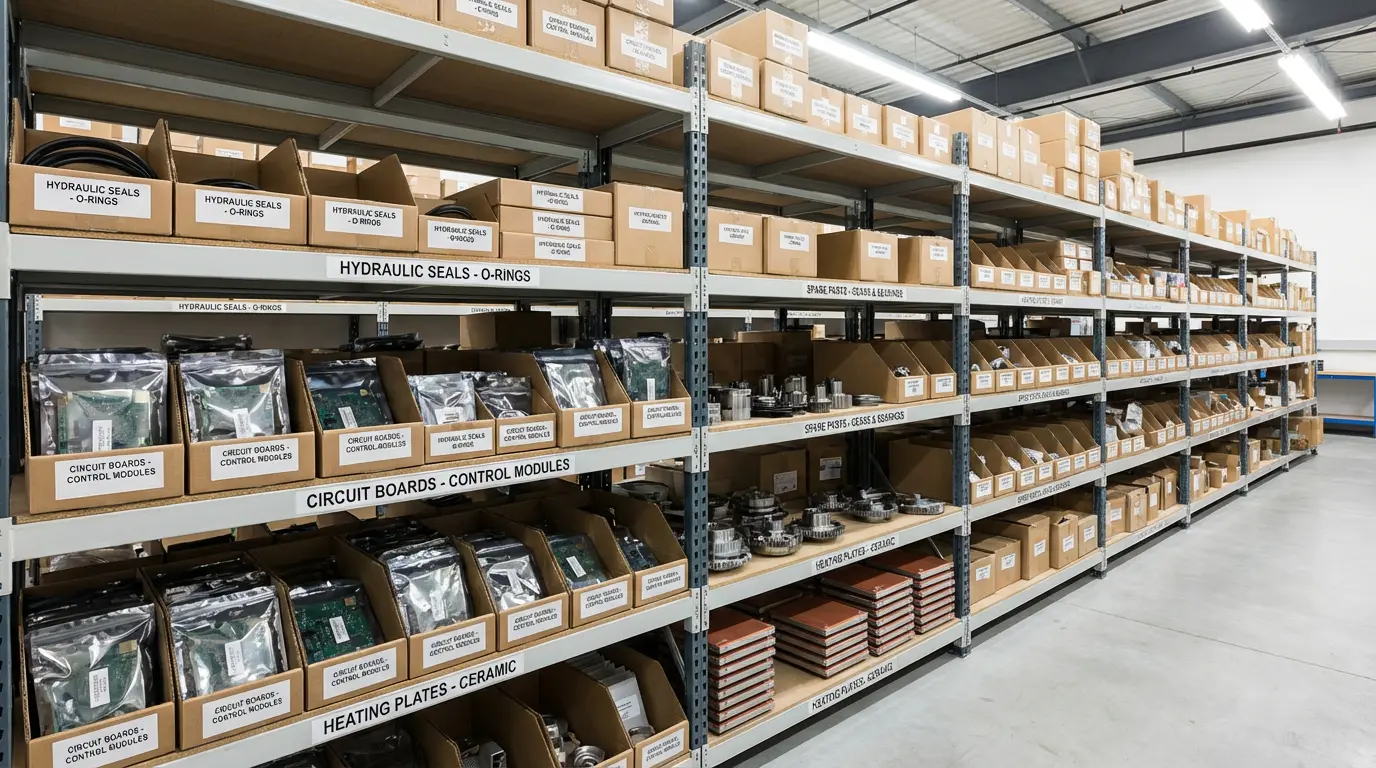
The global nature of pipeline construction means a butt fusion welding machine might be working thousands of miles from the factory. The supply chain for spare parts is therefore a critical component of the product itself. A common frustration with imported equipment is the 3-week lead time for a simple hydraulic seal or control board.
Ekberg utilizes a Global Warehousing Strategy to solve this logistics challenge. We stock “A-List” critical spares—including hydraulic seal kits, heating plates, facing tool motors, and CNC control boards—in regional distribution hubs. This allows for 24-48 hour dispatch to major markets in Europe, Southeast Asia, and the Americas. For projects in extremely remote locations, we offer “Crash Kits”—curated boxes of essential spares sold alongside the hdpe fusion machine—ensuring the site remains self-sufficient for 90% of common maintenance issues.
Selection Criteria: How to Vet Certified Orbital Pipe Welding Machine Manufacturers
Evaluating the Warranty Terms and Coverage
Warranty terms in the heavy machinery sector vary significantly and require careful scrutiny. A standard “1-year warranty” can be misleading if it excludes the most expensive components. Buyers must ask specific questions: Does the warranty cover the CNC electronics, or are they considered “wear items”? Is the hydraulic pump covered against internal failure?
Ekberg Welding offers a transparent 1-Year Comprehensive Warranty coupled with a lifetime maintenance commitment. Our comprehensive coverage includes all electronic and hydraulic components against manufacturing defects. Beyond the first year, our Lifetime Maintenance plan ensures that customers only pay for the cost of parts; labor for diagnostics and repairs at our service centers is provided free of charge. This model aligns our incentives with the customer’s—we build butt fusion machines to last because we are committed to supporting them forever.
Assessing Technical Support Accessibility
When a butt fusion welding machine is down, accessibility to support is the only metric that matters. Support should be evaluated based on strict Key Performance Indicators (KPIs).
- Response Time: Can the manufacturer guarantee a response within 2 hours?
- Language Capabilities: Is the technical team fluent in English? Misinterpreting a technical term like “drag pressure” or “bead buildup” can lead to disastrous weld settings.
- Availability: Does the support line operate on a 9-to-5 basis in a single time zone, or is it truly 24/7?
Ekberg’s support infrastructure is built for the global market. We utilize a “follow-the-sun” support model, ensuring that a project manager in Peru can receive immediate answers from an engineer, regardless of the local time in Asia.
Automatic Pipe Welding Machine Compliance Requirements Checklist
Before finalizing a purchase order, buyers should use this checklist to verify that the manufacturer meets all necessary compliance and support requirements:
- CE Declaration of Conformity: Must reference Directive 2006/42/EC and ISO 12176-1.
- Calibration Certificate: Must be included, dated within 6 months, and traceable to national standards.
- Weld Data Reporting: Request a sample PDF report. Verify it lists ISO 21307 parameters and visualizes the cooling curve.
- Manuals & Schematics: Ensure operation manuals and electrical wiring diagrams are provided in clear, technical English.
- Service Center Proximity: Confirm the location of the nearest authorized service center or spare parts hub.
Comparison: Support Level Tiers
| Feature | Standard Market Support | Ekberg Premium Support |
|---|---|---|
| Warranty Duration | 12 Months (Parts Only) | 12 Months (Parts & Labor) + Lifetime Maintenance |
| Response Time | 24-48 Hours | < 2 Hours (24/7 Hotline) |
| Remote Diagnostics | Phone Support Only | Cloud Data Analysis & Log Review |
| Spare Parts Lead Time | 2-3 Weeks (Import) | 24-48 Hours (Regional Hubs) |
| Calibration Services | Third-Party Required | Manufacturer Direct or Authorized Partner |
Ekberg Welding: Manufacturing Excellence, Quality Control & Global Support
Factory-Direct Quality Assurance Processes
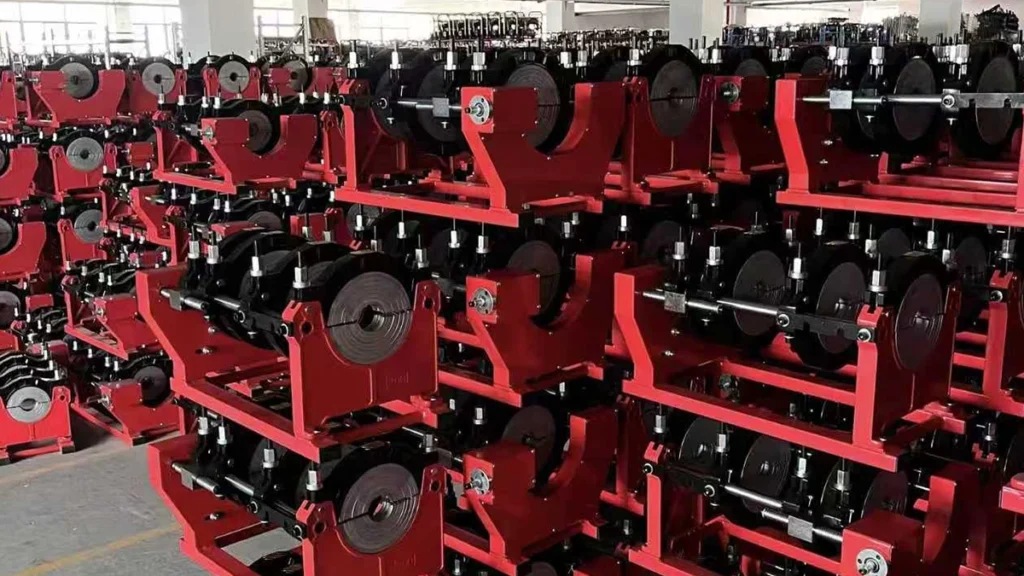
Reliability is engineered in the factory, not inspected in the field. Ekberg’s internal Quality Control (QC) protocols are among the most rigorous in the industry. Before assembly, raw materials such as the aluminum alloy for the chassis and high-grade steel for the clamps undergo hardness and tensile testing.
Crucially, every CNC control unit is subjected to a 48-hour continuous run test to eliminate “infant mortality” in electronic components. Once assembled, the hydraulic stations undergo a pressure holding test at 1.5 times the maximum operating pressure for 4 hours. This ensures that when the butt fusion machine arrives at your site, the hydraulic system is leak-free and capable of holding the precise fusion pressures required for large-diameter HDPE pipes.
Global Service Network and Response Protocols
Ekberg operates on a “Hub and Spoke” service model to maximize reach and speed. Our Regional Hubs serve as major logistics and repair centers, holding extensive inventory and specialized diagnostic tools. These hubs support a network of local Authorized Distributors (the “Spokes”) who are trained to perform Level 1 and Level 2 repairs, such as seal replacements and electrical component swaps.
When a support ticket is raised, our protocol dictates immediate triage. If remote diagnosis cannot resolve the issue, the nearest Spoke is activated. For complex failures, a Hub engineer is deployed, or a replacement unit is dispatched. This layered approach ensures that expert help is always within reach.
Commitment to Innovation and Software Upgrades
The pipeline industry is not static. New materials like PE-RT (Polyethylene of Raised Temperature resistance) and PA-12 (Polyamide) are gaining traction, requiring modified welding parameters. Ekberg’s commitment to after-sales support includes regular firmware updates for our automatic hdpe pipe welding machine data loggers.
We view the plastic pipe welding machine’s software as a living system. By providing updates that include new material standards or revised ISO parameters, we ensure that a butt fusion welding machine purchased today remains compliant with the standards of tomorrow. This future-proofing protects your capital investment and ensures your equipment never becomes obsolete due to changing regulations.
Frequently Asked Questions
Q1: What is the standard warranty period for an Ekberg hdpe pipe welding machine?
Ekberg provides a 1-year comprehensive warranty covering all parts and labor for manufacturing defects. Beyond the first year, we offer a unique Lifetime Maintenance plan. Under this plan, customers pay only for the cost of replacement parts; all labor charges for repairs performed at our authorized service centers are waived for the life of the hdpe pipe welding machine.
Q2: Does your equipment meet butt fusion machine CE certification standards?
Yes, all Ekberg automatic models are fully CE certified. They comply strictly with the EU Machinery Directive 2006/42/EC and meet the specific safety requirements of ISO 12176-1. A signed Declaration of Conformity is included with every butt fusion machine, ensuring it meets the legal safety standards required for use in the European Economic Area and beyond.
Q3: How do you handle support for international clients in different time zones?
We operate a 24/7 Global Support Hotline accessible via phone, email, WhatsApp, and WeChat. Our technical support team works in rotating shifts to ensure that regardless of your location—be it South America, Australia, or Europe—you receive a response within our target window of <2 hours. We also utilize video calls for visual diagnostics.
Q4: Can Ekberg butt fusion welding machines generate reports for ASME standards for automatic pipe welding?
Absolutely. Our integrated CNC data loggers record every critical parameter, including heating plate temperature, drag pressure, fusion pressure, and cooling time. These reports can be exported as PDF or CSV files via USB or Cloud. This data provides the granular traceability required by ASME B31.3 inspectors and ISO 21307 quality assurance protocols.
Q5: What are the maintenance requirements to keep the warranty valid?
To maintain warranty validity, operators must adhere to the preventative maintenance schedule outlined in the user manual. This includes weekly cleaning of the heating plate and V-grooves, monthly inspection of hydraulic hoses and oil levels, and the exclusive use of genuine Ekberg spare parts. We also recommend annual calibration to ensure parameter accuracy.
Conclusion
Choosing the HDPE pipe welding machine is a strategic decision that directly impacts the safety timeline and profitability of your pipeline projects. While technical specs like clamping force, heating power, and hydraulic pressure range are critical, the true value of the equipment is sustained by the support network behind it. Compliance with CE, ASME, and ISO standards isn’t a one-time checkbox during purchase—it’s a continuous process of calibration, maintenance, and validation.
Ekberg Welding stands apart not just as a manufacturer, but as a dedicated partner in your project’s success. With a 24/7 Global Warranty, a robust supply chain for critical spares, and a commitment to remote diagnostics, we ensure that your welding operations remain compliant and efficient. Don’t let equipment downtime dictate your project’s deadline or budget.
Minimize your project risk today. Contact Ekberg Welding for a technical consultation on our warranty packages and to get a factory-direct quote for our certified HDPE pipe welding machines.