
Why Cooling Time Matters in HDPE Pipe Butt Fusion Welding
Table of Contents
Butt fusion welding cooling time determines HDPE joint strength, leak resistance, and field reliability. Learn what affects cooling time, common risks, and how to control weld quality on site.
What Is Cooling Time in HDPE Pipe Butt Fusion Welding?
Cooling time in HDPE pipe butt fusion welding dictates the exact period a fused joint sits clamped under unyielding pressure after you remove the heating plate. This phase acts as the backbone of the entire weld. Why? It gives molten polymer chains the uninterrupted window they need to interdiffuse, entangle, and ultimately solidify. By respecting this window, the joint secures massive tensile strength and pressure resistance well before anyone releases it from the machine.

Cooling time defined in the butt fusion welding process
In any standard butt fusion cycle, cooling is the final—and often the longest—stage of the process. After the pipe ends are heated to the required melt condition under a heater plate temperature typically ranging from 200°C to 230°C and joined under the specified fusion pressure, the joint enters the cooling phase. During this period, the prescribed pressure must be maintained to allow the molten material at the interface to solidify and develop full mechanical strength. Eliminating guesswork and following timer-based cooling procedures helps ensure consistent weld quality and compliance with standards such as ISO 21307 and DVS 2207-1.
What happens inside the HDPE joint during cooling?
High-density polyethylene (HDPE) notoriously lacks thermal conductivity, meaning it cools down at a snail’s pace. Throughout this drawn-out period, polymer chains actively interdiffuse and tangle across the molten interface. You must keep the joint under relentless pressure to force this molecular diffusion and fight the weld material’s natural urge to shrink. Drop that pressure too soon, and the interface forms a “cold skin.” That skin acts as a barrier, wrecking the structural bond and leaving dangerous internal voids behind.
Cooling time vs. handling time vs. full cure time
Mixing up post-weld phases is a fast track to joint damage. You have to clearly distinguish between them. Cooling time represents the non-negotiable period the pipe stays locked inside the machine clamps under pressure. Handling time kicks in right after clamp release; this is when crews can carefully shift the pipe or lower it into a trench as long as they avoid bending stress. Finally, full cure time is the long haul. It’s the extended wait required before hitting the pipeline with hydrostatic pressure testing, giving the pipe wall’s core temperature a chance to completely normalize.
Why Cooling Time Directly Affects Butt Fusion Joint Strength
How molecular bonding develops as the joint cools
Moving from a molten, viscous puddle to a rock-solid structural connection demands undisturbed time. As the heat dissipates, those tangled polymer molecules lock firmly into place to build a unified matrix. Holding fusion pressure steady during this cooldown stops the shrinking material from ripping itself apart from the inside. Ultimately, this highly controlled solidification process delivers the legendary durability HDPE pipe butt fusion joints are known for.
Why moving the pipe too early weakens the weld interface
Jostling the pipe before that cooling timer zeroes out wreaks havoc on the material while it remains viscous and vulnerable. Cut the cooling duration short, and the molecules at the joint interface simply cannot interlock. This rushed movement breeds micro-fractures and subtle misalignments. Even if the external bead looks flawless to the naked eye, the structural integrity of the weld is already compromised.
Pressure retention and joint integrity in buried or pressurized pipelines
A flawlessly cooled joint merges perfectly with the pipe body, stripping away mechanical weak points. When crews execute this correctly, the weld’s pressure resistance and tensile strength rival—or even match—the original pipe. You absolutely need this caliber of joint integrity for high-pressure water mains and buried gas lines. In those applications, mechanical failure or a loss of gas tightness simply isn’t an option.
Factory-direct pricing with technical consultation included
Get Your Free QuoteKey Factors That Determine HDPE Pipe Cooling Time
Hign-Density Polyethylene Pipe diameter and wall thickness
Cooling time hinges directly on the pipe wall thickness (known as the fusion butt joint area, or *en*), rather than just looking at the outer diameter. Thicker walls trap core heat significantly longer due to the polymer’s poor thermal conductivity. Consequently, solidifying the dead center of the weld interface demands exponentially longer cooling durations.
Material grade, SDR rating, and operating pressure
The Standard Dimension Ratio (SDR) maps out the relationship between pipe diameter and wall thickness. Lower SDR numbers point to thicker walls engineered for intense operating pressures, which naturally demand lengthier cooling cycles. Furthermore, different PE material grades—think PE80 versus PE100—dissipate heat at slightly different rates. These material quirks subtly shift the exact cooling requirements for a perfect HDPE butt fusion joint.
Ambient temperature, wind, rain, and jobsite conditions
Mother Nature dictates thermal dissipation rates. When ambient temperatures swing anywhere from –5°C to +40°C, the correction factor for fusion time hovers around 0.5% to 1% per degree Celsius. Most standard parameters use a 20°C baseline. Bitter cold or howling winds can flash-freeze the outer bead while the core stays dangerously molten. To combat this, crews must set up rigorous environmental protections around the welding zone.
Machine clamp stability and applied fusion pressure
A butt fusion machine’s physical stability makes or breaks cooling efficiency. The rig has to hold absorbent pressure flawlessly to stop pipe springback dead in its tracks. If a hydraulic cylinder leaks or the clamps lose their grip, pressure drops during the cooling phase. That loss stops the pipe from binding tightly, paving the way for a structurally crippled weld.
| Variable | Impact on Cooling Time | Technical Parameter |
|---|---|---|
| Wall Thickness (en) | Primary determinant of duration | Exponential increase for *en* ≥ 18mm |
| Ambient Temperature | Alters thermal dissipation | 0.5% – 1% adjustment per °C |
| SDR Rating | Lower SDR requires more time | High-pressure pipes need longer cycles |
| Hydraulic Stability | Prevents internal void formation | Maintain ~10% of fusion pressure |
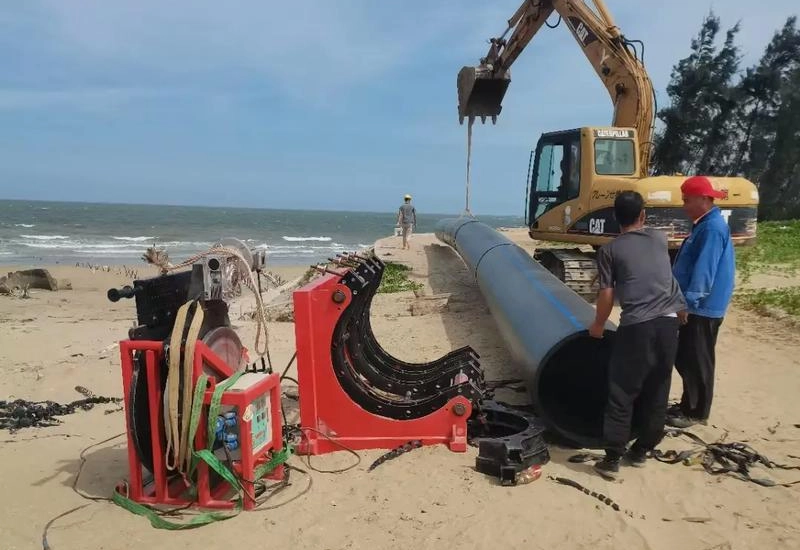
Typical Cooling Time Guidelines for HDPE Butt Fusion Welding
Why cooling time should follow machine and pipe manufacturer specifications
Contractors have to play by the rules laid out in standards like ISO 21307, DVS 2207-1, or ASTM F2620. These technical frameworks spell out the exact pressure and cooling times needed to trigger proper molecular diffusion. Letting an operator guess the timing instead of following engineered specs is practically begging for a catastrophic pipeline blowout.
Example cooling time ranges by pipe size and wall thickness
While exact parameters shift depending on the standard you apply, mapping out a baseline cooling time chart remains vital for project planning. Under standard ISO/DVS math, pipes with a wall thickness under 18 mm need a minimum cooling time of “en + 3” minutes.
Baseline small-diameter cooling times generally look like this:
- 20mm pipe: 3 minutes
- 32mm pipe: 4 minutes
- 40mm pipe: 4.5 minutes
- 50mm pipe: 5 minutes
- 63mm pipe: 6 minutes
Meanwhile, for high-pressure North American jobs, ASTM F2620 mandates a cooling time under fusion pressure of 11 minutes for every inch of HDPE pipe wall thickness.
When to extend cooling time in cold, windy, or high-load conditions
Ugly weather widens the gap between the weld’s core temperature and the external bead. Strong winds chill the outside far too fast, sparking thermal stress. When facing these conditions, operators need to throw up wind shields around the welding zone. They may also need to bump up the cooling phase duration, ensuring the internal wall core stabilizes completely before anyone touches the clamp release.
Get detailed specs and custom configuration options
Request Technical SpecificationsWhat Happens If Cooling Time Is Too Short?
Joint deformation, bead distortion, and internal misalignment
Forcing a correction or nudging the pipe after the processing time lapses is a massive red flag. Dropping clamping pressure too early—or trying to muscle a fused pipe straight—triggers instant joint deformation. You get warped beads and brutal internal misalignment that will absolutely wreck fluid flow dynamics down the line.
Hidden weld weakness that may pass visual inspection
Shortchanging the cooling time creates one of the most insidious butt fusion defects: a fragile internal interface masquerading as a perfect weld. When material flows excessively without proper pressurized cooling, the polymers fail to tangle. An inspector might look at the external bead and pass it, completely unaware of the hidden internal voids and missing molecular fusion lurking just beneath the surface.
Premature leakage, cracking, or pressure test failure
If the internal matrix fails to bond because someone rushed the cooldown, the pipeline simply cannot handle real-world operational stress. Releasing that clamping pressure prematurely translates directly into shrinkage voids. From there, the pipe cracks under ground load and inevitably suffers a blowout failure the second you run a hydrostatic pressure test.
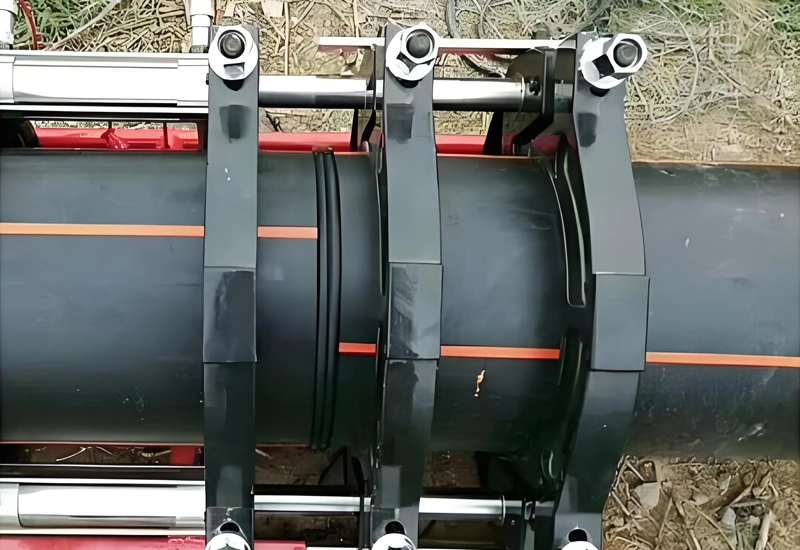
Can Cooling Time Be Too Long in Butt Fusion Welding?
Quality impact of extended cooling time
Look at it from a purely metallurgical and chemical angle: leaving the pipe locked in the machine clamps past the required timer won’t hurt the weld’s molecular structure. In fact, extra cooling time guarantees the core temperature drops into a safe zone. This maximizes joint strength without accidentally injecting thermal stress defects.
Productivity trade-offs on large pipeline projects
Over-cooling might not damage the pipe, but it absolutely slaughters jobsite productivity. Since cooling eats up the largest chunk of the fusion cycle, dragging it out creates a massive operational bottleneck. It slashes the number of completed joints per shift and sends labor costs skyrocketing on massive pipeline runs.
How automatic butt fusion machines help control cycle time
Next-generation equipment tackles these productivity drains head-on. Fully automatic machines keep a digital eye on ambient temperatures and tweak parameters on the fly. Advanced tech, like optimized core temperature monitoring, lets the machine calculate the precise second the core wall hits a safe threshold. It safely ends the process and pings the operator to release the clamps, shaving off wasted minutes.
How to Control Cooling Time During HDPE Pipe Fusion Work
Use timer-based procedures instead of operator estimation
Operators should never eyeball how long an HDPE pipe needs to cool. Sticking rigidly to the fusion welding procedure means relying on digital machine timers. Modern rigs enforce this discipline by blasting audible alarms and flashing on-screen prompts (like “CYCLE OK welding complete… CT cooling time 0:00”). This effectively strips human error out of the equation.
Keep the pipe clamped until the minimum cooling time is reached
The alignment carriage and clamps must stay locked down tight for the entire cycle. Dumping the hydraulic pressure or popping the carriage open even a few seconds early allows the pipe ends to pull apart on a microscopic level. That alone is enough to ruin the weld.
Record welding parameters for quality traceability
Running equipment equipped with data loggers (such as the WR 200 S) empowers operators to print out comprehensive process parameter sheets. This data logging delivers bulletproof traceability. It proves to skeptical inspectors and utility owners that the crew nailed the exact heating, pressure, and cooling times for every single joint on the line.
Protect the joint from movement, vibration, and weather exposure
Freshly processed joints are incredibly fragile during their specified cooling window. Site crews have to act as bodyguards. They must block heavy machinery vibrations, stop accidental bumps, and shield the weld from sudden weather shifts—like a flash downpour—until the structural formation is completely locked in.
Cooling Time, Heating Time, and Fusion Pressure: How They Work Together
The relationship between heating plate temperature and cooling behavior
Cooling parameters share a direct link with the heating phase. You have to lock the heating plate temperature tightly between 200~220°C (usually aiming for 210±5°C). Blast it with too much heat, and the polymer degrades. Its viscosity shifts, turning the subsequent cooling and solidification behavior into an unpredictable mess.
Why fusion pressure must be maintained during the cooling phase
Molten material at the interface wants to flow and diffuse simultaneously. Since the weld material shrinks slowly as it cools down, you must feed it continuous pressure. Take that sustained pressure away, and the joint will literally pull itself apart from the inside as the plastic contracts.
How incorrect heating or pressure changes cooling requirements
The switching cycle—the frantic window between pulling the heating plate out and ramming the pipes together under fusion pressure—must be razor-thin. Dragging out the switching time slaps a “cold skin” across the molten ends. Once that happens, you cannot save the bond. No amount of extra fusion pressure or extended cooling time will fix it; the joint is permanently defective.
Choosing Equipment That Improves Cooling-Time Control
Manual vs. hydraulic vs. CNC butt fusion welding machines
The machine you put in the trench dictates your level of procedural control. Manual rigs lean entirely on the operator to hold pressure and watch the clock, which spikes the failure risk. Hydraulic machines step it up by delivering steady absorbent pressure, though operators still manage the timers. CNC and fully automatic butt fusion machines wipe out the guesswork entirely. They lock in cooling times, automatically scale the pressure, and refuse to release the clamps until the cycle finishes.
Useful features: data logging, pressure control, timers, and clamps
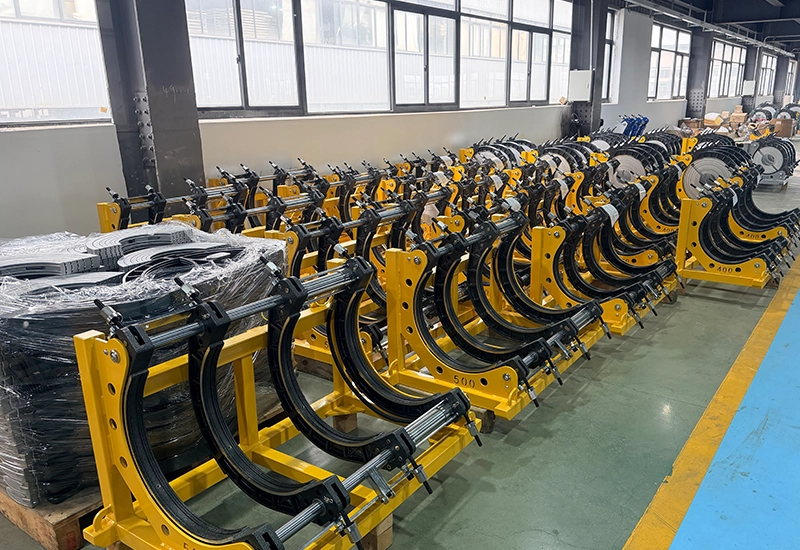
When procurement teams hunt for an HDPE pipe butt fusion machine, they need to zero in on specific technical specs. Hunt for integrated data logging, automated countdown timers, and brutal clamping mechanisms that flat-out refuse to let the pipe slip. High-capacity hydraulic systems (hitting 24 MPa, for instance) are also a must to ensure pressure stays dead-steady during those marathon cooling phases.
What contractors should ask suppliers before buying a butt fusion machine
Contractors have to grill their suppliers to guarantee equipment reliability. Ask the hard questions: Can this machine hold a tight heating plate temperature variance of ±3°C to ±5°C? Does it fully comply with ISO 21307 and DVS 2207-1? Will the hydraulic system guarantee zero pressure drop during an extended cooling cycle?
Best Practices for Reliable HDPE Pipe Butt Fusion Welds
Pre-weld preparation and alignment checklist
A flawless cooling phase actually starts before the heater even touches the plastic. You must ensure the welding zone, the pipes, and the heating plate are spotlessly clean. Face the cut ends so they sit perfectly perpendicular at exactly 90 degrees. Wall thickness deviation has to stay under 10% to guarantee flawless concentricity and even heat distribution.
Cooling and post-weld handling checklist
Roll out a rigorous quality inspection checklist for the post-weld phase. Check that the double-edged flanging formed correctly and that the seam’s weld looks full and uniform. As a pro tip, have operators take a marker and write the exact hour and minute the cooling time ends right on the joint. This stops other crew members from accidentally bumping or moving it too early.
Final inspection before pressure testing or installation
Run a test connection on-site every single day to prove the machine’s calibration and verify environmental adjustments. Most importantly, keep the pipeline far away from hydrostatic testing until you hit the full cure time. This stretches well beyond the machine’s initial cooling timer and ensures the core wall has finally dropped to ambient temperature.
FAQ
Q1: How long should HDPE pipe cool after butt fusion welding?
Cooling time relies heavily on the pipe’s wall thickness, SDR, and the ambient temperature on site. Smaller lines (like a 63mm pipe) might wrap up in 6 minutes, whereas thick-walled heavyweights demand significantly more time. Standards like ASTM F2620 mandate 11 minutes for every inch of wall thickness. Always defer to the specific guidelines provided by the pipe manufacturer and your machine specs.
Q2: What causes a butt fusion welding to fail after installation?
Failures usually stem from popping the clamping pressure before the timer runs out, lagging during the switching phase (which creates a cold skin), or dialing in the wrong fusion pressure. These blunders stop the molecules from tangling properly. The result? Internal voids, shrinkage cracks, and catastrophic blowouts when the line finally faces hydrostatic testing or real-world operational stress.
Q3: Can HDPE pipe be moved immediately after butt fusion welding?
Absolutely not. Shifting the pipe right away tears at the molten polymer chains while they sit in a fragile, viscous flow state. The pipe has to stay locked down in the machine, under constant absorbent pressure, until the minimum cooling timer hits zero. Even after you release it, the joint demands careful handling until it reaches a full cure.
Q4: Does larger HDPE pipe need longer cooling time?
Yes, but primarily because larger diameters usually feature thicker walls. Cooling duration ties directly to wall thickness (en), not just the pipe’s outer girth. Because HDPE is a terrible conductor of heat, thicker walls trap core temperatures much longer, requiring extended cycles to solidify the center of the joint.
Q5: How do temperature and weather affect butt fusion cooling time?
Ambient temperatures drastically alter how fast heat dissipates. Standard cooling times use a 20°C baseline. If you’re working anywhere between –5°C and +40°C, you adjust the fusion time by roughly 0.5% to 1% per degree. Extreme cold or biting winds will flash-cool the outer bead while leaving the core molten, meaning you absolutely must set up environmental shielding.
Q6: What is the difference between cooling time and pressure test waiting time?
Cooling time is the strict, mandatory window the pipe spends clamped under pressure inside the butt fusion welding machine so it can structurally solidify. Pressure test waiting time (or full cure time) is the much longer period after you pull it from the machine. This wait allows the pipe’s core temperature to normalize completely before you hit the system with hydrostatic pressure.
Q7: How can contractors verify that an HDPE pipe butt fusion welding is acceptable?
Contractors should validate welds using data logging records that prove the crew nailed the heating, pressure, and cooling parameters. Visually, you want to see a uniform external bead with correct double-edged flanging. Beyond that, running a daily test weld on-site and executing a final hydrostatic pressure test will confirm the system’s overall integrity.
Q8: Do automatic butt fusion machines improve cooling time control?
Yes. CNC and fully automated butt fusion machines take the guesswork out of the operator’s hands. They automatically crunch the numbers for cooling times based on ambient temps and pipe specs, hold hydraulic pressure dead steady, run strict countdown timers, and physically lock out premature clamp releases. This drastically cuts down on human error.
Conclusion
Mastering cooling time stands as a non-negotiable requirement for building reliable, leak-free HDPE pipelines. This final phase is where the joint’s structural integrity is truly forged. Jostling the pipe early or dropping absorbent pressure shatters the molecular entanglement, leaving behind hidden voids that guarantee spectacular pressure test failures. Variables like wall thickness, ambient temperature, and the hydraulic stability of your machine dictate the precise window the polymer needs to shift from a gooey, viscous state into a rock-solid matrix.
To crush project risks and hit ISO 21307 or ASTM F2620 standards, contractors must abandon operator guesswork and embrace rigid, timer-driven procedures. Dropping capital on CNC automatic HDPE pipe butt fusion machines equipped with robust data logging and relentless hydraulic pressure retention does more than secure optimal joint strength. It delivers the hard traceability required to keep utility owners and inspectors happy. Treat the cooling phase with the exact same reverence as heating and alignment, and your crews will skyrocket productivity while wiping out the staggering costs of pipeline rework.
Let our experts help you choose the right equipment for your project
Contact Our Engineering Team