

Table of Contents
This Butt Fusion Machine guide helps B2B buyers, contractors, and HDPE pipeline project teams choose the right model for their pipe diameter, project scale, and on-site conditions. It covers machine types, key specifications, price ranges, common selection mistakes, and a step-by-step decision framework to ensure reliable HDPE pipe welding.
What Is a Butt Fusion Machine and How Does It Work?
A butt fusion machine serves as the backbone of thermoplastic pipeline construction. This specialized industrial equipment securely joins pipes by applying electric heat to the fusion surfaces, completely melting the material. Once the plastic reaches a molten state, the machine forces the ends together using exact mechanical or hydraulic pressure. The result? A permanent, leak-proof bond that solidifies as it cools.
Definition and Core Function of a Butt Fusion Machine
At its core, this equipment engineers a homogenous joint between two thermoplastic pipes. You’ll primarily see it used on Polyethylene (PE), Polypropylene Random Copolymer (PPR), Polyethylene of Raised Temperature Resistance (PERT), and Polypropylene Copolymer (PP-C). What makes this welding methodology stand out is its ability to deliver immense joint strength and flawless sealing—completely eliminating the need for extra fittings, chemical solvents, or messy adhesives. In fact, the finished weld frequently outperforms the native pipe in sheer strength, guaranteeing the pipeline’s long-term integrity.
How Does the Butt Fusion Welding Process Work?
Guaranteeing structural integrity means following a rigid, sequential welding cycle. Operators must navigate six precise steps:
1. Positioning: Securely clamping the pipe into the machine’s chassis.
2. Milling: Planing the pipe ends to shave them down to perfectly flat, parallel surfaces.
3. Heating: Deploying the heater plate so the plastic absorbs the necessary heat, followed by a rapid extraction of the plate.
4. Pressure Application: Driving the molten pipe ends together.
5. Pressure Maintenance: Clamping the newly formed joint under sustained, unwavering force.
6. Cooling: Giving the joint ample time to solidify. Since plastic acts as a poor thermal conductor, this cooling phase happens slowly. You have to maintain pressure the entire time to stop the material from shrinking.
Key Components: Frame, Heater Plate, Planer, and Hydraulic Unit
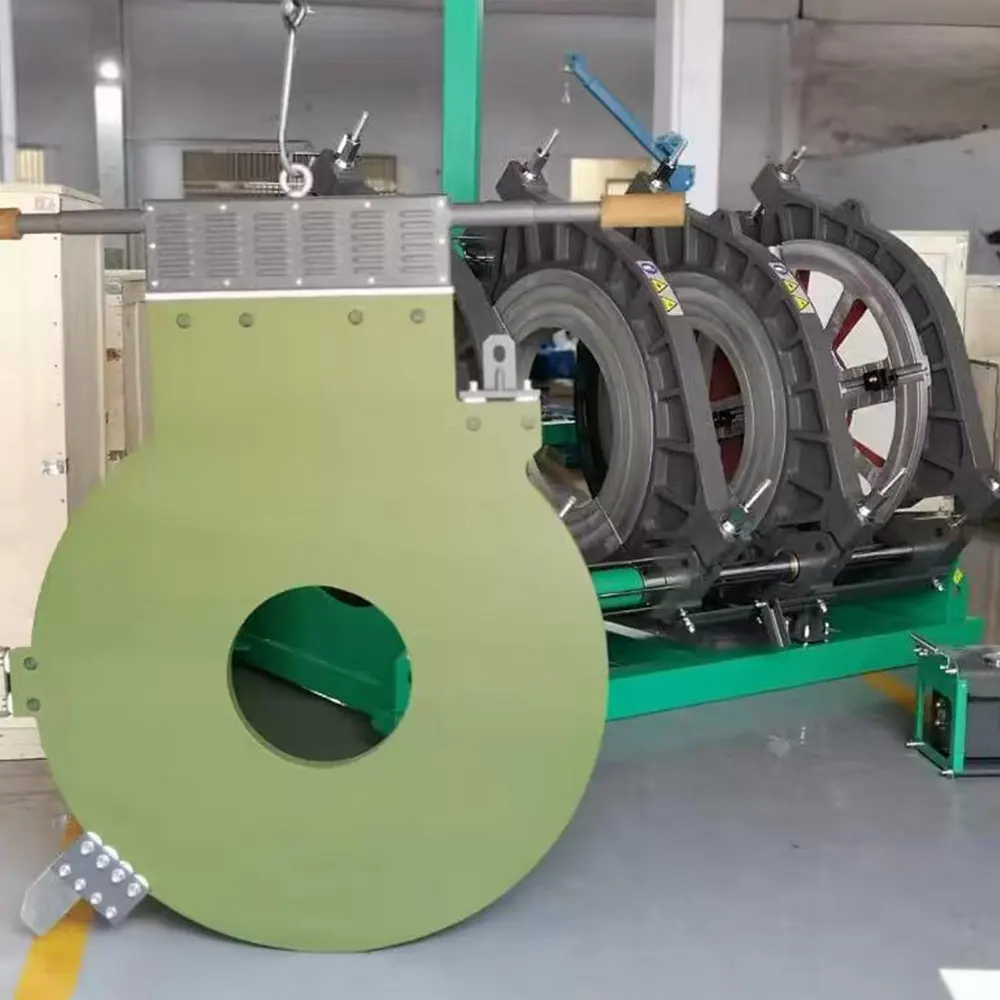
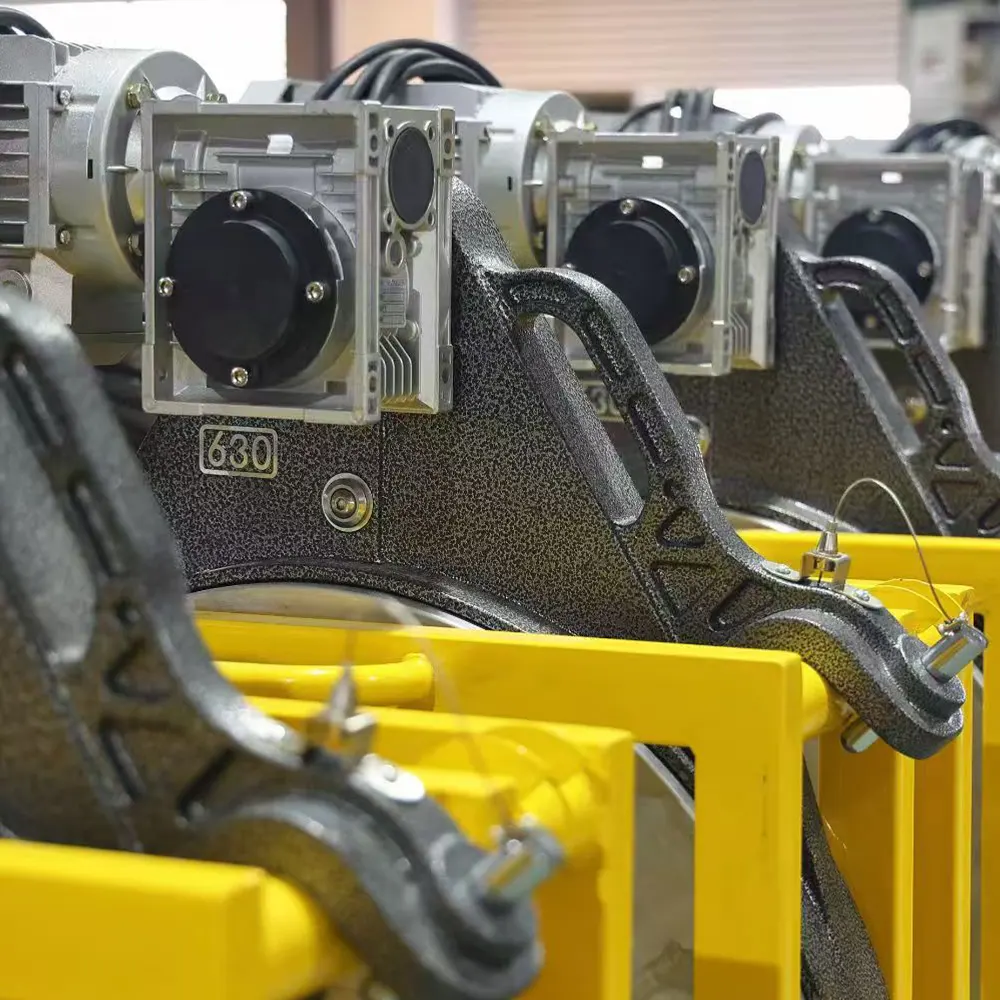
Every standard butt fusion welding machine leans on four foundational components. First, the main frame handles the heavy lifting, providing rigid clamping and perfect alignment. Next is the heater plate. Built from corrosion-resistant aluminum alloy, it features a specialized Polytetrafluoroethylene (PTFE) coating that stops sticky, molten plastic from ruining the surface. Then you have the planer, or milling cutter. Equipped with high-speed carbon steel blades and driven by a heavy-duty chain mechanism, it guarantees flawlessly flat pipe ends. Finally, the hydraulic unit drives the operation. It delivers high-precision pressure regulation and rapid response times, allowing for semi-automatic or fully automatic force control throughout the entire fusion cycle.
Main Types of Butt Fusion Machines for HDPE Pipe Welding
Picking the right equipment architecture can make or break your project’s efficiency. Manufacturers typically segment these machines based on their power source, degree of automation, and the specific environments where they’ll operate.
| Machine Type | Operation Mode | Typical Diameter Range | Best Use Case | Relative Cost |
|---|---|---|---|---|
| Manual | Hand-crank / Lever | 160mm – 250mm | Residential, small irrigation | Low |
| Hydraulic | Semi-Automatic | 160mm – 2600mm | Municipal water, standard industrial | Medium |
| CNC | Fully Automatic | 160mm – 630mm | Gas distribution, high-pressure mining | High |
| Workshop | Hydraulic / CNC | Varies (Fabrication) | Factory production of elbows/tees | High |
Manual Butt Fusion Machines (Small Diameter Applications)
Manual butt welding machines are entirely human-powered. Operators use hand-cranked or lever-driven mechanisms to apply the necessary pressure. Because of this physical limitation, you should only deploy these units for small-diameter pipes where a single worker can realistically generate the force needed for milling, heating, and cooling. Since there’s no automated pressure regulation on board, the final weld quality leans heavily on the operator’s personal experience and consistency.
Hydraulic Butt Fusion Machines (Medium to Large Diameter)
Stepping up in power, hydraulic butt fusion machines utilize a motorized system to drive the operation. This setup introduces semi-automatic control to the fusion process. If you are working with medium to large-diameter pipes, this mechanism isn’t just helpful—it’s mandatory. Manual force simply cannot meet the rigorous standard fusion pressure requirements for larger infrastructure. By letting operators dial in exact pressure parameters via the hydraulic unit, these machines drastically cut down on workforce fatigue while massively boosting joint reliability.
CNC / Fully Automatic Butt Fusion Machines
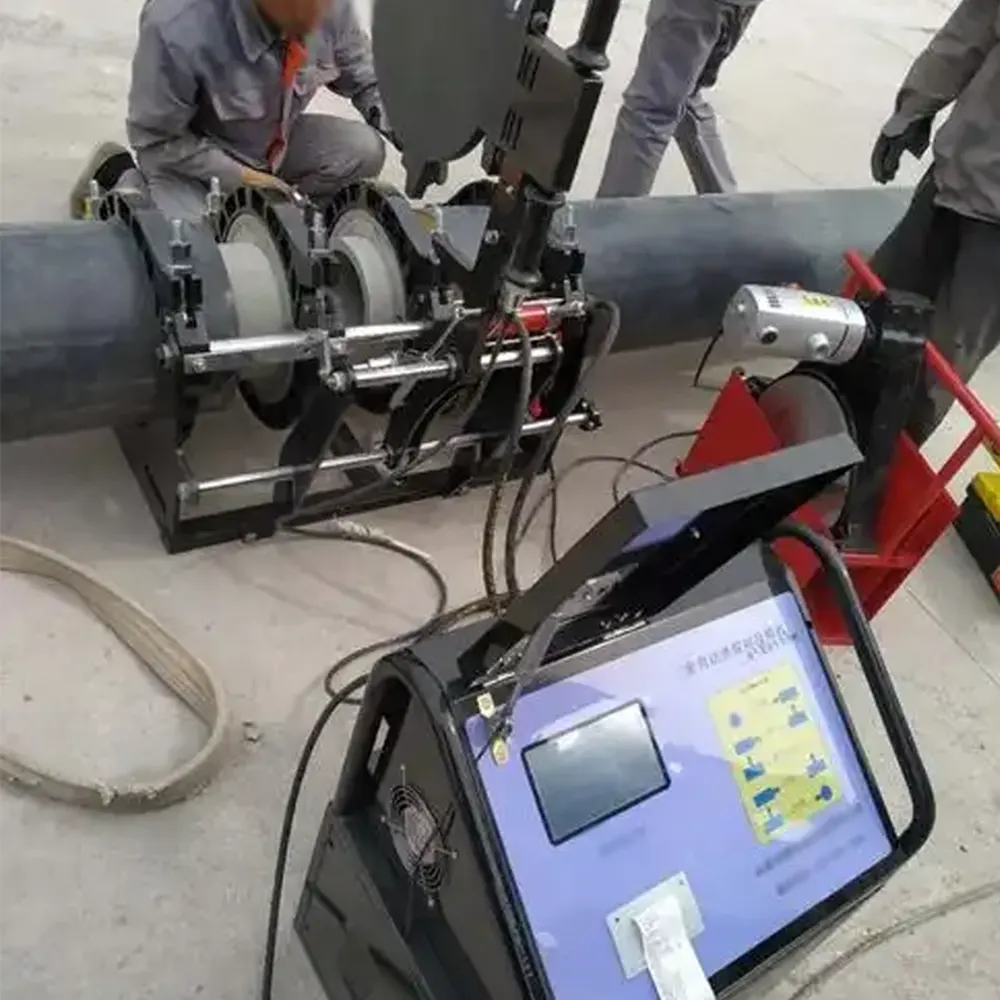
Fully automatic CNC machines sit at the absolute pinnacle of pipeline welding technology. They provide uninterrupted, precision control over time, temperature, and pressure from the first second of the cycle to the last. Advanced CNC models go a step further by automatically detecting ambient temperatures and adjusting the heat absorption time on the fly. Operators interface with the equipment through intuitive 10-inch color touchscreens to manage parameter settings and recipe controls. Most critically, these butt fusion machines log dynamic welding data. They store every parameter and operator code, allowing site managers to export the logs via USB for stringent quality control audits.
Workshop Fabrication vs On-Site Field Machines
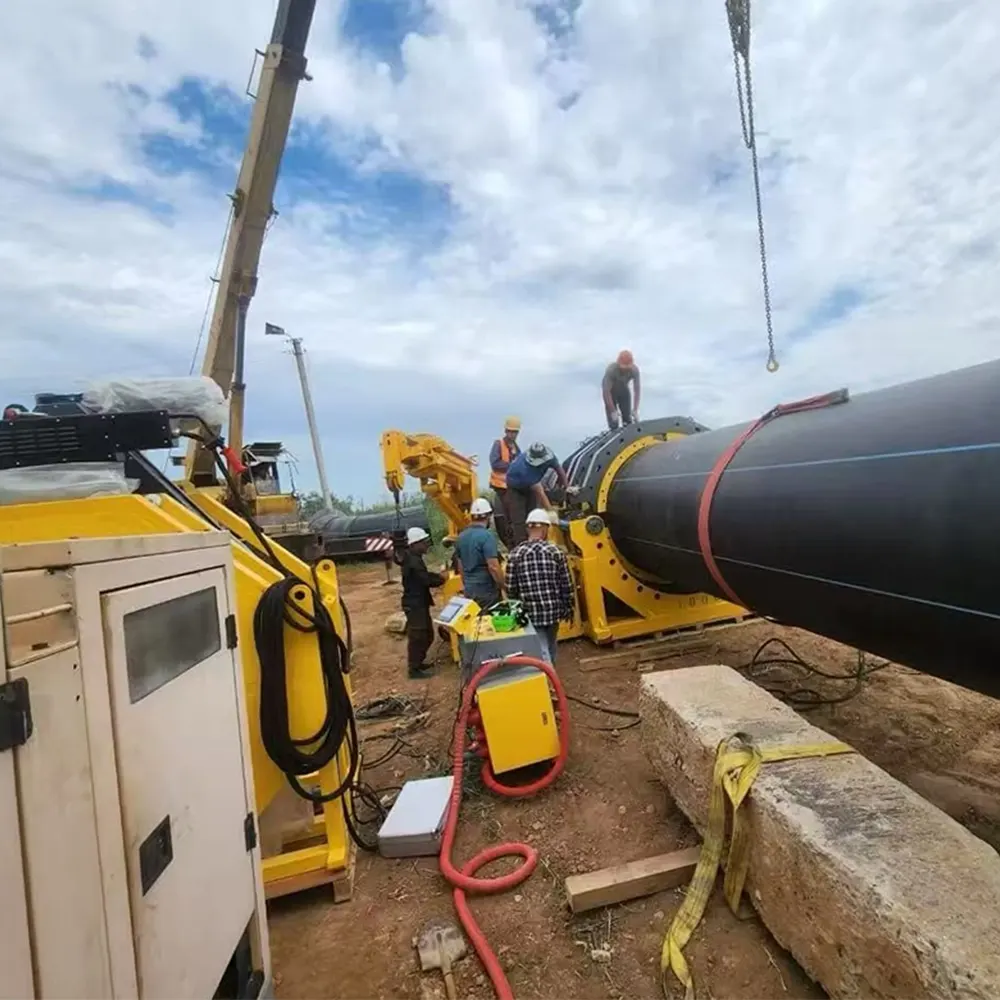
Equipment design shifts dramatically depending on where the work actually happens. Workshop fabrication machines are heavy, stationary units built specifically for manufacturing fittings. They join pipe segments to create elbows, tees, and wyes, executing highly precise angular cuts anywhere from 0° to 67.5°. On the flip side, on-site field machines are rugged and compact. Often mounted on trailers for rapid mobility, engineers design these field units to survive brutal outdoor construction environments, heavy dust, and wildly fluctuating weather conditions.
Factory-direct pricing with technical consultation included
Get Your Free QuoteButt Fusion Machine Size Ranges and Pipe Diameter Compatibility
Matching your machine’s chassis to the target pipe diameter is step one in the procurement process. Make no mistake: an undersized machine simply won’t generate the clamping force or hydraulic pressure needed to successfully fuse heavy-wall pipes.
Common Size Ranges: 40–160mm, 63–200mm, 90–315mm, 180–450mm, 315–630mm,630-1200mm
Manufacturers categorize their equipment into standard model classes determined by maximum pipe capacity. You’ll frequently see designations like the 160 type (capable of welding up to 160mm), alongside the 200, 250, 315, 450, and 630 types. The beauty of these systems is that a single pipe welding machine can handle a variety of pipe sizes using reducing inserts. Take a standard 250 model, for instance. It usually ships with a full suite of clamp inserts to accommodate 90, 110, 125, 140, 160, 180, 200, 225, and 250mm pipes.
Which Pipe Welding Machine Size Matches Your HDPE Pipe Project?
The golden rule of equipment sizing? Always select a HDPE Pipe butt fusion machine that can handle pipes slightly larger than the maximum diameter required for your current project. This buffer gives you a crucial safety margin. It protects your timeline if unexpected design changes occur or if you suddenly need to weld heavier-walled pipes demanding higher hydraulic force. When sourcing a butt fusion machine for an extensive 63mm to 1200mm HDPE pipeline network, you must evaluate the entire scope of the layout. Ensure the selected chassis comfortably covers your primary operational range.
SDR, Wall Thickness, and Their Impact on Butt Fusion Machine Selection
Standard Dimension Ratio (SDR) and wall thickness (e) are the ultimate dictators of your heating time and pressure requirements. Industry guidelines are strict: butt fusion welding is outright prohibited for pipe components with a diameter (dn) ≤ 63mm or a wall thickness (e) < 6mm. The risk of structural collapse under pressure is simply too high. Furthermore, if you attempt to weld pipe components from different SDR series, switch to electrofusion instead. If you absolutely must use butt fusion, you have to PE butt welding machine the ends first to equalize the wall thickness at the joint before striking an arc.
Key Technical Specifications to Evaluate Before Buying
Procurement engineers cannot afford to skim the spec sheet. Rigorous evaluation of technical specifications is the only way to guarantee the equipment will consistently hit international pipeline standards.
Heater Plate Temperature Range and PTFE Coating Quality
Your heater plate needs to reliably hit and hold a target temperature of roughly 220-230°C. A premium PTFE coating isn’t a luxury here—it’s mandatory to stop polymer degradation and prevent sticking. There is also a critical operational rule regarding uniformity: once the red indicator light flashes on, operators must wait an additional 10 minutes before initiating the weld. This pause allows the temperature to distribute evenly across the entire aluminum plate, eliminating dangerous cold spots that inevitably lead to weak welds.
Hydraulic System Pressure, Stability, and Drag Pressure Compensation
Hydraulic stability dictates the success of the entire operation. The system must test and record the Drag Pressure (P0) for *every single weld joint* to accurately compensate for pipe friction. If the drag pressure climbs too high, operators need to drop in short pipe spacers. During the cycle, as the pipe protrusions hit the required height, the system pressure (P1) must smoothly drop down to P2 (which closely approximates the drag pressure) right as the heat absorption timer kicks off. Only a highly precise hydraulic unit can manage this delicate transition without triggering disastrous pressure spikes.
Power Supply, Voltage Options, and Site Electrical Requirements
Always audit your site’s electrical infrastructure before dropping equipment onto the dirt. Smaller fusion units usually run just fine on a standard 220V AC working voltage, but heavy-duty industrial butt welding machines demand 380V three-phase power. Keep in mind that power consumption scales aggressively with size. A 160 type heater plate pulls 1600W (paired with a 750W milling motor), a 200 type draws 2000W, and a larger 250 type demands 2550W for the heater alone, plus another 1100W to spin the motor.
What Welding Standards Should the Butt Fusion Welding Machine Comply With (ISO 21307, DVS 2207)?
You must verify that your butt fusion welding machine’s specifications align perfectly with regional pipeline codes. Operating in a metric country? You’ll follow ISO 21307, the international standard that dominates 95% of the global market. If you are working under rigorous German engineering codes, DVS 2207-1 applies. This standard defines “Low-Pressure Welding” at 0.15 N/mm² (roughly 1.5 bar), aiming to achieve molecular diffusion using the absolute minimum pressure necessary. Meanwhile, stateside projects rely on ASTM F2620, which clearly outlines “High-Pressure Welding” parameters.
Get detailed specs and custom configuration options
Request Technical SpecificationsTypical Application Scenarios for Butt Fusion Machines
Every industry brings its own unique demands to the table regarding automation, data traceability, and sheer equipment durability.
Water Supply and Municipal Pipeline Projects
When tackling municipal water infrastructure, contractors desperately need a balance between raw efficiency and operational simplicity. That’s why semi-automatic hydraulic butt fusion machines are widely regarded as the go-to choice for water supply projects. They pack more than enough hydraulic force to handle medium-diameter pipes and deliver highly consistent performance, all without forcing companies to pay the premium price tag of full CNC automation.
Gas Distribution and PE Gas Pipe Welding
Gas pipelines carry an astronomical level of liability. Because of this, fully automatic CNC machines aren’t just recommended—they are completely mandatory. The high-risk nature of gas distribution demands flawless, high-efficiency welding backed by rigorous data logging. CNC machinery removes human error from the equation entirely by locking in exact welding parameters, adjusting for ambient temperature shifts, and recording operator codes. This data is then printed or exported to satisfy strict regulatory compliance audits.
Mining, Dredging, and Slurry Transport Lines
Mining and dredging operations rely on massive, high-pressure pipelines that are notoriously heavy and tough to maneuver. Fully automatic hydraulic butt welding machines shine in these brutal environments. They generate the extreme hydraulic force necessary to push past immense drag pressure. For the crews on the ground, these butt machines are lifesavers, drastically cutting down the exhausting manual labor required to manage thick-walled slurry transport lines in unforgiving, rugged terrain.
Industrial, Irrigation, and Sewage Applications
If a project involves gravity-fed sewage lines, agricultural irrigation, or low-pressure industrial fluid transport, standard manual or basic hydraulic machines usually get the call. They offer a highly cost-effective solution—assuming the operators running them possess top-tier skills. Since these specific applications operate under significantly lower pressures, the obsessive data logging of CNC machines is rarely required. However, remember that manual welding quality will always live or die based on the operator’s personal technique.
How to Choose the Right Butt Fusion Machine: Step-by-Step Selection Guide
Successfully navigating the procurement maze requires a structured, logical approach to matching equipment capabilities directly against your project’s demands.
Step 1: Confirm Pipe Material, Diameter Range, and SDR
Start by verifying that the machine’s clamp inserts perfectly match the exact outer diameter (OD) of your pipeline inventory. Beyond that, you must ensure the hydraulic unit can actually generate enough pressure for your specific SDR and wall thickness. It takes significantly more hydraulic muscle to fuse heavy-wall pipes than it does to join thin-wall variants of the exact same diameter.
Step 2: Define On-Site Conditions and Power Availability
Take a hard look at the construction environment. Can the site reliably support the necessary 220V or 380V power supply? You need to account for the total peak wattage—that means adding up the draw from the heater, planer, and hydraulic pump combined. If you’re heading to a remote site, double-check that your portable generators are sized appropriately to handle the heavy inductive load of the milling motor without suffering dangerous voltage drops.
Step 3: Choose Manual, Hydraulic, or CNC Based on Workload
Match the technology to the stakes. Opt for manual machines on low-budget projects dealing strictly with small pipes. Step up to semi-automatic hydraulic units for standard medium-to-large pipes in everyday municipal applications. However, if you are bidding on high-liability projects like gas lines or mining infrastructure, mandate CNC machines. You need automated parameter control and zero tolerance for human error.
Step 4: Verify Standards, Certifications, and Data Logging Needs
Cross-reference your equipment against regional requirements, ensuring it complies with either ISO 21307 or DVS 2207 standards. If the project contract stipulates quality control audits, you must verify that your chosen CNC machine includes reliable USB data export capabilities so inspectors can easily download the dynamic welding logs.
Step 5: Evaluate Supplier Capability and After-Sales Support
Don’t buy blindly. Thoroughly vet manufacturers and suppliers, checking for valid CE and ISO certifications. A top-tier CNC butt fusion welding machine manufacturer should boast robust R&D capabilities. More importantly, they need to prove they can supply quick-change mold assemblies, replacement PTFE plates, and rapid-response technical support to keep your job site running when things go wrong.
Butt Fusion Machine Price, MOQ, and Lead Time
Grasping the financial and logistical realities of procurement empowers project managers to build accurate budgets and dodge crippling schedule delays.
Typical Price Ranges by Machine Size and Type
The price of a hydraulic butt fusion machine swings wildly depending on its size and level of automation. Manual machines are incredibly easy on the wallet but offer zero automation. Conversely, fully automatic CNC machines demand a hefty initial capital expenditure (CapEx) and take up a larger physical footprint. Yet, savvy contractors know that CNC models deliver a vastly superior total cost of ownership (TCO) over the long haul. By slashing joint failure rates by up to 60%, they eliminate the catastrophic financial fallout associated with pipeline leaks.
MOQ, Customization, and OEM Options
The good news? Most industrial manufacturers maintain highly flexible Minimum Order Quantities (MOQ). For large chassis models, the MOQ frequently starts at just a single unit. Industry-leading manufacturers also bring deep customization and OEM options to the table. You can request tailored fusion heads—like configuring 8 sets on the long edge and 4 sets on the short edge—or specify stepper-position-controlled mold assemblies for precise, recipe-driven alignment.
Lead Time, Shipping, and Export Documentation
Sourcing equipment internationally means dealing with rigorous documentation. Any HDPE pipe welding machine intended for export must carry ironclad CE and ISO certifications. Furthermore, pre-welding preparations and the fusion processes themselves must align with TSG D2002-2006 and CJJ 63 compliance standards. Lead times will inevitably vary based on the OEM and the sheer size of the machine. Smart buyers always factor ocean freight schedules and potential customs bottlenecks into their project kick-off timelines.
Common Mistakes and Hidden Risks When Selecting a Butt Fusion Machine
Letting the budget completely drive your procurement strategy is a fast track to critical field failures. Interestingly, nearly 60% of construction crews assume their equipment will feature built-in welding quality detection systems. The reality? Bargain-bin machines almost always strip these crucial features out to save a few bucks.
Choosing a butt welding Machine Based on Price Alone
The market is currently flooded with subpar pipe butt fusion machines that pose serious safety hazards. Buying solely on price usually leaves you with equipment suffering from coarse, inaccurate temperature adjustments and notoriously weak hydraulic seals. The domino effect is brutal: high joint failure rates, massive pipeline leaks, and eventual repair bills that completely dwarf whatever money you saved upfront.
Ignoring Heater Plate Temperature Uniformity
Precision is non-negotiable. If the temperature runs too high or dips too low—straying from that strict 220-230°C window—the plastic will simply fail to fuse properly. Prolonged heating or localized hot spots will literally boil the polymer, creating dangerous shrinkage cavities. On the flip side, cold spots halt molecular entanglement entirely. The result is a brittle, fragile joint destined to blow apart during pressure testing.
Overlooking Hydraulic Drag Pressure Calibration
Forgetting to measure and compensate for drag pressure (P0) on *every single joint* ranks among the worst operational errors a crew can make. If your butt welding machine’s hydraulic system lacks the capability to accurately calibrate this drag pressure, the net fusion pressure forced into the melted plastic will be dead wrong. This single oversight fundamentally compromises the structural integrity of the entire weld.
Why Low-Cost Suppliers Often Skip Quality Testing
To slash prices, cheap suppliers routinely gut the pipe welder machine’s internals, omitting high-precision electronic thermostats and automated ambient temperature sensors. This aggressive cost-cutting leaves the operator flying blind against environmental variables. Without ambient temperature compensation, a sudden drop in weather will prematurely cool the heater plate. The weld quality gets destroyed instantly, and the operator won’t even realize it until the pipeline goes active and fails.
Operation, Maintenance, and Welding Quality Control
You can’t fake pipeline longevity. It requires rigid adherence to operational parameters and a relentless commitment to equipment maintenance.
Standard Butt Fusion Welding Parameters and Cycle Steps
Heating times are strictly dictated by wall thickness. Take a D20*2.8S3.2 pipe, for instance—it only needs a brief 3 to 5 seconds of heat. Thicker industrial pipes, however, demand several minutes on the plate. There is also an absolute, unbreakable protocol here: if the fusion process is interrupted for any reason—be it a sudden power drop or a minor hydraulic slip—the operator must scrap the attempt and trigger a completely new fusion cycle from scratch.
How to Maintain the Heater Plate, Planer, and Hydraulic System
Effective maintenance and troubleshooting start with obsessive cleanliness. Keep that dust cover securely closed whenever the butt fusion welding machine isn’t actively fusing; the splice area must remain 100% free of dirt, moisture, and air bubbles. On an annual basis, technicians must audit the temperature display deviation. This ensures the actual surface temperature at every single point on the heating plate perfectly mirrors the digital setpoint on the screen.
Welding Defects: Causes, Prevention, and Inspection
A sharp visual inspection easily catches several common defects. Spot an insufficient column head? That’s usually the result of low temperatures or inadequate pressure applied during the cycle. Shrinkage cavities tell a different story; they occur when excessive heating time boils the polymer structure. Meanwhile, joint separation is almost always caused by impatience—specifically, failing to hold the weld under sustained pressure for the full required cooling duration.
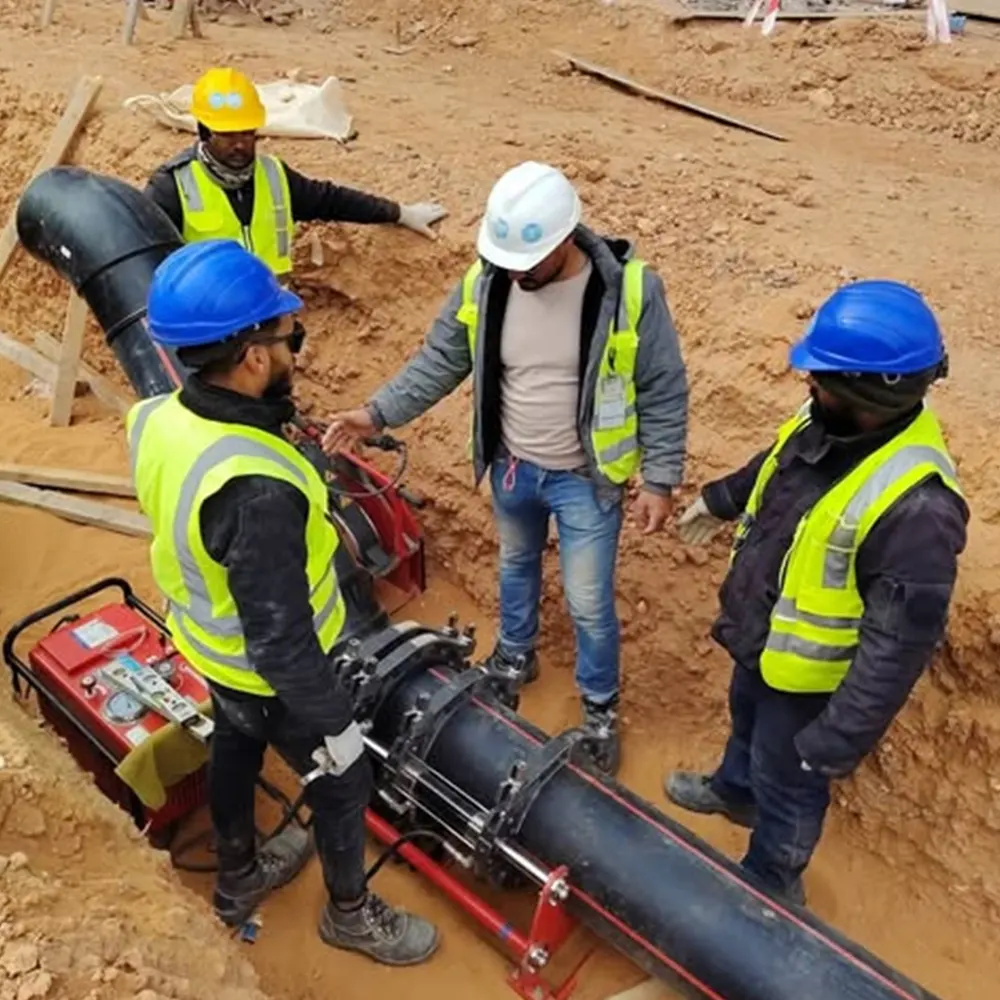
Final Recommendation: Matching the Right Butt Fusion Machine to Your Project
Nailing down the perfect piece of equipment means looking past the marketing brochure and aligning the HDPE butt fusion machine’s exact specs with your project’s physical demands and liability profile.
Recommended Models by Project Type and Pipe Diameter
If you are tackling small residential jobs or basic irrigation setups (up to 160mm), manual or entry-level hydraulic 160 models will easily get the job done. Moving up to municipal water and gas infrastructure (90-315mm) means you should heavily consider semi-automatic or CNC 250/315 models. Finally, if you are operating in heavy industrial, dredging, or mining sectors handling massive lines (315-1200mm), fully automatic CNC models (450, 630, and larger) equipped with comprehensive data logging are non-negotiable assets.
When to Request a Customized Quote or Technical Consultation
Don’t guess when dealing with complex variables—escalate the issue to a technical consultation. You need expert input if your project involves joining pipes from different SDR series, handling pipes with wall thicknesses under 6mm, or navigating conflicting international codes. Having an engineering expert weigh in is especially critical when you’re forced to choose between the low-pressure mandates of DVS 2207-1 and the high-pressure requirements of ASTM F2620.
FAQ
Q1: What is the difference between a manual and a hydraulic butt fusion machine?
A manual butt fushion machine is entirely human-powered. The operator uses hand-cranks or levers to generate pressure, which limits its use to small pipes (typically up to 160mm). In contrast, a hydraulic butt welding machine leverages a motorized pump to automatically deliver and hold precise, high-pressure force. This mechanical advantage is absolutely essential for medium to large-diameter pipes, ensuring the weld quality remains consistent without exhausting the crew.
Q2: What size butt fusion machine do I need for 400mm HDPE pipe?
For a 400mm HDPE pipe, your best bet is a 450 type hydraulic or CNC butt fusion welding machine. The golden rule in pipeline engineering is to select a chassis that is slightly larger than the maximum diameter you plan to weld. A 450 model guarantees you’ll have the robust clamping stability and sheer hydraulic power needed to fuse heavy-wall 400mm pipes seamlessly.
Q3: How much does a butt fusion welding machine cost?
Pricing fluctuates dramatically based on the PE butt fusion machine’s size and its level of automation. Small manual units are incredibly budget-friendly, whereas massive, fully automatic CNC butt fusion welding machines require a serious upfront capital expenditure. That said, CNC welding machines frequently deliver a superior total cost of ownership. By cutting joint failure rates by up to 60%, they save contractors from the devastating financial impact of pipeline leaks down the road.
Q4: Which standards should a butt fusion machine comply with (ISO 21307 or DVS 2207)?
If you are operating in a metric country, your butt fusion welding machine needs to comply with ISO 21307, which dictates standards for about 95% of the global market. For projects governed by German engineering codes, DVS 2207-1 is the law, requiring specific “Low-Pressure Welding” parameters. Meanwhile, infrastructure projects in the United States generally demand strict adherence to ASTM F2620 high-pressure standards.
Q5: Can a butt fusion machine weld both PE100 and PE80 pipes?
Yes, the equipment is fully capable of welding both PE100 and PE80 pipes. However, industry best practices strongly advise against using standard butt fusion when joining components made of different materials or varying SDR series (wall thicknesses). In those scenarios, electrofusion is the safer choice. If butt fusion is unavoidable, you must butt fusion machine the thicker pipe down so its wall thickness perfectly matches the thinner pipe before welding.
Q6: How long does it take to weld one HDPE joint with a butt fusion machine?
Welding duration hinges entirely on the pipe’s Standard Dimension Ratio (SDR) and wall thickness. A thin-walled pipe (like a D20*2.8S3.2) might only need 3 to 5 seconds on the heating plate. Conversely, massive, thick-walled mining pipes require several minutes of intense heat, followed by a long, sustained cooling period under pressure. Never rush the cooling phase—plastic is a notoriously poor thermal conductor, and rushing it ruins the joint.
Q7: What is the typical lead time and MOQ when importing butt fusion machines?
For heavy industrial butt welding machines, the Minimum Order Quantity (MOQ) is almost always just one unit. Lead times, however, can vary wildly depending on the specific manufacturer, the size of the chassis, and any custom features you request (like integrated CNC data logging). When planning your timeline, be sure to bake in extra days for ocean freight transit and the processing of essential CE, ISO, and export compliance documents.
Q8: How do I maintain the heater plate and hydraulic system of a butt fusion machine?
Heater plate maintenance is all about cleanliness. Keep that PTFE coating spotless, free of moisture or dust, and always lock the dust cover when the HDPE butt fusion welding machine is idle. Once a year, verify the temperature display deviation to ensure the plate is actually hitting that crucial 220-230°C mark evenly. For the hydraulic side, make it a habit to check fluid levels, inspect the seals for sneaky leaks, and routinely verify your drag pressure calibration.
Conclusion
Pinpointing the perfect butt fusion machine comes down to carefully aligning the unit’s size, hydraulic muscle, and automation capabilities with your specific pipe diameter, SDR, and industry demands. Whether you are gearing up for a routine municipal water project or a brutal, high-pressure mining operation, your priorities remain the same. You need equipment that guarantees precise temperature uniformity—locked strictly between 220-230°C—and flawless drag pressure compensation to secure the long-term integrity of your pipeline.
Procurement teams have a duty to ensure their chosen butt fusion machinery meets rigorous international standards, be it ISO 21307 or DVS 2207. Sure, budget-friendly manual units might handle small-scale irrigation jobs just fine. But the moment you step into high-liability territory—like gas distribution—fully automatic CNC butt welding machines armed with ambient temperature compensation and USB data logging become absolute necessities. Steer clear of cut-rate suppliers who bypass quality testing and strip out precision thermostats. Whatever capital you save upfront will vanish the moment a compromised joint fails, triggering massive leaks and catastrophic infrastructure damage.
Let our experts help you choose the right equipment for your project
Contact Our Engineering Team