
HDPE Pipe Jointing Machine in Senegal: Buying Guide for Importers and Contractors
Table of Contents
HDPE Pipe Jointing Machine in Senegal buyers can use this guide to compare machine types, specifications, pricing factors, supplier support, and project-fit criteria before importing or purchasing.
What Is an HDPE Pipe Jointing Machine and Why Is It Used in Senegal?
If you’re tackling municipal water systems, agricultural irrigation, or large infrastructure projects, an HDPE Pipe Jointing Machine in Senegal is absolutely essential. This heavy-duty industrial equipment permanently fuses high-density polyethylene pipes. Before importing these systems, buyers in Senegal need to look closely at several key factors. You have to evaluate the pipe diameter range, machine type, and heating controls. Don’t forget to weigh hydraulic performance, available accessories, pricing, and the level of after-sales support your supplier provides.
How HDPE pipe jointing works in simple terms
Think of a butt fusion machine as a highly controlled heat press for plastic. It uses an electrically heated plate to transfer thermal energy directly to the pipe’s welding surfaces. Depending on your pipe specifications, this plate hits temperatures anywhere from 0 to 600°C. Once the pipe ends melt just enough, the operator quickly pulls the heating plate away. Next, a hydraulic unit steps in, forcefully pushing the molten ends together so they can fuse and solidify under constant pressure. Every successful welding cycle boils down to four exact steps: clamping the pipes into position, milling the ends flat with a facer, heating the surfaces, and finally, cooling the newly formed joint under pressure.
Why butt fusion is commonly used for HDPE pipelines
Why rely on butt fusion? It simply delivers incredible joint strength, perfect sealing, and fast installation right in the trench. It’s a highly cost-effective and dependable method. In fact, when done correctly, the welded joint actually boasts higher tensile and pressure strength than the original HDPE pipe. This creates a monolithic, seamless pipeline structure. For contractors and utility operators, that means a massive boost in safety and durability, slashing long-term maintenance and replacement expenses.
Typical Senegal projects that require HDPE pipe fusion equipment
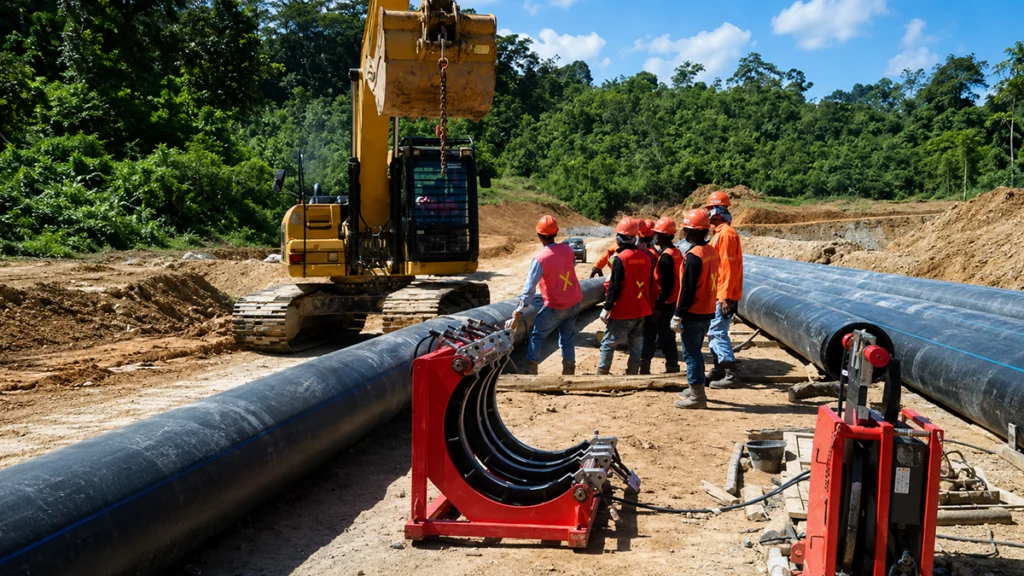
Rapid infrastructure expansion is currently pushing the demand for dependable HDPE pipe jointing equipment throughout West Africa. You’ll typically see these butt fusion machine Senegal deployed for municipal water supply networks, massive drainage systems, and extensive rural agricultural irrigation setups. Beyond water, industrial sectors rely heavily on this equipment to build gas transmission lines and industrial fluid conveyance systems. These applications demand incredibly robust joints capable of handling wild fluctuations in internal pressure.
How machine quality affects pipeline strength and leakage risk
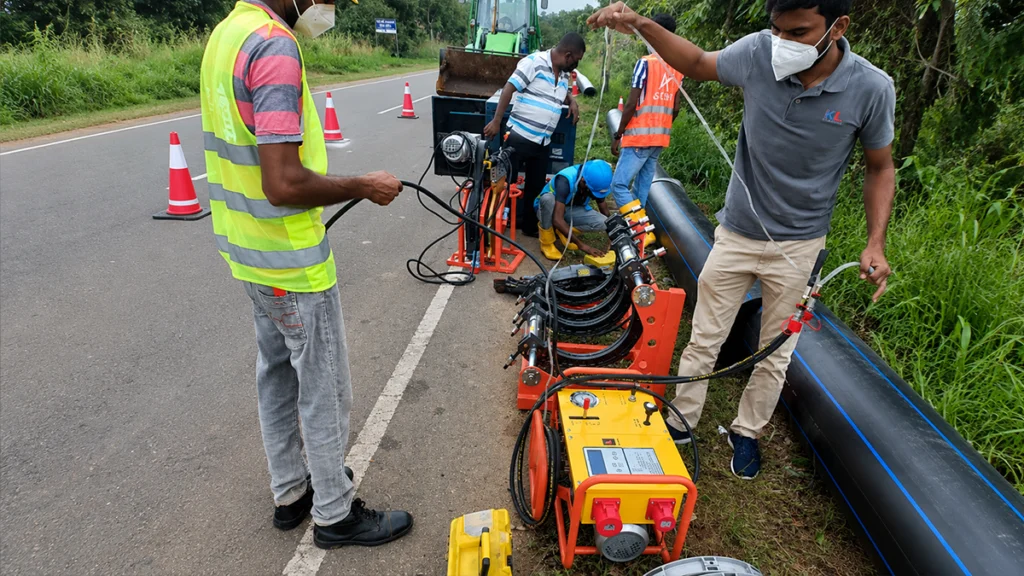
Cutting corners on fusion equipment directly destroys weld integrity. Low-quality butt fusion machines are notorious for causing uneven weld bead heights and severe joint misalignment. You might also see insufficient flange roll or incomplete material fusion. Ultimately, these defects cripple the pipeline’s operational performance and slash its service life. To make matters worse, cheap or damaged clamp locking devices let the pipe shift during the crucial cooling phase. Once the system pressurizes, that instability skyrockets the risk of catastrophic joint failure and leaks.
Why Importers and Contractors Should Compare Machines Before Buying
Why low upfront price can increase total project cost
Grabbing the cheapest equipment on the market usually triggers a financial nightmare down the road. Bargain-bin butt fusion machines frequently suffer from wildly inaccurate parameter controls. This completely defeats the purpose of automated welding and practically guarantees failed, leaking joints. When manufacturers slash prices, they often swap out standard ZL104 aluminum for low-grade metals and install cheap sensors. That move destroys system stability and lifespan. Remember, your total project cost factors in labor, daily operations, and maintenance. Unreliable pipe welding machines lead straight to extended downtime, brutal trench rework, and massive repair bills.
What Senegal buyers should confirm before placing an order
Never place an import order without first verifying the manufacturer’s actual capabilities. Do they handle their own research, development, and manufacturing? You need rock-solid guarantees regarding future equipment maintenance, calibration, testing, and software upgrades. Recent market data shows that 60% of construction buyers rank a stable spare parts supply channel as their top priority. Buying an isolated butt fusion machine without a reliable pipeline for replacement parts introduces operational risks you simply cannot afford.
Manual HDPE pipe jointing machines for small-diameter work
For technicians operating on tight capital budgets, manual butt fusion machines offer a highly cost-effective and straightforward solution. They shine in small-scale projects involving small pipe diameters and minimal automation requirements. Keep in mind, though, that welding quality rests entirely on the operator’s skill and experience. Manual units rely on relatively coarse temperature adjustments and completely lack precise pressure logging capabilities.
Hydraulic butt fusion machines for contractor and municipal projects
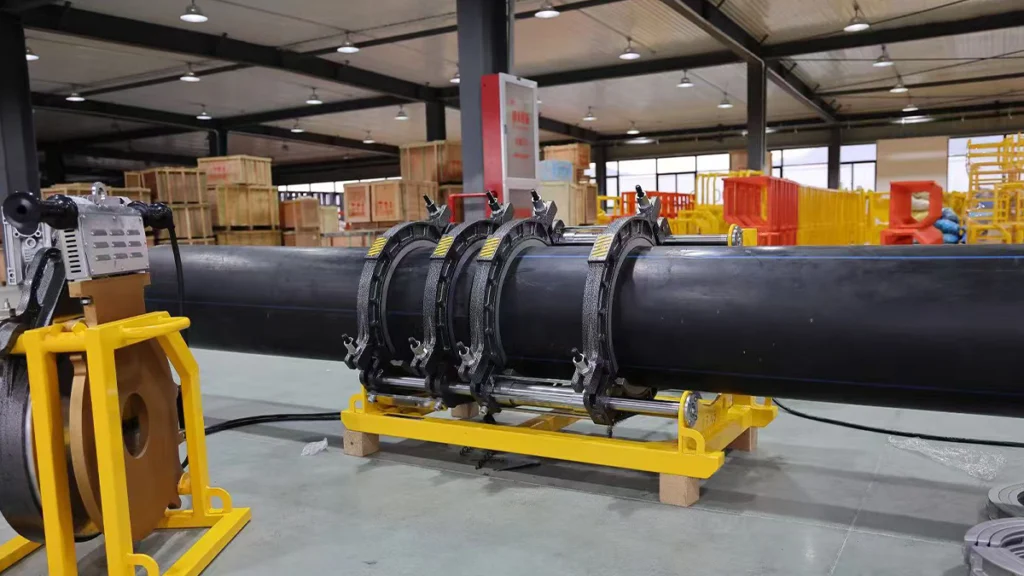
When scaling up to larger pipe diameters, hydraulic butt fusion machines become structurally essential. They leverage a centralized hydraulic system for semi-automatic control, delivering the heavy, sustained pressure necessary for the milling, heating, and cooling phases. You simply cannot generate these forces manually. Top-tier hydraulic units also boast low starting pressure capabilities. This precision makes them incredibly reliable for welding both small and large pipes without accidentally crushing the pipe walls.
Factory-direct pricing with technical consultation included
Get Your Free QuoteMain Types of HDPE Pipe Jointing Machines for Senegal Projects
| Machine Type | Typical Pipe Range | Best Use Case | Main Advantages | Typical Buyer or Project |
|---|---|---|---|---|
| Manual Butt Fusion Machine | Typically DN40–DN250 | Small-diameter irrigation, plumbing, repairs, and occasional field welding | Lower initial cost, portable design, and simple maintenance | Small contractors, irrigation installers, and repair teams |
| Hydraulic Butt Fusion Machine | Typically DN63–DN2250 | Municipal water, irrigation mains, drainage, mining, and industrial pipelines | Stable fusion pressure, higher productivity, and suitability for larger pipes | Infrastructure contractors, water utilities, and pipeline installers |
| Automatic CNC Butt Fusion Machine | Typically DN63–DN630 | High-volume or regulated projects requiring repeatable parameters and weld traceability | Automated parameter control, digital weld records, and reduced operating variation | Utility companies, major contractors, and quality-controlled infrastructure projects |
| Electrofusion Machine | Depends on fitting and machine output capacity | Repairs, tie-ins, branch connections, and confined installation areas | Compact equipment, controlled fusion cycles, and suitability for restricted spaces | Maintenance teams, gas and water utilities, and urban pipeline contractors |
CNC Automatic Butt Fusion Machines for Consistent Welding Control
CNC automatic butt fusion machines use programmed controls to manage key welding stages, including facing, heating, changeover, fusion pressure, and cooling. Depending on the model, the system can calculate welding parameters, monitor the fusion cycle, and record temperature, pressure, time, and operator information.
These machines are suitable for projects that require repeatable welding procedures, reduced operating variation, and digital weld traceability. Data-storage, export, printing, and applicable standard functions vary by machine configuration, so buyers should confirm the exact capabilities before ordering.
Which machine type is suitable for importers, rental fleets, and contractors?
Small contractors usually lean toward standard manual or portable hydraulic butt fusion machines. Ideally, these units should weigh under 200kg and feature rugged transport wheels for quick mobility. On the other hand, infrastructure contractors require high-powered hydraulic or CNC butt fusion welding machines built specifically for grueling, sustained operation on massive pipelines. For importers and rental fleets, the buying criteria must be strict. Always specify butt fusion machines equipped with premium domestic or imported electrical components, standard PTFE-coated heating plates, and bulletproof after-sales support to slash rental fleet breakdown rates.
Pipe Diameter Range and SDR Compatibility
Butt fusion machines are available in different operating ranges, such as DN110–DN250, DN160–DN315, and DN710–DN1000, depending on the machine model and manufacturer. Buyers should confirm the complete pipe range, reducing inserts, maximum wall thickness, hydraulic capacity, and applicable welding procedure before selecting equipment.
Butt fusion is generally performed between compatible pipes or fittings with the same outside diameter and suitable wall thicknesses. When joining pipes with different SDR values or wall thicknesses, the transition must follow the pipe manufacturer’s guidance and the approved project procedure. Depending on the dimensional difference, a transition fitting, electrofusion connection, flange assembly, or specially prepared butt-fusion joint may be required.
Heating Plate Temperature Control and Surface Quality
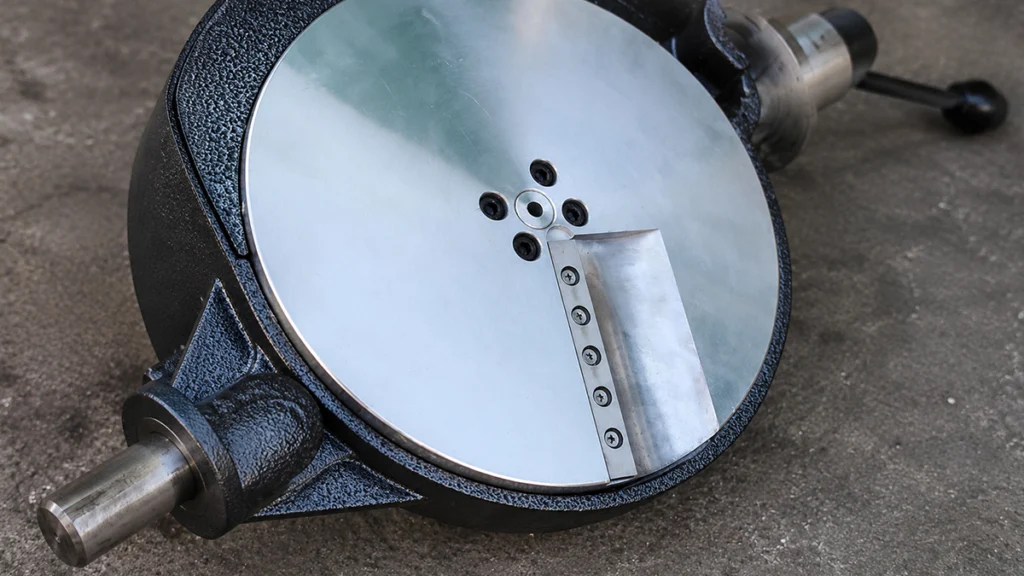
The heating plate should provide uniform surface temperature and stable temperature control throughout the welding cycle. Many HDPE butt fusion machines use a PTFE-coated heating surface to reduce sticking and support clean separation from the molten pipe ends.
Buyers should check the heater’s rated temperature range, temperature-control accuracy, surface uniformity, calibration method, and coating condition. The required plate temperature and permitted variation should follow the selected welding procedure, pipe material, applicable standard, and equipment manufacturer’s instructions.
Key Specifications to Compare Before Importing
| Specification | Standard Parameter Range | Quality Indicator |
|---|---|---|
| Hydraulic Pressure | 0 to 6.3 MPa | Low starting pressure capability |
| Temperature Range | 0 to 300°C | Deviation ≤±3°C to ±5°C |
| Facer Blades | Double-edged | High-quality tool steel |
| Voltage | 220V (Single) / 380V (Three-phase) | Stable current draw |
| Power Requirement | 3.7 kW to 16.9 kW | Matches field generator output |
Hydraulic pressure range, facer quality, and clamp stability
A solid hydraulic system usually operates with a working pressure ranging from 0 to 6.3 MPa. The facer—or milling cutter—needs to pack a high-torque motor and feature reversible, double-edged blades forged from high-quality tool steel to shave pipe ends perfectly flat. Clamp stability is equally critical. Clamps must strictly adhere to national standards. For instance, pipe fusion machines under 400 amps should utilize a maximum of three layers. This specific design prevents the pipe from slipping and stops uneven flanges from forming during the intense high-pressure cooling phase.
Voltage, generator compatibility, and field operation requirements
When looking at operating voltages, smaller units generally run on 220V (single-phase), while massive butt fusion machines tackling 450-800mm pipes require 380V (three-phase) power. Depending on the exact size of your butt fusion machine, total power requirements will stretch from 3.7 kW up to 16.9 kW. Out in the field, you have to match your generators perfectly. Proper grounding and correct power supply wiring are non-negotiable. Get this wrong, and you risk motor reversal or sudden current drops that will instantly ruin your welding cycle.
HDPE pipe welding for municipal water and rural supply projects
Transporting municipal water over long distances demands flawless, highly reliable sealing structures to prevent catastrophic leaks. For these jobs, you want equipment featuring separate clamping and operating systems, which makes maneuvering in tight municipal trenches much easier. Take a contractor installing a 250mm rural water pipeline as an example. They must carefully compare the butt fusion welding machine’s overall trench footprint, its generator power draw, and whether narrow clamps are available to safely navigate around existing underground utilities.
Irrigation pipeline installation for agriculture and farming zones
Agricultural jobs are all about mobility. Contractors highly prefer portable designs weighing under 200kg because they are incredibly easy to drag across large, uneven farming fields. Furthermore, you should look for butt fusion machines equipped with flat-face, quick-connect hydraulic fittings. This specific design drastically improves the equipment’s environmental resilience by blocking dirt and mud from contaminating the hydraulic fluid during constant field setups.
Get detailed specs and custom configuration options
Request Technical SpecificationsApplications in Senegal: Water Supply, Irrigation, Mining, and Construction
Mining, drainage, and industrial pipeline applications
Mining drainage and industrial fluid conveyance systems transport highly abrasive slurries and harsh chemicals, demanding exceptionally strong pipe joints. The HDPE pipe welding machines deployed in these brutal sectors have to survive punishing operational environments. You absolutely need waterproof and dustproof designs that meet strict IP54 protection levels. This shielding is vital for protecting sensitive hydraulic valves and electrical timers from aggressive airborne dust and heavy moisture.
Contractor scenarios: site work, maintenance, and emergency repairs
When operators face highly repetitive site work, having independent dual-channel timers equipped with loud audible alarms completely transforms efficiency and consistency. During emergency repairs, equipment reliability dictates everything. Contractors need manufacturing partners who can expedite the shipping of critical spare parts and provide backup equipment on demand. That level of support guarantees that broken municipal pipelines get restored immediately, without agonizing delays.
Machine size, automation level, and build quality
Market build quality is all over the map. Using premium aluminum components—specifically the ZL104 standard—costs thousands of RMB more per ton than cheap recycled alloys. However, that premium material directly dictates the frame’s rigidity under extreme pressure. On the operational side, automation levels span from basic manual hydraulic push systems all the way up to advanced CNC units. These high-end butt fusion welding machines boast massive 1,000-weld storage capacities and seamless remote data transmission.
Shipping, customs, spare parts, and local handling costs
Procurement managers have to scrutinize the entire logistics chain. Your supplier must offer rapid shipping options and absolutely guarantee a stable channel for spare parts into West Africa. If you experience delays waiting for replacement facer blades or a simple hydraulic hose, you are immediately looking at idle labor costs and severe project penalties.
HDPE Pipe Jointing Machine Price in Senegal: What Affects Cost?
| Cost Component | Impact on Total Investment | Buyer Consideration |
|---|---|---|
| Base Machine | Varies by automation (30k-100k+ RMB) | CNC vs Hydraulic vs Manual |
| Material Quality | ZL104 Aluminum vs Recycled | Frame rigidity and lifespan |
| Components | Sensors, PTFE plates, imported seals | Determines breakdown frequency |
| Support & Training | Manufacturer technician training | Prevents operator-induced joint failure |
Why accessories and training should be included in price comparison
Running these butt fusion machines properly requires rigorous, hands-on training. Skipping this step inevitably causes pipe misalignment, wildly incorrect pressure application, and brittle welds. Your procurement contracts should explicitly mandate manufacturer technician training and outline formal equipment acceptance protocols upon delivery. When you evaluate an HDPE pipe welding machine price in Senegal, you must factor in the real value of these knowledge-transfer costs.
How to compare quotation value instead of only the lowest price
Smart procurement means digging deep into the internal components, not just glancing at the bottom line. You must evaluate the origin and true cost of the hydraulic valves, control systems, and pressure sensors—which can fluctuate from a few hundred to several thousand RMB. Furthermore, weigh the manufacturer’s actual design expertise. Professional engineering design fees often range from 5,000 to 15,000 RMB, and this upfront investment fundamentally dictates the long-term stability of your hydraulic system.
What documents and certifications should the supplier provide?
Any reputable supplier will gladly hand over documented safety certifications and solid proof of compliance with strict manufacturing standards, such as TSG D2002-2006. As a buyer, you should actively demand quality traceability documentation and standardized maintenance record forms. These documents prove that the equipment successfully passed rigorous factory calibration tests long before it was crated for export.
How to evaluate factory experience and export capability
True factory capability goes far beyond the assembly line. You need to verify if the factory actually offers dedicated video troubleshooting, remote technical guidance, and comprehensive equipment trade-in services. Assessing a supplier’s ability to deliver ongoing calibration, testing, and software upgrades is the easiest way to separate premium manufacturing partners from low-tier assembly workshops.
Supplier Evaluation Checklist for Senegal Importers
- Manufacturing Origin: Does the supplier actually manufacture the equipment independently, or do they just outsource the assembly?
- Heating Precision: What is the exact temperature deviation of the heating plate? (It must be ≤±5°C).
- Hydraulic Integrity: Do the hydraulic quick connectors feature a flat-face design to lock out mud and dirt?
- Material Standard: Is the pipe fusion machine’s frame cast from high-grade ZL104 standard aluminum?
- Traceability: Will the supplier hand over official TSG D2002-2006 compliance documentation?
Spare parts availability, warranty terms, and technical support
A solid industrial warranty needs to cover at least one full year of operation, backed by a firm guarantee of lifetime maintenance support. During that warranty period, suppliers should provide free replacement parts for any non-human-induced damage. Once the warranty expires, they should only charge baseline material costs. If a supplier offers complimentary annual on-site or remote maintenance services, you’ve found a strong indicator of reliable, long-term technical backing.
Questions to ask before confirming an HDPE pipe welding machine order
Importers have to demand total technical transparency. Ask your supplier directly: Do you handle manufacturing in-house, or do you outsource? What is the precise temperature deviation of the heating plate when operating in rough field conditions? Are your hydraulic quick connectors a flat-face design to prevent environmental contamination? How they answer these questions will instantly expose their true engineering competence.
Buying a machine that does not match pipe diameter requirements
Trying to butt fuse pipes that are ≤ 63mm in diameter or have a wall thickness of < 6mm blatantly violates fundamental safety protocols and will simply crush the pipes. On the flip side, running incorrect clamp sizes or ignoring standard reduction inserts guarantees severe pipe misalignment. This mistake also aggressively accelerates wear and tear on the butt fusion machine’s aluminum frame.
Ignoring power supply and generator compatibility
Power compatibility ruins countless field operations. If you accidentally reverse the polarity connections on a three-phase generator, the milling cutter motor will spin backward, instantly destroying the blades. Additionally, insufficient external voltage—or using power cables that are too long and thin—stops the heating plate from hitting its required welding temperatures, leaving you with weak, cold joints.
Common Buying Mistakes and Hidden Risks
Overlooking operator training and welding procedure control
- Risk: Untrained operators often forget to test drag pressure or simply neglect to clean the heating plate before starting.
- Solution: Enforce strict, mandatory procedure controls. Dirty plates immediately cause hydrocarbon contamination. Meanwhile, dialing in the wrong initial current or heating time ruins the heat penetration depth, leaving the pipeline with dangerously brittle joints.
Choosing a supplier without spare parts or service support
- Risk: Suffering through massive project downtime just because a minor component failed.
- Solution: Only partner with suppliers who maintain a robust, stable parts inventory. If you can’t get rapid replacements for a blown hydraulic hose or dull milling blades, your entire pipeline installation grinds to a devastating halt.
Step 1: Confirm pipe size, SDR, and project volume
First, check if your project pipes fit within standard equipment ranges, such as 160-315mm. Double-check that the pipe wall thickness is ≥ 6mm. If your pipeline involves varying SDRs (unequal wall thicknesses), direct butt fusion is completely off the table. Project managers will need to pivot and plan for electrofusion or precise mechanical machining instead.
Step 2: Choose manual, hydraulic, or CNC operation
Align the butt fusion machine’s automation level directly with your project scope. Grab manual machines for indoor jobs or minor repairs. Roll out hydraulic units for your standard municipal mainlines. Finally, demand CNC automatic butt fusion machines for gas pipelines or major utility projects where strict data logging and flawless quality traceability are legally required.
How to Choose the Right HDPE Pipe Jointing Machine for Your Project
Step 3: Compare total landed cost and supplier support
Always weigh material durability against that tempting upfront price. A solid HDPE pipe welding machine built with PTFE coatings and ZL104 aluminum will easily outlive cheaper, budget-friendly alternatives. To truly protect your total landed cost, confirm that your chosen supplier offers rapid spare parts dispatch to West Africa alongside remote video troubleshooting.
Step 4: Request technical specifications before ordering
Don’t guess—demand the exact specifications for heating plate power, hydraulic station output, and temperature error margins (which absolutely must be ≤±3°C). You also need to verify the equipment’s ingress protection levels. An IP54 rating ensures the butt fusion welding machine will actually survive harsh outdoor construction environments, fighting off heavy dust and sudden rainstorms.
Best choice for small contractors and repair teams
If you are handling localized repairs or small rural connections, portable manual units or compact hydraulic butt fusion machines in the 160-250mm range are your best bet. Look for equipment weighing under 200kg, outfitted with tough transport wheels and ergonomic handles. This setup allows small crews to hustle rapidly from trench to trench without exhaustion.
Best choice for infrastructure contractors and municipal projects
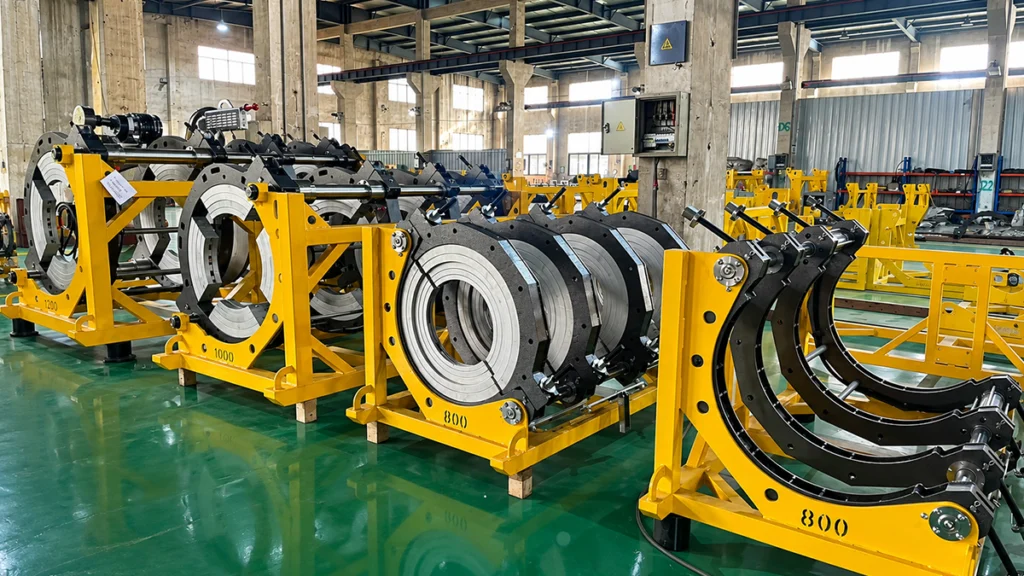
Massive infrastructure jobs demand unforgiving, heavy-duty performance. You will need four-column hydraulic or fully automatic CNC butt fusion machines running on 380V power, capable of dominating 800-1000mm pipe capacities. To keep municipal inspectors happy, these high-end machines must include displacement detection systems and the ability to print data directly on-site.
Final Recommendation for Senegal Buyers
Best choice for importers building a resale or rental inventory
Importers and distributors have to prioritize equipment longevity above all else to protect their brand reputation and secure their rental ROI. Choose butt fusion machines built with premium imported hydraulic seals and top-tier electrical components to drastically cut down on rental breakdowns. Moving forward, partner exclusively with manufacturers who offer comprehensive training, attractive trade-in programs, and contractually guaranteed spare parts availability.
Frequently Asked Questions About HDPE Pipe Jointing Machines in Senegal
Q1: What size HDPE pipe jointing machine do I need for water projects in Senegal?
The required machine size should be selected according to the outside diameter of the HDPE pipe, SDR or wall thickness, project scale, and expected welding volume. Hydraulic butt fusion machines covering ranges such as DN160–DN315 are commonly used for municipal distribution and irrigation pipelines, while larger transmission mains may require higher-capacity equipment. Buyers should confirm the machine’s rated pipe range, reducing inserts, wall-thickness capacity, and approved welding procedure before ordering.
Q2: How much does an HDPE pipe welding machine cost for importers in Senegal?
The price depends on the pipe range, manual or hydraulic configuration, automation level, control system, reducing inserts, facer and heater capacity, data-recording functions, spare parts, and warranty. Importers should request a model-specific EXW, FOB, or CIF quotation and also account for ocean freight, customs clearance, inland transport, taxes, training, and after-sales support.
Q3: Is a manual or hydraulic HDPE pipe jointing machine better for contractors?
The better option depends on pipe diameter, welding frequency, site access, budget, and quality-control requirements. Manual machines may suit smaller pipes, occasional repairs, and low-volume irrigation work. Hydraulic machines are generally more practical for regular municipal, industrial, mining, and infrastructure projects because they provide controlled carriage movement and measurable fusion pressure.
Q4: What specifications should I check before buying an HDPE pipe fusion machine?
Check the rated pipe range, supported SDR or wall thickness, hydraulic pressure capacity, heater temperature control, temperature uniformity, facer performance, clamp and frame construction, electrical supply, enclosure protection, included reducing inserts, calibration method, data-recording functions, and spare-parts availability. These specifications should be evaluated against the machine manufacturer’s documentation and the welding procedure required by the project.
Q5: Can one HDPE pipe jointing machine weld different pipe diameters?
Yes. Many butt fusion machines use reducing inserts to weld several pipe sizes within their rated range. Buyers should confirm the supported diameters, included inserts, wall-thickness capacity, and hydraulic performance. Pipes with different SDRs may require an approved transition fitting or special jointing procedure.
Q6: What spare parts are important for HDPE pipe welding machines?
Common spare and maintenance items include facer blades, heater-plate coatings or heater assemblies, temperature sensors and controllers, hydraulic seals, hoses, quick connectors, pressure gauges, electrical components, clamp inserts, cables, and heating elements. The recommended spare-parts package should match the machine model, project duration, operating environment, and local availability.
Q7: How do I evaluate a reliable HDPE pipe jointing machine supplier?
Evaluate the supplier’s manufacturing capability, technical documentation, machine test records, calibration information, warranty terms, operator training, spare-parts inventory, troubleshooting support, and experience with export packing and shipping to West Africa. Ask for the applicable equipment and welding standards rather than relying on a single certificate.
Q8: What are the risks of buying a low-cost HDPE pipe welding machine?
A low purchase price does not necessarily indicate poor quality, but buyers should carefully verify temperature control, heater uniformity, hydraulic stability, frame alignment, facer performance, electrical protection, calibration, spare-parts availability, and warranty coverage. Inadequate equipment performance or weak after-sales support may increase the risk of inconsistent welding, project delays, maintenance problems, and avoidable rework.
Conclusion
Selecting the right HDPE pipe jointing machine in Senegal requires careful consideration of pipe diameter, SDR, welding volume, site conditions, power supply, automation level, and total landed cost. Buyers should compare machine capacity, heater temperature control, hydraulic performance, included reducing inserts, calibration records, warranty, operator training, and spare-parts support before placing an order.
Matching the equipment to the project requirements and the crew’s operating capability can improve welding consistency, reduce avoidable rework, and support reliable pipeline installation for irrigation, municipal water, mining, and infrastructure projects.
Need help choosing the right HDPE pipe jointing machine for your project?
Request a Machine Recommendation