
Butt Welding Machine in Ecuador: HDPE Pipe Welding Equipment for Contractors
Table of Contents
Butt Welding Machine in Ecuador helps contractors choose the right HDPE pipe welding equipment by comparing machine types, technical specs, project applications, and buying factors such as lead time, support, and total cost.
What a Butt Welding Machine Is and How It Works
What is butt fusion welding in simple terms?
At its core, a butt welding machine is a heavy-duty mechanical setup built to connect thermoplastic pipes end-to-end. The fusion process relies on a thermostatically controlled hot plate to heat two identical pipe faces until the plastic hits a viscous flow state. Once perfectly melted, the operator removes the plate and applies mechanical or hydraulic pressure to drive the ends together. As the plastic cools and hardens under that constant pressure, the two pieces forge a single, heavy-duty bond. Structurally, you cannot tell this new joint apart from the original pipe itself.
Which pipe materials are compatible with this process?
This specific joining technique works exclusively with thermoplastics. High-Density Polyethylene (HDPE) takes the crown as the primary material for massive municipal and industrial jobs. That said, the equipment handles standard Polyethylene (PE), Polypropylene (PP), and Polyvinylidene Fluoride (PVDF) just as easily. Just keep it away from thermosetting plastics or metal pipes—the technology simply isn’t built for them.
How does the heating, alignment, and joining cycle work?
Operators follow a strict, time-sensitive five-step cycle to guarantee a flawless joint:
1. Milling: A high-speed cutter shaves off the oxidation layer, leveling the pipe ends so they sit perfectly flush against each other.
2. Heating: A PTFE-coated plate introduces heat (usually hitting 210°C ±3°C for PE) under an initial burst of pressure, followed by a soak period where pressure drops to almost zero.
3. Changeover: The heating plate pulls out rapidly, ensuring the molten plastic ends remain untouched and undamaged.
4. Pressure Application: The rig drives the pipes together using calculated fusion pressure (which factors in P1 butt welding pressure plus P2 dragging pressure).
5. Cooling: Clamps hold the joint tight under steady pressure until the core temperature hits a safe handling zone.
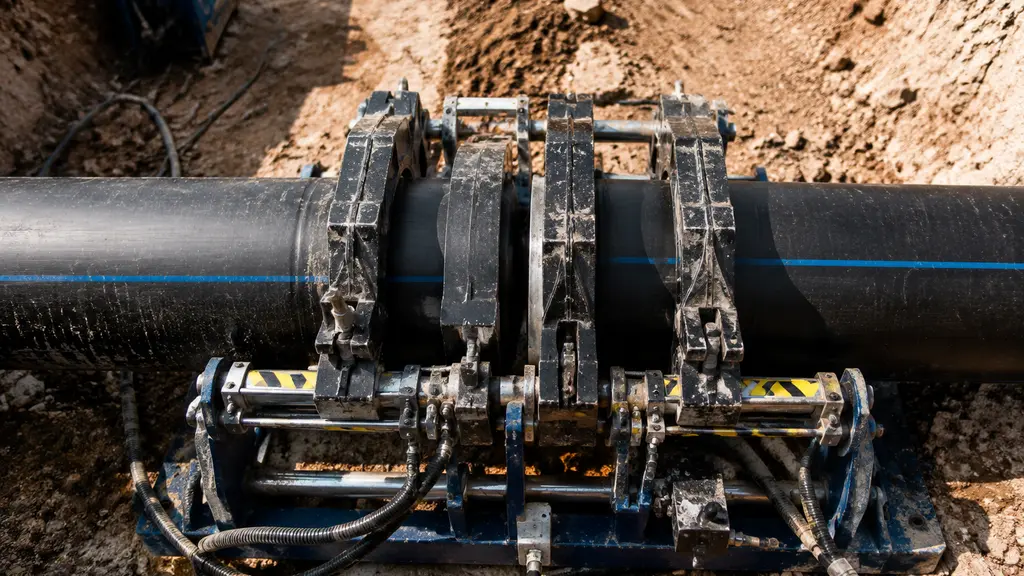
Why HDPE Pipe Welding Matters for Contractors in Ecuador
Where do contractors typically use HDPE pipe systems?
Infrastructure contractors rely heavily on HDPE networks across a wide range of sectors. You will routinely see these systems powering municipal water grids, upgrading regional sewage lines, handling heavy-duty agricultural irrigation, and managing industrial fluid transport. When tackling rugged environments, having a dependable butt welding machine in Ecuador becomes an absolute necessity—especially for building tough slurry lines in mining zones or laying down secure natural gas grids.
Why is a fused joint stronger than many mechanical alternatives?
Mechanical fittings, flanged connections, and rubber-gasket joints all share a common weakness: they eventually leak. A properly fused HDPE joint bypasses this entirely by melting into one continuous, monolithic stretch of plastic. This creates a leak-proof, maintenance-free, and chemically inert connection. It easily absorbs ground shifts and seismic shocks, delivering a 100-year operational lifespan without ever needing pricey anti-corrosion coatings or cathodic protection.
What project risks increase when welding quality is inconsistent?
Sloppy welds open the door to massive financial and operational headaches. Miss the temperature mark or apply weak pressure, and you get cold fusion—a recipe for sudden joint blowouts under active stress. These hidden defects inevitably lead to failed hydrostatic pressure tests and brutal excavation rework. Worse, if hazardous industrial chemicals or raw sewage spill into the surrounding soil, contractors face crippling downtime and massive environmental fines.
Factory-direct pricing with technical consultation included
Get Your Free QuoteMain Types of Butt Welding Machines Available
Manual, hydraulic, and CNC models: what is the difference?
Selecting the right setup comes down to your required clamping force, HDPE pipe diameter, and strictness of precision.
| Machine Type | Power Mechanism | Best For | Automation Level |
|---|---|---|---|
| Manual | Handwheels / Levers | Small diameters, low-pressure lines | None. Operator controls all variables. |
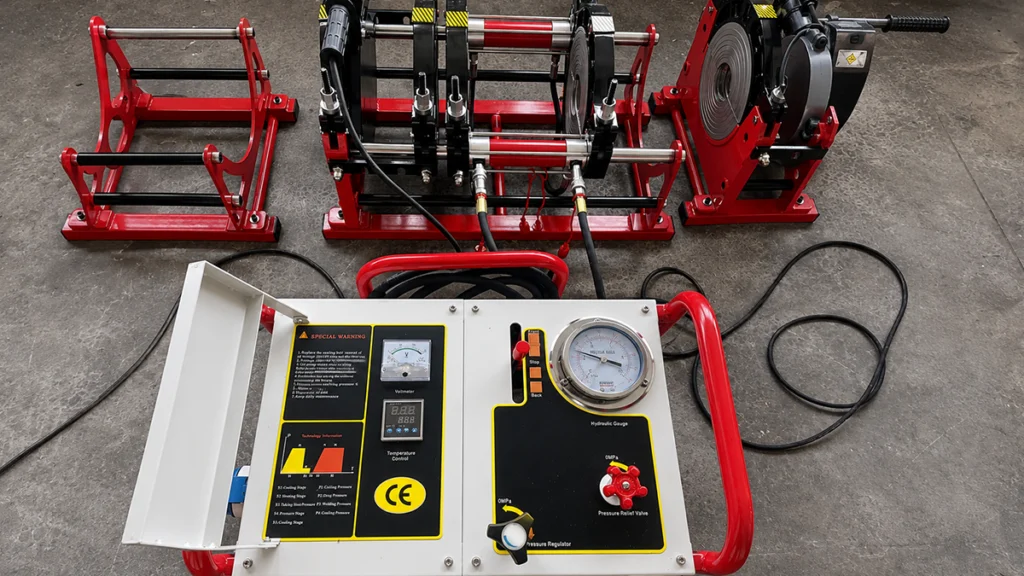
| Hydraulic | Hydraulic Station (0-16 MPa) | Medium to large infrastructure | Semi-automated. Operator manages timers and valves. |
| CNC | Programmable Logic Controller | Gas lines, strict ISO compliance | Fully automated. Detects displacement, logs data. |
Which machine type fits small crews versus large infrastructure jobs?
Manual rigs make perfect financial sense for small crews tackling light, infrequent work on smaller pipes (typically up to 200mm). Large-scale infrastructure, however, demands the brute force of a hydraulic system to merge massive 710-1000mm pipelines. A rugged hydraulic butt welding machine for contractors in Ecuador guarantees operators can hit the exact drag pressure needed to shift heavy, cumbersome pipe lengths across unforgiving terrain.
When does automation justify the extra investment?
Stepping up to CNC automation makes sense the moment a contract demands rigorous ISO compliance and flawless defect control. Natural gas distribution and high-pressure chemical lines leave zero room for human error, requiring dead-on pressure and temperature tracking. The steep initial cost pays off quickly by boosting daily weld counts, taking the guesswork out of the operator’s hands, and generating hard data logs that municipal inspectors demand.
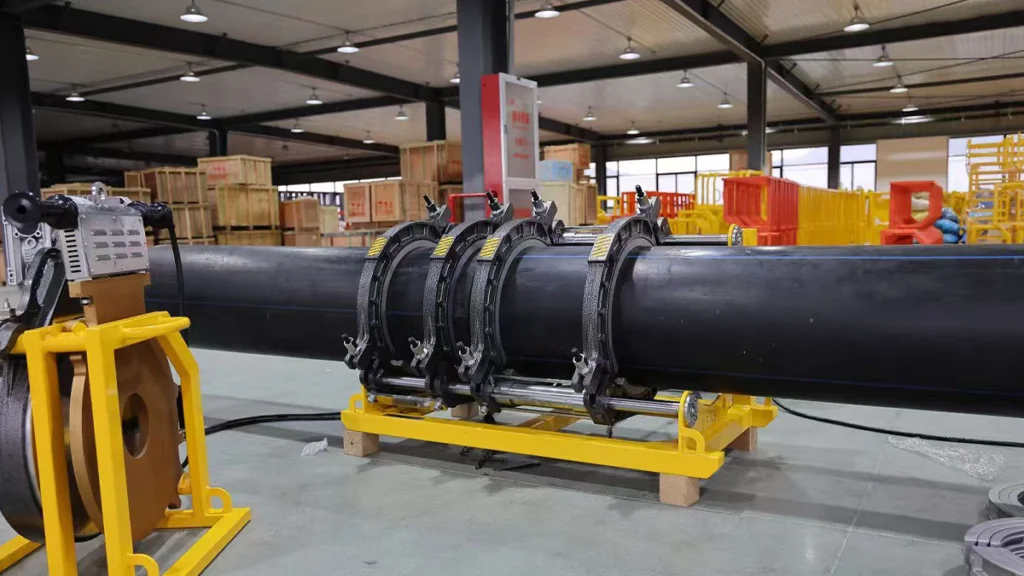
Key Technical Specifications to Compare Before Buying
What pipe diameter range should the machine cover?
Manufacturers categorize these butt fusion welding machines by their effective welding spans. Buyers need to lock down a chassis size that fits both current contracts and future bids. Standard brackets generally run 63-200mm, 90-355mm, 315-630mm, and 710-1000mm, while heavy industrial units can tackle giants up to 3000mm. Picking a versatile range keeps you competitive in the bidding process without sinking cash into oversized, unnecessary equipment.
Which electrical, hydraulic, and heating specs matter most?
Digging into butt fusion machine specifications for Ecuador projects means looking way past the physical footprint. Smart buyers examine these core metrics:
- Heating Plate: Needs to hit 0-270°C with a tight ±3°C variance to keep the polymer from degrading.
- Hydraulic System: Must deliver a rock-solid adjustment range of 0-16 MPa to handle varying Standard Dimension Ratios (SDR).
- Power Capacity: Total kW draw (like 23.5kW for a 1000mm rig) must match the output of your site generators.
What accessories and tooling should be included with the machine?
Never settle for a stripped-down package. A proper setup includes a precision milling cutter armed with high-speed carbon or tool steel reversible blades. The heating plate needs a tough, non-stick PTFE coating. You will also want a heavy-duty hydraulic station, a complete set of reduction clamps (inserts) covering the HDPE pipe welding machine’s full diameter range, and a standalone dual-channel timer to strictly monitor both the heating and cooling phases.
Get detailed specs and custom configuration options
Request Technical SpecificationsHow to Choose the Right Machine for Your Ecuador Project
How do you match machine capacity to pipe diameter and wall thickness?
The math comes down to the pipe’s Standard Dimension Ratio (SDR) and the surface area of the pipe fusion machine’s hydraulic cylinders (usually somewhere between 2237 mm² and 23179 mm²). You have to verify that the hydraulic station can push the required interfacial pressure (say, 0.15 N/mm² for DVS 2207-1) even after fighting the drag resistance of a heavy pipe. When figuring out how to choose a butt welding machine for water projects in Ecuador, always cross-check the maximum clamping force against the thickest SDR pipe in your project specs.
What should you prioritize for field work versus workshop work?
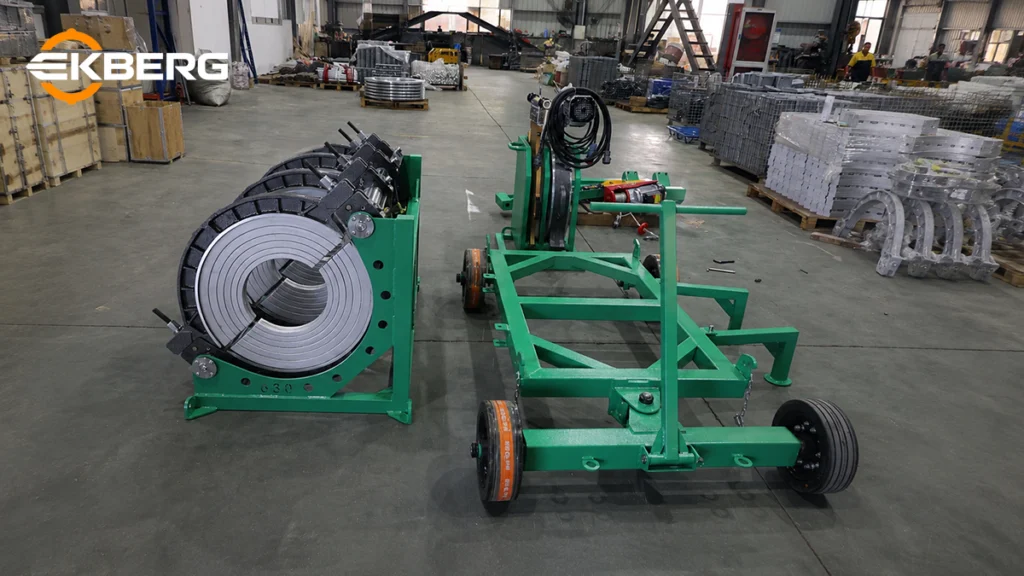
Trench work destroys fragile gear. Field equipment needs a mobile chassis wrapped in heavy-duty wheels or rugged tracks, plus flat-face, quick-connect hydraulic fittings to keep mud out of the system. Workshop environments fabricating segmented fittings play by different rules. Here, prioritize stationary frames, highly precise angle adjustments, and low starting pressures so you can weld thin-walled, small-diameter pipes without crushing them.
Which factors matter most for long-term operating cost?
The sticker butt fusion machine price is just a fraction of your Total Cost of Ownership (TCO). True operating costs hinge on power efficiency, how long the PTFE coating on the heating plate survives, and how fast you can get spare parts. Buying equipment backed by a solid guarantee—like a 1-year warranty paired with lifetime maintenance—slashes unexpected downtime and keeps maintenance budgets firmly in check.
Typical Applications for Contractors in Ecuador
Water supply and municipal pipeline installation
HDPE is rapidly taking over municipal infrastructure. Contractors rely on these HDPE pipe welding machines to push through rural water mains, overhaul aging sewage networks, and build out urban drinking water grids. Because fused joints are entirely leak-proof, they eliminate non-revenue water loss—a massive selling point when bidding on lucrative government utility contracts.
Irrigation, drainage, and agricultural infrastructure
Modern farming demands high-pressure water systems tough enough to survive acidic soil and harsh fertilizers. Tracking down the best butt welding machine for irrigation and drainage pipes lets crews rapidly deploy massive HDPE networks. This keeps water flowing to crops reliably, completely sidestepping the constant repair cycles associated with rotting metal pipes.
Mining, industrial, and utility pipeline projects
Heavy industry pushes pipelines to their absolute limits. Contractors use large-diameter pipe fusion machines to lay down aggressive slurry lines for mines, build environmental controls for landfills, and assemble cooling loops for massive data centers. A toxic spill in these environments is catastrophic, making precision hydraulic or CNC welding gear a strict requirement to guarantee unbreakable joints.
Cost, Lead Time, and Procurement Factors to Evaluate
What drives price differences between machine models?
The manual butt fusion machine price in Ecuador sits comfortably at the lower end of the spectrum simply because it strips out electronic controllers and hydraulic pumps. Prices climb sharply as you add CNC automation and digital data logging. Premium materials also bump up the cost—think ZL104 aluminum alloy for the clamping jaws and high-end imported electrical parts that drastically reduce failure rates.
How should buyers evaluate MOQ, lead time, and shipping support?
When sourcing industrial HDPE pipe welding equipment Ecuador, expect standard lead times around 15 workdays for imported units, even during busy seasons. Smart buyers look closely at a manufacturer’s Minimum Order Quantity (MOQ) requirements. You also need to confirm their logistics team can actually handle the complex freight routing from major global hubs—like Qingdao port—straight through to South American delivery sites.
What after-sales items should be confirmed before purchase?
Locking down a reliable butt welding machine lead time and spare parts in Ecuador keeps your crews working instead of waiting. Before signing a purchase order, secure a 1-year warranty alongside lifetime maintenance guarantees. Make sure the supplier will replace non-human damage for free during the warranty window, and verify they actually stock essential consumables like fresh milling blades and replacement PTFE plates.
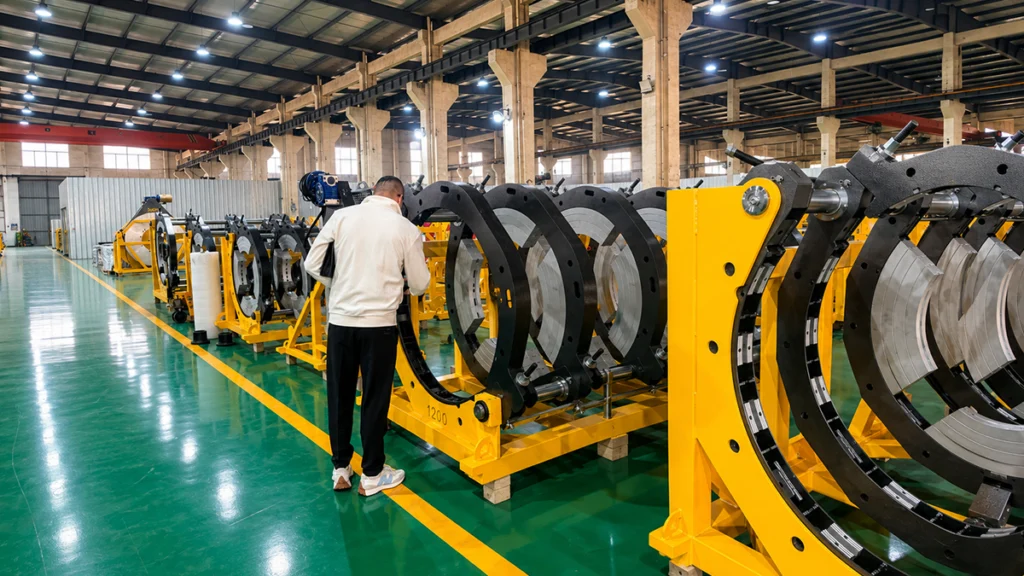
Common Welding Mistakes and How to Avoid Them
What happens when temperature or pressure is set incorrectly?
Stray from the exact parameters, and your joint will fail. Run the heating plate too cold, and you get cold fusion—a superficial bond with zero structural depth. Run it too hot, and the polymer burns, leaving brittle “carbon black” windows in the plastic. Mess up the pressure, and you either squeeze all the molten material out of the joint or fail to forge a dense bond, resulting in a blown pipe during hydrostatic testing.
Why are pipe alignment and surface preparation critical?
Thermal control means nothing if the physical prep is garbage. The misalignment between two pipe ends cannot exceed 10% of the pipe’s wall thickness. Milling isn’t optional; it cuts away the UV-damaged oxidation layer and leaves a perfectly flat mating surface. Skip the milling phase, and you guarantee a weak, incomplete fusion, no matter how perfectly you dialed in the temperature.
How can operator training improve weld consistency?
A HDPE pipe jointing machine is only as good as the person running it. Operators need proper training to calculate total fusion pressure—adding the theoretical butt welding pressure (P1) to the real-world dragging pressure (P2) of the pipe itself. They also need the discipline to respect heat absorption and cooling times. Popping a pipe out of the clamps before it completely cools traps internal stress inside the plastic, drastically weakening the final joint.
How to Evaluate a Supplier or Manufacturer
What documents, certifications, or test records should you request?
Any trustworthy HDPE pipe butt fusion machine Ecuador supplier will gladly hand over their compliance paperwork. Demand to see CE certifications and hard proof that their gear meets heavy-hitting global standards like ISO 21307, DVS 2207-1, or ASTM F2620. If you are buying a data-logging CNC rig, ask for TSG D2002-2006 compliance records to prove their electronic sensors actually read accurately.
How do you judge spare parts availability and technical support?
Find out if the manufacturer actually engineers their own equipment or just bolts together third-party parts. A true manufacturer runs independent R&D, maintains a deep inventory of consumables, and calibrates their own gear in-house. This setup ensures that if a hydraulic valve blows or a sensor dies on your job site, they can box up the exact replacement part and ship it out immediately.
What questions should contractors ask before placing an order?
Weed out low-tier assemblers by hitting them with hard technical questions. Ask, “Can this unit print out displacement and temperature logs for municipal inspectors?” Follow that up with, “Do you guarantee the heating plate temperature variance stays ≤ ±3°C across the entire surface?” How they answer will instantly tell you if their equipment can handle the strict demands of high-level engineering contracts.
Final Recommendation for Ecuador Buyers
Which buyer profile should choose which machine type?
Small contractors handling occasional fixes on low-pressure farm lines should grab a manual or basic hydraulic rig to keep their ROI high. On the flip side, major infrastructure firms, gas pipeline crews, and municipal utility builders need to put their money into automatic CNC models. When you are dealing with high-liability public infrastructure, the flawless precision and printable data logs of a CNC unit are absolutely mandatory.
What is the fastest way to shortlist suitable models?
To cut through the noise and find the right butt fusion welding machine, start by pinning down the absolute maximum pipe diameter your current and future jobs will require. Next, check the specific engineering standards (like ISO or ASTM) written into your project contracts. Finally, balance the necessary automation level against your budget, keeping in mind the massive labor hours a hydraulic or CNC system will save you over time.
When should you request a quote or technical consultation?
Reach out to a manufacturer the second your project engineer locks in the pipe SDR, the diameter range, and the required pressure specs. Handing a supplier those three exact data points lets them match you with a pipe fusion machine featuring the perfect hydraulic cylinder area and heating capacity. This simple step stops you from under-sizing your equipment or burning cash on a rig that is far too big for the job.
FAQ
Q1: What pipe sizes can a butt welding machine handle?
Manufacturers build these rigs in distinct size brackets. You will typically see ranges like 63-200mm, 90-355mm, 315-630mm, and 710-1000mm, while heavy-duty industrial versions can fuse massive 3000mm pipes. The goal is to secure a chassis that accommodates your largest required diameter while still safely gripping the smallest pipe on your roster.
Q2: Which type of butt fusion machine is best for contractor projects in Ecuador?
Hydraulic machines hit the sweet spot of power and affordability for most municipal and infrastructure crews, delivering the heavy clamping force required for thick HDPE lines. However, if you are bidding on highly regulated utility jobs or natural gas pipelines, CNC machines take the win thanks to their strict automated defect control and digital data logging.
Q3: How do I know whether to choose manual, hydraulic, or CNC equipment?
Grab a manual unit for low-pressure, small-diameter work (under 200mm). Step up to hydraulic when you are wrestling with larger pipes and need serious mechanical force to overcome ground drag. Go with CNC when the contract dictates strict ISO/ASTM compliance, automated pressure cycles, and hard data printouts for the site inspector.
Q4: What technical specifications matter most when buying HDPE welding equipment?
Always check the heating plate accuracy first—it needs to hold a tight ≤ ±3°C variance. Next, verify the hydraulic pressure range (usually 0-16 MPa) and the total kW power draw. Most importantly, do the math to ensure the machine’s hydraulic cylinder area can actually generate the required fusion pressure for your specific pipe SDR.
Q5: How much does a butt welding machine typically cost for B2B buyers?
Pricing swings wildly based on automation and size. Small manual rigs are incredibly budget-friendly, while massive CNC units require a serious capital outlay. The final price tag largely depends on build quality—like utilizing premium ZL104 aluminum—alongside the inclusion of imported hydraulics and advanced data-logging computers.
Q6: What should I check before importing or ordering a machine for Ecuador?
Confirm the factory’s production lead time (15 workdays is standard), map out the shipping logistics to South America, and double-check that the electrical specs match your local grid. More importantly, lock in the warranty details, verify lifetime maintenance terms, and ensure they can quickly ship consumable parts like PTFE plates and cutter blades.
Q7: Is operator training required for reliable HDPE pipe butt welding?
Absolutely. Even with high-end hydraulic gear, the crew needs to know how to calculate total fusion pressure by adding drag resistance to the base welding pressure. They also must strictly follow heating and cooling timers and properly mill the pipe faces. Solid training is the only way to avoid cold fusion and pass strict hydrostatic pressure tests.
Conclusion
Securing the right butt welding machine in Ecuador comes down to perfectly matching your equipment’s capacity with the harsh realities of your job site. For crews laying down municipal water grids, agricultural irrigation, or heavy industrial lines, the strength of that HDPE joint makes or breaks the whole project. Deciding between a manual, hydraulic, or CNC setup ultimately depends on your pipe diameters, local engineering standards (like ASTM F2620 or ISO 21307), and whether the client demands printable weld data.
Look past the initial price tag and focus heavily on the Total Cost of Ownership. You need a durable PTFE heating plate, a highly accurate hydraulic station, and a manufacturer who actually answers the phone when you need spare parts. By demanding tight temperature accuracy (±3°C variance), insisting on a rugged aluminum chassis, and thoroughly training your operators, you can completely eliminate the nightmare of cold fusion and blown pressure tests. Partnering with a transparent, responsive supplier guarantees your gear will deliver bulletproof, leak-free joints through decades of brutal field work.
Let our experts help you choose the right equipment for your project
Contact Our Engineering Team