
HDPE Pipe Welding Equipment Supplier: What International Buyers Should Check
Table of Contents
HDPE Pipe Welding Equipment Supplier: learn which machine types, technical specs, certifications, export services, pricing terms, and after-sales support international buyers should check before requesting a quote.
What Should an HDPE Pipe Welding Equipment Supplier Provide?
When international buyers evaluate an HDPE pipe welding equipment supplier, they need to look far beyond a basic product catalog. A truly capable manufacturer acts as your technical partner. They deliver a complete ecosystem—machinery, tooling, and data integration—that guarantees pipeline integrity regardless of harsh field conditions.
Core equipment categories buyers should expect
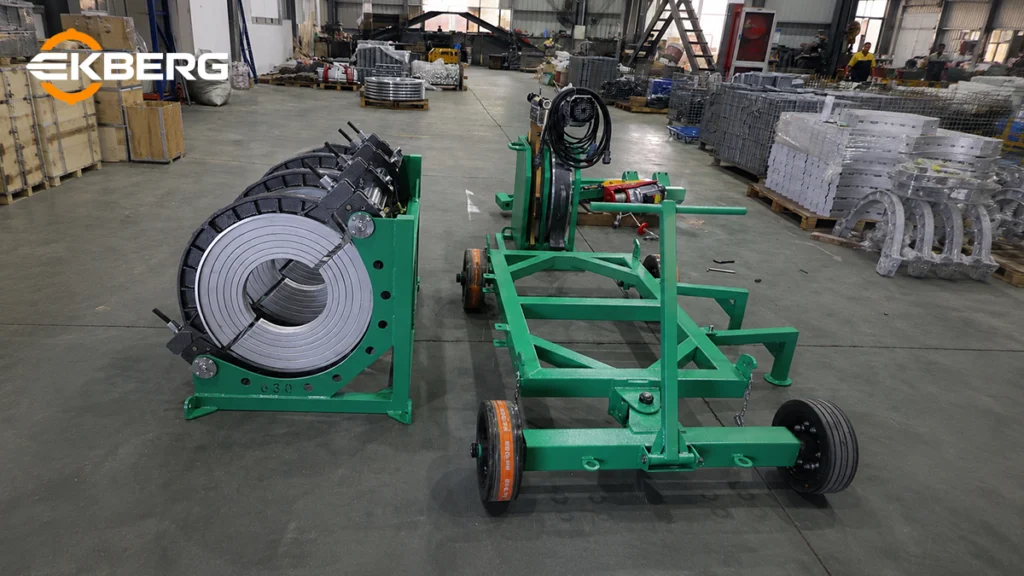
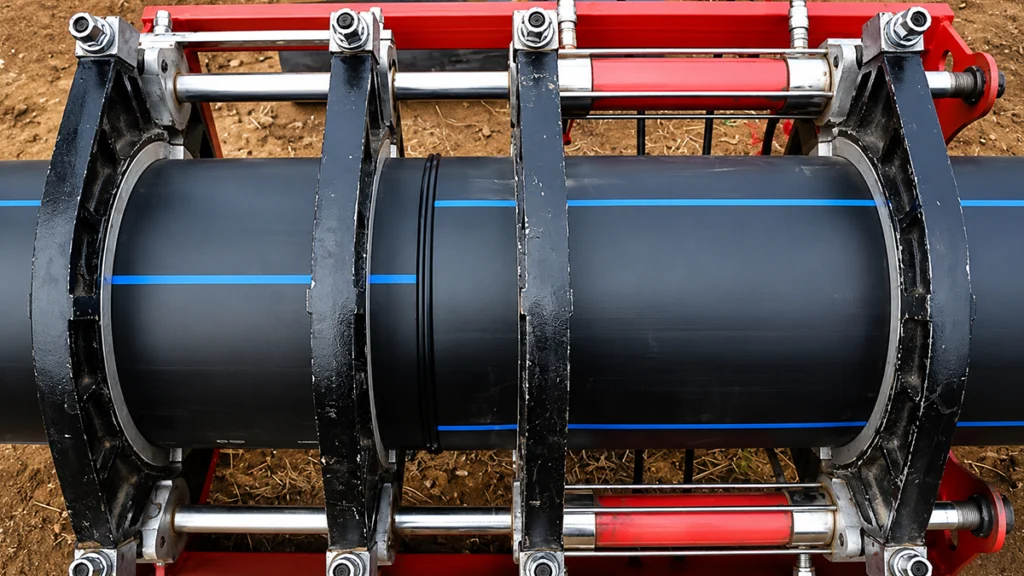
A reliable supplier brings a full spectrum of fusion technologies to the table, ensuring you can tackle any pipeline engineering scenario. You will need hydraulic butt fusion machines to handle long, straight pipe runs. Confined trench spaces and complex fittings? That calls for electrofusion welders. Meanwhile, socket fusion tools handle the smaller diameters, and saddle fusion equipment manages lateral branch connections. Sourcing this entire lineup from a single manufacturer guarantees interface compatibility and standardizes operating procedures across your entire job site.
What a complete supplier package usually includes
Buying a bare-bones butt fusion machine is a fast track to field delays. A genuinely field-ready butt fusion package has to include the heavy-duty main frame, a precision hydraulic control box, a PTFE-coated heating plate, and a high-torque facer or milling cutter. But it doesn’t stop there. The supplier should also deliver a comprehensive set of reducing clamps and SDR-specific inserts to fit various pipe diameters, plus an integrated data logger to capture fusion parameters for municipal compliance.
How supplier scope affects project risk
Top-tier suppliers actively reduce your project risks by building fail-safes directly into their equipment ecosystems. Take electrofusion, for example: automated barcode recognition systems completely eliminate manual data entry errors. When a supplier includes universal true RMS meters and precise alignment tools in their scope, contractors can confidently lock in ovality tolerances (strictly <5‰dn) before ever applying heat. This drastically cuts the risk of failing a hydrostatic pressure test down the line.
Which HDPE Welding Machine Types Should You Compare?
Choosing the right fusion technology ultimately dictates both your pipeline’s structural integrity and your crew’s daily efficiency. Buyers have to match the butt fusion machine type to the realities of their specific project environment.
Butt fusion machines vs. electrofusion machines
These two methods serve completely different engineering needs.
| Feature | Butt Fusion Machines | Electrofusion Machines |
|---|---|---|
| Primary Mechanism | Hydraulic pressure paired with a PTFE heating plate (210±5°C) | Embedded resistance wires (typically running a 40V welding voltage) |
| Best Application | Long, straight pipeline runs, and cross-country water or gas networks | Tight trench spaces, field repairs, and complex directional fittings |
| Cost Profile | Higher upfront capital expenditure, but zero consumable fitting costs | Lower initial machine cost, but high recurring costs per consumable fitting |
| Operating Space | Demands significant clearance for the frame and pipe alignment | Needs minimal clearance; easily operates inside cramped trenches |
When socket fusion or extrusion tools are needed
You structurally need socket fusion tools for small-diameter pipes (usually under DN63 mm) because the wall thickness simply cannot support a reliable butt weld. Extrusion welders, conversely, act as your secondary fabrication and repair workhorses. Crews deploy them for custom manhole fabrication, tank builds, and manual seam repairs in spots where automated clamping just isn’t an option.
Which accessories and consumables matter
A weld’s lifespan often comes down to the accessories used during the prep phase. Don’t overlook rotary pipe edge scrapers—they are essential for peeling away the oxidized layer of HDPE. Mechanical alignment tools are equally critical for locking in perfect concentricity. Furthermore, premium suppliers will specify strict environmental controls, like using 99% purity anhydrous ethanol for joint cleaning, which stops hydrocarbon contamination dead in its tracks during the heating cycle.
Factory-direct pricing with technical consultation included
Get Your Free QuoteWhat Technical Specifications Decide Performance?
Technical specs are the dividing line between a butt fusion welding machine that survives relentless field use and one that dies under extreme temperatures or fluctuating power. A dependable HDPE pipe welding equipment supplier engineers these exact parameters to meet strict international standards.
Pipe diameter range and pressure class
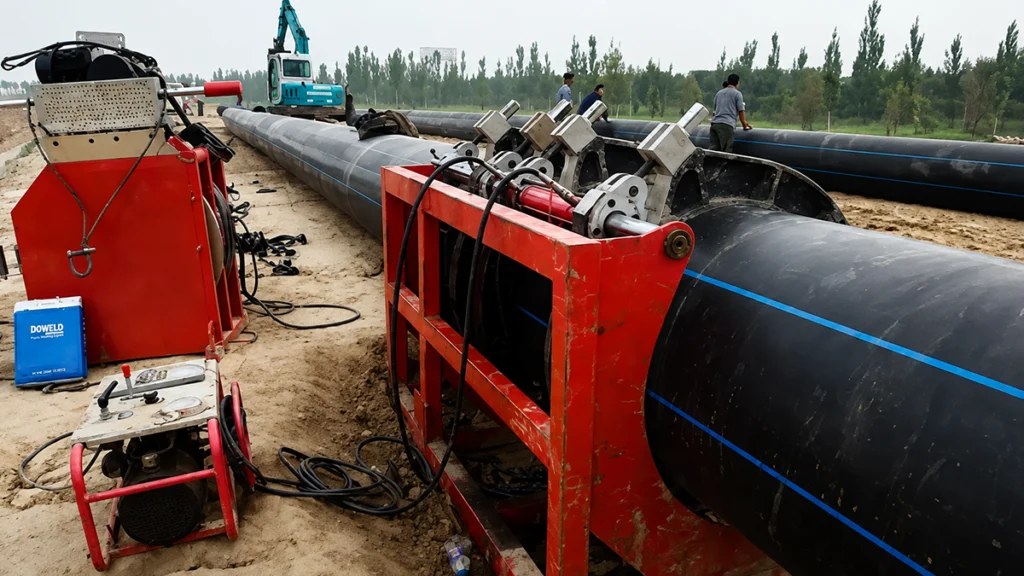
Standard butt fusion equipment is classified by outer diameter (OD) capacity, typically covering ranges like 63-200mm, 90-355mm, and 315-630mm. Industrial and mining sectors, however, push these limits to the extreme. Custom heavy-duty welders have to tackle massive ODs reaching 1200mm or even 1600mm. Handling the crushing weight and intense drag resistance of thick-walled slurry pipes requires an exponential scale-up in clamping force.
Heating plate temperature, hydraulic control, and alignment accuracy
In pipe fusion, precision is absolutely non-negotiable. Heating plates must feature advanced PID controllers to lock in thermal stability within a tight ±3°C window across the entire surface. The hydraulic system has to deliver the exact interfacial pressure demanded by regional codes—usually 0.15 N/mm² for low-pressure DVS 2207 standards, or a much higher 0.3 N/mm² for high-pressure ASTM F2620 requirements. On the mechanical side, the chassis must be rigid enough to ensure misalignment between the clamped pipe ends never exceeds 10% of the pipe’s wall thickness.
Voltage, frequency, and power options for export markets
Manufacturers exporting HDPE welding equipment must build machines that adapt to diverse global power grids. The equipment needs to handle AC 220V (single-phase) or 380V (three-phase) at either 50Hz or 60Hz. Because on-site generators notoriously output unstable power, the HDPE pipe welding machine’s internal circuitry has to aggressively regulate allowable voltage fluctuations to within ±0.5V. If it doesn’t, energy input deviations will inevitably lead to weak, cold welds.
Which Certifications and Quality Documents Should Buyers Request?
Smart procurement teams demand hard documentation to prove the HDPE pipe jointing machinery aligns with municipal and industrial regulations.
CE, ISO, and relevant electrical or safety standards
If you are doing professional pipeline construction, compliance with the ISO 12176 series is mandatory. Buyers need to verify ISO 12176-1 certification for butt fusion machines and ISO 12176-2 for electrofusion units. To integrate with modern smart-grid systems, the equipment should also meet ISO 12176-4, which dictates material traceability and digital data logging standards. Finally, CE certification remains a strict requirement for the European Economic Area to validate electrical safety and electromagnetic compatibility.
Factory test reports and calibration records
Never accept a plastic pipe welding machine that lacks individual testing documentation. Always ask for factory test reports that prove the unit passed motor calibration and discharge tests prior to shipping. This step is particularly vital for electrofusion welding machines. Changes in atmospheric pressure and climate can shift resistance values, meaning you need verified baseline calibration data before making your first field weld.
Material traceability and warranty terms
A trustworthy HDPE pipe welding equipment supplier delivers full production traceability using barcode-coded optimal parameters. Look for standard industry warranties covering a minimum of 3 years against non-human-induced damage. This warranty should explicitly protect high-value components, including the hydraulic pump, the CNC control board, and the heavy-duty main clamping frame.
Get detailed specs and custom configuration options
Request Technical SpecificationsHow Can International Buyers Judge Supplier Capability?
Vetting an overseas manufacturer means looking past polished marketing brochures. You need to scrutinize their engineering depth, operational footprint, and post-sale support infrastructure.
Export experience and target market references
The best suppliers have a proven history of operating in heavily regulated environments. Ask for references from municipal gas distribution projects, as these demand adherence to unforgiving standards like GB15558.2 or ISO 8085-2000. If a supplier actively exports to strict markets in North America, Europe, or Australia, they already possess the internal capabilities to navigate complex compliance and customs hurdles.
OEM and ODM support, branding, and customization
Elite manufacturers offer deep OEM and ODM customization that goes way beyond slapping on a custom paint color. They can modify CNC interfaces—for instance, requiring the operator to scan a barcode or confirm scraping completion before the HDPE pipe welding machine even allows the heating cycle to start. Customization also means engineering heavily reinforced frames designed specifically to survive brutal mining environments.
Spare parts, training, and after-sales response
Operator error is the number one cause of joint failure. Your supplier should provide comprehensive 6S standard training materials, highly detailed Standard Operating Procedures (SOPs), and visual troubleshooting flowcharts. Always verify that critical spare parts are readily available. You will eventually need replacement Hall switches, display screen ribbon cables, and fresh PTFE coatings. Clear maintenance schedules—like cleaning electrodes after every 1,000 splices—are also a must.
What Commercial Terms Need Careful Comparison?
Smart procurement strikes a balance between upfront capital costs, long-term operational efficiency, and shipping logistics.
Price structure, MOQ, and sample order logic
When weighing the price and Minimum Order Quantity (MOQ) of an HDPE pipe welding machine, always calculate the total cost of ownership between manual and CNC automatic models. CNC automatic butt fusion machines demand a higher initial investment, but they completely remove operator guesswork and shave off roughly 20 minutes of idle time per weld. If a contractor performs 10 welds a day, that recovers over 3 hours of paid labor, often shrinking the ROI payback period to just 22 months.
Lead time, packing method, and shipping terms
Ocean freight exposes precision electronics and delicate PTFE surfaces to harsh environmental risks. Buyers must insist that butt fusion machines ship with heavy-duty dust covers and are packed in environments where humidity stays strictly below 65%. Ensure the wooden crates are ISPM 15 fumigated and heavily reinforced to stop the chassis from warping during crane lifts and rough sea transit.
Hidden costs: tooling, certification, and freight
Ignoring hidden costs will quickly blow up a procurement budget. Factor in the recurring expenses for replacement electrofusion electrodes, specific SDR reducing inserts to handle different pipe wall thicknesses, and the logistics of annual factory recalibrations. Also, double-check if the quoted price covers specific third-party inspection certificates (like TÜV or SGS) if your local customs authority requires them.
Which Applications Require Different Machine Configurations?
You cannot apply one butt fusion welding machine universally. The exact pipeline application and local geography will dictate the specific equipment configuration you need.
Water supply, gas distribution, and irrigation projects
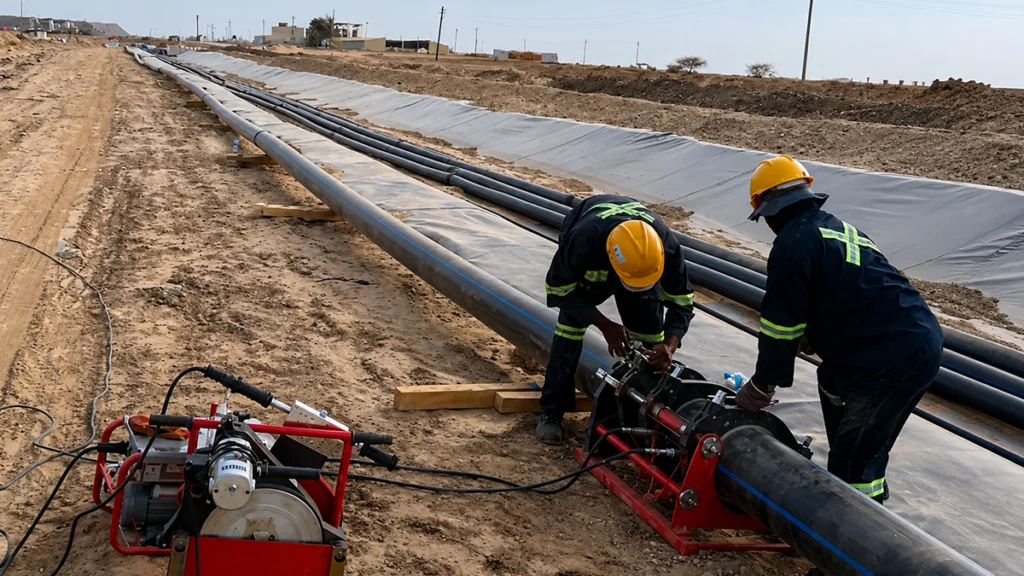
Gas pipelines require absolute precision and mandatory non-destructive data logging to guarantee zero leaks under pressure. These specialized butt fusion welding machines must also support destructive bend tests during the calibration phase. On the flip side, agricultural irrigation projects operate at much lower pressures. Using standard water-grade manual butt fusion machines here makes perfect sense, allowing you to optimize equipment costs without compromising necessary performance.
Site conditions: trench work, workshop work, and field repairs
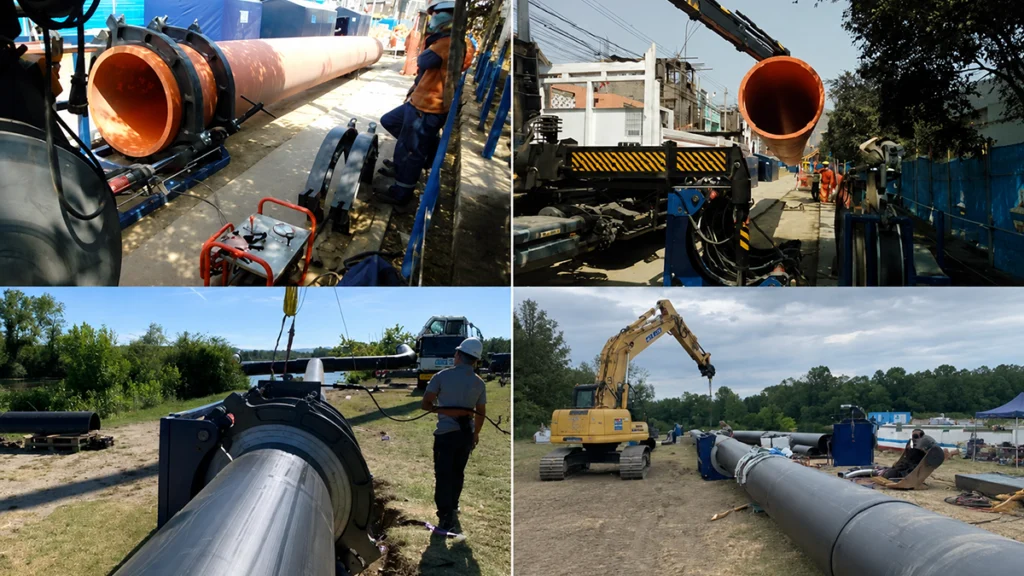
The topology of the job site drives your equipment choices. Trench work demands ultra-compact butt fusion frames or electrofusion setups when hydraulic chassis clearance is non-existent. For field repairs in exposed, windy environments, crews need but fusion machines equipped with wind-blocking tents and rapid-heating plates. These features prevent short-circuit overheating or rapid cooling of the fusion zone, which inevitably leads to brittle, failed welds.
How pipe size and material grade change the spec
Large-diameter mining pipes—especially those handling abrasive slurry—rely on incredibly dense, thick-walled HDPE. Fusing these materials requires heavy-duty hydraulic butt fusion machines built to withstand massive drag pressures. The hydraulic cylinders must be significantly upsized to maintain a constant interfacial pressure of 0.3 N/mm², even when the pipe fusion machine is dragging hundreds of meters of heavy pipe across uneven, rocky terrain.
What Common Mistakes Do Buyers Make?
Buying heavy butt fusion machinery internationally carries inherent risks. Dodging these common pitfalls protects both your capital investment and your project schedule.
Choosing by price only
Buying the absolute cheapest plastic pipe machine on the market is a guaranteed recipe for rapid equipment failure. Budget butt fusion machines cut corners by using inferior, thin PTFE coatings that quickly degrade. Molten plastic then sticks to the plate, completely ruining the weld geometry. Furthermore, these cheap units lack CNC data logging. Without digital weld records, they are entirely useless for municipal contracts, dropping their resale value to zero.
Ignoring local voltage or climate conditions
Failing to run a discharge test after a major shift in altitude or climate will ruin your splicing quality. Cold weather aggressively pulls heat from the heating plate, meaning the CNC controller needs built-in ambient temperature compensation to adjust. Also, running a 60Hz butt fusion machine on a 50Hz grid without the correct inverters will quickly burn out hydraulic pump motors and destabilize the interfacial pressure.
Skipping spare parts and operator training
Operators who rush the cooling phase put the entire pipeline at risk. For example, skipping the mandatory 4-6 minutes of clamp-cooling time for a 40-63mm pipe creates micro-cracks inside the joint. Buyers who try to save a few dollars by skipping spare parts and comprehensive training packages open themselves up to massive liabilities if a high-pressure line bursts due to simple human error.
What Final Checklist Should You Use Before Sending an Inquiry?
A well-structured Request for Quotation (RFQ) guarantees the supplier hands you an accurate, technically compliant proposal right out of the gate.
Buyer checklist for RFQ preparation
Before you reach out to an HDPE pipe welding equipment supplier, gather these critical data points:
- Exact outer diameter (OD) range required (e.g., 90-355mm).
- Pipe SDR (Standard Dimension Ratio) and pressure rating (PN).
- Primary application (municipal gas, water, mining slurry).
- Required welding standard compliance (ISO 21307, DVS 2207-1, or ASTM F2620).
- Local voltage, frequency, and plug type.
Questions to ask before placing an order
Test the supplier’s technical depth by asking pointed questions:
- “Does the butt fusion machine’s control box support ISO 12176-4 digital data logging?”
- “What is the exact warranty duration on the hydraulic pump and the PTFE heating plate?”
- “Do you provide remote or factory-direct annual calibration services?”
- “What is the allowable voltage fluctuation for the CNC controller?”
When to request a sample, demo, or video test
With high-value capital equipment, shipping a physical sample rarely makes sense. Instead, ask the supplier for a live or recorded video demonstration showing a daily on-site test butt fusion connection. Most importantly, insist that the video shows a non-destructive “bend test” of the resulting weld ring. This allows you to visually confirm the geometry, bead rollback, and overall structural integrity of the joint under stress.
FAQ
Q1: What documents should I request from an HDPE pipe welding equipment supplier?
You need to ask for ISO 12176-1/2/4 certifications to confirm the equipment meets modern standards and data logging rules. Beyond that, insist on factory test reports, motor calibration records, discharge test results, and CE certificates for electrical safety. A trustworthy supplier will also hand over a documented 3-year warranty and a full material traceability report.
Q2: How do I know whether butt fusion or electrofusion equipment is right for my project?
Butt fusion shines on long, straight pipeline runs where you have plenty of room for pipe alignment and the hydraulic frame. Electrofusion, on the other hand, is an absolute must for tight trench work, complex directional fittings, and field repairs where mechanical clamping just won’t fit. Most serious contractors keep both on hand to tackle different phases of a build.
Q3: What factors affect the price of HDPE pipe welding machines?
Pricing heavily depends on the level of automation (CNC versus manual), the maximum outer diameter (OD) it can handle, and how heavy-duty the hydraulic frame is built. CNC machines carry a higher price tag upfront but save about 20 minutes of labor per weld. Premium PTFE coatings, built-in data loggers, and the ability to meet high-pressure ASTM F2620 standards will also bump up the initial capital cost.
Q4: Can a supplier provide machines for different pipe diameters and voltages?
Absolutely. Professional manufacturers design their machines with interchangeable reducing clamps and SDR-specific inserts so a single unit can cover wide OD ranges (like 90-355mm). Export-focused suppliers will also customize the internal circuitry and motors to perfectly match your local grid, whether you need 220V single-phase or 380V three-phase power at 50Hz or 60Hz.
Q5: How important are spare parts and training when buying from overseas?
They are make-or-break. Simple human errors—like rushing a mandatory 4-6 minute cooling cycle—are the leading cause of joint failures. Proper 6S training stops those errors before they happen. Buying spare parts upfront (such as Hall switches, ribbon cables, and replacement electrodes) saves you from suffering through weeks of downtime waiting for international shipping if a component breaks.
Q6: What is the difference between a manufacturer and a trading supplier?
A direct manufacturer owns the engineering process. They can customize CNC interfaces, run factory calibration tests, and modify heavy-duty frames for mining applications. They also provide direct technical troubleshooting. Trading suppliers are just middlemen. They rarely offer deep OEM customization, lack in-house ISO 12176 testing facilities, and often struggle to deliver fast, highly technical support after the sale.
Q7: How long does export delivery usually take for HDPE welding equipment?
Lead times scale with the size and customization of the machine. Standard manual units often ship out in just 10-15 days. However, custom CNC machines or massive heavy-duty mining frames (up to 1200mm) might need 30-45 days for proper manufacturing and calibration. Ocean freight then adds another 20-40 days, depending on your destination port and how fast customs clears the cargo.
Conclusion
Partnering with the right HDPE pipe welding equipment supplier ultimately determines the safety, profitability, and long-term success of your pipeline infrastructure projects. Smart international buyers look past the initial price tag. They rigorously vet a supplier’s technical capabilities, focusing on precise hydraulic control (0.15 to 0.3 N/mm²), thermal stability (±3°C), and strict compliance with ISO 12176 standards. Deciding between electrofusion and butt fusion, weighing the labor efficiency of CNC automation, and demanding robust export packaging are all critical steps. By insisting on verifiable factory calibration reports, stocking up on essential spare parts, and rolling out comprehensive operator training, procurement teams can effectively eliminate joint failures, mitigate field risks, and lock in a rapid return on investment.
Let our experts help you choose the right equipment for your project
Contact Our Engineering Team