
Butt Fusion Machine in Brazil: Buying Guide for HDPE Pipeline Projects
Table of Contents
Butt Fusion Machine in Brazil helps buyers compare machine types, technical specs, voltage, price, and supplier support so they can choose the right HDPE fusion equipment for municipal, mining, and industrial pipeline projects.
What Is a Butt Fusion Machine and Why It Matters for HDPE Pipeline Projects in Brazil
If you’re laying High-Density Polyethylene (HDPE) pipelines, you already know the stakes. A single weak joint can compromise the whole system. That’s where a butt fusion machine comes in. This specialized thermofusion equipment heats pipe ends until they melt, then drives them together under strict hydraulic pressure. For contractors sourcing a Butt Fusion Machine in Brazil, getting this right is non-negotiable. It’s the literal foundation for building leak-free, high-pressure networks across the country’s agricultural, industrial, and municipal sectors.
How does butt fusion welding work?
The fusion process follows four strict steps outlined by global standards like DVS 2207 and ISO 21307. First, a mechanical facer shaves the pipe ends. This guarantees they sit perfectly flat and parallel. Next, a PTFE-coated heating plate warms those ends—usually hitting between 200°C and 220°C—until a distinct bead of molten plastic appears. Once the plate is out of the way, hydraulic cylinders push the melted ends together at a specific pressure (measured in bar or MPa). The HDPE pipe jointing machine in Brazil holds that pressure while the plastic cools, forging a solid, monolithic bond.
Why is butt fusion preferred for HDPE pipelines?
Industry professionals default to butt fusion for HDPE pipe one simple reason: it completely removes the need for chemical solvents, gaskets, or mechanical fittings. Done right, a fused joint boasts 100% of the original pipe’s tensile strength. This seamless connection stops leaks in their tracks. It also shrugs off ground shifts and keeps internal flow dynamics smooth. That makes the method perfect for demanding, high-pressure gas and water lines rated for PN10, PN16, or even PN25.
Which Brazil project types use butt fusion most often?
Across Brazil, regional utilities like COPASA and SABESP rely heavily on this equipment to drive massive municipal sanitation upgrades. Mining operations in Pará and Minas Gerais lean on it just as much to build tough, abrasion-resistant slurry lines. Out in the Midwest, large-scale agricultural irrigation networks depend on butt fusion to quickly stitch together kilometers of continuous HDPE piping.
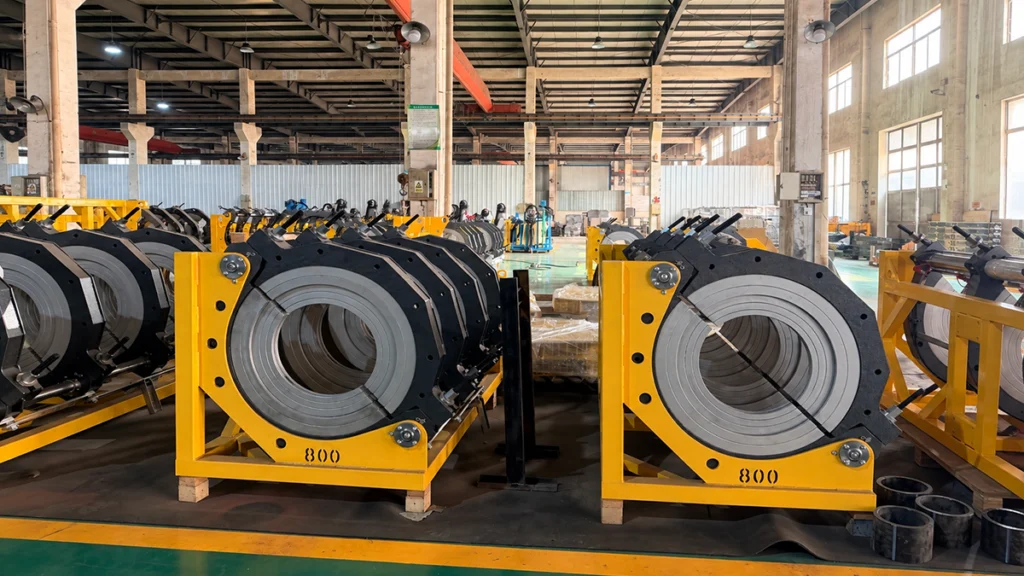
Manual, Hydraulic, or CNC: Which Butt Fusion Machine Type Fits Your Project?
Deciding between a manual, hydraulic, or CNC automatic butt fusion machine isn’t a guessing game. It comes down to your pipe diameter, the level of automation you need, and the strict compliance rules of your specific pipeline contract.
What is the difference between manual and hydraulic models?
Manual units are straightforward. An operator uses a lever or handwheel to physically push the pipe ends together. They are highly cost-effective and easy to carry, but you sacrifice precise pressure control. Hydraulic models, on the other hand, pack an electrically driven pump. This setup delivers exact, trackable pressure—often exceeding 150 bar—straight to the clamping carriage. If you are dealing with thick-walled HDPE or fighting the sheer drag force of heavy pipes, hydraulic power isn’t just an option. It’s mandatory.
When does CNC or automatic control make sense?
CNC (Computer Numerical Control) systems take the human element out of the equation. Once you input the pipe parameters—like material, SDR, and outer diameter (OD)—the butt fusion welding machine for HDPE pipe fully automates the fusion pressure, changeover time, and heating duration. When a project demands flawless execution and complete traceability, CNC is the only way to go. Strict municipal water contracts and natural gas distribution lines usually require this equipment. Why? Because CNC automatic but fusion machines generate a digital weld report for every single joint, proving ISO 12176 compliance on the spot.
Which type fits small, medium, or large pipeline jobs?
| Machine Type | Typical Diameter Range | Best Fit Project Scenario |
|---|---|---|
| Manual | 40mm – 160mm (up to 200mm) | Tight trench spaces, low-pressure irrigation systems, and small indoor plumbing jobs. |
| Hydraulic | 160mm – 630mm | Heavy construction sites, mining slurry lines, and standard municipal water mains. |
| CNC / Automatic | 160mm – 1200mm+ | High-risk industrial lines, audited municipal infrastructure, and gas pipelines. |
Factory-direct pricing with technical consultation included
Get Your Free QuoteKey Technical Specifications to Check Before Buying
Sourcing a dependable butt fusion machine in Brazil means digging into the details. You have to validate the facer torque, heating plate wattage, voltage compatibility, and exact diameter range to guarantee the rig can handle your local job site conditions.
What pipe diameter range should you confirm?
Manufacturers engineer every butt fusion machine for a specific Outer Diameter (OD) bracket. Think 90-315mm, 315-630mm, or a massive 630-1000mm. Always double-check that the unit’s primary clamps actually fit your largest pipe. Just as importantly, ensure the supplier throws in a full set of aluminum reducing inserts (liners). You will need these to step the clamps down for your smallest pipe sizes.
Which heating plate, facer, and clamp details matter most?
Start with the heating plate. It needs a premium PTFE (Teflon) coating so molten polyethylene doesn’t stick to it, alongside a tight temperature variance of less than ±5°C across the entire surface. Then look at the facer. You want a high-torque electric motor paired with dual-sided high-speed steel (HSS) blades. This combo easily shaves thick-walled pipes without bogging down. Finally, inspect the clamps. High-strength aluminum alloy is essential here to grip the pipe relentlessly without warping under intense hydraulic pressure.
How do voltage and power requirements affect use in Brazil?
Brazil’s electrical grid is notoriously fragmented. Smaller units (up to 315mm) usually run on standard 220V single-phase power, which you can find almost anywhere. But step up to heavy industrial hydraulic butt fusion machines (450mm and beyond), and you will need 380V three-phase power to kickstart the heavy heating plates and hydraulic pumps. Before you buy, tally up the total power consumption (kW). You need that math to properly size the diesel generators for your remote, off-grid sites.
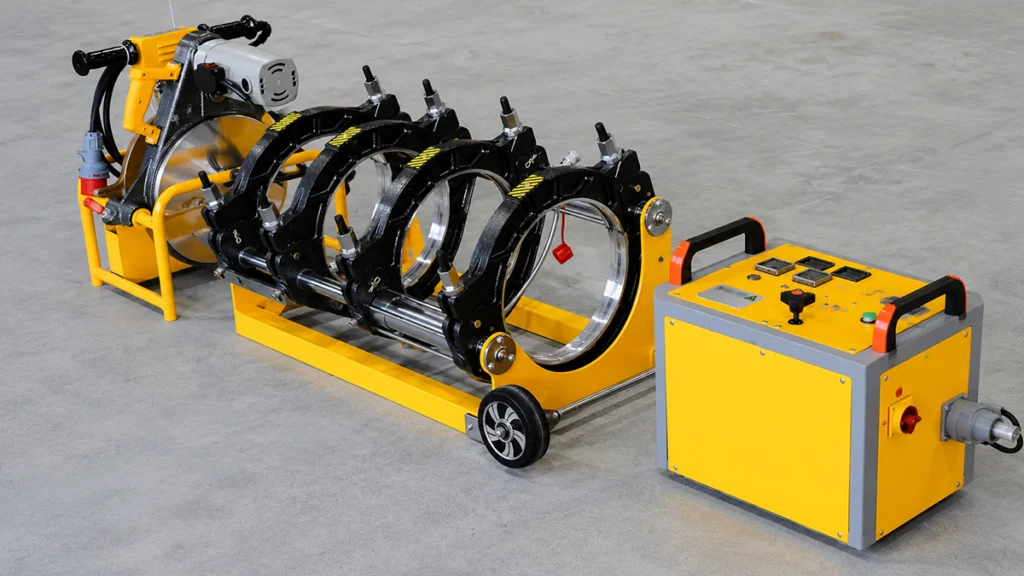
Where Butt Fusion Machines Are Used in Brazil’s HDPE Pipeline Projects
From dense urban water networks to isolated mining slurry lines and sprawling agricultural setups, butt fusion equipment is hard at work across Brazil’s massive infrastructure landscape.
How are they used in water supply and municipal networks?
Brazilian municipalities are aggressively ripping out aging PVC and cast iron pipes to install durable HDPE. Contractors tackling these upgrades need rigs capable of knocking out hundreds of welds a week. Crews typically use hydraulic butt fusion machines to fuse long, continuous stretches of water mains right next to the trench. Once welded, they lower the whole line into the ground. This strategy drastically cuts down on traffic headaches and speeds up urban sanitation projects.
Why are they common in mining, irrigation, and industrial lines?
Mining operations push highly abrasive chemical slurries and tailings through their pipelines. Butt fusion guarantees the joints are just as tough and abrasion-resistant as the pipe walls themselves. Down in the Cerrado region, agriculture relies on massive center-pivot irrigation systems that demand kilometers of water transport lines. Contractors out there favor wheeled, highly portable pipe fusion machines. This mobility lets a small crew tear across rough farmland, welding huge stretches of pipe in a single day.
What about drainage, gas, and infrastructure projects?
When it comes to natural gas, safety takes the front seat. Contractors exclusively run automated CNC automaic butt fusion machines equipped with data logging to ensure absolutely leak-proof joints. Meanwhile, stormwater and highway drainage projects call for heavy-duty hydraulic butt fusion machines—sometimes up to 1200mm—to fuse the giant solid-wall or corrugated HDPE pipes needed to handle Brazil’s intense tropical downpours.
Get detailed specs and custom configuration options
Request Technical SpecificationsHow to Choose the Right Machine for Pipe Size and Job Site Conditions
Picking the right gear means matching your pipe’s Standard Dimension Ratio (SDR) and Outer Diameter (OD) against the HDPE pipe jointing machine’s in Brazil pressure limits. You also have to think critically about how the unit will actually move around your job site.
How do you match machine size to pipe OD and SDR?
Your butt fusion welding machine’s hydraulic cylinders and chassis must be rugged enough to handle the physical bulk and wall thickness of your pipe. Remember, a lower SDR number means a thicker wall. Thicker walls demand higher hydraulic pressure to hit the right fusion force. If your crew is fusing heavy-duty SDR 11 or SDR 9 pipes, double-check the hydraulic pump and cylinder specs. They need a large enough cross-sectional area to generate the required MPa without redlining the system.
What site conditions affect portability and frame design?
If you are running cross-country pipelines or working in wide-open agricultural fields, a wheeled chassis is a lifesaver. It allows a lean crew to simply tow the butt fusion welding machine down the pipeline route. But if you’re navigating cramped urban trenches or retrofitting an industrial plant, you need a modular, compact frame that breaks down easily for lowering into an excavation. And for anything over 800mm, heavy-duty lifting eyes aren’t optional—they are an absolute necessity for crane positioning.
When do you need inserts, data logging, or extra accessories?
If you expect one HDPE pipe jointing machine to handle multiple pipe sizes—like using a 315mm rig to weld 250mm, 200mm, and 160mm pipes—reducing inserts are strictly non-negotiable. Data loggers become mandatory the second a project owner asks for digital proof of weld integrity. Finally, grab a stub-end device (flange adaptor). It’s incredibly useful when you eventually need to tie your new HDPE line into existing metal infrastructure or steel valves.
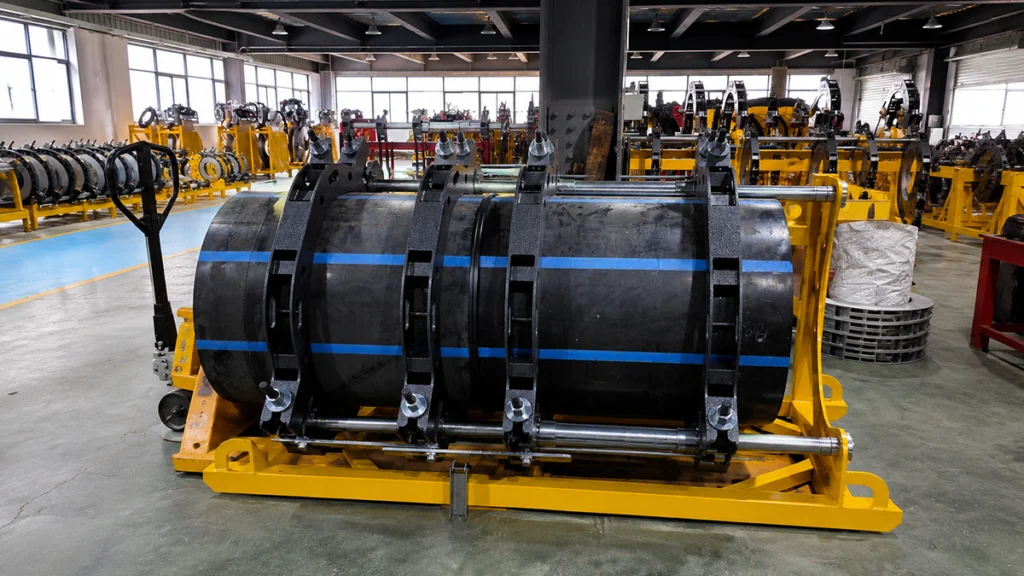
Butt Fusion Machine Price in Brazil: What Drives the Total Cost?
The sticker price at the factory is just the beginning. Securing a Butt Fusion Machine in Brazil involves calculating automation levels, tricky shipping logistics, steep import duties, and mandatory accessories.
What factors change the machine price?
Two things dictate the baseline cost: maximum welding diameter and automation. A massive 1200mm hydraulic rig will cost drastically more than a 315mm model simply because of the sheer volume of steel and aluminum involved. Stepping up from standard hydraulic controls to a fully automated CNC setup will also spike the price. Don’t forget internal component quality. Specifying premium parts—like Rexroth hydraulic valves or Schneider electrical contactors—will push your initial capital expense higher, though it pays off in durability.
How do shipping, customs, and accessories affect total cost?
Getting the equipment into the country means navigating sea freight to major hubs like Paranaguá or Santos. B2B buyers have to calculate the true landed cost. This includes butt fusion machine Brazil’s notoriously heavy import taxes (ICMS, COFINS, PIS, IPI, and II). Nailing down the correct NCM (Mercosur Common Nomenclature) code is vital to dodge brutal customs penalties. Throwing in data loggers, crane hoists for the heating plate, and full sets of reducing inserts will also bump up the final invoice.
What MOQ or order structure is common for B2B buyers?
When dealing with heavy-duty hydraulic butt fusion machines (630mm and up), the Minimum Order Quantity (MOQ) usually sits at just one unit. However, major contractors and equipment distributors get smart with their freight. They structure orders as Full Container Loads (FCL) or Less than Container Loads (LCL). Packing a single 20ft container with a mix of 450mm, 315mm, and 160mm butt fusion machines is the smartest way to slash customs clearance fees and sea freight costs per unit.
Brazil-Specific Procurement Factors: Voltage, Logistics, and Service
Bringing heavy butt fusion machinery into Brazil is not for the faint of heart. It requires a laser focus on electrical compatibility, rugged packaging to survive brutal transit times, and a rock-solid guarantee for replacement parts.
Is 220V or 380V more suitable for Brazil?
Brazil doesn’t have a single, unified industrial power grid. While 220V single-phase works fine for smaller HDPE Pipe jointing machines in Brazil, high-capacity industrial rigs demand 380V three-phase power. Never assume. Always audit the power supply at your actual job site or check the exact output of your diesel generators before signing a purchase order. If you specify the wrong voltage, your hydraulic pump and heating plate will be dead weight the moment they arrive.
What should you confirm about spare parts and warranty?
Pipeline downtime burns through thousands of Reais a day. Protect yourself by ensuring the supplier ships a comprehensive spare parts kit alongside the butt fusion welding machine. This should include quick-release couplings, hydraulic seals, HSS facer blades, and extra PTFE-coated heating elements. Hold your manufacturer to a minimum 12-month warranty that covers electrical and structural defects, backed up by fast, reliable technical support.
How can packaging and delivery timing protect project schedules?
Shipping via ocean freight from Europe or Asia to Brazil takes roughly 30 to 45 days. Tack on another 10 to 20 days just to clear customs. To keep your project schedule from derailing, demand that your equipment is packed in ISPM-15 certified wooden crates. If your packaging isn’t compliant, the Brazilian agricultural authority (MAPA) will quarantine or outright destroy the shipment, causing a catastrophic delay.
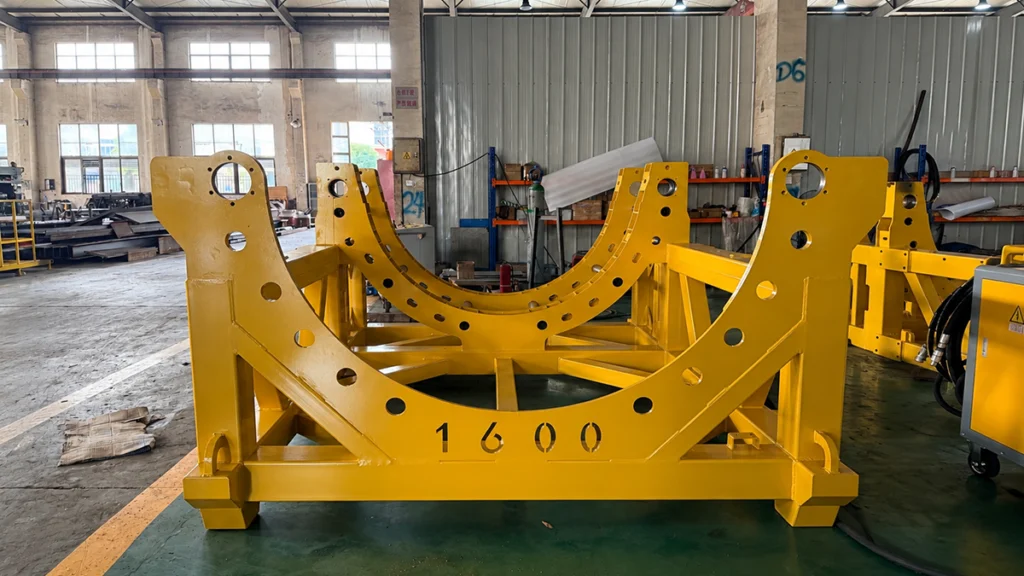
Common Buying Mistakes and Quality Risks to Avoid
Shopping strictly for the lowest price tag is a dangerous game. It usually results in hidden defects—like uneven heating plates or flimsy hydraulic seals—that ultimately trigger massive pipeline failures.
What hidden quality issues should you inspect first?
Cheap butt fusion welding machines are notorious for leaking hydraulic cylinders. When pressure drops during the critical cooling phase, you get a compromised, weak weld. Another massive red flag is a poorly applied PTFE coating on the heating plate. This creates cold spots, stopping the HDPE from melting evenly. Finally, check the thickness of the clamps. Low-grade cast aluminum will crack or warp the second you apply the extreme pressure needed for heavy-wall pipes.
Which documents and test reports should a supplier provide?
Don’t take a supplier’s word for it—ask for the paperwork. A legitimate manufacturer will hand over a detailed packing list, an ISO 9001 factory audit report, and a CE certificate. On the technical side, demand temperature calibration reports to verify heating plate accuracy, plus hydraulic pressure test certificates proving the cylinders hold firm without leaking. Buying a CNC unit? Tell them to send over a sample digital weld report.
Why can a low-price machine raise total project risk?
The initial savings of a bargain-bin butt fusion welding machine are a complete illusion. Imagine a single weld failing on a PN16 municipal water line. You have to excavate the trench, cut out the bad joint, and reweld the whole thing. The labor costs, machine downtime, and hit to your reputation will vastly outweigh whatever money you saved upfront. Think of premium equipment as an insurance policy against catastrophic project failure.
Final Procurement Checklist and Supplier Evaluation Tips
A disciplined buying process is the only way to ensure you land high-quality gear that hits your technical specs and arrives on time.
What should be on a final purchase checklist?
Before you sign off on that Purchase Order, lock down these details:
- Exact compatibility with your pipe’s SDR and OD.
- A full set of reducing inserts included in the package.
- The right voltage (380V three-phase or 220V single-phase).
- A data logger (if your contract mandates it).
- A robust spare parts kit (heating elements, seals, blades).
- Export packaging that is strictly ISPM-15 certified.
How do you compare suppliers side by side?
Stop looking only at the bottom line and start evaluating engineering transparency. Compare the exact brands they use for critical components, like temperature controllers, electric motors, and hydraulic valves. Gauge how fast they respond to deep technical questions. Do they really understand international shipping logistics? Can they hand over clear, English-language maintenance schematics and operating manuals?
When should you request a sample weld, video test, or technical call?
Never send the final balance payment without seeing a recorded or live video test of your exact pipe fusion machine. That video needs to clearly show the heating plate hitting the target temperature and the butt fusion machine holding maximum hydraulic pressure. Setting up a technical video call with the supplier’s engineering crew is also a brilliant move. It confirms they actually know their stuff and proves they can support your field technicians from afar.
FAQ
Q1: What size butt fusion machine do I need for HDPE pipeline work in Brazil?
The right size hinges entirely on your pipe’s outer diameter (OD). For standard irrigation and municipal builds, crews usually run 160mm to 315mm or 315mm to 630mm models. Make sure you buy a unit where the main clamps fit your absolute largest pipe, then use reducing inserts to step down for the smaller ones.
Q2: Is a 220V or 380V butt fusion machine better for Brazil?
That depends on your site’s power setup and the butt fusion welding machine’s size. Smaller units (up to 315mm) run perfectly well on 220V single-phase power. But if you are deploying large industrial rigs (450mm and up), you will absolutely need 380V three-phase to drive those massive hydraulic pumps and heating plates. Always verify your generator specs first.
Q3: How much does a butt fusion machine cost in Brazil?
Pricing is all over the map depending on import logistics, automation, and diameter. A basic manual 160mm butt fusion welding machine is highly affordable. Conversely, a 630mm CNC hydraulic rig is a serious capital expense. Remember that true landed costs in Brazil must include customs clearance fees, sea freight, and heavy import duties like IPI, ICMS, and II.
Q4: What is the difference between manual, hydraulic, and CNC butt fusion machines?
Manual units rely on sheer physical leverage, making them fine for small, low-pressure pipes. Hydraulic rigs swap muscle for motorized pumps, delivering the precise, heavy pressure needed for thicker, larger pipes. CNC models take it a step further by fully automating the time, pressure, and temperature. They also spit out the digital weld reports required for strict municipal and gas contracts.
Q5: Can one machine handle different pipe diameters and SDR ratings?
Absolutely. You can adapt a single butt fusion wleding machine to various diameters by snapping aluminum reducing inserts (liners) right into the main clamps. The same rig can also fuse different SDR ratings (wall thicknesses), provided its hydraulic pump packs enough punch to generate the specific bar/MPa required for that thicker wall.
Q6: What should I check before importing a butt fusion machine to Brazil?
First, verify the exact voltage. Next, make sure a spare parts kit is included in the deal. Crucially, confirm that everything is packed in ISPM-15 certified wooden crates so it doesn’t get flagged by Brazilian agricultural customs (MAPA). Finally, double-check the NCM code with your customs broker to avoid nasty surprises.
Q7: How do I know if the supplier offers spare parts and training?
Ask them to list out a detailed spare parts package (hydraulic seals, facer blades, PTFE elements) on the very first quote. The best suppliers won’t just sell you a pipe fusion machine; they will provide comprehensive English manuals, step-by-step video tutorials, and remote video-call support to help your field engineers troubleshoot on-site.
Conclusion
Locking down the ideal Butt Fusion Machine in Brazil takes more than just browsing a catalog. It requires a hard look at import logistics, site conditions, and strict technical specs. The success of your pipeline hinges on matching the unit’s hydraulic pressure capabilities to your pipe’s SDR and OD. You also have to nail the voltage requirements and pick the right automation level—whether that’s a standard hydraulic setup for rural irrigation or a fully automated CNC rig for heavily audited gas lines.
Buyers have to look past the initial factory price tag. Evaluating the true landed cost means factoring in reliable after-sales support, mandatory spare parts, and strict ISPM-15 packaging. By demanding pre-shipment video tests, prioritizing engineering quality, and refusing to settle for the lowest bid, contractors can dodge the nightmare of joint failure. Doing the upfront homework protects project schedules and guarantees decades of flawless, leak-free pipeline performance.
Let our experts help you choose the right equipment for your project
Contact Our Engineering Team