
200mm HDPE Pipe Welding Machine: Manual vs Hydraulic Options Explained
Table of Contents
200mm HDPE Pipe Welding Machine guide comparing manual and hydraulic options, key specifications, applications, costs, and buying criteria for safer pipeline welding decisions.
What Is a 200mm HDPE Pipe Welding Machine?
A 200mm HDPE pipe welding machine serves as a purpose-built industrial tool for joining high-density polyethylene (HDPE) pipes up to 200mm in diameter via thermal fusion. If you’re handling low-frequency, budget-conscious field repairs, manual models do the trick nicely. On the flip side, hydraulic units are built for relentless, heavy-duty pipeline construction where pinpoint pressure control isn’t just nice to have—it’s mandatory.
How butt fusion welding joins HDPE pipes
Think of butt fusion as creating a permanent, monolithic bond. The process starts by heating the freshly planed ends of two HDPE pipes against a PTFE-coated plate. Once the plastic hits that perfect molten state, you remove the heater and drive the pipe ends together under strictly controlled pressure—either mechanically or hydraulically. As the material cools down, it transforms into a homogeneous, leak-proof joint. The result? A connection structurally as tough as the original pipe itself.
Typical pipe diameter range and SDR compatibility
A standard 200mm butt fusion machine handles a versatile working range spanning from 63mm up to 200mm. The main clamping inserts lock in standard outside diameters (OD), including 63, 75, 90, 110, 125, 140, 160, 180, and 200mm. These rigs play well with various Standard Dimension Ratios (SDR) that dictate wall thickness. Just remember one golden rule: never butt-fuse pipes from different SDR series directly to one another. If you’re dealing with mismatched wall thicknesses, you’ll need to pivot to electrofusion.
Where 200mm HDPE welding machines are commonly used
You’ll spot these fusion units operating on infrastructure and industrial sites across the globe. Crews rely on them heavily for municipal water supply networks, urban gas distribution lines, agricultural irrigation setups, and heavy-duty industrial fluid transfer facilities. The 200mm footprint hits the sweet spot for secondary distribution lines and sprawling commercial plumbing projects.
Which option is better for small contractors?
If you run a smaller contracting outfit, a manual butt fusion welding machine offers unbeatable portability and cost-effectiveness. By ditching the heavy hydraulic stations, these units become incredibly easy to maneuver. They’re perfect for tight trench constraints, leaner budgets, and jobs that don’t demand high-volume automation. You get rock-solid performance for non-critical drainage or low-pressure water systems without breaking the bank.
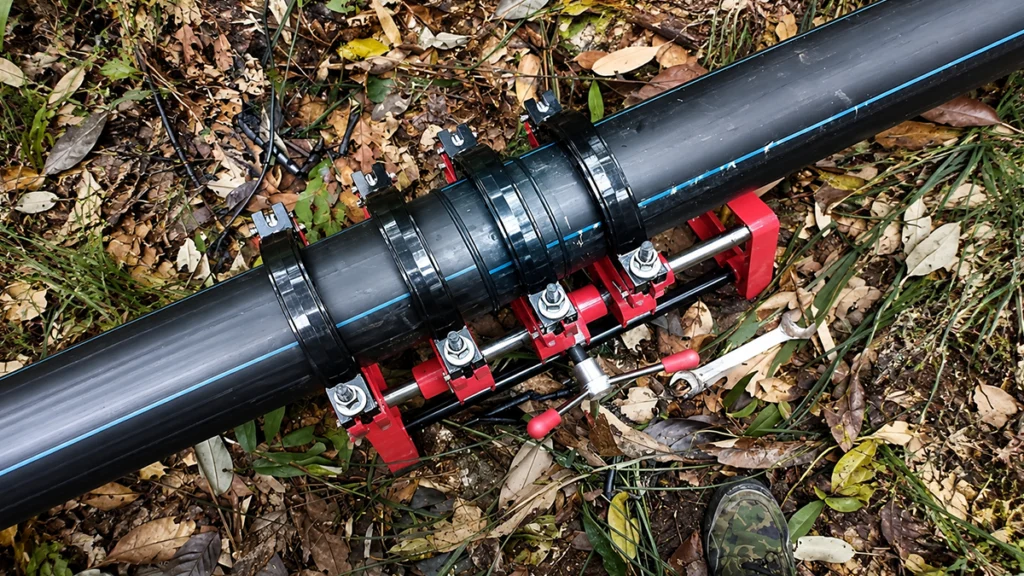
Manual vs Hydraulic 200mm HDPE Pipe Welding Machines: Quick Comparison
| Feature | Manual Butt Fusion Machine | Hydraulic Butt Fusion Machine |
|---|---|---|
| Operation Method | Hand-crank or lever-driven | Electric hydraulic station |
| Pressure Control | Coarse, relies on operator feel | Precise, 0-16 MPa adjustable range |
| Alignment Stability | Standard 2-clamp or basic frame | Robust 4-clamp sleeve structure |
| Labor Requirement | High physical effort | Low physical effort |
| Welding Consistency | Variable, operator-dependent | High, standardized repeatability |
| Data Logging | Not available | Available on CNC/advanced models |
| Price Level | $600 – $1,500 | $1,500 – $3,500+ |
Which option is better for frequent pipeline projects?
When you’re tackling frequent, high-volume pipeline installations, hydraulic butt fusion machines win hands down. By leaning on a hydraulic system for semi-automatic control, they strip away the intense physical fatigue operators usually face. This mechanical edge guarantees a massive, consistent daily joint output. Ultimately, the rapid production speed easily offsets the steeper upfront price tag on mid-to-large-scale jobs.
Key differences in pressure control, alignment, and repeatability
The core difference boils down to how you apply force. Manual units lean entirely on human muscle, meaning your fusion pressure ends up being rough and highly subjective. Hydraulic models take a completely different route. They utilize an electric hydraulic station to deliver precise, unwavering force—usually sitting at a 2-4 MPa working pressure for 200mm pipes. Add in a heavy-duty, four-clamp sleeve structure, and you get superior pipe alignment that practically eliminates the risk of high-low misalignment during the joining phase.
Main components of a manual butt fusion machine
You can break a manual butt fusion machine down into three main parts. First, the carriage (or frame) grips and aligns the pipe ends. Next comes the planing tool, or milling cutter, which mechanically shaves the pipe faces so they sit perfectly parallel. Finally, the heating plate steps in to deliver the thermal energy required to melt those surfaces before they are pressed together.
When manual operation is practical
Going manual still makes perfect sense in the right context. It shines during occasional field repairs or small-scale utility work. If you’re out in a remote location without access to heavy power generation, a manual rig is a lifesaver. It’s also the go-to for non-critical gravity drainage systems where nobody is demanding strict data logging or high-pressure standard compliance (like ISO 21307).
Factory-direct pricing with technical consultation included
Get Your Free QuoteHow a Manual 200mm HDPE Pipe Welding Machine Works
The manual fusion workflow kicks off with the operator locking the HDPE pipes into the carriage clamps. Next, they drop in the milling cutter to face the pipe ends, pull it out, and swap in the heating plate. Once the plastic melts and forms an adequate bead, the operator quickly yanks the heater out. Then comes the heavy lifting: manually pulling a lever or cranking a wheel to drive the pipes together, holding that physical force steady until the joint fully cools.
Common limitations in pressure consistency and operator workload
The glaring drawback of manual gear? You simply can’t measure, record, or precisely control the welding pressure. The structural integrity of that joint rides entirely on the operator’s gut feeling and physical stamina. Generating the necessary drag and joining pressure for beefier 200mm pipes demands serious muscle. Over a long shift, that physical drain inevitably leads to fatigue and highly inconsistent bead formation.
Hydraulic clamping and pressure control explained
To bypass those manual hurdles, hydraulic setups bring an integrated control box to the table to manage butt pressure. This system relies on hydraulic cylinders mounted straight to the carriage, empowering the operator to dial in exact pressure values—usually adjustable from 0 to 16 MPa. This guarantees dead-accurate, stable force right through the critical bead-up, heating, joining, and cooling stages.
Why hydraulic machines improve repeatability
Hydraulic units skyrocket repeatability simply by cutting human physical variance out of the equation. They pack an integrated control console that displays temperature and hydraulic pressure side-by-side. This setup allows operators to rigidly follow standardized welding parameters, guaranteeing that every single joint undergoes the exact same thermal and kinetic treatment.
When hydraulic models reduce labor and welding risk
When you step up to larger diameter pipes, hydraulic models stop being optional and start becoming essential. The milling, heating, and cooling phases demand substantial, sustained pressure. Trying to manually hold 60–90 psi of interfacial pressure on a 200mm pipe is basically impossible. Hydraulic automation steps in to crush human error, eliminate cold fusion risks, and keep you strictly compliant with demanding pipeline engineering standards.
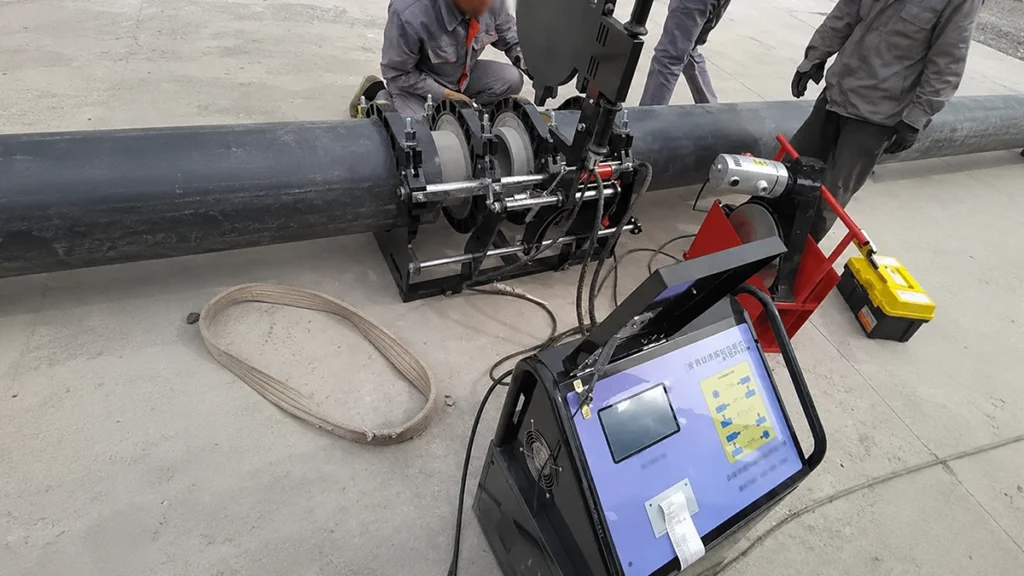
How a Hydraulic 200mm HDPE Pipe Welding Machine Works
A hydraulic 200mm welding machine takes the grunt work out of force application. The operator dials in the exact drag, heat, and fusion pressures right on the hydraulic console. From there, the cylinders fluidly drive the carriage, pushing the pipe against the facer, then the heater, and finally pressing them together. The console locks in the precise pressure throughout the entire cooling cycle—no lever-holding required.
Pipe diameter range, pipe material, and SDR rating
Engineered for versatility, a standard 200mm hydraulic HDPE pipe jointing machine easily covers the 63-200mm spectrum. It’s highly adaptable, ready to fuse PE, HDPE, PP, and PVDF plastics. The hydraulic force output is robust enough to tackle the thickest SDR ratings out there—like SDR 9 or SDR 11. For 200mm pipes, those thicker walls demand vastly more fusion pressure than standard thin-walled variants.
Heating plate power, temperature control, and coating quality
You can’t compromise on thermal consistency. A proper 200mm model needs a 2000W heating plate to hold uniform temperatures across its entire face. A digital thermostat manages the heat, offering an adjustment range from 0 to 300°C. Furthermore, the plate features a premium PTFE (Teflon) coating. This prevents sticky molten plastic from adhering, which guarantees a flawless, clean separation during the changeover phase.
Facing tool performance and power supply requirements
The facing tool—often called a milling cutter—relies on a 750W motor to shave down thick HDPE pipe ends until they are perfectly smooth and parallel. Both this facer and the heating plate run on a standard 220V working voltage. Because of this, the entire setup pairs effortlessly with the standard portable generators you already have on your construction site.
Frame structure, clamp material, and field durability
Out in the dirt, durability comes down to metallurgy. The primary carriage components and clamps need to be cast from high-strength aluminum alloy (specifically the ZL104 standard) to deliver a killer strength-to-weight ratio. Smart buyers also look for flat-type quick hydraulic connectors to block out dirt, alongside a rigid four-clamp sleeve structure that absolutely refuses to let pipes slip under immense hydraulic loads.
Get detailed specs and custom configuration options
Request Technical SpecificationsKey Technical Specifications to Check Before Buying
| Specification | Parameter Standard |
|---|---|
| Welding Range | 63mm, 75mm, 90mm, 110mm, 125mm, 140mm, 160mm, 180mm, 200mm |
| Heating Plate Power | 2000W |
| Facer Motor Power | 750W |
| Temperature Range | 0°C – 300°C |
| Hydraulic Pressure Range | 0 – 16 MPa |
| Frame Material | ZL104 Aluminum Alloy |
Before you sign off on any technical specifications, take a hard look at your operational environment. Every project throws unique curveballs, demanding specific HDPE pipe welding machine configurations and parameter standards.
Municipal water supply and drainage projects
Municipal water grids run under intense pressure. They absolutely demand joints that are leak-proof and built to last decades. Because of this, specifications for city projects almost always mandate hydraulic butt fusion machines. You need equipment capable of passing brutal municipal pressure tests while spitting out documented, highly repeatable fusion data.
Agricultural irrigation and aquaculture pipelines
Agricultural irrigation and aquaculture setups usually involve massive pipeline runs, but they operate at far lower pressures. In these environments, cost-effectiveness drives the purchasing decision. Depending on your project budget and the pipe’s SDR, crews frequently deploy either high-tier manual butt fusion welding machines or entry-level hydraulic models to get the job done efficiently.
Mining, industrial fluid transfer, and gas distribution
Mining and industrial gas distribution sit at the very top of the risk spectrum. These high-stakes applications demand unwavering adherence to aggressive high-pressure standards, such as ASTM F2620 or ISO 21307. Safety-critical systems literally cannot afford a cold weld or a slight misalignment. Therefore, hydraulic butt fusion welding machines equipped with pinpoint pressure control and robust data logging aren’t just recommended—they are mandatory.
Choosing machine type by project frequency and site conditions
More often than not, the reality of your job site dictates your final spec sheet. Manual butt fusion machines shine in cramped trenches, elevated installs, or remote areas totally cut off from heavy power grids. Conversely, if you have an accessible site demanding relentless, high-volume daily joint output, a hydraulic butt fusion welding machine is your undisputed specification of choice.
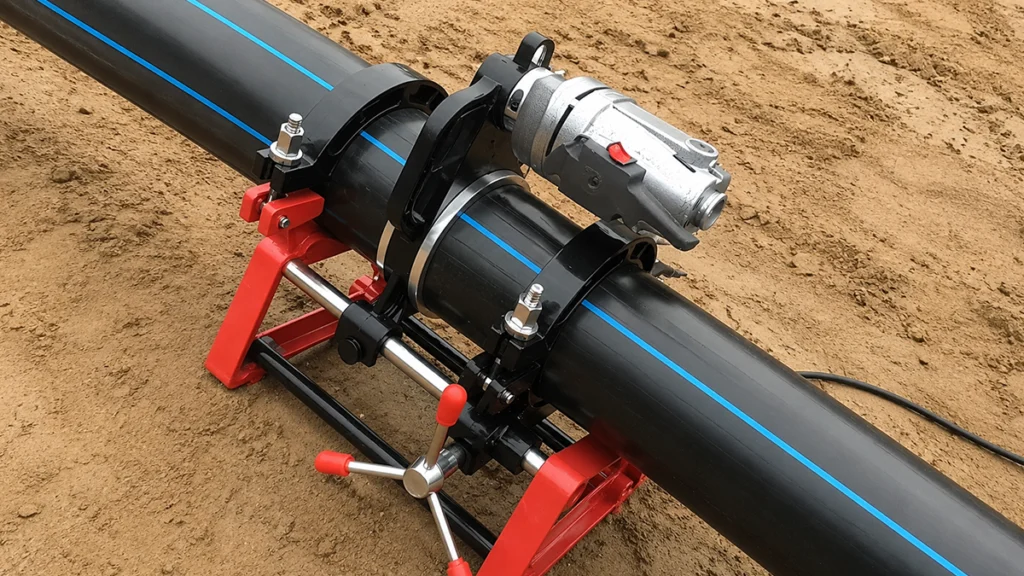
Applications for 200mm HDPE Pipe Welding Machines
Where and how you deploy your 200mm HDPE pipe welding machine directly shapes its financial footprint. Complex, high-stakes applications naturally push equipment requirements higher, which subsequently drives up both your initial procurement and daily operational costs.
What affects 200mm HDPE pipe welding machine price?
The price tag on a 200mm pipe fusion machine hinges heavily on its automation level—whether you choose manual, basic hydraulic, or fully CNC. Secondary cost drivers sneak in through the origin of internal components (think imported versus domestic hydraulic seals and relays), the thickness of the PTFE coating, and whether the unit holds legitimate international compliance certifications like CE and ISO 12176.
Manual vs hydraulic cost differences
You’ll notice a massive pricing gap between the two technologies. Manual 200mm rigs generally sit between $600 and $1,500, making them incredibly accessible for smaller businesses. Stepping up to basic hydraulic or CNC models requires a heftier capital injection. Expect to spend anywhere from $1,500 to well over $3,500, even when buying factory-direct from vetted suppliers.
Spare parts, packaging, shipping, and after-sales support
Manual butt fusion machines cost pennies to maintain. Because they lack pumps, valves, and cylinders, their spare parts run up to 80% cheaper than hydraulic equivalents. Regardless of the type you buy, you must hold your supplier accountable for logistics. Demand rugged export packaging (like solid wooden crates), transparent shipping routes, and lightning-fast spare part availability to dodge crippling project downtime.
How to estimate total ownership cost
Smart procurement managers look way past the initial invoice. Calculating your total cost of ownership (TCO) means factoring in the purchase price, freight, routine maintenance, and daily labor efficiency. Yes, hydraulic butt fusion machines sting a bit more upfront. However, they drastically slash failure rates and pump out more joints per shift. On long-term contracts, the massive savings in labor and eliminated rework make hydraulic units the smarter financial play.
Price, MOQ, Lead Time, and Total Cost Considerations
When you sit down to crunch total costs and map out lead times, your primary fork in the road is simple: manual or hydraulic. Your specific operational constraints will heavily dictate that choice.
Choose manual if budget and portability matter most
A manual rig is the obvious choice if you’re battling tight spaces, scraping together a low initial capital budget, or only welding occasionally. If your crew only needs to knock out 2 to 3 joints an hour on thinner-walled (high SDR) pipe, a manual unit delivers incredible value. There is zero reason to over-capitalize on automation you simply don’t need.
Choose hydraulic if consistency and productivity matter most
Pull the trigger on a hydraulic butt fusion welding machine if your contracts demand rigorous standard compliance (like DVS 2207-1) and high daily output. The built-in automation takes a massive physical load off your operators. This ensures that the very last weld of a grueling 10-hour shift looks and performs exactly like the first weld of the morning.
Decision checklist for contractors, distributors, and project buyers
Before you stamp that purchase order, run through this rapid-fire checklist:
1. Maximum pipe size (up to 200mm OD).
2. Pipe SDR rating (thicker walls absolutely require hydraulic force).
3. Project frequency and daily joint output targets.
4. Capital equipment budget versus your ongoing labor budget.
5. The baseline skill level of your operators.
6. Required regional pipeline welding standards.
Ignoring welding pressure accuracy
Never ignore the sheer cost of failure. Failing to hit strict benchmarks like ISO 21307 because a manual unit couldn’t accurately log drag and fusion pressure is a recipe for disaster. It can trigger catastrophic pipeline blowouts. The resulting financial liabilities will instantly dwarf whatever money you saved by avoiding a hydraulic butt fusion welding machine.
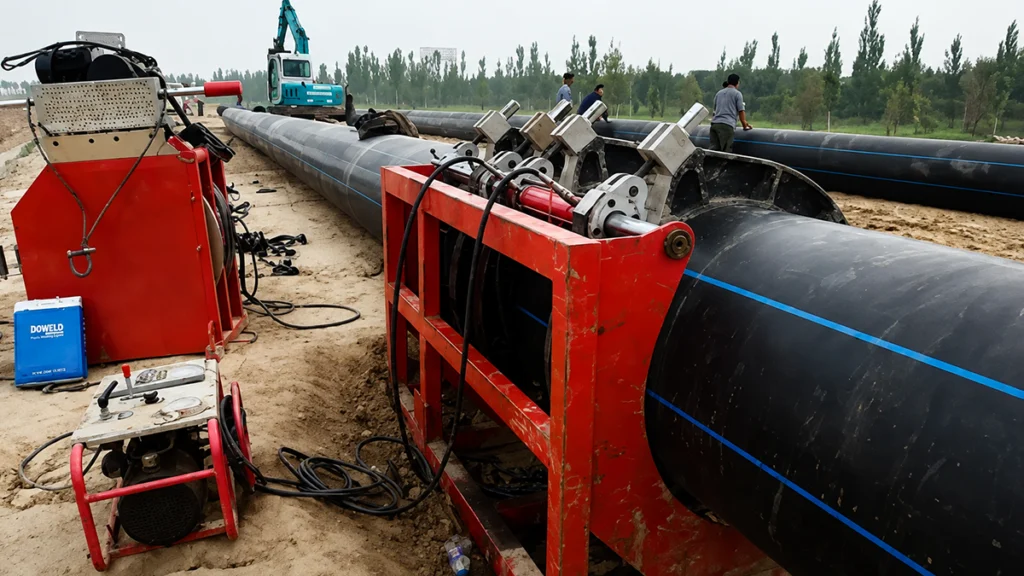
How to Choose Between Manual and Hydraulic Options
Picking between manual and hydraulic models means navigating around common procurement traps that routinely wreck pipeline integrity and blow up project timelines.
Buying based only on machine price
Shopping strictly by the lowest sticker price is a highly toxic strategy. Sacrificing long-term ROI for cheap, off-brand equipment almost always results in failed welds. You end up bleeding cash through extensive project delays, skyrocketing labor costs, constant mechanical breakdowns, and endless joint rework.
Overlooking spare parts and training support
Let’s face it: even top-tier industrial gear takes a beating and occasionally breaks down in harsh trench environments. If you get stuck with zero after-sales support, shady warranty terms, or unavailable spare parts (like fresh PTFE plates or hydraulic seals), your pipeline project grinds to a halt. You’ll end up burning thousands of dollars a day on idle labor.
Not matching the machine to pipe SDR and site workload
Deploying a manual butt fusion machine for low SDR, thick-walled pipes or high-volume contracts is a brutal mismatch. It triggers rapid operator burnout, weak joining pressure, and wildly inconsistent joints. Your HDPE pipe jointing machine’s mechanical capabilities must perfectly align with the physical resistance of the specific pipe you are fusing.
Best choice for occasional repair and small projects
If your goal is to mitigate risk on smaller-scale operations, a high-quality manual 200mm butt fusion machine is your best bet. It hands you exactly the functionality you need without the heavy maintenance overhead of hydraulic systems. For occasional repair work, it simply cannot be beaten.
Common Buying Mistakes and Quality Risks
To sidestep these industry pitfalls, stick to these final selection guidelines. They will ensure you procure the exact equipment your pipeline infrastructure demands.
Best choice for contractors and pipeline installers
If you are a professional contractor, a utility company, or a dedicated pipeline installer, a hydraulic 200mm butt fusion machine is unequivocally the right move. It provides the relentless reliability, rapid fusion speed, and strict parameter compliance required to guarantee a pipeline’s integrity over a 50-year lifespan.
Information to prepare before requesting a quote
Want an accurate quote and a rock-solid HDPE pipe jointing machine recommendation? Have this data ready for your supplier: your exact pipe diameters (63-200mm), the SDR ratings, your specific project application (water, gas, mining), your desired automation tier (manual or hydraulic), voltage requirements, and your final destination port to nail down shipping logistics.
Final Recommendation: Which 200mm HDPE Welding Machine Should You Choose?
- Select a Manual Butt Fusion Machine if: Your capital is tightly restricted, you’re knocking out occasional field repairs, navigating severely restricted trench spaces, and fusing thinner-walled (high SDR) pipes where no one is demanding absolute pressure data logs.
- Select a Hydraulic Butt Fusion Machine if: You operate as a professional pipeline contractor, need massive daily joint output, must hit ISO 21307 or ASTM F2620 compliance, are fusing thick-walled pipes, and want to completely eliminate operator fatigue to secure 100% repeatable, leak-proof joints.
- Focus on Total ROI: Look beyond the initial purchase price. Heavily factor in daily labor efficiency, the elimination of rework, and long-term spare parts costs when making your ultimate procurement choice.
Frequently Asked Questions
Q1: What size pipes can a 200mm HDPE pipe welding machine weld?
A standard 200mm unit is engineered to fuse HDPE, PE, and PP pipes spanning from 63mm up to 200mm in outside diameter. Out of the box, it generally packs interchangeable aluminum clamp inserts for 63, 75, 90, 110, 125, 140, 160, 180, and 200mm sizes. This flexibility lets a single machine tackle multiple pipeline dimensions across a single job site.
Q2: Is a manual HDPE pipe welding machine suitable for professional pipeline projects?
Yes, but only in very specific contexts. Manual rigs work beautifully for low-pressure agricultural irrigation, temporary water bypass lines, and small-scale gravity drainage where nobody asks for strict pressure data logs. However, if you are laying high-pressure municipal water or gas distribution lines, you must step up to hydraulic machines to satisfy professional engineering standards.
Q3: Why is a hydraulic HDPE welding machine more expensive than a manual one?
Hydraulic machines pack a lot of complex, heavy-duty hardware. You’re paying for an electric hydraulic pump station, high-pressure cylinders, digital pressure gauges, and a highly reinforced four-clamp frame. These components completely automate the pressure application, delivering a precise, repeatable fusion force that a manual hand-crank simply cannot replicate. That advanced engineering justifies the higher manufacturing and retail cost.
Q4: How do I choose between manual and hydraulic butt fusion machines?
Let your project frequency, pipe SDR, and budget drive the decision. Go manual if you have a tight budget, only do occasional repairs, and work with thin-walled pipes. Pivot to hydraulic if you face continuous daily welding, thick-walled pipes (low SDR), strict ISO/ASTM standard compliance, or if minimizing operator fatigue is the key to your project’s profitability.
Q5: What power supply is needed for a 200mm HDPE pipe welding machine?
The vast majority of 200mm HDPE welding machines run on a standard single-phase 220V power supply. Typically, the heating plate pulls about 2000W, while the facing tool motor draws 750W. Hydraulic models will pull a bit more juice to run the pump station. Generally, a standard portable construction generator provides more than enough power to run the entire setup out in the dirt.
Q6: What factors affect the price of a 200mm HDPE pipe fusion machine?
Pricing swings based on the automation level (manual versus hydraulic) and the underlying quality of the raw materials—like using premium ZL104 aluminum instead of cheaper, brittle alloys. Costs are also driven by the origin of the electrical and hydraulic internals, the lifespan of the PTFE heating plate coating, and whether the rig boasts legitimate CE and ISO safety certifications.
Q7: Can one machine weld different HDPE pipe SDR ratings?
Absolutely. A single machine can handle various SDR ratings (different wall thicknesses) just by tweaking the heating time and fusion pressure. However, there is a hard rule: never butt-fuse two pipes of *different* SDR ratings together. Mismatched wall thicknesses will instantly create a weak, non-compliant joint that is practically guaranteed to fail.
Q8: What should I check before ordering an HDPE pipe welding machine from a supplier?
Before you wire any funds, verify the machine’s actual welding range (63-200mm), the heating plate wattage, the frame’s material grade, warranty specifics, and how fast they can ship spare parts. Also, feed your supplier your exact pipe SDR, intended project application, and destination port. This ensures you get the right configuration and a dead-accurate freight quote.
Conclusion
Nailing down the right 200mm HDPE Pipe Welding Machine stands as a critical procurement choice that heavily influences pipeline integrity, labor efficiency, and your ultimate project ROI. Manual butt fusion machines carve out a highly portable, cost-effective niche for small contractors, fast field repairs, and low-pressure environments. But when it comes to professional pipeline installations, municipal water networks, and aggressive industrial fluid transfer, hydraulic butt fusion machines easily take the crown as the superior investment.
By stripping away operator fatigue and automating pressure control, hydraulic rigs lock in compliance with unforgiving global standards like ISO 21307 and ASTM F2620, ensuring every joint is perfectly leak-proof. Ultimately, procurement teams have to look past the initial sticker shock. Evaluating the true cost of ownership, matching pipe SDR compatibility, and vetting the supplier’s after-sales support network are the real keys to securing long-term operational success.
Let our experts help you choose the right equipment for your project
Contact Our Engineering Team