
HDPE Pipe Jointing Machine in Kenya: Water Pipeline Installation Guide
Table of Contents
HDPE Pipe Jointing Machine in Kenya helps buyers choose the right fusion equipment for water pipeline installation, compare machine types and specs, avoid costly joint defects, and plan reliable project execution.
What Is an HDPE Pipe Jointing Machine?
What does the machine actually do?
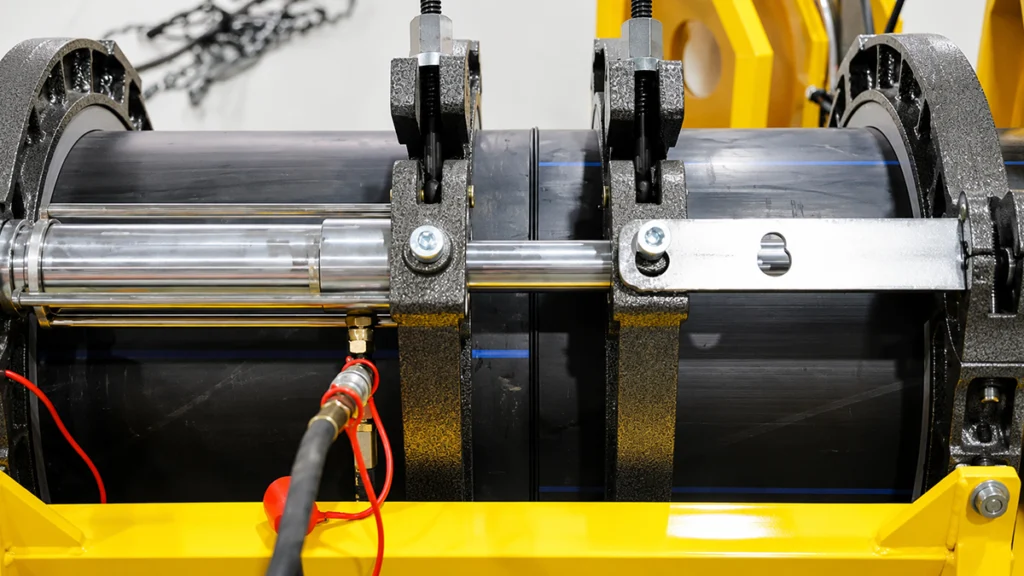
At its core, an HDPE pipe jointing machine in Kenya seamlessly connects high-density polyethylene pipes. It does this by heating the pipe ends until the plastic molecules melt. Once the material hits that precise target temperature, the equipment drives the surfaces together using controlled hydraulic or manual pressure. As the plastic cools down, the polymer chains intertwine and fuse. You’re left with a permanent, monolithic joint that boasts the exact same strength and pressure rating as the original pipe.
Is the same machine used for all HDPE pipe sizes?
Not at all. No single piece of equipment can handle every pipe diameter out there. Pipeline contractors have to carefully match their machinery to the specific outside diameter (OD) and Standard Dimension Ratio (SDR) of their current project. Think about massive municipal water mains. Those require heavy-duty hydraulic butt fusion machines built to deliver immense clamping forces. On the flip side, smaller indoor plumbing runs or complex, tight trench layouts rely on compact electrofusion welders or socket fusion tools designed specifically for confined spaces.
How is joint quality measured after fusion?
Field crews verify joint integrity through a strict two-step process. First comes the visual inspection. Operators scrutinize the weld bead to ensure uniform roll-back, correct width, and a complete lack of bubbles, cracks, or dirt. But looks aren’t everything. Following visual approval, the newly fused pipeline must pass a mandatory hydrostatic pressure test. By subjecting the line to pressures well above normal operating limits, contractors can absolutely guarantee the structural integrity and complete sealing of the connection before any water actually flows.
Why Joint Quality Matters in Kenyan Water Projects
Why are leak-free joints critical for Kenyan water pipelines?
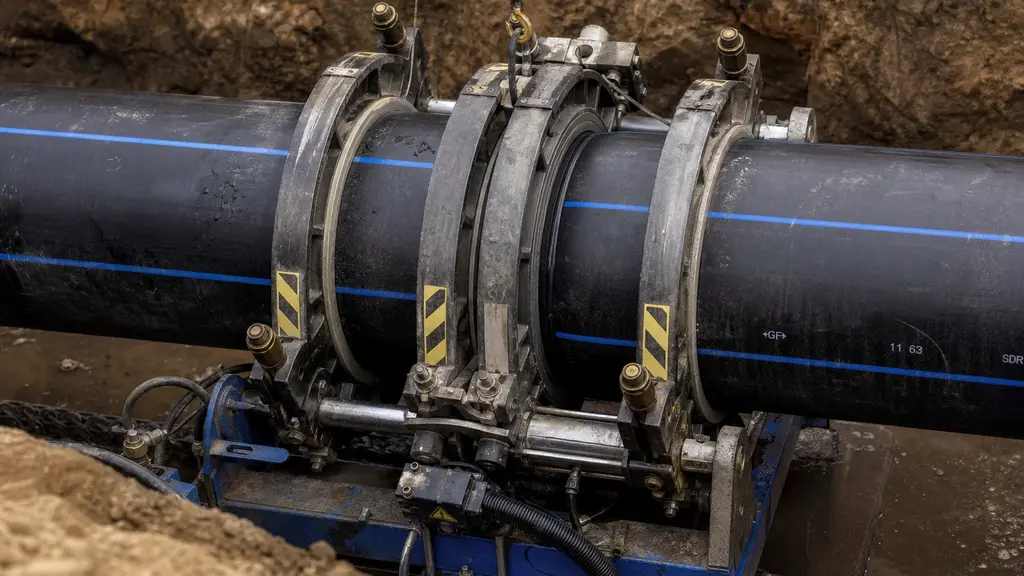
Leak-free joints form the absolute backbone of both urban water supply grids and agricultural irrigation networks. When a joint fails, pressurized water escapes rapidly. This triggers massive non-revenue water loss, localized flooding, and a sharp drop in delivery capacity downstream. In critical infrastructure setups, a structural failure at the joint level can literally force entire municipal grids offline. That creates immediate, severe public health and safety risks that contractors simply cannot afford.
Which site conditions increase jointing risk?
Kenyan pipeline projects rarely happen on perfectly flat, clean ground. Crews constantly battle challenging terrain—think hard rock, steep gradients, and remote rural stretches that demand long-distance transmission lines. These harsh environments drastically elevate the risk of pipe misalignment. Add windblown dust and sudden moisture to the mix, and the welding process gets even tougher. Without rugged, highly portable equipment built to stabilize pipes in uneven trenches, these environmental factors will ruin the molecular fusion of the PE material.
How does poor joint quality raise lifecycle cost?
Substandard fusion leaves behind microscopic voids and structural weak points. Under continuous hydrostatic pressure, these flaws will inevitably fail. When they do, the fallout is expensive. You’re looking at emergency excavations, sudden service disruptions, and the heavy cost of replacement fittings. Over a pipeline’s projected 50-year lifespan, the mounting expenses of repairing botched joints—coupled with endless water loss—will completely wreck a project’s return on investment (ROI). It sends the total lifecycle cost through the roof.
Factory-direct pricing with technical consultation included
Get Your Free QuoteButt Fusion, Electrofusion, or Socket Fusion: Which Option Fits Your Project?
What is the difference between butt fusion and electrofusion?
Butt fusion relies on a PTFE-coated heating plate to directly melt the raw ends of two pipes, followed by mechanical pressure to force them together. It’s highly effective but demands enough physical space for the butt fusion machine chassis and pipe movement. Electrofusion takes a different route. It uses specialized fittings packed with embedded electrical resistance coils. The butt fusion welding machine delivers a precise voltage to heat these coils, melting both the inside of the fitting and the outside of the pipe at the exact same time. This makes it the perfect solution for tight, confined spaces where shifting the pipes is impossible.
When is socket fusion the better choice?
Socket fusion shines when you’re working with small-diameter pipelines, usually falling between 20mm and 110mm. You’ll see this method heavily utilized in indoor plumbing, localized distribution branches, and smaller agricultural setups. The process involves heating the outside of a pipe spigot along with the inside of a fitting socket. It keeps the pipeline layout flexible and requires practically zero heavy HDPE pipe welding machinery, allowing a single operator to knock out installations rapidly.
Which method works best for municipal, borehole, or irrigation projects?
| Project Type | Recommended Method | Primary Advantage | Typical Pipe Range |
|---|---|---|---|
| Municipal Water Mains | Butt Fusion | Delivers maximum joint strength; highly cost-effective for long, straight runs without extra fittings. | 160mm – 1200mm+ |
| Borehole Abstraction | Electrofusion | Offers exceptional precision for vertical drops; ideal for cramped wellhead environments. | 63mm – 225mm |
| Agricultural Irrigation | Socket / Electrofusion | Enables rapid deployment for complex branching and smaller distribution networks. | 20mm – 110mm |
How Butt Fusion Machine Works on HDPE Pipes
What are the main parts of a butt fusion machine?
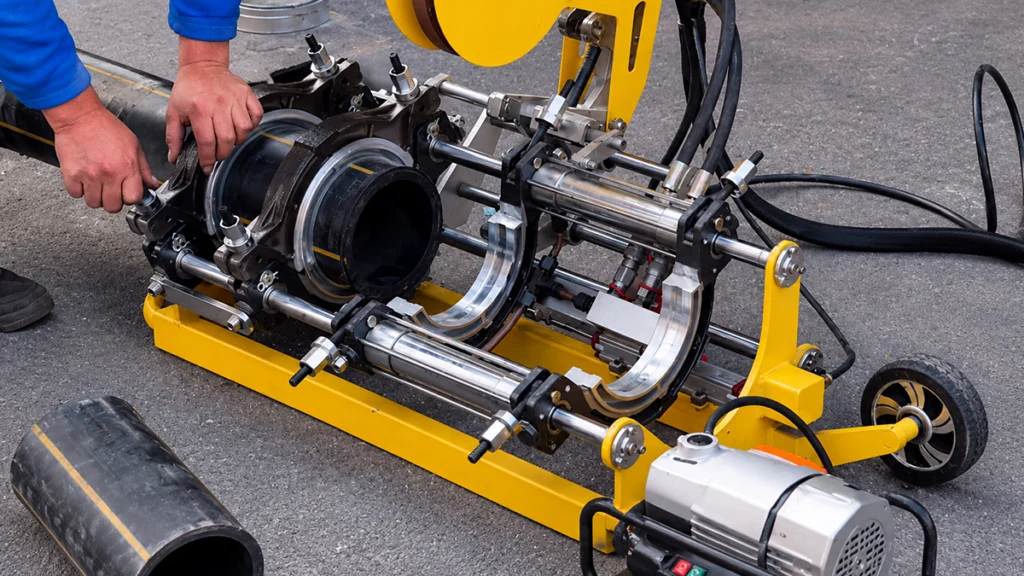
A standard butt fusion machine used across Kenya breaks down into four essential components. First, the chassis houses specialized self-aligning clamps that grip and lock the pipes into perfect alignment. Next, the facing tool (often called a trimmer) shaves the pipe ends so they sit perfectly flat and parallel. Then comes the PTFE-coated heating plate, which handles the actual melting of the pipe surfaces. Finally, the hydraulic or manual pressure unit takes over, controlling the exact force applied during the critical fusion and cooling stages.
What happens during heating, fusion, and cooling?
During the heating phase, the plate brings the pipe ends up to a blistering 220°C–240°C, forming a uniform melt ring. Once heated, the fusion phase kicks in. The operator rapidly yanks the heater out, and the hydraulic unit drives the molten ends together at a strictly controlled pressure (usually 0.2 MPa to 0.4 MPa). Then comes cooling. The newly formed joint must sit completely immobilized under continuous pressure until the polymer matrix solidifies. You calculate this duration based on the pipe’s wall thickness—usually wall thickness multiplied by 10 seconds.
What makes a welded joint strong and consistent?
True consistency and structural strength boil down to one thing: strict adherence to international welding standards like ISO 21307 and DVS 2207. A joint only achieves monolithic strength when the operator maintains total control over the heating temperature, the interfacial pressure, and the undisturbed cooling time. Slip up on any of these parameters, and you disrupt the molecular entanglement of the high-density polyethylene. The result? A brittle, weak connection guaranteed to fail.
Get detailed specs and custom configuration options
Request Technical SpecificationsHow to Choose the Right Machine for Your Project
Which pipe diameter range do you need to cover?
Your pipe fusion machine capacity will entirely dictate your procurement strategy. Manual units generally handle the smaller 20-63mm pipes. However, for standard Kenyan agricultural and municipal distribution lines, contractors need hydraulic butt fusion machines that cover the 63-200mm or 160-315mm ranges. Tackling major transmission pipelines? You’ll need heavy-duty units built to weld massive 630-1200mm pipes. By selecting a butt fusion machine with the right array of insert sizes, you guarantee versatility across multiple phases of your project.
Is the machine portable enough for field work?
Out in the field, mobility directly drives your daily productivity. If your crews are tackling remote trench work, prioritize HDPE pipe welding machines engineered with lightweight aluminum frames or wheeled carriages. Compact, modular designs are a game-changer. They allow operators to lower the chassis directly into narrow trenches, completely eliminating the grueling task of dragging long, heavy strings of welded pipe over abrasive rocks and rough terrain.
Do you need manual, hydraulic, or automatic control?
Manual butt fusion machines are certainly easy on the budget, but they rely 100% on the operator’s physical strength, which limits them to small diameters. Hydraulic machines step up the game by delivering the consistent, measurable pressure required for medium to large pipes, keeping you compliant with EN 12007 standards. At the top of the food chain are CNC (Computer Numerical Control) automatic machines. These premium units offer automated pressure regulation, eliminate human error, and provide comprehensive datalogging for highly regulated, top-tier infrastructure projects.
What power supply and generator compatibility should you confirm?
Site power reliability can make or break your timeline. Smaller butt fusion machines run just fine on standard 110V or 220V single-phase power, but heavy-duty industrial rigs demand 380V three-phase power. Before purchasing, buyers must check the total kilowatt (kW) draw of both the heating plate and the hydraulic pump to guarantee it plays nicely with their on-site diesel generators. A generator has to deliver rock-solid voltage. Any fluctuation can cause the heating plate temperature to drop right in the middle of a critical fusion cycle.
Key Technical Specifications and Accessories to Check Before Buying
Which parameters matter most: heater plate, pressure, clamps, and voltage?
Procurement engineers sizing up an HDPE pipe jointing machine in Kenya must zero in on a few critical technical parameters.
| Component | Critical Specification | Operational Impact |
|---|---|---|
| Heater Plate | 220°C – 240°C range, PTFE coated | Guarantees optimal PE melting without degrading the material. |
| Hydraulic System | 0.2 MPa – 0.4 MPa sustained | Eliminates internal voids; forces true molecular fusion. |
| Clamps | Self-aligning, heavy-duty aluminum | Prevents disastrous high-low misalignment during the weld. |
| Voltage | 220V/380V with surge protection | Shields sensitive electronics from erratic generator power. |
Should you check calibration, warranty, and spare parts support?
Dropping capital on premium brands like McElroy, Ritmo, GF, or even rugged value-tier options like Riyang demands solid local backing. Buyers must ensure the supplier actually offers factory-certified calibration services and transparent warranty terms. Just as importantly, you need immediate access to hydraulic seals, heating elements, and trimmer blades right in Nairobi or Mombasa. Equipment sitting idle because a cheap spare part is stuck in transit will quickly obliterate your project’s ROI.
Which accessories are essential for on-site installation?
Pulling off an efficient pipeline installation requires more than just the core pipe fusion machine. You need the right accessories. Dataloggers are vital for GPS and barcode tracking of your welds, while de-beading tools help optimize internal flow. Don’t forget specialized pipe scrapers for prepping electrofusion joints. Taking it a step further, integrating pipe rollers and adjustable pipe racks can drastically cut down drag resistance, bumping your crew’s productivity from 20 joints a day to well over 29.
Water Pipeline Installation Workflow: From Pipe Prep to Pressure Test
How do you prepare pipes and the work area?
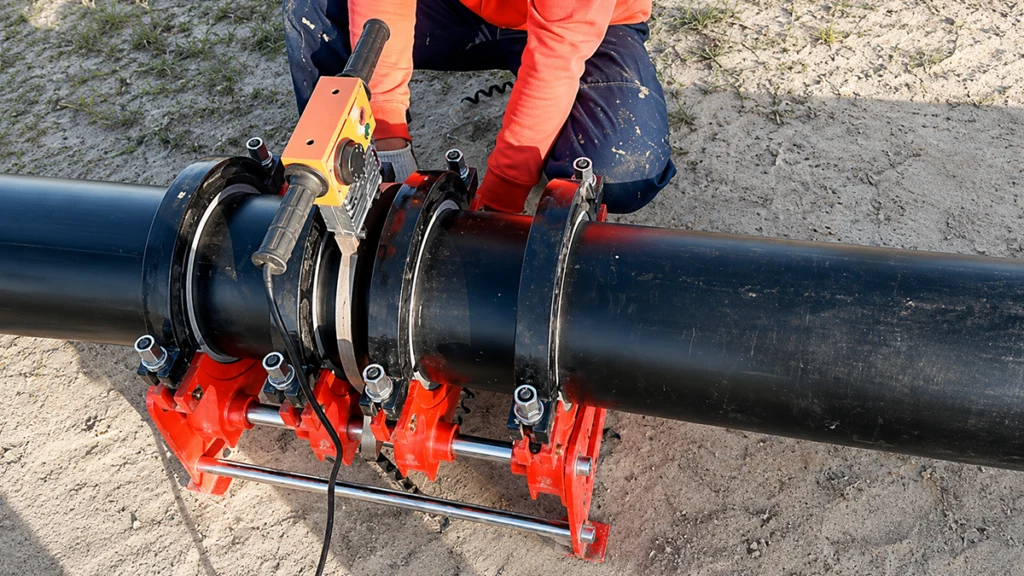
Flawless preparation dictates the success of the fusion. Operators have to inspect the pipes for any deep gouges, slice them to the exact length using dedicated pipe cutters, and lock them firmly into the butt fusion welding machine clamps. Next, they plane the pipe ends until continuous, unbroken ribbons of plastic peel away. Finally, those freshly planed surfaces get wiped down with isopropyl alcohol to guarantee they are 100% free of dust, oil, and impurities. Oh, and the work area? It needs to be well-ventilated while remaining shielded from wind and rain.
What is the correct fusion sequence?
Nailing the fusion sequence requires a strict, rhythmic cadence. Step one: align the pipes in the clamps and visually verify there is absolutely zero gap between them. Step two: drop in the heating plate and apply drag pressure until a uniform bead rolls back, then immediately back off to the lower heat soak pressure. Step three: pull the heater plate out lightning-fast (literally within seconds) and smash the molten pipe ends together at your calculated fusion pressure, holding steady between 0.2 and 0.4 MPa.
How should cooling, pressure testing, and commissioning be handled?
During the cooling phase, the hydraulic system has one job: maintain continuous pressure without introducing any external stress or bending to the pipeline. Yanking the pipe out of the clamps too early will shatter the cooling polymer chains. Once everything is fully cooled down to ambient temperature, operators perform a visual check of the double bead. The absolute final hurdle before commissioning the line is the hydrostatic pressure test. By holding water at 1.5 times the intended operational pressure, crews can officially certify the network for active duty.
Common Mistakes, Risks, and Quality Checks
What causes weak or leaking joints?
Weak joints almost always trace back to parameter violations. Crank the heating temperature too high, and the PE material oxidizes and burns. Drop it too low, and the plastic molecules refuse to integrate, leaving you with something that acts like a fragile cold glue joint. Furthermore, if you don’t apply enough hydraulic pressure during the fusion phase, trapped air won’t get pushed out. That leaves internal voids, paving the way for catastrophic seal failure once the line goes under operational load.
How can poor alignment or contamination be detected?
Quality control hinges entirely on reading the weld bead. Poor alignment creates a glaring “high-low” mismatch, where one side of the bead bulges significantly larger than the other. If dust, moisture, or oil snuck into the weld, the bead will look porous, bubbly, or even cracked. The rules here are uncompromising: according to ASTM F2620 guidelines, any joint showing these visual defects must be completely cut out and re-welded from scratch.
What should operators verify before restarting work?
Before kicking off a new fusion cycle—especially after a lunch break or shift change—operators must verify that the generator output is rock steady. They need to ensure the temperature settings are still locked exactly between 220°C and 240°C. They also must tap the hydraulic pressure gauges to confirm accurate readings. Finally, a physical inspection of the heating plate is mandatory. The PTFE coating must be clean, entirely undamaged, and completely free of any melted plastic residue left over from previous welds.
Cost, Supplier Evaluation, and Final Buying Checklist in Kenya
What affects the machine price in Kenya?
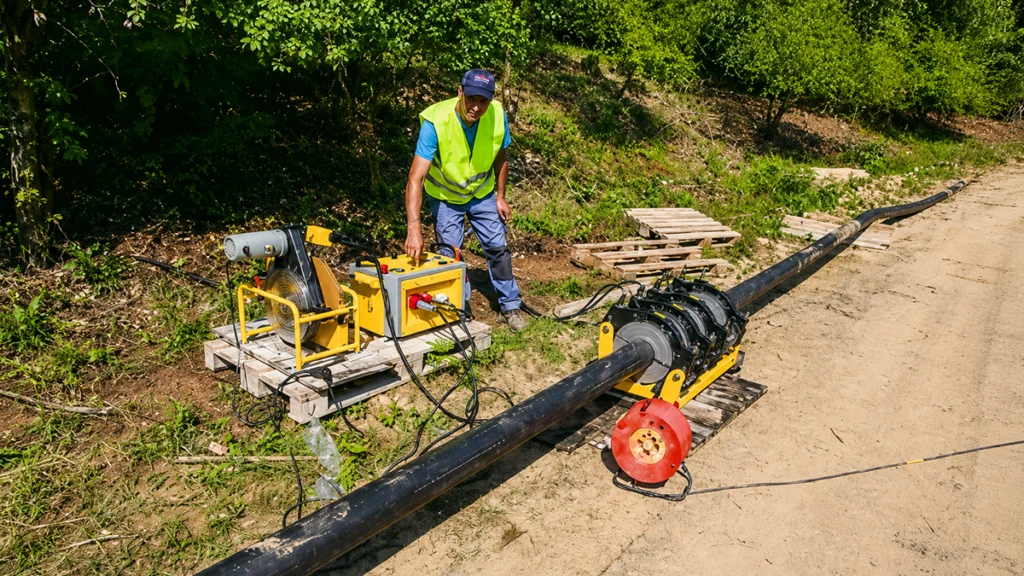
The price of an HDPE pipe welding machine in Kenya swings wildly based on size capacity, the level of automation, and where it was manufactured. Entry-level manual PPR/HDPE welders run cheap, usually hovering between KSh 3,900 and KSh 4,500. Step up to professional hydraulic butt fusion machines (like the 63-200mm range), and you’re looking at a heavier investment, typically spanning KSh 175,000 to KSh 250,000 or more. Fully automated CNC butt fusion machines built for massive infrastructure grids command top-tier premium pricing, largely driven by their advanced datalogging tech.
Should you buy locally or import?
Sourcing from a local supplier right in Nairobi brings massive advantages: faster lead times, instant access to spare parts, and boots-on-the-ground technical support. On the other hand, importing directly from factories in Europe or China can land you better upfront pricing, especially on large-capacity hydraulic or CNC rigs. But tread carefully. Buyers going the import route have to accurately calculate shipping logistics, heavy customs duties, and the very real risk of delayed after-sales support if something breaks.
What should buyers ask about training, MOQ, and lead time?
Procurement teams need to hold suppliers accountable. Always ask upfront if the vendor provides comprehensive operator training. Remember, human error is the number one cause of joint failure. If you’re importing specialized electrofusion fittings or unique accessories, nail down the Minimum Order Quantity (MOQ) early. Lastly, demand absolute clarity on lead times. You need to guarantee that the equipment delivery perfectly aligns with your trenching and installation schedule.
What documents should you request before purchase?
To lock in regulatory compliance and ensure site safety, buyers must demand specific paperwork before ever issuing a purchase order. Ask for CE certification to prove the equipment meets strict manufacturing safety standards. Request documented proof of ISO 12176 compliance, which directly governs the specs for polyethylene fusion gear. Finally, double-check that the butt fusion machine’s operational manual aligns perfectly with DVS 2207 welding guidelines. That is the only way to guarantee theHDPE pipe jointing machine will pass municipal engineering audits.
FAQ
Q1: Which HDPE pipe jointing machine is best for water pipeline installation in Kenya?
When tackling large municipal water mains and long-distance transmission lines, a hydraulic butt fusion machine stands out as the premier choice, offering immense joint strength and great cost-efficiency. However, if you are navigating complex borehole installations, vertical drops, or cramped trench environments where shifting the pipe is impossible, an electrofusion machine steps in to provide the exact precision and flexibility you need.
Q2: What pipe sizes can a butt fusion machine handle?
Capacities shift dramatically depending on the specific model. Small manual units easily handle 20mm to 63mm pipes. The standard hydraulic machines deployed across most Kenyan projects typically cover ranges of either 63mm-200mm or 160mm-315mm. For massive infrastructure jobs, heavy-duty industrial butt fusion machines are brought in to weld colossal pipes ranging from 630mm all the way up to 1200mm and beyond.
Q3: How much does an HDPE pipe jointing machine cost in Kenya?
Pricing scales directly with the machine’s physical size and level of automation. Basic manual welders are highly affordable, ranging from KSh 3,900 to KSh 4,500. Professional hydraulic butt fusion machines geared for standard water pipelines (63-200mm) generally run between KSh 175,000 and KSh 250,000+. If you are eyeing high-end CNC machines for major municipal overhauls, expect a significantly higher capital investment.
Q4: Is butt fusion better than electrofusion for Kenyan water projects?
Neither method is universally superior; they simply cater to different operational realities. Butt fusion is incredibly cost-effective and structurally robust for long, straight municipal pipelines because it eliminates the need for extra fittings. Conversely, electrofusion is the undisputed champion for confined spaces, emergency repairs, and intricate borehole layouts where maneuvering a bulky hydraulic chassis just isn’t feasible.
Q5: What power supply is needed for HDPE fusion equipment on site?
Smaller manual and electrofusion units generally plug right into standard 110V or 220V single-phase power. Large hydraulic butt fusion rigs, however, demand serious juice: 380V three-phase power. Contractors must rigorously verify that their on-site diesel generators can deliver stable voltage and boast enough kilowatt (kW) capacity to power both the heating plate and the hydraulics without a single fluctuation.
Q6: How do you check if an HDPE joint is strong and leak-free?
You start with a detailed visual inspection of the weld bead, looking for uniform roll-back, the correct width, and absolutely zero bubbles or dirt contamination. Once it passes the visual check, the pipeline must endure a mandatory hydrostatic pressure test. By pressurizing the line to 1.5 times its designed operational load, crews can verify a flawless, leak-free seal before officially commissioning the network.
Q7: Can one machine handle both water and irrigation pipelines?
Absolutely, as long as the machine’s clamping range matches the pipe diameters required for both jobs. A versatile hydraulic butt fusion machine built to cover 63mm to 200mm can easily tackle standard municipal water distribution lines while also handling main agricultural irrigation headers. This kind of cross-compatibility maximizes your equipment’s ROI across entirely different sectors.
Q8: What spare parts and training should a buyer ask for?
Smart buyers demand local access to critical wear parts, specifically hydraulic seals, PTFE-coated heating elements, and sharp trimmer blades. Just as crucially, you must insist on factory-certified operator training. Strict, unwavering adherence to temperature and pressure parameters is literally the only way to prevent weak joints and disastrous pipeline blowouts.
Conclusion
Selecting the ideal HDPE pipe jointing machine in Kenya is a massive procurement decision that fundamentally dictates the lifespan and financial success of any water infrastructure project. For long-distance municipal pipelines, hydraulic butt fusion machines deliver unparalleled joint strength and financial efficiency. But this only holds true if operators religiously stick to the 220°C–240°C temperature window and the 0.2-0.4 MPa pressure standards outlined by ISO 21307 and DVS 2207. On the flip side, electrofusion equipment stands as the ultimate engineering solution for tight borehole setups and highly complex trench routing.
Moving beyond the raw technical specs, a successful pipeline rollout relies on flawless workflow execution—from the initial pipe prep all the way to the final hydrostatic pressure test. Procurement teams need to judge suppliers on more than just the lowest sticker price. You have to evaluate their capacity to deliver immediate spare parts, factory-certified calibration, and hands-on operator training. By securing rugged, standards-compliant fusion gear and the right handling accessories, contractors can wipe out the risk of devastating leaks, speed up their installation timelines, and guarantee the long-term resilience of Kenya’s most vital water networks.
Let our experts help you choose the right equipment for your project
Contact Our Engineering Team