
630mm Butt Fusion Machine for Large Diameter HDPE Pipeline Projects
Table of Contents
630mm Butt Fusion Machine guide explains specifications, working principle, applications, buying criteria, and jobsite best practices for large-diameter HDPE pipeline projects, helping contractors and procurement teams choose the right equipment.
What Is a 630mm Butt Fusion Machine?
A 630mm butt fusion machine is a heavy-duty industrial welder designed to connect large-diameter thermoplastic pipes using exact levels of heat and pressure. The process is straightforward but highly effective: the equipment melts the pipe ends and drives them together under strict hydraulic force. The result? A continuous, seamless pipeline. Contractors rely on this butt fusion welding machinery as the go-to joining solution for massive infrastructure projects because it completely replaces mechanical fittings and wipes out the risk of long-term leaks.
What pipe sizes and materials does it support?
This HDPE pipe jointing machine specifically tackles large-diameter applications. It easily handles pipes ranging from 315mm to 630mm in outer diameter (DN315–DN630). On the material side, you can use it with a wide array of industrial-grade thermoplastics. That includes Polyethylene (PE), High-Density Polyethylene (HDPE), Polypropylene (PP), and Polyvinylidene Fluoride (PVDF).
Why is 630mm a key capacity for HDPE projects?
Hitting the 630mm mark represents a major threshold in infrastructure engineering. It effectively bridges the gap between standard distribution lines and massive transmission arteries. Utility contractors actively seek out 630mm equipment for heavy-duty mining networks, main water transmission lines, and high-stakes industrial pressure pipes. In these environments, fluid volume and flow velocity demand a seriously large cross-sectional area.
What jobs is it designed to handle?
Manufacturers purpose-build 630mm HDPE butt fusion machines for high-stakes infrastructure. Think municipal water mains, sprawling cross-country gas distribution lines, and industrial chemical transport networks that demand extreme pressure ratings like SDR 11. These rugged butt fusion welding machines thrive in harsh, deep-trench environments where they must manipulate the immense weight and rigid nature of thick-walled HDPE pipe.
How Butt Fusion Works in HDPE Pipe Joining
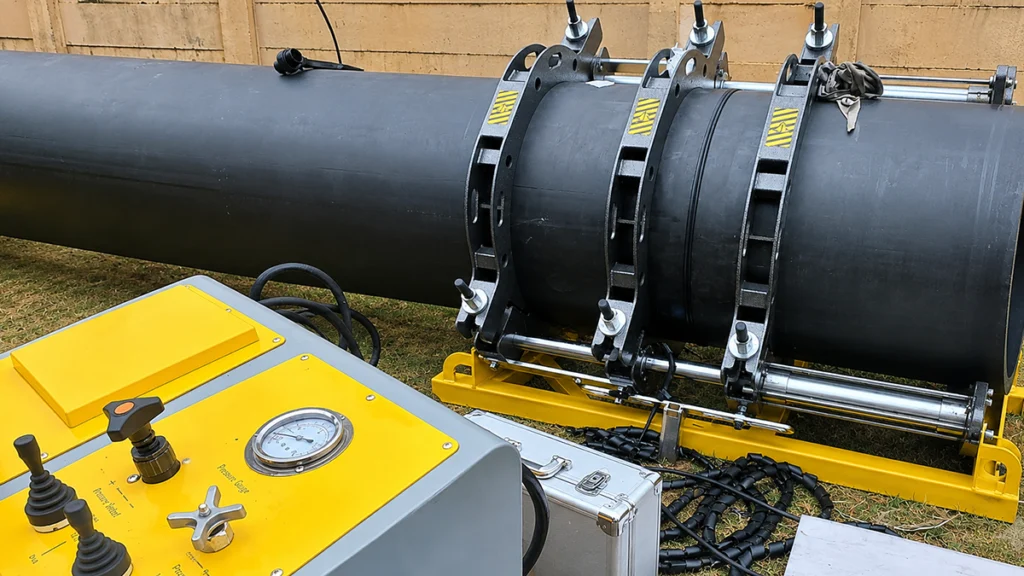
Thermoplastic welding demands absolute thermal and mechanical synchronization. To succeed, the HDPE pipe jointing machine runs through a strictly governed sequence. It transitions the solid polymer into a viscous state before fusing the molecular chains directly across the joint interface.
What happens during heating, alignment, and fusion?
The entire operation follows a rigid five-stage workflow. First, beveling removes surface gaps to guarantee flush contact between the two ends. Next comes heat absorption. A PTFE-coated plate melts the pipe faces while the system drops the pressure to near zero. Then, the changeover phase kicks in, requiring operators to yank the heating plate out as fast as possible. Finally, during fusion and cooling, the HDPE pipe welding machine ramps up the hydraulic pressure to forge the molten ends together. It holds that exact pressure until the polymer turns completely solid.
Why temperature and pressure control matter
Thermoplastic joining is essentially “post-melt welding.” If the material flows too much during its viscous state, it ruins molecular diffusion. You must tightly control the pressure to keep the molten flow within a very specific range. Drop the interfacial pressure too low, and your joint loses density. Push it too high, and the butt fusion machine squeezes the molten material right out of the fusion zone, leaving you with a weak cold weld. Changeover time is equally critical. Drag out the transition, and the molten ends will form a cold skin that stops the molecular chains from locking together.
What makes a joint strong and leak-resistant?
When you execute the weld according to ISO 21307 or DVS 2207-1 standards, the heat-fused joint becomes entirely self-restrained and 100% leak-free. As the material cools, the molecular chains from both pipe ends intertwine and crystallize. The finished joint actually matches—or even exceeds—the strength of the original pipe, holding up flawlessly against intense tension and internal pressure.
Factory-direct pricing with technical consultation included
Get Your Free QuoteMain Components and Machine Configuration
The sheer size of large-diameter butt fusion equipment demands serious mechanical muscle to move heavy pipes. At the same time, it needs highly precise control systems to manage the complex thermodynamic process.
What are the core components of the machine?
The primary setup features a heavy-duty steel frame, a hydraulic power station, an electric milling cutter (or facer), a PTFE-coated heating plate, and various clamping and guiding devices. The frame locks the pipe in a coaxial position. Meanwhile, the milling cutter shaves down the ends to create a perfectly parallel finish. The heating plate pushes out uniform thermal energy, and the hydraulic station delivers the mechanical brute force required to forge the weld.
Hydraulic system vs manual system: what is the difference?
For a 630mm butt fusion machine, hydraulic systems aren’t optional—they are mandatory. Hydraulic stations generate automated, trackable power for clamping and maintain pinpoint pressure control throughout the fusion and cooling phases. Manual systems, on the other hand, rely on sheer human strength and only offer rough temperature tweaks. While a manual setup works fine for small pipes under 160mm, it completely fails against the massive weight and pressure demands of a 630mm pipeline.
Which accessories are essential for field work?
Rough field conditions call for tough, high-performance accessories. You need high-speed carbon steel blades on a chain-driven milling cutter to guarantee clean shavings. Quick-connect flat-type hydraulic fittings are also vital to stop fluid leaks, especially in environmentally sensitive zones. Finally, don’t overlook independent dual-channel timers with loud audible alarms. They keep operators strictly aligned with the required heat and soak schedules.
Technical Specifications to Check Before Buying
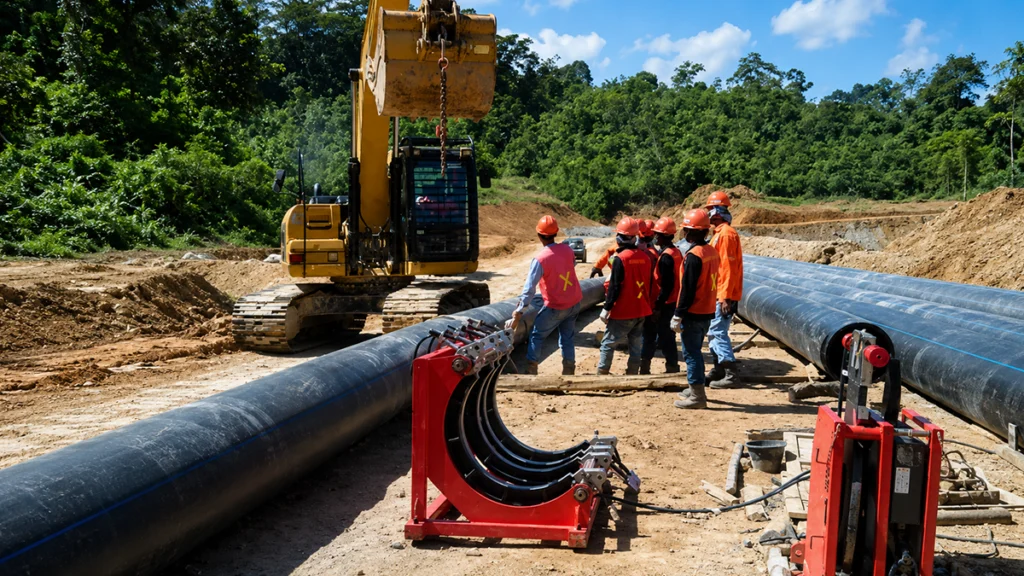
Buying equipment for large-scale pipeline jobs means you need to scrutinize the mechanical and electrical specs. Get the power supply or hydraulic capacity wrong, and you will instantly cripple jobsite production.
Which technical parameters matter most?
Engineers have to evaluate three main things: temperature range, hydraulic cylinder capacity, and total power draw. The heating system must hold a precise temperature window between 0 and 300°C. For the 630mm class, the hydraulic cylinder’s total piston area sits right around 22,306 mm². This specific metric dictates the absolute maximum interfacial pressure the butt fusion machine can push against the pipe ends.
How do heating plate, clamp system, and pressure range affect output?
The heating plate has to push out perfectly uniform heat to avoid creating weak cold spots. On a standard 630mm unit, expect the heating plate power to hover around 9.2kW. Next comes the clamp system, which must grip the pipe tightly without causing deformation. Finally, the 1.5kW hydraulic station has to maintain a rock-solid pressure level during the prolonged cooling cycles that thick-walled pipes require.
What power supply and generator setup is required on site?
Huge HDPE pipe welding machines pull huge electrical loads. A standard 630mm butt fusion setup needs a reliable three-phase 380V, 50Hz power supply.
| Component | Power Requirement |
|---|---|
| Heating Plate | 9.2 kW |
| Milling Cutter | 1.5 kW |
| Hydraulic Station | 1.5 kW |
| Total System Power | 12.2 kW |
Contractors must size their mobile site generators appropriately. Aim for at least 15kW to 20kW of continuous output. This buffer safely handles the massive initial power surge that hits when the heating plate and hydraulic pump kick on at the exact same time.
Get detailed specs and custom configuration options
Request Technical SpecificationsWhere 630mm Butt Fusion Machines Are Used
The 630mm capacity naturally aligns with heavy infrastructure projects. In these sectors, mechanical joints introduce unacceptable maintenance headaches and catastrophic failure risks.
Is it suitable for water supply and drainage projects?
Absolutely. These units serve as the industry standard for high-pressure municipal water mains and massive water conservancy builds. The seamless, self-restrained joints easily block root intrusion. Plus, they wipe out the chronic water loss usually tied to degrading mechanical fittings, guaranteeing decades of zero-maintenance operation.
Can it be used in gas pipeline installation?
Yes. Natural gas and propane distribution networks operate on a strict zero-leak tolerance. Butt fusion delivers a monolithic pipeline structure capable of safely trapping high-pressure volatile gases. By following rigorous welding standards like ASTM F2620, crews ensure complete fusion. This protects the pipeline from shifting ground and seismic shocks.
What about irrigation, mining, and industrial piping?
The 630mm butt fusion machine truly shines in brutal environments. Mining crews deploy them for tailings transportation, heavy dewatering lines, and heap leaching networks. Industrial plants lean heavily on fused HDPE to move aggressive chemicals, leachates, and abrasive slurries. Why? Because the fused joint shares the exact same chemical resistance profile as the pipe itself.
How to Choose the Right Model for Your Project
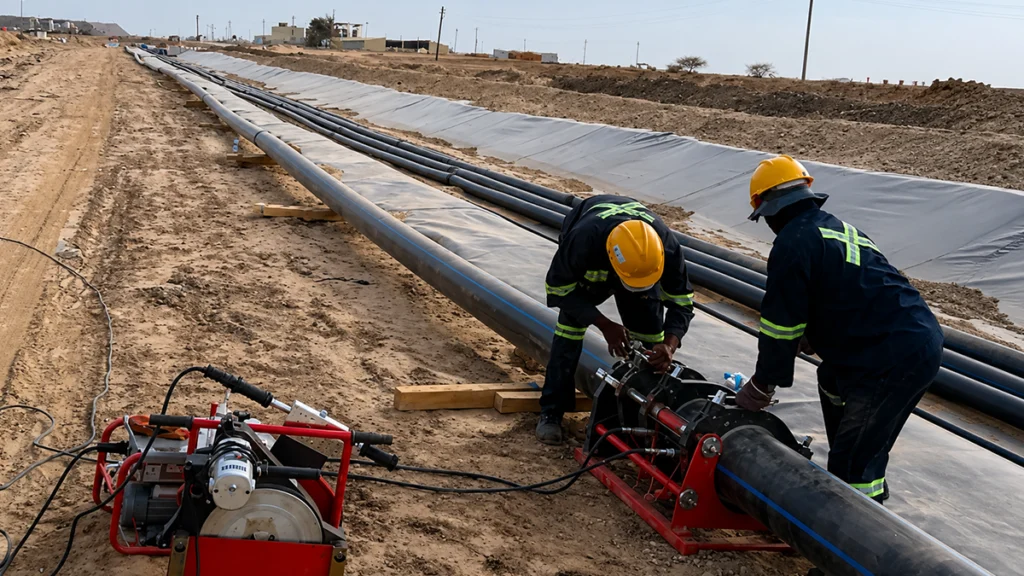
Picking the correct butt fusion jointing machine configuration directly impacts your daily production rates, labor costs, and overall joint integrity.
Should you choose hydraulic, manual, or fully automatic?
For 630mm HDPE pipe welding, the right machine depends on project scale, budget, and operator experience. Fully automatic butt fusion machines can control heating time, pressure, and cooling cycles more consistently, helping reduce operator-dependent variation. Manual butt fusion machines are more economical and suitable for smaller or less demanding projects, but they require experienced operators to control pressure, timing, and the welding process correctly.
| Feature | Manual | Fully Automatic (CNC) |
|---|---|---|
| Pressure Control | Operator controlled | Automatically controlled |
| Data Logging | Usually not available | Built-in / Integrated |
| Operator Skill | High skill required | Lower operator dependency |
| Welding Parameters | Manually monitored | Automatically managed |
| Initial Cost | Lower | Higher |
How do pipe material and wall thickness affect selection?
Your equipment choice must factor in the pipe’s Standard Dimension Ratio (SDR). Keep in mind that butt fusion isn’t allowed for wall thicknesses under 6mm. If your crew needs to weld different SDR series together (like SDR 11 to SDR 17), the operator must butt fusion machine the thicker pipe down to equalize the wall thickness at the joint—or switch to electrofusion. Furthermore, the butt fusion welding machine’s clamping system must handle these specific thickness variations without accidentally crushing the pipe.
What should contractors ask a supplier before ordering?
Always ask about built-in welding quality detection systems. Data logging modules that record every single joint parameter are invaluable for inspector reviews. Also, check if the supplier offers wheeled mobile frames. Maneuvering a massive butt fusion machine inside a cramped, muddy trench is incredibly difficult without one.
Price Factors, MOQ, and Lead Time
Procurement managers need to look past the base sticker price. You have to evaluate the total cost of ownership (TCO) alongside the logistical hurdles of buying large-diameter welding gear.
What affects the price of a 630mm butt fusion machine?
Automation drives the price. Fully automated CNC butt fusion machines demand a 30% to 50% premium over standard hydraulic setups. However, CNC models easily deliver a higher ROI over a standard three-year project lifecycle. The combination of faster fusion rates and zero rework can easily save contractors over $5,000 per 100 joints in labor and heavy equipment rental fees.
How do customization and voltage requirements change lead time?
Standard units run on 380V/50Hz. If you need to modify the electrical system for regional standards—like 480V/60Hz for North America—the factory has to custom-build the motors and heating elements. That extends lead times. Tacking on specialized data-logging modules or requesting custom hydraulic cylinder dimensions will also push back your delivery schedule.
What should buyers confirm about MOQ, warranty, and spare parts?
Because of their massive size and cost, the Minimum Order Quantity (MOQ) for a 630mm unit is almost always one set. Still, buyers must strictly verify the availability of spare parts. Make sure the supplier actively stocks consumables like PTFE-coated heating plates, hydraulic quick-connect seals, and carbon steel milling blades. Finally, demand a comprehensive warranty that covers the electrical control boards and hydraulic pump for a minimum of 12 months.
Operating Steps and Jobsite Best Practices
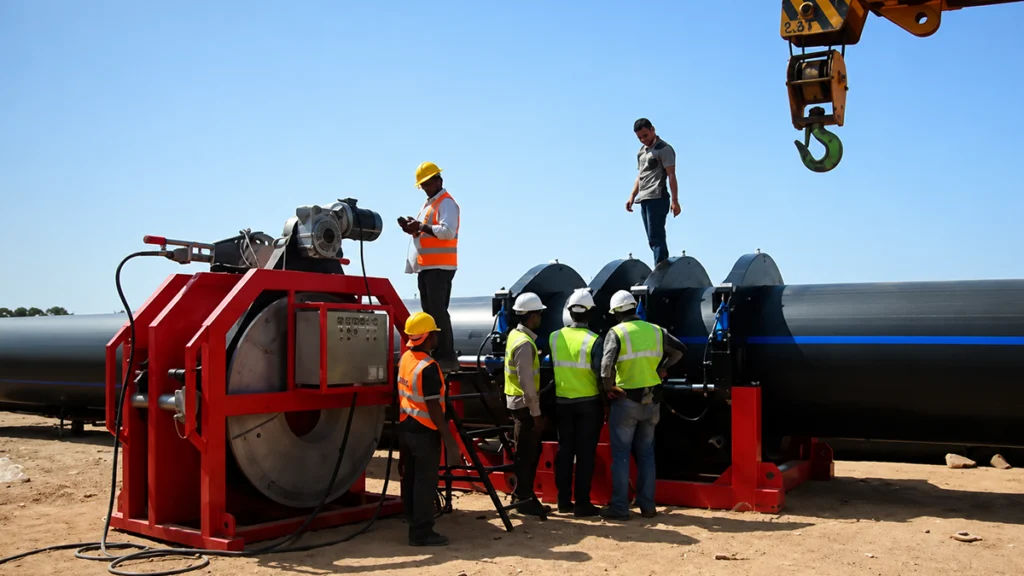
Sticking strictly to welding protocols is the only guaranteed way to protect a pipeline’s structural integrity. Even the most expensive equipment will churn out failed joints if the operator ignores basic workflow standards.
What is the standard butt fusion workflow?
1. Wipe down the inside and outside of the pipe faces using a tangent cleaner or isopropyl alcohol.
2. Mill the pipe ends vertically until you see continuous shavings rolling off both sides.
3. Check the heating plate balance with pressure-sensitive paper to guarantee uniform contact.
4. Heat the pipe ends under initial pressure until the correct bead width forms, then immediately drop to soak pressure.
5. Yank the heater out quickly and fuse the ends together under high pressure.
6. Keep the pipe locked under pressure until it cools completely.
How do you prepare the pipe ends correctly?
You must clamp the pipes coaxially inside the HDPE pipe welding machine frame. Misalignment—often called “high-low”—directly triggers joint failure by shrinking the weld’s effective cross-sectional area. Operators have to adjust the clamps carefully and position pipe rollers outside the butt fusion machine. This neutralizes the immense drag weight of the 630mm pipe, allowing the ends to meet perfectly flush.
What quality checks should be done after fusion?
Immediately conduct a visual inspection to confirm a uniform, double rollback flange (the bead) wraps around the entire circumference. For strict compliance, contractors also need to run destructive testing on sample welds. This includes hydrostatic pressure testing at 80°C for 1,000 hours (ISO 1167) or tensile testing (ISO 13953) to prove the joint actually yields outside the fusion zone.
Common Problems and How to Avoid Them
Pipeline failures almost never stem from the pipe material itself. They are almost exclusively the fallout of sloppy fusion procedures or busted equipment.
Why do fusion joints fail or become weak?
Joints fail for a few common reasons: poor heat penetration, low heating temperatures, or a heat fusion column that ends up too thin. If you see a tiny column head (bead), it means the operator didn’t use enough pressure or time during the heating phase. Also, dragging out the changeover time lets the melted polymer cool down, which actively blocks the molecular chains from locking together.
What causes misalignment, overheating, or poor pressure control?
Misalignment rears its head when operators fail to clamp the pipes coaxially or skip using pipe stands to support the heavy trailing pipe. Overheating and uneven temperatures usually trace back to degraded PTFE coatings, burnt internal heating tubes, or loose wiring. As for poor pressure control? That almost always stems from a failing hydraulic pump motor or active fluid leaks.
How can operators reduce downtime and rework?
Contractors have to mandate scheduled preventative maintenance. Operators must swap out worn milling inserts the second they see jagged shavings. They should also inspect electrical components daily and verify hydraulic fluid levels before every single shift. Lastly, keeping the PTFE heating plate spotless prevents polymer buildup. That buildup acts like an insulator and creates dangerous cold spots during the fusion process.
Final Buying Advice for Large-Diameter HDPE Projects
Buying a 630mm butt fusion machine is a massive capital expense. You need to carefully align the equipment’s capabilities with your project specs and your long-term fleet strategy.
Which buyers need a 630mm machine most?
This hardware is non-negotiable for pipeline contractors managing 5km+ infrastructure jobs, municipal utility crews overhauling aging water mains, and mining developers routing heavy-duty slurry lines. If your operation consistently handles DN315 to DN630 pipes, you absolutely need this specific class of hydraulic fusion equipment.
When should you request technical support or a customized quote?
Reach out for engineering support if you plan to fuse pipes of different SDR grades or if you’re working in extreme temperatures (like sub-zero winters or high-desert heat), which forces you to recalculate heating and cooling times. You’ll need a customized quote if your project demands specific data-logging compliance, like ASTM F3124, or requires non-standard voltage setups.
What is the fastest way to compare suppliers?
Grade suppliers on the total cost of ownership (TCO) instead of just staring at the initial price tag. Look at the origin of the hydraulic components (domestic vs. imported), the structural rigidity of the steel frame, and the HDPE pipe welding machine’s data-logging capabilities. A solid, reliable supplier will gladly hand over clear documentation on power requirements and hydraulic cylinder area, while guaranteeing immediate access to consumable spare parts.
FAQ
Q1: What pipe sizes can a 630mm butt fusion machine handle?
A 630mm butt fusion machine is built specifically for large-diameter thermoplastic pipes, handling outer diameters from 315mm right up to 630mm (DN315–DN630). It uses adjustable inserts inside the main clamps to tightly grip different pipe sizes across this operational range.
Q2: Is a 630mm butt fusion machine suitable for PE100 HDPE pipe?
Yes, it is a perfect match. Manufacturers design this equipment specifically to weld high-density polyethylene, including both PE80 and PE100 grades. The hydraulic system pushes the exact interfacial pressure needed, while the heating plate holds the precise 200–230°C temperature required to achieve total molecular fusion in PE100 pipes.
Q3: What is the difference between hydraulic and manual butt fusion machines?
Hydraulic machines rely on a powered pump and cylinders to deliver precise, measurable pressure during fusion and cooling—a mandatory feature for heavy 630mm pipes. Manual machines depend entirely on the operator’s physical leverage to shove the pipes together. That simply cannot generate the massive force required for large-diameter lines.
Q4: How much does a 630mm butt fusion machine cost?
Prices swing wildly based on configuration and automation levels. Standard semi-automatic hydraulic models keep costs down, whereas fully automatic CNC versions demand a 30% to 50% upfront premium. Other variables—like custom voltages, integrated data logging, and the manufacturing origin of the hydraulic parts—also directly shift the final price tag.
Q5: What power supply is required for a 630mm butt fusion machine on site?
A standard 630mm unit demands a heavy-duty three-phase 380V, 50Hz power supply. The whole system draws roughly 12.2kW, split between the heating plate (9.2kW), the hydraulic station (1.5kW), and the milling cutter (1.5kW). You should size your site generators between 15kW and 20kW to easily absorb startup surges.
Q6: How do you ensure a reliable butt fusion joint in large-diameter pipelines?
Reliability comes down to strictly following standards like ASTM F2620 or ISO 21307. Operators have to guarantee coaxial alignment, mill the pipe faces completely flush, hold the correct heating plate temperatures, shrink the changeover time, and maintain the exact hydraulic pressure throughout the entire cooling cycle without any interruptions.
Q7: What should I check before buying a butt fusion machine for a project?
Always verify the machine’s total power requirements, the temperature consistency of the PTFE heating plate, and the total hydraulic cylinder piston area. Make sure the equipment actually supports the wall thickness (SDR) of your specific pipe. Finally, double-check that the supplier provides accessible spare parts, data-logging options, and a rock-solid warranty.
Conclusion
Buying a 630mm butt fusion machine represents a major, critical investment for industrial pipelines, municipal water systems, and heavy infrastructure projects. Pulling off successful large-diameter HDPE welds demands strict adherence to international fusion standards, robust hydraulic pressure, and flawless thermal control. When you evaluate different machines, prioritize the precision of the hydraulic station, the structural strength of the frame, and the availability of CNC automation to wipe out human error and slash long-term labor costs. By perfectly matching the machine’s technical specs—like cylinder capacity, power requirements, and data-logging features—to your exact jobsite realities, contractors can maximize daily production. Ultimately, this guarantees leak-free joints and secures a massive return on investment over the lifespan of your pipeline builds.
Let our experts help you choose the right equipment for your project
Contact Our Engineering Team