

Table of Contents
Butt Fusion Welding Machine buying guide for sourcing from China, covering machine types, specifications, supplier checks, pricing factors, quality inspection, shipping, and procurement decisions.
What Is a Butt Fusion Welding Machine and What Is It Used For?
A Butt Fusion Welding Machine serves as specialized industrial gear built specifically to fuse thermoplastic pipes. The process is straightforward yet highly controlled: the machine simultaneously heats the squared pipe ends against a precision heating plate, retracts the plate, and drives the molten ends together using calculated hydraulic pressure. The result? A permanent, leak-proof joint that often outlasts and outperforms the original pipe.
How butt fusion welding works for thermoplastic pipes
You can break the butt fusion process down into four distinct technical stages. First up is the Preheating phase. Here, the heating plate raises the pipe surface to its exact melting point. Next comes the Fusion Butt Welding stage, where the machine rapidly presses the heated ends against the plate. The third step involves Pressure Holding. Operators apply targeted hydraulic pressure—usually hovering around 0.15 N/mm² or 1.5 bar to meet low-pressure standards like ISO 21307. Finally, the Cooling Solidification stage lets the newly formed joint crystallize naturally, free from any external stress.
Common pipe materials: HDPE, PE, PP, and PVDF
While highly versatile, a butt fusion welding machine for PE pipe demands exact calibration depending on the specific polymer you’re working with. Engineers design these units to seamlessly weld High-Density Polyethylene (HDPE), standard Polyethylene (PE), Polypropylene (PP, PPH), and Polyvinylidene Fluoride (PVDF). They easily manage pipes of varying wall thicknesses, typically accommodating anything from Standard Dimension Ratio (SDR) 7 right up to SDR 2250.
Where butt fusion welding machines are used in industrial projects
Modern thermoplastic pipeline infrastructure leans heavily on fusion technology. You will find these machines hard at work across municipal water supply networks, high-pressure gas distribution lines, and complex sewage management systems. They also play a massive role in mining slurry pipelines and chemical plant networks. Additionally, agricultural irrigation crews rely on rugged, field-ready models to build large-scale water transport systems.
Why machine quality affects joint strength and project reliability
The lifespan of any pipeline ultimately comes down to joint integrity. Precise temperature and pressure controls aren’t just nice to have—they are absolute requirements. If you use inadequate machinery suffering from poor hydraulic stability or uneven heating plate temperatures, you risk excessive bead formation, weak cold welds, or outright material deformation. Substandard welds shatter the leak-proof integrity of the system. This inevitably triggers catastrophic pressure failures and forces contractors into massive, expensive excavation rework.
Why Buy a Butt Fusion Welding Machine from China?
China’s advantages in pipe welding machine manufacturing
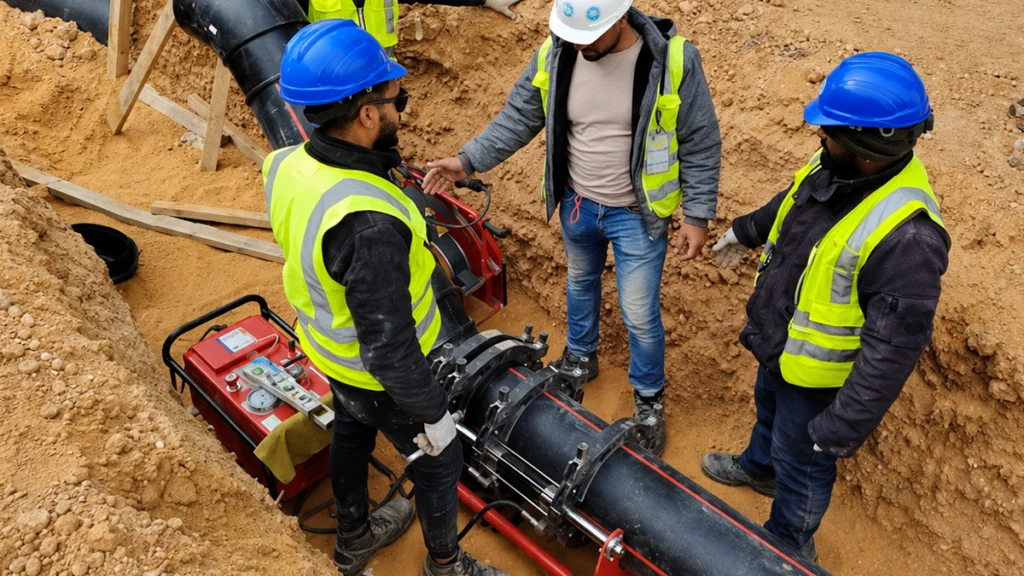
China operates a massively integrated supply chain dedicated to plastic pipe welding equipment. When global buyers source direct-from-factory, they instantly slash middleman markups. Top-tier Chinese manufacturers now routinely bridge the quality gap once dominated by premium European and American brands. They achieve this by blending lower domestic assembly costs with high-grade imported parts—think premium electrical contactors and advanced imported hydraulic sealing systems.
Price flexibility for distributors, contractors, and project buyers
The Chinese procurement ecosystem delivers unparalleled pricing flexibility. Many factories run highly adaptable operations, frequently offering “No MOQ” (Minimum Order Quantity) policies. This allows contractors to grab a single unit perfectly tailored to a specific job. Meanwhile, distributors leverage aggressive volume discounts to build lucrative local inventories. Project buyers also win big, sourcing exact equipment configurations without absorbing the bloated costs of unnecessary proprietary features.
Available options from manual units to CNC-controlled machines
The manufacturing depth available is staggering. A contractor might need a lightweight 160mm unit for cramped urban repair jobs, or perhaps a massive 1600mm heavy-duty rig to tackle municipal mainlines. Whatever the scope, factories deliver. Buyers can source everything from basic manual setups to highly advanced CNC-controlled machines built to execute fully automated, traceable welds on critical high-pressure gas lines.
When buying from China may not be the best choice
Keep in mind that importing always requires strategic planning. Sourcing a butt fusion welding machine from China isn’t the smartest move if an emergency pipeline rupture demands same-day equipment deployment. Additionally, if your chosen supplier lacks a solid localized spare parts network or remote troubleshooting capabilities, you carry a hidden risk. The crushing downtime caused by a single failed hydraulic cylinder could easily wipe out your initial capital savings.
Factory-direct pricing with technical consultation included
Get Your Free QuoteMain Types of Butt Fusion Welding Machines Available in China
Manual butt fusion welding machines for small pipe sizes
Manual units offer an incredibly cost-effective solution, relying on mechanical leverage instead of hydraulic pumps to generate fusion pressure. Their structural simplicity makes them a breeze to transport from site to site. The catch? Welding quality depends heavily on the operator’s personal experience. Coarse temperature adjustments and the lack of exact, measurable fusion pressure mean human error is always a factor.
Hydraulic butt fusion welding machines for jobsite productivity
Hydraulic butt fusion machines separate the clamping frames from the operational control units, linking them via robust hydraulic hoses and flat-type quick-connect fittings. This modular architecture makes them exceptionally flexible, especially during tight, narrow trench operations. A dedicated hydraulic pump guarantees consistent dragging and fusion pressure. As a result, you drastically cut down on operator fatigue while driving up your daily joint output.
Automatic and CNC butt fusion welding machines for traceable welding
CNC (Computer Numerical Control) automatic butt fusion machines leverage advanced closed-loop systems packed with PLCs, precision sensors, and electronic solenoid valves. These rigs take over the heavy lifting by automatically controlling heating times, monitoring heat absorption, and executing critical pressure-holding phases. More importantly, they securely store welding parameters and operator codes. This generates the exact traceable data logs auditors demand for strict ISO and DVS compliance.
Workshop fitting fusion machines versus field welding machines
Field machines are rugged beasts. Manufacturers often build them as trailer-mounted units designed specifically to shrug off dirt, mud, and harsh weather during active pipeline installations. Workshop machines, on the other hand, act as stationary, precision-engineered hubs strictly meant for controlled factory floors. Teams use these workshop units to fabricate segmented fittings—like elbows, tees, and wyes—executing highly precise angular cuts ranging from 0° to 67.5°.
Key Specifications to Check Before Buying
Pipe diameter range and clamping capacity
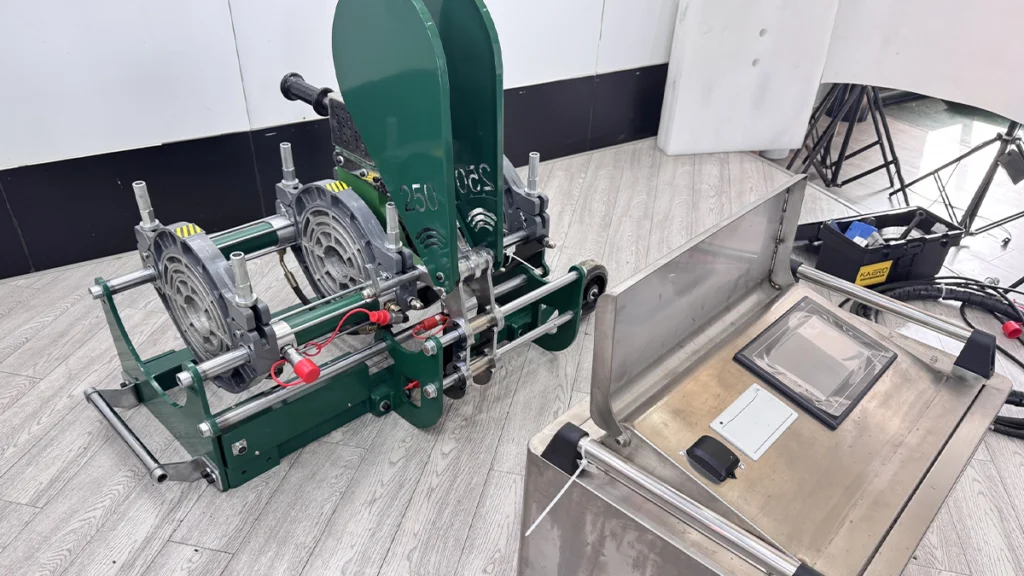
The industry categorizes these machines by their effective welding range. You’ll frequently see standard configurations like Dn63-250mm, Dn160-315mm, or massive heavy-duty 800-1600mm and 1600-3200mm systems. Always double-check that your machine ships with the correct aluminum reducer inserts (inner clamp blocks). You need these to securely grip the specific outer diameters (OD) your project demands.
Heating plate temperature control and surface coating
High-thermal-conductivity aluminum alloy is non-negotiable for the heating plate’s construction. It also demands a premium, heat-repellent PTFE/Teflon coating to stop sticky, molten polymer from ruining the surface. While standard temperature adjustments typically span from 0 to 300°C, keep in mind that specialized industrial plastics might push you to source heating elements capable of hitting 600°C.
Facing tool power, hydraulic pressure, and frame structure
Your facing tool (or milling cutter) needs high-speed carbon steel blades backed by a rugged chain drive mechanism. Motor power scales aggressively alongside machine size. A 750W motor easily handles a 200mm model, yet stepping up to a 250mm model requires at least 1100W of power. Structurally, the main frame must feature a rigid four-column alignment. This critical design prevents pipe deflection when the system unleashes high hydraulic pressure (such as the force generated by a 53.4cm² cylinder area).
Voltage, plug type, packaging size, and site compatibility
Never overlook electrical specifications. They absolutely must align with your destination country’s grid and the actual capacity of your jobsite generators.
| Specification Category | Parameter to Verify |
|---|---|
| Voltage & Phase | 220V Single-Phase vs. 380V/50Hz/3-Phase |
| Total Power (kW) | Combined draw of Facer, Heater, and Hydraulic Pump |
| Hydraulic Pressure | System max pressure (bar/MPa) and cylinder area |
| Facer Mechanism | Gear-driven vs. Chain-driven |
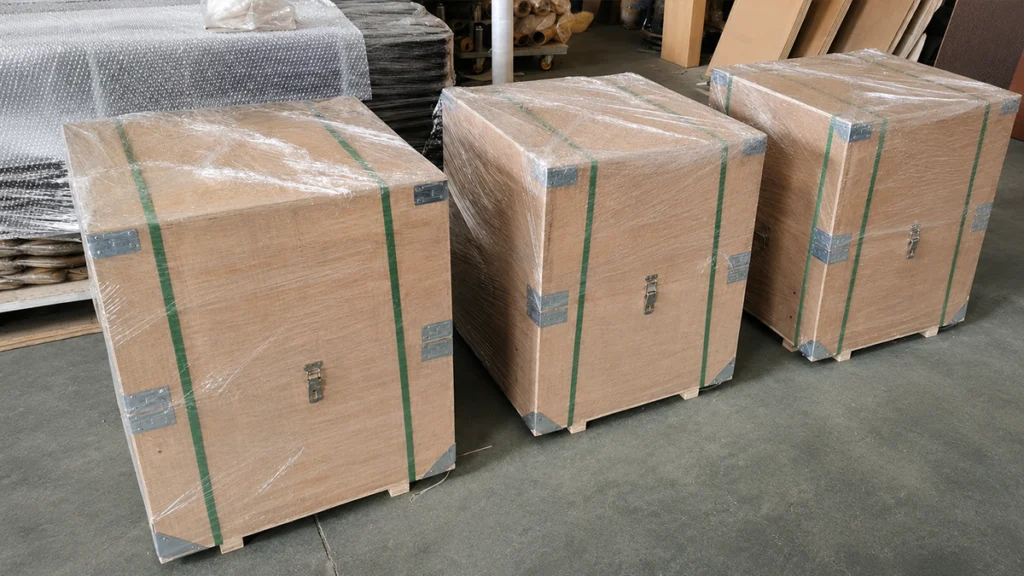
| Packaging | Export-grade fumigated wooden cases (check CBM for freight) |
Get detailed specs and custom configuration options
Request Technical SpecificationsHow to Evaluate a Chinese Butt Fusion Welding Machine Supplier
Manufacturer, trading company, or OEM supplier: which is better?
When hunting for an HDPE pipe butt fusion welding machine supplier, always prioritize actual manufacturers boasting independent R&D capabilities. Trading companies certainly offer massive, appealing catalogs. However, true manufacturers deliver the real value: direct system upgrades, highly precise hydraulic calibration services, and rock-solid guarantees on long-term spare parts availability.
What certifications and test reports should buyers request?
Never settle for verbal quality claims. You must demand verifiable CE certification alongside formal compliance test reports covering international welding standards. Specifically, push the supplier for documentation proving strict compliance with ISO 12176. This is the definitive international standard outlining equipment requirements for butt fusion machines operating on polyethylene systems.
How to verify factory capability and export experience
Any reliable China butt fusion welding machine manufacturer will gladly and transparently detail their component sourcing. Check to see if the factory integrates high-grade imported components at the butt fusion machine’s critical stress points. You should actively ask for evidence of imported hydraulic sealing systems—which stop pressure bleed-off dead in its tracks—as well as premium electrical contactors that prevent catastrophic heating plate failures.
Questions to ask before placing a bulk or project order
Arm yourself with this supplier evaluation checklist before signing any contracts:
- Do you manufacture the hydraulic cylinders entirely in-house, or do you outsource that production?
- Can you supply an uncut video demonstrating the machine holding P3 (cooling pressure) for a full 15 minutes without a single gauge drop?
- Do your CNC models feature built-in welding quality detection systems, such as ultrasonic scanning integration?
- What is the exact, verifiable thickness of the PTFE coating applied to the heating plate?
Butt Fusion Welding Machine Price in China: What Affects the Cost?
Price differences by pipe size range and automation level
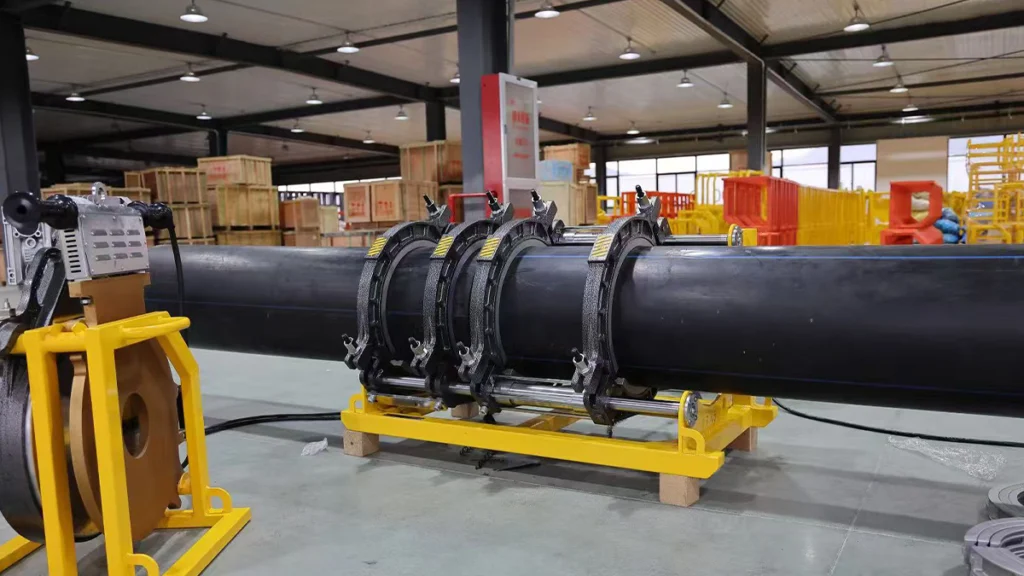
To truly grasp automatic butt fusion welding machine price dynamics, you have to look closely at automation premiums. A fully equipped CNC automatic butt fusion welding machine generally costs three to four times as much as a basic manual hydraulic unit of the exact same diameter. Furthermore, scaling up from a 315mm setup to a colossal 2250mm machine triggers an exponential cost increase. The massive hydraulic cylinders and ultra-heavy-duty steel frames required simply demand a higher budget.
How accessories, spare parts, and packaging affect the quote
Beware of base quotes; they frequently exclude critical operational additions. Throwing in optional add-ons—such as full sets of inner clamp blocks, digital data loggers, stub-end device holders, or specialized lifting hoists for massive facing tools—will quickly inflate your final invoice. Don’t forget that robust, export-grade wooden packaging also tacks a noticeable premium onto the baseline cost.
MOQ, sample orders, and distributor pricing
While plenty of factories happily accommodate single-unit orders, lucrative distributor pricing tiers generally kick in once you hit the 3-to-5 unit mark, depending largely on HDPE pipe butt fusion machine size. Ordering a sample of a small-diameter manual butt fusion welding machine won’t break the bank. However, if you request a custom-configured 800mm hydraulic beast as a “sample,” expect to pay standard project pricing without any discounts.
Hidden costs: shipping, customs duty, training, and after-sales parts
Smart international buyers always calculate the true Total Cost of Ownership (TCO) to avoid nasty surprises.
| Cost Factor | Description & Impact |
|---|---|
| Machine Base Cost | Determined by diameter range, hydraulic power, and CNC integration. |
| Consumable Spares | PTFE-coated heating plates, carbon steel milling blades, hydraulic seals. |
| Freight & Logistics | LCL or FCL ocean freight based on the packaged CBM and weight. |
| Customs & Duties | Import tariffs specific to industrial machinery HS codes in the destination country. |
| Training | Cost of flying out technicians or paying for remote commissioning for large CNC units. |
Quality Control Checklist Before Shipment
Machine appearance, frame alignment, and clamp inspection
Before the supplier even thinks about crating the equipment, demand an inspection of the main structural components. The four-column structure must align flawlessly. Even the slightest deviation guarantees pipe mismatch (often called high-low misalignment) on the jobsite. Additionally, verify that the clamp materials rely on durable, standardized alloys like aluminum ZL104. This prevents dangerous cracking when the butt fusion machine applies heavy torque.
Heating plate test, temperature accuracy, and coating condition
Insist on seeing a thermal camera image or a multi-point thermometer test. This verifies absolute temperature accuracy across the entire surface of the heating plate. Unnoticed cold spots inevitably cause catastrophic weld failures. You should also visually inspect the anti-stick PTFE coating. Look closely to ensure zero scratches exist, as molten pipe ends will aggressively adhere to any damaged areas.
Hydraulic system, pressure stability, and electrical safety checks
The absolute core of any butt fusion welding machine quality inspection is a rigorous hydraulic test. Check the oil tank thoroughly, then mandate a comprehensive pressure stability test spanning all operational phases: P1 (system pressure), P2 (dragging pressure), and P3 (cooling pressure). Finally, verify that all flat-type quick connectors remain completely leak-free, even when pushed to maximum load.
What photos, videos, and documents to request from the supplier
Never authorize the final balance payment without hard visual proof. Request uncut, continuous videos showing the butt fusion machine executing a complete test weld on scrap pipe. Watch the footage closely. It must clearly document the facing tool producing a continuous ribbon shaving, precise heat absorption timing, and the pressure gauge holding rock-steady throughout the entire cooling phase.
Manual vs Hydraulic vs Automatic Butt Fusion Welding Machine: Which Should You Choose?
Best option for small contractors and repair teams
Standard manual butt fusion machines easily stand out as the most cost-effective choice for repair crews operating on tight budgets. If your automation needs are low and your projects primarily involve small-diameter pipes (typically sitting under 160mm), this is your go-to. They remain incredibly lightweight, demand very little setup time, and run flawlessly on standard basic power supplies.
Best option for large pipeline installation projects
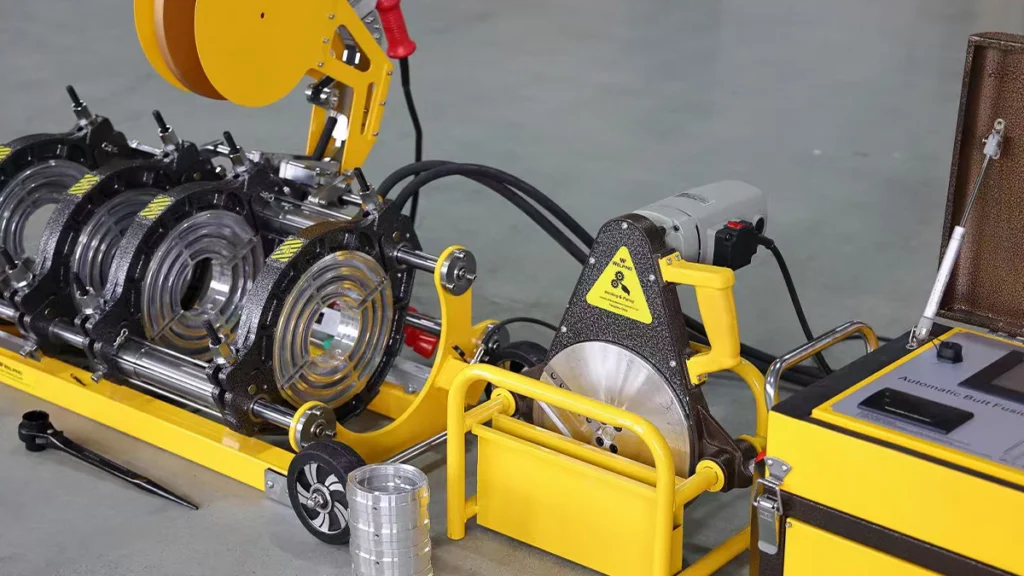
When weighing manual vs hydraulic butt fusion welding machine options for grueling, continuous trench work, hydraulic units take the crown decisively. They deliver the raw dragging force required to pull massive, heavy strings of HDPE pipe together. In fact, once you deal with diameters exceeding 250mm, hydraulic assistance shifts from being a luxury to a physical necessity if you want to hit compliant fusion pressures.
When automatic welding records are worth the extra cost
Automatic and CNC automatic butt welding machines aren’t just nice upgrades—they are strictly mandatory for gas pipelines, chemical transport systems, and critical municipal infrastructure. The heavy upfront capital expenditure easily justifies itself. These advanced units automatically lock out operator interference, instantly store vital welding parameters, and generate the precise PDF or CSV reports you need to survive brutal ISO and DVS compliance audits.
Comparison by cost, productivity, accuracy, and operator dependency
| Feature | Manual Machine | Hydraulic Machine | Automatic/CNC Machine |
|---|---|---|---|
| Cost Level | Low | Medium | High (3-4x Manual) |
| Operator Dependency | High (Prone to human error) | Medium (Requires monitoring) | Low (PLC controlled) |
| Weld Consistency | Variable | High | Exceptionally High |
| Data Recording | None | Optional Data Logger | Built-in / Automated |
| Best-Fit Buyer | Plumbers, small repairs | Water/sewer contractors | Gas utilities, EPC firms |
*(Note: Swapping out manual labor for a fully automated process can easily yield savings of $20,000 to $30,000 over a 6-month project. You achieve this by entirely eliminating rework and significantly boosting your daily joint output.)*
Ordering Process, Lead Time, Shipping, and After-Sales Support
How to send an accurate inquiry to a Chinese supplier
Want an accurate quotation right out of the gate? You must send a highly specific inquiry. Clearly state the exact pipe outer diameters (like Dn160-315mm) and the specific pipe materials (PE, PP, or PVDF) your project uses. Don’t forget to include the SDR ratings, as these dictate critical wall thickness and pressure requirements. Finally, outline your jobsite’s power availability, including exact voltage and phase.
Typical production lead time and delivery options
Grasping butt fusion welding machine MOQ and lead time dynamics is absolutely crucial for tight project scheduling. Factories often keep standard machines—like 160-250mm hydraulic units—in stock, allowing for rapid 3-to-7-day delivery turnarounds. However, if you order large custom CNC automatic butt fusion machines (stretching up to 3000mm) or place massive bulk project orders, expect extended production lead times. These typically range anywhere from 30 to 45 days.
Spare parts, warranty terms, and remote technical support
Make sure your purchasing contract explicitly details the warranty duration, paying special attention to electrical and hydraulic component coverage. Any reliable supplier worth their salt will offer remote technical troubleshooting via video calls to resolve unexpected field faults. More importantly, verify that they actively stock critical spare parts—like heating tubes, temperature sensors, and milling blades—and can air-freight them to your site within 48 hours.
Payment terms and risk control for international buyers
Standard international payment terms generally involve a 30% T/T deposit to kick off production. You pay the remaining 70% balance only after you review and approve the detailed pre-shipment inspection videos and photos. If you are handling large, multi-machine project orders, protect your capital. Utilize Letters of Credit (L/C) or hire reputable third-party inspection agencies—such as SGS or TÜV—to physically verify the cargo before the factory loads the container.
Final Buying Recommendations for Importers and Project Buyers
Match the machine to pipe size, material, and jobsite conditions
The golden rule of equipment procurement: never overbuy, and never under-equip. Make absolutely sure the butt fusion machinery matches your specific SDR range, as thick-walled pipes demand significantly higher hydraulic dragging pressure. Always factor in the jobsite footprint as well. Narrow trench installations call for modular hydraulic butt fusion machines equipped with long quick-connect hoses. Conversely, sprawling open-field staging areas easily accommodate much larger, wheeled chassis units.
Do not compare price without comparing configuration
One of the most common pitfalls in knowing how to choose a butt fusion welding machine is staring blindly at bottom-line prices while completely ignoring the internal architecture. An open-loop manual valve system will always be cheaper. However, it is fundamentally less durable and far less accurate than a premium closed-loop electronic solenoid system. Always put quotes side-by-side and compare exact hydraulic cylinder sizes, motor wattages, and the specific origins of critical components.
Build a long-term spare parts and technical support plan
Project downtime burns through thousands of dollars a day. Protect your margins by building a long-term maintenance plan right from the start. Order extra consumable parts alongside your initial butt fusion welding machine purchase. By stockpiling spare PTFE-coated heating plates, sharp carbon steel milling blades, hydraulic quick connectors, and replacement O-rings, you virtually guarantee uninterrupted, highly profitable field operations.
Recommended documents to prepare before requesting a quote
Before you even initiate contact with a potential supplier, put together a clear, comprehensive technical dossier. Document your required welding standards—such as ISO 21307 for low-pressure or ASTM F2620 for high-pressure—so the factory calibrates the hydraulic system correctly for your specific region. Finally, provide your exact target destination port so the supplier can generate a highly accurate CIF or DDP freight estimate.
FAQ
Q1: How much does a butt fusion welding machine cost in China?
Pricing swings dramatically depending on pipe diameter and the level of automation you need. A bare-bones manual 160mm unit might set you back just a few hundred dollars. Step up to a standard 315mm hydraulic butt fusion machine, and you are looking at a range of $1,500 to $3,000. If you require fully CNC automatic machines for massive diameters (800mm and above), expect investments exceeding $15,000 to $30,000 due to the complex PLCs and massive heavy-duty hydraulics involved.
Q2: What information should I send to a supplier before requesting a quote?
You need to be as specific as possible. Always provide the exact pipe material (like HDPE, PP, or PVDF), the outer diameter range you are working with (for instance, 160-315mm), and the SDR rating, which dictates wall thickness. Also, clearly state your required automation level—whether manual, hydraulic, or CNC—and list your jobsite’s electrical voltage and phase. Lastly, name your destination port so the supplier can calculate accurate freight costs.
Q3: What is the difference between manual and hydraulic butt fusion welding machines?
Manual butt fusion machines rely on simple mechanical leverage, utilizing hand wheels or levers to apply pressure. This makes them highly affordable but completely dependent on the operator’s skill and physical strength. Hydraulic butt fusion machines, conversely, use a motorized pump and heavy-duty cylinders to deliver consistent, highly measurable dragging and fusion pressure. If you are working with large pipes or need high daily productivity, hydraulic systems are mandatory.
Q4: How do I check the quality of a butt fusion welding machine before shipment?
Demand an uncut video showing the butt welding machine executing a complete test weld from start to finish. You should also verify the heating plate’s temperature uniformity using a thermal camera readout and visually inspect the PTFE coating for any scratches or defects. Most importantly, mandate a hydraulic pressure test to prove the butt fusion welding machine can hold P3 (cooling pressure) perfectly steady without the gauge dropping.
Q5: Which pipe materials can be welded with a butt fusion welding machine?
Manufacturers design these butt fusion machines exclusively for thermoplastic pipes. The most frequently welded materials include High-Density Polyethylene (HDPE), standard Polyethylene (PE), Polypropylene (PP, PPH), and Polyvinylidene Fluoride (PVDF). Keep in mind that you absolutely cannot use this equipment to weld thermosetting plastics or traditional metal pipes.
Q6: Can Chinese suppliers provide spare parts and technical support overseas?
Yes, but only if you partner with a reputable, true manufacturer. Top-tier factories maintain robust after-sales support networks. They routinely offer remote video troubleshooting to solve field issues quickly and can express air-freight vital consumable parts—like milling blades, sensors, and heating plates—anywhere in the world within a matter of days. Always verify a supplier’s spare parts inventory policy before signing a contract.
Q7: What certifications are important when importing a butt fusion welding machine?
At the bare minimum, you must require CE certification to guarantee electrical and mechanical safety. For strict project compliance, go further. Request formal test reports verifying that the equipment fully meets ISO 12176 standards (the global benchmark for PE fusion equipment) and proves the HDPE pipe butt welding machine can execute precise welds according to ISO 21307 or DVS 2207-1 parameters.
Q8: How long does it take to manufacture and ship a butt fusion welding machine from China?
Standard hydraulic butt fusion machines (handling up to 315mm) usually sit in active inventory and can ship out within a rapid 3-to-7-day window. If you order large diameter rigs (800mm and above) or custom-built CNC units, expect a production lead time spanning 30 to 45 days. After manufacturing, ocean freight will add an additional 15 to 40 days to your timeline, depending entirely on your destination port.
Conclusion
Sourcing a butt fusion welding machine from China stands as a highly strategic capital play for pipeline contractors, utility companies, and global equipment distributors. The sheer scale of the Chinese manufacturing ecosystem delivers immense flexibility. Buyers can effortlessly secure everything from lightweight manual units perfect for quick urban repairs, all the way up to massive, CNC-controlled hydraulic rigs engineered to execute fully traceable welds on sprawling 1600mm infrastructure projects.
True success in this procurement journey means looking far beyond surface-level price tags. Smart buyers rigorously match the internal configuration—focusing heavily on cylinder size, motor wattage, and PLC integration—directly to their project’s exact pipe diameters, SDR ratings, and strict regional standards like ISO 21307 or ASTM F2620. You can drastically cut import risks by demanding pre-shipment hydraulic stability tests, thorough thermal plate inspections, and transparent component origin checks. Ultimately, when you factor in the total cost of ownership—accounting for freight, consumable spares, and remote technical support—your procurement team will secure high-performance butt fusion machinery that guarantees leak-proof joints and drives massive jobsite productivity.
Let our experts help you choose the right equipment for your project
Contact Our Engineering Team