
HDPE Pipe Welding Machine: Complete Buyer’s Guide for Contractors and Distributors
Table of Contents
HDPE Pipe Welding Machine buyers can use this guide to compare machine types, key specifications, price factors, supplier risks, and selection criteria for contracting or distribution needs.
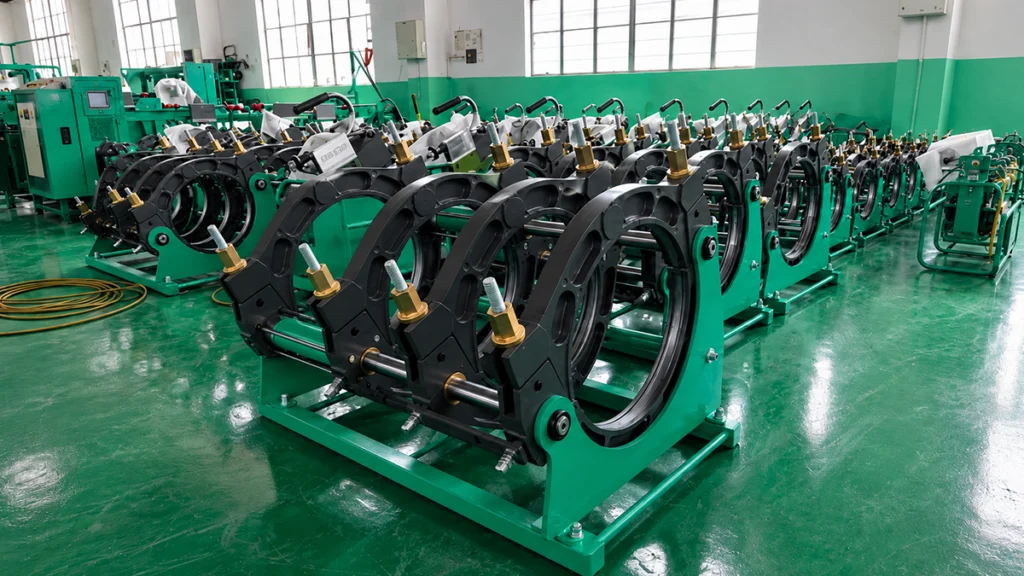
When you need to join high-density polyethylene pipes, an HDPE pipe welding machine is the go-to industrial workhorse. Using a controlled thermal process, this equipment aligns, heats, and fuses pipe ends into a single, leak-proof joint. Pipeline contractors, infrastructure managers, and procurement teams depend heavily on these butt fusion machines to guarantee pipeline integrity—even in the toughest environments.
How an HDPE pipe welding machine joins thermoplastic pipes
The process relies on a highly regulated thermal cycle. It starts with preheating, moves into fusion butt welding, transitions to pressure holding, and finishes with cooling solidification. By heating the pipe ends to precise temperatures and driving them together under calculated hydraulic pressure, the polyethylene melts and bonds on a molecular level. You get a seamless, continuous pipeline without ever needing mechanical fittings.
Main machine functions contractors should understand
If you operate a butt fusion welding machine, you need to master its core functions: clamping, facing (or milling), heating, fusion, and cooling. The clamping system locks the pipe tightly to prevent any unwanted movement. Next, the facing tool shaves down the pipe ends, guaranteeing perfectly parallel surfaces. A heating plate then melts those ends evenly. Finally, the hydraulic unit steps in, applying the exact pressure needed during the fusion and cooling stages to lock the joint permanently in place.
Where HDPE pipe welding is used in infrastructure and industry
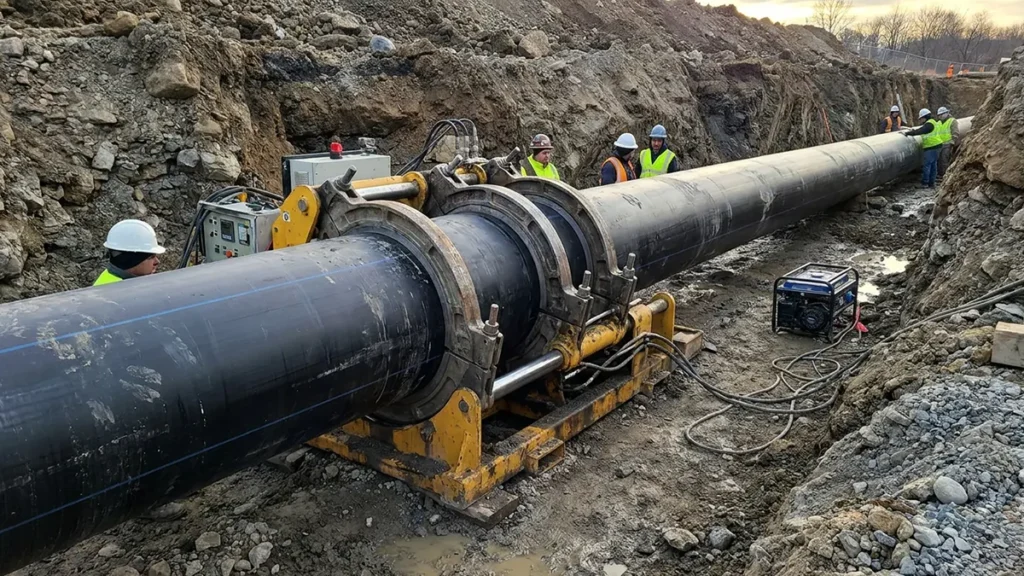
Any critical infrastructure sector demanding zero-leak performance relies on this technology. You will see these butt fusion machines deployed for municipal water supply networks, natural gas transmission lines, and massive agricultural irrigation grids. Industrial plant engineers also require HDPE pipe fusion equipment to build urban heating networks, protect underground cables, execute marine dredging operations, and construct floating pipelines at mining sites.
Why HDPE Pipe Welding Quality Matters for Contractors and Distributors
How poor welding affects pipeline safety and service life
Done right, thermal fusion creates a homogeneous joint that actually outstrips the pipe itself in strength. That level of durability is non-negotiable if you want an HDPE pipeline to hit its 100-year design lifespan. On the flip side, shoddy welding ruins structural integrity. Bad temperature control or uneven pressure creates severe joint misalignment, inadequate flange roll, and incomplete fusion. Under daily operational stress, these defects drastically spike the risk of catastrophic blowouts.
Why distributors need consistent machine quality for repeat buyers
B2B buyers expect reliability. Equipment distributors need consistent butt fusion welding machine quality, backed by solid after-sales support, to earn that trust. Industry data shows that 90% of contractors want 24-hour online technical help alongside comprehensive warranty services. By supplying dependable fusion equipment, distributors protect their brand reputation, slash warranty claim costs, and lock in repeat orders from major construction firms.
Project risks caused by unstable fusion pressure or temperature
Wavering operational parameters invite disaster. If a butt fusion welding machine cannot hold the strict 210±10°C required for HDPE, or if hydraulic pressure drops during the cooling phase, the weld bead heights will turn out uneven. These hidden flaws cause pipelines to fail mandatory pressure tests. What follows? Massive project delays, expensive rework, and severe environmental hazards—especially in gas or chemical transmission lines.
Main Types of HDPE Pipe Welding Machines
Picking the right tool means understanding the operational gaps between different technologies. The table below breaks down the primary fusion machines contractors use in the field.
| Machine Type | Best Suited For | Key Characteristics |
|---|---|---|
| Manual | Small diameter (<160mm), low-pressure residential systems | Relies on human force; lower upfront cost; lacks precise pressure control. |
| Hydraulic | Large diameter (>110mm), infrastructure projects | Uses hydraulic cylinders; precise adjustment of pressure, temperature, and time. |
| Automatic (CNC) | High-volume, strict QA compliance projects | Features closed-loop systems, PLCs, and automated hot plate lift-off. |
| Electrofusion | Tight trenches, repairs, specific fittings | Reads barcodes to automatically set welding parameters; no manual voltage adjustment. |
Manual HDPE pipe welding machines
Manual units work best for pipes under 160mm and low-pressure plumbing setups. The operator uses physical levers to generate fusion pressure. Sure, these manual butt fusion machines are highly portable and carry a lower price tag. However, because you cannot accurately control or record the welding pressure, they simply do not meet the strict standards required for municipal or industrial jobs.
Hydraulic butt fusion welding machines
When dealing with pipes over 110mm, hydraulic units become the industry standard. Common models handle anything from 160mm up to 630mm and beyond. These hydraulic butt fusion machines pack a hydraulic power unit to dial in precise welding pressure, temperature, and time. This setup guarantees compliance with rigorous pipeline engineering codes while providing the raw muscle needed to shift heavy, large-diameter pipes.
Automatic HDPE pipe welding machines
Automatic butt fusion machines bring CNC closed-loop systems, PLCs, and advanced sensors to the jobsite. They fully automate the welding cycle—right down to the automatic hot plate lift-off. By stripping human error out of the process, these machines deliver consistent, repeatable results. They also generate digital weld logs, giving project managers bulletproof QA documentation.
Socket fusion and electrofusion equipment
Sometimes butt fusion just isn’t practical. That is where socket fusion and electrofusion machines step in, especially for tight trench repairs or complex fitting assemblies. Electrofusion gear removes the guesswork. Instead of manual voltage adjustments, the machine reads a barcode on the pipe fitting to automatically configure the welding parameters, executing a flawless heating cycle every time.
Factory-direct pricing with technical consultation included
Get Your Free QuoteHow an HDPE Pipe Welding Machine Works
Pipe clamping and alignment
Everything starts with securing the pipes. Separate clamping systems and heavy-duty aluminum fixtures lock the pipes tightly into position. Getting this right is critical. Proper clamping corrects pipe ovality and stops lateral shifting dead in its tracks, ensuring perfect alignment before the high-pressure fusion process begins.
Facing, heating, fusion, and cooling stages
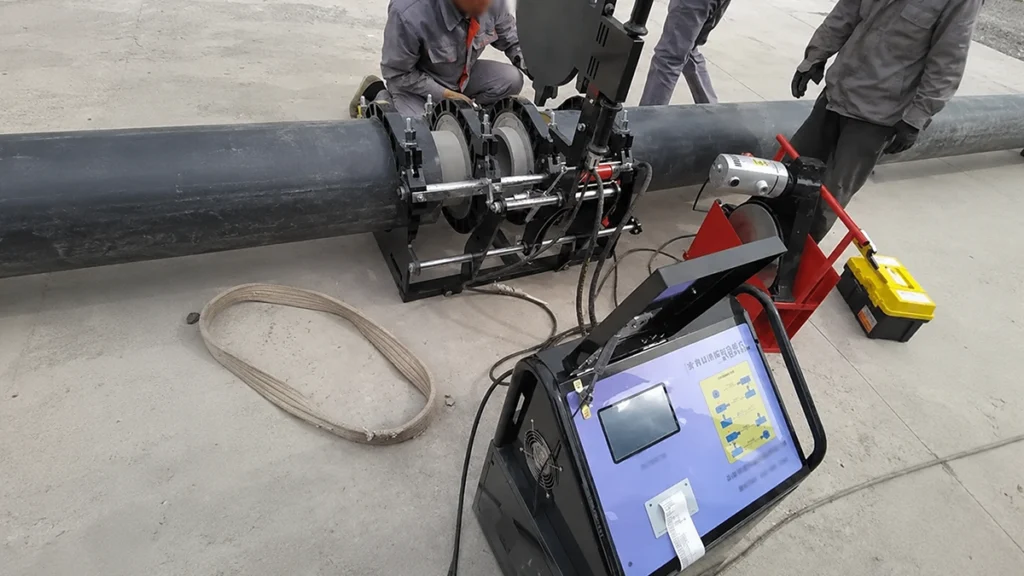
Once everything is locked down, an electric milling cutter shaves the pipe ends. This exposes clean, unoxidized material and forms perfectly parallel faces. Next, the operator inserts a PTFE-coated heating plate to melt those ends. As soon as the material hits the right molten state, the heating plate comes out, and hydraulic cylinders immediately ram the pipe ends together. The joint stays under static pressure until it cools completely.
What temperature, pressure, and cooling time control
Nailing the weld means strictly controlling your variables. For HDPE and MDPE materials, the heating plate must sit at 210±10°C. Meanwhile, the hydraulic system manages pressure adjustments, usually ranging from 0 to 6.3MPa. To stop premature stress from ruining the joint, independent dual-channel timers track the exact duration of both the heating and cooling phases.
What makes a weld joint strong and consistent?
Molecular diffusion is the secret behind a bulletproof joint. Molten polymer chains entangle across the weld interface, forming a permanent bond. To make this happen, you must apply the minimum pressure dictated by industry standards—like the DVS 2207-1 standard of 0.15 N/mm² (roughly 1.5 bar). Crucially, the joint must remain completely motionless while it cools and solidifies.
Key Specifications to Check Before Buying
Evaluating technical specs is the only way to ensure the equipment meets your pipeline engineering demands.
| Specification Category | Typical Parameters to Evaluate |
|---|---|
| Diameter Capacity | 160mm, 200mm, 250mm, 315mm, 450mm, 630mm models |
| Heating Plate Range | 0~270°C (requires strict deviation of ±5°C) |
| Hydraulic Pressure | System adjustment range of 0~6.3MPa |
| Power Requirements | e.g., 2.1 kW heating plate for a standard 250mm machine |
| Data Logging | Onboard memory for temperature, pressure, and time QA |
Pipe diameter range and compatible SDR ratings
Manufacturers categorize butt fusion machines by their maximum outer diameter capacity—think 160, 250, 315, or 630 models. Buyers need to confirm that a butt fusion machine can handle their project’s specific SDR (Standard Dimension Ratio) ratings. Thicker-walled pipes, which have a lower SDR, demand HDPE pipe jointing machines with serious clamping force and higher hydraulic pressure capacities to get the job done right.
Heating plate power and temperature control accuracy
You cannot compromise on temperature stability. Seek out a temperature range of 0~270°C paired with a tight control deviation of ±5°C. Power output must scale with pipe size. A standard 250mm plastic pipe welding machine, for instance, generally needs a 2.1 kW heating plate to guarantee fast, even melting without leaving dangerous cold spots.
Hydraulic pressure range and data recording options
To handle a variety of pipe wall thicknesses, the hydraulic power unit must deliver a system pressure adjustment range of 0~6.3MPa. For today’s modern infrastructure jobs, data recording isn’t just nice to have; it’s essential. Automated butt fusion machines pack data loggers that record the exact temperature, pressure, and time specs for every single weld. This makes hitting ISO 21307 compliance a breeze.
Machine frame strength, portability, and jobsite durability
Your jobsite environment dictates the frame style you need. Cross-country pipeline builds require trailer mobility so crews can move quickly between welds. On the other hand, separate clamping systems and modular frames shine in tight trenches or crowded urban areas where heavy lifting gear simply cannot reach.
Get detailed specs and custom configuration options
Request Technical SpecificationsHow to Choose the Right HDPE Pipe Welding Machine
Choosing by pipe size and project type
Always match the hardware to the task. Keep manual butt fusion machines strictly for small-diameter (under 160mm) residential setups or basic agricultural plumbing. For large-diameter (over 110mm) infrastructure work—like municipal water mains or gas distribution networks—a hydraulic butt fusion machine is absolutely mandatory to pass rigorous pressure testing.
Choosing by labor skill level and automation needs
Manual and basic hydraulic units require operators with serious technical chops. They have to manually calculate and execute drag pressure, bead-up pressure, and cooling times. Automatic butt fusion machines flip the script by handling these calculations via a built-in PLC. This drastically lowers the skill barrier and cuts labor costs, making CNC models perfect for crews with high turnover or limited specialized training.
Choosing for construction sites, factories, or rental fleets
Pipeline contractors and rental fleet managers usually gravitate toward trailer-mounted units. These setups offer self-contained power and unmatched mobility across rugged terrain. Conversely, stationary frame units dominate indoor factory settings, where teams prefabricate complex fittings, elbows, and tees in a highly controlled environment.
When should buyers upgrade from manual to hydraulic models?
The time to ditch manual gear for hydraulic models is when project specs demand flawless pressure documentation, such as ASTM F2620 compliance. Moreover, when you start welding large-diameter pipes or heavy SDR classes, human muscle simply cannot overcome pipe drag to hit the target fusion pressure.
HDPE Pipe Welding Machine Price, MOQ, and Lead Time Factors
What affects HDPE pipe fusion machine price?
Engineering complexity dictates the sticker price. A straightforward, manual 2″-8″ pipe fusion machine runs about $5,700. Step up to fully automatic CNC automatic butt fusion machines, and you will pay three to four times more than a basic hydraulic unit. That premium covers onboard computers, highly sensitive sensors, and automated mechanical parts.
- Manual Equipment: Lowest capital investment; high labor cost.
- Hydraulic Equipment: Moderate investment; standard for most contractors.
- CNC/Automatic: Highest capital investment; lowest long-term labor and QA costs.
Typical cost drivers: frame size, hydraulic system, automation, and accessories
Maximum frame size and hydraulic quality heavily influence the final cost. Open-loop manual valves keep prices low but sacrifice precision, while closed-loop solenoid valves deliver pinpoint pressure feedback. Automation features like PLCs and data loggers, along with add-ons such as crane hoists, stub-end devices, and diverse insert sizes, also push the final procurement price upward.
MOQ and distributor order planning
Minimum Order Quantities (MOQ) play a massive role in unit pricing and freight efficiency for distributors. Buying multiple units lets you maximize shipping container space and lock in better financial terms. Smart distributors schedule bulk orders ahead of seasonal construction booms and keep high-demand sizes (like 160mm to 315mm) in stock to supply contractors without delay.
How lead time changes with customization and bulk orders
You can usually get standard models dispatched immediately. Lead times stretch, however, when you request custom features—like specific heating copper block dimensions, localized voltage tweaks, or custom branding. Bulk orders demand crystal-clear contract terms regarding delivery schedules, though urgent infrastructure projects can often negotiate expedited shipping and backup equipment guarantees.
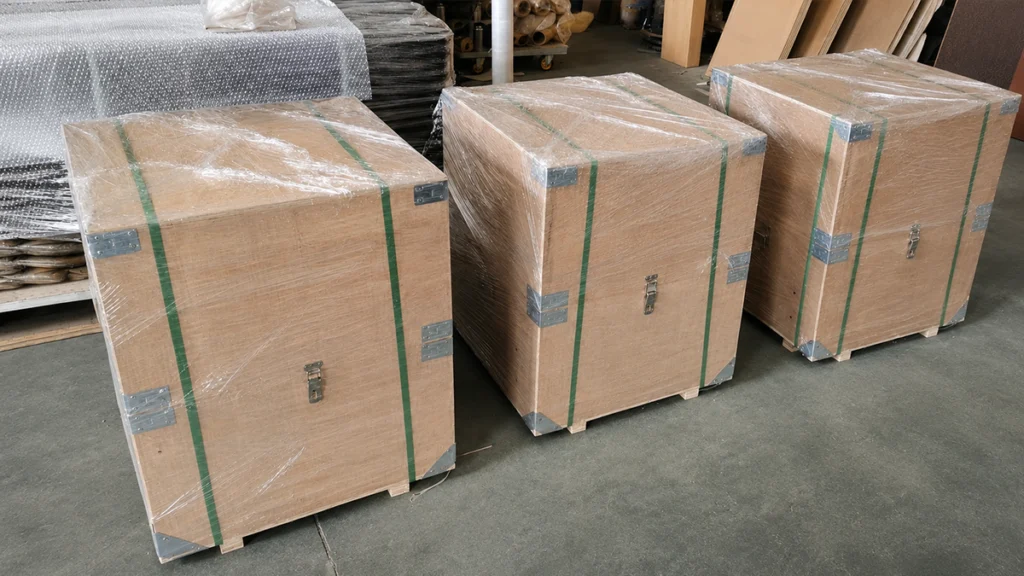
Supplier Evaluation Checklist for B2B Buyers
Documents and certifications to request
Never skip the paperwork. Before signing a PO, demand compliance documentation. A credible supplier must provide certificates proving their butt fusion machines meet ISO 21307, DVS 2207-1, and ASTM F2620 standards. If you are importing into Western markets, CE or UL marks for electrical components are absolutely mandatory.
After-sales support, spare parts, and training availability
Equipment downtime murders project margins. Statistics show that 75% of construction crews need detailed operation manuals and video tutorials, while 60% stress the importance of a reliable spare parts pipeline. Make sure your supplier promises rapid shipping for critical consumables like PTFE plates, hydraulic seals, and milling blades.
How to evaluate factory capability and quality control
Dig into the manufacturer’s operations. Do they invest in independent R&D, or do they just bolt together off-the-shelf parts? Top-tier factories welcome third-party inspections, provide remote video troubleshooting, and run rigorous in-house testing facilities. For example, their hydraulic units should undergo extended pressure-holding tests before they ever see a shipping crate.
Questions to ask before placing a bulk order
- What is the exact tolerance of your heating plate temperature control?
- Do you provide software updates for the CNC data logging systems?
- What are your warranty terms regarding hydraulic pump failure?
- Can you supply localized plug and voltage configurations for our target market?
Common Buying Mistakes and Hidden Risks
Buying only by the lowest machine price
Hunting for the absolute lowest price is a trap. Cheap butt fusion machines often use low-grade hydraulic valves and subpar sensors, resulting in erratic fusion parameters. This defeats the entire purpose of precision thermal welding. The eventual costs of failed pressure tests, broken parts, and ruined jobsite productivity will rapidly eclipse whatever money you saved upfront.
Ignoring pipe diameter range and field conditions
Buyers frequently make the mistake of choosing a pipe fusion machine whose maximum capacity exactly matches their largest pipe size. This leaves zero margin to handle heavy SDR drag forces. Furthermore, deploying stationary manual butt fusion machines for large pipes in muddy, uneven trenches guarantees poor clamping, terrible joint misalignment, and ultimately, rejected welds.
Overlooking calibration, maintenance, and spare parts
Neglecting regular calibration of the heating plate and pressure control system will wreck your weld quality. Many buyers completely forget about annual calibration schedules. Buying from a supplier that doesn’t stock replacement PTFE coatings or hydraulic filters will leave your crew stranded the moment a consumable part wears out.
Choosing automation features that operators cannot use properly
CNC automation is fantastic for compliance, but buying highly programmable gear that your on-site crew doesn’t know how to run is a massive blunder. If a fully automatic butt fusion machine glitches and the operators lack the training to bypass the PLC and finish the weld manually, your entire pipeline project grinds to a halt.
Final Recommendation: Matching the Machine to Your Business Model
Best choice for contractors handling varied jobsite projects
If your crews bounce between diverse municipal and industrial jobs, a mid-to-large capacity hydraulic butt fusion machine (like a 315mm or 450mm model) is your best bet. Pair it with data logging capabilities and trailer mobility. This setup provides the rugged durability needed for trench work while delivering the strict QA data that inspectors demand.
Best choice for distributors building a product portfolio
Distributors need to partner with manufacturers that offer a full spectrum of equipment—from 160mm up to 630mm and beyond. Focus on suppliers who guarantee 24-hour technical support, rock-solid spare parts availability, and strong OEM branding options. Building a reliable, localized support network is the fastest way to secure repeat B2B contracts.
Best choice for high-volume or quality-controlled welding operations
Tackling a high-volume job like a long-distance gas line or running a factory prefabrication shop? Fully automatic CNC machines are the way to go. Swapping out highly paid, specialized manual labor for an automated process can easily save $20,000 to $30,000 over a six-month project. You recoup the HDPE pipe welding machine’s initial ROI rapidly while guaranteeing zero-defect fusion.
FAQ
Q1: What size HDPE pipes can a welding machine handle?
HDPE pipe welding machines are usually classified by their welding range and maximum pipe outer diameter. Small manual butt fusion machines are commonly used for smaller pipes, while hydraulic butt fusion machines can cover wider ranges such as 63–160mm, 90–250mm, 160–315mm, 315–630mm, and larger sizes. For large-diameter water supply, drainage, mining, and infrastructure projects, customized butt fusion machines can be used for pipes over 1200mm.
Q2: What is the difference between manual and hydraulic HDPE pipe welding machines?
Manual HDPE pipe welding machines rely on operator force to move the clamps and apply fusion pressure. They are usually suitable for smaller pipe sizes and simple field jobs. Hydraulic HDPE pipe welding machines use a hydraulic power unit to provide more stable and controllable pressure, making them more suitable for medium and large-diameter pipelines, thicker pipe walls, and professional construction projects.
Q3: How much does an HDPE pipe welding machine cost?
The cost of an HDPE pipe welding machine depends on the pipe size range, machine type, automation level, hydraulic system, accessories, and project requirements. Manual models are usually more economical, while hydraulic and automatic CNC butt fusion machines cost more because they provide higher pressure control, larger welding capacity, and better operation consistency. For an accurate quotation, buyers should provide the pipe diameter, SDR, material, voltage requirement, and application.
Q4: How do I choose an HDPE pipe fusion machine for construction projects?
Start by confirming the pipe diameter range, SDR, wall thickness, material grade, and jobsite conditions. For small pipe projects, a manual butt fusion machine may be enough. For municipal, mining, water supply, drainage, or large-diameter pipeline projects, a hydraulic butt fusion machine is usually a better choice. If your project requires quality records, choose a machine with a data logger or digital control system.
Q5: What accessories are usually supplied with an HDPE pipe welding machine?
A standard HDPE pipe welding machine package usually includes reduction inserts, a facer, a PTFE-coated heating plate, a hydraulic station for hydraulic models, and a machine frame. Depending on the model, optional accessories may include data loggers, flange adaptor holders, stub-end clamps, pipe rollers, lifting tools, and storage boxes.
Q6: How often should an HDPE pipe welding machine be maintained or calibrated?
HDPE pipe welding machines should be checked before each use. Operators should clean the PTFE-coated heating plate, inspect the facer, check the hydraulic system, and make sure the pressure gauge and temperature control work properly. Calibration should follow the machine manufacturer’s instructions and project requirements. For frequent use or major pipeline projects, temperature, pressure, and timer calibration should be checked regularly to help keep welding quality stable.
Q7: What should distributors check before importing HDPE pipe welding machines?
Before importing HDPE pipe welding machines, distributors should check the welding range, machine type, voltage, plug type, hydraulic system, spare parts supply, warranty terms, and after-sales support. They should also confirm whether the machine can support welding procedures required by ISO 21307, DVS 2207-1, or local project standards. For different markets, electrical certificates, customs documents, user manuals, and localized voltage options are also important.
Q8: Can one HDPE pipe welding machine be used for different pipe SDR ratings?
Yes. One HDPE pipe welding machine can weld different SDR ratings as long as the pipe outer diameter is within the machine’s welding range and the correct inserts are used. However, different SDR ratings mean different wall thicknesses, so the heating time, fusion pressure, cooling time, and welding parameters should be adjusted according to the pipe material, pipe size, SDR, and selected welding standard. For thick-wall pipes, the machine must have enough hydraulic force and stable pressure control.
Conclusion
Choosing the right HDPE pipe welding machine is a high-stakes procurement move. The equipment you select directly dictates pipeline safety, jobsite efficiency, and overall project profitability. Smart B2B buyers focus on hard technical specs—like a 0~270°C heating range with ±5°C accuracy and a 0~6.3MPa hydraulic pressure capacity—rather than just chasing the lowest upfront price. Settling for cheap, inaccurate gear inevitably triggers uneven weld beads, blown pressure tests, and financially crippling rework.
Contractors win by deploying hydraulic or CNC models fitted with data loggers, locking in strict compliance with ISO 21307 and DVS 2207-1 standards. Distributors need to zero in on supplier reliability, partnering with manufacturers that offer a complete 160mm to 630mm+ lineup, robust warranties, and a dependable spare parts pipeline. Ultimately, by aligning the butt fusion machine’s automation features, mobility, and hydraulic power with your specific pipeline engineering demands, you strip away operational risks and secure maximum ROI for the 100-year lifespan of your HDPE infrastructure.
Let our experts help you choose the right equipment for your project
Contact Our Engineering Team