
HDPE Pipe Welding Machine in Ghana: Buying Guide for Contractors and Distributors
Table of Contents
This guide explains how contractors and distributors sourcing an HDPE pipe welding machine in Ghana can choose the right type, size, and supplier. It covers butt fusion vs electrofusion, specifications, pricing, MOQ, shipping to Tema, certifications, and a practical buying checklist to reduce risk and improve project ROI.
What Is an HDPE Pipe Welding Machine and Why It Matters in Ghana
Definition and Core Function of an HDPE Pipe Welding Machine
Think of an HDPE pipe welding machine as the backbone of modern pipeline construction. This specialized industrial equipment permanently joins high-density polyethylene (HDPE) pipes and fittings using thermal fusion. By applying exact amounts of heat and pressure, the machinery melts the pipe ends and merges them together. The result? A seamless, leak-proof joint that actually boasts more structural strength than the pipe itself. Getting your hands on the right HDPE pipe welding machine in Ghana is an absolute must for contractors tackling municipal water distribution, industrial effluent management, and massive mining operations where a compromised pipeline spells disaster.
Why HDPE Fusion Is the Standard for Ghana’s Water and Mining Projects
Thermal fusion easily claims the top spot for infrastructure projects across Ghana. Why? Unmatched durability and serious resistance to chemical corrosion. Mechanical couplings tend to degrade or spring leaks over the years, but thermal fusion builds a single monolithic pipeline. Whether you are dealing with Ghana Water Company Limited (GWCL) projects or deep-pit mining operations, fused HDPE pipelines handle ground shifts, aggressive slurry transport, and high internal pressures hitting up to 1.6 MPa for SDR 11 pipes. Sticking to ISO 21307 and DVS 2207 welding standards guarantees these pipelines survive 50-year lifespans, even in the harshest West African climates.
Which Industries in Ghana Rely on HDPE Welding Machines?
Several heavy-hitting industrial sectors drive the constant demand for an HDPE pipe welding machine in Ghana. Urban water utilities lean on this equipment daily to connect main distribution and service lines. Out in the Ashanti and Western Provinces, the mining sector puts heavy-duty machines to work on tailing lines, dewatering systems, and slurry transport networks. Agricultural contractors also rely heavily on them to roll out extensive irrigation grids across the Volta and Northern regions. Meanwhile, telecommunications crews deploy fusion machines to install secure underground fiber-optic conduits.
Butt Fusion Welding Machines (Manual, Hydraulic, CNC)
When you need to join long, straight stretches of HDPE pipe, butt fusion is your go-to method. The gear spans a wide spectrum. You have basic manual machines perfect for smaller diameters up to 160mm. On the other end, advanced hydraulic and CNC (Computer Numerical Control) systems tackle massive infrastructure pipes reaching 1200mm. Hydraulic units generate the intense mechanical force needed to hit the precise drag and drag-fusion pressures required by international codes. This guarantees flawless weld quality across miles of pipeline.
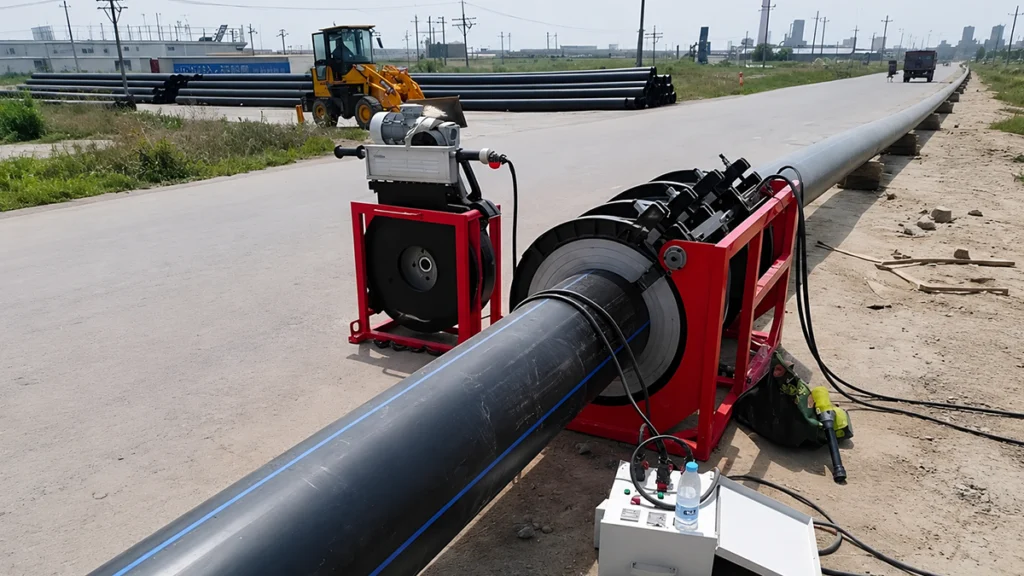
Main Types of HDPE Pipe Welding Machines Used in Ghana
Electrofusion Welding Machines for Fittings and Tight Spaces
Electrofusion machines take a different approach by using specialized fittings embedded with electrical resistance heating coils. The machine sends a specific voltage into the fitting, causing the coils to melt the surrounding polymer and fuse everything to the pipe. This technique works wonders for quick repairs, tying into live lines, or operating inside cramped trenches where standard butt fusion gear simply won’t fit. Partnering with a reliable electrofusion welding machine supplier Ghana contractors trust keeps municipal gas and water networks running smoothly while meeting strict ISO 12176 standards.
Socket Fusion Machines for Small-Diameter HDPE Pipes
You will typically see socket fusion equipment deployed for small-diameter pipes ranging from DN20 to DN110. How does it work? Handheld or bench-mounted tools simultaneously heat the outside of the pipe and the inside of a socket fitting. Once melted, the operator pushes them together. Plumbers and agricultural crews treat this method as standard practice for indoor plumbing, building connections, and small-scale irrigation. It prioritizes high throughput and keeps equipment weight to an absolute minimum.
Which Type Fits Ghana’s Typical Project Scale?
Picking the right butt fusion machinery boils down to your specific project scope, pipe diameters, and the physical working environment.
| Machine Type | Best For | Diameter Range | Typical Price Range | Skill Level Required |
|---|---|---|---|---|
| Manual Butt Fusion | Small plumbing, light irrigation | 40mm – 250mm | Low | Moderate |
| Hydraulic Butt Fusion | GWCL water mains, mining slurry | 90mm – 2250mm | Medium to High | High |
| Electrofusion | Trench repairs, gas lines, tight spaces | 20mm – 1200mm+ | Medium | Moderate (Automated) |
The 5-Step Butt Fusion Welding Process Explained
Pulling off a perfect butt fusion weld means sticking rigidly to a standardized five-step sequence:
1. Clean and Clamp: Lock the pipes into the butt fusion machine clamps. Wipe the ends down with isopropyl alcohol to strip away dirt and oils.
2. Plane (Face): Drop in the milling cutter (planer) to shave the pipe ends until they are perfectly flat and parallel.
3. Align: Pull the planer out and push the pipe ends together. Check for any high-low misalignment and tweak the clamps if needed.
4. Heat: Insert the PTFE-coated heating plate (usually running between 210°C and 270°C). Apply initial pressure to build a bead, then back off the pressure for the heat-soak phase.
5. Fuse and Cool: Quickly remove the heating plate, snap the melted ends together under target fusion pressure, and hold them steady. Let the joint cool completely based on DVS 2207-1 timetables.
Factory-direct pricing with technical consultation included
Get Your Free QuoteWorking Principle and Key Components of a Butt Fusion Machine
Key Components: Heating Plate, Planer, Clamps, Hydraulic Unit
Any professional-grade butt fusion welding machine for HDPE pipes Ghana projects demand relies on four main parts. The heating plate uses a non-stick PTFE coating and precision thermostatic controls to deliver perfectly even melting. A planer (or facer) utilizes hardened steel blades driven by an electric motor to square up the pipe ends. The chassis with clamps holds the pipes firmly in place to maintain perfect alignment. Finally, the hydraulic unit delivers measurable, highly controlled pressure during both heating and cooling, completely eliminating the guesswork of older manual levers.
How Temperature and Pressure Control Affect Weld Quality
Weld integrity hinges entirely on how well you manage temperature and pressure. Run the heating plate too cold (under 200°C), and the polymer chains refuse to intermingle. You end up with a brittle “cold weld.” Run it too hot (over 240°C), and the HDPE material breaks down, losing its structural strength. Pressure works the same way. Too little force fails to forge the materials together. Too much force squeezes all the molten polymer right out of the fusion zone. This is exactly why hydraulic units with digital pressure gauges are non-negotiable—they maintain the exact MPa or bar parameters needed for specific pipe SDR ratings.
Common Diameter Ranges: 63–160mm, 90–315mm, 200–500mm, 500–1200mm
Manufacturers engineer butt fusion machine frames to handle specific diameter ranges using interchangeable aluminum reduction inserts. A hydraulic HDPE butt welding machine 315mm Ghana contractors buy frequently will usually cover 90mm, 110mm, 160mm, 200mm, 250mm, and 315mm pipes. Stepping up to larger infrastructure jobs means bringing in 200-500mm or massive 500-1200mm chassis. These monsters require crane-assisted handling and heavy-duty hydraulic power packs just to shift the sheer weight of thick-walled pipes.
Voltage, Power, and Heating Plate Specifications for Ghana (230V/400V)
Electrical compatibility demands serious attention. Ghana’s national grid runs at 230V for single-phase and 400V for three-phase power at 50Hz. Butt fusion machines sized up to 315mm generally run on 230V single-phase power, pulling total outputs between 3.0 kW and 5.5 kW. Bump up to larger units (450mm and above), and you need 400V three-phase power drawing anywhere from 8.0 kW to well over 30 kW. Contractors must size their on-site diesel generators correctly. A good rule of thumb? Size the generator at least 1.5 times the butt fusion welding machine’s rated power to absorb the heavy initial electrical draw from the heating plate.
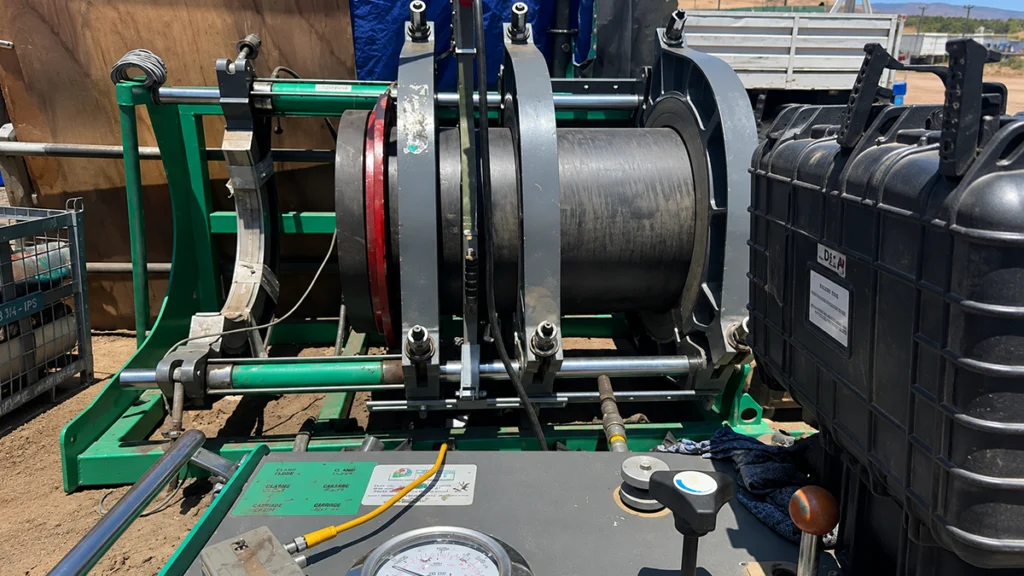
HDPE Pipe Welding Machine Size Range and Technical Specifications
What Specifications Should Match GWCL and Mining Project Requirements?
Sourcing an HDPE pipe butt fusion machine for water projects Ghana engineers manage means aligning specs directly with the pipe’s Standard Dimension Ratio (SDR) and the project’s required pressure rating (PN). The butt fusion machine has to generate enough hydraulic drag pressure to overcome the heavy friction of long pipe strings. GWCL municipal lines demand equipment that complies with ISO 12176 traceability standards. Mining projects, on the other hand, call for ruggedized frames, beefed-up hydraulic cylinders, and dust-proof electrical enclosures to survive highly abrasive environments.
Urban Water Supply and GWCL Distribution Networks
Urban water grids in hubs like Accra, Kumasi, and Takoradi lean heavily on 90mm to 315mm HDPE pipes for secondary distribution, pushing up to 800mm for main transmission lines. Equipment operating here must stay highly mobile to navigate tight trench work. Hydraulic butt fusion machines spanning the 160-315mm range act as the ultimate workhorses in these settings. They strike the perfect balance between portability and the controlled fusion pressure required to guarantee leak-free municipal connections.
Mining Slurry and Dewatering Lines in Obuasi, Tarkwa, and Ahafo
Mining operations punish equipment. Contractors deal with highly abrasive materials and intense dewatering pressures, forcing the use of thick-walled SDR 9 or SDR 11 HDPE pipes. HDPE pipe jointing machines deployed in Obuasi, Tarkwa, and Ahafo must be heavy-duty hydraulic models capable of handling 315mm to 630mm or larger. Thick-walled pipes need longer heat-soak and cooling phases under sustained high pressure. Therefore, robust hydraulic accumulators that hold pressure without forcing the pump to run continuously are absolutely mandatory.
Agricultural Irrigation and Cocoa Farm Water Systems
Massive agricultural irrigation layouts in the Volta region and commercial cocoa farm setups run at much lower pressures, typically utilizing SDR 17 or SDR 21 pipes. Diameters usually fall between 63mm and 250mm. For these specific applications, highly portable manual butt fusion welding machines or entry-level hydraulic units do the job perfectly. The main goal here is rapid deployment across hundreds of acres and the flexibility to run the gear off small, portable petrol generators.
Get detailed specs and custom configuration options
Request Technical SpecificationsApplication Scenarios for HDPE Welding Machines in Ghana
Gas Distribution and Industrial Effluent Projects
Inside the Tema industrial enclave, contractors lay HDPE pipelines to handle industrial effluent discharge and local gas distribution. Gas pipelines demand the highest possible safety standards. This makes CNC automatic butt fusion machines and automated electrofusion welders the mandatory choice to strip out human error. These advanced machines feature data logging capabilities that record the exact temperature, pressure, and duration of every single weld. That data generates the compliant handover documentation regulatory authorities require.
Match Machine Diameter Range to Project Pipe Size
A crucial step in procurement is matching your HDPE pipe jointing machine specifications and MOQ directly to your project’s pipeline bill of materials. Buying a massive 630mm butt fusion machine to weld a batch of 110mm pipes makes zero operational sense. The equipment will be too clumsy for the trench, and swapping reduction inserts constantly kills workflow. On the flip side, pushing a 250mm HDPE pipe welding machine to its absolute maximum capacity day in and day out will quickly burn out the hydraulic seals and planer motor.
Manual vs Hydraulic vs CNC: Which One Should You Buy?
Running a thorough manual vs hydraulic HDPE welding machine comparison highlights massive operational differences.
| Feature | Manual Butt Fusion | Hydraulic Butt Fusion | CNC Butt Fusion |
|---|---|---|---|
| Pressure Control | Operator's physical force | Regulated hydraulic pump | Automated via software |
| Weld Consistency | Low to Moderate | High | Perfect / Traceable |
| Best Pipe Sizes | 63mm – 160mm | 90mm – 1200mm | 90mm – 1200mm |
| Data Logging | None | Optional add-on | Built-in |
| Capital Cost | Lowest | Moderate | Highest |
Certifications to Look For (CE, ISO 9001, ISO 12176)
Bidding on public infrastructure tenders in Ghana means equipment certification is strictly enforced. Your butt fusion machine needs a genuine CE mark to prove electrical and mechanical safety. The manufacturer should also carry an active ISO 9001 quality management certificate. Additionally, if the butt fusion machinery touches critical gas lines or high-pressure water mains, it must comply with ISO 12176. This standard dictates strict performance requirements and data logging protocols for polyethylene fusion equipment.
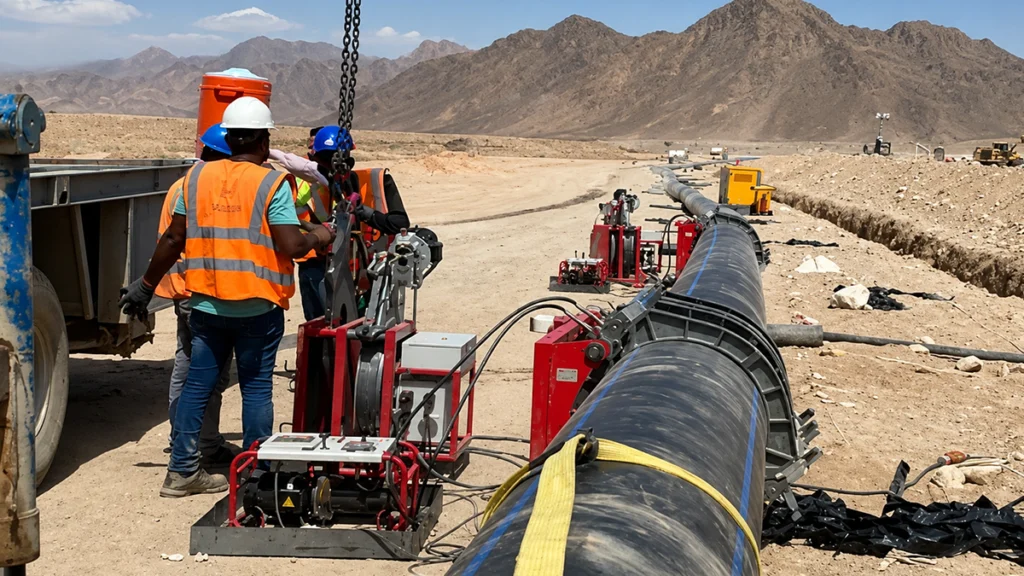
How to Choose the Right HDPE Welding Machine: Decision Criteria
How to Evaluate Supplier Capability and Factory Credibility
Pinpointing the best HDPE welding machine brands for Ghana contractors takes more than glancing at a glossy brochure. Dig into the manufacturer’s export history to West Africa. Can they provide custom voltage setups (230V/400V 50Hz)? Do they offer English-language PLC interfaces? A credible factory willingly hands over detailed technical datasheets, legitimate CE certificates (not just self-declarations), and video proof of your specific butt fusion machine passing pressure tests prior to crating.
Typical FOB Price Ranges by Machine Size (USD)
Figuring out an accurate HDPE pipe welding machine price in Ghana begins with the baseline FOB (Free on Board) costs set by international manufacturers.
- Manual 160mm: $300 – $600
- Hydraulic 250mm: $1,200 – $1,800
- Hydraulic 315mm: $1,500 – $2,500
- Hydraulic 630mm: $4,500 – $7,000
- Hydraulic 800mm+: $8,000 – $15,000+
*Note: Electrofusion and CNC models carry higher price tags due to their integrated electronics and precision sensors.*
MOQ, Payment Terms, and Lead Time from Chinese and European Suppliers
Most industrial equipment builders set a Minimum Order Quantity (MOQ) of just 1 set for hydraulic and CNC autonatic butt fusion machines. This makes direct importing highly accessible for medium-sized contractors. Standard payment terms require a 30% T/T (Telegraphic Transfer) deposit, settling the remaining 70% balance after a pre-shipment video inspection. Production lead times for standard units (up to 315mm) run between 7 and 15 days. Custom builds or massive large-diameter frames (800mm+) often stretch the timeline to 30 or 45 days.
Shipping to Tema Port: Freight, Duties, and Customs Clearance
Logistics dictate the pace of procurement. Sea freight originating from major Chinese hubs (like Qingdao or Shanghai) or European ports takes roughly 35 to 50 days to hit Tema Port. Buyers need to budget accurately for ocean freight (LCL for single units, FCL for bulk distributor shipments), marine insurance, and Ghana import duties based on industrial butt fusion machinery HS codes. Do not forget to factor in VAT and the service fees charged by a licensed local customs house agent.
Cost, MOQ, Lead Time, and Import Considerations for Ghana Buyers
Total Landed Cost Breakdown Example
To estimate the real cost of importing an HDPE pipe welding machine in Ghana, buyers should calculate the total landed cost, not only the FOB machine price. The example below shows a reference breakdown for importing a 315mm hydraulic butt fusion machine to Tema.
| Cost Component | Estimated Value (USD) |
|---|---|
| Machine Price (FOB) | $2,500 |
| Sea Freight to Tema (LCL) | $500 |
| Marine Insurance | $50 |
| Import Duty, VAT & Local Levies | $760–$1,220 |
| Customs Clearance & Port Fees | $250–$400 |
| Inland Transport (Tema to Accra) | $100–$200 |
| Estimated Total Landed Cost | $4,160–$4,870 |
Buying Underspecified Machines for Large-Diameter Projects
One of the most expensive mistakes a buyer can make is procuring a butt fusion machine that fits the pipe diameter on paper but lacks the brute hydraulic power to move the pipe’s physical weight. Clamping thick-walled SDR 9 mining pipes into a lightweight 315mm frame leads to disaster. Expect burnt-out hydraulic pumps, slipping clamps, and blown welds that rupture under pressure. Always explicitly state the pipe SDR and material grade when requesting factory quotes.
Ignoring After-Sales Support, Spare Parts, and Local Service
Access to HDPE pipe welding machine training and after-sales service Ghana is what separates a profitable project from a stalled one. Heating plates eventually need fresh PTFE coatings, planer blades dull over time, and hydraulic seals blow out. Buying from a supplier who guarantees DHL air freight for spare parts within 5-7 days saves projects. Alternatively, partnering with a local distributor who stocks consumables right in Accra or Kumasi completely eliminates severe downtime.
Voltage Mismatch and Power Stability Issues in Ghana
Unpredictable power grids and voltage drops at remote job sites destroy sensitive welding electronics. Hooking a 230V butt fusion machine up to a fluctuating site generator can permanently fry the heating plate’s thermostat or torch the hydraulic unit’s electric motor. Sourcing butt fusion welding machines engineered with strong voltage tolerance is critical. Furthermore, ensuring site generators run with Automatic Voltage Regulators (AVRs) dramatically extends the lifespan of your equipment in Ghana.
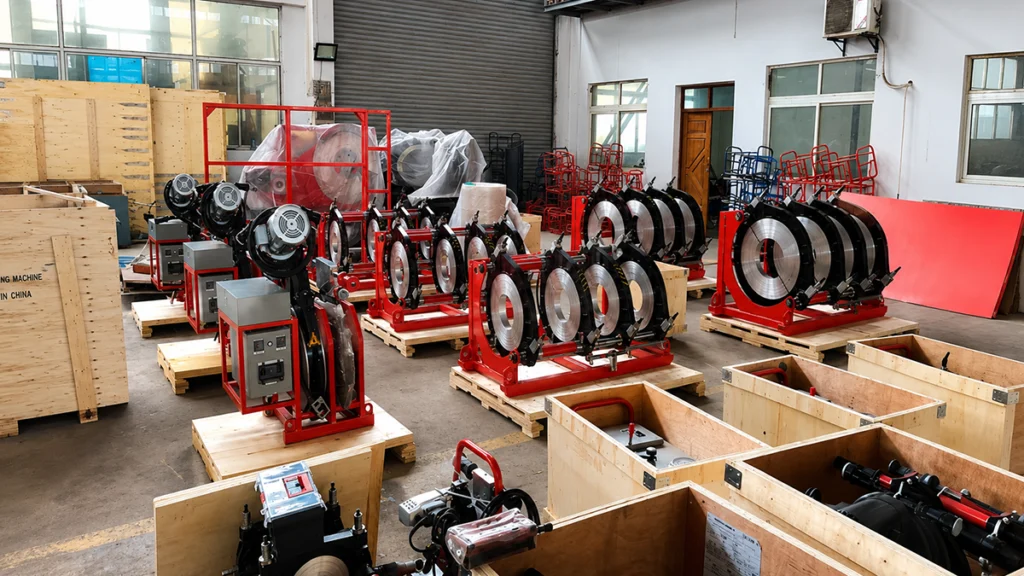
Common Mistakes and Hidden Risks When Buying HDPE Welding Machines
Uncertified Suppliers and Counterfeit Heating Plates
The industrial market is flooded with cheap equipment hiding counterfeit components. The biggest threat? Fake PTFE (Teflon) coatings on heating plates. Counterfeit coatings burn and peel off after just a few dozen cycles. Once that happens, molten HDPE sticks aggressively to the bare metal, destroying the weld face and forcing crews to shut down. Always demand verifiable specs regarding the exact brand and thickness of the PTFE coating.
Pre-Purchase Technical Checklist (Specs, Certificates, Warranty)
- [ ] Verify the butt fusion machine covers the exact diameter range and SDR ratings of your project.
- [ ] Confirm electrical compatibility (230V/400V 50Hz) and generator sizing requirements.
- [ ] Request the CE certificate and verify its authenticity with the issuing body.
- [ ] Check the hydraulic cylinder size and maximum drag pressure capabilities.
- [ ] Ensure a minimum 12-month manufacturer warranty covering core components.
Supplier Verification Checklist (Factory Audit, References, Export History)
- [ ] Request a live video tour of the supplier’s manufacturing and testing facility.
- [ ] Ask for export records or Bill of Lading samples showing previous shipments to West Africa.
- [ ] Verify ISO 9001 quality management certification.
- [ ] Check if the supplier manufactures the chassis in-house or merely assembles outsourced parts.
- [ ] Request references from other African infrastructure or mining contractors.
Post-Purchase Support Checklist (Training, Spare Parts, Repair Turnaround)
- [ ] Confirm the inclusion of a comprehensive English operation manual and parameter charts.
- [ ] Ensure the supplier provides video training materials for the specific butt fusion welding machine model.
- [ ] Secure a commitment for fast-tracked air freight of critical spare parts (blades, seals, thermostats).
- [ ] Ask for a recommended spare parts kit to be included in the initial sea freight shipment.
- [ ] Verify the supplier offers responsive technical support via WhatsApp or email during Ghana working hours.
Practical Buying Checklist for Contractors and Distributors in Ghana
Recommended Setup for Small Water Distribution Contractors
For local crews handling secondary water connections and residential plumbing tie-ins, speed and portability reign supreme. Pairing a tough manual butt fusion machine (up to 160mm) with a compact electrofusion unit (up to 110mm) delivers massive flexibility for trench repairs and tight-space operations. This highly cost-effective setup easily runs off small, lightweight petrol generators.
Recommended Setup for Mining and Large-Diameter Infrastructure
Mining sub-contractors and GWCL main-line installers must prioritize raw durability and hydraulic power. The ultimate setup features heavy-duty hydraulic butt fusion machines (think 315mm, 630mm, or 800mm models) equipped with reinforced clamps, integrated data loggers for quality control, and high-capacity hydraulic accumulators. Adding crane attachments and wheeled chassis options proves essential for maneuvering these massive rigs across hostile terrain.
Recommended Setup for Distributors Serving Multiple End-Users
Businesses aiming to launch an HDPE pipe welding machine rental in Accra or supply contractors directly need to stock versatile, high-demand gear. Distributors thrive by keeping 160mm, 250mm, and 315mm hydraulic butt fusion machines in inventory, as these specific sizes handle roughly 80% of urban infrastructure requirements. Stocking a deep array of spare parts—like planer blades, PTFE plates, and quick-release hydraulic couplings—cements a distributor’s reputation as a dependable local partner.
Final Recommendation: Best-Fit HDPE Welding Machine Setup for Ghana Projects
Pinning down the right HDPE pipe welding machine in Ghana means striking a balance between capital expenditure, hard project specifications, power availability, and long-term reliability. For standard municipal water contracts, a 315mm hydraulic butt fusion machine consistently delivers the best return on investment. Mining applications dealing with thick-walled pipes strictly require 630mm+ heavy-duty hydraulic frames. Whether you operate as a distributor or a frontline contractor, prioritize suppliers who hand over transparent technical data, genuine CE certifications, and rock-solid spare parts logistics to Tema Port. Doing so guarantees your pipelines will stand the test of time for decades to come.
—
FAQ
Q1: How much does an HDPE pipe welding machine cost in Ghana?
The cost of an HDPE pipe welding machine in Ghana depends on the welding range, machine type, hydraulic system, automation level, voltage requirement, accessories, and spare parts package. Small manual machines are usually more economical, while 315mm hydraulic butt fusion machines generally cost more because they provide better pressure control and wider pipe size coverage. Large-diameter hydraulic or CNC butt fusion machines require a higher budget. Buyers should also include sea freight to Tema Port, marine insurance, import duties, local clearance fees, and inland transport when calculating the final landed cost.
Q2: What is the difference between butt fusion and electrofusion welding for HDPE pipes?
Butt fusion welding uses a heating plate to heat the prepared ends of two HDPE pipes. The pipe ends are then joined under controlled pressure to form a continuous fusion joint. Electrofusion welding uses special fittings with built-in heating wires. The fitting is connected to an electrofusion welding machine, which supplies electric current to heat and fuse the fitting with the pipe surface. Butt fusion is commonly used for straight pipe-to-pipe joints, while electrofusion is often used for branch connections, repairs, and confined trench installations.
Q3: Which HDPE welding machine size is best for GWCL water distribution projects?
The best HDPE welding machine size for GWCL water distribution projects depends on the pipe diameter, SDR, wall thickness, and project design. For many secondary water distribution networks, a DN315 hydraulic butt fusion machine can be a practical option because it can weld common pipe sizes such as DN90, DN160, DN200, DN250, and DN315 with the correct reducing inserts. For larger transmission pipelines, contractors may need DN500, DN630, or larger hydraulic butt fusion machines.
Q4: Do HDPE welding machines imported to Ghana work on 230V or 400V power supply?
Yes. HDPE pipe welding machines can usually be configured according to Ghana’s jobsite power requirements. Smaller machines may use 230V single-phase, 50Hz power, while larger hydraulic machines may require 400V three-phase, 50Hz power. Before ordering, buyers should confirm the required voltage, plug type, total power demand, heating plate power, and generator capacity. For remote construction sites, the generator should provide sufficient continuous output for heating, facing, and hydraulic operation.
Q5: How long does shipping an HDPE welding machine from China to Tema Port take?
Shipping time from major Chinese ports to Tema Port usually depends on the shipping route, vessel schedule, transshipment, and customs clearance process. Ocean freight may take around 35 to 50 days as a reference, while production time depends on the machine model, stock availability, voltage configuration, and accessories. For a standard 315mm hydraulic butt fusion machine, buyers should usually plan a total procurement window of about 6 to 8 weeks, including production, export preparation, sea freight, and local clearance.
Q6: What certifications should a reliable HDPE fusion machine supplier have?
A reliable HDPE fusion machine supplier should be able to provide quality management certificates, product documents, and electrical safety information according to the target market and project requirements. Common documents may include ISO 9001, CE-related documents where applicable, operation manuals, test reports, packing lists, and machine specifications. For professional pipeline projects, buyers should also confirm whether the machine can support welding procedures required by standards such as ISO 21307, DVS 2207-1, or relevant local project specifications.
Q7: Can one HDPE welding machine handle both small and large diameter pipes?
One HDPE welding machine can weld different pipe sizes within its rated welding range by using reducing inserts. For example, a 315mm butt fusion machine can usually weld smaller sizes such as 90mm, 160mm, 200mm, 250mm, and 315mm when the correct inserts are used. However, a machine cannot weld pipes larger than its maximum clamping range. Buyers should choose the machine size according to the largest pipe diameter, SDR, wall thickness, and project requirements.
Q8: What after-sales support should contractors in Ghana expect from suppliers?
Contractors in Ghana should look for suppliers that provide clear English operation manuals, machine specifications, spare parts lists, remote technical support, and welding operation guidance. For long-term projects, it is also important to confirm the availability of consumable parts such as PTFE-coated heating plates, facer blades, hydraulic seals, temperature controllers, and reducing inserts. A reliable supplier should help buyers prepare essential spare parts before shipment to reduce downtime during construction.
Conclusion
Securing the optimal HDPE pipe welding machine in Ghana represents a strategic move that dictates the success and lifespan of major infrastructure builds. Whether your crews are laying GWCL municipal water lines across Accra, maintaining aggressive slurry pipelines in the Tarkwa mining sector, or rolling out vast agricultural irrigation in the Volta region, aligning your HDPE pipe jointing machinery with the pipe diameter, SDR rating, and harsh site conditions is non-negotiable.
Contractors and local distributors need to look far past the initial FOB sticker price. Evaluate the true landed cost at Tema Port, scrutinize the power of the hydraulic systems, and verify the durability of the PTFE heating plates. By demanding legitimate CE and ISO certifications, confirming electrical compatibility with Ghana’s 230V/400V grid, and locking down a dependable spare parts supply chain, buyers successfully dodge the crushing downtime caused by counterfeit or underspecified gear. Ultimately, deploying technically compliant, heavy-duty fusion equipment guarantees that every single weld easily clears international standards, providing Ghanaian communities and industries with reliable, leak-proof pipelines for decades to come.
Let our experts help you choose the right equipment for your project
Contact Our Engineering Team