
HDPE Pipe Welding Machine in Lebanon: Buying Guide for Municipal Pipeline Projects
Table of Contents
HDPE Pipe Welding Machine in Lebanon buyers can use this guide to compare machine types, specifications, costs, supplier support, and quality requirements for municipal pipeline projects.
Buying an HDPE Pipe Welding Machine in Lebanon isn’t just about picking a tool out of a catalog; it requires a strategic match between what the equipment can do and the rigorous demands of your project. You have to weigh factors like the pipe diameter range (DN), the Standard Dimension Ratio (SDR), and whether you need butt fusion or electrofusion. On top of that, consider the level of automation, power availability on site, and whether you can actually get local support when things go wrong. Making the right choice means securing compliant, top-tier equipment that guarantees leak-proof, long-lasting joints across critical municipal water and wastewater networks.
What Is an HDPE Pipe Welding Machine and Why Does It Matter for Municipal Projects?
How HDPE pipe welding creates leak-resistant pipeline joints
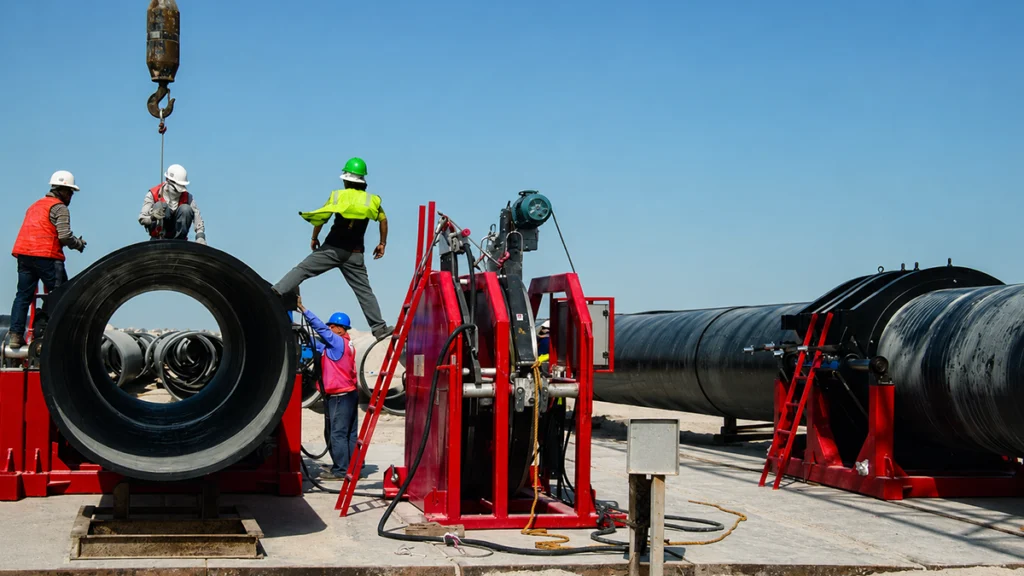
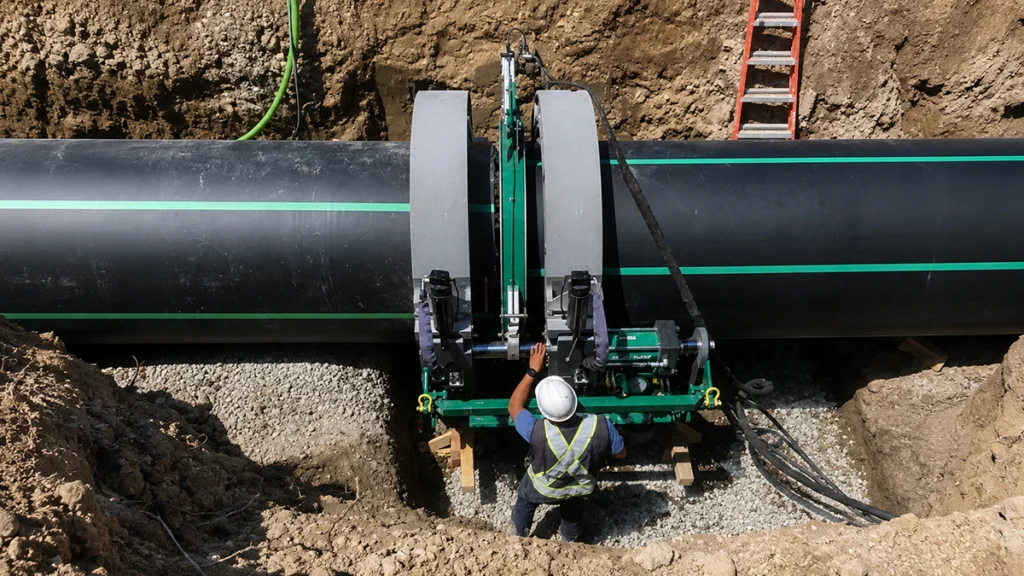
These butt fusion welding machines rely on thermofusion to permanently bond high-density polyethylene pipes. The process is straightforward but requires absolute precision. The equipment applies targeted heat—usually sitting between 200°C and 230°C for PE100 materials—along with strictly controlled hydraulic pressure to melt and fuse the pipe ends. Do this right, and the plastic’s molecular structure essentially knits itself together. The result? A continuous joint that often boasts more strength than the original pipe. You can finally say goodbye to mechanical fittings, gaskets, and thrust blocks, leaving you with a truly leak-proof pipeline.
Why municipal contractors need controlled fusion quality
Municipal infrastructure doesn’t get a pass on durability; it has to perform flawlessly for decades. That means controlled fusion quality isn’t optional. Every single joint must align with strict international benchmarks like DVS 2207-1 or ISO 21307. If your butt fusion machine fails to accurately regulate temperature, cooling times, or interfacial pressure (which usually hovers between 0.15 and 0.20 MPa), you risk creating cold joints or dangerous stress concentrations. Contractors need equipment that takes the guesswork out of the equation. They need repeatable, verifiable welds capable of surviving both ground shifts and intense internal hydrostatic pressure.
Where HDPE welding machines are used in Lebanon infrastructure projects
Upgrading and expanding infrastructure across Lebanon leans heavily on heavy-duty thermoplastic piping. You will find an HDPE Pipe Welding Machine in Lebanon working hard across a massive variety of sites. They tackle everything from coastal desalination distribution lines to complex mountain reservoir connections. Contractors depend on this equipment for tight urban street trenching in Beirut, sprawling agricultural irrigation networks out in the Bekaa Valley, and specialized industrial zones that demand highly chemical-resistant piping.
Municipal water and wastewater pipeline applications
City planners and municipalities deploy HDPE welding gear for two main lifelines: pressurized potable water networks and gravity-fed sewage systems. When laying down long, straight stretches of main distribution lines, a butt fusion welding machine for municipal pipeline projects proves absolutely essential. Meanwhile, wastewater and drainage projects have their own strict rules. They demand high chemical resistance and zero-infiltration joints to keep groundwater safe from contamination. Here, high-quality pipe fusion machines step up to deliver the structural integrity that environmental regulations demand.
HDPE Pipe Welding Demand in Lebanon: Project Conditions Buyers Should Consider
How terrain and jobsite access affect machine selection
Lebanon throws a mix of wild topographies at construction crews. You have the congested, chaotic urban grid of Beirut, contrasted sharply by steep, rocky mountain passes. This landscape dictates exactly what gear you should buy. Sure, heavy, track-mounted automatic welders dominate wide-open, flat terrain. But take them up a narrow mountain road, and they instantly become a logistical nightmare. When site access gets tight, contractors usually pivot to wheeled, modular hydraulic butt fusion machines. Crews can break these units down, lower the pieces into a cramped trench, and rebuild them right around the pipe.
What procurement teams should check before ordering equipment
Never issue a purchase order without first doing a reality check on the jobsite. Procurement managers need to look hard at the operational conditions. What does the on-site power supply look like? You need to verify generator capacity and voltage stability. Also, double-check the exact pipe SDR ratings required by the project specs, along with the ambient temperatures your crew will face during construction. Trust me, ignoring the mismatch between a butt fusion machine’s power draw and the field generator’s output is a surefire way to stall a project.
When local support matters more than the lowest purchase price
Hunting down the absolute lowest price tag seems smart until something breaks. Finding an HDPE pipe welding machine supplier in Lebanon who provides immediate technical support almost always beats a cheap upfront deal. These HDPE pipe jointing machines need ongoing care. We’re talking routine calibration, swapping out PTFE-coated heating plates, and staying on top of hydraulic fluid maintenance. Buy a bargain-bin import with zero local spare parts, and a single failed valve could paralyze a time-sensitive municipal project for weeks.
Butt fusion welding machines for standard HDPE pipeline joints
When you need to join massive lengths of HDPE pipe, butt fusion stands as the undisputed industry standard. The crew starts by facing the pipe ends so they sit perfectly parallel. Next, they heat those ends against a PTFE-coated plate. Once the plastic hits the right melt, they pull the plate and drive the molten ends together under precise hydraulic pressure. Because it completely bypasses the need for extra couplers or fittings, this method remains incredibly cost-effective for sprawling municipal runs.
Factory-direct pricing with technical consultation included
Get Your Free QuoteMain Types of HDPE Pipe Welding Machines for Municipal Pipeline Work
Electrofusion welding machines for repairs and restricted spaces
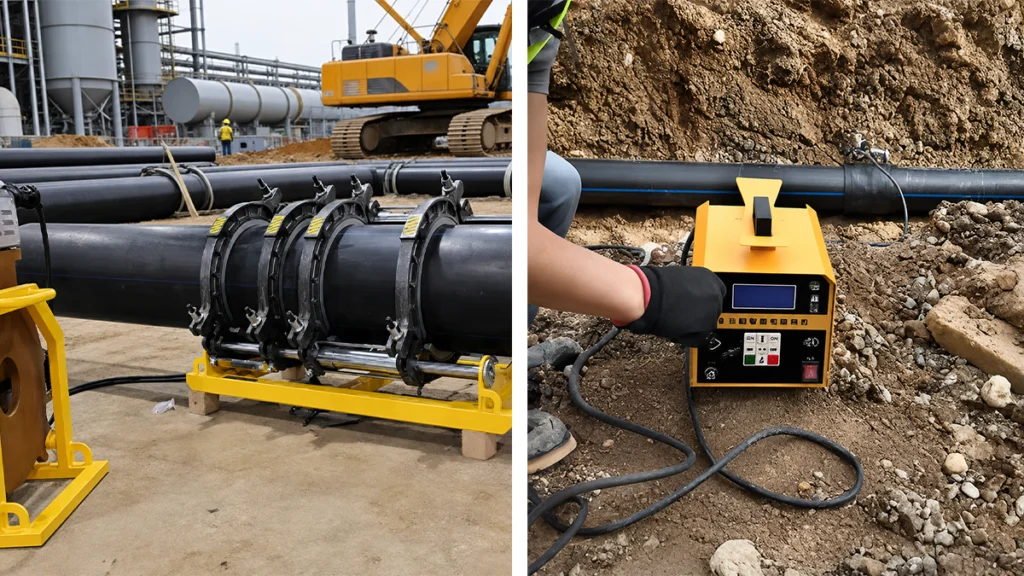
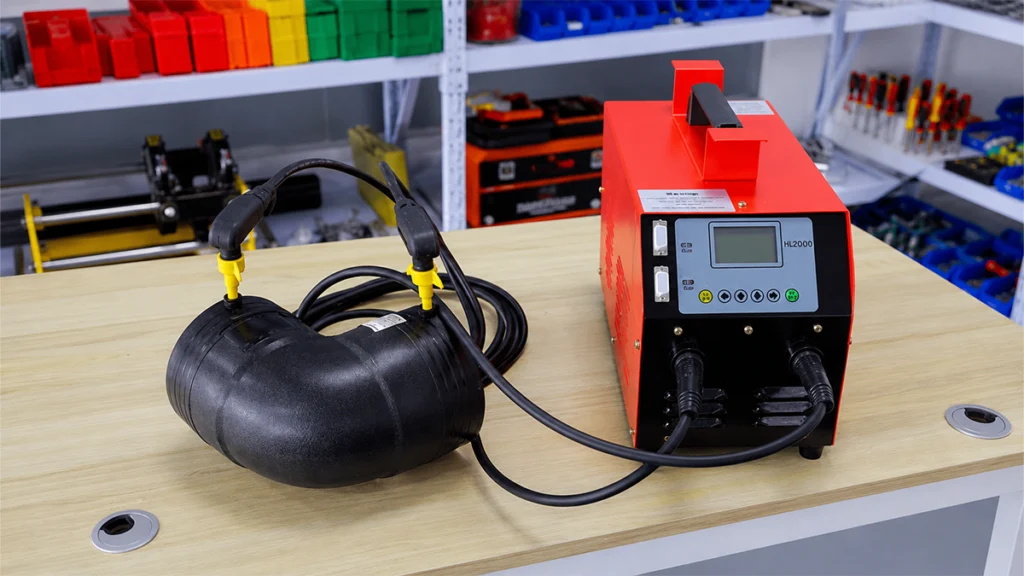
Electrofusion takes a different route, relying on specialized fittings packed with embedded electrical heating coils. The electrofusion welding machine shoots a highly precise voltage into the fitting. This melts both the inside of the fitting and the outside of the pipe simultaneously. It’s the perfect solution for claustrophobic trenches, vertical shafts, and emergency repair jobs where wrestling a massive butt fusion machine into place simply isn’t an option.
Manual vs Hydraulic vs CNC Butt Fusion Machines
Choosing the right HDPE pipe welding equipment depends on pipe diameter, project scale, site conditions, automation requirements, and operator experience. The table below compares manual, hydraulic, CNC automatic, and electrofusion equipment to help contractors select a suitable solution.
| Machine Type | Typical Pipe Range | Best For | Main Advantages | Key Limitations |
|---|---|---|---|---|
| Manual Butt Fusion Machine | Approx. 40–250 mm | Small-diameter pipes, repairs, and low-volume projects | Compact, economical, and easy to transport | More dependent on operator control and less efficient for frequent welding |
| Hydraulic Butt Fusion Machine | Approx. 63–2250 mm | Municipal, industrial, mining, and large pipeline projects | Stable pressure control, durable construction, and a wide welding range | Heavier equipment and requires a suitable power supply |
| CNC Automatic Butt Fusion Machine | Approx. 160–630 mm | Projects requiring repeatability, traceability, and welding records | Automated parameter control, data logging, and improved process consistency | Higher initial investment and requires trained operators |
| Electrofusion Equipment | Commonly 20–500 mm | Repairs, branch connections, confined spaces, and tie-ins | Compact operation and suitable where butt fusion equipment cannot be positioned | Higher fitting cost and careful scraping, cleaning, alignment, and cooling are required |
Actual welding ranges and configurations vary by machine model, pipe SDR, project standard, and manufacturer specifications.
Which welding method is better for municipal pipeline projects?
Pitting an electrofusion vs butt fusion machine for HDPE pipelines against each other comes down entirely to your project scope. If you are laying down kilometers of brand-new, straight pipe, butt fusion wins easily. It’s far more economical because you don’t have to buy thousands of dollars worth of fittings. On the flip side, electrofusion shines for maintenance crews. Whether they are handling hot taps, executing tie-ins, or patching up existing lines buried deep inside congested underground utility corridors, electrofusion is the smarter play.
Pipe diameter range and SDR compatibility
You can’t just buy a butt fusion machine and expect it to weld everything. Each unit carries a specific rating for a diameter range—say, DN160 up to DN315. More importantly, it can only handle pipes up to a maximum wall thickness, known as the SDR. A welder built specifically for thin-walled SDR 17 pipe will likely choke if you ask it to push together thick-walled SDR 9 pipe of the exact same diameter. It simply won’t have the hydraulic muscle to do the job right.
Key Technical Specifications to Check Before Buying
Heating plate temperature control and pressure accuracy
A solid weld lives and dies by heat and pressure. When you buy, insist on heating plates equipped with digital PID temperature controllers. These need to hold temperatures steady within a tight ±5°C window. On the hydraulic side, look for a highly accurate, easily readable pressure gauge. (Pro tip: get a liquid-filled one to handle jobsite vibrations). You also absolutely need an accumulator to keep that drag pressure rock-steady while the joint cools down.
Power supply, generator compatibility, and field operation
Crews working on sewage and drainage projects frequently drag HDPE welding equipment out into the middle of nowhere. Before heading out, calculate the total power draw (in kW) of your facer, heating plate, and hydraulic pump combined. Your field generator isn’t just there to match that number; it needs to output at least 1.5 to 2 times the butt fusion machine’s rated power. This overhead absorbs aggressive startup surges and guarantees your heating plate won’t suffer a sudden voltage drop right in the middle of the critical soaking phase.
Data logging and traceability for quality control
Handshakes don’t cut it anymore; modern municipal contracts demand hard digital proof of your weld quality. This is where data loggers step in. They capture the exact temperature, pressure, and time parameters for every single joint. They even tag the data with the operator’s ID and precise GPS coordinates. If a pipeline ever fails down the road, this level of traceability acts as an insurance policy. It proves beyond a doubt that your team fused the joint strictly by the book, adhering to all ISO/DVS standards.
For small repair teams and maintenance departments
Agility is the name of the game for small repair and maintenance crews. They need to deploy fast and move easily. The perfect setup for these teams involves lightweight, modular frames running on standard 220V single-phase power, backed by serious electrofusion capabilities. Give a crew a compact DN160 manual (or entry-level hydraulic) HDPE pipe jointing machine and pair it with a solid electrofusion unit, and they will easily knock out 90% of the emergency municipal water line repairs they encounter.
Get detailed specs and custom configuration options
Request Technical SpecificationsHow to Choose the Right HDPE Pipe Welding Machine for Municipal Contractors
For medium-size water supply and drainage contractors
Let’s look at mid-sized contractors tackling neighborhood distribution networks. They usually wrestle with pipes falling in the DN90 to DN315 range. Imagine a crew tasked with installing a DN315 SDR 11 water main. For them, the smartest play is a heavy-duty hydraulic butt fusion machine mounted on a wheeled chassis. This setup delivers the raw hydraulic pushing power needed for thicker walls, yet it stays nimble enough to navigate standard, cramped street trenches.
For large-diameter pipeline installation projects
Stepping up to massive transmission lines—anything from DN400 all the way to DN1200+—changes the rules entirely. The HDPE pipe welding machine specifications for large diameter pipes have to reflect the extreme environment. You are looking for heavy-duty steel frames, built-in crane-lifting points, and massive hydraulic power units. To move these beasts across brutal terrain, you’ll likely need a tracked chassis. Furthermore, hydraulic pipe lifters become mandatory to safely maneuver and align pipe sections that weigh several tons.
Should you choose automatic or semi-automatic equipment?
Opting for an automatic HDPE pipe welding machine for water supply networks (CNC) completely removes the operator from calculating pressure and time. This practically eliminates human error. On the other hand, semi-automatic units force the operator to check charts and manually dial in the pressures and cooling times. Yes, semi-automatic gear keeps more money in your pocket upfront. However, if you are working on high-pressure gas lines or critical water mains where a failed weld equals a catastrophe, automatic is the only way to go.
Machine size, automation level, and component quality
Picking the perfect butt fusion machine means walking a tightrope between your upfront budget and long-term operational speed. Never skimp on component quality. Features like German-engineered hydraulic seals, aerospace-grade aluminum clamps, and ultra-durable PTFE coatings are what keep you running instead of breaking down mid-job. Procurement teams shouldn’t just guess by flipping through a glossy brochure. Sit down with a technical supplier. Let them spec out the ideal model based strictly on your exact SDR and diameter requirements.
HDPE Pipe Welding Machine Price in Lebanon: What Affects Total Cost?
Accessories, clamps, inserts, facer, and heating plate costs
Don’t let the sticker price fool you; the base cost almost never covers what you actually end up paying. A realistic HDPE pipe fusion machine price in Lebanon has to factor in all the extras. You will need reducing inserts to handle smaller pipes on a large frame. You also have to pay for a high-torque electrical or hydraulic facer and a top-tier heating plate. Throw in specialized gear like stub-end holders for flange adapters, and that initial quote climbs quickly.
Import, delivery, warranty, and spare parts considerations
Budgeting gets tricky once you add logistics. You have to account for international freight, hefty customs duties, and the cost of hauling the equipment inland to your site. Sometimes, paying a bit more upfront makes financial sense. A butt fusion machine backed by a rock-solid local warranty and a warehouse full of spare parts is a far safer bet than a dirt-cheap import. If a hydraulic valve blows on that cheap import, the resulting downtime will eat your profits alive.
How to calculate value instead of choosing the cheapest option
True value comes down to understanding your Total Cost of Ownership (TCO). Here is how you break it down:
- Base Machine Price: $X
- Shipping & Import: $Y
- Downtime Risk (Lack of parts): This acts as a massive cost multiplier.
- Lifespan & Resale Value: High-end machines actually hold their worth over time.
Grabbing the absolute cheapest option usually backfires. It leads to misaligned pipes, weeping joints, and the staggering expense of digging up and replacing broken municipal lines.
Common HDPE fusion welding procedure requirements
Following strict welding procedures isn’t just about quality; it directly hits your bottom line. These protocols demand strict environmental controls. For instance, you will need welding tents to shield the joint from wind and rain. You also have to pay for precise datalogger calibration and a steady supply of fresh facer blades. If you want your project bids to be accurate, you must build the cost of meeting these procedural requirements straight into your budget.
Quality Standards, Welding Procedures, and Joint Inspection
Visual inspection signs of a proper butt fusion joint
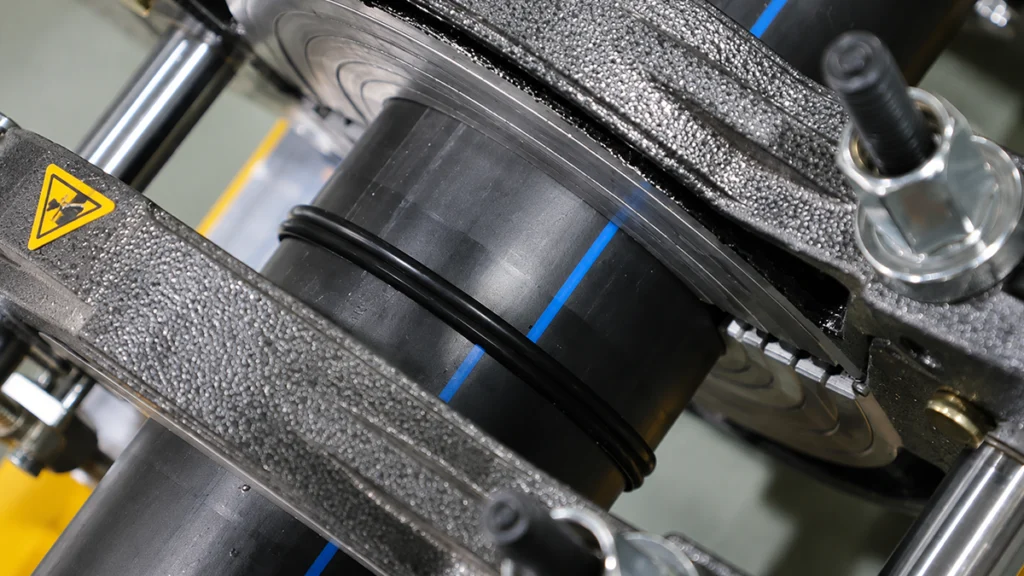
You can spot a stellar butt fusion joint just by looking at the bead. Inspectors want to see a perfectly uniform, double-bead that rolls completely over onto the pipe’s surface. That bead needs to be smooth, free of any tiny pores, uncolored, and perfectly symmetrical all the way around the pipe. If you spot deep V-shaped grooves between the beads, or if the roll-over looks lopsided, you have a problem. Those are classic signs of bad pressure, uneven heating, or sloppy alignment.
Why operator training affects weld consistency
You can buy the most sophisticated hydraulic rig on the market, but it won’t fix terrible pipe preparation. That is why HDPE fusion welding machine training and after-sales service in Lebanon is non-negotiable. Your crew needs to know exactly how to prep and clean the pipe ends. They need the experience to hear or feel when a facer blade goes dull, and they must know how to tweak the settings when ambient temperatures spike or plummet. Put simply, untrained operators cause more joint failures than any piece of equipment ever will.
How welding records support project acceptance
Don’t expect a municipal engineer to just take your word for it; they won’t sign off without hard proof. Automated data loggers generate a detailed digital footprint for every single joint. These records show the exact heating time, the split-second changeover time, and the sustained cooling pressure. If you want to pass the final project inspection and actually get paid, handing over these records is mandatory.
Questions to ask before requesting a quotation
Before you shoot off an RFQ, make sure you hit the supplier with some tough, quality-focused questions:
- Does this specific butt fusion machine fully comply with DVS 2207-1 and ISO 21307 standards?
- Will you provide official calibration certificates for both the heating plate and the pressure gauge?
- At its absolute maximum diameter, what is the highest SDR rating the hydraulic unit can safely push?
Supplier Evaluation Checklist for Buying an HDPE Pipe Welding Machine in Lebanon
Documents and certificates a reliable supplier should provide
Any supplier worth their salt will hand over a stack of comprehensive documentation without you having to beg. Look for CE or ISO manufacturing certificates, along with deeply detailed operation manuals (preferably in English or Arabic). You also want to see electrical safety certificates and recent hydraulic pressure calibration reports. This paperwork is your only guarantee that the equipment actually meets the brutal standards required for municipal work.
After-sales service, spare parts, and operator training
Take a hard look at what happens after the sale. Does the supplier actually have a local footprint? Ask if they stock standard wear parts—like fresh PTFE plates, facer blades, and replacement hydraulic seals—right there in Lebanon. Find out if they will send a tech out for on-site commissioning and proper certification training for your crew. A vendor acting as a genuine technical partner will always offer these services to keep your project moving forward.
Red flags when comparing HDPE welding machine suppliers
Walk away fast from any supplier who stares blankly when you ask about the difference between high-pressure and low-pressure welding standards. Watch out for other glaring red flags, too. If they don’t have any physical inventory, refuse to break down exactly what is included in the base price, or can’t offer technical advice beyond reading off a glossy sales brochure, take your business elsewhere.
Buying a machine without confirming pipe diameter requirements
A great way to test a supplier is to see if they try to save you from yourself. A trustworthy vendor flat-out refuses to sell you a butt fusion machine until they confirm your exact pipe diameter (DN) and wall thickness (SDR) specs. If a sales rep just blindly quotes their best-selling model without digging into your municipal project’s unique specifications, they aren’t helping you. They are just piling on project risk.
Common Buying Mistakes That Increase Pipeline Project Risk
Ignoring power conditions and jobsite mobility
It happens all the time: contractors buy massive, heavy-duty pipe fusion machines and only later wonder how they will drag them through a flooded trench or power them up. If you ignore the massive starting current a large heating plate demands, you will spend your days blowing generator fuses and dealing with cold welds. Always ensure your jobsite logistics align perfectly with the butt fusion machine’s physical footprint and electrical appetite.
Underestimating training and calibration needs
Tossing the keys to an HDPE pipe jointing machine for infrastructure projects to just any heavy equipment operator is a massively expensive mistake. Thermoplastic welding isn’t just digging a hole; it is a precise science. On top of that, if you skip your annual butt fusion machine calibration, your temperature and pressure readings will start to drift. Before long, you will be looking at systematic weld failures spanning the entire length of your pipeline.
Choosing price over weld repeatability and support
Chasing the lowest price tag usually means sacrificing frame rigidity. When you start pushing thick-walled pipes together under high hydraulic pressure, a cheap chassis will flex. That flex leads directly to misalignment and compromised joints. Think about it: the staggering cost of excavating and replacing just one failed joint beneath a paved city street will instantly wipe out whatever money you saved buying substandard gear.
Best-fit machine selection by project scenario
If you don’t match the butt fusion machine to the specific scenario, you are just throwing money away. Buying a fully automated CNC rig for a crew that patches up occasional low-pressure irrigation lines is a massive waste of capital. On the flip side, handing a manual butt fusion machine to a team laying a high-pressure municipal water main is a terrifying engineering risk. Match the tool to the exact task.
Final Recommendation: Matching Machine Capability to Municipal Pipeline Goals
Information to prepare before contacting a supplier
If you want a quote that actually means something, your procurement team needs to build a highly specific project brief before picking up the phone. Outline the exact pipe material (like PE100). Detail the complete range of outside diameters (OD/DN) you will be handling, along with the SDR or PN (Pressure Nominal) ratings. Don’t forget to specify your preferred welding method, the site’s available power (voltage and phase), and your hard delivery deadlines.
How to reduce procurement risk for municipal infrastructure projects
Cutting down procurement risk means looking way past the initial capital expenditure. You have to prioritize heavy-duty technical specs and demand advanced data-logging capabilities for bulletproof quality assurance. More importantly, partner with a supplier who guarantees local after-sales support and hands-on training. Doing this ensures your municipal pipelines will survive for generations. Stop guessing at specs; sit down with technical equipment specialists to configure the precise setup your infrastructure challenges demand.
FAQ
Q1: What type of HDPE pipe welding machine is best for municipal water pipelines?
For long, straight municipal water pipelines, a hydraulic butt fusion machine is usually the most practical option because it provides controlled alignment and fusion pressure across a wide range of pipe sizes. Electrofusion equipment may be more suitable for repairs, branch connections, confined trenches, and locations where a butt fusion machine cannot be positioned. CNC automatic machines are useful when the project requires repeatable welding parameters and detailed joint records.
Q2: How much does an HDPE pipe welding machine cost in Lebanon?
The cost depends on the welding range, automation level, power configuration, included reducing inserts, data-recording capability, and after-sales support. Manual machines generally require a lower initial investment, while hydraulic and CNC automatic machines for medium- or large-diameter pipes cost more. Buyers should request a model-specific quotation and include freight, customs duties, local delivery, training, spare parts, and warranty support when calculating the total landed cost in Lebanon.
Q3: What pipe diameter range should a municipal contractor choose for HDPE welding equipment?
Contractors should select a machine that covers the pipe diameters used most frequently while allowing reasonable capacity for future projects. A hydraulic butt fusion machine in the 63–315 mm or 90–315 mm range can cover many local water-distribution projects, while 160–450 mm and 315–630 mm models are more suitable for larger municipal mains and transmission pipelines. The final choice should also consider SDR, required fusion force, transport conditions, and project specifications.
Q4: Is butt fusion or electrofusion better for HDPE pipeline projects?
Neither method is universally better. Butt fusion is commonly used for new, long pipeline installations because it produces continuous joints without separate couplings. Electrofusion is often more practical for repairs, branch connections, tie-ins, confined spaces, and locations with limited equipment access. The correct method depends on pipe diameter, installation space, project standard, fitting availability, and operator experience.
Q5: What specifications should be checked before buying an HDPE fusion machine?
Buyers should confirm the machine’s welding range, supported pipe material and SDR, heater temperature control, hydraulic pressure control, drag-pressure measurement, facer performance, clamp and reducing-insert configuration, voltage, phase, frequency, and total power requirement. Data logging, calibration records, spare-parts availability, operator training, and compliance with the selected fusion procedure should also be reviewed.
Q6: Do HDPE pipe welding machines require trained operators?
Yes. Even when hydraulic or CNC systems control pressure, temperature, and welding time, trained operators are still required to prepare, face, clean, align, heat, join, and cool the pipe correctly. Operators should understand the approved fusion procedure and know how to respond to wind, rain, low temperatures, excessive heat, contamination, pipe ovality, and unstable site power.
Q7: How can buyers verify the quality of an HDPE pipe welding machine supplier?
Buyers should review the supplier’s quality-management documentation, machine specifications, inspection reports, calibration records, electrical documentation, warranty terms, and spare-parts support. They should also confirm whether the supplier provides machine demonstrations, operator training, technical manuals, remote troubleshooting, and suitable equipment recommendations based on the required pipe diameter, SDR, power supply, and project standard.
Q8: What common mistakes cause poor HDPE pipe weld quality?
Common causes include inadequate pipe-end preparation, contaminated fusion surfaces, poor alignment, incorrect heater temperature, excessive changeover time, incorrect fusion or drag pressure, insufficient cooling, and moving the joint too early. Dull facer blades, damaged heater coatings, unsuitable equipment, and welding in wind, rain, or dusty conditions without proper protection can also reduce joint quality.
Conclusion
Selecting the right HDPE pipe welding machine requires more than comparing the initial purchase price. Buyers should confirm that the machine covers the required pipe diameters and SDR range, provides stable heater temperature and hydraulic pressure control, and is suitable for the project’s site conditions, power supply, and approved fusion procedure.
Supplier support is equally important. Operator training, technical documentation, calibration records, spare-parts availability, and responsive after-sales service can help reduce downtime and improve welding consistency throughout the project. By matching the equipment configuration to the pipeline requirements, contractors can support reliable joint quality and long-term municipal water system performance.
Get the Right HDPE Welding Machine for Your Project
Contact Our Engineering Team