
Butt Fusion Machine Price Guide: Why Models Cost Differently
Table of Contents
This butt fusion machine price guide explains why models cost differently, breaking down pricing by pipe size, manual vs hydraulic vs CNC type, key components, hidden ownership costs, and supplier factors—helping B2B buyers benchmark quotes and select the right machine for their project.
What Is a Butt Fusion Machine and How Is Its Price Determined?
Definition and core function of a butt fusion machine
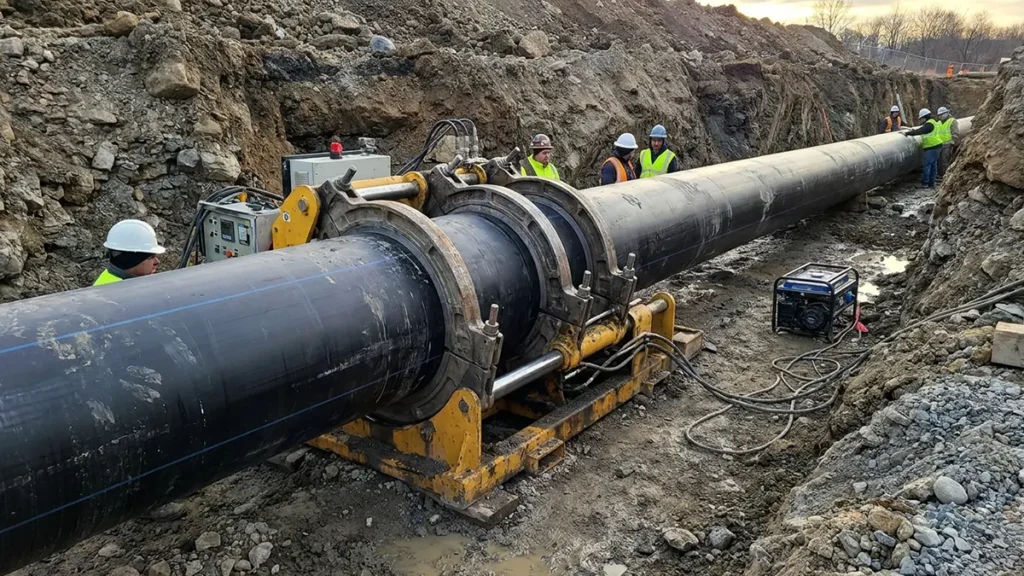
A butt fusion machine isn’t just a basic tool. It is a highly specialized piece of industrial equipment engineered to weld thermoplastic pipes—such as PE, PPR, and HDPE—into a single, seamless, and leak-proof line. How does it work? The system uses controlled electrical heat to melt the pipe ends. Once the thermoplastic reaches the perfect molten state, the machine drives the two faces together under precise pressure. The resulting joint frequently outlasts and outperforms the pipe itself. For procurement teams analyzing a butt fusion machine price, recognizing this complexity is step one. These units blend thermodynamic precision, mechanical clamping power, and advanced hydraulics into a single package.
What pricing factors most influence the final cost?
Automation dictates the final cost more than any other variable. Is the system manual, hydraulic, or fully CNC-controlled? Right behind automation comes HDPE pipe size capacity. A rig designed to fuse massive 1200mm pipes demands exponentially more structural steel and raw hydraulic force compared to a compact 160mm unit. Other significant cost drivers lurk beneath the surface. Upgrading to a premium Polytetrafluoroethylene (PTFE) coating on the heating plate, integrating top-tier hydraulic pumps, or adding the digital data logging required for strict municipal compliance will all push the baseline price upward.
Typical price range overview by machine type
The global market for these industrial welders spans a massive pricing spectrum. Basic manual models built for small-diameter work generally kick off around $1,500. Step up to mid-range hydraulic systems—the go-to choice for municipal contractors—and you will typically see price tags between $2,799 and $5,700. At the extreme high end, fully automated CNC systems engineered for volatile gas lines or mega-infrastructure projects routinely blow past the $12,000 mark. Top-tier, large-capacity CNC models can easily surpass $30,000.
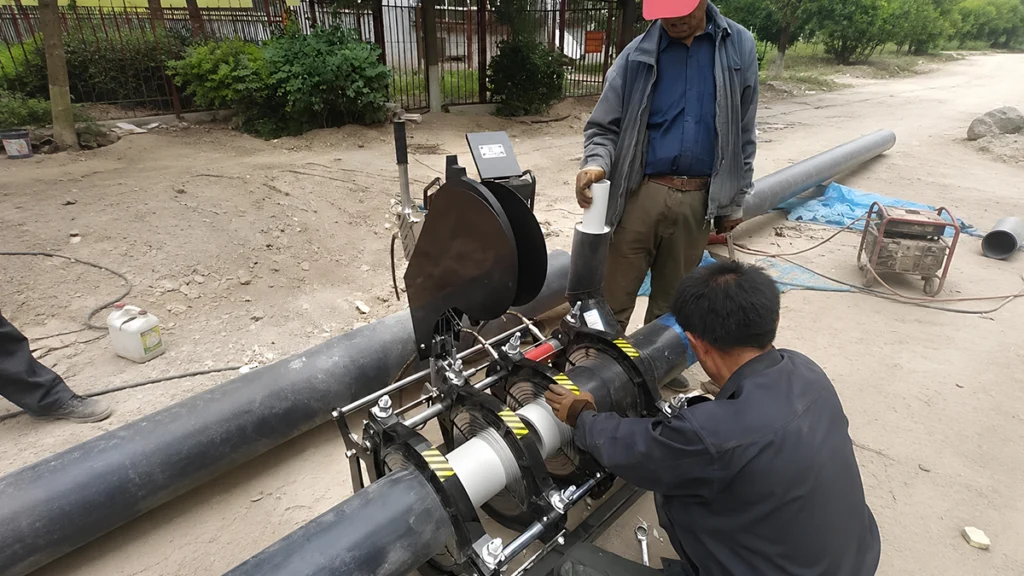
Butt Fusion Machine Price Range by Pipe Size Capacity
Price range for small-diameter machines (63-160mm)
Machines tackling the 63mm to 160mm range prioritize portability and cost-effectiveness. Because they require minimal starting pressure, manual models dominate this category. They are perfect for indoor plumbing installations or light agricultural irrigation. Buyers researching this specific butt fusion machine cost per size range will find basic manual units sitting comfortably between $500 and $635. However, bolting on hydraulic assistance will quickly drive that figure closer to $1,500.
Price range for medium-diameter machines (90-315mm and 200-450mm)
Medium-diameter butt fusion machines act as the undeniable workhorses for drainage and municipal water contractors. Operating these units requires dedicated 220V or 380V power sources, pulling anywhere from 4.21KW to 12.2KW of total power. Expect a standard 63-315mm butt fusion machine price to land between $2,799 and $5,700. The final number largely depends on a single choice: does the buyer want a baseline hydraulic setup or a semi-automatic system featuring advanced pressure regulation?
Price range for large-diameter machines (500-1200mm)
When you move into the 500-1200mm territory, you are looking at massive capital expenditures designed for heavy civil engineering, bulk fluid transport, and mining operations. Fusing 710-1000mm pipes demands up to 23.5KW of power and a chassis weighing around 2600kg. Naturally, prices scale aggressively. Expect to pay anywhere from $15,500 to well over $30,000. Maintaining perfectly parallel alignment across a 1200mm surface area under immense hydraulic pressure requires uncompromising engineering—and that precision commands a premium.
How does pipe size capacity scale with price?
Price scales exponentially with pipe size. The physics of thermoplastic welding leave no room for shortcuts. Larger pipe diameters demand massive clamping forces. For instance, fusing an 800mm pipe requires a hydraulic cylinder with a 23,179 mm² piston area just to generate the necessary drag and fusion pressure. Manufacturers must incorporate heavy-duty cast aluminum clamps, industrial-grade hydraulic power units, and oversized heating plates that draw massive electrical currents. These heavy materials and upgraded components directly inflate manufacturing costs.
| Pipe Size Range | Typical Machine Type | Indicative Price Range (USD) | Common Applications |
|---|---|---|---|
| 63-160mm | Manual / Light Hydraulic | $500 – $1,500 | Indoor plumbing, light irrigation |
| 90-315mm | Hydraulic | $2,799 – $4,500 | Municipal water supply, drainage |
| 200-450mm | Hydraulic / Semi-Auto | $4,000 – $5,700 | Industrial distribution, sewer mains |
| 500-1200mm | Heavy Hydraulic / CNC | $15,500 – $30,000+ | Mining, bulk water transport, dredging |
Factory-direct pricing with technical consultation included
Get Your Free QuoteMain Types of Butt Fusion Machines and Their Price Differences
Manual butt fusion machine price and use cases
Manual units rely entirely on the operator’s physical strength and intuition to manage milling, heating, and fusion pressure. Sitting in the highly affordable $500 to $3,500 bracket, they utilize mechanical leverage and basic, coarse temperature dials. While incredibly cost-effective, their application is strictly limited. They belong on low-pressure lines and smaller pipe diameters where extreme regulatory precision isn’t necessary. Independent technicians handling non-critical residential or agricultural tie-ins often find these manual butt fusion machines perfectly suited to their budgets.
Hydraulic butt fusion machine price and advantages
Reviewing a hydraulic butt fusion welding machine cost reveals the added value of a mechanized power unit capable of pushing a precise 0-16Mpa pressure range. This mechanization becomes absolutely critical for medium and large pipes. Human operators simply cannot sustain the consistent, heavy pressure required during the milling, heating, and cooling phases. Hydraulic systems completely remove operator fatigue from the equation. They ensure uniform bead formation and drastically slash joint failure rates across municipal water networks.
Fully automatic / CNC butt fusion machine price
The CNC automatic butt fusion machine price for HDPE pipe represents the absolute top of the market. These units cost three to four times more than standard manual hydraulic setups. Entry-level CNC models start between $2,300 and $2,800, while massive large-diameter CNC rigs easily cross the $22,000 threshold. They justify this price tag through advanced technology: closed-loop hydraulics, programmable logic controllers (PLCs), high-precision sensors, and fully automated sequence execution. By removing human error, they guarantee flawless welds.
Which type offers the best price-to-performance ratio?
General contractors building water and wastewater infrastructure usually find the best price-to-performance ratio in semi-automatic hydraulic butt fusion machines. They deliver the necessary pressure consistency without the steep premium of full CNC automation. However, gas pipeline contractors operate in a different reality. Regulatory compliance demands strict digital data logging and zero-defect tolerances. For these high-liability projects, swallowing the high initial cost of a CNC automatic butt fusion machine is the only realistic way to mitigate severe operational risks.
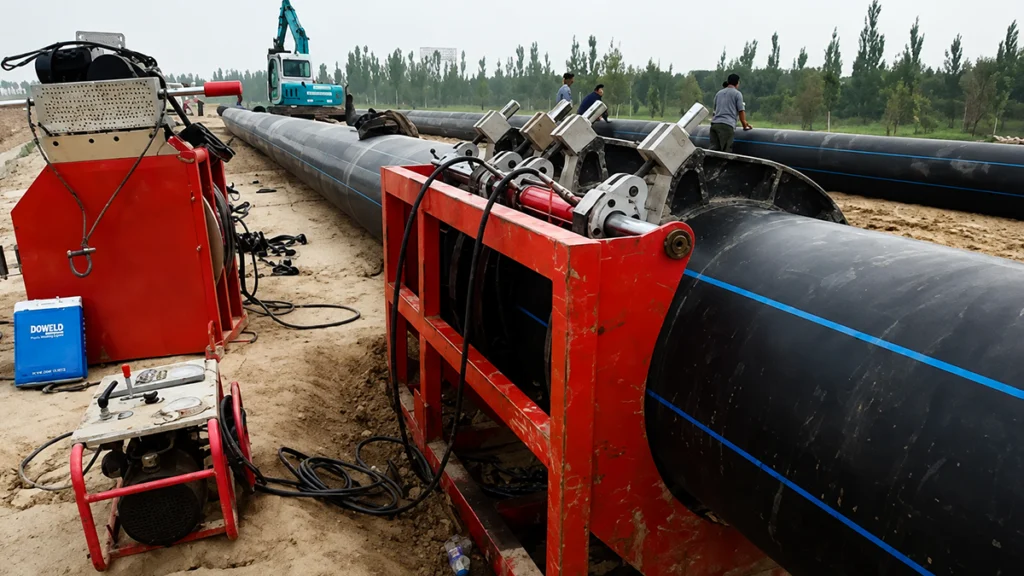
Key Components That Drive Butt Fusion Machine Cost
Hydraulic system and pump quality
The hydraulic power unit acts as the beating heart of any non-manual welder. Premium systems guarantee lightning-fast response times and pinpoint pressure regulation across the entire 0-16Mpa spectrum. High-end hydraulic pumps hold exact drag pressure during the crucial cooling phase without any drop-off—a non-negotiable requirement for proper polymer crystallization. Cheap, inferior pumps inevitably suffer from pressure bleed. The result? Weak joints and catastrophic pipeline failures.
Heating plate coating and temperature accuracy
Manufacturers cast heating plates from high-grade aluminum alloys to guarantee perfectly uniform thermal distribution. During operation, the plate must hold temperatures between 0-270°C, staying within a razor-thin ±3°C error margin. Substandard butt fusion machines frequently drift by ±5°C or more, leading straight to localized polymer degradation. Additionally, coating the plate with premium Polytetrafluoroethylene (PTFE) stops molten plastic from sticking. While high-quality PTFE treatments drive up the initial manufacturing cost, they save contractors thousands in field maintenance downtime.
Facer / planer motor and blade quality
The facer (or planer) relies on an electric milling motor—typically ranging from 1.36KW to 3.0KW—to shave pipe ends until they are perfectly parallel. Motor quality dictates the torque available to chew through heavy-wall HDPE without stalling out. Premium HDPE pipe jointing machines deploy high-speed carbon steel, double-edged, reversible blades. These sharp components produce clean, continuous plastic ribbons, guaranteeing absolutely zero micro-gaps when the two pipe faces meet against the heating plate.
Control system: manual gauges vs CNC data logger
A HDPE pipe welding machine’s intelligence lives in its control system. Basic models utilize shockproof analog pressure gauges alongside simple thermostats. Advanced setups feature sophisticated digital CNC data loggers. These computers record exact temperatures, applied pressures, and phase durations for every single weld joint. Capturing this data isn’t just a bonus; it is often legally required to meet TSG D2002-2006 and GB/T 20674.1 standards. Contractors can print weld reports right from the pipe fusion machine, handing them directly to site inspectors for immediate sign-off.
Get detailed specs and custom configuration options
Request Technical SpecificationsManual vs Hydraulic vs CNC Butt Fusion Machine: Price Comparison Table
Comparison table: price, capacity, automation, operator skill
| Type | Indicative Price Range | Pipe Size Suitability | Automation Level | Operator Skill Required | Best For |
|---|---|---|---|---|---|
| Manual | $500 – $3,500 | 63mm – 250mm | None (Mechanical) | High (Relies on feel) | Small contractors, low-pressure lines |
| Hydraulic | $2,799 – $15,000 | 90mm – 1200mm | Semi-Automatic | Medium (Follows charts) | Municipal water, general infrastructure |
| CNC | $2,800 – $30,000+ | 90mm – 1200mm | Fully Automatic | Low (Program execution) | Gas pipelines, strict utility contracts |
Which model is best for contractors vs factories vs utilities?
Small independent contractors working tight budgets on non-critical jobs gravitate toward manual models. Mid-sized contractors and prefabrication factories tackling standard water and effluent pipelines find their sweet spot with hydraulic models. Meanwhile, major utility companies and specialized gas contractors have no choice. They must deploy CNC models to guarantee absolute joint integrity and provide undeniable digital traceability for every single field connection.
ROI comparison across machine types
Comparing a manual vs hydraulic butt fusion machine price demands a broader view of capital expenditure. Swapping out a highly skilled manual welding technician for an automated CNC process can easily generate $20,000 to $30,000 in labor savings over a standard six-month pipeline build. Furthermore, CNC machines virtually eliminate expensive joint failures, rework, and destructive testing penalties. Thanks to these massive operational savings, premium automated equipment frequently pays for itself during its very first major deployment.
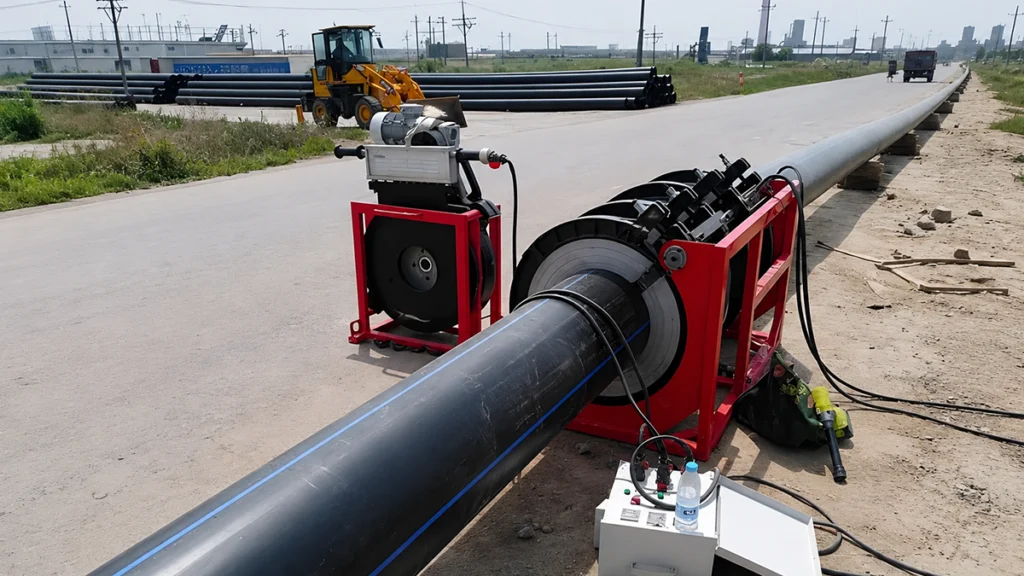
Application Scenarios That Justify Different Price Points
Water supply and HDPE distribution networks
Trenching miles of municipal water supply and drainage requires relentless consistency. Medium to large hydraulic butt fusion machines dominate this sector. The hardware must be tough enough to survive daily physical abuse while still delivering precise hydraulic pressure. This balance of rugged durability and capital efficiency perfectly justifies the mid-tier price point.
Gas pipeline welding requirements
Thermoplastic gas distribution networks carry the highest risk profile in the industry. Fusing these lines mandates fully automatic CNC butt fusion machinery outfitted with real-time data logging, automated thermal timing, and instant print capabilities. A single gas leak carries devastating consequences. Because safety and strict compliance are non-negotiable, the top-tier pricing of CNC equipment is easily justified.
Mining, dredging, and industrial applications
Dredging and mining operations punish equipment with highly abrasive, corrosive, and physically brutal environments. Fusing thick-walled pipes under these conditions requires heavy-duty, large-diameter butt fusion machines capable of generating extreme clamping forces. Procurement teams in the mining sector must shell out for reinforced chassis designs and premium hydraulic cylinders, naturally pushing costs into the highest pricing tiers.
On-site contractor projects vs factory prefabrication
Field welding exposes the process to unpredictable variables like sudden ambient temperature drops and cutting winds. Contractors need portable units equipped with high-wattage heating plates that can hold 200°C–230°C without faltering. Factory prefabrication is an entirely different game. Indoor environments support stationary, highly automated CNC setups. When a project demands hundreds of identical welds, establishing a temporary factory-style workshop with a premium stationary pipe fusion machine will drastically slash per-joint labor expenses.
Hidden Costs Beyond the Butt Fusion Machine Price Tag
Shipping, packaging, and import duties
A standard butt fusion welding machine price for sale quote rarely includes logistics. Large-diameter units (like a 710-1000mm rig) feature massive packaging footprints, sometimes hitting 2200x1800x1700mm and weighing up to 2600kg. Moving this kind of heavy HDPE pipe jointing machinery across the globe triggers substantial sea freight charges, heavy-lift port fees, and steep import duties. Procurement must calculate these into the final landed cost.
Spare parts, blades, and PTFE coating replacement
Consumables and accessories frequently blindside procurement teams. Missing the specific clamp inserts needed to step down pipe sizes can instantly inflate post-purchase costs by 15-20% if not negotiated upfront. Additionally, high-speed carbon steel milling blades eventually dull. The heating plate’s PTFE coating will also degrade over time, forcing contractors to pay for recoating or full plate replacement to keep weld quality high.
Training, certification, and operator cost
Advanced CNC automatic butt fusion machines do not run themselves; they still require operators who grasp the fundamental principles of thermoplastic fusion. Factoring in the cost of ISO or DVS certification training for field crews is essential. While automation lowers the physical barrier to entry, technicians still need training to spot environmental contamination, diagnose pipe ovality, and execute proper machine calibration sequences.
Maintenance and calibration over machine lifetime
Heavy industrial gear demands rigorous preventative maintenance. Heating elements slowly degrade and require routine multimeter resistance testing. Hydraulic power units utilize oil-gas separators that technicians must drain regularly, while chassis guide pillars need consistent lubrication. Furthermore, maintaining ISO/DVS compliance requires the annual calibration of temperature sensors and pressure transducers—a recurring expense that cannot be ignored.
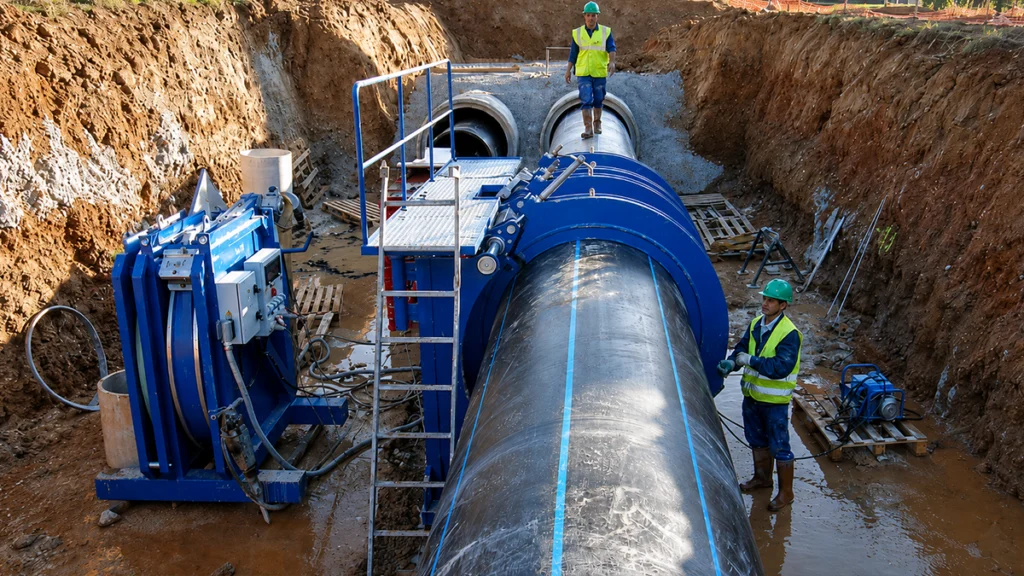
How to Evaluate a Butt Fusion Machine Supplier Before Buying
Required certifications: CE, ISO, and pressure compliance
Any reputable supplier will present a butt fusion machine price with certification CE ISO clearly documented. The hardware must align with ISO 21307 for metric regions, DVS 2207-1 for strict parameter controls, and ASTM F2620 for North American projects. If the machine is destined for critical high-pressure infrastructure, it must also pass TSG D2002-2006 pressure compliance standards to guarantee it won’t buckle under operational pipeline stress.
MOQ, lead time, and payment terms to expect
Sourcing directly from a factory requires buyers to clarify Minimum Order Quantities (MOQ). While MOQs are usually flexible for heavy machinery, they might apply to highly customized CNC models. Lead times swing wildly—from a quick 15 days for a standard 315mm hydraulic rig to well over 60 days for a bespoke 1200mm CNC system. Standard international payment terms generally involve a 30% T/T deposit, with the remaining balance cleared before shipment after a successful factory acceptance test.
How to verify factory capacity and after-sales support
Analyzing a China butt fusion machine manufacturer price means verifying their actual engineering footprint. Buyers need to know if the vendor conducts independent R&D, pushes out proprietary software updates for CNC units, and guarantees the long-term availability of spare parts. Asking for a live video tour of their hydraulic testing bays and CNC machining centers is a great way to separate genuine manufacturers from middlemen trading companies.
Red flags when a butt fusion machine price seems too low
Deeply slashed prices almost always hide dangerous engineering shortcuts. If a hydraulic unit lacks a displacement detection system, or if a CNC automatic butt fusion machine cannot log and print phase data, walk away. Another major red flag is the use of standard commercial-grade aluminum for the heating plate instead of thermally optimized alloys. The resulting temperature swings will absolutely guarantee weld failures in the field.
Common Mistakes Buyers Make When Comparing Butt Fusion Machine Prices
Comparing prices without matching pipe diameter range
The most common procurement blunder is comparing quotes that feature mismatched specifications. Weighing a 160mm butt fusion machine quote from Vendor A against a 250mm quote from Vendor B completely ruins the financial analysis. Likewise, forgetting to specify the operating voltage (such as 220V versus 380V) often results in a massive piece of equipment arriving on-site that cannot even be plugged in.
Ignoring heating plate and hydraulic quality
Buyers obsessed with the bottom line frequently ignore technical tolerances. Accepting a rig with a heating plate temperature deviation of ±5°C instead of the rigid ±3°C standard guarantees cold welds and degraded polymer joints. In the same vein, cheaping out on the hydraulic pump practically guarantees pressure drop-offs during the vital cooling phase, destroying joint integrity.
Underestimating after-sales and spare-part availability
Choosing a supplier based exclusively on the lowest initial price—without locking in guarantees for future maintenance—is a massive gamble. If a CNC controller faults out or a hydraulic seal blows mid-project, the resulting downtime will instantly consume whatever capital was saved during procurement. Buyers must verify that the supplier maintains a deep inventory of rapid-dispatch replacement parts.
Why the cheapest quote is rarely the best value
Bargain-basement quotes rarely translate to actual value because they strip out necessary accessories. A rock-bottom price usually excludes the full set of reduction inserts, forcing the buyer to shell out an extra 15-20% the moment the crate is opened. When you factor in premature PTFE degradation, elevated long-term maintenance, and the catastrophic risk of pipeline leaks, premium equipment consistently delivers a far superior Total Cost of Ownership (TCO).
How to Get an Accurate Butt Fusion Machine Quote for Your Project
Project specs to share: pipe size, material, voltage, standard
Securing an accurate butt fusion machine price list 2026 requires giving vendors exact engineering data. Clearly specify the Outer Diameter (OD) range of your pipes, the exact thermoplastic material (PE, PPR, or HDPE), and the site’s required voltage (220V 50Hz or 380V 50Hz). Above all else, declare the required welding standard (ISO, DVS, or ASTM). The manufacturer needs this information to calibrate the butt fusion machine’s internal parameters before shipping.
Manual vs hydraulic vs CNC: matching budget to need
Pinpoint your automation requirements based on the pipeline’s criticality and local labor rates. If you are laying high-pressure gas lines or need digital weld traceability, explicitly demand a CNC quote right out of the gate. For standard municipal water drainage, ask for quotes on semi-automatic hydraulic systems. This keeps the budget balanced without compromising joint reliability.
Requesting a customized quote with full BOM and warranty terms
Never settle for a single-line price estimate. Require a detailed Bill of Materials (BOM) that breaks down the base pipe fusion machine, the exact sizes of all included reduction inserts, the hydraulic power unit, the facer, and the heating plate (along with its protective storage cover). Finally, make sure the quote outlines crystal-clear warranty terms, specifically detailing the coverage duration for the hydraulic cylinder and sensitive electrical components.
FAQ
Q1: How much does a butt fusion machine cost on average?
Typically, a basic manual unit runs between $500 and $1,500. If you step up to mid-range hydraulic models designed for standard municipal pipes (90-315mm), expect to pay $2,799 to $5,700. For heavy industrial use or gas pipelines, large-diameter fully automated CNC machines generally start around $15,000 and can easily exceed $30,000 based on features and capacity.
Q2: What is the price difference between manual and hydraulic butt fusion machines?
Because manual machines rely on basic mechanical leverage, they are highly affordable, usually maxing out around $3,500 for the largest models. Hydraulic machines feature mechanized power units to deliver precise pressure control (0-16Mpa). This crucial upgrade typically adds $1,500 to $3,000 to the base cost compared to a manual model of the same size, guaranteeing consistent weld quality for critical projects.
Q3: How much does a 315mm or 630mm butt fusion welding machine cost?
A standard 315mm hydraulic machine usually lands between $2,800 and $4,500. Upgrading to a 630mm hydraulic unit—which requires much heavier structural steel, stronger hydraulic cylinders, and larger heating plates—pushes the price to a range of $8,500 to $14,000. If you add CNC automation to either of these sizes, the price will multiply by a factor of three to four.
Q4: Why do butt fusion machine prices vary so much between suppliers?
The massive price variations come down to component quality. Premium rigs feature highly responsive hydraulic pumps, high-grade PTFE coatings, and advanced aluminum alloy heating plates capable of maintaining strict ±3°C temperature tolerances. Budget machines cut corners by using basic analog gauges instead of digital data loggers, inferior metals, and leaving essential reduction inserts out of the base price.
Q5: Is a CNC butt fusion machine worth the higher price?
Absolutely, especially for high-liability installations like large-scale utility networks or gas pipelines. CNC equipment completely eliminates human error by automating the heating, pressure, and cooling phases. They also generate digital data logs required for strict regulatory compliance. Between the massive labor savings and the prevention of catastrophic joint failures, a CNC machine often pays for its premium price tag during its first major deployment.
Q6: What certifications should a butt fusion machine have before purchase?
Any reliable machine needs CE certification to prove mechanical and electrical safety. It must also be capable of executing welds that align with global standards like DVS 2207-1, ISO 21307, or ASTM F2620. For high-pressure pipeline applications, the equipment must comply with specific pressure directives, such as TSG D2002-2006.
Q7: What hidden costs should I consider beyond the butt fusion machine price?
The sticker price is only part of the equation. Buyers must account for heavy sea freight and import duties, as these machines are exceptionally large and heavy. You also need to budget for reduction clamp inserts (often adding 15-20% to the total cost), routine calibration maintenance, operator certification training, replacement milling blades, and eventually, PTFE heating plate recoating.
Q8: How long does a butt fusion machine typically last and what affects its ROI?
With strict preventative maintenance, a premium machine can easily last 10 to 15 years. The overall ROI depends heavily on machine uptime, operator efficiency, and minimizing failed welds. CNC automation drives the highest ROI by preventing expensive pipeline leak repairs and saving tens of thousands of dollars in skilled labor costs over the lifespan of the equipment.
Conclusion
Evaluating butt fusion machine prices demands a strategic approach, balancing initial capital outlay against long-term operational reliability. Ultimately, the cost of this heavy equipment comes down to pipe size capacity, the chosen level of automation (manual, hydraulic, or CNC), and the engineering tolerances of critical parts like the PTFE-coated heating plate and the hydraulic pump. Basic manual models handle low-pressure tasks perfectly well. However, semi-automatic hydraulic and fully CNC machines become absolutely essential for industrial and municipal pipelines, where strict temperature accuracy (±3°C) and relentless pressure consistency guarantee joint integrity.
Procurement professionals must look past the initial sticker price to calculate the true Total Cost of Ownership. Overlooking hidden expenses—like missing reduction inserts, the logistical nightmare of shipping heavy freight, or frequent milling blade replacements—can destroy a project’s budget. By insisting on comprehensive quotes with a full Bill of Materials, matching the equipment directly to regulatory standards (like ASTM F2620 or DVS 2207), and verifying CE/ISO certifications, buyers can confidently secure machinery that delivers measurable ROI and flawless welds.
Let our experts help you choose the right equipment for your project
Contact Our Engineering Team