
Table of Contents
A practical guide on how to maintain a butt fusion welding machine for long-term use, covering daily checks, heating plate care, hydraulic calibration, blade inspection, troubleshooting, and spare parts planning — helping contractors and procurement teams extend equipment life, ensure weld quality, and reduce downtime.
Butt fusion welding machines are heavy-duty industrial tools built to join high-density polyethylene (HDPE) pipes. They do this by applying highly controlled heat and hydraulic pressure to melted pipe ends, creating a seamless bond. Why does maintenance matter so much? Because even minor fluctuations in temperature or interfacial pressure can ruin the joint’s molecular structure. The result? Catastrophic pipeline blowouts, massive cleanup costs, and instantly voided warranties.
Core components affected by wear and contamination
Wear and tear hit a few specific parts the hardest. You need to keep a close eye on the PTFE-coated heating plate, the hydraulic unit, the planer assembly, structural clamps, and the electrical control box. Job-site dust, loose debris, and oxidized plastic build up on these surfaces fast. Scratched or fouled PTFE coatings lead to uneven heat across the pipe face. Meanwhile, dirt sneaking into the hydraulic system chews through seals. Once those seals degrade, the equipment simply cannot hold the sustained pressure needed during the critical cooling cycle.
How poor maintenance impacts weld integrity and project cost
Skipping preventive maintenance for your HDPE pipe welder is a guaranteed way to inflate project costs. Downtime and joint rework eat into your profit margins quickly. Bad maintenance inevitably causes poor joint alignment. If that misalignment creeps past 10% of the pipe’s wall thickness, you compromise the entire pipeline’s structural integrity—a direct violation of ISO 21307 standards. Worse, failing to maintain hydraulic pressure yields weak welds destined to snap under operational loads. Suddenly, a skipped fluid check spirals into a multi-million-dollar excavation and repair nightmare.
Who is responsible for Butt Fusion machine upkeep on a job site?
Keeping the butt fusion welding machine running is a shared responsibility. Field operators must handle daily pre- and post-weld cleaning, visual checks, and logging parameter data. On the other side, the Process Engineering or Equipment Management Department steps in to build the actual maintenance protocols. They schedule quarterly hydraulic calibrations and train field crews on proper handling techniques to stretch the asset’s lifespan to the absolute maximum.
Key Components That Require Regular Maintenance
Performing a reliable daily inspection requires operators to actually understand how each sub-assembly wears down and what its baseline parameters look like.
| Component | Primary Function | Typical Wear Mode | Inspection Frequency |
|---|---|---|---|
| Heating Plate | Melts pipe ends at 210°C ± 10°C | Scratched PTFE, plastic adhesion | Daily |
| Hydraulic Unit | Drives carriage and holds pressure | Fluid degradation, seal leaks | Weekly / Monthly |
| Planer Assembly | Mills pipe ends for flush alignment | Dull blades, motor stalling | Weekly |
| Clamps & Frame | Secures pipes and ensures alignment | Dirt accumulation, loose inserts | Daily |
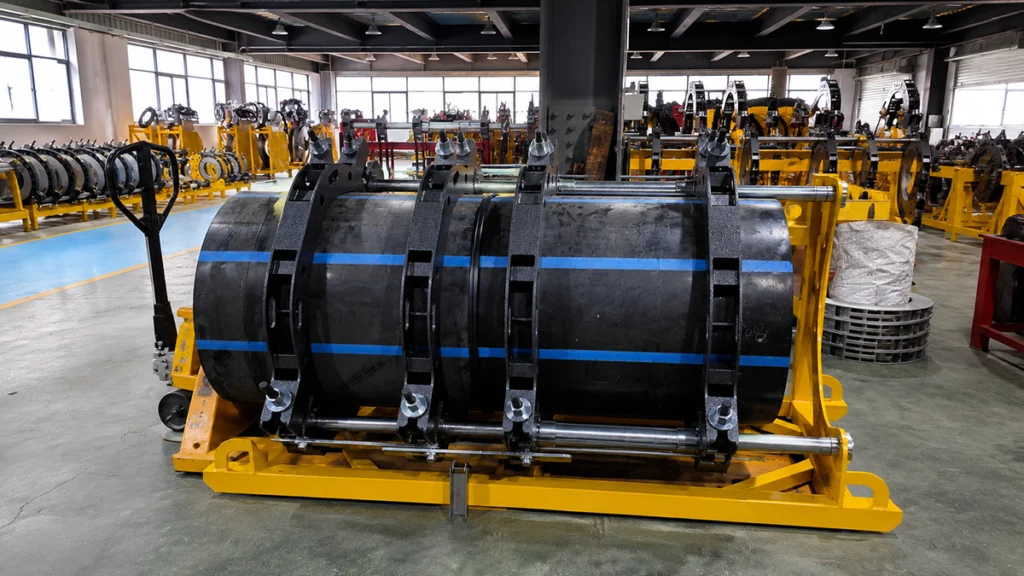
Heating plate (heater plate) and PTFE coating
Heating plates run at incredibly tight temperatures—usually 210°C ± 10°C for HDPE applications. The non-stick PTFE (Teflon) layer protecting the plate is notoriously easy to scratch. Just one minor abrasion destroys the uniform heat distribution. Molten plastic then clings to the damaged area, creating cold spots and ultimately producing defective pipe joints.
Hydraulic unit, pump, and pressure gauges
Your hydraulic system has to lock in precise interfacial pressure during both the fusion and cooling cycles. Think about it this way: if your HDPE pipe welding machine needs 40 bar of drag pressure to pull a heavy pipe, and the welding standard demands 60 bar of interfacial pressure, the gauge must read exactly 100 bar. Pressure drift caused by old oil or leaking seals is a direct violation of DVS 2207 parameters.
Planer / facer assembly and blades
The planer assembly uses a rotating cutting disc to shave down pipe ends until you see continuous plastic chips measuring between 0.5 and 1.0 mm thick. Dull blades or shot motor bearings stop the HDPE butt fusion welding machine from achieving a perfectly flush face. This leaves microscopic gaps between the pipe ends, blocking the uniform molecular bonding necessary during the heating phase.
Clamps, inserts, and alignment frame
Aluminum die-cast clamps lock the pipe in place against the extreme hydraulic forces generated during high-pressure fusion. You have to keep these components totally free of grit. Otherwise, the gap between the milled pipe ends will exceed the allowed tolerances: 0.3 mm for diameters up to 225 mm, 0.5 mm for 225–400 mm pipes, and 1.0 mm for anything over 400 mm.
Electrical control box and temperature controller
Inside the control box, you will find the PLC, temperature controllers, and displacement sensors. Let dust or humidity creep in, and you risk short-circuiting the electronics. Moisture also disrupts communication with the displacement sensors, which completely paralyzes your automatic welding sequences.
Daily, Weekly, and Monthly Maintenance Checklist
Sticking to a rigid maintenance checklist keeps your equipment running smoothly and protects that promised 100-year pipeline design life.
Daily pre-operation inspection items
- Wipe down the entire heating plate with anhydrous ethanol or methanol on a soft cloth.
- Check the 220V/380V AC power cords and all hydraulic hoses for cuts, abrasions, or kinks.
- Confirm the temperature controller hits the set point and stays stable.
- Run a daily on-site test weld and perform a non-destructive bend test.
Weekly cleaning and lubrication tasks
- Scrub the V-groove, reflector, and both internal and external clamp components using cotton swabs dipped in anhydrous ethanol.
- Look closely at the planer cutting blades for any dull edges or chipping.
- Clean the guide shafts on the butt fusion machine frame and add a light layer of approved lubricant to stop them from binding.
- Make sure all quick-connect hydraulic couplings are spotless before hooking them up.
Monthly calibration and deep inspection
- Examine the hydraulic oil levels in the reservoir. Look for a milky appearance, which indicates water contamination.
- Execute a discharge and pressure calibration test using a certified master gauge.
- Inspect the alignment frame’s structural pins and locking mechanisms for signs of metal fatigue.
- Verify that the cooling fans on the electrical control box are clear of blockages.
What should be logged after every welding job?
Modern pipeline projects demand strict data traceability. You must print or download the welding parameters—specifically the heating temperature, interfacial pressure, heat soak time, and cooling time—to a USB drive after every single job. At the same time, crews need to update maintenance logs with details on cleaning, oil top-offs, and blade replacements.
Factory-direct pricing with technical consultation included
Get Your Free QuoteHow to Clean and Care for the Heating Plate Correctly
Mastering the heating plate cleaning routine is the single most important part of daily site operations. Contaminated plates are the number one cause of joint failure.
Recommended cleaning materials and what to avoid
Grab soft, lint-free paper or clean cotton cloths lightly dampened with methanol or anhydrous ethanol. Never touch the heating plate with hard objects, wire brushes, steel wool, or utility knives. Furthermore, keep your hands clear of the hot plate to avoid severe burns.
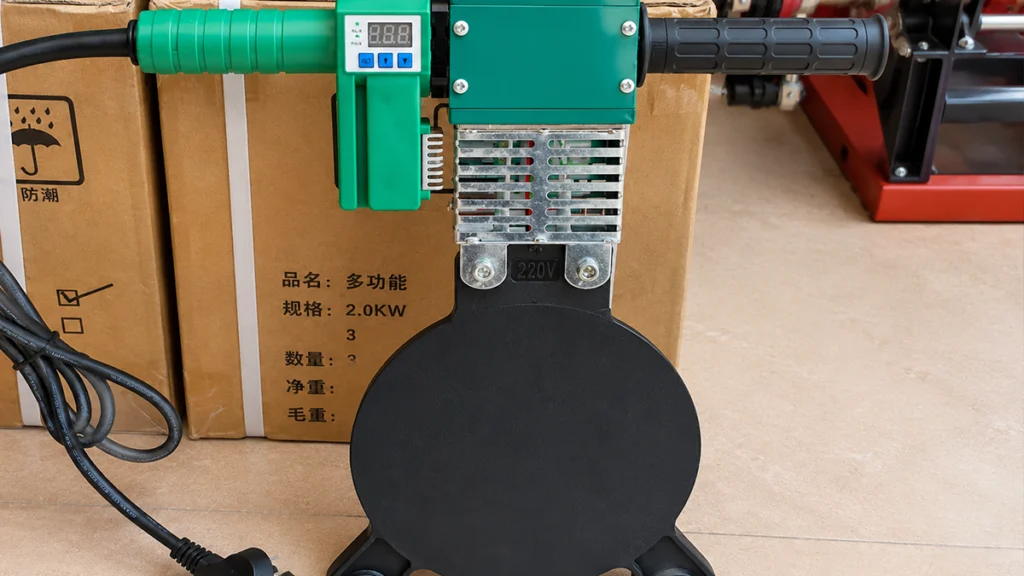
Step-by-step heating plate cleaning procedure
1. Let the heating plate cool down slightly from its peak temperature. If it is too hot, the solvent will instantly vaporize.
2. Apply anhydrous ethanol directly to your soft cloth. Never pour the liquid solvent straight onto the electrical plate.
3. Wipe the surface gently using a circular motion to lift away dust, oxidized plastic, and job-site grime.
4. Avoid pressing down hard. Heavy pressure forces trapped grit into the sensitive PTFE coating, leaving deep scratches.
When should you replace the PTFE coating or heater plate?
Swap out the heating plate or its PTFE coating the second you notice visible scratches, flaking, or molten plastic consistently sticking to the metal. You also need a replacement if the temperature controller shows a thermal drift of more than ±10°C from your set point. That kind of drift usually means the internal heating elements are failing.
Hydraulic System Maintenance and Pressure Calibration
Fluid dynamics and pressure accuracy are absolute requirements if you want to comply with international welding standards. Troubleshooting the hydraulic system properly keeps these metrics in check.
How often should hydraulic oil be changed?
Under normal conditions, completely drain and replace your hydraulic oil every three months. Are you operating in extreme environments, like high-heat deserts or sub-zero tundra where fluid viscosity breaks down fast? Shorten that interval. Fresh oil protects the internal pump seals.
Detecting leaks, air ingress, and pressure drift
Make it a habit to check the hydraulic manifold block, carriage directional control valves, and pressure-reducing valves for oil drips. Even microscopic leaks or a tiny bit of air trapped in the lines will trigger pressure drops during the fusion cooling cycle. If the pipe fusion machine cannot hold that cooling pressure, the pipe joint crystallizes poorly, leaving you with a brittle, dangerous weld.
Calibrating pressure gauges against welding standards
Pressure gauges and the entire hydraulic control system require formal, annual calibration. Sticking to this service interval guarantees your plastic pipe welding machine aligns with ISO 21307, DVS 2207, and ASTM F2620 standards. Running a HDPE pipe jointing machine with uncalibrated gauges instantly voids material warranties and injects massive liability into your pipeline network.
Get detailed specs and custom configuration options
Request Technical SpecificationsPlaner and Cutting Blade Inspection
The planer prepares the geometric foundation for the weld. If the pipe faces are not perfectly parallel, achieving a secure molecular bond is physically impossible.
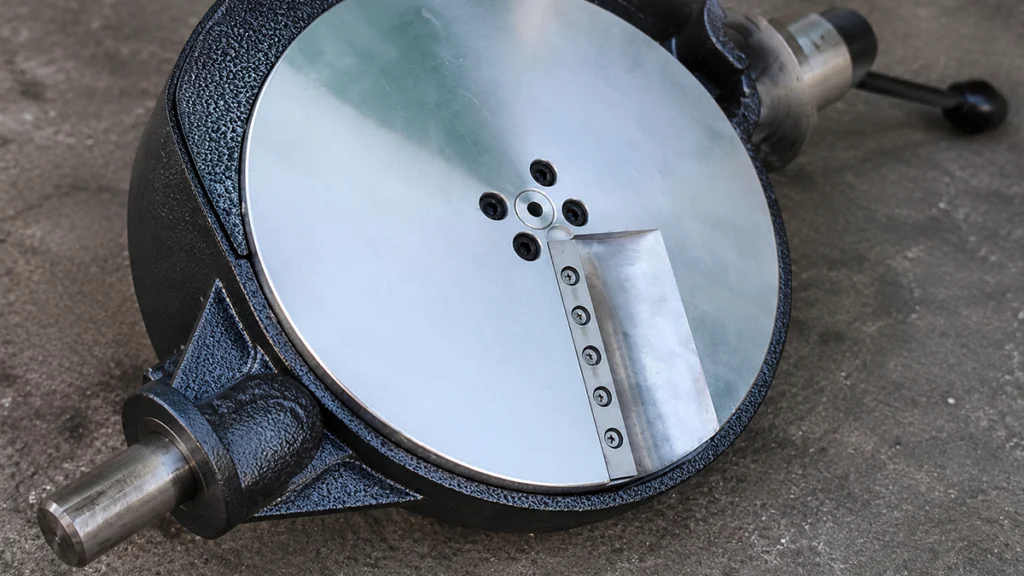
Signs your planer blades need sharpening or replacement
Pay attention to the plastic chips. If the planer stops throwing off continuous ribbons, or if those chips fall outside the ideal 0.5–1.0 mm thickness, your blades need work. Also, listen to the motor. If it stalls, sounds strained, or creates a chattering vibration during the facing process, the blades are too dull to cut efficiently. Swap them out.
Correct procedure for blade installation and alignment
Installing new blades requires precision. Use a micrometer to adjust the cutting height so you can dictate the exact chip thickness. After locking the blades down, run a test mill on a piece of scrap pipe. Bring the newly milled ends together without applying any pressure. The gap—or misalignment—between the two faces must stay well under 10% of the pipe’s wall thickness.
Safety interlocks: what to verify before each cut
Planer motors pack a massive amount of torque. Before pulling the facer out of the alignment frame, operators must confirm the milling cutter’s power switch is off and the motor has entirely stopped spinning. Bypassing safety interlocks to shave a few seconds off the job routinely ends in severe lacerations and total site shutdowns.
Common Faults and Troubleshooting Guide
Field engineers who understand the most common equipment faults can troubleshoot issues rapidly, minimizing downtime and avoiding destructive rework.
| Fault Symptom | Likely Cause | Recommended Action |
|---|---|---|
| Temperature too low | Voltage drop or damaged heating tube | Verify 220V/380V AC input; test heating element continuity. |
| Pressure drops | Hydraulic leak or degraded oil | Check quick connectors; replace 3-month-old hydraulic oil. |
| Planer motor stalls | Dull blades or excessive pressure | Replace blades; reduce forward carriage pressure until RPM stabilizes. |
| Error codes active | Sensor contamination | Clean displacement sensors; verify PLC connections. |
Heating plate not reaching set temperature
When the plate refuses to heat up, check the site generator’s input voltage first. It needs to provide a stable AC 220V/380V at 50Hz/60Hz. If the power supply is fine, you are likely dealing with damaged internal electric heating tubes, a blown solid-state relay, or a bad temperature controller inside the electrical box.
Hydraulic pressure drops during fusion cycle
Losing pressure usually points to a physical leak in the hydraulic hose quick-connectors. It could also mean your hydraulic oil is severely degraded and has lost its viscosity, or the pressure regulating valve inside the manifold is failing. Fix this immediately. Pressure drops during the cooling phase ruin weld integrity.
Planer motor stalls or cuts unevenly
Nine times out of ten, motor stalling comes down to operator error. Usually, someone applied too much forward hydraulic pressure on the carriage before the cutting blades hit full RPM. Alternatively, extremely dull blades can catch on the HDPE pipe, overloading the motor and tripping the thermal breaker.
Error codes and control panel issues
Automated butt fusion machines today throw specific prompts on the screen, such as “[Is the hot plate in place?]” or “[Remove Milling Cutter]”. If you cannot clear these codes, you probably have sensor contamination or a communication failure with the displacement sensor. Shield these sensors from dust and wipe them down carefully if the errors pop up again.
Storage, Transportation, and Job-Site Handling Best Practices
Getting years of reliable service out of your welding equipment depends heavily on how you treat the butt fsuion welding machine when it isn’t joining pipes.
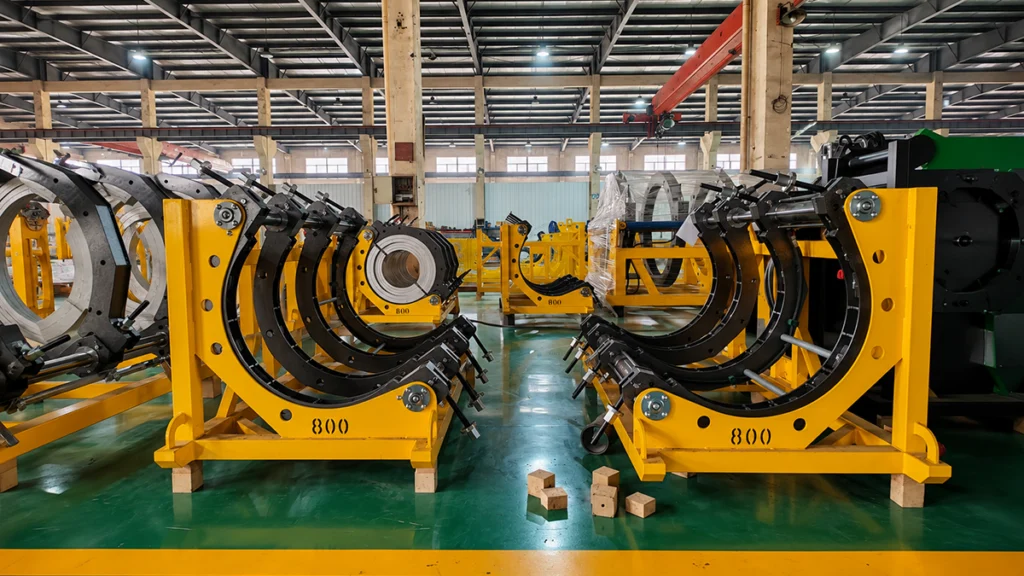
How to store the butt fusion machine between projects
Keep the butt fsuion machine in a bright, dust-free, well-ventilated space where the ambient humidity stays under 65%. Throw heavy-duty dust covers over the alignment frame, hydraulic unit, and heating plate. This simple step prevents environmental moisture and dirt from degrading the seals and electronics.
Protecting electronics in humid or dusty environments
Working on a coastal or tropical site? That environment puts your electrical control box and displacement sensors at severe risk. Fine dust and damp air easily short out the PLC. Elevate control boxes out of the mud, seal all panel doors tightly, and toss moisture-absorbing packets inside the enclosures before shipping them out.
Transport precautions for hydraulic and heating units
Let the heating plate cool completely to ambient temperature before you move it. Moving a hot plate is a massive fire hazard and risks ruining the PTFE coating. Secure the hydraulic manifold and calibrated gauges with shock-absorbing mounts during transit. Heavy vibrations and impacts will easily knock your pressure gauges out of DVS 2207 calibration tolerance.
Spare Parts, Service Intervals, and Lifecycle Planning
Waiting for things to break before fixing them guarantees project delays. Smart pipeline contractors deploy a strict spare parts replacement schedule. It is simply the most cost-effective way to operate.
Essential spare parts to keep on hand
Field crews need a mobile stash of high-turnover consumables. Stock up on anhydrous ethanol, clean cotton cloths, replacement PTFE-coated heating plates, sharp planer blades, and the correct hydraulic oil. When these items are readily available on-site, operators won’t resort to using damaging substitutes just to hit a deadline.
Recommended service intervals by machine size (63-1600 mm)
The bigger the machine, the more intense the service requirements. Standard routines include daily plate cleanings, weekly clamp scrubs, 3-month hydraulic oil changes, and annual factory calibrations. However, massive units—like the 1200mm to 1600mm models—demand far more frequent hydraulic cylinder seal inspections. They operate under extreme clamping forces, which chews through seals much faster.
When is repair more cost-effective than replacement?
Fixing a machine makes sense when you are swapping out worn blades, changing sensors, or resurfacing a heating plate. But what if you are running an older machine with undersized hydraulic cylinders that constantly fail to hit modern high-pressure standards (like 60 bar)? Repairing that is a waste of money. At that stage, you must replace the unit with a high-rigidity aluminum die-cast model—like the ones built by Ekberg Welding—to prevent frame warping and disastrous joint failures.
Common Maintenance Mistakes That Shorten Machine Lifespan
Even veteran crews slip into bad habits that wreck equipment and threaten pipeline safety. Make sure your team avoids these critical errors.
Using abrasive tools on the heating plate
Scraping melted plastic off the heating plate with wire brushes, metal scrapers, or sandpaper will obliterate the PTFE coating in seconds. Make this mistake, and you will be buying a new plate immediately.
Ignoring small hydraulic leaks
Running the equipment while ignoring minor hydraulic drips causes silent but deadly pressure drops during the fusion cycle. The result? Weak, non-compliant welds. They might pass a quick visual check, but they will blow apart during hydrostatic pipeline testing.
Skipping calibration after blade or heater replacement
Skipping your annual recalibration—or failing to recalibrate after swapping out major hydraulic or heating parts—violates both ISO and DVS standards. This simple oversight effectively voids the 100-year warranty on the entire HDPE pipeline network you just installed.
Untrained operators and missing maintenance logs
Handing the controls over to untrained personnel usually leads to disaster. They rush through damp weather, forget to use pipe roller supports, or try to weld incompatible materials (like PE80 to PE100) without adjusting the machine’s parameters. Pair that with missing maintenance logs, and you guarantee premature equipment failure alongside untraceable weld defects.
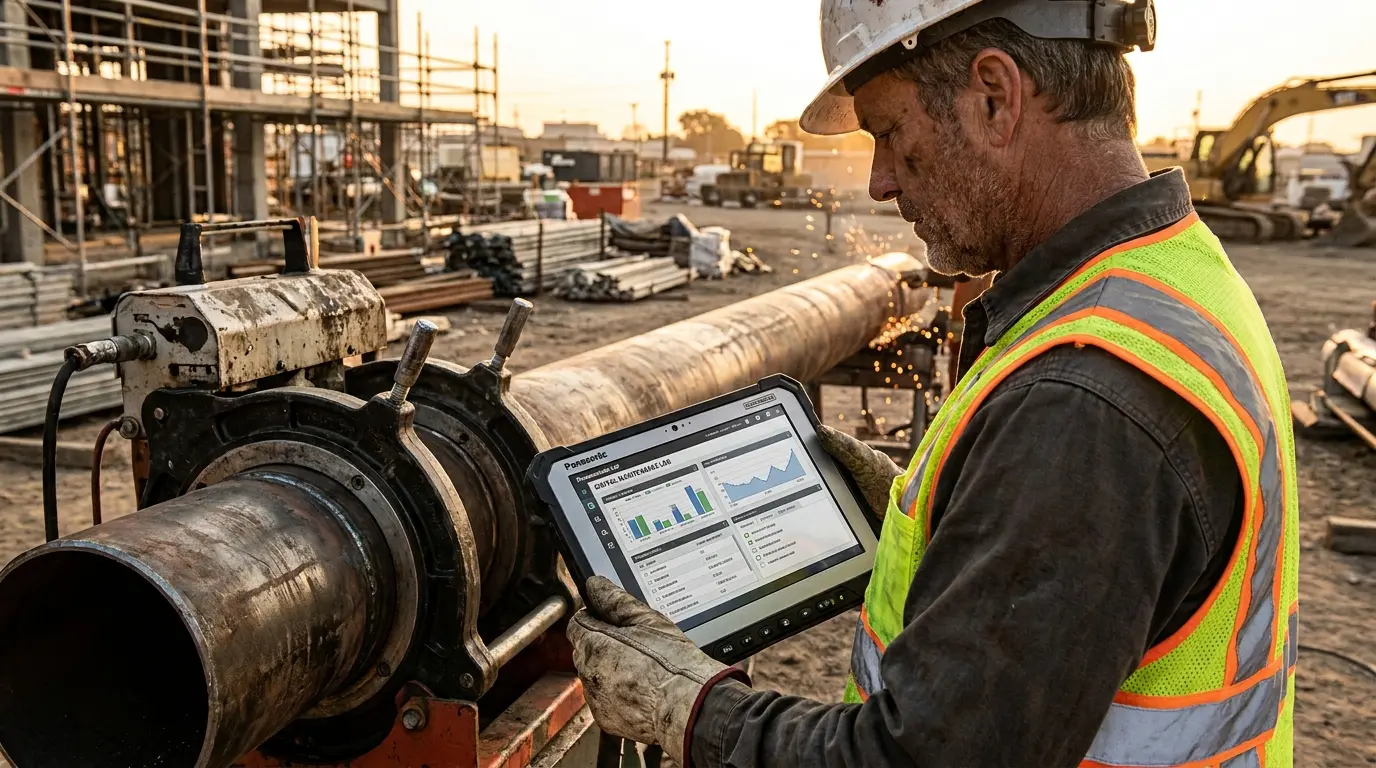
Logging maintenance data for a butt fusion welding machine
FAQ
Q1: How often should a butt fusion welding machine be serviced?
Your machine needs daily visual inspections and heating plate wipe-downs. Weekly maintenance involves cleaning the clamps and inspecting the planer blades. Swap out the hydraulic oil every three months. Finally, bring in a technician annually for formal pressure and temperature calibration to stay compliant with ISO 21307 and DVS 2207 standards.
Q2: What is the lifespan of a butt fusion welding machine with proper maintenance?
If you stick to daily cleanings, regular fluid changes, and smart storage practices, a premium machine will easily last 10 to 15 years. That lifespan hinges entirely on keeping dirt out of the hydraulic seals and protecting the precision alignment frame from heavy impacts during job-site transport.
Q3: Can I clean the heating plate with sandpaper or steel wool?
Absolutely not. Never let sandpaper, steel wool, wire brushes, or utility knives touch the heating plate. Abrasives instantly shred the delicate PTFE (Teflon) layer. Once you scratch that coating, the plate heats unevenly, molten plastic sticks to the metal, and you are forced to buy a completely new heating element.
Q4: What type of hydraulic oil is recommended for butt fusion machines?
Always default to the specific anti-wear hydraulic oil grade recommended by the manufacturer. Usually, this means a high-quality ISO VG 32 or VG 46 fluid, depending on the ambient temperatures at your site. Keep the oil completely free of water and dirt, and drain it entirely every three months.
Q5: Why is my butt fusion welder not maintaining temperature?
Temperature swings usually point to a damaged internal heating tube, a failing solid-state relay, or a busted temperature controller in the electrical box. Check your job-site generator, too. Unstable power that fluctuates outside the 220V/380V AC range prevents the machine from locking in the required 210°C.
Q6: How do I calibrate the pressure gauge on a hydraulic butt fusion machine?
Pressure calibration requires hooking up a certified master reference gauge to the hydraulic circuit. You then test the machine’s output across various pressure stages to verify the onboard gauge matches the master perfectly. Have a qualified technician perform this annually to keep your equipment aligned with international welding codes.
Q7: What spare parts should every HDPE welding contractor keep in stock?
Keep a solid stash of anhydrous ethanol and lint-free cotton cloths for your daily cleaning routines. For hardware, stock replacement PTFE-coated heating plates, sharp planer blades, fresh hydraulic oil, quick-connect fittings, and extra displacement sensors. Having these on hand stops a minor component failure from causing days of costly downtime.
Q8: Is preventive maintenance worth the cost for small-diameter butt fusion machines?
Yes, without a doubt. Small-diameter machines might handle lower pressures, but a blown weld on a 63mm gas or water line carries the exact same catastrophic leak liabilities as a massive pipeline. Preventive maintenance costs pennies in ethanol and oil. Conversely, digging up and repairing a buried, failed joint will cost you thousands in labor and penalties.
Conclusion
Taking care of your butt fusion welding machine is not just some secondary chore—it is your primary defense against pipeline failure. The engineering data points to a rigid, non-negotiable routine: clean the PTFE heating plate daily with anhydrous ethanol, replace hydraulic oil every three months, and perform annual pressure calibrations to meet ISO 21307 and DVS 2207 standards. Ignore these tasks, and you invite PTFE degradation and hydraulic pressure drift. That leads directly to molecular joint failure, entirely wiping out the 100-year lifecycle ROI of your HDPE piping system. By committing to a structured maintenance plan, logging your weld parameters, and relying on OEM spare parts, you maximize uptime. More importantly, you keep your projects compliant with international standards and protect your bottom line from the crushing liabilities of pipeline rework.
Let our experts help you choose the right equipment for your project
Contact Our Engineering Team