
Table of Contents
An HDPE Pipe Welding Machine Supplier evaluation helps buyers compare technical capability, QC, lead time, after-sales support, certifications, and pricing risks before placing a safer B2B order.
What Makes a Reliable HDPE Pipe Welding Machine Supplier?
Sourcing the right HDPE pipe welding machine supplier involves digging deep into their technical specs, manufacturing muscle, and quality control. You also have to consider after-sales support, lead times, and their track record with past projects. The best partners do more than just put butt fusion machine on a truck. They act as technical advisors, making sure the equipment aligns perfectly with your specific pipeline standards.
Core qualities of a qualified supplier
Top-tier manufacturers maintain strict production traceability. Every HDPE pipe welding machine they build follows rigorous Standard Operating Procedures (SOPs). But their job doesn’t end at the sale. Great suppliers back their products with hands-on operator training and layered maintenance support. You want equipment that handles multiple materials—like PE80 and PE100—effortlessly. Integrated barcode scanners for automated parameter input are another hallmark of a forward-thinking supplier.
What information should a supplier provide before quotation?
Never accept a blind quote. A professional vendor will first confirm your welding standards. They need to specify whether the butt fusion welding machine runs on ISO 21307, DVS 2207 (Low Pressure: 0.15 N/mm²), or ASTM F2620 (High Pressure: 60-90 psi) parameters. Expect precise specs. This covers the exact welding range (such as d20–315mm), input voltage (like AC 220V), and the heating plate’s temperature limits. You should also demand granular details about the hydraulic control box, displacement sensors, and the milling cutter’s power supply.
Red flags that indicate supplier risk
Watch out for vendors who gloss over the details. If they cannot provide specific heating, soaking, and cooling parameters matched to different pipe Standard Dimension Ratio (SDR) values, walk away. Another glaring issue? Companies pushing “fully automatic” welders that actually lack closed-loop electronic feedback or fail to catch improper pipe insertion. Finally, skip suppliers who ignore annual equipment calibration protocols or motor discharge guidelines. Using them introduces massive compliance risks, especially on strict municipal jobs.
Poor machine quality can increase joint failure risk
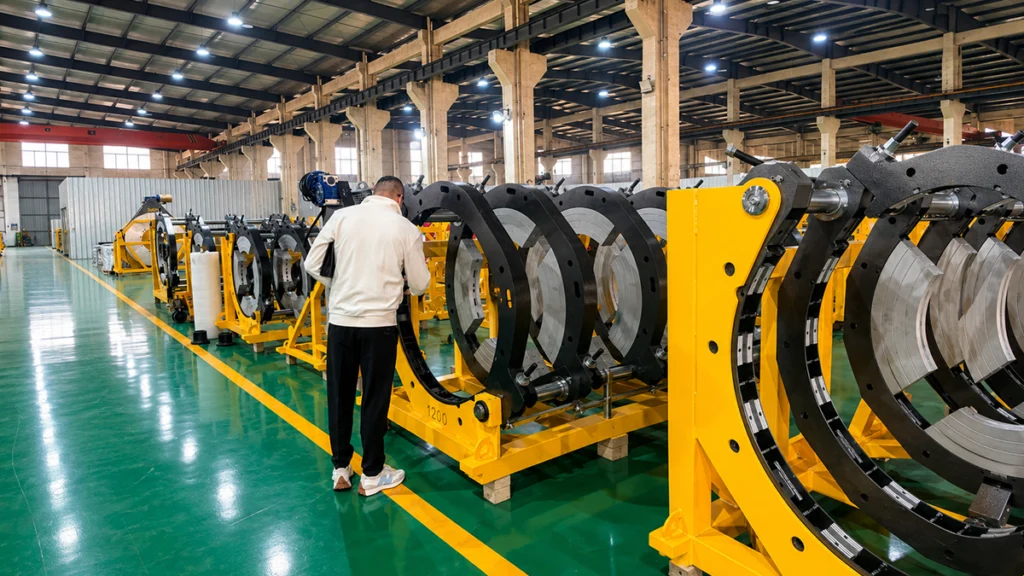
Cheap equipment destroys pipeline integrity. Take butt fusion: bad butt fusion machine alignment causes asymmetrical flange curling, brutal misalignment, and dangerous bubbles or pitting inside the weld zone. In electrofusion, faulty voltage control or poorly designed clamps destroy coaxial alignment. The result? Uneven gaps and the dreaded “false fusion.” Even semi-automatic welders can cause havoc if their hydraulic systems are unstable, often applying too much drag pressure or cutting cooling times short. This leaves you with a fundamentally weak joint.
Why Supplier Evaluation Matters Before Ordering
Delays can affect project schedules and contractor penalties
Dead equipment kills project timelines. When an unreliable HDPE butt fusion machine breaks down and you can’t find spare heating elements or hydraulic hoses, pipeline construction grinds to a halt. Poorly built units also hate bad weather. They frequently short out or stall in damp environments, forcing crews into a frantic rush. Worst of all, bad welds trigger failed pressure tests. Contractors then have to dig massive pits, cut out the bad section, and patch it using expensive flanges.
Hidden costs beyond the initial butt fusion machine price
The sticker price is just the beginning. Manual butt fusion machines require a babysitter. In contrast, automated welders easily save contractors $20,000 to $30,000 in labor on a typical six-month job. Then there’s maintenance. Without a preventative plan, you will face crushing repair bills that standard warranties almost never cover. Don’t forget material waste. When a machine fails to detect improper pipe insertion, overlapping welds ruin incredibly expensive large-diameter HDPE pipes and fittings.
Manual, hydraulic, CNC, and automatic welding machine options
| Machine Type | Control System | Pressure Monitoring | Best Application | Price/ROI Profile |
|---|---|---|---|---|
| Manual | Open-loop, manual valves | Operator visual check | Small diameter, non-critical plumbing | Lowest upfront cost, high labor cost |
| Hydraulic | Semi-automatic valves | Gauge reading | Standard infrastructure projects | Moderate upfront cost, relies on operator skill |
| CNC / Automatic | Closed-loop, PLC, solenoid | Electronic feedback | Municipal gas & high-pressure water | High upfront cost, massive labor savings, zero error |
| Electrofusion Auto | Barcode scanner, automated | Voltage/Time monitoring | Trench repairs, complex fittings | Fast execution, highly specialized |
How to match machine size with HDPE pipe diameter
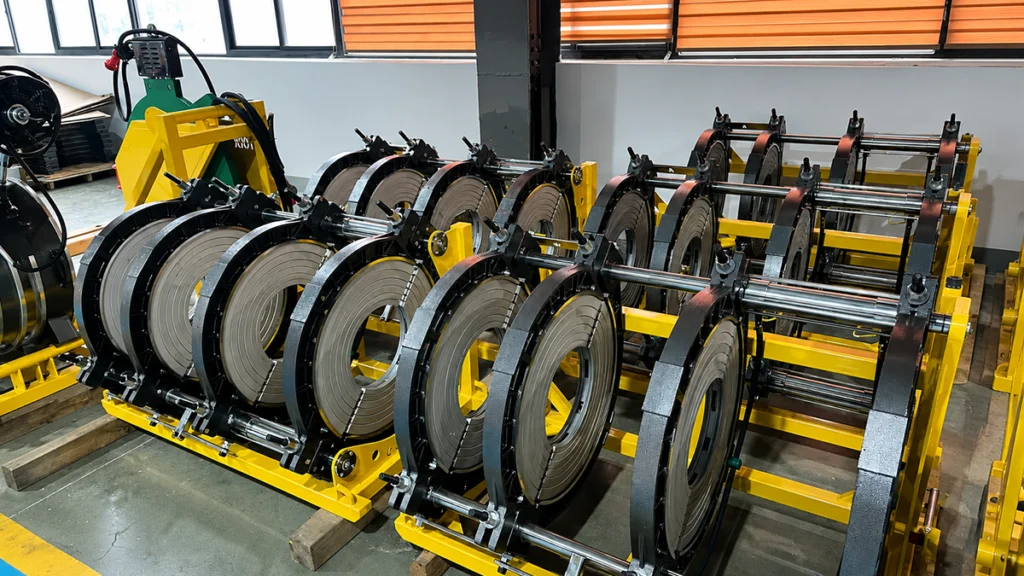
Sizing matters. Manufacturers categorize these units by their maximum clamping diameter—think 63-250mm, 160-315mm, or massive 1200mm+ setups for large bore work. When you need to weld smaller pipes, your supplier must include precision-machined reducing clamps. These inserts step down the master clamp size and need an ovality tolerance of <5‰dn to stay accurate. Also, check the hydraulic cylinders. They must pack enough punch to generate proper interfacial pressure for thick-walled, low-SDR pipes at the pipe fusion machine’s absolute maximum rated diameter.
Factory-direct pricing with technical consultation included
Get Your Free QuoteCheck the Supplier’s Product Range and HDPE pipe Welding Machine Compatibility
When should buyers choose butt fusion, electrofusion, or socket fusion equipment?
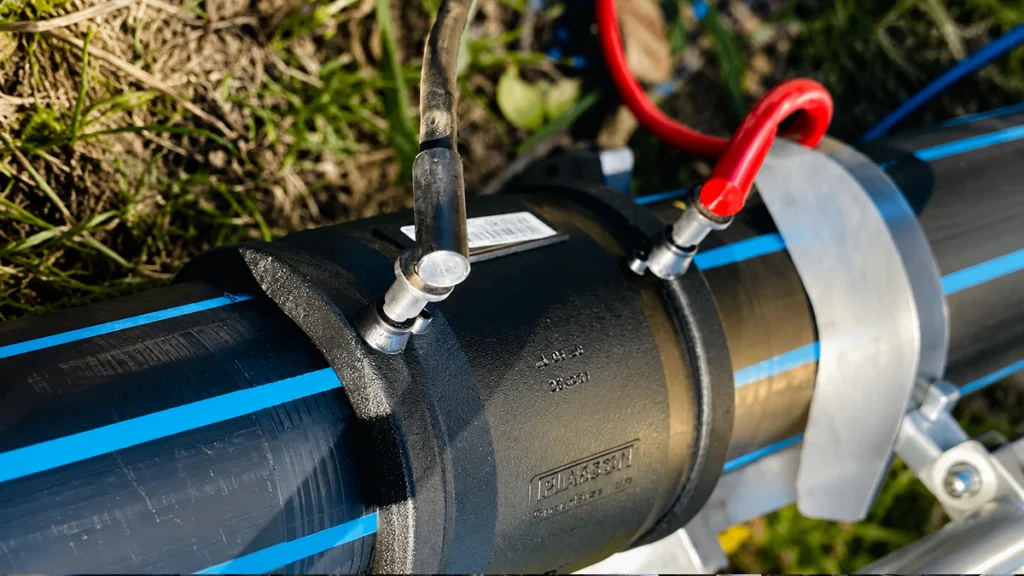
Butt fusion reigns supreme for main pipelines and large-diameter runs. It requires heating the mating surfaces to exactly 210±5°C before the hydraulic pressure kicks in. Electrofusion welding machine takes a different approach. It uses the Joule effect through a resistive coil embedded right inside the fitting. This makes it perfect for cramped trench repairs or complex fittings like reducers and saddles. Socket fusion? That’s mostly kept for smaller pipes (up to 120mm) handling internal building plumbing and water supply lines.
Accessories and tooling that should be included
A bare-bones HDPE pipe welding machine won’t cut it. A complete butt fusion setup needs a PTFE-coated heating plate, an electric milling cutter (facer), and a hydraulic control box fitted with quick connectors. Alignment tooling is just as critical. Make sure the supplier includes specialized fusion clamps, roller supports to kill pipe drag, and displacement sensors. Buying electrofusion gear? That package must feature barcode scanners, manual scraper tools, and specialized constant-temperature wiring terminals.
Key parameters: welding range, pressure, temperature, voltage, and power
Precision dictates success in standard butt fusion. You need a tight temperature window of 200~220°C, aiming squarely for 210±5°C to get an optimal melt. Pressure limits have to match your regional codes, handling either Low Pressure (0.15 N/mm² / 1.5 bar) or High Pressure (60-90 psi) requirements. On the electrical side, expect large equipment to draw AC 220V or 380V. Electrofusion welding machines, however, usually drop a precise 40V output straight to the fitting.
Heating plate quality and temperature control accuracy
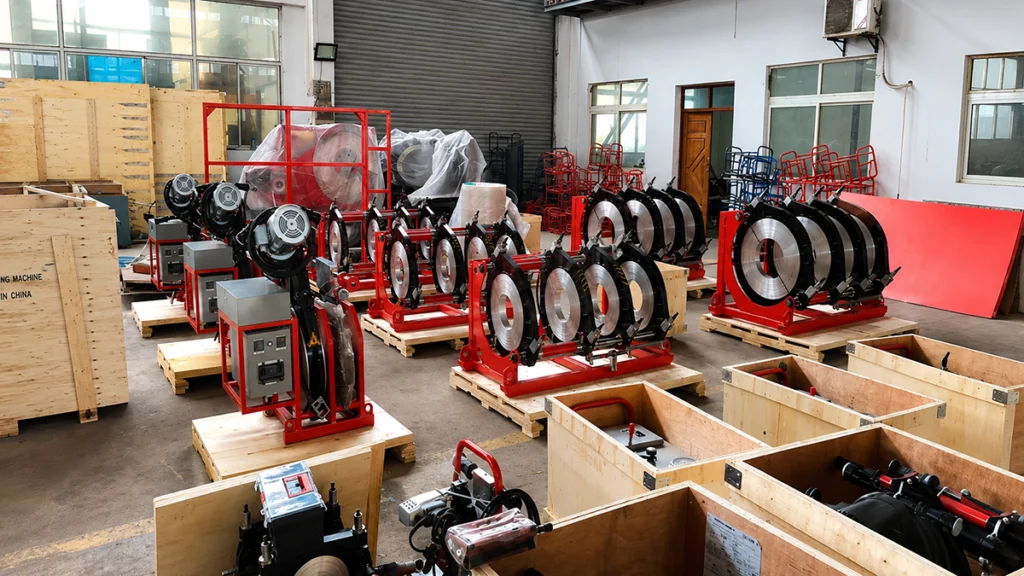
The melt’s integrity relies entirely on the heating plate’s surface. It must remain scratch-free, spotless, and heavily coated with PTFE so molten polyethylene won’t stick. Temperature distribution is non-negotiable—it needs to hold a steady 210±5°C across every inch to melt the pipe face evenly. Better automatic models even pack a pop-up mechanism for the conversion stage. This lets the hot plate snap back quickly as the frame closes, slashing heat loss during the critical transfer window.
Review Technical Specifications Before Comparing Prices
Frame strength, hydraulic system stability, and alignment precision
Flimsy frames ruin welds. The pipe fusion machine’s chassis must have the structural rigidity to absorb massive clamping forces without bending. This keeps the milled pipe ends locked at a perfect 90° angle. Hydraulic stability is just as vital. The system has to hold strict “heat soaking pressure” and “cooling pressure” without bleeding off during a long cooling cycle. To hit true alignment precision, both the frame and clamps must maintain an ovality tolerance of <5‰dn. This stops severe misalignment and prevents asymmetrical flange curling.
What specifications should be included in a supplier quotation?
| Specification Category | Required Details in Quotation |
|---|---|
| Operational Parameters | Bead-up pressure, bead-up height, heat soaking time, transfer time, fusion pressure, cooling time. |
| Hardware Capabilities | Total heat capacity, welding speed, total machine weight, power supply requirements (kW/Voltage). |
| Included Accessories | Specific sizes of reducing inserts, electric facer specs, type of data logger included. |
| Commercial Terms | Standard 3-year warranty terms, lead time, export packaging details. |
Factory audit points for HDPE pipe welding equipment
Auditing a factory requires looking past the sales pitch. Confirm that the facility runs on strict “6S” manufacturing standards with an active Quality Department verifying all equipment parameters. Inspect their testing labs. Do they run storage tests, displacement checks, and heating plate uniformity tests on every unit before it leaves the floor? Full production traceability is an absolute must. Serial numbers and software versions should map directly back to specific manufacturing batches.
Which certifications and test reports are useful?
Start with ISO 12176.2-1998. This is the baseline international standard that defines safety and classification for electric fusion equipment. CE Certification is mandatory if you operate in Europe, but it also acts as a solid global benchmark for mechanical and electrical safety. Don’t stop at general certificates, though. Demand specific weld quality data, such as laboratory peel tests, ultrasonic testing reports, and verifiable on-site bend test results.
Get detailed specs and custom configuration options
Request Technical SpecificationsVerify Quality Control, Certifications, and Manufacturing Capability
How to evaluate sample testing, inspection records, and traceability
Serious suppliers back up their claims with documented non-destructive testing procedures. This includes clear visual inspection rules and daily on-site “bend tests.” Today’s CNC and automatic butt fusion machine units must have built-in data logging. Being able to print or download vital stats—like date, time, operator ID, joint numbers, and pressure/temp logs—is essential for municipal compliance. Ask to see the factory’s internal “Hot Press Inspection & Maintenance Record Forms.” Reviewing these documents provides a transparent look at their actual quality control habits.
Manufacturer vs trading company: what should buyers confirm?
Real manufacturers have dedicated Production and Technical departments. They handle complex secondary or tertiary maintenance and push out software updates directly. Because they build the electrofusion welding machines, they have the engineering chops to tweak PLC programming, change voltage specs, or custom HDPE pipe welding machine your clamps. Trading companies simply can’t do this. Buying direct from the source also means you get immediate access to spare electrodes, sensors, and heating plates without waiting on a middleman during a warranty crisis.
What affects HDPE pipe welding machine price?
Automation drives the price tag. CNC and automatic butt fusion welding machines run three to four times higher than manual hydraulic setups because they pack expensive PLCs, advanced sensors, and closed-loop solenoid valves. Pressure standards shift the cost, too. A rig built for ASTM F2620 (High Pressure) needs much heavier frames and stronger hydraulics than a standard DVS 2207 (Low Pressure) model. Integrated data loggers and barcode scanners will bump up the initial quote, yet they are completely indispensable for strict municipal pipeline jobs.
How MOQ and customization influence total order cost
Asking for custom features immediately affects your Minimum Order Quantity (MOQ) and bottom line. Need non-standard reducing inserts or special inch-to-millimeter conversions? That requires custom molds, which drives up costs and extends lead times. Tweaking the voltage—like adapting motors and heating plates for 110V instead of the usual 220V/380V—almost always triggers strict MOQ rules. The same goes for OEM colors and branding. Factories demand bulk orders to justify the extra setup and tooling expenses.
Compare Price, MOQ, Payment Terms, and Lead Time
Typical lead time factors for standard and customized models
Factories typically keep standard manual and hydraulic models in stock. For these, your lead time depends mostly on export packaging and ocean freight schedules. Custom orders are a different story. They demand extra engineering hours for motor calibration, discharge testing, and custom machining on the frame or clamps. No matter what you order, every unit has to pass a mandatory program self-test, displacement check, and heating plate trial before shipping. This quality control phase adds unavoidable, yet vital, time to the schedule.
Payment terms, warranty terms, and export documentation
Trustworthy manufacturers offer a standard 3-year warranty that covers non-human-induced damage. They will also be clear that if your crew neglects or breaks the butt fusion machine, you pay the repair bill. Export packaging is another critical detail. Sensitive electronics need heavy-duty crating and robust dust covers to survive the violent vibrations of international transit. Make sure your paperwork is flawless. Essential export documents should include CE certificates, ISO compliance records, and detailed SOPs translated into your team’s native language.
What after-sales support should a B2B supplier provide?
True B2B support goes way beyond mailing out replacement parts. It includes thorough operator training that teaches your on-site crews how to handle daily chores, like checking the pressure hammer and cleaning the V-groove. When complex issues strike—think displacement sensor failures or tricky motor calibrations—rapid technical troubleshooting is a lifesaver. If you run CNC equipment, the vendor has to supply regular software updates. This keeps your HDPE pipe welding machine’s internal database perfectly aligned with the latest ISO, DVS, or ASTM standards.
Spare parts that should be available after purchase
Contractors lose money every day they wait for replacement parts. A solid supplier keeps a deep inventory of consumables ready to ship. This means milling cutter blades, electrodes, and PTFE-coated heating plates are always in stock. Crucial hydraulic gear—like oil pump switches, solenoid valves, and hoses with quick connectors—must also be accessible immediately. Don’t forget the electronics. Displacement sensors and temperature probes need regular swapping or annual calibration to keep your gear compliant.
Evaluate After-Sales Support and Spare Parts Availability
Remote troubleshooting, video guidance, and operator training
Today’s welding controllers come packed with diagnostic interfaces. They display frequency settings, program self-tests, and storage data, allowing remote technicians to instantly diagnose errors via digital codes. But field operators need visual help, too. Suppliers should provide high-quality video SOPs showing routine tasks, like adjusting the pressure hammer or cleaning sensors with anhydrous ethanol. Beyond repairs, technical teams should offer parameter consultation. This is incredibly helpful when you are trying to weld pipes and fittings sourced from completely different manufacturers.
Warranty coverage buyers should clarify before ordering
Never sign a purchase order without verifying the warranty details. Ensure the contract explicitly guarantees the 3-year standard for non-human damage. You also need to know exactly what voids the deal. Most warranties will not cover damage caused by skipping routine cleaning, hooking the rig up to the wrong grid voltage, or suffering massive impacts during shipping. Finally, check the fine print to see if the warranty includes—or strictly requires—annual factory calibration for your pressure and displacement sensors.
How project references reduce procurement uncertainty
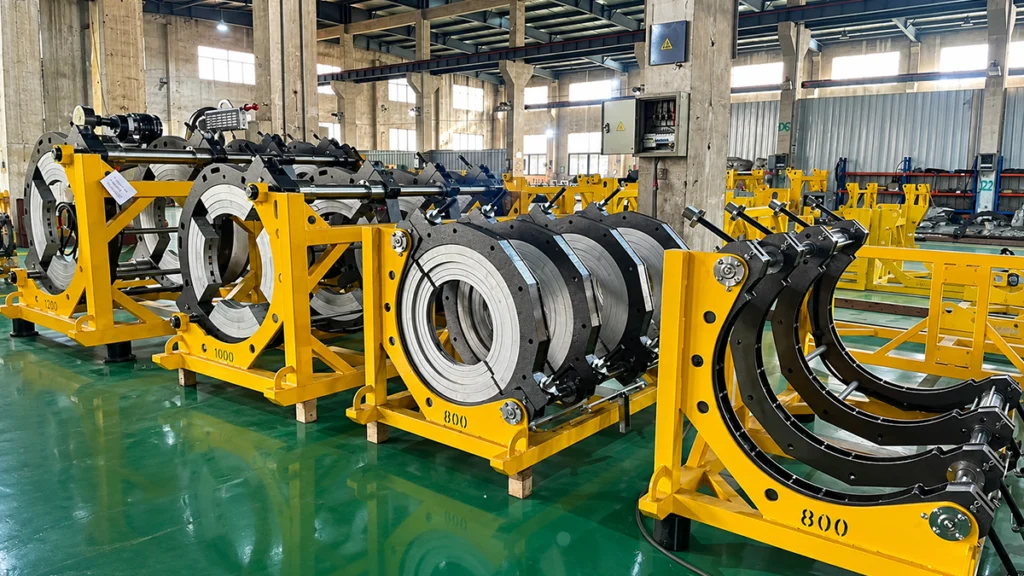
Buying heavy plastic pipe welding machine carries risk, but strong project references lower that anxiety. When a supplier can point to major infrastructure jobs—like the West-East Gas Pipeline—you know their equipment survives high-stress, continuous deployment. A solid portfolio proves the butt fusion welding machines can consistently beat strict municipal pressure tests and ultrasonic inspections. These references also validate the equipment’s versatility, showing it can weld PE80 and PE100 materials flawlessly in harsh, unpredictable climates.
Which industries should the supplier have served?
A seasoned export supplier will have scars and successes across multiple tough industries. The Gas & Natural Gas sector is notoriously strict, demanding absolute precision, zero leaks, and rigid ISO/ASTM compliance. Meanwhile, Water Supply & Drainage projects require high-volume, large-diameter butt fusion power, plus the electrofusion finesse needed for tight trench work. Then there’s the Mining & Industrial sector. These sites destroy weak equipment, demanding rugged, high-pressure HDPE pipe jointing machines that can fuse thick-walled pipes in highly abrasive environments.
Ask for Project References, Case Examples, and Export Experience
Questions to ask about export packaging, shipping, and documentation
- “How exactly do you shield the displacement sensors and hydraulic control box from violent vibrations during ocean freight?”
- “Do you seal the pipe fusion machines against high humidity (keeping it below 65%) and heavy dust during transit?”
- “Will you supply complete CE and ISO 12176.2 paperwork, plus English-language SOPs, so we don’t hit a wall at customs?”
How to assess communication speed and technical professionalism
You can test a supplier’s technical chops with a few targeted questions. Ask them to break down the difference between ISO/DVS (0.15 N/mm²) and ASTM (60-90 psi) parameters. A real manufacturer fires back an answer instantly. Next, test their troubleshooting. Ask how they fix a “false fusion” error. A pro will immediately talk about checking clamp usage, fixing coaxial alignment, and hunting down voltage drops. Finally, ask to see their standard operating procedures to ensure they actually have step-by-step manuals ready to go.
Technical checklist for model selection
- Capacity Match: Does the butt fusion machine’s stated welding range perfectly align with your project’s pipe diameters (like d20-315mm)?
- Power Compatibility: Will the required voltage and kW (such as AC 220V or 380V) actually run on the generators you have on-site?
- Control System: Are you buying manual, semi-automatic, or fully CNC? Does it include an integrated data logger to ensure weld traceability?
Commercial checklist for quotation comparison
- Total Cost of Ownership: Does the bottom-line price cover every essential accessory, including the data logger, electric facer, and reducing clamps?
- Warranty Clarity: Is the 3-year warranty written clearly into the contract, along with a list of specific exclusions?
- Lead Time Accuracy: Has the supplier guaranteed the delivery dates, and do those dates actually fit your construction timeline?
Use a Supplier Evaluation Checklist Before Placing an Order
Quality and compliance checklist
- Machine Standards: Check for strict compliance with ISO 12176-1 (Butt Fusion) or ISO 12176-2 (Electrofusion).
- Welding Standards: Make sure the PLC and hydraulic systems can flawlessly execute DVS 2207, ISO 21307, or ASTM F2620 procedures.
- Safety Verification: The equipment must carry a CE mark, feature proper grounding, and have an accessible emergency stop on the hydraulic pack.
Final questions to ask before confirming the purchase order
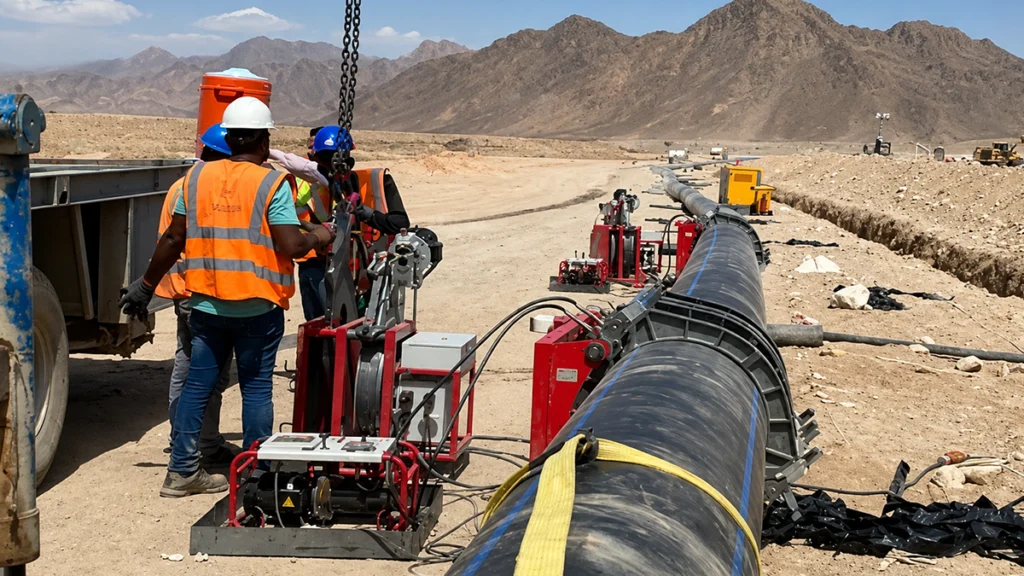
Before you sign that final purchase order, throw a few hard questions at the vendor. Ask them: “Are your reducing clamps precision-machined to hold an ovality of <5‰dn?” Next, confirm whether the software handles barcode scanning for automatic parameter inputs—a massive time-saver for electrofusion. Finally, nail down the long-term maintenance reality. Ask: “When the PTFE heating plate coating inevitably wears out, what is the exact cost and procedure to replace it?”
How to balance price, quality, and delivery risk
Smart procurement means balancing equipment costs against labor expenses. Spending three to four times more upfront on a CNC automatic rig sounds painful, but it routinely yields $20,000 to $30,000 in labor savings. More importantly, it prevents the devastating rework caused by failed pressure tests. On the flip side, grabbing the cheapest hydraulic welder without a solid 3-year warranty or guaranteed spare parts is a massive gamble. The resulting downtime will cost you far more than the pipe fusion machine ever did. Always verify the supplier’s export track record to dodge transit damage and customs nightmares.
When a customized supplier recommendation is useful
Off-the-shelf butt fusion welding machines don’t work everywhere. If your project sits in extreme cold or high humidity, you need customized recommendations for specialized environmental shielding and tweaked heating parameters. When you are forced to weld pipes and fittings from entirely different manufacturers, a supplier who provides custom parameter consultation and laboratory peel tests becomes your best asset. Also, large bore projects pushing past 1000mm require custom-built hydraulic frames. Only top-tier manufacturers have the engineering bandwidth to pull those off safely.
Final Recommendation: Choose Value, Not Only the Lowest Price
Best next step before ordering
Stop looking at base quotations. Your best move is to run a Total Cost of Ownership (TCO) analysis. Lock down your exact pipe diameter range, environmental conditions, and required welding standards. From there, shortlist only the suppliers who actually manufacture their own equipment. Demand their technical spec sheets and scrutinize their data logging features. Before you sign anything, confirm they have spare parts ready to ship and a crystal-clear 3-year warranty in place.
Frequently Asked Questions
Q1: What should I check before choosing an HDPE pipe welding machine supplier?
Always verify the factory’s manufacturing traceability and strict adherence to ISO 12176 standards. Ensure their butt fusion machines fully support DVS 2207 or ASTM F2620 parameters. Beyond the specs, look for a standard 3-year warranty, readily available spare parts like PTFE plates and hydraulic hoses, and thorough operator training backed by clear SOPs.
Q2: How do I know if an HDPE pipe welding machine supplier is a real manufacturer?
Real manufacturers maintain dedicated technical departments. They can instantly push out CNC software updates, customize your PLC programming, or alter voltage specs on the fly. They also ship spare parts directly from their own inventory and gladly share internal audit reports, including heating plate uniformity records and displacement test results.
Q3: What specifications are important for an HDPE butt fusion welding machine?
Focus heavily on the exact welding range (like d160-315mm) and the system’s hydraulic stability, which is crucial for holding heat soaking pressure. The heating plate must maintain a strict, uniform 210±5°C. Additionally, the chassis needs to guarantee alignment with an ovality tolerance under <5‰dn, and the setup should absolutely feature an integrated data logger.
Q4: Why do HDPE pipe welding machine prices vary between suppliers?
Automation is the biggest price driver. Fully CNC automatic butt fusion welding machines loaded with PLCs and closed-loop solenoid valves cost much more than basic manual hydraulic units. Pressure codes matter, too. Building a rig for ASTM standards requires a much heavier frame than a DVS-compliant pipe fusion machine. Finally, adding barcode scanners and data loggers naturally bumps up the price.
Q5: What after-sales service should a welding machine supplier provide?
A top-tier B2B supplier delivers remote troubleshooting using diagnostic error codes, alongside clear video SOPs for your daily maintenance routines. They should offer expert parameter consultation when you hit tricky welds. Furthermore, expect fast shipping on consumable parts and access to annual calibration services for your pressure and displacement sensors.
Q6: How can I compare quotations from different HDPE pipe welding equipment suppliers?
Look past the base price and compare the Total Cost of Ownership (TCO). Verify whether the quote covers crucial accessories like data loggers, electric facers, and reducing clamps. Then, scrutinize the warranty exclusions, export packaging standards, guaranteed lead times, and confirm if you are paying for a fully CNC butt fusion machine or just a semi-automatic one.
Q7: What documents should I request before placing an international order?
Demand the CE certificate and ISO 12176 compliance paperwork upfront. Ask for concrete weld quality reports, such as laboratory peel tests. You also need the detailed technical spec sheet, English-language SOPs, and the exact internal factory inspection records for the specific batch you are buying.
Q8: Is the cheapest HDPE pipe welding machine a good choice for project use?
Absolutely not. Bargain butt fsuion welding machines typically suffer from poor hydraulic stability, erratic temperature control, and zero data logging. This directly causes asymmetrical welds and failed pressure tests. The massive expense of digging up and repairing just one ruined joint will instantly wipe out whatever money you saved buying cheap equipment.
Conclusion
Finding the right supplier means looking right past the initial sticker price. You have to evaluate the Total Cost of Ownership (TCO) and protect your long-term project security. Dig into the vendor’s manufacturing traceability. Verify their adherence to international codes like ISO 12176, and test the technical precision of their gear. Certain parameters simply cannot be compromised. Your hydraulic system must hold exact pressures, and the heating plates must lock in at a strict 210±5°C.
Deciding between manual, hydraulic, or fully CNC automatic rigs comes down to your specific project demands and labor targets. While automatic butt fusion machines carry a higher upfront cost, they quickly pay for themselves through heavy labor savings and the total elimination of human error. This keeps you safe from catastrophic joint failures and busted pressure tests. Ultimately, your best strategy is to partner with a true manufacturer. When they offer deep technical consultation, a rock-solid 3-year warranty, and immediate access to spare parts, you guarantee pipeline integrity and eliminate crippling delays on the job site.
Let our experts help you choose the right equipment for your project
Contact Our Engineering Team