
Professional HDPE Pipe Jointing Machines: Maximizing Infrastructure Integrity and Speed
📑Table of Contents
Introduction
The reliability of a utility network hangs on a single variable: the precision of the HDPE pipe jointing machine deployed in the trench. With infrastructure projects facing tighter deadlines than ever, contractors simply cannot afford the catastrophic delays triggered by failed welds, equipment breakdowns, or drifting fusion parameters. A single compromised joint isn’t just a leak; it represents upwards of $15,000 in excavation, environmental remediation, and rework costs—not to mention the reputational hit.
This guide breaks down critical failure modes, dissects essential industry standards like ISO 21307 and DVS 2207, and offers a granular comparison between butt fusion and electrofusion technologies. We also provide a rigorous technical checklist for selecting equipment that delivers laboratory-grade precision despite the mud and grit of the job site. By the end, you will have a solid framework to specify the right HDPE pipe jointing machine for your next pipeline project, avoiding costly procurement missteps.
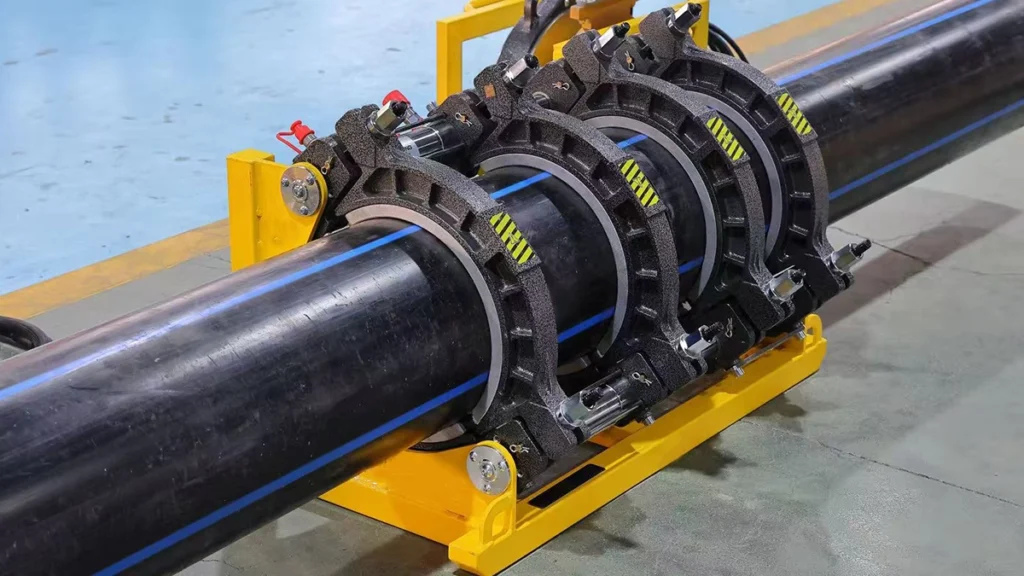
The Critical Role of Professional Jointing in HDPE Pipeline Systems
An HDPE pipeline is only as strong as its weakest link: the joint. While the pipe itself is extruded to survive 50 to 100 years, the fusion point is manufactured in the field, often under punishing conditions.
Failure Modes of Poorly Executed HDPE Joints
Understanding the mechanics of failure is the first step toward prevention. When an HDPE pipe jointing machine lacks hydraulic precision, or the operator cuts corners, specific failure modes emerge that threaten the entire network.
- Cold Welds: These occur when the heating plate temperature drops too low or the changeover time (the critical seconds between removing the heater and applying fusion pressure) drags on too long. The molten surfaces cool before contact, preventing proper molecular entanglement. The result is a brittle interface that might pass a visual check but will snap under ground movement or pressure surges.
- Insufficient Fusion/Low Pressure: If the hydraulic system fails to maintain the specified interfacial pressure (drag pressure + bead build-up pressure) throughout the cooling cycle, voids form within the weld. This compromises the cross-sectional strength significantly.
- Contamination: Dust, grease, or moisture on the pipe ends—usually due to rushed planing or skipped cleaning—acts as a barrier to fusion. Even microscopic contaminants can slash joint strength by 50%, initiating slow crack growth (SCG) that leads to leaks years down the line.
Industry Standards: The Blueprint for Quality
To neutralize these risks, professional machinery must rigorously adhere to international standards. These documents define the “process window”—the exact recipe of temperature, pressure, and time required to make the joint as strong as the pipe itself.
- ISO 21307: The global authority for butt fusion welding of PE pipes. It details procedures for Single Low Pressure (SLP), Dual Low Pressure (DLP), and Single High Pressure (SHP) fusion. A compliant HDPE pipe jointing machine must be capable of replicating these specific pressure curves without deviation.
- DVS 2207: Originating from the German Welding Society, this is arguably the most stringent standard in existence. It dictates precise heating durations relative to wall thickness and is often the benchmark for high-risk industrial and gas applications.
- EN 12007: Specific to gas infrastructure, this European standard places a heavy premium on traceability and data logging, ensuring every joint in a gas network is fully auditable.
Lifecycle Cost Benefits: The ROI of Quality
Procurement teams often fixate on the initial purchase price (Capex), but the Total Cost of Ownership (TCO) paints a different picture. A “budget” manual HDPE pipe jointing machine might save $2,000 upfront but lacks the hydraulic consistency and chassis rigidity of a professional unit.
Consider the Operational Costs (Opex):
1. Speed: A professional hydraulic butt fusion machine equipped with high-flow pumps can shave cycle times by 15-20% compared to underpowered units. On a 10km pipeline, that efficiency gains days of labor.
2. Rework: As mentioned, a single repair bill dwarfs the price gap between a standard and a premium butt fusion machine.
3. Longevity: Professional HDPE pipe welding machines, like Ekberg’s, are engineered with hardened steel guides and heavy-duty seals, often serving 10+ years with proper maintenance. Cheaper alternatives frequently succumb to hydraulic leaks or frame warping within 24 months.
Core Technologies: Butt Fusion vs. Electrofusion for Different Applications
Choosing the right jointing method isn’t a matter of preference; it’s a matter of engineering requirements. Both technologies offer distinct tactical advantages depending on the project scope.
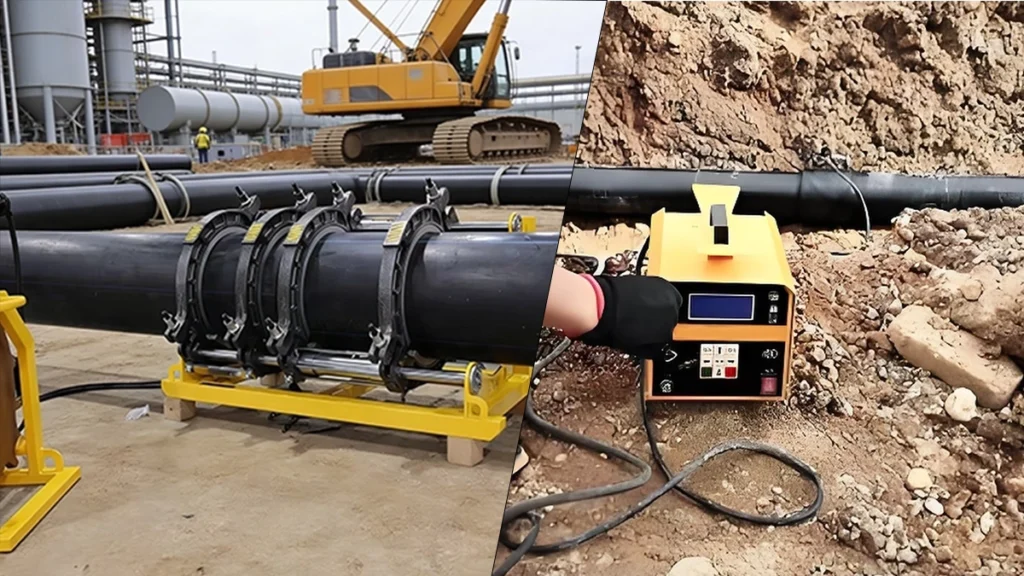
Technology Comparison: Butt Fusion vs. Electrofusion
The table below contrasts the two primary technologies to assist in fleet planning.
| Feature | Butt Fusion (e.g., Ekberg Series) | Electrofusion (e.g., Ekberg EKE-Series) |
|---|---|---|
| Pipe Diameter Range | DN63 – DN2600+ (Ideal for large transmission lines) | DN20 – DN800 (Ideal for service lines & tie-ins) |
| Joint Cost | Low (No fittings required; pipe-to-pipe) | High (Requires a coupler/fitting for every joint) |
| Equipment Size | Large, requires clearance for machine carriage | Compact, fits in narrow trenches |
| Skill Requirement | High (Operator manages pressure/time curves) | Moderate (Barcode scanning automates parameters) |
| Typical Application | Long-distance water/gas mains, mining, industrial | Repairs, complex geometries, tight urban spaces |
| Joint Strength | Equal to pipe strength (homogeneous) | Strong, but relies on fitting integrity |
Ekberg Series Applications
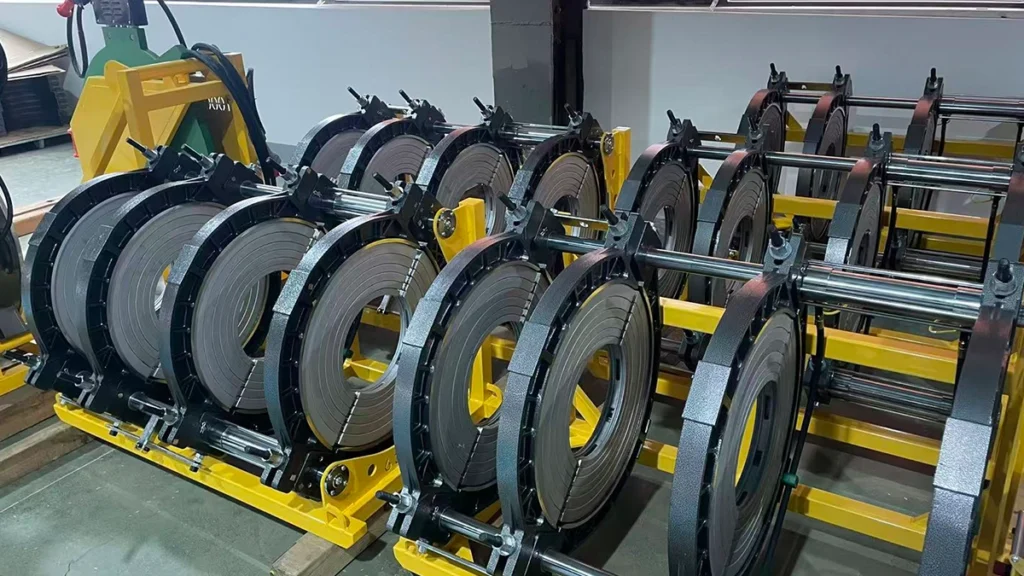
- Ekberg Series (Butt Fusion): Engineered for high-volume pipeline contractors. These hydraulic butt fusion machines are the workhorses for municipal water mains and mining slurry lines. They feature robust hydraulic aggregators capable of handling the immense drag forces associated with moving heavy SDR11 pipes.
- Ekberg EKE-Series (Electrofusion): These lightweight, computerized units are essential for gas distribution networks and emergency repair crews. The EKE-Series excels in “last mile” connections where maneuvering a large butt fusion chassis into a cramped residential trench is physically impossible.
Technical Decision Criteria
When weighing methods, engineers must evaluate:
1. Pipe Material & SDR: Butt fusion is generally restricted to pipes with the same wall thickness (SDR). If you need to connect pipes of differing SDRs, electrofusion or flange adapters are the only way forward.
2. Access: In a greenfield project with ample space, butt fusion is the economic winner. In brownfield projects (existing urban infrastructure), the compact footprint of electrofusion often makes it the only viable option.
3. Joint Configuration: For standard linear connections, butt fusion is faster. However, for complex manifold assemblies involving elbows, tees, and reducers in close proximity, electrofusion allows for tighter geometry than the carriage of a butt fusion machine would permit.
Essential HDPE Pipe Jointing Machine Selection Criteria: A Buyer’s Technical Checklist
Investing in an HDPE pipe jointing machine is a capital expenditure demanding technical scrutiny. Don’t rely on brochure highlights; dig into the engineering specs.
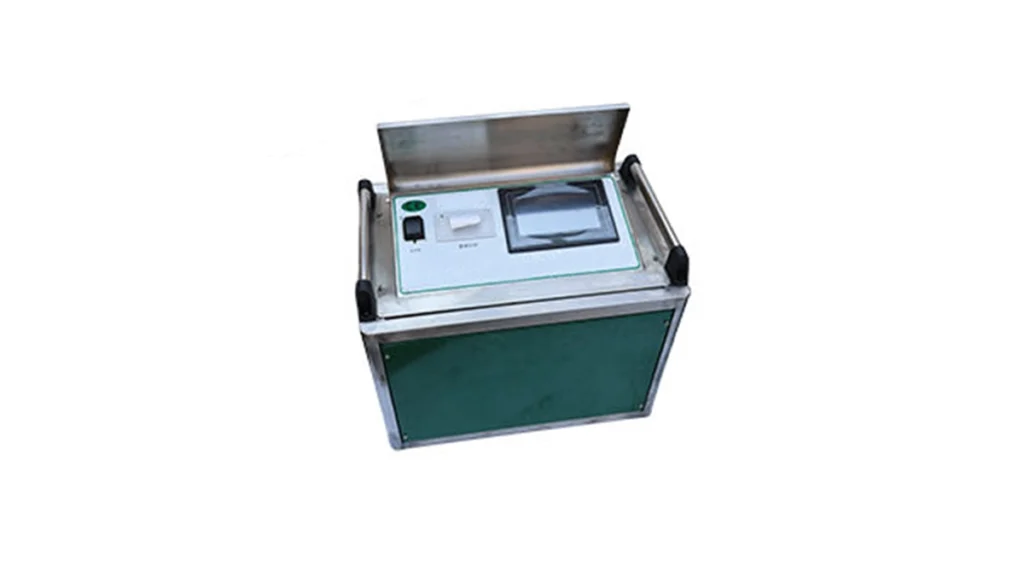
Critical Performance Specifications
- Temperature Control: The heating plate must maintain temperature uniformity across its entire surface with a deviation of no more than ±3°C (ideally ±1°C). Uneven heating introduces internal stresses that weaken the joint.
- Hydraulic Stability: Look for a system pressure range of 0-2.5 MPa (or higher for large diameter machines). Crucially, the system must hold pressure without fluctuation during the cooling phase. A pressure drop here signals internal valve leakage, which compromises the weld.
- Alignment Precision: The pipe welder chassis must prevent angular misalignment. High-quality HDPE pipe welding machines use hardened, distinct guide shafts to ensure the pipe ends meet with perfect concentricity.
- Data Logging: In modern projects, “trust but verify” is the rule. The HDPE pipe jointing machine should automatically record time, temperature, and pressure for every joint, generating a tamper-proof ISO 12176-compliant report.
Durability and Usability Factors
Field conditions are brutal. A HDPE pipe jointing machine sitting in a muddy trench at 5°C must perform with the same accuracy as one in a factory.
- Frame Construction: Aluminum alloy frames offer the best balance of strength-to-weight, making them easier for crews to position manually. For machines above DN630, steel frames are preferred for absolute rigidity.
- Power Source: Ensure the hdpe pipe welding equipment is compatible with field generators. Voltage fluctuations can fry sensitive electronic controls, so look for built-in power conditioning or surge protection.
- Environmental Ratings: Electronics (the hydraulic unit and data logger) should be rated at least IP54 to resist dust ingress and splashing water.
HDPE Pipe Jointing Machine Supplier Checklist
Before signing the PO, grill the supplier:
- Spare Parts: “Do you stock replacement heating elements, facer blades, and hydraulic seals locally?” Waiting six weeks for a seal kit can stall a project indefinitely.
- Training: “Does the purchase include operator training according to ISO or DVS standards?”
- Calibration: “How often does the hdpe welding machine need recalibration, and can this be done locally?”
- Warranty: Look for a minimum 2-year warranty that explicitly covers hydraulic components.
Optimizing Welding Parameters for Maximum Joint Integrity
Even the most advanced plastic pipe welding machine cannot compensate for incorrect parameters. Adhering to the physics of fusion is non-negotiable.
Ekberg Recommended Parameter Guidelines
While specific parameters depend on the pipe manufacturer and standard (ISO/DVS/ASTM), general guidelines for PE100 pipe include:
- Heating Plate Temperature: Typically 200°C – 230°C.
- Bead Build-up Pressure: High enough to ensure full contact between the pipe end and the heater plate until a bead forms around the entire circumference.
- Heat Soak Time: Roughly 10 seconds per millimeter of wall thickness (at near-zero pressure) to allow heat to penetrate the pipe wall without pushing out molten material.
- Changeover Time: Critical. For a DN315 pipe, this might be a maximum of 6-8 seconds. Delay here causes the melt to cool, leading to a “cold joint.”
- Cooling Time: Must be done under pressure. Premature removal of pressure allows the molten plastic to shrink, creating voids.
The Science of Fusion
Fusion is about molecular entanglement. When HDPE is heated, the crystalline structure becomes amorphous (viscous). By pressing two amorphous zones together, polymer chains migrate across the interface.
- Interfacial Pressure: This force pushes the chains together. If pressure is too high, you squeeze all the hot material out (cold weld). If too low, chains don’t entangle (weak weld).
- Controlled Cooling: HDPE recrystallizes as it cools. If cooled too fast (e.g., pouring water on the joint), the structure becomes brittle. Natural cooling under pressure allows the crystalline structure to reform strongly.
Pre-Welding Preparation: The Forgotten Step
70% of joint failures are due to poor preparation, not machine failure.
1. Cleaning: Pipe ends must be cleaned with a lint-free cloth and an approved solvent (e.g., Isopropanol) to remove oils and dust.
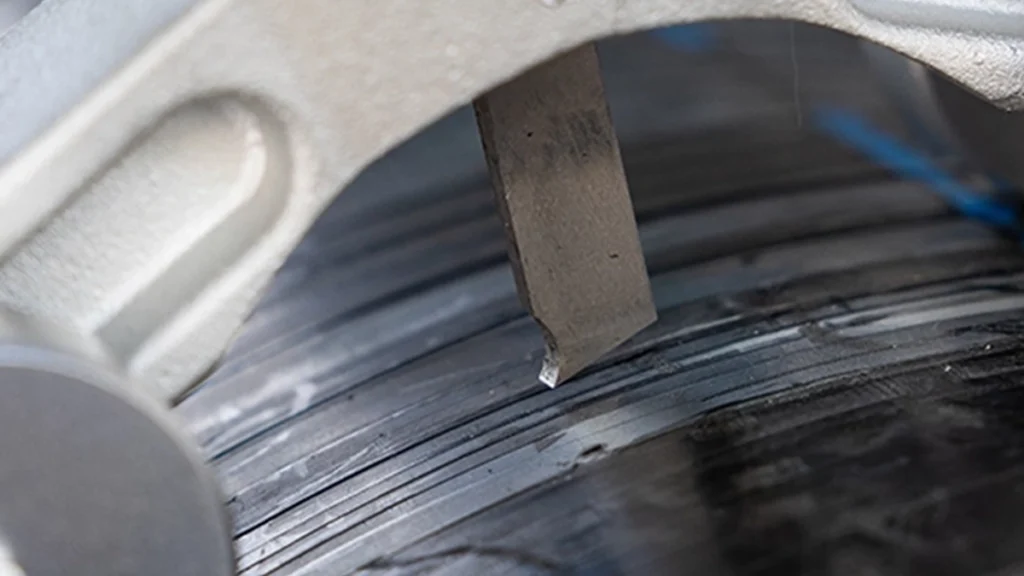
2. Planing (Facing): The facing tool must shave the pipe ends until continuous ribbons are produced on both sides. This ensures the ends are perfectly parallel and square.
3. Alignment Check: After facing, bring pipe ends together. The gap should not exceed the maximum tolerance (e.g., 0.5mm for smaller diameters).
4. Drag Pressure Measurement: The force required to move the carriage *must* be added to the calculated welding pressure. Neglecting drag pressure results in insufficient fusion force.
Manufacturing Excellence, Quality Control & Global Support
At Ekberg Welding, we understand that our machines are the backbone of critical infrastructure. Our manufacturing philosophy reflects this heavy responsibility.
Factory Production and Testing
Every Ekberg pipe welding equipment undergoes a rigorous “birth certificate” process before leaving the floor.
- Hydraulic Cycle Testing: Hydraulic units are subjected to pressure cycles exceeding their rated maximum to ensure valves and seals can withstand pressure spikes.
- Thermal Mapping: Heating plates are tested with thermal imaging cameras to verify temperature uniformity. A cold spot on a heating plate is a future leak in a pipeline.
- Calibration: Pressure gauges and temperature sensors are calibrated against master standards traceable to international metrology institutes.
Certifications and Compliance
Ekberg equipment is manufactured under ISO 9001 quality management systems. HDPE pipe jointing machines are designed to help contractors meet ISO 21307, DVS 2207, and ASTM F2620 standards. The CE marking ensures compliance with European safety, health, and environmental protection requirements, guaranteeing operator safety.
Global Support Network
A HDPE pipe jointing machine down in the field is a crisis. Ekberg maintains a global network of distributors and service centers.
- Local Support: We ensure that technical support is available in your time zone.
- Spare Parts Logistics: Critical consumables (blades, heater plates) and repair parts are stocked regionally to minimize shipping times.
- Training Academy: We offer certification courses for operators, teaching not just button-pushing, but the physics of welding and troubleshooting field issues.
Frequently Asked Questions
Q1: What is the main difference between a butt fusion machine and an electrofusion machine, and which one should I choose for a municipal water pipeline project?
Butt fusion joins pipes by heating the ends and pressing them together, requiring no additional fittings. It is the gold standard for long, straight runs (mainlines) due to lower material costs. Electrofusion uses energized fittings to melt the pipe surface. It is better suited for tie-ins, repairs, and tight spaces. For new municipal water mains, butt fusion is typically the choice for efficiency and cost-effectiveness.
Q2: How do I verify if my HDPE pipe jointing machine is producing welds that meet industry standards like ISO 21307?
Verification requires a hdpe pipe jointing machine equipped with data logging capabilities. The butt welding machine records heating time, temperature, fusion pressure, and cooling time for every joint. You can compare these reports against the ISO 21307 standard parameters. Additionally, performing destructive testing (tensile or bend tests) on a test weld at the start of a project provides physical verification of HDPE piep welding machine calibration and operator skill.
Q3: Can the same machine weld different diameters of HDPE pipe, and what accessories are needed to change sizes?
Yes, most professional butt fusion machines cover a range of diameters (e.g., a DN315 machine might weld anywhere from DN90mm to DN315mm). To change sizes, you use aluminum reduction inserts (liners) that fit into the main clamps. These inserts reduce the clamp diameter to match the smaller pipe size while maintaining correct alignment. Ensure you have the full set of inserts for your project’s pipe range.
Q4: What are the most common operational mistakes that lead to joint failure, and how can they be prevented?
The most common errors are insufficient cleaning (leaving dust/grease), incorrect drag pressure calculation (failing to add drag force to fusion pressure), and rushing the cooling time. Prevention involves strict adherence to a checklist: clean pipe ends with alcohol, measure drag pressure for *every* weld, and never remove clamps before the full cooling cycle completes.
Q5: What does the typical maintenance schedule for a professional-grade butt fusion machine involve, and what are the critical components to monitor?
Daily checks should include cleaning the heating plate (removing plastic residue) and checking hydraulic fluid levels. Weekly, inspect the facing tool blades for sharpness (dull blades cause uneven facing) and check hydraulic hoses for wear. Annually, the HDPE pipe jointing machine requires calibration of the pressure gauge and temperature controller by a certified technician to ensure the readings match actual output.
Conclusion
Selecting a professional HDPE pipe jointing machine is more than a simple purchase order; it is a strategic decision that directly impacts installation speed, workforce safety, and the long-term integrity of the infrastructure. As we have explored, the difference between a successful project and a costly failure often lies in the equipment’s ability to maintain precise parameters under pressure and the operator’s adherence to standards like ISO 21307.
By prioritizing technology that offers hydraulic stability, accurate data logging, and robust construction, contractors can eliminate the variables that lead to leaks. Whether you opt for the high-volume efficiency of the Ekberg Series butt fusion line or the versatile precision of the EKE-Series electrofusion units, the goal remains the same: permanent, leak-free connections.
Do not leave your infrastructure integrity to chance. Contact Ekberg Welding today for a personalized consultation. Our engineering team can help you select the exact HDPE pipe jointing machine configuration for your pipe diameters and project scope, ensuring you have the power and precision to get the job done right. Request a detailed quote or ask for our technical white papers to learn more about optimizing your pipeline operations.