
High-Capacity Butt Fusion Machine: Rent or Buy Guide
Table of Contents
When a project calls for welding DN1600 pipe at 220°C, the equipment isn’t just a tool; it’s the linchpin of infrastructure integrity. High-capacity butt fusion machines are massive, powerful, and expensive. This substantial acquisition cost forces almost every contractor to pause and calculate: is it better to rent or buy?
For utility contractors tackling large-scale water or gas distribution, “high-capacity” generally refers to equipment in the DN315 to DN1600 range. These aren’t machines you toss in the back of a pickup; they demand precise hydraulic control and significant power input. While specialized heavy equipment distributors do offer rental fleets, the decision isn’t as simple as comparing a monthly invoice against a purchase order. It involves complex variables—Total Cost of Ownership (TCO), strict compliance with ISO 21307, and the risk of project timeline slippage.
This guide breaks down the economics of the rent-versus-buy debate, highlights the hidden availability risks of large-diameter gear, and outlines the non-negotiable specs your machinery needs. We will walk you through a “field-tested” inspection checklist for incoming equipment and explain how Ekberg Welding’s manufacturing standards protect both fleet owners and end-users. By the end, you’ll have a solid framework to select the right equipment for your DN315–DN1600 HDPE projects—avoiding the specification errors that lead to joint failure.

Rent vs. Buy: Strategic Analysis for Utility Contractors
Deciding whether to sink capital into heavy machinery or burn operational budget on rental fees is rarely a straight line. For utility contractors, this choice pulls at cash flow, tax liabilities, and operational agility. While finding a rental unit for small-diameter work (up to DN250) is easy, the game changes entirely when you need high-capacity butt fusion machines engineered for 800mm to 1600mm pipes.
Project Duration and Frequency Analysis
Time is the first variable in the equation. If you are looking at emergency repairs or short-term tie-ins lasting a week or two, renting is almost always the smart financial move. The logistics of transporting a purchased 1200mm hydraulic butt fusion machine, coupled with the cost of storing and maintaining it during downtime, destroys the ROI on short-burst projects.
However, the math flips for infrastructure rollouts that span six months or more. Rental fees for large-diameter fusion equipment can easily top $1,000 a day once you factor in accessories and market demand. A contractor renting a butt fusion welding machine for a six-month municipal water job could burn through $130,000—money that could have nearly covered the purchase price of a new Ekberg hydraulic unit. The break-even point usually hits around the 3 to 4-month mark of continuous use. Cross that line, and ownership doesn’t just stop the daily cash bleed; it builds asset value you can leverage for future bids or resell later.
Availability Risks for Large Diameter Equipment
The rental market has a scarcity problem that many contractors discover too late. While DN315 or 450mm hydraulic butt fusion machines are everywhere, finding a rental-ready 1200mm or 1600mm unit on short notice is a gamble. Because these “super-large” units are expensive and utilized less frequently, rental fleets stock very few of them.
Relying on a rental provider for a critical path activity exposes you to a major vulnerability: if the specific butt fusion welding machine size isn’t sitting in the yard when your trench is ready, the cost of the delay—idle crews, penalties, and schedule slippage—will dwarf the cost of the machine itself. Owning an Ekberg unit puts the control back in your hands. You determine the schedule, ensuring the machinery is ready to deploy the moment your engineering team signs off on the fusion procedure.
Asset Management and Depreciation Benefits
Financially, this is a battle between Capital Expenditure (CapEx) and Operating Expenditure (OpEx). Rental fees are 100% deductible as operating expenses right now, which helps companies trying to lower immediate taxable income without bloating the balance sheet.
On the flip side, purchasing industrial machinery opens the door to depreciation write-offs over several years. For stable utility companies, capitalizing a fleet of Ekberg butt fusion machines strengthens the company’s asset base. Plus, ownership kills the dreaded “damage waiver” arguments that happen when you return a rental. When you own the iron, a scratch is a maintenance task, not a billable penalty from a rental agency.
Customization and Fleet Standardization
Efficiency takes a hit when operators have to relearn a new machine’s quirks with every rental contract. A mixed fleet breeds inconsistency in welding parameters, setup times, and safety protocols.
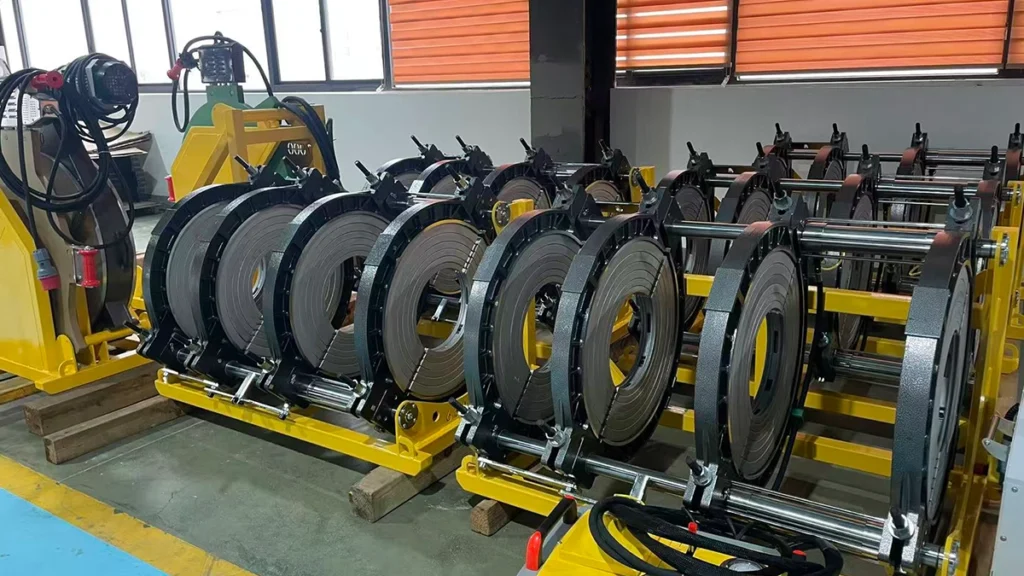
Buying Ekberg hdpe pipe welding machines allows for fleet standardization. This uniformity means an operator trained on a DN630 unit can jump onto a DN1200 unit and intuitively know the control logic, hydraulic interfaces, and data logging systems. Ownership also allows for customization—like outfitting your fleet with specific interchangeable inserts or specialized data loggers that sync directly with your utility company’s reporting software. Try asking a rental house to modify their butt fusion machine for you; it rarely happens.
Critical Technical Specifications for High-Capacity Butt Fusion Machines
Whether you sign a rental agreement or a purchase order, the butt fusion welding machine that lands on your job site has to perform. The physics of the weld don’t care how you procured the equipment; it demands precise heat and pressure, or the joint will fail.
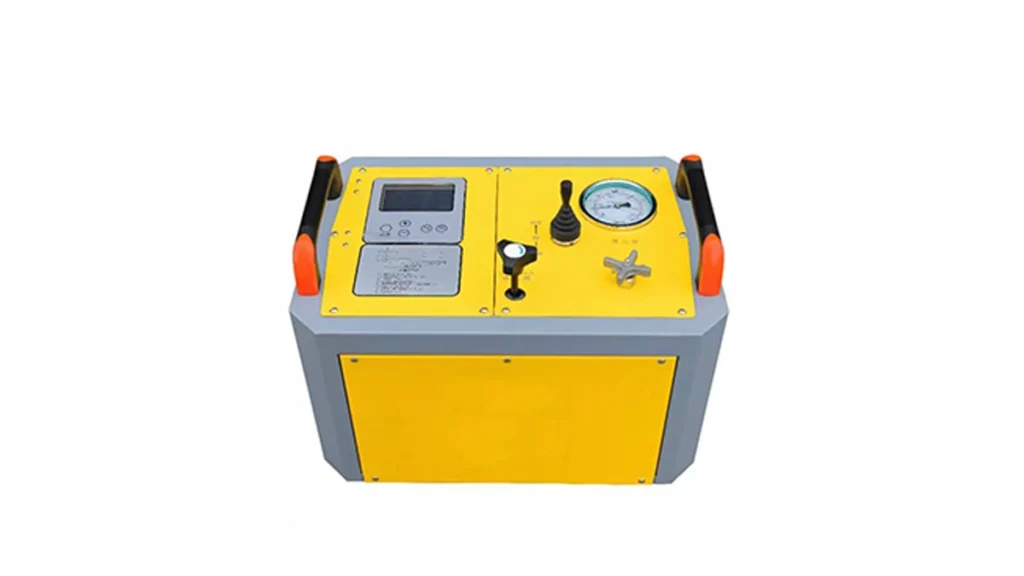
Hydraulic Pressure and Force Capability
Welding thick-walled HDPE pipes (SDR 11 or SDR 17) in large diameters requires massive interfacial pressure. ISO 21307 dictates that high-pressure fusion requires interfacial pressures up to 0.52 MPa. On a 1600mm pipe, that translates to a staggering amount of hydraulic force.
Ekberg’s heavy-duty series is engineered with hydraulic cylinders designed to operate continuously at system pressures between 4 and 6 MPa (up to 160 bar internal rating). This ensures the drag pressure is overcome and bead formation remains consistent. Under-powered rental butt fusion machines often struggle to hold that pressure during the cooling cycle, creating voids in the weld zone. You need to verify that the machine’s hydraulic cross-section can deliver the required force without red-lining the pump.
Data Logging and Traceability (ISO 12176)
In the world of gas and water utilities, if there is no data, there is no weld. Modern standards, like ISO 12176, make recording every joint mandatory. The hdpe pipe jointing machine must log operator ID, GPS coordinates, ambient temperature, heater temperature, drag pressure, fusion pressure, and cooling time.
Ekberg pipe butt welders integrate compliant data logging systems that spit out unalterable PDF reports. When vetting a rental unit, don’t just check if a logger exists—check if it’s calibrated and talks to your reporting software. Using a butt fusion machine with a glitchy logger can lead to the rejection of entire pipeline sections during final inspection.
Heating Plate Technology and Temperature Control
The heating plate is the heart of the operation. On a 1600mm plate, keeping the temperature uniform is a serious engineering challenge. You cannot have deviations exceeding ±5°C across the surface, which typically runs between 200°C and 230°C for PE100.
Ekberg uses high-grade aluminum alloys with a premium PTFE coating to prevent sticking. If you rent a butt fusion equipment with a scratched or worn coating, the pipe can stick to the plate during removal, ruining the molten interface. Additionally, the electronic thermal control needs to be snappy enough to recover heat instantly after the plate touches the cold pipe ends.
Chassis Ruggedness for Field Terrain
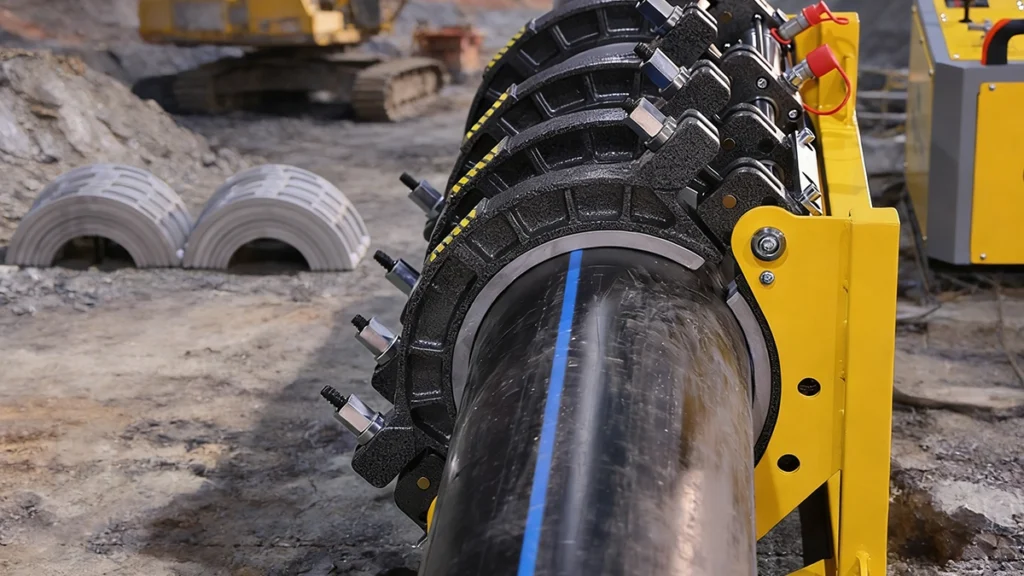
Large-diameter HDPE pipes aren’t laid on shop floors. They go into muddy trenches, onto rocky slopes, and into remote mining pits. The butt fusion machine chassis needs to be rigid enough to stop the pipe from twisting the frame out of alignment.
Ekberg employs a robust 4-column structure or heavy-duty saddle design to resist torsional stress. If a rental butt fusion machine arrives with a frame warped from previous abuse, achieving the coaxial alignment required by DVS 2207 (<10% wall thickness mismatch) is impossible. A rigid chassis ensures hydraulic force is applied axially, rather than being wasted fighting frame flex.
Inspection Checklist: Evaluating Machine Quality Before Deployment
Before a butt fusion machine touches a pipe—whether it’s a rental fresh off the truck or a purchased asset—it needs to pass a strict pre-deployment inspection.
Verifying Alignment and Clamping Integrity
Start by bringing the clamps together without a pipe to check for concentricity. Misalignment cannot exceed 0.5mm for smaller pipes or 10% of the wall thickness for larger diameters. Inspect the clamp liners for deformation; worn liners on beat-up rental units are a classic cause of “hi-low” misalignment, which creates stress concentrators in the finished weld.
Hydraulic System Health Check
The hydraulic system must hold pressure. Period. Perform a “dummy weld” test: bring the carriage to pressure and close the valve. Watch the gauge for 10 minutes. If the needle drops, you have internal leaks in the cylinders or control valves. Verify the accumulator (if equipped) is charged to handle pressure spikes, and check all hoses for abrasion. Quick-couplers should be clean and lock with a satisfying click.
Planing Tool (Trimmer) Performance
The facing tool (trimmer) needs sharp, double-edged blades. Run the trimmer and look at the shavings. You want continuous, long ribbons of plastic. If the trimmer is spitting out chips or dust, the blades are dull. Dull blades on a rental butt fusion welding machine will work-harden the pipe end and leave a rough surface that won’t soak up heat properly. Also, check that the safety limit switches actually stop the trimmer from engaging unless it’s seated correctly.
Electrical Safety and Power Requirements
Large butt fusion machines are power-hungry beasts. A 1600mm hydraulic butt fusion machine can draw over 60 kW. Verify your on-site generator is sized correctly—usually 1.5 times the total machine power (heater + hydraulic pump + trimmer). For a 61.5 kW machine, a 100 kVA generator is the minimum safe bet to prevent voltage drops that reset data loggers or cause heater fluctuations. Inspect all electrical cables for cuts or insulation damage—a very common issue with rental gear.
Ekberg Factory Capability, Certification & Global Support
Ekberg Welding isn’t just a manufacturer; we act as a strategic partner for rental fleets and end-user contractors alike.
Manufacturing Excellence and Quality Control
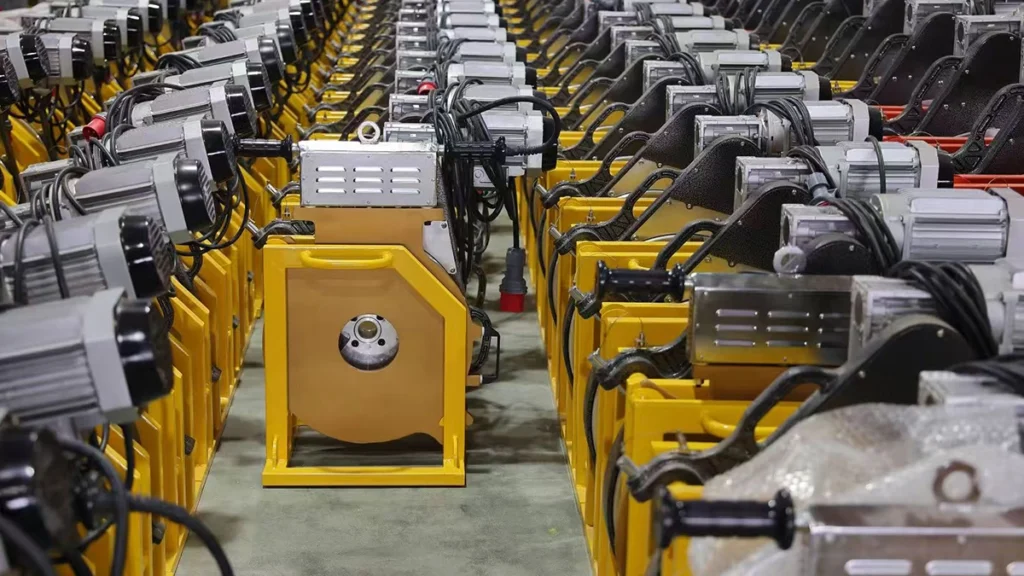
We control the entire production lifecycle. Ekberg butt fusion welding machine bodies are CNC machined from high-strength metal blocks for absolute precision, rather than relying on cast parts that might hide internal voids. Every hydraulic cylinder and heating element faces a rigorous 24-hour testing cycle before it leaves our dock. This obsession with QC is why rental companies often prefer Ekberg—our equipment survives the brutality of the rental market better than lighter-weight alternatives.
Global Supply Chain and Spare Parts Availability
Downtime kills profitability. Ekberg maintains a global logistics network to ensure critical spare parts—seals, electronic boards, trimmer blades, and inserts—can be dispatched immediately. If you own the machine, support is never more than a courier flight away. For rental companies, this support guarantees high fleet utilization rates.
Support for Rental Fleets and Distributors
We actively partner with equipment distributors to build rental-ready fleets. We offer refurbishment services where older machines can be sent back to the factory or authorized centers for hydraulic overhauls and software updates. This partnership ensures that when a contractor rents an Ekberg butt fusion machine, they are getting a unit that performs like new, backed by OEM specs.
Training and Certification Programs
The best hdpe pipe welding machine in the world is useless in the hands of an unskilled operator. Ekberg provides comprehensive training modules covering machine operation, welding standards (ISO/DVS), and troubleshooting. We certify operators to handle high-capacity fusion procedures safely—a credential that project owners and municipal inspectors are increasingly demanding.
Industry Applications: Where High-Capacity Fusion is Mandatory
Municipal Water and Wastewater Infrastructure
As cities rip out aging concrete and cast-iron pipes, HDPE has become the standard for water transmission. These projects often snake through dense urban environments where a leak is a disaster. High-capacity hdpe butt fusion machines are used to weld typically DN450 to DN1000 mains. The zero-leak guarantee of a properly fused joint is essential for reducing non-revenue water loss.
Gas Distribution Networks
The gas industry operates with the strictest safety margins (ISO 4437). Butt fusion machines here must have flawless data logging and pressure control. A failure in a high-pressure gas line isn’t just a maintenance issue; it’s a life-safety issue. Consequently, gas utilities often mandate butt fusion machines with automatic welding processes to remove human error—a standard feature in Ekberg’s advanced hydraulic series.
Mining and Slurry Pipelines
Mining operations rely on thick-walled pipes to transport abrasive slurry. These pipes (often DN630+) require immense force to fuse due to their wall thickness. The environment is harsh—dust, extreme heat, and rough handling. Ekberg’s rugged chassis design is a favorite in this sector because it maintains alignment even when the butt fusion machine is dragged across uneven mine floors.
Frequently Asked Questions
Q1: Does Ekberg Welding offer direct rental services for butt fusion machines?
Ekberg Welding primarily focuses on manufacturing and direct sales to ensure the lowest TCO for our clients. However, we maintain a robust network of authorized distributors and partners globally who offer rental services for our equipment. We can connect you with a local partner who stocks Ekberg butt fusion machines, ensuring you get our technology with the flexibility of a rental contract if purchasing isn’t in the cards right now.
Q2: What generator size is needed for a 1200mm butt fusion machine?
For a 1200mm hydt=raulic butt fusion machine, the total power consumption (heater, facer, and hydraulic pump) is significant. You must adhere to the “1.5x rule” to handle the startup current surge. If the machine draws approximately 30 kW, you should specify a generator with a minimum capacity of 80 kVA to 100 kVA. Undersized generators cause voltage drops that can trigger safety shut-offs or erratic heating plate temperatures.
Q3: Can Ekberg machines be retrofitted with data loggers for utility projects?
Yes. While most of our modern hydraulic series come with integrated data logging compliant with ISO 12176, older Ekberg models can be retrofitted. We offer external data logger units that connect directly to the hydraulic system and temperature probes. This upgrade allows older fleet assets to meet current municipal and gas utility reporting standards without you having to buy an entirely new machine.
Q4: What is the typical lead time for purchasing a high-capacity machine vs. renting?
Renting is immediate, assuming the size you need is sitting in a local yard. Purchasing a high-capacity butt fusion machine (e.g., DN1200 or DN1600) typically involves a manufacturing and shipping lead time, ranging from 2 to 6 weeks depending on customization. However, Ekberg stocks standard models (up to DN800) for faster dispatch. For long-term projects, planning for this lead time is worth the ROI compared to months of rental fees.
Q5: How does Ekberg ensure machine reliability for remote construction sites?
Reliability in the middle of nowhere is secured through three layers: Design, Components, and Support. We use a simplified, non-proprietary hydraulic design that is easy to service in the field. We use premium electrical components resistant to dust and vibration. Finally, we provide remote video diagnostic support, allowing site mechanics to troubleshoot issues with our engineers in real-time, minimizing the need to ship butt fusion machines back for minor repairs.
Conclusion
For utility contractors, the choice between renting and buying high-capacity butt fusion machines is a balancing act between financial strategy and operational risk. While rental offers flexibility for short-term repairs, the break-even analysis heavily favors ownership for any project extending beyond three to four months. More importantly, owning Ekberg equipment guarantees availability, a consistent maintenance history, and fleet standardization—factors that directly influence your project timelines and weld quality.
Ekberg Welding stands ready to support your infrastructure projects with machinery that meets the highest global standards (ISO, DVS, ASTM). Our commitment to precision manufacturing ensures that whether you are fusing DN315 water mains or DN1600 industrial intakes, the equipment delivers reliable, compliant joints every time.
Ready to optimize your fleet strategy? Contact Ekberg Welding today for a personalized Total Cost of Ownership analysis. Let us help you determine if a factory-direct purchase or a distributor rental is the right path for your next project.