
HDPE Pipe Welding Machine Manufacturer: Equipment Guide
Table of Contents
Evaluating HDPE pipe welding machine manufacturers ranks as the single most important procurement decision a pipeline contractor can make. Why? Because equipment running at 220°C and pushing 0.2 MPa of fusion pressure literally decides if a pipeline survives 50 years or ruptures prematurely. The joint’s reliability dictates both pipeline integrity and your project’s bottom line. Selecting the right machinery is absolutely critical for utility companies and contractors alike.
This guide breaks down butt fusion welding machine specifications across the board. We will look at welding parameter standards like ISO 21307 and map out selection criteria for projects of any size. You will also see exactly what drives pricing dynamics, how to calculate Total Cost of Ownership (TCO), and where specific butt fusion machines fit—from municipal water networks down to punishing mining operations.
By the time you finish reading, you will have a rock-solid engineering framework for choosing the exact right equipment for DN40mm–DN2600mm HDPE pipe projects. No more costly specification errors. You will know how to vet factory-direct suppliers, maximize your ROI, slash equipment downtime, and keep every critical infrastructure installation strictly up to code.

Understanding the Types of Pipe Welding Machines
Compare manual, hydraulic, and CNC butt fusion machines
Industrial pipeline jobs demand highly specific alignment and pressure capabilities. It all comes down to pipe diameter and material thickness. Ekberg’s equipment lineup handles a massive welding range, starting at DN40 and scaling all the way up to massive DN2000 pipe diameters. Manual butt fusion machines lean on the operator’s physical strength, making them fine for smaller diameters. Hydraulic systems step it up. They pull from an AC 220V power supply to drive hydraulic cylinders, laying down perfectly consistent fusion pressure across much larger surface areas.
Want to take human error out of the equation? Advanced CNC and automatic models swap manual pressure calculations for a Programmable Logic Controller (PLC) and a slick touchscreen Human-Machine Interface (HMI). This shift turns a tedious, manual single-cycle process into a fully automated production line. The PLC calculates drag pressure on the fly, tracks soak times, and runs the entire fusion cycle. Pneumatically or hydraulically driven cylinders handle the heavy lifting. The result is unshakeable reliability packed into a compact frame that easily fits inside a trench.
Detail electrofusion welders
Sometimes, standard butt fusion just won’t work. That is where electrofusion steps in. Engineered for tight spaces and heavily regulated gas distribution networks, these electrofusion machines operate on a standard 40V welding voltage. They easily handle product specifications from DN20mm right up to 315mm. To deliver precise energy to the fitting’s internal heating coils, they rely on three main voltage regulation technologies: transformer tap, thyristor, and high-frequency switching devices like IGBT, IPM, or GTR.
Data logging isn’t just a nice feature here; it is mandatory. Modern electrofusion welders come equipped with automatic barcode recognition—usually a light pen or scanner. The scanner reads the exact parameters right off the fitting, wiping out any chance of setup errors. The HDPE pipe welding machine tracks the ambient temperature, tweaks welding parameters dynamically, and manages the cooling cycle. Operators can instantly print out the parameter records. This keeps construction managers happy and easily satisfies tight municipal compliance rules.
Explain multi-angle fitting welding machines
Workshop fabrication calls for a completely different class of machinery. You need specialized gear to build custom fittings that simply cannot be molded efficiently. Multi-angle fitting welding machines are built from the ground up to fabricate electrofusion sockets, reducers, 45° elbows, 90° elbows, equal tees, and reducing tees. These stationary workshop workhorses lock angled pipe segments in place using heavy-duty clamps and ultra-precise hydraulic controls during the milling and heating stages.
Precision in the workshop leaves zero room for sloppiness. When you align pipes and fittings on the same axis, structural integrity rules dictate that misalignment cannot exceed 10% of the wall thickness. On top of that, the gap between the milled pipe faces has to stay under 0.3mm before you even touch them with the heating plate. Hitting these tight tolerances requires a rigid butt fusion machine frame and high-torque milling cutters that kill vibration dead during prep.
Highlight essential pipe preparation tools
You cannot compromise on joint preparation. Failing to strip the oxidized layer off a plastic pipe’s exterior guarantees a cold joint and a blown pipeline. Ekberg builds lightweight external pipe scrapers featuring tough aluminum alloy bodies and high-strength replaceable blades. They handle pipe diameters from DN110mm to 400mm with ease. Thanks to a smart rotary design, these scrapers need just 150mm of clearance around the pipe, making them perfect for cramped trench work.
Meeting DVS 2207 standards means hitting exact oxide removal metrics. You typically calibrate the scraping thickness to 0.2mm to strip away the old oxidation layer entirely. Once that surface is scraped, you must protect it from dirt, moisture, and skin oils. Preparation tools also need to chamfer the cut edges with a 10 to 15-degree slope and a length of 2.5 to 3.0mm. This crucial step stops the pipe edge from knocking the heating coils out of alignment when you insert it for electrofusion.
Key Criteria for Selecting the Best Pipe Welding Machine Manufacturers
Verify adherence to international welding standards
Procurement engineers need to dig deep and verify that pipeline welding machine suppliers engineer their equipment to recognized global standards. ISO 21307 stands as the gold standard internationally for butt welding HDPE pipe. It lays out the exact single, dual low-pressure, and high-pressure fusion parameters used across metric countries. Your equipment must hold the precise heating and cooling times demanded by these ISO tables.
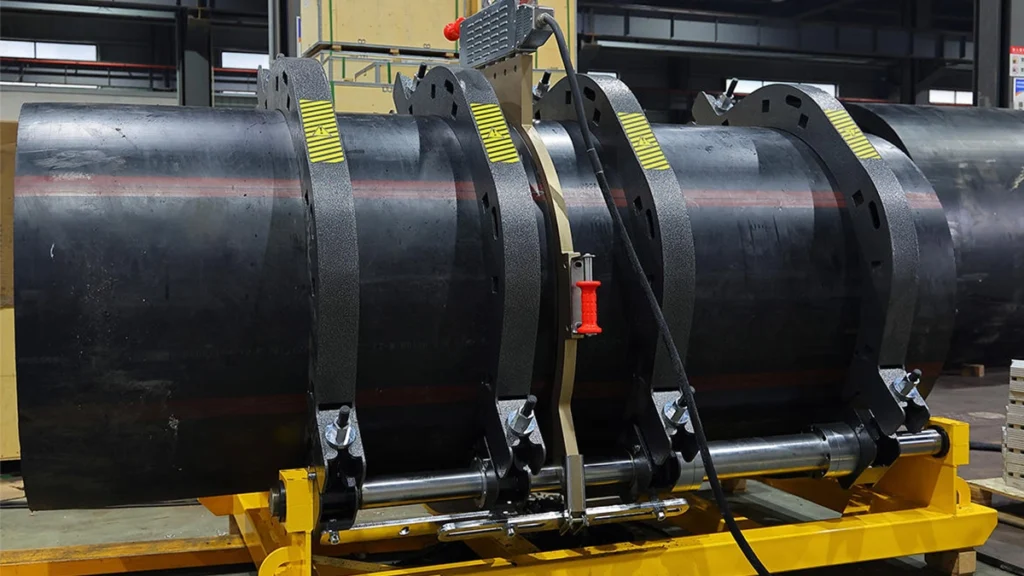
If you are tackling highly demanding industrial jobs, DVS 2207-1 and DVS 2207-11 compliance is non-negotiable. These strict German standards govern the high-precision welds needed for chemical, mining, and industrial systems, enforcing rigorous environmental controls and operator qualifications. Furthermore, any hdpe pipe welding machine hitting the North American market needs to support ASTM F2620, the standard practice for heat fusion joining of polyethylene pipe and fittings.
Evaluate the manufacturer’s R&D and technological innovation
Top-tier HDPE pipe welding machine manufacturers pour money into Research and Development to stamp out operator error. Take modern CNC integration. These setups feature displacement sensor data communication interfaces that automatically detect dragging pressure. The sensors display resistance in Bar and instantly add that figure to the baseline fusion pressure. This guarantees a molecularly flawless weld, regardless of how heavy the pipe is or how much friction the trench throws at you.
Automated pressure control systems let the controller dynamically expand the frame displacement stroke and tweak the milling pressure. Project documentation matters just as much. Real-time data export is a lifesaver for quality assurance. Advanced systems pack display interfaces for storage tests, operator barcode inputs, and connection completion confirmations. Supervisors can easily pull PDF or CSV reports detailing every single joint welded during a shift.
Assess the range of equipment and customization capabilities
A truly versatile supplier bridges the gap between muddy field installations and pristine workshop fabrication. Trench equipment has to take a beating. It needs lightweight manual scrapers and height-adjustable support rollers boasting a 190mm adjustment range to handle rough, uneven ground. These field units also demand IP54 or higher ratings to block out dust and moisture during messy municipal repairs.
Workshop operations sit on the opposite end of the spectrum. They require heavy, stationary fabrication butt fusion machines built to crank out tees and elbows all day long. When evaluating a manufacturer, look closely at how well they customize these systems. Can they provide specific clamp sizes? Do they offer varied voltage inputs? Can they tweak the frame design to fit the exact logistical footprint of your contractor fleet?
Review post-sales support, OEM availability, and warranty terms
Industrial welding gear lives in a harsh world. That makes post-sales support a massive financial safety net. Solid manufacturers back their gear with real warranties. Ekberg, for example, offers a 3-year warranty period covering all non-human-induced damage. That kind of guarantee shows serious confidence in the lifespan of their hydraulic seals, PLC components, and heating elements.
Equipment uptime lives and dies by maintenance protocols and spare parts access. The best in the business offer “Same-day return, zero cost” maintenance policies for specific critical parts. They also hand you detailed preventative maintenance schedules. Think mandatory weekly cleaning protocols for V-grooves and optical lenses using anhydrous ethanol. That is how you keep barcode scanners and sensors dead-accurate after years in the dirt.
Equipment Comparison Table: Butt Fusion Machine Actuation Types
| Feature | Manual Butt Fusion | Hydraulic Butt Fusion | CNC / Automatic Butt Fusion |
|---|---|---|---|
| Diameter Range | DN40 – DN250 | DN40 – DN2600 | DN63 – DN630 |
| Pressure Control | Operator physical force | Hydraulic hand pump / valve | Automated PLC controller |
| Data Logging | None | Optional add-on | Integrated real-time export |
| Best Application | Small repairs, tight budgets | Standard municipal pipelines | Highly regulated gas/water lines |
Decoding Pipe Welding Machine Manufacturers Price and ROI
Analyze the factors influencing equipment price
Figuring out how manufacturers price their butt fusion welding machines means looking under the hood at component quality. High-quality PTFE-coated heating plates drive up the upfront cost, but for good reason. This non-stick layer is absolutely vital. It holds a strict, uniform temperature between 200°C and 220°C, stopping localized cold spots that ruin joints. Cheap out on the butt fusion welding machine, and you get inferior coatings that burn off fast, leaving you with melted plastic stuck to the plate and a trail of failed welds.
Automation levels and structural materials also push the price tag. Fully automatic PLC and touchscreen HMI systems cost more than manual transformer-tap hdpe fusion welding machines because they pack sophisticated microprocessors built to handle environmental compensation. On the mechanical side, chrome-plated steel rollers and heavy-duty pneumatic or hydraulic cylinders add incredible durability. These premium parts shrug off scoring and corrosion in flooded trenches, easily justifying the initial capital hit.
Compare factory-direct sourcing vs. purchasing through third-party equipment distributors
How you buy your equipment heavily dictates what you pay. Going through third-party equipment distributors generally inflates the price tag by 20% to 40%. Why? Intermediary markups. Distributors have to pay for inventory holding costs, regional warehouses, and sales commissions. Every single one of those expenses gets passed straight down to the pipeline contractor.
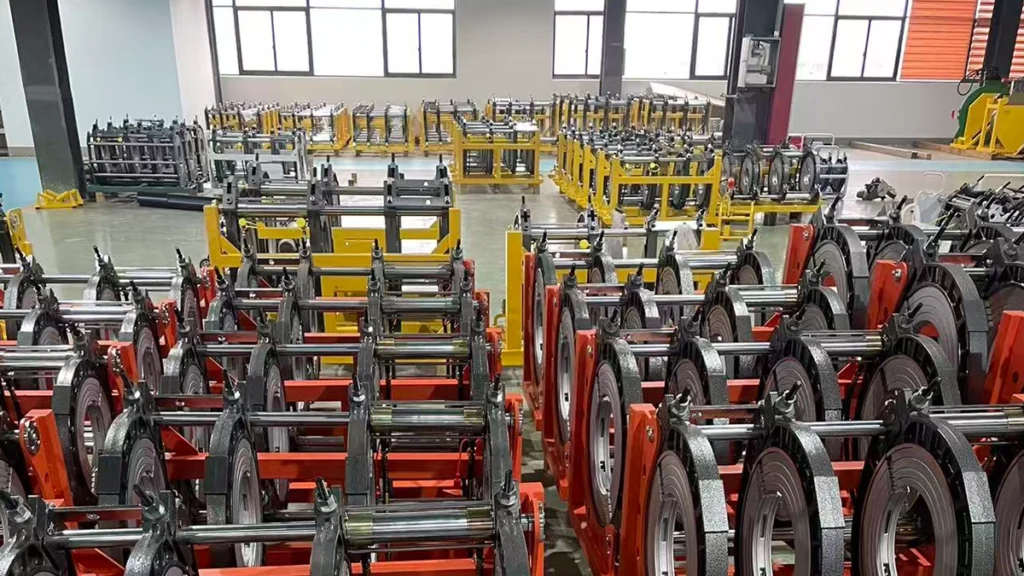
Buying direct from a pipeline butt fusion welding machine supplier like Ekberg cuts those markups to zero. But the benefits go way beyond immediate cash savings. Factory-direct sourcing gives you a direct pipeline to OEM spare parts and top-tier technical support. If a hydraulic manifold starts acting up, you talk straight to the engineers who built the HDPE pipe welding machine. That solves the problem infinitely faster than playing a game of telephone with a regional sales rep.
Calculate Total Cost of Ownership (TCO)
Judging a butt fusion welding machine purely by its sticker price is a rookie mistake. Smart buyers calculate the Total Cost of Ownership (TCO) looking five to ten years down the road. Industrial-grade HDPE fusion welding machines are engineered to run hard for a decade or more—provided you keep up with calibration and seal replacements. Bargain-bin equipment usually burns out within three years, trapping contractors in an endless, expensive cycle of replacing broken gear.
Maintenance costs and downtime risks heavily swing your TCO. Premium butt fusion machines, for example, bury the resistance wires deep inside the heating plates. This smart engineering move stops the wires from detaching or oxidizing, which slashes long-term repair bills compared to exposed wire setups. When you add up annual calibration fees, parts replacement, and the brutal cost of unexpected downtime, premium factory-direct butt fusion machines actually cost far less in the long run.
Formulate an ROI calculation for pipeline contractors
Active pipeline contractors can hit a full return on investment with high-efficiency automated welders in under six months. Automatic butt fusion machines rip through the fusion cycle faster and demand far less babysitting. A single operator can manage the active weld while the rest of the crew stages the next section of pipe. Cutting labor hours per joint drastically speeds up your project timeline.
Financial ROI gets another boost from annual power savings (thanks to efficient IGBT inverters), less wasted material, and a massive drop in joint failure rates. A single blown DN400 joint on a municipal water job can easily trigger $15,000 in excavation, dewatering, material, and labor costs. By running CNC automatic butt fusion machines that strip out human error, contractors lock down their project margins and dodge catastrophic leaks.
Buyer Selection Checklist:
- Verify maximum and minimum pipe diameter requirements (DN/OD).
- Confirm required compliance standards (ISO 21307, DVS 2207).
- Assess required automation level (Manual, Hydraulic, CNC).
- Check availability of data logging and barcode scanning.
- Validate heating plate temperature uniformity (200-230°C).
- Review warranty terms and OEM spare parts availability.
Application Scenarios: Matching Equipment to Pipeline Projects
Municipal Water and Wastewater Infrastructure
Municipal water systems push equipment to the limit. They require heavy-duty butt fusion machines built to wrestle massive HDPE pipes, often hitting DN2000. Hydraulic butt fusion shines here because municipal main water transmission lines usually feature long, straight runs. The butt fusion welding machine must lay down massive, relentless hydraulic pressure to create the perfect bead rollback. That joint has to survive decades of shifting ground and fluctuating water pressure.
Gas Distribution Networks
Gas distribution is a different beast entirely. Strict safety regulations mean you absolutely have to rely on electrofusion welders. These projects typically deal with pipe diameters from d20 to 315mm. You are looking at high-security joints, cramped trenches, and a maze of existing urban utilities. Electrofusion is non-negotiable here because it lets you weld right in the trench without shifting the pipe laterally. Plus, mandatory barcode traceability means every single weld gets a digital fingerprint tying it to a specific operator and GPS location.
Mining Slurry Lines and Industrial Chemical Piping
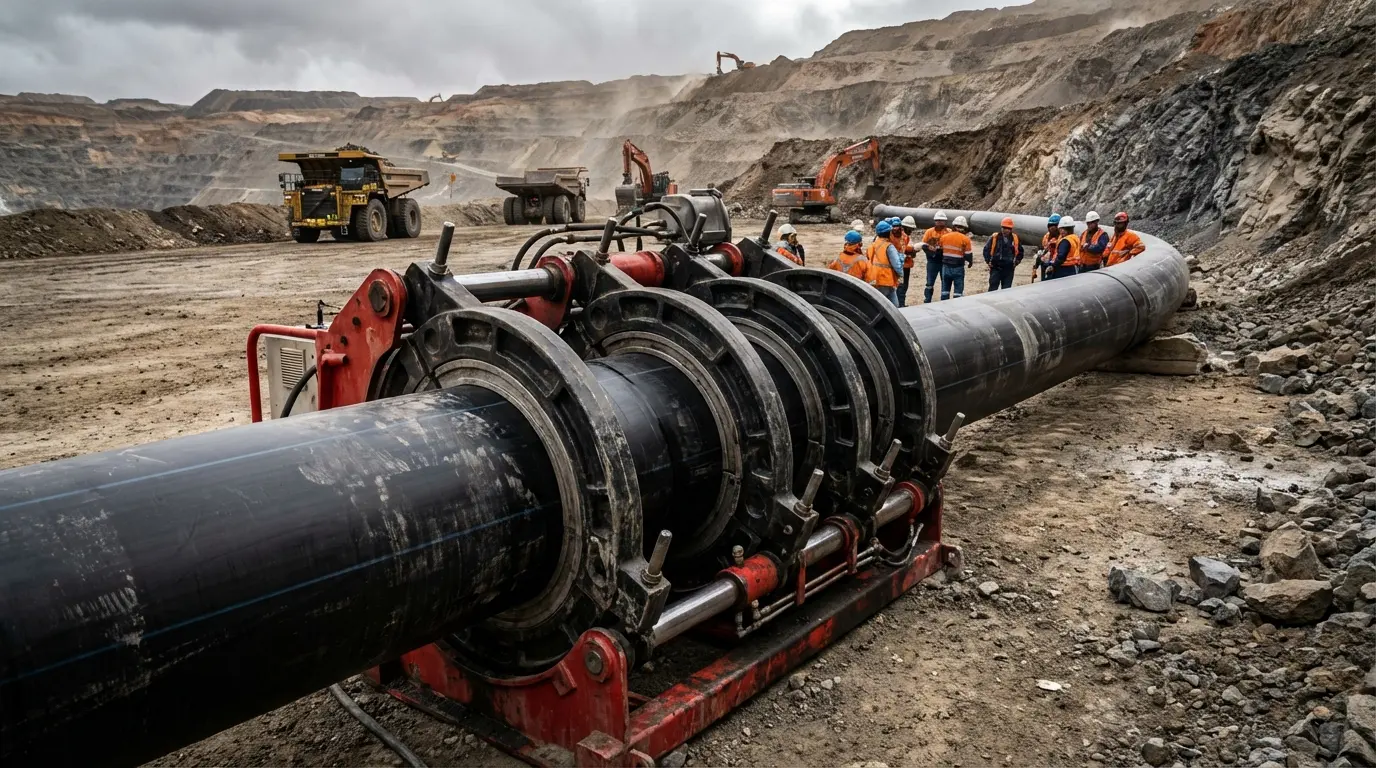
Mining and chemical plants offer the most brutal conditions imaginable for plastic piping. These sites demand rugged butt fusion welding machines that can handle highly abrasive slurry lines and thick-walled pipes pumping corrosive chemicals. The welding parameters leave no room for error. To guarantee joint integrity, the minimum crimping on both sides of the weld bead must hit 0.1 times the wall thickness (for instance, 0.5mm). Equipment sent into these environments needs reinforced frames and ultra-heavy-duty clamps to stop the pipe from slipping during the high-pressure fusion phase.
Agricultural Irrigation Installers
Farming irrigation projects care about three things: speed, mobility, and covering massive areas. Extreme pressure ratings take a back seat. Installers lean heavily on portable, manual, and lightweight hydraulic butt fusion machines to tackle rough, off-road terrain. Machines built with aluminum alloy bodies hit the perfect strength-to-weight ratio. A small crew can easily muscle the machinery across miles of open fields. Fast setup times and dead-simple controls let teams rapidly deploy low-pressure water networks.
Factory Capability, Certification & Global Support at Ekberg Welding
Detail Ekberg’s ISO-certified manufacturing excellence
Teaming up with elite HDPE pipe welding machine manufacturers means you get precision-engineered gear backed by strictly audited, ISO-certified manufacturing processes. Ekberg taps into advanced PLC integration and precision pneumatic cylinder assembly to build incredibly tough butt fusion welding machine frames and high-tolerance clamps. This relentless focus on manufacturing excellence guarantees that the pipe’s mechanical alignment stays dead-locked during the critical heating and cooling phases.
That precision flows straight into the fittings they build and the HDPE pipe welding machines that weld them. Fittings roll off the line with an ovality of less than 5‰dn—crushing standard national requirements. Why does low ovality matter? It ensures flawless pipe-to-fitting contact during electrofusion. It wipes out cold spots and guarantees a uniform molecular bond around the entire circumference of the joint.
Explain stringent quality control protocols
Field reliability starts on the factory floor. Ekberg runs brutal temperature uniformity checks on every single heating plate before it ships. Using thermal imaging alongside multi-point sensor calibration, engineers verify that plates hit and hold their design values of 200 to 220°C (and up to 230°C for specific PE materials) without a single degree of deviation.
They don’t stop there. Ekberg mandates intense pipeline pressure testing and quality verification across all their systems. During the hydraulic test phase, QC engineers lock down the pipeline supports to ensure absolute stability under pressure. This punishing testing phase mirrors the worst-case field conditions, proving the structural integrity of the chassis, clamps, and hydraulic manifolds under maximum load.
Highlight global supply chain logistics and export capabilities
Supplying a global B2B market takes serious logistical muscle. Ekberg maintains total production traceability from day one. Whether it’s the initial raw aluminum and steel procurement or the final bolt on an electrofusion socket, every single component is tracked. This airtight traceability ensures international clients get exactly the specifications they ordered.
For international buyers, project planning hinges on predictable lead times, solid shipping partners, and bomb-proof packaging. Factory-direct suppliers know how to properly crate equipment for export. They armor sensitive PLC components and calibrated heating plates against the rigors of oceanic and air freight, ensuring the butt fusion welding machine rolls onto your job site ready to work.
Outline technical support and operator training programs
Even the smartest CNC butt fusion welding machine is useless in the hands of an untrained operator. Ekberg’s Process Engineering Department takes direct responsibility for training your on-site crews. They hand over detailed Standard Operating Procedures (SOPs) custom-tailored to your specific butt fusion welding machine and project scope. Factory experts help with the initial commissioning, making sure every hydraulic pressure setting and heating parameter is dialed in perfectly for your local climate.
The support doesn’t vanish after day one. Ekberg provides aggressive secondary and tertiary maintenance support. Pipeline contractors get round-the-clock access to technical troubleshooting. This stops minor calibration hiccups from snowballing into massive project delays. Solid training empowers your field crews to squeeze every ounce of efficiency and lifespan out of the equipment.
Frequently Asked Questions
Q1: How do I choose between butt fusion and electrofusion machines for my project?
Butt fusion delivers the best cost-efficiency for long, straight runs of large-diameter HDPE pipe. Electrofusion, on the other hand, dominates in tight trenches, repair scenarios, gas distribution lines, and complex small-diameter tie-ins where you simply cannot move the pipe laterally.
Q2: What is the average lifespan of an industrial pipe welding machine?
When you buy from reputable HDPE pipe welding machine manufacturers, a well-maintained hydraulic or CNC unit will easily give you a 10+ year operational lifespan. To hit that decade mark, you have to follow preventative maintenance schedules, calibrate sensors regularly, and swap out hydraulic seals when needed.
Q3: How do top HDPE pipe welding machine manufacturers ensure joint reliability?
Industry heavyweights engineer their gear to comply strictly with DVS 2207 and ISO 21307 standards. They use precision PTFE-coated heating elements to guarantee uniform heat and integrate automated PLC/HMI pressure monitoring. This completely removes human error from the fusion cycle.
Q4: Why is it important to use professional pipe scrapers before electrofusion?
You have to strip away the surface oxidation layer—usually requiring a highly precise 0.2mm scrape—to meet mandatory regulatory codes. This exposes virgin, unoxidized polyethylene, which prevents cold joints and locks in a permanent molecular bond. Keep that scraped surface completely clean before welding.
Q5: Do pipeline welding machine suppliers offer customized equipment?
Absolutely. Factory-direct manufacturers like Ekberg thrive on customization. Buyers can spec out exact clamp sizes from DN40 all the way to DN2600, request specific AC 220V voltage inputs, and select manual, hydraulic, or fully automated controls to perfectly align with their project’s logistical and regulatory needs.
Conclusion
Picking the right plastic pipe fusion equipment demands a hard look at your project’s diameter specs, regulatory hurdles, and long-term financial targets. Winning in the field means matching the exact HDPE pipe welding machine type to your specific environment. Heavy-duty butt fusion dominates municipal water lines, while highly traceable electrofusion rules gas networks. Smart buyers prioritize ISO and DVS certified gear. They focus heavily on a 10-year Total Cost of Ownership and a rapid ROI, rather than just hunting for the cheapest initial price tag.
Teaming up with an established, factory-direct manufacturer puts proven engineering expertise in your corner. Buying direct unlocks OEM parts, solid 3-year warranties, and the automated technology needed to kill joint failures and speed up construction timelines. Working with top-tier plastic pipe welding machine manufacturers shields your infrastructure investments and protects your company’s hard-earned reputation.
Don’t gamble your pipeline’s integrity on substandard machinery. Contact Ekberg Welding today for a deep-dive technical consultation. Our engineering team stands ready to deliver customized equipment recommendations and a factory-direct quote on advanced butt fusion and electrofusion systems built specifically for your next big installation.