
Table of Contents
Hydraulic Butt Fusion Machine selection depends on pipe size, pressure control, jobsite conditions, automation level, and supplier support. This guide helps B2B buyers compare features, applications, costs, and risks.
What Is a Hydraulic Butt Fusion Machine?
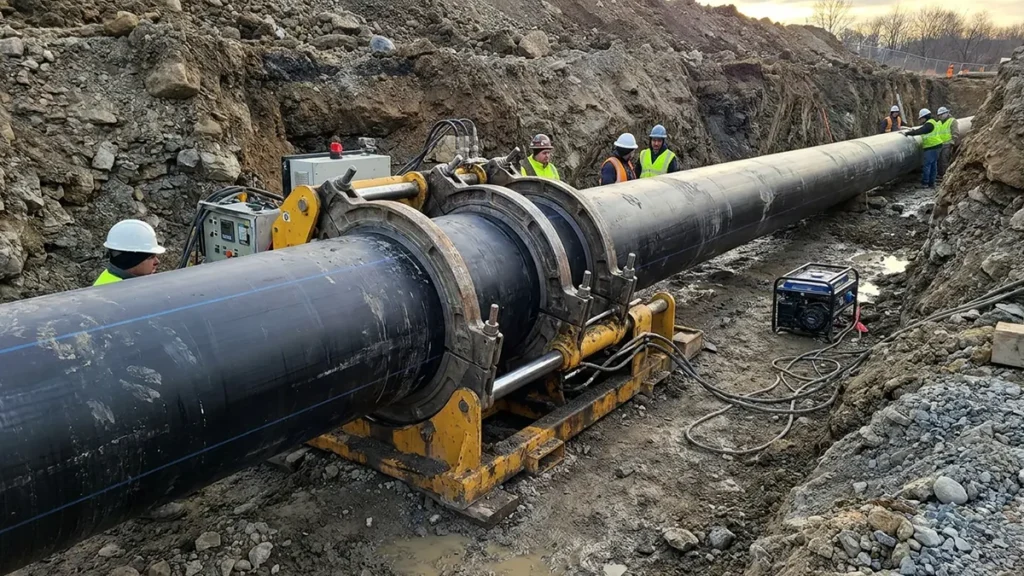
A hydraulic butt fusion machine serves as heavy-duty industrial equipment built to seamlessly join thermoplastic pipes. It relies on a dedicated hydraulic station to drive the facing, heating, and fusion stages. By delivering exact, unwavering pressure directly to the melted pipe ends, the butt fusion machine creates a continuous, leak-proof pipeline network you can trust.
How hydraulic butt fusion works in HDPE pipe welding
Fusing high-density polyethylene (HDPE) pipes requires a rigid sequence: positioning, milling, heating, and cooling. First, operators clamp the pipe sections tightly into the pipe welding machine’s sturdy aluminum frame. A rotating facer—or milling cutter—then shaves the pipe ends until they sit perfectly parallel to one another. Next comes the heating phase. A PTFE-coated heating plate drops between the two ends, melting the polymer at a finely tuned temperature, usually hovering around 200-220°C. Once the plastic reaches the ideal melt, the operator pulls the plate out. The hydraulic station immediately forces the molten ends together under a highly specific pressure. They stay locked in place until the newly formed joint fully cools and solidifies.
Key differences from manual and semi-automatic fusion machines
Manual fusion machines force operators to rely on their own physical strength. You have to crank handwheels or pull levers to apply pressure, which severely limits these tools to small-diameter jobs. Hydraulic butt fusion machines swap out human sweat for a motorized hydraulic station. This powerhouse generates massive, sustained pressure—sometimes hitting 16 MPa. With that kind of force, contractors gain semi-automatic or fully automatic control over the entire fusion cycle. Frankly, it is the only practical way to weld medium or large-diameter pipelines where manual force simply won’t cut it.
Why hydraulic pressure control matters for joint quality
Strict thermoplastic welding standards, like DVS 2207-1 and ASTM F2620, leave no room for guesswork. They demand exact interfacial pressures throughout the bead-up, joining, and cooling phases. DVS 2207-1, for example, dictates an interfacial pressure of 0.15 N/mm², while ASTM F2620 sets the bar at 60–90 psi. A high-quality hydraulic system locks in this exact pressure, spreading it evenly across the pipe’s cross-section. This eliminates pressure fluctuations that typically cause cold joints, weak bonds, or excessive plastic extrusion.
Why Hydraulic Butt Fusion Machines Are Used for HDPE Pipe Projects
Stronger and more consistent pipe joints
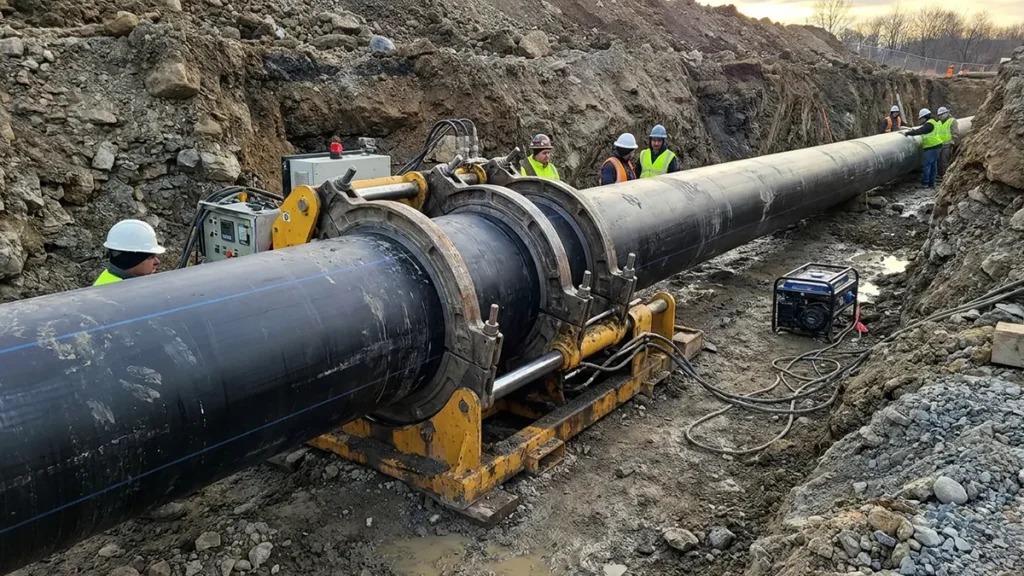
When you perfectly balance temperature, pressure, and cooling times through a reliable hydraulic station, something remarkable happens to the HDPE. The molecular chains of the plastic completely intertwine. This creates a monolithic, homogeneous joint that actually ends up physically stronger than the original pipe wall. You completely eliminate the risk of future leaks, ensuring the pipeline easily handles its maximum rated operating pressure.
Better productivity for medium and large pipe diameters
As pipe sizes scale up, the surface area needing heat and pressure explodes. Try manually milling and joining pipes in the 160-315mm range—it’s incredibly tough. For massive 710-1000mm infrastructure pipes, it is physically impossible. Hydraulic machine steps in with the raw, mechanical force required to shift heavy pipe segments and pin them together under high pressure during long cooling cycles. It keeps massive infrastructure projects moving forward on time.
Reduced operator fatigue and welding variation
Let’s face it: pressurizing and milling pipes by hand is exhausting. A hydraulic system takes over the heavy lifting. Operators simply manage the fusion process using control valves instead of their own muscles, drastically cutting down on physical fatigue. Less fatigue means fewer human errors on the job site. The 50th weld you complete at the end of a long shift stays just as precise and compliant as the very first one.
When is hydraulic fusion more cost-effective than manual welding?
Stepping up to automated hydraulic gear requires a larger upfront investment, but the operational payoff is huge. By speeding up weld cycles and replacing expensive manual labor, contractors often see savings of $20,000 to $30,000 on a typical six-month pipeline build. Beyond the daily labor savings, preventing just one catastrophic joint failure more than pays for the entire lifetime cost of a premium butt fusion machine.
Factory-direct pricing with technical consultation included
Get Your Free QuoteMain Components and Features of a Hydraulic Butt Fusion Machine
Machine frame and clamps
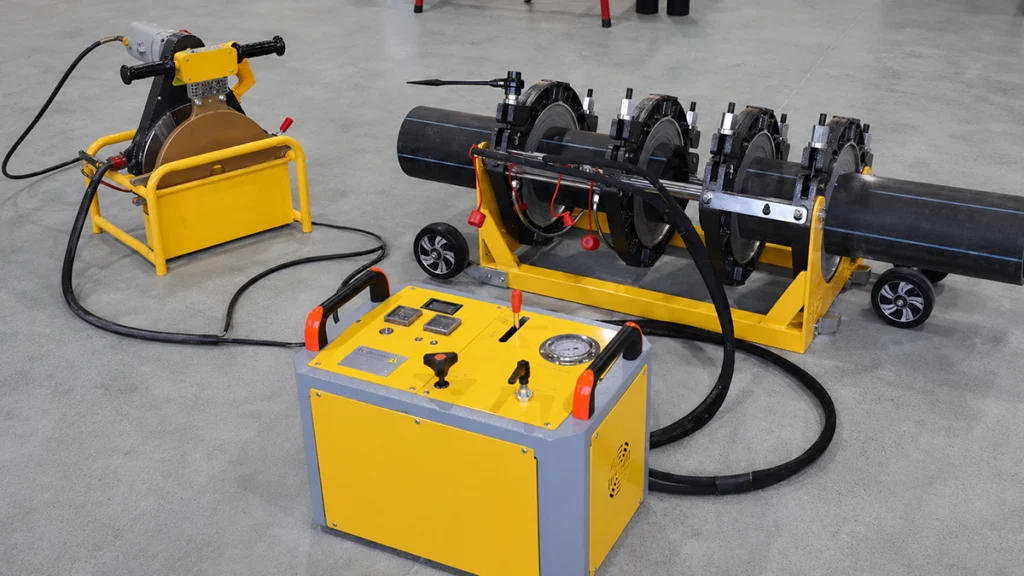
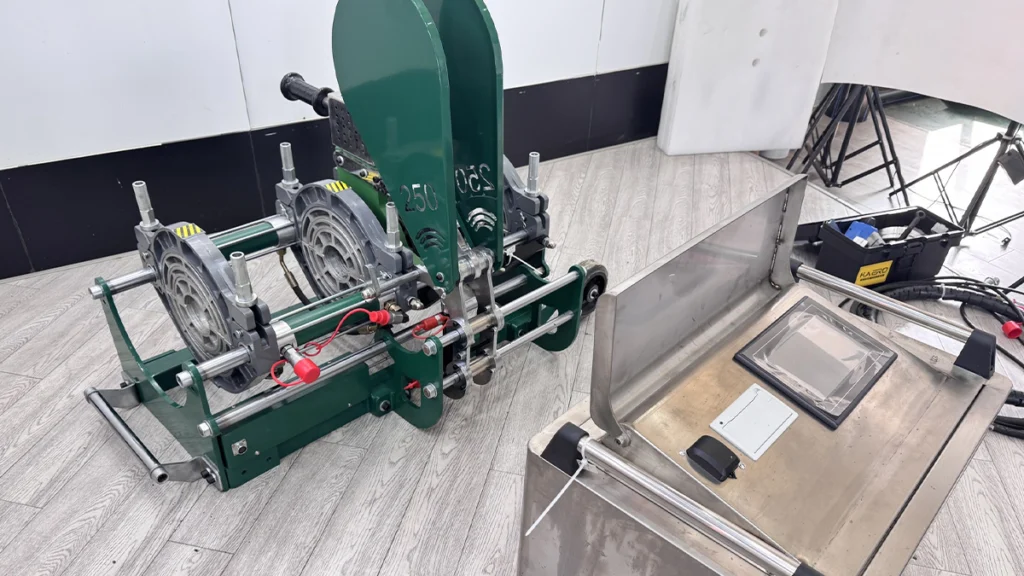
The heavy-duty HDPE pipe welding machine frame exists to lock pipes into flawless axial alignment. Top-tier butt fusion machines cast their frames from high-strength aluminum alloy built to the ZL104 standard. This gives you incredible structural rigidity without weighing down your crew. Many manufacturers also design the clamping system to detach from the main operating platform, a lifesaver for contractors working in cramped, narrow trenches.
Hydraulic station and pressure control system
Think of the hydraulic station as the beating heart of the equipment. It usually offers a pressure adjustment range from 0 to 16 MPa. To prevent messy fluid leaks under extreme stress, quality units feature imported hydraulic sealing systems. You will also find flat-type quick connectors on these HDPE pipe jointing machines. They hold up to jobsite abuse while allowing rapid setup, ensuring pressure delivery stays rock-solid while the joint cools.
Heating plate, facer, and pipe alignment tools
The heating plate runs on an independent, highly accurate temperature control system that maintains heat anywhere from 0 to 270°C. A thick coat of non-stick PTFE stops molten plastic from sticking to the metal. Meanwhile, the electric facer (milling cutter) relies on premium tool steel. It uses double-edged, reversible blades and a built-in safety limit switch to keep your operators safe while they align and shave the pipe ends.
Optional data logger, automatic controls, and lifting accessories
Today’s modern hydraulic butt fusion setups often feature advanced data loggers and CNC automatic controls. These smart additions include displacement detection systems that closely monitor the crucial T1 preheating stage, alongside independent dual-channel timers and instant data printing. For municipal and high-pressure utility jobs, this level of complete weld traceability isn’t just nice to have—it is strictly required.
Common Applications for HDPE Pipe Butt Fusion Welding
Water supply and municipal pipeline construction
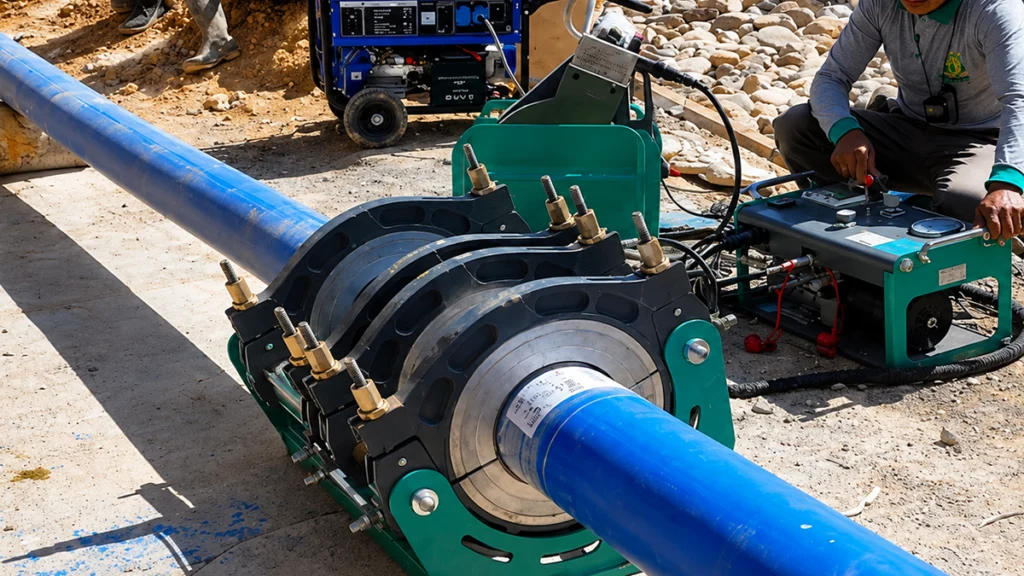
Municipal infrastructure relies heavily on HDPE pipe butt fusion machines. Contractors deploy them constantly to build residential water networks, massive underground drainage systems, and complex water conservancy projects. The flawless, leak-proof nature of hydraulic fusion guarantees zero water loss, simultaneously protecting local groundwater from contamination.
Gas distribution and pressure pipeline systems
When transmitting high-pressure natural gas, a failed joint is simply not an option. The safety risks are far too severe. Hydraulic butt fusion machines guarantee every single connection aligns with strict TSG D2002-2006 or ISO standard tolerances. They deliver a permanent, gas-tight seal that easily shrugs off ground shifting and seismic vibrations.
Mining, dredging, and slurry transport
The mining sector counts on hydraulic fusion gear to assemble rugged pipelines for slurry transport, floating dredging lines, and fracking water collection. These pipes take a beating from highly abrasive materials and harsh environmental conditions. The monolithic joints formed by hydraulic fusion hold strong, preventing disastrous blowouts under intense mechanical strain.
Agricultural irrigation and industrial fluid transfer
Out in the fields, agricultural teams use hydraulic butt fusion welding machines to lay miles of irrigation networks at top speed. On the industrial side, these machines piece together urban heating networks and chemical fluid lines. Because HDPE strongly resists chemicals, combining it with a seamless fusion joint creates the perfect vessel for safely transporting corrosive industrial fluids.
Get detailed specs and custom configuration options
Request Technical SpecificationsImportant Technical Specifications to Compare Before Buying
Pipe diameter range and SDR compatibility
Manufacturers categorize these HDPE pipe jointing machines by their effective welding range. Standard setups usually cover Dn160-315mm, 450-800mm, or the massive 710-1000mm bracket. Before buying, always verify that the butt fusion welding machine’s clamp inserts perfectly match the Standard Dimension Ratio (SDR) and outer diameters (OD) of your specific piping.
Welding pressure, heating temperature, and power supply
A pipe fusion machine’s power appetite scales right alongside its diameter capacity. Take a massive 1000mm hydraulic butt fusion machine: it usually demands a 380V operating voltage and draws a hefty 24.5KW of total power (17.5 KW for the heating plate, 3.0 KW for the milling cutter, and another 4.0 KW for the hydraulic station). You must ensure your jobsite generators can handle this heavy, continuous load.
Material compatibility: HDPE, PP, PVDF, and other thermoplastics
Although contractors primarily use them as hydraulic butt fusion machines for HDPE pipe, premium models offer incredible versatility. A solid unit will flawlessly butt weld Polypropylene (PP), Polyvinylidene Fluoride (PVDF), and various other thermoplastics. You just need to tweak the temperature and pressure settings on the control station to match the material.
Machine weight, portability, and jobsite conditions
Weight drives your jobsite logistics. Two operators can easily carry a small 160mm butt fusion machine, but large-diameter units are serious industrial assets. A 1000mm butt fusion welding machine weighs roughly 2600 kg. Moving it requires heavy lifting cranes and flatbed transport, especially considering the frame packaging measures around 2200x1800x1700mm.
| Specification Parameter | Small-to-Medium (160-315mm) | Large Diameter (800-2600mm) |
|---|---|---|
| Heating Temperature | 0 – 270°C | 0 – 270°C |
| Hydraulic Pressure | 0 – 8 MPa | 0 – 16 MPa |
| Power Supply | 380V / Single Phase | 380V / Three Phase |
| Total Power Consumption | ~5.85 KW | ~94.7 KW |
| Typical Machine Weight | 180 kg | 2600 kg |
Hydraulic Butt Fusion Machine Types and Configuration Options
Workshop vs jobsite hydraulic butt fusion machines
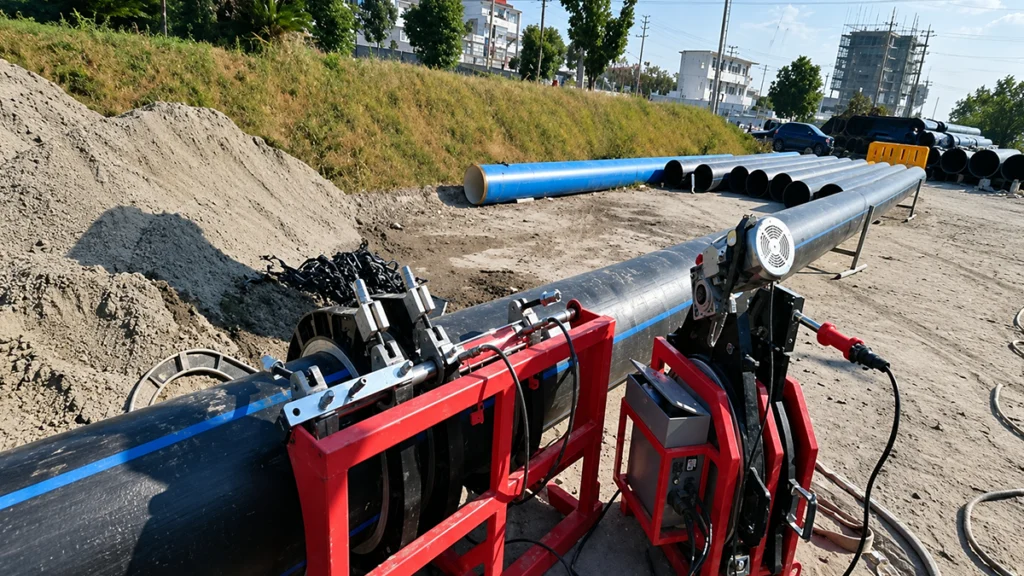
Workshop models are stationary beasts built specifically to fabricate segmented fittings like elbows, tees, and crosses. They deliver precise angular cuts anywhere from 0° to 67.5°. Jobsite pipe fusion machines, however, are engineered for the dirt and mud of outdoor trench work. They feature trailer mobility, weather-sealed components, and detachable hydraulic platforms tailored for rugged field operations.
Manual hydraulic vs automatic butt fusion machines
Manual hydraulic butt fusion machines run on an open-loop system. The operator physically opens and closes the hydraulic valves while keeping a close eye on an analog pressure gauge. Fully automatic (CNC) butt fusion welding machines upgrade to a closed-loop system packed with solenoid valves, PLCs, and smart sensors. They manage the entire cycle in real-time, completely stripping human error out of the pressure and timing equations.
Small-diameter vs large-diameter machine selection
Small-diameter units (like 50-160mm or 2″-6″ IPS) are highly portable, making them perfect for indoor plumbing or tight residential trenches. Conversely, large-diameter setups (pushing 800mm or beyond) are massive, heavy-duty rigs built strictly for major civil infrastructure. Running them requires dedicated power generation and heavy cranes to maneuver both the pipe and the HDPE pipe welding machine components.
Which configuration is best for contractors, distributors, and utilities?
Contractors usually lean toward rugged, manual hydraulic jobsite butt fusion machines because they strike a great balance between affordability and toughness. Distributors do best stocking versatile, mid-range sizes (160-315mm) that appeal to the widest market segment. Utility companies and municipal departments, however, almost universally demand fully automatic CNC butt fusion machines equipped with data loggers to guarantee compliance and protect against liability.
How to Choose the Right Hydraulic Butt Fusion Machine
Match the machine to your pipe diameter range and project volume
Do not buy an oversized HDPE pipe jointing machine for small pipes. The clamping setup becomes clumsy, and the energy consumption will drain your budget. Choose a model where your most common pipe sizes sit comfortably in the middle of its operating range. If you are tackling high-volume projects, spending extra on an automated system will aggressively drive down your cost-per-weld.
Check welding standard compliance and pressure accuracy
Make sure the equipment actually executes international welding parameters accurately. Your butt fusion welding machine needs highly sensitive, properly calibrated pressure gauges and temperature controls that align with ISO 21307, DVS 2207-1, and ASTM F2620 standards. Without dead-on pressure accuracy, passing a certified weld inspection is virtually impossible.
Evaluate spare parts, training, warranty, and after-sales support
Pipeline gear takes a beating in the field. Partner with suppliers who offer at least a one-year warranty alongside lifetime maintenance support. They should also provide free replacements for any non-human-induced damage during the warranty window. Double-check that everyday wear parts—like PTFE heating plates and facer blades—are easy to source.
Questions to ask a hydraulic butt fusion machine supplier
When vetting an HDPE pipe welding machine supplier, hit them with highly specific technical questions:
- Does this unit feature automatic drag pressure measurement and compensation?
- Is the main frame cast from certified ZL104 aluminum?
- Does the hydraulic station pack a displacement detection system for the T1 preheating stage?
- Are the hydraulic seals imported to handle high-pressure durability?
Price, MOQ, Lead Time, and Total Cost Considerations
What affects hydraulic butt fusion machine price?
The price of a hydraulic butt fusion welding machine heavily depends on its diameter capacity and level of automation. A basic manual hydraulic unit might run anywhere from $800 to $3,300 based on its size (a 450mm butt fusion welding machine, for example, hovers around $2,000). The quality of the materials also shifts the baseline price—using premium ZL104 aluminum costs more than cheap, heavy alloys.
How accessories and automation change the total cost
Stepping up from a manual hydraulic setup to a fully automated CNC butt fusion machine will easily triple or quadruple your capital cost. Tacking on optional accessories—like digital data loggers, wheeled transport trailers, stub-end device holders, or GPS tracking modules—pushes the final procurement price even higher. However, these upgrades deliver massive workflow efficiencies that pay off quickly.
Typical procurement factors: MOQ, delivery time, packaging, and shipping
For international B2B buyers, the standard Minimum Order Quantity (MOQ) sits at just one set. If you order a non-customized model, standard delivery lead times usually range from 5 to 8 working days. Because these components are both heavy and highly calibrated, manufacturers must ship the equipment in heavy-duty, export-grade plywood cases. This prevents catastrophic calibration damage during rough ocean or rail transit.
Why the cheapest machine may increase project risk
Dialing in the wrong fusion parameters (temperature, pressure, time) remains the number one cause of HDPE pipeline failures. When you buy the absolute cheapest pipe welding machine on the market, you are usually sacrificing pressure gauge accuracy, heating plate consistency, and hydraulic seal quality. This corner-cutting drastically spikes the risk of project failure, turning cheap equipment into a massive financial liability.
Operation, Maintenance, and Common Welding Risks
Basic butt fusion welding process steps
The hot melt butt welding process breaks down into five critical stages:
1. Heating: Pressing the heating plate against the pipe ends under initial pressure to build a uniform bead.
2. Heat Absorption: Dropping the pressure so the heat can soak deeply into the pipe wall.
3. Switching: Quickly pulling the heating plate out and bringing the pipe ends together.
4. Welding: Ramping up the final fusion pressure to merge the molten plastic.
5. Cooling: Holding that pressure completely static while the new joint solidifies.
Common causes of weak or misaligned joints
If your switching time—the window to remove the heating plate and dock the pipes—drags on too long, the molten surface cools prematurely. This blocks the molecular chains from fully penetrating. On the flip side, if the switching phase is too rushed or aggressive, the alignment shifts, leaving you with a skewed joint. Furthermore, forgetting to factor in pipe drag pressure will leave you with a dangerously low actual fusion pressure.
Maintenance checklist for heating plates, facers, and hydraulic systems
Keep your gear jobsite-ready by sticking to a strict maintenance routine:
- Grab a multimeter and regularly test the heating tube resistance to guarantee even temperature distribution.
- Clean the PTFE heating plate using only a soft cloth and ethanol to preserve the delicate non-stick coating.
- Keep the HDPE butt fusion welding machine’s guide pillars and facer bearings thoroughly lubricated with premium butt fusion machine oil.
- Make it a habit to drain any accumulated water from the hydraulic station’s oil-gas separator.
Operator training and safety considerations
Hydraulic butt fusion machines mix high-voltage electricity, blistering heat (reaching 270°C), and intense mechanical pressure. Because the electrical and control components are rarely waterproof, you must shield them from rain. Operators need to wear heat-resistant gloves and steel-toed boots, and they must undergo rigorous training covering hydraulic safety and international welding parameters.
Final Selection Tips for B2B Buyers
Best choice for small contractors
If your team operates on a tight budget, doesn’t need heavy automation, and mostly handles standard residential or agricultural water lines, a standard manual hydraulic butt fusion machine is your best bet. It delivers the exact pressure required for solid, reliable welds without forcing you to pay a premium for CNC electronics.
Best choice for utility and infrastructure projects
Municipal grids and high-pressure gas utilities demand absolute perfection. Zero defect tolerance means fully automatic CNC butt fusion welding machines are non-negotiable. These advanced rigs provide closed-loop control, GPS/Beidou tracking, and automated data logging. By eliminating human error, they ensure every single weld is documented and fully traceable, offering lifetime liability protection.
Best choice for distributors and rental fleets
Rental managers and equipment distributors should focus on highly versatile size ranges (like 160-315mm). Look for units built with rugged ZL104 aluminum frames, imported hydraulic seals, and durable flat-type quick connectors. Rental equipment takes serious abuse from multiple users, so raw physical durability must be your top purchasing priority.
When to request a customized model recommendation
Sometimes off-the-shelf equipment just won’t cut it. If your upcoming project features non-standard SDR ratings, extreme weather conditions that alter cooling times, or specialty materials like PVDF for chemical plants, you need a tailored solution. Send your exact pipeline specs to the manufacturer so they can design a customized hydraulic station and clamp configuration built for your environment.
FAQ
Q1: What size HDPE pipe can a hydraulic butt fusion machine weld?
These butt fusion machines come in a variety of configurations to tackle almost any pipe size. Smaller models easily handle pipes ranging from 50mm to 160mm. Mid-range units take over for the 160mm to 315mm category, while heavy-duty, large-diameter rigs are built to fuse massive pipes from 710mm all the way up to 1000mm or beyond.
Q2: How does a hydraulic butt fusion machine work?
The process starts with a sturdy aluminum frame that locks the pipes into perfect alignment. An electric facer mills the ends completely flat, and a PTFE-coated plate heats the plastic to roughly 200-220°C. Once the plastic melts, a motorized hydraulic station pushes the ends together, holding them under precise, steady pressure until the new joint cools and hardens.
Q3: What is the difference between manual and hydraulic butt fusion machines?
Manual butt fusion welding machines require the operator to pull levers and use physical strength to apply joining pressure, which means they only work well for small pipes. Hydraulic butt fusion welding machines swap human effort for a motorized hydraulic station capable of pushing up to 16 MPa of pressure. This sheer force makes them absolutely essential for welding medium and large-diameter pipes.
Q4: How do I choose the right butt fusion machine for HDPE pipe?
Start by matching the pipe jointing machine to your project’s pipe diameter range, SDR requirements, and desired level of automation. Always verify that the equipment meets international welding standards like ISO 21307 or ASTM F2620. If you are doing utility work, CNC automatic models with data loggers are a must. For standard contracting, manual hydraulic models usually deliver the best return on investment.
Q5: What factors affect hydraulic butt fusion welding machine price?
The final price tag largely comes down to the HDPE butt fusion welding machine’s maximum pipe diameter and its automation level (manual hydraulic versus fully automatic CNC). Material quality plays a big role too—things like ZL104 aluminum frames and imported hydraulic seals add to the cost. Finally, throwing in optional accessories like data loggers or transport trailers will bump up the total investment.
Q6: Can one butt fusion machine weld different pipe materials?
Absolutely. A premium hydraulic butt fusion machine can handle a variety of thermoplastics, including HDPE, Polypropylene (PP), and Polyvinylidene Fluoride (PVDF). The operator just needs to dial in the correct heating temperature, fusion pressure, and cooling time on the control station to match the specific properties of the material.
Q7: What are the most common causes of failed HDPE butt fusion joints?
Most joint failures trace back to sloppy fusion parameters. If the heating temperature is too low, the interfacial pressure is wrong, or the operator takes too long to switch the heating plate, the plastic cools before it can properly bond. Dirt, moisture, or contamination on the heating plate or pipe ends will also ruin the weld’s structural integrity.
Q8: How often should a hydraulic butt fusion machine be maintained?
You should perform basic maintenance daily—like wiping down the PTFE heating plate with ethanol and checking your hydraulic fluid levels. On a monthly basis, grab a multimeter to check the heating tube resistance, lubricate the guide pillars with fresh HDPE pipe welding machine oil, and drain the oil-gas separator to keep the system running at peak performance.
Conclusion
Choosing the right hydraulic butt fusion machine is a major engineering and procurement decision. It directly impacts the safety, longevity, and overall profitability of your HDPE pipeline projects. By swapping out exhausting manual labor for precise, motorized pressure control, hydraulic fusion equipment ensures you hit strict interfacial pressure requirements—like those demanded by ISO 21307 and DVS 2207-1—every single time. The end result is a monolithic joint that actually outlasts the native pipe, completely wiping out the risk of leaks in demanding high-pressure gas, municipal water, and industrial slurry lines.
When you start evaluating equipment, you have to look past the initial price tag. Dig into the technical specifications. Features like ZL104 aluminum frame construction, imported hydraulic seals, displacement detection, and CNC automation capabilities dictate the true lifecycle value of the butt fusion machinery. While manual hydraulic models offer fantastic ROI for standard contractors, modern utility and infrastructure projects now strictly demand fully automatic butt fusion machines equipped with data logging for total weld traceability. Ultimately, if you align the butt fusion welding machine’s diameter capacity, automation tier, and standard compliance with your specific project needs, you will eliminate catastrophic joint failures and push your operational efficiency to the absolute maximum.
Let our experts help you choose the right equipment for your project
Contact Our Engineering Team