
Manual Butt Fusion Machine for Small Diameter PE Pipe Welding Projects
Table of Contents
Manual Butt Fusion Machine buyers can use this guide to understand working principles, key specifications, application fit, pricing factors, and selection criteria for small diameter PE pipe welding projects.
What Is a Manual Butt Fusion Machine?
How does manual butt fusion welding work?
A manual butt fusion machine relies entirely on human-operated mechanical force to drive its carriage. Technicians use levers or handwheels to apply precise pressure during the pipeline welding cycle. At its core, the working principle is thermofusion. Polyethylene (PE) pipe ends are securely clamped, faced until perfectly smooth, and pressed against a heated plate. Under specific temperature and pressure parameters, the PE resin molecules begin to melt. Once the heating plate is removed and the pipes are pressed together, these molecules bond. They form long, intertwined molecular chains that create a seamless connection—one that frequently outlasts the pipe itself.
What pipe materials and sizes can it handle?
Manufacturers engineer this equipment specifically for thermoplastic piping systems. It easily handles PE, HDPE, PPR, PB, PVDF, PVC, and PP-C pipes, as long as the pipe wall thickness exceeds 2.3mm. Standard small-diameter pipe fusion machines follow dedicated industry sizing tiers. A 160mm series butt fusion welding machine, for example, welds 63, 75, 90, 110, 125, 140, and 160mm pipes. Step up to a 200mm series, and your range expands accordingly. A 250mm series accommodates everything from 90mm up to 250mm by utilizing a set of modular reduction inserts.
Why is it a practical choice for small diameter PE pipe projects?
When dealing with small-diameter polyethylene pipe, manual operation strikes an unbeatable balance between cost-efficiency and mobility. Bulky hydraulic units require massive capital expenditure. Manual butt fusion machines do not. Their compact footprint and lightweight, surface-hardened aluminum frames allow crews to deploy them right on the ground or deep inside highly restrictive trenches. While achieving a perfect weld does rely on the operator’s experience to maintain the correct pressure, the machine’s sheer simplicity makes it the go-to choice for contractors outfitting multiple field crews on a tight budget.
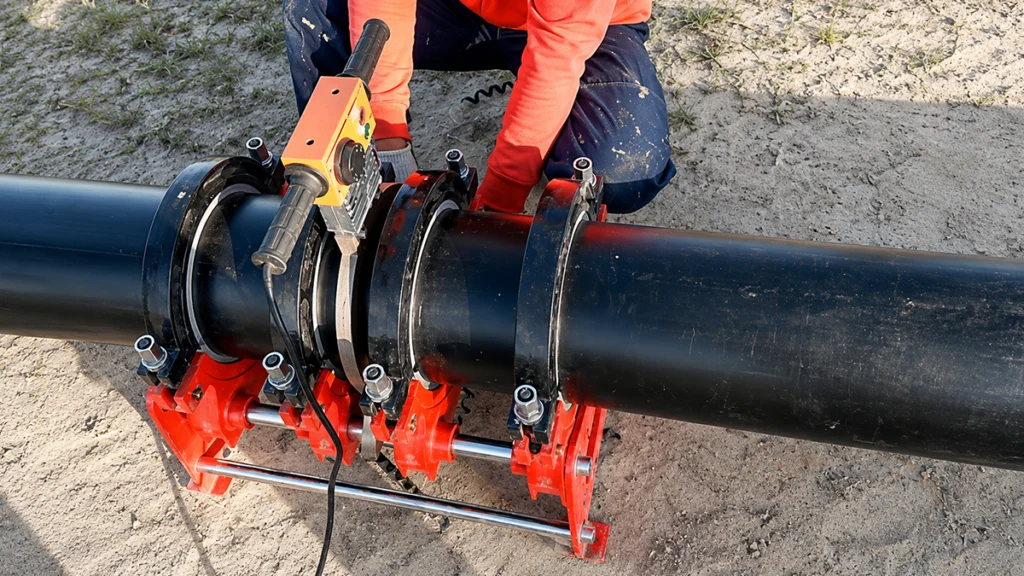
Where Manual Butt Fusion Machines Are Used
Is it suitable for irrigation, plumbing, and utility work?
Absolutely. Manual fusion equipment offers incredible versatility across a wide array of utility sectors. Project engineers frequently specify these pipe fusion machines for municipal water supply networks, low-pressure gas distribution lines, sewage disposal, and district heating systems. Beyond municipal infrastructure, they serve as the standard joining tool for agricultural irrigation, commercial plumbing, air conditioning setups, and industrial refrigeration systems that rely on small-diameter thermoplastics.
Which field jobs benefit most from manual operation?
Any project demanding high mobility and rapid deployment needs a portable HDPE pipe welding machine. Gas station maintenance, small-scale industrial pipeline overhauls, and residential service laterals (typically 2 to 8 inches) are prime targets. Repair crews lean heavily on manual setups because they can toss the unit into the back of a standard utility truck. There is no need to haul heavy lifting equipment or tow external power generators just to run a hydraulic pump.
When is a manual machine better than a powered system?
Manual butt fusion machines easily outshine powered hydraulic systems when you face spatial restrictions or need to scale your fleet quickly.
Mini Case Scenario: A municipal water repair crew has to replace a ruptured 90mm HDPE line buried under a busy, congested sidewalk. The excavation trench is incredibly narrow. A standard hydraulic butt fusion welding machine simply won’t fit, and lowering a heavy chassis into the hole poses a massive safety risk. A manual machine, however, drops right into the tight space. Its separate clamping and operating systems allow the technician to finish the weld directly in the ditch. From a business perspective, contractors handling low-budget, high-mobility jobs can purchase five manual machines for the price of one premium hydraulic unit, enabling simultaneous work across multiple job sites.
Factory-direct pricing with technical consultation included
Get Your Free QuoteHow the Butt Fusion Process Works
What are the main steps in the welding cycle?
A flawless weld doesn’t happen by accident. It requires strict adherence to a five-step mechanical cycle:
1. Positioning and Adjustment: Lock the pipes into the clamps and double-check the alignment.
2. Milling (Facing): Engage the facer to shave the pipe ends down until they are perfectly smooth, clean, and parallel.
3. Heating: Press the milled ends against the PTFE-coated heating plate under initial pressure. Once a bead forms, drop the force down to a heat-soak pressure.
4. Switching (Changeover): Quickly remove the heating plate and snap the molten pipe ends together.
5. Seam Closing and Cooling: Apply the final joining pressure. Hold this force steady while the joint cools and solidifies into a permanent bond.
What temperature and pressure control factors matter most?
Precise control during the heating phase keeps the material flow exactly where it needs to be. Once the heating plate hits the target temperature (usually between 200°C and 230°C for HDPE), the operator applies initial pressure until a specific bead width rolls back. Here is the critical part: pressure must then drop to a specified hold value. This “heat soak” phase allows deep thermal absorption and molecular diffusion to occur without squeezing all the molten plastic out of the weld zone. The interface material enters a viscous flow state, and excessive pressure at this stage will ruin the joint’s structural integrity.
How do alignment and heating time affect joint quality?
Geometric alignment and thermal timing dictate the survival of the pipeline. Misalignment between the two pipe ends must stay strictly below 10% of the pipe’s wall thickness, and the gap between faced pipes cannot exceed 0.3mm. Furthermore, the changeover time—the brief window between removing the heater and pressing the pipes together—must be lightning fast. For small pipes, this usually means under 5 seconds. Any delay allows the molten ends to cool prematurely, creating a brittle “cold fusion” joint practically guaranteed to fail under pressure.
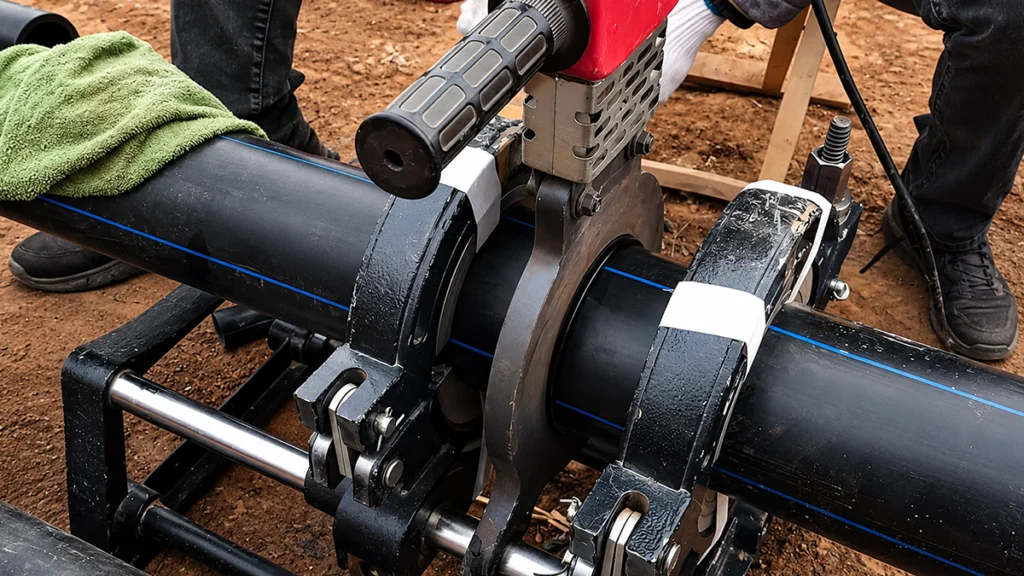
Key Components and Technical Parameters to Check
Which parts should every manual butt fusion machine include?
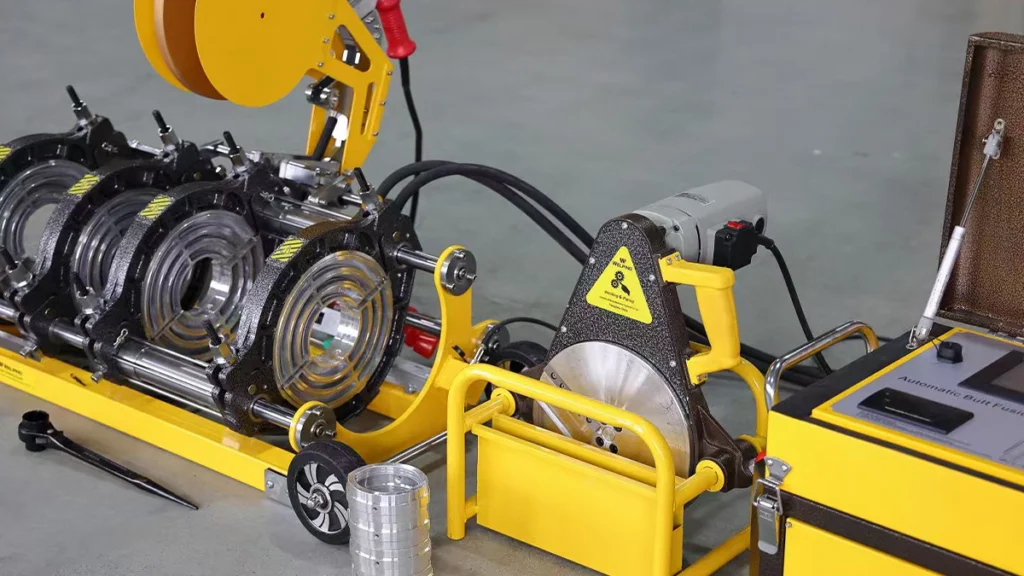
A reliable manual welding rig relies on four core components. The Operating Platform/Frame needs to be cast from lightweight, surface-hardened aluminum to provide maximum rigidity without breaking the operator’s back. The Clamping Device must maintain a narrow profile for tight trench work and include aluminum reduction inserts to grip various pipe sizes. The Heating Plate demands an aluminum alloy core protected by a tough PTFE (Teflon) coating to ensure uniform heat distribution and prevent sticky plastic residue. Finally, the Milling Cutter (Facer) should utilize high-speed carbon steel blades powered by a robust gear or chain drive.
What diameter range and clamp size should you verify?
Never assume a butt fusion welding machine fits your pipe without rigorously checking its maximum and minimum outer diameter (OD) range. If you are sourcing a welder for 20mm to 110mm pipe, physically verify that the chassis supports those specific extremes. Additionally, check that the clamp design caters to the Standard Dimension Ratio (SDR) of your project materials. Thicker-walled pipes demand deeper clamp engagement; otherwise, they will slip right out during the high-pressure cooling phase.
Which technical parameters affect welding accuracy?
Precision parameter control is what separates professional-grade equipment from cheap knockoffs.
| Technical Parameter | Specification Requirement | Impact on Weld Quality |
|---|---|---|
| Thermostat Range | 0–300°C Minimum | Guarantees compatibility across PE, PP, and PVDF materials, all of which require vastly different melting points. |
| Drag Pressure Measurement | Low-friction carriage | Allows the technician to accurately gauge the force needed to move the carriage and add it to the baseline joining pressure. |
| Body Material | Surface-hardened Aluminum | Stops the chassis from flexing under heavy pressure, ensuring pipes stay perfectly aligned as they cool. |
| Power Supply | 110V or 220V | Matches local site generators so the heating plate never drops below its target temperature. |
Get detailed specs and custom configuration options
Request Technical SpecificationsManual vs Hydraulic Butt Fusion Machine
Which machine is better for low-volume projects?
For low-volume, small-diameter installations, a manual butt fusion machine wins hands down. The biggest draw is the exceptionally low initial capital cost, which usually hovers between $150 and $600. Small contractors and facility maintenance teams can buy the equipment outright instead of bleeding money on expensive daily rentals. Plus, without a heavy hydraulic power unit dragging you down, manual butt fusion machines are vastly superior for rapid, scattered repair jobs where speed and portability are everything.
When does hydraulic control become necessary?
Hydraulic control transitions from a luxury to an engineering necessity once you start working with larger pipe diameters—typically anything over 160mm, and absolutely anything above 250mm. As diameter and wall thickness scale up, the milling, heating, and cooling phases demand massive, sustained interfacial pressure (e.g., 0.15 N/mm² per DVS 2207 standards). A human operator simply cannot apply and hold that level of force manually for a 15-to-30-minute cooling cycle without slipping up and ruining the joint.
How do cost and maintenance differ between the two?
Manual and hydraulic systems differ wildly in both financial investment and daily operational demands.
| Feature | Manual Butt Fusion Machine | Hydraulic Butt Fusion Machine |
|---|---|---|
| Initial Cost | $138 – $600 | $1,000 – $3,000+ (Entry Level) |
| Maintenance Complexity | Very Low (Mechanical only) | High (Fluid, pumps, electronics) |
| Component Failure Risk | Worn blades, scratched heating plate | Blown hoses, leaking seals, pump failure |
| Operator Effort | High (Physical leverage required) | Low (Button/joystick controlled) |
| Data Logging | Not possible | Available on advanced models |
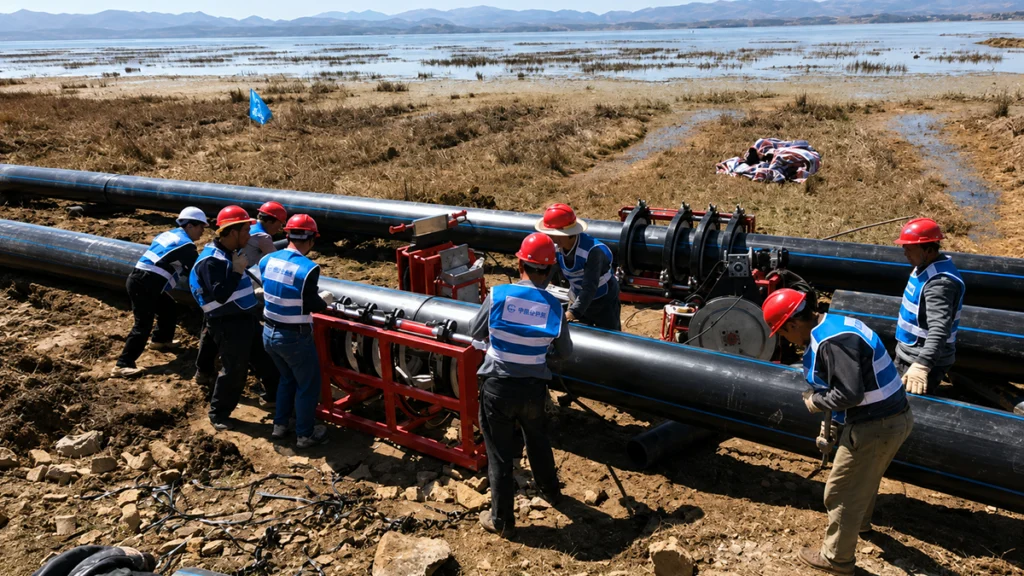
How to Choose the Right Model for Small Diameter PE Pipe
How do you match the machine to pipe diameter and SDR?
Proper equipment matching means selecting a chassis where your target pipe OD falls comfortably in the middle of the butt fusion machine’s range. If your crew frequently welds 90mm and 110mm pipes, a 160mm capacity HDPE pipe jointing machine offers the perfect blend of physical size and clamping strength. Always confirm that the manufacturer provides the exact reduction inserts for your pipe’s OD. Ensure those clamps can grip your specific SDR (wall thickness ratio) securely—you don’t want to crush thin-walled pipes or have thick-walled pipes slip out of place.
What should buyers prioritize: portability, accuracy, or durability?
When reviewing a manual butt fusion machine specification sheet, portability and durability must top your list. Because manual machines lack automated pressure control, weld “accuracy” ultimately comes down to operator skill, timing, and strict adherence to standards like ASTM F2620. Therefore, the HDPE pipe welding machine itself must be tough enough (via a rigid aluminum frame) to survive rough trench handling without bending. If the frame stays true, the operator’s physical inputs will translate directly into perfectly aligned joints.
Which project conditions make one model a safer choice?
Confined spaces and deep trench work dictate very specific model choices. A manual butt fusion machine with a narrow clamp design and an independent operating system is the safest bet for in-ditch welding. Heavy hydraulic butt fusion machines demand heavy lifting equipment, introducing dangerous overhead crush hazards into unsupported trenches. You can lower a lightweight manual model by hand, eliminating rigging risks and letting your technicians work safely in tight quarters where heavy butt fusion welding machinery simply cannot go.
Operating Tips for Better Weld Quality
How should pipes be prepared before welding?
A perfect fusion joint begins long before you plug the pipe fusion machine in.
- Cutting: Use a dedicated rotary pipe cutter to guarantee a perfectly vertical cut. Never use a reciprocating saw.
- Milling: Run the facer against the welding surfaces until continuous, unbroken ribbons of plastic peel off both sides. This proves the ends are smooth and parallel.
- Cleaning: Wipe down the milled surfaces and the V-groove with a lint-free cloth and an approved solvent (like isopropyl alcohol). Ensure absolutely no dirt, dust, or moisture touches the plastic before you introduce the heating plate.
What are the most common operator mistakes?
When manual welds fail, procedural shortcuts are almost always to blame. The deadliest error? Re-clamping without re-milling. If a pipe gets bumped or adjusted after facing, you must mill it again to restore parallel alignment. Another common trap is ignoring drag pressure. Operators have to measure the friction of the moving carriage and add that number to the baseline welding pressure. Lastly, a slow changeover gives the pipe ends time to cool off, completely destroying the molecular bond.
How do you check whether a weld is acceptable?
Field technicians need to rely on rigorous visual inspection protocols to verify their work.
- Pre-weld Check: Confirm the heating plate temperature is rock-solid and the milling blades are razor-sharp.
- Post-weld Check: Look at the finished joint. It should feature a uniform, double-rolled flange (bead) all the way around the circumference.
- Symmetry: Both halves of the bead should be relatively equal in size.
- Internal Surface: The internal bead needs to be smooth and flat. A messy internal bead causes turbulent water flow and can catch debris, leading to blockages.
Cost, MOQ, Lead Time, and Supplier Evaluation
What affects the price of a manual butt fusion machine?
The manual butt fusion welding machine price heavily depends on its maximum capacity, build materials, and bundled accessories. Prices scale up alongside the maximum pipe diameter because larger butt fusion machines demand substantially more raw aluminum for the frame and larger, higher-wattage heating plates. Electrical configurations (like custom-wiring for 110V versus 220V markets) and the total number of reduction inserts included in the box will also sway the final invoice.
How do MOQ and lead time typically vary by supplier?
Because manual units are highly standardized and commoditized, factory-direct suppliers generally offer fantastic, flexible terms. The standard Minimum Order Quantity (MOQ) across the industry is usually just 1 set. Lead times are also exceptionally short. In-stock units frequently ship out within 3 to 5 days, which is a stark contrast to custom hydraulic builds that can easily trap you in a 4-to-6-week manufacturing queue.
What should you ask before placing a bulk order?
Before signing off on a fleet purchase, procurement managers need to run through this evaluation checklist:
1. Capacity Validation: Does the exact max/min OD range actually align with our upcoming project specs?
2. Thermostat Verification: Can the heating plate control box reliably sustain temperatures between 0–300°C for multi-material applications?
3. Warranty & Support: What exactly do the warranty terms cover, and can we get spare parts (like PTFE heating plates and carbon steel milling blades) shipped globally without delay?
Common Problems and How to Avoid Them
Why do some welds fail even when the machine is correct?
Even if your HDPE pipe welding machine is perfectly calibrated, environmental variables and operational missteps can still ruin a weld. Common defects include uneven bead heights, severe joint misalignment, insufficient flange roll, and incomplete fusion. The root causes almost always point back to operator error: dialing in the wrong temperature, easing up on the pressure during the cooling phase, or letting windblown dust and ambient moisture settle on the milled pipe ends before heating.
What maintenance issues shorten machine life?
Skipping basic preventative maintenance will destroy your equipment’s performance. The most frequent culprits are worn milling cutter blades (resulting in rough, un-parallel pipe faces), degraded PTFE coatings on the heating plate (causing molten plastic to stick and scorch), and uncalibrated pressure gauges or stiff carriage guide rods. If you regularly lubricate the guide rods and swap out scratched heating plates, you will dramatically extend the butt fusion welding machine’s operational lifespan.
How can poor fixture accuracy affect the final joint?
Frame integrity is everything. If the pipe fusion machine’s structural components get knocked out of alignment due to drops or rough handling, the clamping force won’t distribute evenly across the pipe face. This uneven pressure means the hot-melt column head won’t provide a uniform fixing effect. The resulting joint will suffer from localized stress concentrations, practically guaranteeing natural separation and catastrophic pipeline failure the moment the system is pressurized.
Frequently Asked Questions
Q1: What is a manual butt fusion machine used for?
It is used to join thermoplastic pipes (like PE, HDPE, and PP) by heating their ends and pressing them together using human-operated mechanical force. It is primarily deployed for small-diameter water, gas, irrigation, and plumbing pipelines where compact, portable equipment is required.
Q2: Which PE pipe sizes are suitable for manual butt fusion welding?
Manual machines are typically designed for small to medium diameters, ranging from 20mm up to 250mm. Standard machine series are categorized by their maximum capacity, such as 160mm, 200mm, and 250mm, utilizing inserts to clamp smaller pipes securely.
Q3: How is a manual butt fusion machine different from a hydraulic model?
A manual machine relies on handwheels or levers operated by a technician to apply joining pressure, whereas a hydraulic model uses an electrically driven hydraulic pump. Manual machines are lighter, much cheaper, and easier to maintain, but are limited to smaller pipe diameters.
Q4: What temperature and heating time are needed for PE pipe welding?
Heating temperatures for PE pipes generally range from 200°C to 230°C. Heating time depends heavily on the pipe’s wall thickness and the specific standard being followed (e.g., DVS 2207 or ASTM F2620), requiring precise adherence to the manufacturer’s parameter charts.
Q5: How do I choose the right clamp size for my project?
You must select a machine whose overall capacity exceeds your largest pipe, and ensure it comes with reduction inserts (inner clamp blocks) that exactly match the outer diameter (OD) of your specific pipes. The clamps must also accommodate the pipe’s SDR rating.
Q6: What factors affect the price of a manual butt fusion machine?
Price is primarily dictated by the machine’s maximum diameter capacity, the quality of the chassis materials (e.g., surface-hardened aluminum), the inclusion of specialized reduction inserts, and the electrical configuration of the heating plate.
Q7: Can a manual butt fusion machine be used on site for field installation?
Yes. Their lightweight, compact design and lack of heavy hydraulic power units make them the ideal choice for field installations, especially in tight trenches, remote agricultural sites, or confined municipal repair locations.
Conclusion
Procuring the right manual butt fusion machine for small-diameter PE pipe projects (up to 250mm) comes down to balancing upfront capital with reliable field performance. These machines deliver an unbeatable combination of affordability, extreme portability, and mechanical simplicity. That makes them the definitive choice for tight trench work, complex irrigation routing, and scattered municipal repairs. While the process absolutely demands a skilled operator to manage pressure and changeover times according to strict DVS 21307 or ASTM F2620 standards, the resulting molecular bond is permanent, seamless, and completely leak-free.
By prioritizing durable, surface-hardened aluminum construction and verifying that the clamp sizes perfectly match your specific pipe SDR, contractors can easily bypass the alignment failures that plague inferior equipment. The drastically lower capital expenditure—frequently under $600 compared to thousands for hydraulic units—gives project managers the financial freedom to scale operations rapidly and outfit multiple field crews without destroying the procurement budget. Ultimately, enforcing strict pipe preparation protocols and investing in high-quality mechanical fusion equipment guarantees pipeline integrity and long-term project success.
Let our experts help you choose the right equipment for your project
Contact Our Engineering Team