
HDPE Butt Fusion Machine: Manufacturing Lead Times Guide
Table of Contents
Introduction
Securing high-performance butt fusion machines for critical DN63–DN2600 HDPE pipe projects is a strategic capital decision. Here, a single week of delay isn’t just an inconvenience; it can hemorrhage upwards of $15,000 in idle labor costs and schedule penalties. When infrastructure projects demand strict adherence to ISO 21307 welding parameters, procurement officers need to master the hidden variables behind equipment lead times—from the casting of hydraulic components to the complexities of international freight. This guide breaks down the complete manufacturing lifecycle, contrasts the timelines for manual versus CNC automatic units, and offers a “back-calculation” method for logistics planning. By the end, you’ll have a solid framework to select the right equipment for your HDPE projects, validate manufacturer promises, and dodge costly specification errors.

—
Understanding the Manufacturing Lifecycle of Butt Fusion Equipment
Production Phases: From Raw Material to Final Assembly
Building a robust butt fusion machine isn’t an instant assembly job; it’s a sequence of engineered stages that generally demands a baseline of 15–20 working days for standard hydraulic models. The lifecycle kicks off with raw material procurement—specifically, casting the aluminum for the machine body and sourcing high-grade hydraulic components. For manufacturers like Ekberg Welding, structural integrity is non-negotiable. We use high-density casting methods to prevent warping under the immense pressure of fusion (up to 16 MPa for large units). Once materials land, precision machining begins. Chassis frames, planing tools (facers), and heating plates are milled to align with strict ISO tolerance standards. If there’s a hiccup in sourcing raw aluminum or specialized hydraulic seals here, it ripples through the entire timeline. This highlights why you need manufacturers with rock-solid upstream supply chains.
Global Supply Chain Constraints and Component Availability
In today’s manufacturing world, the gap between mechanical and electronic components drives lead times. Standard hydraulic butt fusion machines rely mostly on mechanical parts—cylinders, frames, pumps—which are easier to keep on the shelf. However, the industry’s pivot toward automation has introduced volatility. CNC automatic butt fusion machines need sophisticated PLCs (Programmable Logic Controllers), touchscreens, and pressure sensors for data logging and closed-loop control. Global semiconductor shortages can push the lead time for these “smart” machines out by weeks compared to manual versions. Procurement teams need to realize that even if the steel frame is welded and ready, the machine can’t ship without the specific electronic brain required for traceability standards like ISO 12176.
The Quality Assurance Bottleneck
Quality Assurance (QA) is the most frequently underestimated factor in the schedule. For a hdpe fusion machine to be truly site-ready, it has to pass testing that simply cannot be rushed. This includes the pressure holding test: the hydraulic system is pressurized and monitored for leaks over a set duration to ensure seals can hold fusion pressure without dropping. Moreover, heating plate calibration is vital. The surface temperature must be uniform (typically 200–230°C for PE100) with a deviation of no more than ±3°C across the plate. Validating this takes time. If a plate fails the uniformity test, it requires recalibration or replacement, resetting the QA clock. Skipping these steps to rush a delivery is a direct path to joint failure in the field.
“Make-to-Stock” vs. “Make-to-Order” Strategies
Manufacturers usually run a hybrid inventory strategy. “Make-to-Stock” covers high-volume, standard sizes, typically in the DN160 to DN630 range. These units often sit in the warehouse, needing only final voltage configuration and packaging for rapid dispatch (10–15 days). On the flip side, “Make-to-Order” applies to large-diameter equipment (DN800–DN1600) and specialized CNC units. These giants, weighing upwards of 2600 kg, are too capital-intensive to store and are fabricated only after a deposit is received. Knowing which category your butt fusion welding machine falls into is the first step in setting realistic delivery expectations.
—
Key Variables Influencing Lead Times for Different Machine Types
Standard Hydraulic vs. Large Diameter Machines
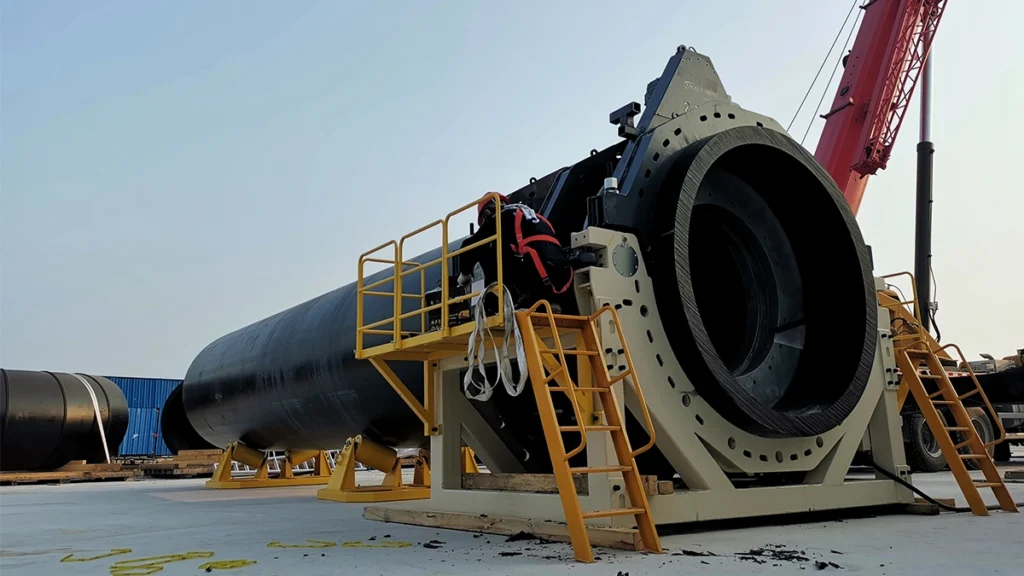
Physical scale is the number one driver of manufacturing duration. A standard hydraulic butt fusion machine (e.g., 160mm–315mm) uses mass-produced components that assemble quickly. But as pipe diameter grows, engineering complexity scales non-linearly. A 1200mm or 1600mm hydraulic butt fusion machine demands heavy-duty fabrication, massive hydraulic reservoirs, and heating plates that draw serious power (often exceeding 23.5 kW). Moving these components through the factory floor takes time. While a 315mm unit might be crated in two weeks, a 1200mm unit often commands a production lead time of 30–45 days—excluding shipping—due to specialized machining for clamp inserts and heavy-lift logistics within the plant.
Automatic/CNC Machine Calibration and ISO 21307
Ordering an automatic butt fusion welding machine introduces a layer of software integration that manual butt fusion machines don’t need. CNC units must be calibrated so the applied hydraulic pressure matches the programmed standard exactly. If a project calls for ISO 21307 “High Pressure” fusion, the machine’s software must be validated to execute those specific pressure ramps and cooling times automatically. This involves “soak testing” the electronics (running them extendedly to ensure stability) and verifying sensor accuracy. Integrating GPS positioning and data logging also requires final configuration based on your region. This software validation process typically tacks 5–7 days onto the production timeline compared to a standard manual unit.
Customization Requirements: Voltage, Plugs, and Branding
Electrical customization causes frequent, minor delays. While 220V/50Hz is common, industrial sites often need 380V 3-phase power, or specific 110V inputs for smaller generators. Swapping heating plate elements and hydraulic motors to match a specific voltage (like 415V for certain UK/Commonwealth markets) requires pulling the butt fusion machine from the standard line for retrofitting. Additionally, requests for specific industrial plugs (e.g., IEC 60309) or custom color-coding to match utility branding will convert a stock machine into a custom order, adding 3–5 days for painting and electrical mods.
Bulk Orders vs. Single-Unit Shipments
Order size dictates factory prioritization. A single-unit order is usually processed fast but might wait for a consolidated courier pickup or LCL (Less than Container Load) slot. Conversely, a bulk order meant to fill a 20ft or 40ft container triggers a different workflow. The factory stages all hdpe pipe welding machines to finish simultaneously for efficient loading. While this might slightly delay the first hdpe pipe jointing machine off the line, it ensures the whole batch ships together. However, if one butt fusion welding machine in a bulk order fails QC, it can hold up the entire container. Buyers should discuss “partial shipment” options if they need urgent machines immediately while the rest of the order is completed.
—
Logistics, Shipping, and Customs: The Hidden Timeline Killers
Air vs. Sea vs. Rail Freight Timelines
Once the butt fusion machine clears the factory gate, global logistics take the wheel.
- Air Freight: The fastest route, typically 3–7 days transit. But for butt fusion machines heavier than 500kg, costs are prohibitive unless the downtime penalty is extreme.
- Sea Freight: The industry standard. Transit times vary wildly: 15–25 days to the US West Coast, but 30–45 days to Europe or the US East Coast.
- Rail Freight: For buyers in Central Asia and Europe, the China-Europe Railway Express is a strategic middle ground. Transit times run roughly 14–18 days (e.g., Chongqing to Duisburg)—significantly faster than sea and far cheaper than air.
Ex-Works to DDP: The Customs Gap
A rookie mistake is assuming “Arrival at Port” means “Delivery to Site.” The gap between these two can be 5–10 days. Export clearance in the manufacturing country usually takes 1–3 days. Upon arrival, import customs require correct HS code classification to determine duties. If a butt fusion equipment gets flagged for inspection, add more delays. “Delivered Duty Paid” (DDP) terms shift risk to the seller, but you must still factor in the time for local trucking from the port to the construction site.
Packaging and Fumigation
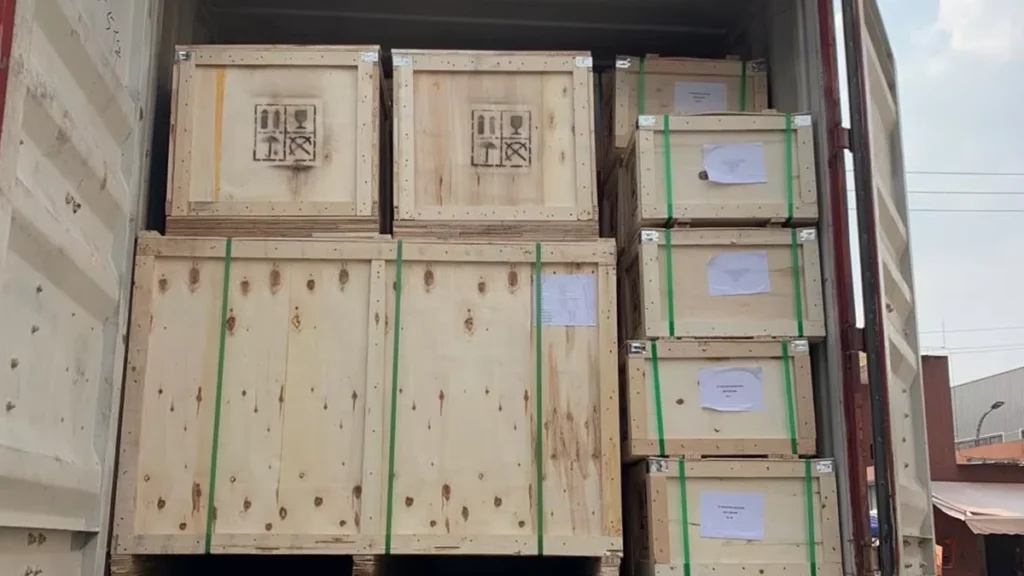
To avoid shipping nightmares, packaging must meet international standards. Butt fusion machines are heavy and sensitive; they need sturdy wooden crates. International shipping regulations (ISPM 15) mandate that all solid wood packing material be heat-treated and stamped (fumigation certificate). If a manufacturer uses non-compliant wood, the shipment can be rejected or quarantined at the destination port, causing weeks of delay. Ensuring the manufacturer provides valid IPPC-stamped crating is a non-negotiable checklist item.
Estimated Shipping Timelines (China Origin)
| Destination Region | Sea Freight (Days) | Air Freight (Days) | Rail Freight (Days) |
|---|---|---|---|
| North America (West) | 15–25 | 5–7 | N/A |
| North America (East) | 30–40 | 5–8 | N/A |
| Western Europe | 30–45 | 5–7 | 16–22 |
| Southeast Asia | 7–12 | 2–4 | 5–8 |
| Middle East | 20–30 | 4–6 | N/A |
—
Strategic Procurement: How to Plan and Shorten Wait Times
The “Back-Calculation” Strategy
Smart procurement starts with the “Weld Start Date” and works backward.
1. Weld Start Date: June 1st.
2. Site Prep & Training: 1 week (Machine needed by May 25th).
3. Inland Transport & Customs: 2 weeks (Arrival at Port by May 11th).
4. Sea Freight (Europe): 5 weeks (Ship Date: April 6th).
5. Production Lead Time: 3 weeks (Order Date: March 16th).
6. Buffer: 1 week.
*Result:* The order must be placed by March 9th. Many contractors fail to account for the customs and inland transport leg, leading to critical schedule slippage.
Blanket Orders and Rolling Forecasts
For distributors and large utility contractors, the Blanket Order is the most effective tool to eliminate lead times. By committing to a set volume (e.g., 50 units of DN315) over a year, the manufacturer can schedule production in advance. This allows the factory to keep finished stock ready for immediate “call-off.” Rolling forecasts allow Ekberg Welding to procure raw materials months ahead, insulating the buyer from supply chain spikes and ensuring standard butt fusion machines are effectively “off-the-shelf.”
Pre-Approving Technical Specifications
Engineering delays often happen *after* the order is placed because technical specs weren’t finalized. Does the project require data logging to ASTM F2620 or DVS 2207 standards? Does the logger need to output CSV or encrypted PDF reports? Sorting these details during the quotation phase prevents “engineering hold” status, where the factory pauses production waiting for customer approval on software or voltage details.
The Value of Vertical Integration
Manufacturers with vertical integration—those owning their casting molds and CNC machining centers—offer more reliable lead times than assemblers buying parts from third parties. Ekberg Welding controls critical manufacturing steps in-house. This reduces dependency on external suppliers for frames and hydraulic cylinders, giving us tighter control over the schedule and the ability to expedite orders when a customer faces a critical downtime situation.
—
Factory Capability, Inventory Management & Global Support
Ekberg Welding’s Production Capacity
To mitigate industry-wide delays, Ekberg Welding maintains strategic inventory of high-demand hydraulic units, specifically in the 160mm to 630mm range. Our production lines are optimized to handle concurrent manufacturing of standard manual butt fusion machines and complex CNC automatic welders. By analyzing global demand trends, we adjust our “Make-to-Stock” levels quarterly, ensuring urgent infrastructure projects aren’t stalled by manufacturing queues.
Quality Control: Preventing “Dead on Arrival”
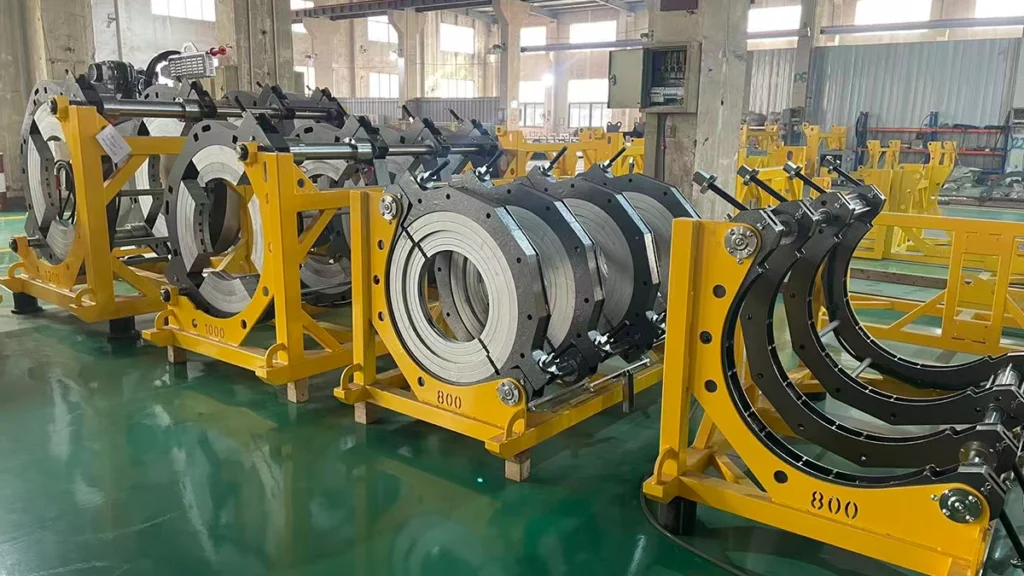
Speed means nothing if the butt fusion welding machine arrives defective. Ekberg’s QC process ensures every butt fusion machine is “site-ready.” This involves a final functional test where the hdpe pipe welding machine heats, faces, and pressurizes a test pipe segment. We verify hydraulic couplers, check facer blades for sharpness, and ensure the heating plate hits 230°C within the specified time. This rigorous final check minimizes the risk of DOA equipment—the ultimate timeline killer.
Spare Parts Inventory System
A hdpe pipe butt welder is only as reliable as its support. 60% of buyers cite spare parts availability as a critical factor. We maintain a dedicated warehouse for heating plates, facer assemblies, hydraulic seals, and electronic sensors (PT100). Unlike whole but fusion machines, these critical spares are pre-packed for air freight, allowing for 24-48 hour dispatch times to minimize downtime on active job sites.
Global Distributor Network
For immediate needs, our global distributor network acts as a forward operating base. Ekberg partners hold local stock of standard butt fusion machines and consumables. While a factory order for a custom 1200mm hydraulic butt fusion machine is processing, a local distributor can often provide a smaller rental unit or a loaner to keep the project moving, bridging the gap between order and delivery.
—
Buyer’s Checklist for Efficient Machine Ordering
To ensure the fastest possible lead time and correct specification, use this checklist before signing the Proforma Invoice:
- Voltage & Frequency: Confirm site power (e.g., 380V/50Hz vs. 220V/60Hz).
- Plug Type: Specify industrial plug or bare wire requirement.
- Standards Compliance: Confirm if ISO 21307, ASTM F2620, or DVS 2207 parameters are required in the software.
- Accessories: Add stub end holders, data loggers, or internal bead removers to the main order (shipping them later costs more).
- Stock Status: Explicitly ask, “Is this specific model on the floor, or in the queue?”
- Documentation: Request operation manuals and calibration certificates in the required language.
Critical Questions for the Sales Engineer
Don’t rely on website estimates. Ask:
1. “What is the current production queue length for this diameter?”
2. “Do you have the specific electronic components for the CNC module in stock?”
3. “Can you provide a binding ship date on the PI?”
Verifying Lead Times in the PI
Verbal estimates are not binding. Ensure the lead time (e.g., “20 working days ex-factory”) is written explicitly in the Proforma Invoice. This creates a contractual obligation and allows you to hold the manufacturer accountable.
Total Cost of Ownership (TCO) Implications
Rushing to buy the only machine available in stock from a low-tier vendor often spikes TCO. A machine with poor temperature stability or weak hydraulic seals causes joint failures, leading to re-digs and massive project losses. Waiting an extra 10 days for a premium Ekberg machine that guarantees weld integrity is a strategic economic decision, not just a logistical one.
—
Frequently Asked Questions
Q1: What is the standard lead time for a 315mm hydraulic butt fusion machine versus a 1200mm unit?
A standard 315mm hydraulic butt fusion machine is often in stock or has a production lead time of 10–15 days. In contrast, a 1200mm unit is a massive, capital-intensive machine (approx. 2600kg) that is typically “Make-to-Order.” The lead time for these large units is usually 30–45 days to account for heavy fabrication, specialized component sourcing, and extended quality assurance testing.
Q2: How much faster is air freight for heavy welding equipment, and is the cost justified?
Air freight takes 5–10 days door-to-door, compared to 30–45 days for sea freight. However, for a standard butt fusion welding machine weighing 200kg+, air freight costs can exceed 50% of the machine’s value. It is generally only justified in “line down” emergencies where the daily penalty cost of the delayed project exceeds the premium freight cost.
Q3: Can Ekberg Welding customize the machine color or brand labeling, and does this affect delivery time?
Yes, Ekberg offers OEM services including custom colors and logo placement. However, this moves the butt fusion machine from “Make-to-Stock” to “Make-to-Order.” Custom painting and curing typically add 3–5 working days to the standard production timeline. If lead time is critical, we recommend accepting the standard manufacturer color (usually orange or black).
Q4: What happens if a machine arrives damaged due to shipping? How quickly can it be replaced?
If a butt fusion welding machine suffers transit damage, immediate notification with photos is required. Ekberg prioritizes replacement parts (e.g., a cracked gauge or bent frame) via express air courier (3–5 days) to get the unit operational. For total loss scenarios, we prioritize the replacement unit at the front of the production queue to minimize further delay.
Q5: Do automatic CNC machines take longer to manufacture than manual machines?
Yes. Automatic butt fusion machines require additional assembly steps for sensors, wiring, and PLCs. More importantly, they undergo a longer QA process to calibrate the software, validate pressure transducers, and “burn-in” the electronics. Expect an additional 5–10 days of lead time for CNC models compared to standard manual hydraulic versions.
—
Conclusion
The lead times for ordering new butt fusion machines are dictated by a complex interplay of manufacturing depth, component availability, and global logistics. While a standard hydraulic unit might be days away, large-diameter or CNC-automated solutions require weeks of precision engineering and calibration. The financial risk of a project delay far outweighs the effort required to plan ahead.
Strategic buyers mitigate these risks by engaging with manufacturers early, utilizing back-calculation for logistics, and insisting on transparent lead times in their contracts. By partnering with agile manufacturers like Ekberg Welding, who combine vertical integration with robust inventory strategies, you ensure that your pipeline projects are powered by reliable, compliant equipment delivered on schedule.
Don’t let equipment shortages derail your infrastructure project.
Contact Ekberg Welding today to request a current stock list and get an accurate, guaranteed lead time estimate for your next order.