
Butt Fusion Machine Manufacturer in Canada: Buyer’s Guide
Table of Contents
Securing a dependable butt fusion machine manufacturer in Canada that can deliver equipment capable of holding a steady 230°C heating plate temperature in brutal -10°C weather is no small feat for northern HDPE pipeline contractors. When machinery fails in sub-zero environments, the fallout is brutal. Add high local distributor markups and sluggish technical support to the mix, and utility installers routinely bleed thousands of dollars for every single failed DN400 HDPE pipe joint. This guide breaks down the essential machine specs you need.
We’ll look at cold-weather welding parameter adjustments under ISO 21307, outline selection criteria for different project sizes, and weigh the ROI of buying factory-direct. You’ll get the inside track on everything from model 160 manual butt fusion machine to fully automated hydraulic systems with advanced data logging. Ultimately, you’ll walk away with a practical, data-driven framework for choosing the exact HDPE fusion equipment your pipeline applications demand. Armed with this knowledge, you can dodge expensive specification blunders and lock down reliable machinery built for Canada’s toughest infrastructure jobs.

The Challenges of HDPE Pipeline Projects in Canada
Research the impact of extreme cold on HDPE butt fusion
Canadian winters throw serious thermodynamic hurdles at the thermoplastic welding process. Once ambient temperatures plunge below -5°C, standard operating parameters go out the window. If you don’t modify them heavily, you end up with brittle joints that fail inspection. To fight rapid heat loss, operators must push the heating plate temperature to the absolute upper limit of 230°C for PE100 materials. Extreme cold also makes cooling times wildly unpredictable. Smart contractors wrap the pipeline ends in heavy cotton blankets to slow the cooling process and set up environmentally shielded welding tents to block freezing wind drafts. You cannot release the hydraulic clamping pressure until the fusion joint hits a stable 120°F (49°C). That means sitting tight for an extended cooling duration of at least 11 minutes per inch of pipe wall thickness.
List Canadian pipeline compliance standards
Procurement engineers carry the heavy burden of verifying that their fusion equipment reliably produces joints meeting strict national and provincial codes. For cold-water pressure services, the CSA B137.1 standard sets the performance baseline for HDPE pipe, tubing, and fittings. Meanwhile, municipal water utility lines require strict adherence to AWWA C906, the governing rulebook for high-density polyethylene (HDPE) pressure pipes and fittings in waterworks. What happens if you fall short? Inadequate heating plate temperature control or fluctuating hydraulic pressure leads directly to catastrophic pipeline leaks and blown hydrostatic tests. For the contracting firm, that translates to massive financial liabilities.
Analyze the logistical challenges of remote job sites
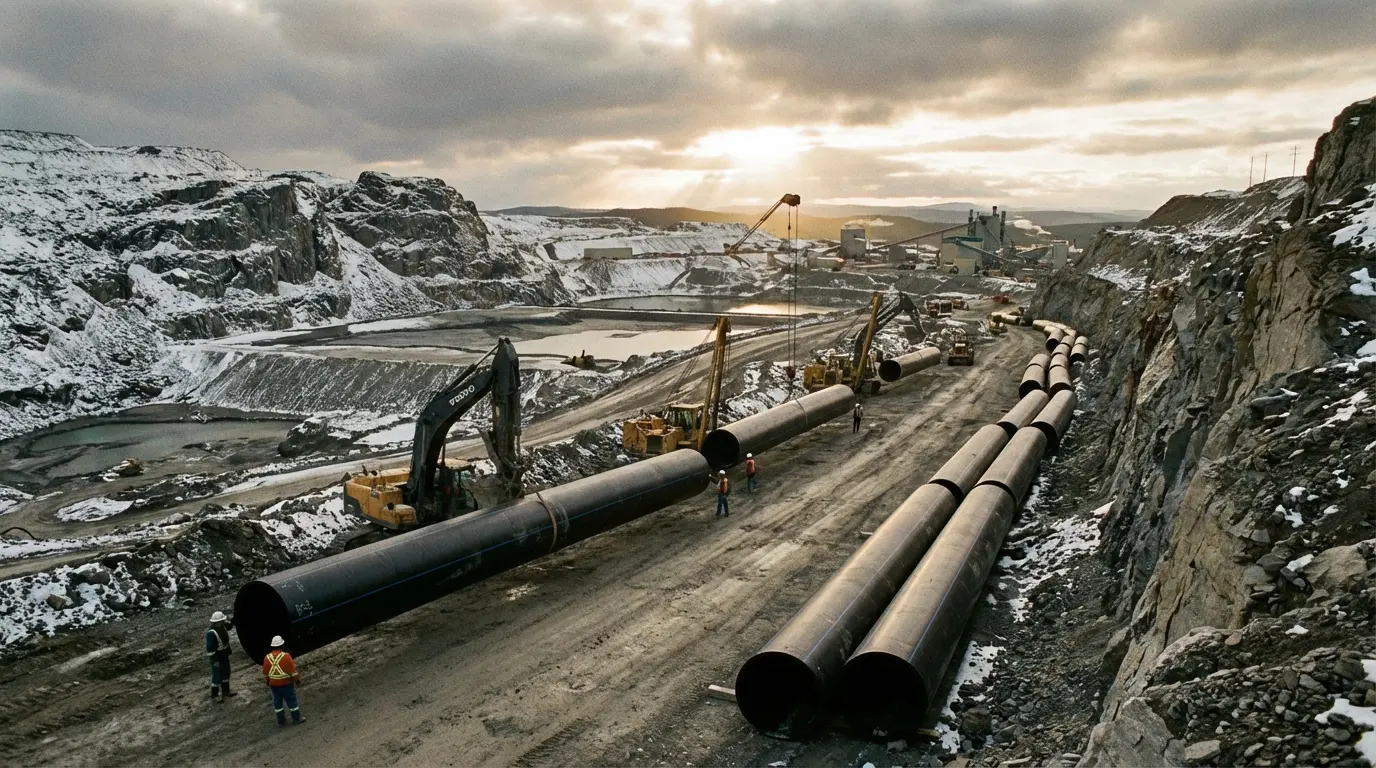
Pulling off pipeline installations in remote areas—think northern Alberta oil fields or isolated Yukon mining camps—demands gear that can take a beating. Fragile machinery simply won’t survive the bone-rattling vibration of unpaved access roads, let alone the daily physical abuse of heavy industrial sites. Tough equipment isn’t a luxury; it’s mandatory. Butt fusion welding machines constructed with a high-strength ZL104 standard aluminum chassis offer the structural rigidity needed to hold perfect pipe alignment. (You absolutely must prevent misalignment that exceeds 10% of the pipe wall thickness). At the same time, this alloy keeps the unit light enough for crews to actually maneuver it in the trench.
Explain the cost impact of equipment downtime
When a butt fusion welding machine breaks down hundreds of kilometers from the nearest service hub, the financial bleeding starts instantly. Idle crews drain payroll. Project milestones slip. Heavy equipment rental fees pile up. This stark reality highlights why reliable butt fusion machine repair and support is so critical. Contractors need machinery built with modular, easily swappable parts—like plug-and-play microswitches and independent temperature dials. Pair that hardware with 24/7 remote technical assistance, and field mechanics can fix problems right in the dirt instead of waiting weeks for a specialist to fly in.
Complete Range: Buy Butt Fusion Machine in Canada for Every Project
Compare manual vs. hydraulic butt fusion machines
Picking the right HDPE fusion welding machine class comes down to two factors: pipeline diameter and required fusion pressure. Manual butt fusion machines handle smaller jobs perfectly. Typically covering DN63mm to DN250mm, these lightweight units are cost-effective and shine in tight spaces or indoor plumbing setups. But once HDPE pipe diameters push past DN250mm, or when crews tackle thick-walled high-pressure lines, stepping up to hydraulic butt fusion machines is non-negotiable. Spanning ranges from DN160 up to a massive DN2600, hydraulic units rely on motorized pumps. They generate and hold the exact drag and fusion pressures (measured in MPa or bar) necessary to forge a molecularly flawless joint that satisfies ISO 21307 standards.
Detail CNC and automatic welding machines
Today’s Canadian gas distribution networks require absolute, undeniable traceability for every single fused joint. CNC (Computer Numerical Control) and fully automatic butt fusion machines take human error out of the equation by automating the heating, changeover, and cooling cycles. Ekberg Welding’s advanced CNC models take this a step further. They integrate Beidou/GPS automatic positioning and DTU remote data transmission, seamlessly pushing welding logs straight to cloud servers. Plus, these machines feature fingerprint ID recognition. This locks out uncertified operators, ensuring your site stays perfectly compliant with data logging mandates.
List essential Ekberg machine specifications
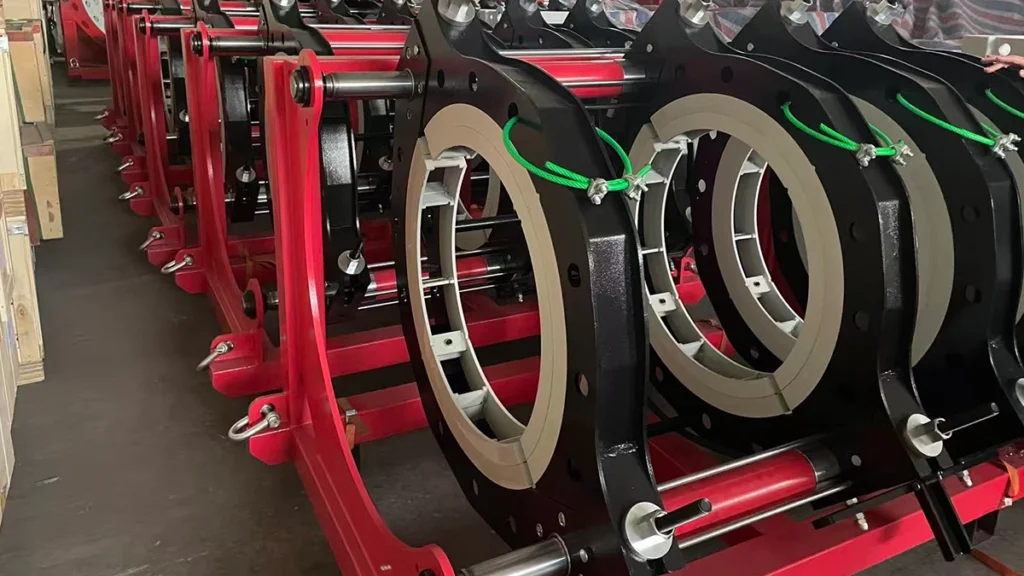
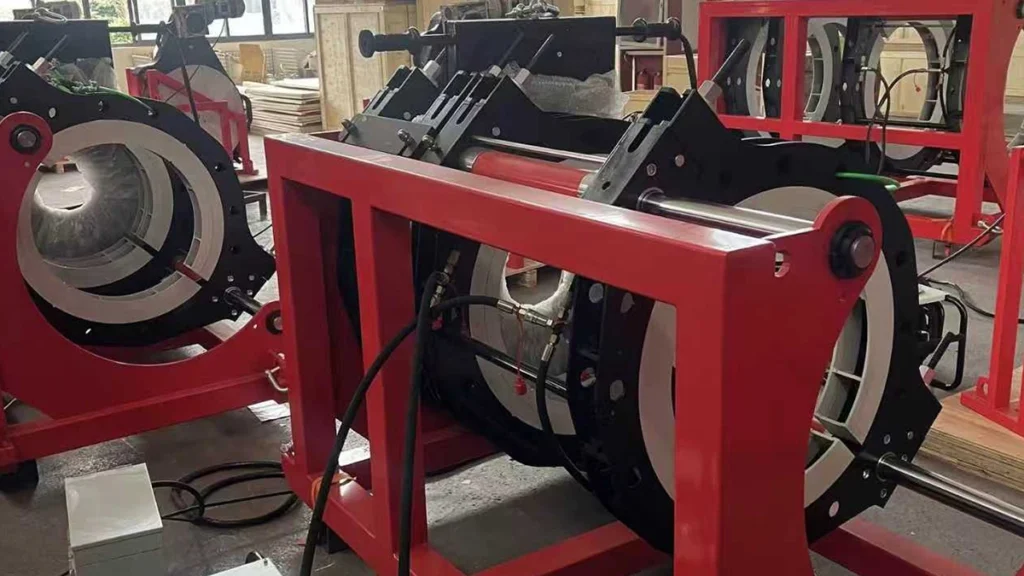
Ekberg HDPE pipe welding machines pack premium specifications to guarantee top-tier performance across varied industrial landscapes. We build the heating plates from corrosion-resistant aluminum alloy and coat them with industrial-grade PTFE (Teflon). This stops hot melt surface sticking dead in its tracks while holding a tight 200–230°C temperature window. High-torque pure copper motors drive the milling cutters, spinning high-speed carbon steel blades via a rugged chain drive to ensure perfectly square pipe facings every time. During the critical T1 preheating and beveling stages, the high-strength ZL104 aluminum clamping system locks everything down for absolute stability.
Below is a technical comparison of standard hdpe fusion machine classifications to help shape your procurement strategy:
| Machine Type | Diameter Range | Pressure Generation | Primary Application | Data Logging |
|---|---|---|---|---|
| Manual | DN40 – DN250 | Physical Leverage | Indoor, Low-Pressure Water | No |
| Hydraulic | DN40 – DN2600+ | Hydraulic Pump Station | Municipal Water, Mining | Optional |
| CNC / Auto | DN63 – DN630 | Automated Hydraulic | Natural Gas, Critical Flow | Yes (Cloud/USB) |
Detail hydraulic pressure specs required for thick-walled pipes
Heavy industrial applications—like chemical transport lines or high-pressure water mains—routinely rely on thick-walled HDPE pipes spanning SDR 7 to SDR 11. Fusing these massive pipes takes immense, unrelenting hydraulic force. Ekberg butt fusion welding machines deploy imported hydraulic sealing systems and flat-type quick connectors to stop pressure drops and fluid leaks cold, even in brutal environments. The robust hydraulic setup lets operators accurately pull the mandatory three consecutive drag pressure measurements right before dropping in the heating plate. This ensures the fusion pressure is dialed in perfectly to match the exact weight and drag resistance of the heavy-duty pipe.
Selection Guide: Choosing the Best HDPE Fusion Equipment Suppliers in Canada
Create a project sizing checklist
Buying the right fusion gear demands a hard look at your project specs. You have to match the hdpe fusion machine’s capacity to both the outside diameter (OD/DN) and the Standard Dimension Ratio (SDR) of the pipeline in question.
- Diameter Limits: Make sure the butt fusion welding machine can handle both your largest and smallest pipe sizes. Keep in mind that butt fusion is strictly off-limits for pipe components with a DN ≤ 63mm or a wall thickness (e) < 6mm.
- SDR Compatibility: Double-check that the clamping force can successfully manage your thickest HDPE pipes.
- Dissimilar SDRs: Trying to weld pipe components from different SDR series (say, SDR 7 to SDR 11)? Standard butt fusion isn’t the play here unless you use appropriate machining methods to equalize the wall thickness at the joint. If you can’t do that, you must switch to electrofusion.
Detail power requirements and generator compatibility
Off-grid Canadian construction sites run on portable diesel generators. When you buy butt fusion machine in Canada compliant equipment, you must factor in power stability. CNC automatic butt fusion machines and data loggers hate voltage spikes. Your generator has to deliver rock-solid voltage (usually 220V or 380V, depending on the unit) and pack enough kVA to handle a massive simultaneous power draw. The heating plate alone can suck up several kilowatts. Combine that with the high-torque pure copper milling motor starting up, and a weak generator will trigger a voltage drop that resets your data logger right in the middle of a critical weld.
Calculate ROI: factory-direct pricing vs. long-term rental
Utility contractors constantly weigh renting versus buying fusion gear. Renting makes sense for quick, low-volume jobs. But if you’re staring down a multi-year municipal water upgrade or a massive mining operation, purchasing factory-direct from a proven butt fusion machine manufacturer canada delivers immediate ROI. Cutting out the North American distributor markup keeps substantial capital in your pocket upfront. Plus, owning a stationary Ekberg butt welder lets crews set up a temporary on-site fabrication shop. This drastically cuts the heavy labor costs of dragging a portable butt fusion welding machine from trench to trench for every single joint.
Define data logging and traceability requirements
Municipal water and natural gas projects face intense regulatory heat. Traceability isn’t a “nice-to-have” anymore; it’s mandatory. Your gear has to comply with international standards like ISO 21307 and DVS 2207, along with specific data logging rules such as GB/T 20674.1. Buyers need to ensure their chosen hdpe fusion equipment suppliers canada offer butt fusion welding machines that record five critical data points: fusion management parameters, equipment identification, pipeline component data, real-time welding metrics (pressure, temperature, time), and the final joint results. Inspectors will want to see this data, so it must be easily exportable via USB or cloud transmission.
Manufacturing Excellence, Quality Control & Global Support
Detail Ekberg Welding’s manufacturing excellence
Real reliability starts on the factory floor. Ekberg Welding runs tight ISO 9001 quality management protocols, guaranteeing every single HDPE pipe welding machine hits rigorous international benchmarks long before it sees a shipping container. All equipment boasts CE certification, proving its safety and performance readiness for global markets. Before anything leaves the facility, every hydraulic unit and heating plate faces aggressive pre-shipment testing. We simulate high-pressure fusion cycles and push temperature stability to the limits. When that HDPE pipe jointing machine drops onto your Canadian job site, it performs flawlessly. Period.
Explain precision engineering of critical components
A butt fusion machine only lasts as long as its internal parts. Ekberg engineers design for the long haul by utilizing imported hydraulic seals that fight off degradation in freezing weather and stop fluid bypass dead under maximum clamping pressure. Pure copper motors drive the milling units, delivering vastly superior thermal conductivity and torque compared to cheap, aluminum-wound knockoffs. We also hit the entire ZL104 aluminum chassis with advanced anti-corrosion treatments. This shields the butt fusion welding machine’s structural integrity from the moisture, abrasive mud, and harsh chemicals that dominate industrial trench environments.
Describe the quality assurance process for heating plates
The heating plate dictates the success of the entire butt fusion process. Uneven temperatures create cold spots. Cold spots create weak joints. Weak joints fail pressure tests. To prevent this, Ekberg runs a punishing quality assurance process for all heating plates. Using an independent temperature control system, we calibrate the plates to guarantee uniform heat distribution across every square inch of the surface, locking in a strict maximum variance of just +/- 5°C. This exactness ensures the entire circumference of your PE100 pipe hits that critical 220°C melting point at the exact same time.
Outline the framework for repair and support
Even the toughest iron needs maintenance eventually. Ekberg delivers a rock-solid framework for butt fusion machine repair and support built specifically for North American clients. We know pipeline schedules are unforgiving. That’s why we stock high availability of modular spare parts—like replacement PTFE plates, quick connectors, and temperature sensors. Clients get comprehensive nationwide warranty coverage and a direct line to 24-hour online technical support. Need to troubleshoot a complex issue? Our factory engineers will jump on a live video call to walk your field mechanics through the fix, getting you back online fast without waiting for a local specialist.
Application Scenarios: Where Ekberg Welding Machines Excel
Document municipal water and wastewater infrastructure upgrades
Canada’s aging municipal infrastructure desperately needs an overhaul, and cities are leaning heavily on HDPE for its incredible corrosion resistance and 100-year lifespan. Ekberg butt fusion welding machines dominate in both trenchless technology (like horizontal directional drilling) and traditional open-cut fusion. In trenchless jobs, the butt-fused joint is everything. The pipe has to survive massive pull-back forces as crews drag it underground. The extreme clamping force and dead-on alignment delivered by Ekberg’s hydraulic chassis ensure every joint easily clears AWWA C906 standards, keeping catastrophic underground separations from ruining the project.
Describe mining operations and tailings/slurry line installations
Mines scattered across the Canadian Shield and the Yukon require piping networks tough enough to move highly abrasive tailings and harsh chemical slurries. These lines take a beating from internal friction and extreme external weather. Ekberg equipment is built to hit the demanding DVS 2207-1 German standard, which demands the high-precision welds necessary for aggressive fluid transport. The rugged ZL104 aluminum frame shrugs off the physical abuse of an active mine site, and the high-torque milling cutter easily faces down the thick-walled SDR 7 pipes standard in heavy slurry lines.
Detail natural gas distribution networks
Natural gas distribution has exactly zero margin for error. One bad joint means a massive safety hazard and crippling liability. Gas network crews trust Ekberg’s CNC automatic butt fusion machines to deliver 100% leak-proof, fully data-logged fusion joints. These units pack an advanced displacement detection system that precisely manages the preheating and beveling depth during the T1 stage—a high-end feature you won’t find on standard competitor models. This guarantees the melt bead size is flawlessly calibrated. Meanwhile, the automated data logger spits out the immutable proof of compliance that gas utility inspectors demand.
List agricultural irrigation and industrial chemical transport
Outside of cities and energy fields, massive agricultural irrigation setups in the prairies and industrial chemical plants depend entirely on thermoplastic piping. These sites require serious chemical resistance and the flexibility to manage fluctuating pressures. Ekberg’s versatile hydraulic butt fusion machines let operators dial in exact temperature settings for different plastics: 210°C–230°C for HDPE, 280°C–300°C for PP (Polypropylene), and 180°C–205°C for PVC. Because they adapt to so many materials, Ekberg stands out as the single-source equipment solution for contractors managing diverse industrial and agricultural pipeline projects.
Frequently Asked Questions
Q1: How do extreme Canadian winters affect HDPE butt fusion welding parameters?
When temperatures drop below -5°C, pipelines cool off far too fast and heating plates lose stability. Contractors have to push heating plate temperatures to the 230°C maximum limit. You’ll also need to set up environmental shielding (like welding tents) to block the wind and wrap pipe ends in heavy cotton cloth. Finally, extend your cooling under pressure to at least 11 minutes per inch of wall thickness until the joint safely hits 120°F (49°C).
Q2: What is the typical lead time and shipping process when I buy butt fusion machine canada direct from Ekberg Welding?
Lead times hinge on the butt fusion welding machine’s size and any custom specs. We typically dispatch standard manual and mid-range hydraulic units very quickly. We offer highly flexible logistics, utilizing cost-effective sea freight for large bulk orders and fast-tracked air freight when you have an urgent project deadline. Plus, our logistics team handles all the heavy lifting with documentation to ensure your gear clears Canadian customs without a hitch.
Q3: Do your machines comply with DVS 2207 and ISO 21307 welding standards?
Absolutely. Every Ekberg hydraulic and CNC automatic butt fusion machine is precision-engineered to meet ISO 21307 and DVS 2207-1 standards without exception. The equipment reliably generates the exact drag and fusion pressures these strict codes demand. We also include highly detailed welding parameter charts with every butt fusion welidng machine, giving operators a clear roadmap to hit compliant heating times, pressures, and bead sizes.
Q4: How does Ekberg provide butt fusion machine repair and support for Canadian contractors?
We tackle downtime head-on with a highly modular butt fusion welding machine design. If something breaks, field operators can quickly swap out standardized wear parts, like PTFE plates or microswitches. We keep a deep inventory of spare parts ready to ship fast. Beyond hardware, we offer 24/7 online technical guidance. That includes jumping on live video calls with our factory engineers to troubleshoot and fix issues right there on your remote job site.
Q5: Can your hydraulic butt fusion machines weld different pipe materials and SDRs?
Yes, our units feature independent, adjustable temperature controls, making them fully compatible with HDPE (210-230°C), PP (280-300°C), and PVC (180-205°C). They also come with insert sets for different pipe diameters. However, we do not recommend joining pipes of different SDRs directly via butt fusion unless you properly butt fusion welding machine the ends to equalize the wall thickness first. If you can’t machine them, you need to use electrofusion instead.
Wrapping Up
Pulling off a successful HDPE pipeline installation in unforgiving northern environments demands gear that perfectly balances brute mechanical strength with hyper-precise thermodynamic control. Whether you are fighting extreme cold-weather parameters or working to guarantee absolute compliance with ISO 21307 and AWWA C906 standards, the equipment you choose directly drives your project’s profitability. Partnering with a dedicated butt fusion machine canada manufacturer allows contractors to sidestep massive distributor markups. At the same time, they secure heavy-duty machinery armed with ZL104 aluminum chassis, imported hydraulic seals, and top-tier data-logging tech.
Keep in mind that butt fusion remains strictly prohibited for pipe walls thinner than 6mm. Furthermore, sizing your butt fusion welding machine capacity correctly against your maximum SDR requirements is the only way to guarantee adequate fusion pressure. Ekberg Welding is fully equipped to back your next major utility, mining, or gas distribution project with world-class engineering and aggressive 24/7 technical support. Never let sub-standard machinery threaten your pipeline integrity or blow up your project budget. Reach out to our engineering team today for a tailored technical consultation, grab our factory-direct pricing catalog, and lock down the exact fusion solution your application requires.