
Butt Fusion Machine Price: Factors That Affect Equipment Cost
Table of Contents
Butt Fusion Machine Price helps buyers understand what drives equipment cost, compare machine types and specifications, and identify hidden expenses before requesting supplier quotes or choosing the right model.
What Is a Butt Fusion Machine and Why Does Price Vary?
What does a butt fusion machine do in pipe joining?
At its core, a butt fusion machine handles the heavy lifting of joining thermoplastic pipes like HDPE, PP, and PVDF. It does this by melting the pipe ends and fusing them together under highly controlled pressure. You have to follow a strict four-step dance: clamp the pipes in place, mill the ends so they align perfectly, heat the surfaces until they reach a molten state, and finally, let the joint cool while keeping the pressure steady. Get it right, and that new joint actually becomes as strong as—sometimes even stronger than—the original pipe.
Why do two machines with similar appearance have different prices?
Put two fusion machines side by side, and they might look like twins. Look under the hood, though, and the engineering tells a completely different financial story. The biggest factor swinging the price tag is how the machine operates. Are you relying on elbow grease (manual), hydraulic pumps, or fully automated CNC brains? Beyond that, the raw materials matter. A chassis built from high-strength ZL104 aluminum costs significantly more to manufacture than one made from cheap, low-grade alloys. Add in the rigorous factory testing required to earn CE and ISO 12176 certifications, and you can easily see why prices fluctuate.
Which buyer needs should determine the budget?
Your procurement budget needs to match your actual field requirements. Buyers have to look hard at their maximum pipe diameters, how often they weld, and whether the project demands strict data traceability. Think about it: a local contractor doing the occasional small-diameter repair has a vastly different budget than a municipal utility that needs 100% weld data logging for a high-pressure gas main. Ultimately, the specific pipe sizes you handle and the level of automation you need will set the baseline for your investment.
What Is the Typical Butt Fusion Machine Price Range?
How does price differ between manual, hydraulic, and CNC models?
The brains of the operation—the control system—essentially split the market into three clear pricing tiers.
| Machine Type | Typical Price Range (USD) | Primary Application |
|---|---|---|
| Manual | $300 – $1,000 | Low-pressure, small diameter repairs |
| Hydraulic | $2,000 – $8,000 | Standard contractor installations |
| CNC / Automatic | $15,000 – $90,000+ | Municipal, high-pressure, regulated infrastructure |
Manual units are incredibly affordable simply because they rely on human muscle to apply pressure. Step up to hydraulic models, and you introduce motorized stations that push the price into the mid-range. At the top of the food chain sit the fully automatic CNC models. They command premium prices by taking human error out of the equation—automatically calculating pressure and logging every piece of joint data.
What price range is common for small, medium, and large pipe diameters?
The size of the pipe you need to weld completely changes the game regarding the butt fusion machine’s physical footprint and power demands. Small-diameter butt fusion machines (20–160 mm) sit comfortably at the lower end of the pricing spectrum. Even the most robust hydraulic versions rarely cross the $2,500 mark. Move up to medium-capacity units (160–315 mm), and you are looking at roughly $4,000 to $12,000, depending on how much automation you want. Large-diameter butt fusion welding machines (315–1200+ mm) are a different beast entirely. They demand massive structural frames and heavy-duty hydraulic cylinders, driving costs anywhere from $15,000 to over $90,000 for top-tier, highly automated setups.
When does a low price become a quality risk?
Beware the bargain-basement quote. Deeply discounted equipment usually hides dangerous manufacturing shortcuts. Cheap butt fusion welding machines notoriously struggle with temperature control, frequently violating the strict ±5°C tolerance required across the heating plate. The result? Localized cold spots that practically guarantee catastrophic joint failure once the pipe is pressurized. Budget models also tend to use flimsy frame materials that warp under heavy clamping forces. Worse, they lack the data logging features you need to prove your welds comply with strict standards like DVS 2207.
Factory-direct pricing with technical consultation included
Get Your Free QuoteWhich Technical Specifications Have the Biggest Impact on Cost?
How does pipe diameter capacity affect machine price?
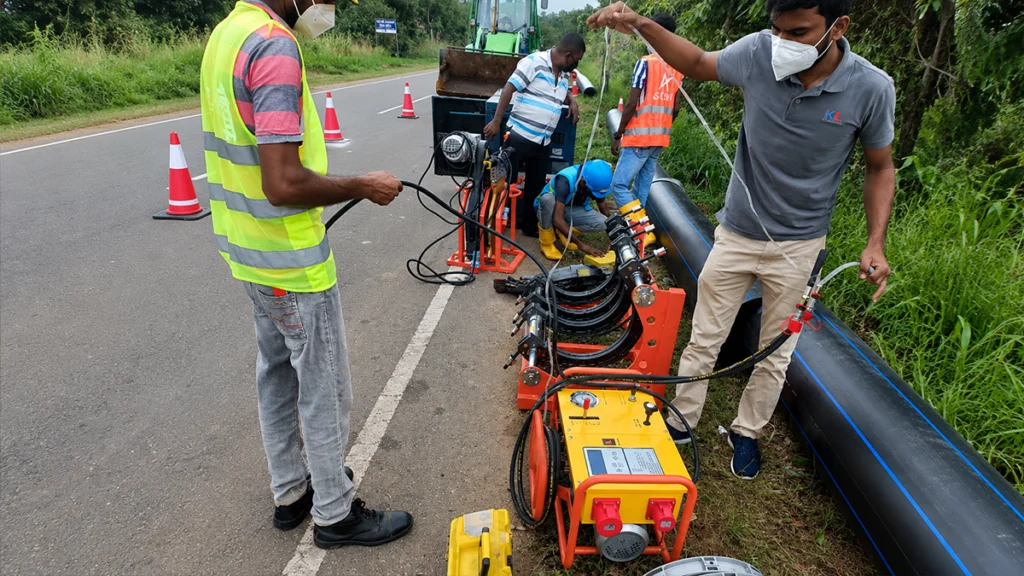
Fusing massive pipes takes an exponential amount of clamping force and heat energy. Consider a butt fusion welding machine built for 1200 mm pipes. It has to withstand crushing hydraulic pressure without the chassis bending even a fraction of a millimeter. To pull that off, manufacturers have to use heavier gauge metals, oversized hydraulic cylinders, and massive heating elements. Scaling up these raw materials and the structural engineering naturally drives up the final price tag for heavy-duty HDPE pipe welding.
Why do power, pressure control, and heating plate size matter?
Electrical and hydraulic specs dictate how fast—and how reliably—you can weld. Take a standard 250 mm HDPE pipe welding machine, for example. It needs a 2.1 kW heating plate, a 1.36 kW milling cutter, and a 0.75 kW hydraulic station just to function properly. Upgrading those power ratings speeds up the heat soak times, but it also inflates component costs. Then there is pressure control. Dialing in exact forces between 0 and 6.3 MPa requires sophisticated hydraulic valves and high-end sensors. That level of precision costs significantly more than slapping on a basic manual relief valve.
What role do frame strength, clamping accuracy, and temperature stability play?
A solid weld lives and dies by perfect alignment and even heat. High-end butt fusion machines rely on ZL104 aluminum frames to stop torsion dead in its tracks, even under maximum hydraulic load. This ensures the pipe ends meet perfectly, with zero angular deflection. Add to that premium PTFE-coated heating plates equipped with multi-zone temperature controls. These systems work tirelessly to maintain a strict ±5°C differential across the entire surface. Naturally, engineering precision at this level demands a higher budget than throwing together a basic steel frame and a single-element heater.
How Do Machine Type and Automation Level Change the Price?
Manual vs hydraulic butt fusion machine: which is cheaper and why?
If you are looking strictly at upfront costs, manual units win easily. They are cheaper because they strip away the complex stuff—no electric hydraulic pumps, no pressure sensors, and no motorized controls. You rely entirely on your operator’s physical leverage to hit the right fusion pressure. But here is the catch: once you start working with pipes larger than 160 mm, hydraulic butt fusion welding machines become mandatory. Human muscle simply cannot generate the drag and interfacial pressures required by international welding codes.
When is CNC or data-logging automation worth the extra cost?
Yes, CNC automatic butt fusion machines hit your wallet hard initially. But look at a large-scale, heavily regulated project, and the ROI becomes crystal clear. Spending the extra money on an automatic butt fusion machine makes perfect sense when it saves you $20,000 to $30,000 on a six-month infrastructure job. How? By slashing cycle times, completely wiping out manual data entry errors, and preventing the massive rework costs caused by a tired operator applying inconsistent pressure.
Which type is best for contractors, distributors, and plant operators?
It all depends on your daily grind. Independent contractors doing residential or light commercial repairs usually get the best ROI from manual or basic hydraulic setups. Equipment distributors, on the other hand, need to stock a bit of everything, though mid-tier hydraulic butt fusion welding machines will always be their highest volume sellers. But for industrial plant operators, utility companies, and municipal contractors? CNC is non-negotiable. The legal and financial liabilities of undocumented welds easily justify paying a premium for automated traceability.
Get detailed specs and custom configuration options
Request Technical SpecificationsWhat Accessories and Configuration Options Raise the Final Quote?
Are heater plates, trimmers, and inserts included in the base price?
Usually, a standard factory quote covers the essentials: the main clamping frame, the hydraulic station, the electric trimmer (milling cutter), and the heating plate. Most reputable manufacturers will also toss in a basic set of reducing inserts for the HDPE pipe jointing machine’s stated range. But do not take this for granted. Some aggressive suppliers will quote a bare-bones HDPE pipe welding machine just to look cheap, only to nickel-and-dime you later for the inserts you actually need to weld smaller pipes. Always verify what is in the box.
Do generator compatibility, transport cases, and spare kits add cost?
Working in the field means you need mobility and independent power. If you are running off dirty site generators, you will likely need specialized voltage regulators to protect your pipe fusion machine’s electronics—and that costs extra. The same goes for heavy-duty wooden or aluminum transport cases designed to protect your delicate PTFE plates and milling cutters during transit; they are almost always optional add-ons. Throw in a comprehensive spare parts kit featuring replacement hydraulic seals, thermocouple sensors, and high-speed carbon steel blades, and your initial invoice will definitely creep up.
Which optional features are useful and which are unnecessary for standard jobs?
Some upgrades are worth every penny. Data loggers for ISO 12176 compliance, special liners for flange welding, and automatic pop-up devices for the hot plate ensure your changeover times are dead accurate. If you are handling large-diameter pipes, heavy-duty pipe rollers and moving trailers are lifesavers that drastically reduce drag pressure. On the flip side, skip the highly specialized layer liners or extreme-weather thermal tents unless your environment specifically demands them. For standard contractors in normal climates, they are just a waste of money.
How Do Brand, Material Quality, and Certification Affect Cost?
Why do welding frame and hydraulic component quality change cost?
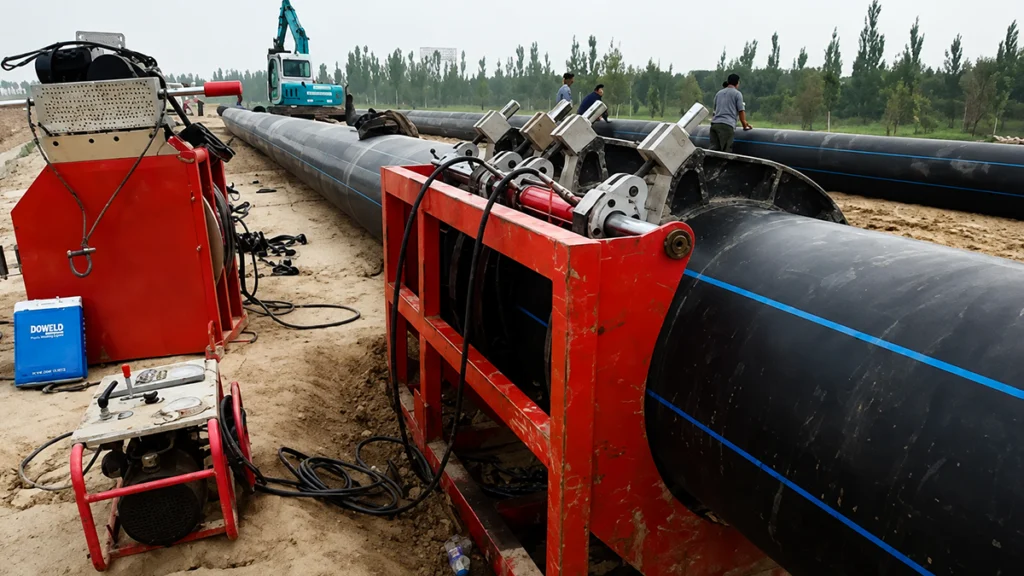
A pipe fusion machine is only as tough as its weakest part. Premium models use imported hydraulic seals capable of surviving sustained 6.3 MPa loads without blowing out. They feature high-speed carbon steel milling blades that stay razor-sharp cut after cut, and thick PTFE coatings that stop molten HDPE from sticking. Swapping these out for cheaper, domestic alternatives drops the manufacturing cost, sure. But it also skyrockets your chances of suffering a catastrophic equipment failure right in the middle of a critical project.
How do CE, ISO, or other certifications influence pricing?
Do not mistake compliance for mere paperwork. Certifications demand serious structural engineering and massive quality assurance overhead. Pipe fusion machines carrying ISO 12176, DVS 2207, or ASTM F2620 badges have survived brutal destructive testing and strict calibration checks before they ever hit the shipping dock. CE certification requires specific electrical shielding and bulletproof emergency stop systems. Suppliers have to price their certified equipment higher simply to cover the ongoing costs of third-party audits and elite quality control.
Is a premium brand always better than a mid-range supplier?
Top-tier names like McElroy, Georg Fischer, and Ritmo definitely command top-of-market prices. We are talking $45,000 to $90,000 for their high-end models, justified by proprietary software, advanced CNC integration, and massive global support networks. But let’s be real: not every buyer needs a Ferrari. Mid-range manufacturers like MM-Tech, Welping, and Bingo strike a fantastic balance. They deliver incredibly reliable, DVS 2207-compliant hydraulic butt fusion welding machines that get the job done flawlessly—at a fraction of the premium brand price tag.
What Hidden Costs Should Buyers Include Beyond the Machine Price?
How much do shipping, customs, and taxes add to landed cost?
The price on the factory quote is almost never what you actually pay in the end. Heavy-duty hydraulic chassis and massive aluminum clamps weigh a ton, meaning ocean freight will heavily impact your final landed cost. You need to look closely at the difference between FOB (Free on Board) and CIF (Cost, Insurance, and Freight) terms. By the time you factor in your destination port, import tariffs, customs clearance, and domestic heavy-haul transport, you can easily add 15% to 30% to the butt fusion machine’s initial sticker price.
What are the costs of training, maintenance, and spare parts?
You cannot just hand a high-pressure hydraulic welder to a rookie and expect perfect results. Buyers need to carve out a budget for formal operator training so their crews actually understand heat soak times, drag pressures, and cooling cycles. Then there is routine maintenance. You have to periodically recalibrate pressure gauges and temperature sensors, often requiring third-party certification to stay compliant. Don’t forget to budget for consumables, either—replacement milling blades and fresh PTFE resurfacing are just part of the annual cost of doing business.
How should buyers budget for warranty support and service response?
Saving a few bucks upfront means nothing if the HDPE pipe jointing machine breaks down and brings your entire pipeline project to a grinding halt. You have to weigh the true financial value of the manufacturer’s warranty. Paying a bit more for a comprehensive 24-month warranty is a smart move that limits your exposure to blown hydraulic pumps or fried electrical boards. Make sure you budget for local service responses or keep a localized stash of critical spare parts. Minimizing downtime is the name of the game.
How to Compare Butt Fusion Machine Quotes the Right Way
What should be checked in a technical comparison table?
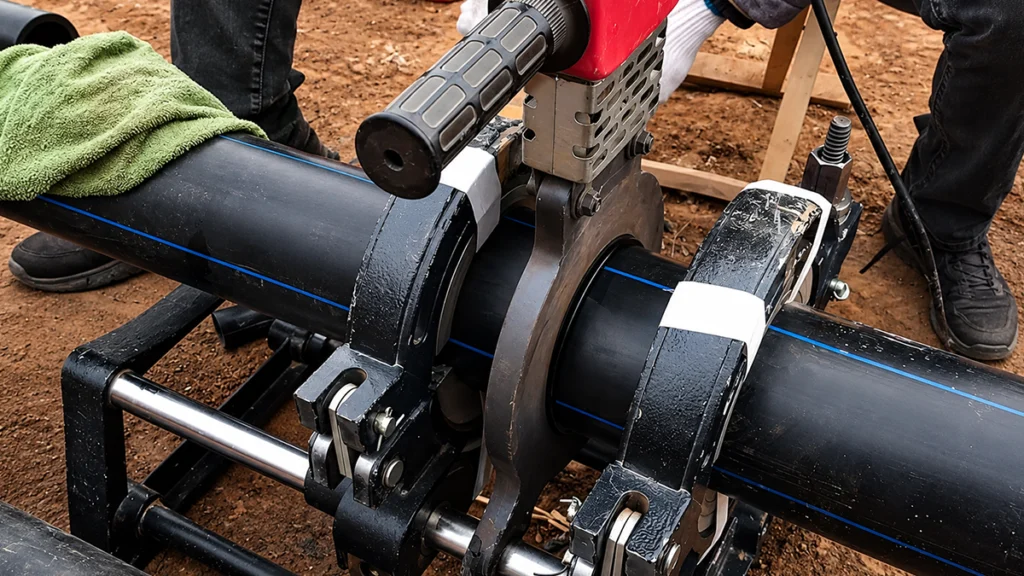
When staring down an HDPE butt fusion machine quote, you have to ignore the headline price for a moment and look at the hard technical parameters.
Put the specs side-by-side and cross-reference these key metrics:
- Pressure control range: It absolutely must support 0 to 6.3 MPa.
- Temperature accuracy: Look for a guaranteed ±5°C surface differential.
- Power consumption: Double-check the generator sizing requirements for both the heater and the hydraulic station.
- Frame architecture: A 4-column chassis design provides vastly superior alignment stability for heavy pipes compared to a basic 2-column setup.
Which quote details should be confirmed before ordering?
Never assume anything is thrown in for free. Ask point-blank if the quoted price includes the complete set of reducing inserts for your specific pipe range. Find out if the data logger is fully integrated, a retrofitted add-on, or sold separately. Clarify whether transport cases come standard. Finally, lock down the exact electrical specs—like 220V single-phase versus 380V three-phase—so you know for a fact the butt fusion welding machine will actually run on your local job site power.
How can buyers compare total value, not just unit price?
Smart procurement teams don’t just look at the unit price; they calculate the Total Cost of Ownership (TCO) per welded joint. Take the total cost of the HDPE pipe welding machine (shipping, taxes, and estimated maintenance included), and divide it by the equipment’s expected lifespan and welding speed. Suddenly, that expensive CNC automatic butt fusion machine might show a much lower TCO per joint than a cheap manual unit. Why? Because it works faster, requires fewer guys on the crew, and completely eliminates the financial nightmare of failed, leaking joints.
How to Choose the Right Butt Fusion Machine for Your Budget and Application
Which machine is suitable for contractors, municipal projects, or fabrication shops?
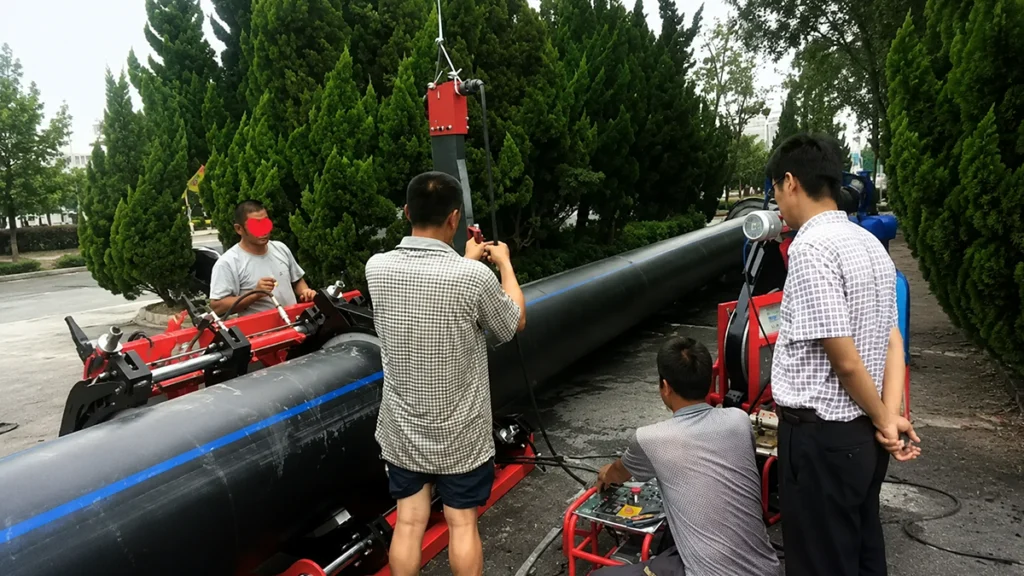
Smart procurement starts with matching the pipe fusion machine to the application. Independent contractors running non-critical water lines do best with semi-automatic hydraulic butt fusion machines—they offer solid speed without forcing you to pay for complex software. Municipal utility crews handling highly volatile gas lines? They need fully automatic CNC machines to guarantee strict parameter adherence and flawless data logging. Fabrication shops, meanwhile, operate in clean, indoor environments and usually lean toward specialized workshop fitting machines rather than heavy, rugged trench welders.
When should a buyer spend more for higher accuracy or larger capacity?
Open up the checkbook for higher accuracy the second your project specs demand 100% weld traceability or strict adherence to codes like ASTM F2620. Also, think about tomorrow. If your project pipeline shows growth, invest in larger capacity now. Buying a 315 mm butt fusion machine today is a mistake if you know next year’s contracts will require 450 mm pipes. Over-sizing your machine capacity just a bit gives you massive operational flexibility down the road.
What is the safest budget choice for first-time buyers?
If you are a first-time buyer trying to figure out how to choose a butt fusion machine without blowing your budget, a mid-range hydraulic unit is your safest bet. It saves you from the physical exhaustion and alignment risks of a manual butt fusion machine, while letting you dodge the steep learning curve and massive capital cost of a CNC model. Stick with a well-built hydraulic unit from a solid mid-tier brand. You will get reliable, semi-automatic control that easily handles standard contractor applications while keeping your welds fully compliant.
What Is the Best Way to Request a Quote and Avoid Overpaying?
What information should be included in a quotation request?
Send a vague inquiry, and you will get a useless quote. To lock in precise pricing, you have to hand the supplier your exact operational parameters. Your RFQ needs to lay out the minimum and maximum pipe diameters (say, DN90 to DN315), the specific pipe materials, and the SDR ratings (which dictate your clamping pressure). Don’t forget to list your local electrical voltages and any mandatory certifications like CE, ISO, or DVS. Throwing in your project timeline also helps the supplier give you a realistic freight and delivery schedule.
Which questions should be asked before confirming an order?
Before you wire a single cent, make sure the supplier is credible. Ask them for detailed video proof of factory sample testing, or better yet, request a live video call showing a dummy weld demonstration. Probe them on their components: Are those hydraulic seals actually imported? Is the heating plate coated in real PTFE? Drill down into the warranty process, too, and demand explicit guarantees that spare parts will remain available for at least the next five years.
How can buyers negotiate a better price without sacrificing quality?
When you negotiate, focus on terms, not on stripping away material quality. If you are doing a bulk upgrade, try negotiating a staggered delivery schedule—maybe order 20 butt fusion machines but only take 5 per quarter. This keeps your cash flow smooth and cuts down on warehouse space, all while securing a big contract for the manufacturer. If they won’t budge on the sticker price, pivot. Ask them to throw in spare parts kits or an extended warranty instead of a direct discount.
FAQ
Q1: What is the average butt fusion machine price?
The average cost swings wildly depending on the machine’s size and how automated it is. Manual models for smaller pipes usually sit between $300 and $1,000. Step up to standard hydraulic units for medium pipes, and you are looking at $2,000 to $8,000. If you need a fully automated CNC powerhouse for industrial applications, expect to pay anywhere from $15,000 to well over $90,000 for top-tier global brands.
Q2: Why are hydraulic butt fusion machines more expensive than manual models?
Hydraulic units carry a higher price tag because they are packed with complex motorized parts. You are paying for electric hydraulic pumps, precision control valves, and pressure sensors. These components take human muscle out of the equation, allowing the equipment to generate and hold the massive, precise interfacial pressures required to fuse large HDPE pipes safely.
Q3: What factors affect the price of a butt fusion welding machine?
The biggest price drivers are the pipe diameter capacity, the automation level (manual, hydraulic, or CNC), and the actual quality of the raw materials—like using premium ZL104 aluminum for the frame. Other things that push the price up include highly precise temperature controls, built-in data loggers, and mandatory factory certifications like CE or ISO 12176.
Q4: Does pipe diameter change the cost of a butt fusion machine?
Absolutely. Pipe size is one of the most significant cost factors. Equipment built for massive pipes (think 630 mm or 1200 mm) needs a heavy-duty metal chassis to prevent bending under extreme pressure. They also demand oversized heating plates and massive hydraulic cylinders, all of which drive up the material and manufacturing costs tremendously.
Q5: What hidden costs should I expect when buying a butt fusion machine?
Never assume the factory quote is your final bill. You have to budget for ocean freight and domestic transport, which get expensive quickly given the heavy weight of the machinery. You also need to account for import duties, customs fees, operator training, routine calibration, and the ongoing cost of consumables like milling blades and PTFE coatings.
Q6: How do I compare butt fusion machine quotes from different suppliers?
Look right past the bottom-line price. You need to compare the technical specs side-by-side. Check the pressure control range (it should hit 0-6.3 MPa), temperature stability (±5°C), and the frame build (4-column is vastly superior to 2-column). Also, comb through the quote to see if reducing inserts, data loggers, and transport cases are included or priced as hidden extras.
Q7: Is a more expensive butt fusion machine always better?
Not always. Ultra-premium brands offer incredible CNC tech and global support, but for a standard contractor, that is often overkill. Mid-range hydraulic machines frequently deliver outstanding, DVS-compliant welds for a fraction of the cost. The “best” machine is simply the one that aligns perfectly with your specific project demands and traceability requirements.
Q8: What details should I provide to get an accurate butt fusion machine quote?
To get a quote you can actually trust, give the supplier your precise pipe diameter range (for example, 160 mm to 315 mm). Tell them the pipe material, the SDR rating, and your local electrical voltage needs. Finally, list any mandatory certifications (like ASTM or ISO) and state clearly whether you require data logging capabilities.
Conclusion
Choosing the right butt fusion machine requires balancing pipe size, automation level, technical specifications, and total ownership cost. Manual machines can be suitable for smaller jobs, while hydraulic and CNC models are better suited to larger-diameter pipelines and projects requiring more consistent process control.
Buyers should look beyond the initial machine price and consider shipping, calibration, maintenance, spare parts, operator training, and long-term service support. Matching machine capacity, pressure control, temperature accuracy, and data logging features to actual project requirements can help improve welding consistency while avoiding unnecessary equipment costs.
For long-term use, prioritize reliable construction, accurate control systems, and supplier support rather than selecting equipment based on price alone.
Let our experts help you choose the right equipment for your project
Contact Our Engineering Team