
Butt Fusion Machine: Rent vs Buy for Pipeline Projects
Table of Contents
Introduction
Operating within the strict ISO 21307 parameters of 200–230°C, reliable butt fusion machines are the non-negotiable backbone of pipeline integrity. Yet, securing them for a rush job remains a logistical nightmare for most contractors. When you are staring down a strict handover deadline on a DN630 project, a single joint failure caused by equipment misalignment or a wavering heater plate can trigger upwards of $15,000 in rework costs and penalties. This pressure forces procurement managers into a tough corner: choose the immediate convenience of a rental or play the long game with asset ownership to guarantee control.
This analysis unpacks the nuances of the rental market, distinguishing the critical technical gaps between “dry hire” and “wet hire” models. We will also outline the specific inspection criteria necessary to ensure rented gear actually meets DVS 2207 standards. Furthermore, we will identify the economic tipping point where purchasing factory-direct equipment yields a higher ROI than sinking money into cumulative rental fees. By the end, you will have a solid framework to decide whether a short-term rental or a strategic acquisition from Ekberg Welding is the smarter play for your infrastructure requirements—and how to sidestep costly specification errors.

The Landscape of Butt Fusion Machine Rentals and Operator Services
The market for pipeline welding equipment splits sharply into two service models: general equipment yards and specialized pipeline solutions providers. Knowing the capabilities—and the limits—of each is the first step in securing the right tools for high-stakes infrastructure work.
Research major types of rental providers (General Equipment vs. Specialized Pipeline Specialists)
General equipment rental companies typically stock a chaotic inventory ranging from excavators to portable generators. While they may list butt fusion machines in their catalog, these units are often treated like commodity hardware. The maintenance history regarding hydraulic pressure calibration and heater plate thermostatic control is frequently a black box. For a contractor welding DN800 HDPE pipe, a hydraulic butt fusion machine that has gathered dust in a general yard for six months without calibration is unlikely to hold the specific 0.15 MPa interfacial pressure required for a compliant weld.
Specialized pipeline rental agencies, by contrast, live and breathe fusion technology. These providers understand the critical difference between SDR 11 and SDR 17 requirements and generally maintain their fleets to a higher standard. However, this expertise commands a premium price. Availability for specific large-diameter machines (710mm–1000mm) is often scarce, creating lead times that can wreck tight project schedules. Moreover, even specialists may not stock the latest CNC-automated units, forcing contractors to rely on older, manual hydraulic systems that leave the door open for operator error.
Analyze the “Operator Support” model: Certified technicians vs. dry hire (machine only)
The industry draws a line between “dry hire” (machine only) and “wet hire” (machine plus operator).
- Dry Hire: This puts the bullseye on your back. You get the hardware, but your crew must hold valid ISO 12176-2 certifications to run it. If the butt fusion welding machine glitches or the data logger fails to capture a weld, the liability sits squarely with your team.
- Wet Hire (Operator Support): This model brings in a technician who is theoretically an expert on that specific unit. While this eases the training burden, it drastically spikes your daily burn rate. Additionally, the “operator” provided is often a generalist, not necessarily a metallurgist or specialist in the specific cooling cycles of the material you are installing (e.g., PP-RCT vs. HDPE).
Investigate the risks of renting: Availability, maintenance history, and calibration validity (ISO 21307 compliance)
The hidden killer in the rental market is compliance. International standards like ISO 21307 and DVS 2207 are unforgiving when it comes to parameter deviations. A rental butt fusion machine might look functional—the clamps slide, and the heater glows—but if the hydraulic system has internal leaks, it cannot maintain the drag pressure plus bead build-up pressure consistently.
If a rental unit lacks a current, valid calibration certificate for its pressure gauges and temperature sensors, the resulting weld data reports may be useless to project owners or municipal inspectors. We have seen entire pipeline sections rejected because the rental equipment’s data logger was out of spec, invalidating the quality assurance record for every single joint.
Compare the logistical challenges of rental mobilization vs. owning portable Ekberg butt fusion units
Mobilization is a massive cost center. A 1000mm hydraulic butt fusion machine weighs roughly 2600 kg. Coordinating freight to a remote site, offloading it, and setting it up can run between $500 and $1,500 per movement. If the machine arrives damaged or with the wrong inserts, the project grinds to a halt while you wait for a replacement.
Owning an Ekberg portable unit flips this dynamic. Contractors who own their fleet control the logistics. The butt fusion machine is pre-configured with the correct inserts and tested before it ever leaves your yard. There is no waiting for a rental depot to “prep” a unit. For recurring projects, eliminating mobilization coordination and guaranteeing immediate availability often outweighs the perceived flexibility of renting.
Rent vs. Buy: A Strategic Cost-Benefit Analysis for Contractors
For project managers, the decision often boils down to the ledger. However, a superficial comparison of weekly rental rates against a purchase price ignores the broader economic reality of asset utilization and project duration.
Calculate the break-even point: Compare rental rates over 3-6 months vs. the acquisition cost of a new Ekberg hydraulic butt fusion machine
Let’s look at the hard numbers. The rental rate for a large-diameter (1000mm+) butt fusion machine can range from $800 to $1,500 per week, and that excludes mobilization.
- Rental Scenario: A 4-month (16-week) project at $1,000/week = $16,000 in rental fees.
- Purchase Scenario: A factory-direct Ekberg 630mm hydraulic butt fusion machine may have a capital cost in the range of $8,000 – $12,000 depending on automation features.
In this scenario, the break-even point sits at roughly 10 to 12 weeks. If the project extends beyond three months—or if you land a second project immediately after—purchasing becomes significantly more profitable. The capital outlay for an Ekberg butt fusion machine is often lower than the cumulative rental cost of a single medium-duration project, essentially giving you a “free” butt fusion welding machine for all subsequent jobs.
Evaluate asset value retention and depreciation for HDPE welding equipment in the current market
High-quality industrial machinery retains value. Unlike consumer electronics, a well-maintained hydraulic butt fusion machine has a long service life. Ekberg HDPE pipe welding machines, built with robust 4-column chassis and serviceable hydraulic components, typically retain 40-60% of their value after three years of service.
When renting, 100% of the expenditure is a sunk cost. When purchasing, you build equity in an asset that can be sold on the secondary market or used as trade-in leverage for upgrading to CNC models later. This residual value fundamentally shifts the ROI calculation in favor of ownership.
Assess the hidden costs of rentals: Mobilization fees, damage waivers, and standby charges
Rental contracts are notorious for ancillary fees that inflate the final invoice.
- Damage Waivers: Often 10-15% of the rental rate, charged regardless of whether damage occurs.
- Standby Charges: If the project is delayed due to weather or permit issues, the rental meter keeps ticking. You pay for the butt fusion machine even when it sits idle.
- Cleaning/Refurbishment Fees: Returning a butt fusion welding machine with site mud or minor scratches often triggers excessive refurbishment charges.
Owning the equipment eliminates these variable costs. If an owned butt fusion machine sits idle for a week due to rain, the direct cost is zero (excluding opportunity cost), whereas a rental continues to drain the budget.
Analyze the tax advantages and asset capitalization benefits of purchasing industrial machinery for utility companies
For many businesses, purchasing capital equipment offers distinct tax advantages. In jurisdictions like the United States (Section 179) and parts of Europe, the full purchase price of industrial equipment can often be deducted from gross income in the year of purchase.
This means purchasing a $12,000 butt fusion machine could result in a significant reduction in corporate tax liability, effectively subsidizing the acquisition cost. Rental payments are operating expenses (OPEX), which deduct differently. For utility companies and large contractors, capitalizing the asset (CAPEX) improves the balance sheet and increases the company’s tangible valuation.
Technical Evaluation: Criteria for Selecting High-Performance Welding Machines
Whether you rent or buy, the machine must perform to spec. A bargain rental or a cheap purchase is worthless if the welds fail pressure testing.
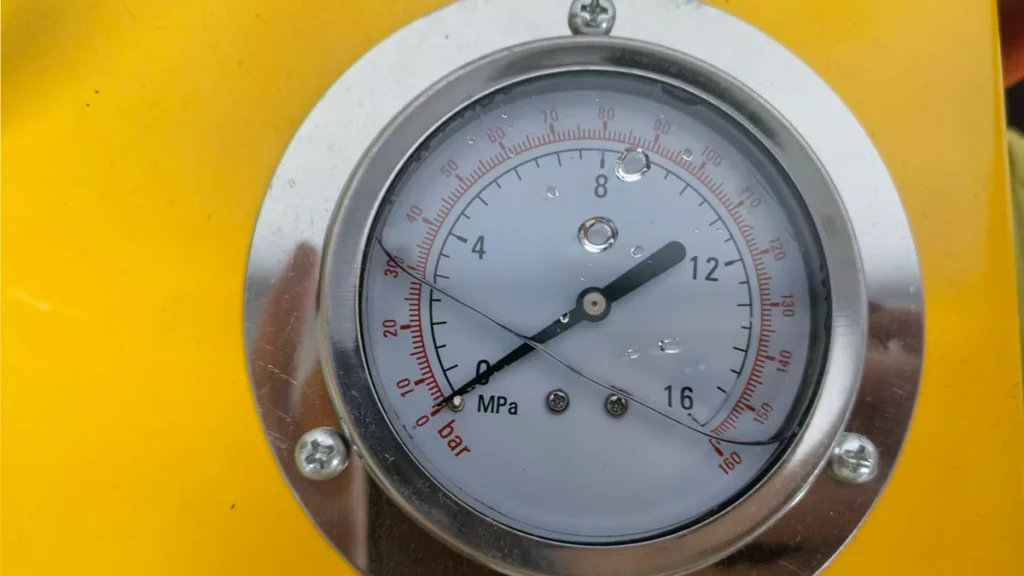
Define critical pressure parameters: Ensure hydraulic systems can maintain stable drag and bead build-up pressure
The heart of any butt fusion machine is its hydraulic system. It must be capable of delivering and holding precise pressure. For large diameter pipes (DN630 and above), the drag pressure—the force required to overcome the friction of the carriage moving the pipe—can be significant.
A high-performance machine must allow the operator to isolate drag pressure and add it to the theoretical fusion pressure. The hydraulic station must maintain this total pressure (e.g., 0.15 MPa interfacial pressure + drag) with a variance of less than ±5% during the cooling phase. Ekberg butt fusion machines utilize high-grade hydraulic seals and accumulators to ensure that once the pressure is locked, it stays locked, preventing the formation of voids in the fusion zone.
Explain the importance of Heater Plate homogeneity: Research temperature consistency requirements (200-230°C range) per DVS 2207 standards
Temperature consistency is non-negotiable. Standard DVS 2207 and ISO 21307 protocols require the heating plate to maintain a surface temperature between 200°C and 230°C (for PE100). More importantly, the temperature distribution must be uniform.
Cheap or poorly maintained rental units often develop “cold spots” on the heater plate due to failing internal elements. If one section of the plate is 220°C and another is 190°C, the pipe face will not melt uniformly, leading to brittle joints. Ekberg heater plates are engineered with high-density heating elements and rigorous thermal mapping to ensure homogeneity across the entire surface area, guaranteeing a uniform melt pool.
Compare Manual, Semi-Automatic, and CNC Butt Fusion Machines for data logging and error reduction
| Feature | Manual Machine | Semi-Automatic | CNC / Fully Automatic |
|---|---|---|---|
| Pressure Control | Manual Valve Adjustment | Hydraulic Assist | Computer Controlled |
| Data Logging | Manual Paper Log | Integrated / External | Integrated & Encrypted |
| Error Risk | High (Human Variable) | Medium | Low (Process Lock-out) |
| Cycle Time | Slower | Standard | Fast (Optimized) |
For critical infrastructure, CNC automatic butt fusion machines offer the highest security. They automate the welding phases (bead up, heat soak, changeover, fusion, cooling). If the operator tries to open the clamps before the cooling time is finished, the machine physically prevents it. This level of process control is rarely available in standard rental fleets but is a standard option in Ekberg’s lineup.
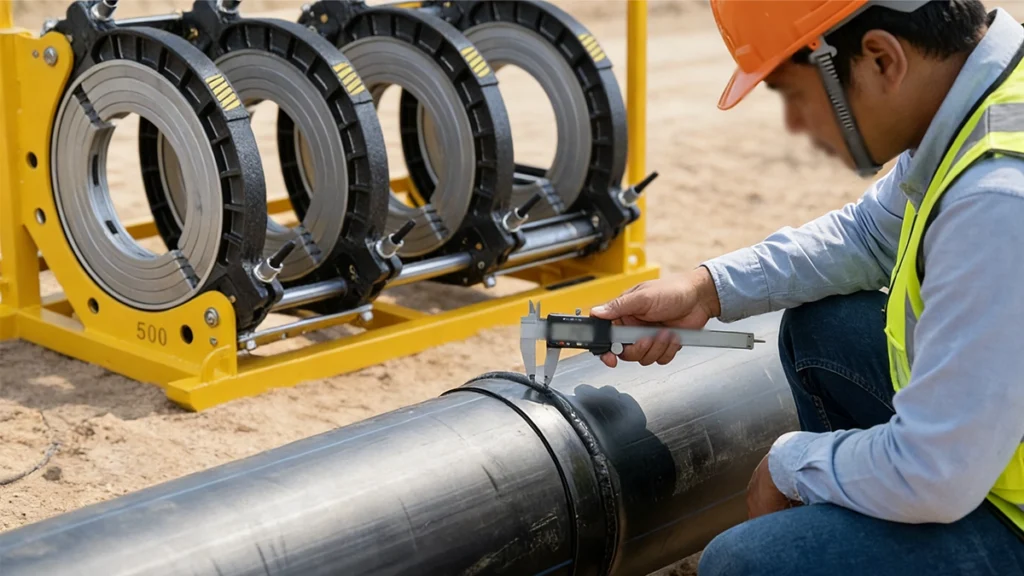
Inspecting chassis rigidity and clamp alignment: Why structural integrity matters for large diameter (DN 630+) pipe fusion
When welding DN1000 pipe with thick walls (SDR 11 or SDR 9), the forces involved are immense. A lightweight or fatigued rental chassis will flex under high pressure. This flexing causes “hi-lo” misalignment, where the two pipe ends do not meet perfectly flush.
Ekberg butt fusion machines utilize a heavy-duty 4-column chassis design. This structural rigidity ensures that even at maximum fusion pressure (up to 16 MPa hydraulic system pressure), the clamps remain perfectly aligned. This prevents stepped joints, which are stress concentrators and common failure points in pipeline systems.
The Critical Role of Operator Competence and Data Logging Technology
Even the best butt fusion machine cannot compensate for gross negligence, but modern technology can prevent most common errors.
Detail the requirements for Operator Certification (ISO 12176-2) and why support services must provide proof of qualification
If you opt for a rental with operator support, verify their credentials. ISO 12176-2 is the global standard for fusion operator qualification. A valid certificate proves the operator understands the rheology of plastics, the importance of cleanliness, and the specific fusion procedures.
Demand to see the physical card or digital certificate. A “factory trained” label is not the same as an ISO certification. When you purchase an Ekberg butt fusion machine, we provide comprehensive training materials to help your team prepare for these certifications, ensuring your internal workforce is as capable as any expensive rental consultant.
Explain how modern Ekberg machines with integrated Data Loggers replace the need for third-party inspection services
In the past, third-party inspectors were required to watch every weld. Today, Ekberg butt fusion machines with integrated data loggers perform this watchdog function. The system records:
- Time and Date
- Ambient Temperature
- Heater Plate Temperature
- Drag, Fusion, and Cooling Pressures
- Duration of each phase
This data is encrypted and cannot be manipulated by the operator. It serves as an undeniable record of quality, often eliminating the need for constant third-party supervision and speeding up project sign-offs.
Research common welding defects caused by operator error (cold joints, excessive pressure) and how automated machines prevent them
Common defects include:
1. Cold Joints: Caused by long changeover times (taking too long to remove the heater and bring pipe ends together). CNC automatic butt fusion machines automate the carriage movement, ensuring changeover meets the strict time limits (e.g., <10 seconds for certain diameters).
2. Excessive Pressure: Applying too much force during the heat soak phase squeezes molten material out of the joint. Ekberg’s hydraulic systems switch to “drag pressure only” automatically during the soak phase to prevent this.
Discuss the workflow of generating welding reports for project handover and QA/QC compliance
At the end of a shift, the Ekberg data logger allows for simple USB export of all welding records. These can be converted into PDF reports that show the pressure graphs for every joint. For contractors, handing over a USB drive with 100% verified weld data is the fastest way to get paid and release retention bonds.
Ekberg Welding Manufacturing Excellence: Built for Durability and Performance
Why do savvy contractors prefer buying Ekberg over renting generic units? It comes down to manufacturing pedigree.
Describe Ekberg’s factory capabilities: CNC machining of machine bodies for superior alignment and durability under rental fleet conditions
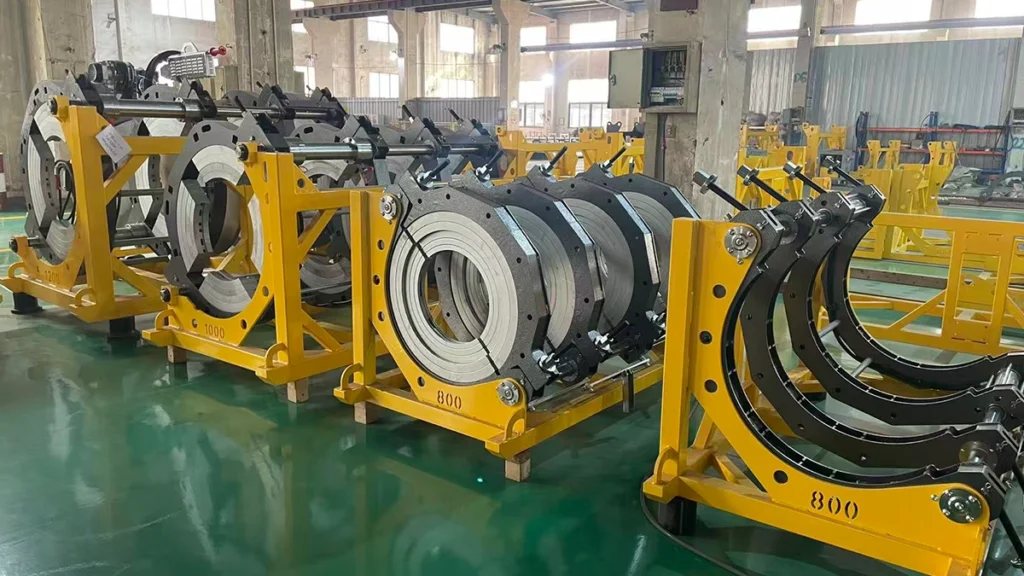
We don’t just assemble parts; we manufacture precision instruments. Our machine bodies are processed using large-scale CNC milling centers. This ensures that the four columns are perfectly parallel and the clamp bores are concentric to within microscopic tolerances. This build quality means an Ekberg machine can survive the rough handling of a job site—or a rental fleet—and still perform precise welds year after year.
Explain the Quality Control (QC) process: rigorous pressure testing and heater element calibration before shipping
Every machine that leaves our factory undergoes a rigorous QC protocol.
- Pressure Hold Test: The hydraulic system is pressurized to max capacity and left to stand to ensure zero leaks in seals or valves.
- Thermal Mapping: We use thermal imaging to verify that the heating plate has no cold spots and maintains ±3°C accuracy across the surface.
- Functional Welding: We perform test cycles to calibrate the drag pressure sensors and carriage movement speed.
Detail the global support network: Spare parts availability and technical training for distributors and fleet owners
A machine is only useful if it’s running. Rental companies often struggle to source parts for their mixed fleets. Ekberg maintains a massive inventory of spare parts—from planer blades to hydraulic seals—ready for global shipment. We support our buyers with video tutorials, remote diagnostics, and technical manuals that empower your maintenance team to keep the equipment in “rental-ready” condition at all times.
Highlight certifications: CE, ISO 9001, and compliance with international welding standards (ASTM F2620, ISO 21307)
Our commitment to quality is documented. Ekberg facilities are ISO 9001 certified, and our machines carry the CE mark, indicating compliance with European safety, health, and environmental protection requirements. Our software is pre-programmed to support ASTM F2620 (North American), ISO 21307 (International), and DVS 2207 (German) welding standards, making them universally deployable regardless of where your next project is located.
Frequently Asked Questions
Q1: What are the key differences between a dry rental and a wet rental (with operator) for butt fusion machines?
A dry rental provides only the equipment, placing the responsibility for operation, insurance, and weld quality on the contractor. A wet rental includes a certified technician to operate the machine. While wet rentals reduce training requirements, they are significantly more expensive and limit your team’s flexibility. Owning an automated Ekberg machine often bridges this gap by providing “expert-level” process control without the high daily cost of an external technician.
Q2: How does the cost of purchasing an Ekberg butt fusion machine compare to a 3-month rental contract?
For most pipe diameters (e.g., DN315–DN630), the purchase price of a new Ekberg machine is roughly equivalent to 10–14 weeks of rental fees (including mobilization). If your project lasts 3 months or more, buying is mathematically superior. You finish the project owning a valuable asset rather than having nothing to show for your expenditure but rental receipts.
Q3: Can Ekberg Welding provide operator training if we choose to buy instead of rent?
Yes. We believe in empowering our clients. Ekberg provides comprehensive training resources, including video tutorials, operation manuals, and remote technical guidance. For fleet buyers, we can arrange specific training sessions to ensure your team is proficient in machine operation, basic maintenance, and data logging procedures, helping them achieve ISO certification standards faster.
Q4: What maintenance is required to keep a butt fusion machine in “rental-ready” condition?
Routine maintenance is straightforward: keep the hydraulic oil clean and at the correct level, ensure the planer blades are sharp, and keep the heating plate surface clean and scratch-free. Periodically, the calibration of the pressure gauge and temperature sensor should be verified. Ekberg machines are designed with accessible service points to make this maintenance easy for on-site crews.
Q5: Does Ekberg offer buy-back programs or financing for contractors transitioning from renting to owning?
We work closely with our partners to facilitate the transition to ownership. While specific financing terms depend on the region and distributor, the high resale value of Ekberg equipment serves as excellent collateral. Many contractors find that the savings from their first project fully capitalize the machine, allowing them to bid more competitively on future jobs since they no longer need to budget for rental fees.
Conclusion
Deciding between renting and buying butt fusion machines isn’t just a financial calculation; it is a strategic move regarding quality control and project autonomy. While rental companies with operator support offer a stop-gap for short-term needs, they introduce risks regarding equipment availability, calibration history, and cost overruns from standby charges.
For contractors focused on long-term growth and compliance, owning high-performance equipment like Ekberg’s hydraulic or CNC fusion series offers a superior ROI. With break-even points as short as 12 weeks, the math favors acquisition. More importantly, owning your gear guarantees that you control the technical specifications—ensuring every joint meets the rigorous pressure and temperature standards demanded by modern infrastructure projects.
Ready to stop renting and start building equity in your fleet?
Contact Ekberg Welding today for a factory-direct quote and a customized ROI analysis. Let us show you how affordable high-performance, compliant fusion technology can be.