
Global Guide to HDPE Pipe Welding Machine 2026
Table of Contents
Definition and Core Value of Automatic Pipe Welding Machine
The introduction of the HDPE pipe welding machine fundamentally transformed pipeline construction. It strips away the unpredictable nature of human execution, replacing it with mechanized, data-driven precision. By locking vital parameters—temperature, travel speed, wire feed rate, and pressure—directly into a programmable controller, these systems wipe out the inconsistencies that plague manual welding. What is the real payoff? Highly repeatable, flawless joints. Projects finish faster. Operators stay safer.
Today’s industrial equipment handles an enormous range of applications. You will find butt fusion machines capable of fusing DN15 micro-tubing just as easily as they tackle DN2000+ heavy-duty transmission lines. Naturally, the technology adapts to the material at hand. When working with thermoplastic infrastructure like HDPE, PP, or PVDF, CNC automatic butt fusion machines rely on displacement detection and exact thermal control. Metallic pipelines require a different approach. Here, systems deploy advanced arc processes, including TIG (Tungsten Inert Gas), MIG (Metal Inert Gas), and SAW (Submerged Arc Welding). Take operator fatigue out of the equation. Remove skill limitations. The result is a contracting operation that strictly complies with rigorous international pipeline integrity standards.

Core Working Principles: TIG, MIG, and Orbital Technologies
How these butt fusion machines operate depends heavily on the specific process you choose. However, they all share a common thread: a synchronized control system designed to manage the weld pool or fusion zone. Grasping these underlying technologies is an absolute must when specifying equipment for your next build.
- TIG (GTAW) Automation: This method uses a non-consumable tungsten electrode to strike the arc. Operators frequently pair it with a specialized hot or cold wire feeder. Because it delivers unparalleled purity and precision, TIG remains the gold standard for high-pressure oil, gas, and nuclear pipelines.
- MIG (GMAW) Automation: Here, a continuously fed consumable wire acts as both the electrode and the filler metal. Need superior deposition rates and rapid travel speeds? MIG is your go-to choice for thick-walled, large-diameter structural piping.
- Orbital Welding Systems: These setups mechanically rotate the welding head (whether TIG or MIG) a full 360 degrees around a clamped, stationary pipe. As the head moves through flat, vertical, and overhead positions, the controller dynamically tweaks the current, voltage, and wire feed. This keeps the weld pool perfectly consistent, even fighting against gravity.
Across the board, standard execution follows a rigid, logical protocol:
- Step 1: Alignment and Clamping: First, the pipe ends lock into a centralized hydraulic or pneumatic clamping console. Working with HDPE? The system uses a four-clamp sleeve structure to force out any misalignment.
- Step 2: Preparation and Purging: Metal pipes require internal backing gas purging to ward off oxidation. Plastic pipes take a different route, undergoing automated facing via high-speed carbon steel milling cutters.
- Step 3: Automated Execution: The CNC system takes over. For metal applications, the arc strikes and the orbital carriage starts its programmed journey. On the plastic side, an aluminum alloy heating plate engages. The system instantly calculates and applies the precise drag pressure and soak time required.
- Step 4: Cooling and Data Logging: The joint remains under tightly controlled parameters throughout the cooling phase. Meanwhile, the displacement detection system records all telemetry. If premature pressure relief happens, an automatic alarm sounds. Finally, the HDPE pipe welding machine spits out a verifiable joint report.
Factory-direct pricing with technical consultation included
Get Your Free Quote2026 Factory Price List and Cost Breakdown
Smart procurement teams look far past the initial sticker price. You have to understand the total capital requirement. The 2026 industrial automatic pipe welding machine price list shows massive variances. These price swings depend heavily on automation levels, hydraulic capacity, and integrated data-logging capabilities.
Pipe Welding Machine Price Tiers:
- Standard CNC HDPE Fusion Machines (up to 630mm): $5,000 – $15,000 per set.
- Heavy-Duty HDPE Fusion Machines (1000mm – 2000mm+): $3,500 – $60,000, varying based on hydraulic console specifications.
- Automatic Metal Rotary Systems: $15,000 – $85,000.
- High-End Orbital TIG Systems: $25,000 – $150,000+.
Operational Cost Breakdown Module:
- Consumables (Wire/Gas/Tungsten): Expect to spend roughly $5 – $15 per hour of active arc time. For thermoplastic setups, consumable costs barely register—you only need periodic replacements of high-speed carbon steel milling blades.
- Training & Commissioning: Budget around $2,500 – $5,000. This covers vendor-supplied field technicians who spend 3-5 days onsite handling operator certification and equipment calibration.
- Shipping & Duty (FOB/CIF): Ocean freight for a standard LCL (Less than Container Load) wooden crate typically runs between $800 and $2,500, depending on where you are located. Buying in bulk (three or more units) drastically dilutes your per-unit logistics costs.
Get detailed specs and custom configuration options
Request Technical SpecificationsTechnical Specifications and Parameters
Your equipment specifications must perfectly align with your project’s material grades and geometric tolerances. Check the benchmark parameters for industrial-grade systems below.
| Parameter | Metal Welding (Orbital/Rotary) | Thermoplastic Welding (CNC Butt Fusion) |
|---|---|---|
| Pipe Diameter Range | DN15 – DN1200+ (1/2" to 48"+) | 63mm – 630mm+ |
| Wall Thickness | 1.5mm – 40mm | SDR 7.4 – SDR 41 |
| Welding / Fusion Speed | 50 – 800 mm/min | Material & ambient temp dependent |
| Process Technology | TIG / MIG / SAW | Contact Thermal Fusion |
| Power Supply | 10kW – 45kW (3-phase) | 1600W (160 type) to 2550W (250 type) |
| Positioning Accuracy | ±0.1mm to ±0.5mm | Displacement detection via linear transducers |
| Heating / Temp Range | N/A (Arc plasma) | 0–300°C (Independent upper/lower mold control) |
| Weight | 150kg – 2500kg (System total) | 80kg – 1500kg (Frame + Console) |
| Control System | PLC / CNC with voltage tracking | CNC with parameter auto-lock & TSG D2002 compliance |
ROI Analysis: Automatic vs. Manual Pipe Welding
Making the leap to an automatic HDPE pipe welding machine completely rewrites your Total Cost of Ownership (TCO) and project profitability. Yes, CNC butt fusion machines demand a steeper initial capital expenditure. However, the return on investment materializes incredibly fast in high-volume environments.
Automation delivers a 3x to 5x boost in execution speed compared to manual SMAW or manual butt fusion. Even better, it crushes the defect rate. Manual welding typically struggles with an 8% to 15% rejection rate, usually driven by human fatigue, inconsistent travel speeds, or sloppy preheating. Fully automatic systems push those defect rates below 2%.
Look at HDPE applications. CNC automatic butt fusion machines rely on displacement detection systems to flawlessly control the T1 preheating and beveling stages. Every parameter locks in from flanging all the way through cooling. If an operator tries to release the fixtures early or drop the pressure, the system immediately triggers an alarm and logs the fault. Wiping out human error, slashing long-term labor costs, and boosting energy efficiency guarantees a massive ROI advantage for large-scale municipal and industrial contractors.
Real-World Case Study: Oil & Gas Pipeline Efficiency
A tier-one oil pipeline engineering firm recently landed a 120-kilometer cross-country transmission project. The build required DN600 API 5L X70 steel pipe. In the past, this contractor relied heavily on manual cell-welding crews. But this time, they faced crippling labor shortages alongside brutal non-destructive testing (NDT) requirements from the asset owner.
To adapt, the company purchased a fleet of all-position bug-and-band automatic hdpe fusion machines equipped with advanced MIG/FCAW processes. The results completely shattered their historical operational metrics. Field welding efficiency surged by 40%. Crews suddenly completed up to 45 joints per day per spread, obliterating their previous ceiling of 32. Better yet, the automated parameter control maintained rigid heat input limits. This dropped their ultrasonic testing (UT) rework rate from a historical 7% down to a microscopic 1.5%. The equipment literally paid for itself before the crews hit the 35-kilometer mark.
6-Step Supplier Evaluation Framework
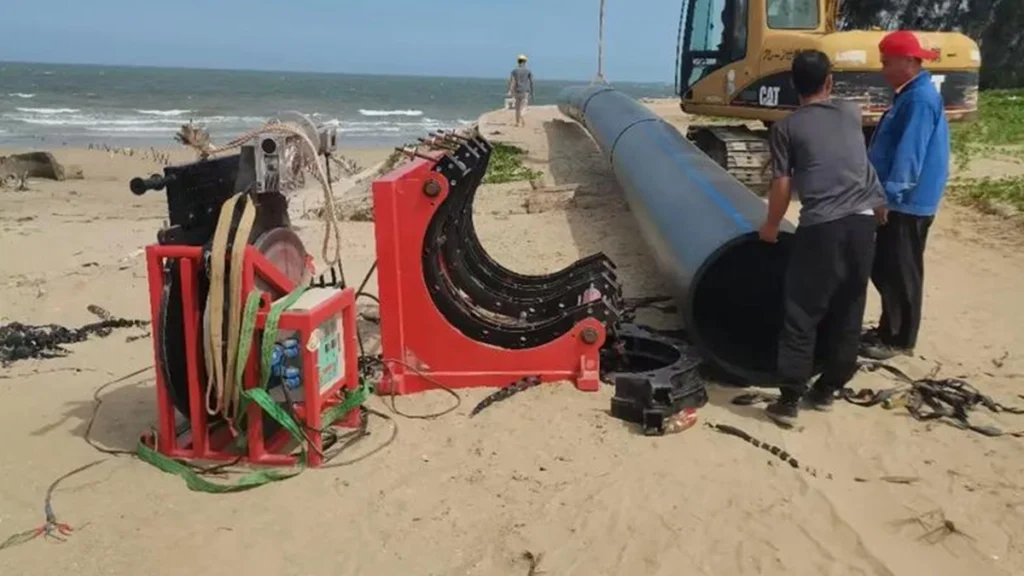
The global market is crowded. You have premium Western brands like McElroy, Ritmo Group, and Georg Fischer sitting right alongside highly competitive direct-from-factory options like Ekberg. To lock down the best automatic HDPE pipe welding machine for sale—whether from China or another manufacturing hub—procurement engineers should run this strict 6-step evaluation framework:
1. Certification Check: Make sure the facility holds an ISO 3834 certification for metallic welding quality. For thermoplastic PE pipe equipment, demand ISO 21307 and DVS 2207 compliance.
2. Welding Procedure Review: Ask the manufacturer for their standard Welding Procedure Specifications (WPS) and Procedure Qualification Records (PQR). Verify that they align with your project materials.
3. Sample Weld Test: Insist on verifiable data logs and NDT results from sample joints welded specifically by their equipment. Keep an eye out for premium features, like Ekberg’s automated parameter locking and displacement detection logs.
4. Production Capacity Audit: Dig into the mechanical construction quality. Top-tier hydraulic butt fusion machines should feature ZL104 standard aluminum main frames and imported hydraulic sealing systems to withstand harsh environments.
5. After-Sales & Spare Parts Guarantee: Secure a solid commitment on critical wear parts (think carbon steel milling blades and specific tungsten electrodes). Confirm their international technical support SLAs.
6. Trial Order: Do not buy the whole fleet at once. Execute a limited purchase of 1-2 units. Validate their field performance, software stability, and data recording compliance (such as TSG D2002-2006) before rolling them out project-wide.
MOQ, Shipping Costs, and Logistics
When importing an automatic HDPE pipe welding machine, you will typically encounter a standard Minimum Order Quantity (MOQ) of 1 to 2 sets. This low barrier allows contractors to test the waters without taking on massive upfront risk. That said, your logistics strategy will heavily dictate the final landed cost.
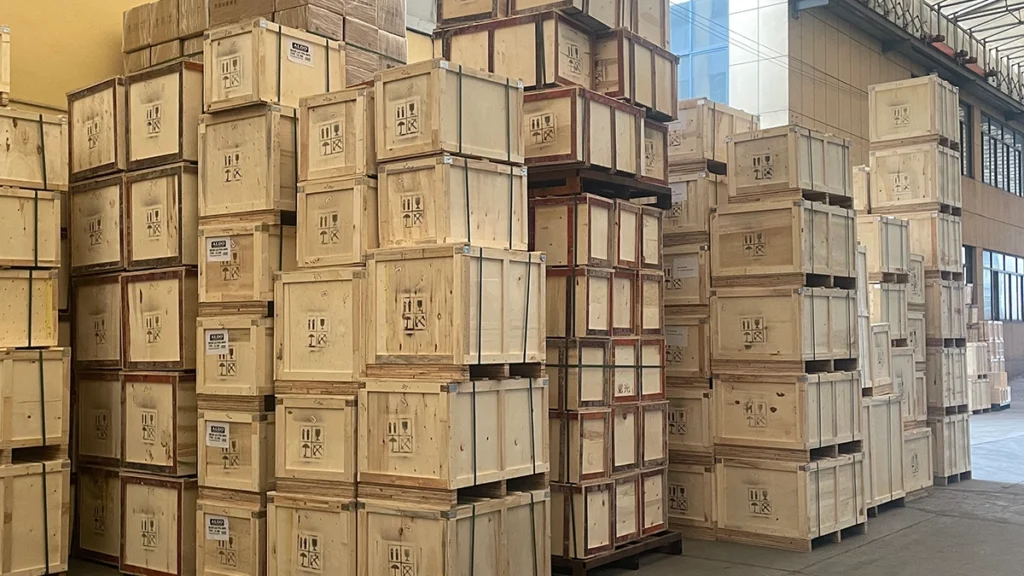
Shipping a single unit means relying on LCL (Less than Container Load) freight. To clear international customs, the butt fusion welding machine must travel in an ISPM-15 certified fumigated wooden crate. LCL offers great flexibility, but scaling up changes the math. Buying 3 or more units—or bundling your butt fusion machine order with bulk consumables like wire, gas lenses, or PE fittings—lets you upgrade to FCL (Full Container Load) shipping. FCL slashes the per-unit shipping cost, cuts down transit damage risks, and makes customs clearance at the destination port vastly simpler.
Installation, Commissioning, and Maintenance Guide
Want to maximize equipment lifespan and guarantee joint integrity? You must strictly adhere to maintenance cycles and proper commissioning protocols. High-quality butt fusion welding machines come packed with imported hydraulic seals and rugged electronics, but you still have to manage the consumables.
Critical Maintenance Cycles:
- Contact Tips (MIG): Inspect and swap these out every 8-20 hours of arc time to stop erratic wire feeding.
- Tungsten Electrodes (TIG): Regrind or replace them every 4-8 hours to keep the arc perfectly focused.
- Wire Feeder Mechanisms: Check the drive rolls and blow out the liners every 500 hours of operation.
- Hydraulic Seals & Coolant: Every month, check fluid levels, confirm cooling flow, and inspect all quick connectors.
5-Step Standard Installation & Commissioning Process:
1. Uncrating and Visual Inspection: Check all structural components, flat-type quick connectors, and data cables. Ensure nothing suffered stress fractures during transit.
2. Power and Fluid Connection: Hook the system up to a reliable 3-phase power supply or a suitably sized generator. Initialize the closed-loop cooling and hydraulic networks.
3. Sensor Calibration: Dial in the displacement detection sensors, linear transducers, and temperature control modules. Verify that the 0–300°C range functions flawlessly for both the upper and lower molds.
4. Dry Run Execution: Run the CNC program through a full cycle without a pipe loaded. Watch the carriage travel, clamp actuation, and the safety limit switches on the milling cutters.
5. Test Weld and Data Verification: Execute a complete fusion or arc cycle on a piece of scrap pipe. Pull the data log. Confirm that every parameter—T1 preheating, pressure curves, and cooling times—recorded accurately per GB/T 20674.1 standards.
Frequently Asked Questions (FAQ)
Q1: How much does an industrial automatic HDPE pipe welding machine cost in 2026?
Pricing swings based on your application and required automation level. Standard CNC automatic butt fusion machines for HDPE (up to 315mm) generally run between $6,500 and $12,800 USD. On the heavier side, metal orbital TIG systems range from $25,000 all the way past $150,000 USD. Keep in mind that paying upfront for advanced CNC features dramatically cuts your long-term labor and rework expenses.
Q2: What is the difference between orbital and rotary automatic pipe welding systems?
With an orbital system, the pipe stays completely stationary while the welding head mechanically rotates 360 degrees around the joint. This makes it perfect for tight, fixed field installations. A rotary system flips that logic: the welding head remains stationary, and the pipe itself spins on a chuck or positioner. Rotary setups are incredibly efficient for prefabrication shops and spooling facilities.
Q3: Which HDPE pipe welding machine is best for heavy duty oil & gas pipeline projects?
For major cross-country oil and gas transmission lines, all-position bug-and-band systems running MIG or FCAW processes dominate the industry. They strike the perfect balance. You get high deposition rates, rugged environmental durability, and the sheer power needed to handle large-diameter, thick-walled API 5L steel pipes out in the elements.
Q4: What is the standard MOQ when importing automatic pipe welding equipment from Chinese manufacturers?
You will generally see a standard Minimum Order Quantity (MOQ) of 1 to 2 sets for industrial-grade systems. However, bumping your order up to 3 or more units unlocks Full Container Load (FCL) shipping. FCL shipping heavily reduces your per-unit freight costs compared to shipping single units via Less than Container Load (LCL) in wooden crates.
Q5: How long does the HDPE pipe welding machine last, and what are the main maintenance costs?
Treat it right, and a premium HDPE pipe welding machine easily lasts 10 to 15 years. Your primary maintenance costs will stem from routine consumables. You will need to swap out contact tips (every 8-20 hours), tungsten electrodes (every 4-8 hours), and carbon steel milling blades. Investing in butt fusion machines built with imported hydraulic seals and ZL104 aluminum frames will significantly stretch that lifecycle.
Let our experts help you choose the right equipment for your project
Contact Our Engineering Team