
How to Troubleshoot Common Issues with Butt Fusion Machines
Table of Contents
Butt fusion machines that fail mid-project do more than just wreck the schedule; they bleed the budget. A single failed DN400 joint costs contractors an estimated $15,000 when you factor in excavation, wasted materials, and the labor required to re-weld. For pipeline engineers and procurement managers, understanding why equipment fails is just as vital as choosing the right pipe resin. This guide breaks down diagnostic protocols for hydraulic pressure loss, heating plate anomalies, and mechanical alignment errors, all while keeping a close eye on ISO 21307 and DVS 2207 standards. By the end, you’ll have a solid framework to troubleshoot malfunctions, minimize downtime in remote locations, and ensure every joint passes rigorous compliance testing.

—
Diagnosing Common Weld Defects and Joint Quality Issues
When a pipeline fails a pressure test, the culprit is usually traceable to a specific butt fusion welding machine glitch or an operator slip-up during the fusion cycle. Visual inspection of the weld bead is your first line of defense. According to ISO 13953, bead geometry offers immediate, forensic feedback on the butt fusion machine’s mechanical stability and parameter accuracy. Adopting a systematic approach to reading these visual cues can stop repetitive failures in their tracks.
Troubleshooting Bead Asymmetry and Misalignment
In a perfect world, a butt fusion joint exhibits a uniform, double-rolled bead around the entire pipe circumference. Asymmetry—where one bead is significantly larger or curled differently than its partner—signals a fundamental mechanical or setup problem. The most frequent cause is physical misalignment of the pipe ends within the chassis. This usually stems from worn liner inserts or a chassis frame that has twisted after rough handling on-site.
However, if the alignment looks perfect but the beads are still uneven, look at the planer (facing tool) or the heating plate. If planer blades are dull on one side, they won’t square the pipe face effectively, leaving a gap that fusion pressure can’t bridge evenly. Similarly, a heating plate with a “cold spot” caused by a dead element will result in polymer with a lower Melt Flow Index (MFI) on that side. The result? A smaller, stiffer bead compared to the properly heated side. Operators need to verify that the gap between pipe ends after facing is strictly less than 0.5mm for pipes up to DN400, and under 1.0mm for larger diameters.
Identifying Causes of Voids and Porosity in the Melt Zone
Voids, bubbles, or foam-like structures inside the weld bead are joint-killers. These defects compromise structural integrity and are rarely the fault of the machine’s hydraulics. Instead, look at the environment. The primary suspect is moisture contamination. HDPE is slightly hygroscopic; if the pipe ends are wet or ambient humidity is high, that water turns to steam at 215°C, creating pockets of air.
From a butt fusion machine perspective, porosity can also stem from insufficient soaking pressure. If the hdpe fusion machine fails to hold the correct drag pressure during the heat soak phase, the pipe ends might physically pull away from the heater plate. This prevents heat from penetrating deep into the pipe wall, causing surface-level melting that traps air once the pressure ramps up. Always confirm the pressure gauge reads the calculated drag pressure (roughly 0.01–0.02 MPa above zero) during the soak.
Resolving “Cold Welds” and Brittle Joints
A “cold weld” is a nightmare scenario: the fusion interface fails to bond molecularly, yet it looks visually acceptable. These joints are brittle and will fail catastrophically under bending stress. Two main hdpe pipe welding machine-related issues cause this: low heater plate temperature and excessive changeover time. If the heater thermostat or PID controller drifts, the surface temperature can dip below the crucial 200°C–230°C range required for PE100.
Even with the right temperature, hydraulic speed matters. The “changeover time”—the split second between removing the heater plate and slamming the pipe ends together—is strictly regulated (e.g., max 3–8 seconds depending on diameter). If the butt fusion welding machine’s hydraulic carriage moves sluggishly due to low oil flow or valve restrictions, the molten surface cools before contact. This creates a “skin” on the pipe ends that blocks fusion. Troubleshooting this requires timing the carriage movement and checking the hydraulic flow rate.
Interpreting Standard Failure Modes (DVS 2202/ISO 21307)
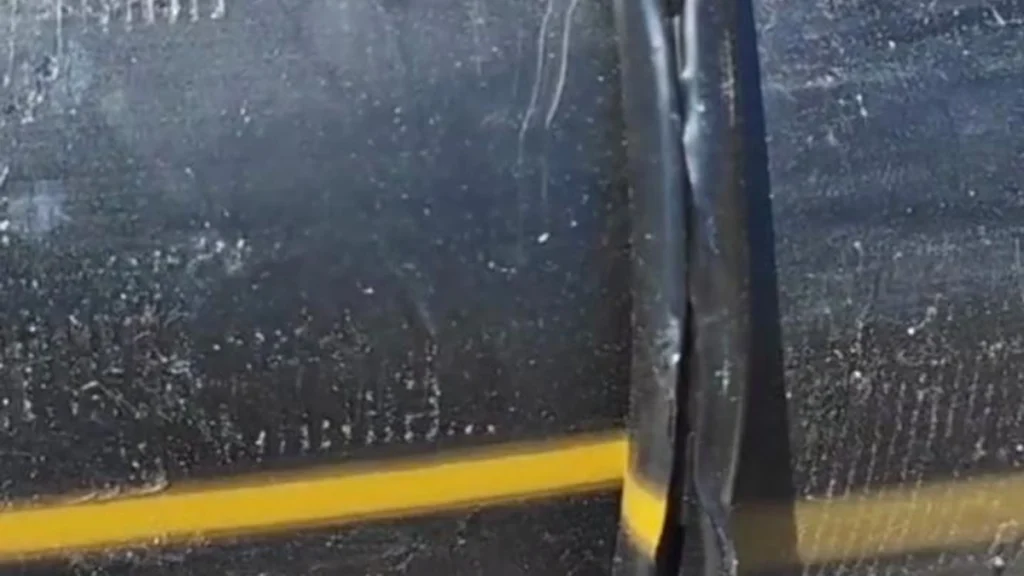
To speed up diagnostics, maintenance teams should correlate visual defects with butt fusion machine parameters. The table below maps common failure modes based on DVS 2207-1 standards:
| Visual Defect | Probable Machine Cause | Corrective Action |
|---|---|---|
| Narrow / Small Bead | Low fusion pressure or low heater temp. | Verify gauge calibration; Check heater elements with pyrometer. |
| Excessive Bead Width | Over-pressurization or temp too high. | Check pressure relief valve; Recalibrate PID controller. |
| V-Shape Notch in Bead | Insufficient joining pressure during cooling. | Check hydraulic accumulator or check valve for leaks. |
| Mismatched Bead Height | Misalignment of clamps or chassis. | Inspect clamp liners for wear; Check frame rigidity. |
—
Troubleshooting Hydraulic System and Pressure Failures
The hydraulic system is the muscle of butt fusion machines, applying the precise force needed for bead-up, fusion, and cooling. Loss of pressure integrity is the single most common mechanical failure. When a plastic pipe welding machine can’t hold pressure, the resulting weld lacks the density to survive pipeline operating pressures.
Diagnosing Pressure Drops During the Cooling Phase
The cooling phase is non-negotiable; the joint must remain under fusion pressure (typically 0.15–0.25 MPa plus drag) for 10 to 20 minutes to allow polymer chains to recrystallize. If the gauge needle starts a slow decline, the joint is compromised. To diagnose this, you have to isolate the circuit.
Start by clamping the hydraulic hoses leading to the chassis. If the pressure gauge on the hydraulic unit stabilizes after clamping, the leak is downstream—likely in the cylinder seals or quick-couplers on the chassis. If the pressure drops even with the hoses clamped, the leak is internal to the hydraulic station itself. This is usually debris stuck in the non-return valve (check valve) or a failing pressure relief valve. In the field, replacing O-rings in the quick-couplers is the most frequent fix.
Correcting Drag Pressure Miscalculations
A frequent “troubleshooting” issue is actually just bad math. Hydraulic cylinders have to overcome friction to move the heavy pipe carriage. We call this Drag Pressure ($P_{drag}$). The actual gauge pressure needed for welding is the Theoretical Welding Pressure ($P_{theoretical}$) plus $P_{drag}$.
If an operator sets the butt fusion machine to the theoretical pressure listed in the tables (say, 4.0 MPa) but ignores the 1.5 MPa of drag pressure needed to move a heavy DN630 hdpe pipe, the actual force hitting the pipe ends is only 2.5 MPa. The result is a weak joint. To fix this, measure P(drag) for every new weld by moving the carriage and reading the gauge, then add that value to your target pressure. Modern CNC automatic butt fusion machines from Ekberg Welding handle this calculation and compensation automatically.
Hydraulic Oil Contamination and Viscosity Issues
Hydraulic systems demand clean, stable fluid. The industry standard for butt fusion equipment is ISO VG 46 oil, ideal for ambient temps between -10°C and +40°C. Contaminated oil is a silent killer of precision. Symptoms include jerky carriage movement, excessive pump noise (cavitation), or fluctuating pressure readings.
If the oil is too thick (extreme cold) or too thin (overheating), the pump can’t maintain consistent flow. This throws off the open/close speed of the carriage, potentially violating changeover time limits. Operators should check oil levels daily (must be >2/3 tank capacity) and inspect the fluid for milkiness (water contamination) or dark sludge (particulates).
Gauge Calibration and Sensor Drift
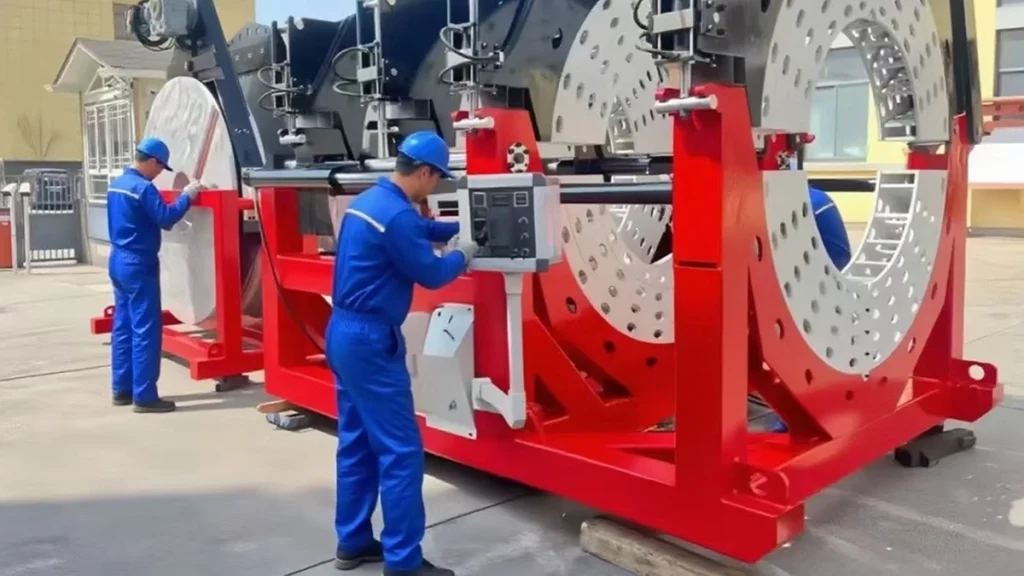
On manual butt fusion machines, the analog pressure gauge is your only source of truth. Over time, vibration and pressure spikes cause the internal mechanism to drift. A gauge reading 5.0 MPa might actually be delivering 4.5 MPa.
Troubleshooting requires cross-referencing the analog gauge with a calibrated digital pressure transducer or a master test gauge. If the deviation exceeds ±0.1 MPa, replace or recalibrate the gauge immediately. For CNC automatic butt fusion machines, pressure sensors can also drift. Ekberg recommends an annual calibration verification to ensure your data logger is recording accurate compliance data.
—
Electrical and Thermal System Malfunctions (Heater & Trimmer)
While the hydraulic system delivers the clamping force, the electrical system supplies the energy required for pipe heating and facing. Failures in this area are often binary—components either function or fail—but intermittent faults can cause particularly frustrating and time-consuming downtime.
Rectifying Heater Plate Temperature Fluctuations
The heating plate must maintain a uniform surface temperature of 215°C ±15°C. If the temperature swings wildly or won’t hit the setpoint, the control loop is the likely suspect. First, check the thermocouple connection; a loose wire can cause the PID controller to read erratic values, forcing the heater to cut out early or overheat.
If the controller display is stable but the plate is cold, check the solid-state relay (SSR) or contactor. A failed heating element inside the plate usually manifests as a “cold zone.” Diagnose this with a digital surface pyrometer by measuring the center and all four corners. If one corner is significantly cooler (>15°C difference), the internal element is shot, and the plate needs factory repair.
Troubleshooting Facing Tool (Planer) Performance
The facing tool (trimmer) is essential for creating parallel pipe ends. Common failures include the motor stalling under load or the cutter skipping across the pipe surface. Stalling often points to worn carbon brushes in the electric motor or a failing start capacitor.
If the planer runs but leaves a rough or stepped surface, the issue is mechanical. Dull blades will “rub” rather than cut, generating friction heat that can melt the pipe surface before welding even begins. Also, check the chain tension on chain-driven planers. A loose chain causes the cutting discs to shudder, creating an uneven surface that leads to alignment gaps.
Generator Power Supply and Voltage Stability
Field sites often run on diesel generators. A common troubleshooting scenario involves the butt fusion welding machine shutting down or the heater failing to climb in temperature when the hydraulic pump kicks in. This is a voltage drop issue caused by an undersized generator.
Butt fusion machines are hungry for inrush current. For instance, a 630mm hydraulic butt fusion machine draws approximately 12 kW. The generator must be sized at least 30-50% higher than the machine’s peak rating to absorb load spikes. For a 12 kW machine, a 20 kVA generator is the minimum safe bet. Undersized power sources don’t just cause failures; they damage the machine’s electronics.
Dealing with PTFE Coating Damage
The heating plate is coated with PTFE (Teflon) to stop molten plastic from sticking. If this coating gets scratched by careless handling or aggressive cleaning (like using a wire brush), the pipe will stick to the plate during removal.
When the operator pulls the plate away, the stuck pipe will “snap” back, deforming the molten bead and ruining the joint profile. If the PTFE is compromised, the plate must be stripped and recoated by a professional. Temporary fixes like spray-on release agents are not ISO compliant and will contaminate the weld.
—
Comprehensive Maintenance Checklist for Long-Term Reliability
Preventative maintenance is the ultimate form of troubleshooting. By catching wear early, contractors avoid the emergency repairs that grind production to a halt.
Daily Pre-Start Inspection Protocol for Operators
Before the first weld of the day, the operator should perform a 10-minute “flight check”:
1. Hydraulics: Check oil level and inspect all quick-couplers for dirt. Wipe them down with a lint-free cloth.
2. Electrical: Verify the ground connection and inspect power cables for cuts or nicks.
3. Planer: Check blades for sharpness. Rotate them if they are reversible, or replace if dull.
4. Heater: Clean the surface with a clean cotton cloth. Verify it reaches 215°C.
5. Chassis: Ensure clamp nuts rotate freely and liners are secure.
Scheduled Preventative Maintenance (Monthly/Annual)
Monthly maintenance should focus on the hydraulic system. Check the hydraulic filter indicator; if it shows red, the filter is bypassed and needs changing. Inspect the accumulator pre-charge (if equipped) to ensure it can still dampen pressure spikes.
Annually, drain and replace the hydraulic oil completely with fresh ISO VG 46 fluid. This flushes out moisture and metal particulates that accumulate over time. The butt fusion welding machine should also undergo a calibration check for pressure and temperature accuracy, preferably by an authorized service center.
Spare Parts Inventory Management for Remote Sites
For projects in remote mining or agricultural zones, waiting for parts isn’t an option. A basic “first aid” kit for the butt fusion welding machine should be kept on-site:
- Hydraulic Seal Kit: O-rings for cylinders and quick couplers.
- Planer Blades: At least two extra sets.
- Fuses & Relays: A replacement set for the electrical box.
- Thermocouple: A spare sensor for the heater plate.
- Hydraulic Oil: 5-10 liters for top-ups.
Data Logger and CNC System Diagnostics
Modern automatic butt fusion machines run on software. If the data logger fails to record a weld or gives a USB export error, check the memory capacity first—it’s often just full. If the system “hangs” or freezes, a hard reset (power cycle) usually clears the glitch. Always keep the HDPE pipe welding machine firmware updated to prevent compatibility issues with newer USB drives.
—
Manufacturing Excellence & Factory Support: The Ekberg Advantage
Troubleshooting skills are essential, but reliability starts at the factory. Ekberg Welding engineers machines designed to minimize failure points and simplify maintenance for the end-user.
Rigorous Factory Quality Control (QC) Testing
Every Ekberg butt fusion machine survives a strict QC protocol before it’s crated. This includes a hydraulic stress test where we pressurize the system to 1.5x its maximum operating pressure to expose potential leaks. We also test frame rigidity to ensure that even under maximum drag loads for heavy DN1200 pipes, the chassis won’t flex, guaranteeing alignment accuracy.
Global Technical Support and Warranty Coverage
We know that a HDPE pipe jointing machine down on a Friday afternoon needs a solution *now*. Ekberg provides extensive video troubleshooting libraries and direct access to engineering support. Our warranty covers all non-human damage for one year, with free replacement parts shipped directly to the site. Unlike distributors who often delay claims, our factory-direct model ensures rapid resolution.
Certification Compliance (CE, ISO 9001)
Ekberg butt fusion welding machines are manufactured in ISO 9001 certified facilities and carry CE marking. This means the electrical components, hydraulic safety valves, and structural materials meet global safety standards. For the buyer, this compliance ensures that replacement parts (like contactors or seals) are standardized and easier to source than the proprietary components used by some niche manufacturers.
—
Frequently Asked Questions (FAQ)
Q1: Why is my butt fusion machine losing pressure during the soak time?
Pressure loss during soak is usually caused by an internal leak in the hydraulic system. First, check the external quick-couplers for oil residue. If they are dry, the issue is likely a small particle of debris preventing the check valve from closing fully, or a worn seal in the hydraulic cylinder.
Q2: What causes the welding bead to curl unevenly around the pipe?
Uneven curling signals misalignment or uneven heating. Check that the pipe ends are perfectly aligned in the chassis. If alignment is correct, use a pyrometer to verify the heater plate has a uniform temperature. Cold spots on the plate make the plastic stiffer, resulting in a smaller curl on that side.
Q3: How often should I change the hydraulic oil in my fusion machine?
For standard operation, change the hydraulic oil (ISO VG 46) once every 12 months or every 1,000 operating hours. If you are working in extremely dusty or humid environments, cut this interval to every 6 months to prevent sludge buildup that can damage the pump.
Q4: Can I weld different SDR ratings together using Ekberg machines?
While the hdpe fusion machine can physically clamp different SDR pipes, welding them together is generally prohibited by standards like ISO 21307 because the wall thicknesses differ, creating stress concentration points. Always use a transition fitting or hdpe fusion machine the thicker pipe wall to match the thinner one, subject to engineer approval.
Q5: What should I do if the heater plate temperature is inconsistent across the surface?
Stop welding immediately. Inconsistent temperature (deviations >15°C) indicates a failed heating element or a loose thermocouple. Check the electrical connections in the handle. If connections are tight, the heating element inside the casting has likely failed and the plate requires professional repair or replacement.
—
Conclusion
The reliability of butt fusion machines is the cornerstone of profitable pipeline construction. By mastering the diagnostics of hydraulic pressure drops, thermal inconsistencies, and mechanical alignment, contractors can transform potential downtime into manageable maintenance tasks. However, troubleshooting is only half the equation.
Investing in factory-tested, compliant equipment significantly reduces the frequency of these issues. Ekberg Welding provides the robust engineering and global support needed to keep your projects moving forward. Don’t let equipment failure compromise your pipeline’s integrity.
Ready to upgrade your projects? Contact Ekberg Welding today for a technical consultation, a quote on our latest CNC fusion range, or to secure a spare parts kit for your next project.