
HDPE Butt Fusion Machine Energy Optimization Guide
Table of Contents
Running butt fusion machines at peak efficiency isn’t just a technical box to check—it is a financial imperative. When a single DN630 joint demands over 12kW of continuous power and relies on diesel generators guzzling more than 5 liters every hour, the math changes quickly. In the heavy infrastructure sector, where pipeline projects snake across kilometers of remote terrain, the energy profile of your welding equipment creates a direct line to your project margins and operational uptime.
This guide dissects the power anatomy of welding equipment. We will compare the energy profiles of manual versus CNC systems and analyze how ISO 21307 high-pressure parameters impact total fuel consumption. You’ll get a walkthrough on generator sizing, the hidden wallet-drainers like voltage drops, and how component quality—from heating plate insulation to hydraulic motor efficiency—dictates the Total Cost of Ownership (TCO).
By the end, you’ll have a solid framework for selecting the right gear for DN90–DN2600mm HDPE pipe projects, helping you optimize generator procurement and avoid the kind of specification mistakes that jeopardize weld integrity.

—
The Anatomy of Power Consumption in Butt Fusion Machines
To truly understand the energy footprint of butt fusion machines, you have to look at the three distinct subsystems drawing power: the heating plate, the hydraulic unit, and the planing tool (trimmer). While the total power rating on a spec sheet gives you a baseline, it rarely tells the whole story of how that energy is actually consumed during a live welding cycle.
The Power Draw Distribution
The heating plate is the heavy lifter. It represents the most significant continuous load, typically accounting for 60-75% of the butt fusion welding machine’s total energy consumption. As a resistive load with a power factor near 1.0, it demands steady current to hold fusion temperatures between 200°C and 230°C. Take an Ekberg 630mm unit as an example: the heater alone draws 9.2kW.
The planing tool presents a different challenge. While it only runs for short bursts, it is an inductive load. This creates a high “inrush current”—a momentary spike often 2-3 times its rated wattage during startup. Meanwhile, the hydraulic unit usually consumes 10-15% of the total power, fluctuating wildly based on the pressure requirements of the specific welding phase.
Energy Profiles by Welding Phase
Welding isn’t a flat line of energy usage; it’s a dynamic cycle with peaks and valleys.
1. Bead-up Phase: This demands high hydraulic pressure (often 0.15–0.25 MPa plus drag pressure) to establish the initial melt against the heating plate. The hydraulic motor is under load, and the heater is actively working to replenish the thermal energy being transferred to the cold pipe ends.
2. Heat Soak Phase: Pressure drops to near zero (drag pressure only). The hydraulic motor load effectively vanishes, but the heating plate works at a high duty cycle to drive heat deep into the pipe wall.
3. Cooling Phase: The heater is removed, but the hydraulic unit must maintain fusion pressure. On large diameter pipes (e.g., DN1000), this phase can last over an hour. Here, the efficiency of the hydraulic pump motor becomes critical to fuel consumption.
Voltage Standards and Machine Size
Voltage standardization is dictated by physics and machine size. Smaller units, typically from 160mm to 315mm, operate on standard 220V single-phase power. An Ekberg 315mm hydraulic butt fusion machine, for instance, draws approximately 5.35kW, pushing the upper limit of standard single-phase circuits.
Once you step up to 355mm and beyond, the amperage draw becomes too aggressive for single-phase wiring, necessitating a switch to 380V or 415V 3-phase systems. This transition is a critical detail for buyers; a 450mm hydraulic butt fusion machine drawing 8.7kW simply cannot function on a residential-style generator.
The Impact of Inrush Current
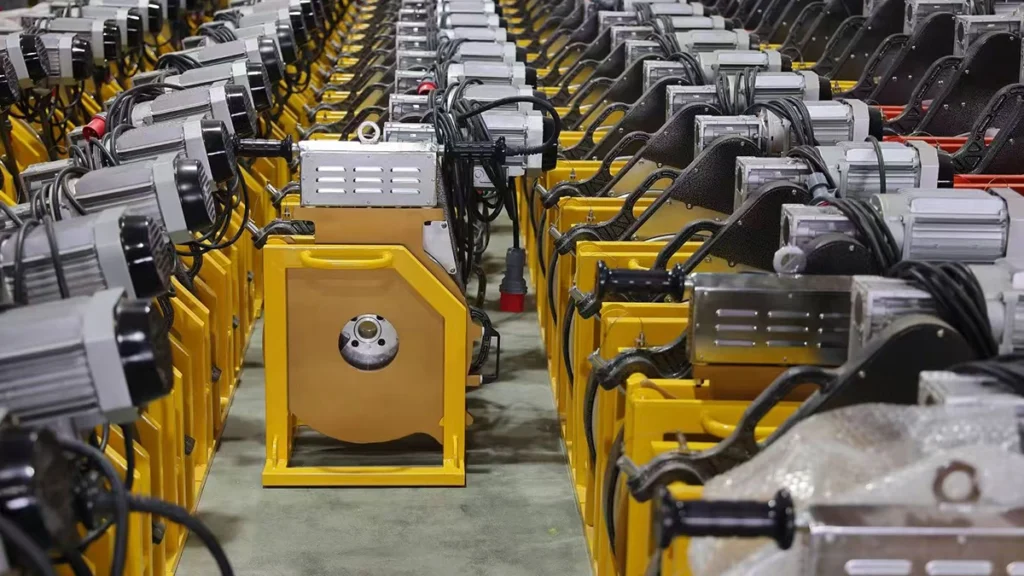
The most common cause of generator failure on pipeline sites is neglecting the inrush current of the planing tool. A 1000mm hydraulic butt fusion machine might list a total rated power of 23.5kW, but the 3.0kW trimmer motor can momentarily demand up to 9.0kW when the operator hits the switch. If the generator is sized precisely to the running watts without accounting for this spike, the voltage will sag. This drop can cause the heating plate’s temperature to fluctuate or the electronic controller to crash, leading to a failed weld and expensive downtime.
—
Efficiency Ratings: Hydraulic Semi-Automatic vs. CNC Automatic Models
The debate between manual and automatic butt fusion machines usually centers on data logging and consistency, but there is a distinct energy efficiency argument for automation. While CNC automatic butt fusion machines contain more sophisticated electronics, their ability to optimize the welding cycle often results in lower net energy usage per joint compared to manual operations that rely on human reaction times.
Cycle Optimization and Ambient Sensing
Advanced CNC butt fusion machines use ambient temperature sensors to adjust welding parameters dynamically. In a manual setup, an operator might default to a conservative, longer heat soak time just to be safe. A CNC unit, however, detects if the ambient temperature is 35°C and calculates the precise—often shorter—soak time required by standards like ISO 21307.
By eliminating unnecessary heating time, the butt fusion machine reduces the duration the heating plate is under maximum load. Furthermore, CNC systems enforce strict changeover times. By mechanically retracting the heater plate the instant the soak phase is complete, the “open time” (where the heater is exposed to air) is minimized, reducing thermal loss and the energy required to reheat the plate for the next joint.
The Hidden Cost of Human Error
Energy efficiency must be viewed through the lens of productivity. A manual butt fusion machine relies on the operator to monitor pressures and times constantly. If an operator gets distracted during the cooling phase and releases pressure too early, the joint may fail quality assurance testing. That pipe then has to be cut and re-welded. A re-weld doubles the energy consumption for that specific connection. CNC machines eliminate this variable. By locking the hydraulic jaws until the cooling phase is mathematically complete, the machine ensures that 100% of the energy consumed results in a usable, compliant joint.
Standby Power and Hydraulic Design
The design of the hydraulic station plays a major role in continuous power draw. Basic hydraulic units use continuous-running motors that circulate oil even when the system is holding static pressure. This generates heat in the hydraulic fluid and wastes electricity.High-efficiency Ekberg models utilize accumulator-based systems or variable displacement pumps. In these designs, once the target pressure (e.g., 16 MPa) is reached, the motor idles or shuts off, allowing the accumulator to maintain the pressure. For a cooling cycle that lasts 45 minutes on a DN500 pipe, an accumulator system can save nearly 40 minutes of motor runtime per weld compared to a continuous-run system.
Electronic Overhead vs. Mechanical Savings
Buyers often ask if the computer and sensors on a CNC hdpe pipe welding machine consume more power. The reality is that the power draw of the CNC control module is negligible (typically <50 watts) compared to the kilowatts devoured by heaters and motors. The energy saved by precise thermal management and reduced hydraulic motor runtime far outweighs the power required to run the onboard computer. Despite having more electronic components, a CNC automatic butt fusion machine generally offers a superior energy-to-output ratio.
—
Generator Sizing and Fuel Management for Field Operations
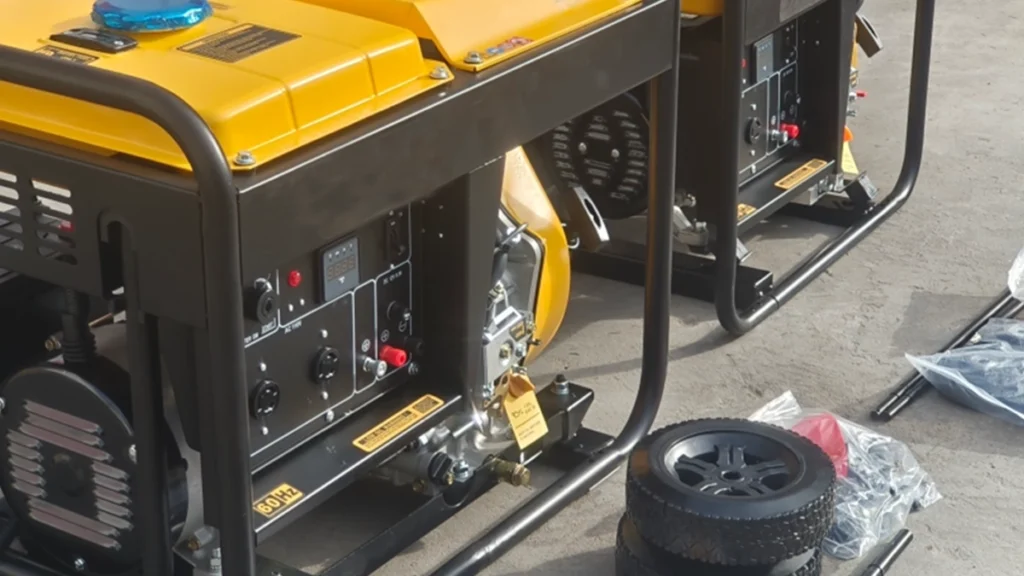
Correctly matching a generator to your butt fusion machines is the single most effective way to control fuel costs and prevent equipment damage. Undersized generators struggle to maintain voltage under load, while vastly oversized generators suffer from “wet stacking” (unburned fuel) and excessive diesel consumption.
Calculating Minimum KVA Requirements
To determine the correct generator size, you cannot simply match the butt fusion machine’s kilowatt (kW) rating. You must account for the power factor and the inductive load of the motors. The industry standard rule is to size the generator at 1.5x to 2.5x the machine’s total power rating.
- 160mm Machine (3.65 kW): Requires a minimum 4.0 kVA generator. Recommended: 5.5 kVA.
- 315mm Machine (5.85 kW): Requires a minimum 8.5 kVA generator. Recommended: 10.0 kVA.
- 630mm Machine (10.1 kW): Requires a minimum 18.5 kVA generator. Recommended: 25.0 kVA.
- 1000mm Machine (24.5 kW): Requires a minimum 35.0 kVA generator. Recommended: 45.0 kVA.
These recommendations ensure that when the trimmer motor kicks in or the heater cycles on, the generator has enough overhead to prevent a voltage drop below the critical threshold (usually 205V for single-phase or 350V for 3-phase).
Fuel Consumption Realities
For remote pipeline projects, fuel logistics are a major cost driver. A 25 kVA diesel generator running at 75% load to power a 630mm hydraulic butt fusion machine will consume approximately 5.2 liters of diesel per hour. Over a 10-hour shift, that’s 52 liters. If the hdpe butt fusion machine is inefficient or the welding process is sluggish, the generator runs longer for the same number of welds. By selecting a hdpe pipe welding machine that supports High Pressure (SHP) welding parameters (discussed below), contractors can significantly slash generator runtime and fuel usage.
Risks of Under-Powering
When a generator is too small, the consequences go beyond tripping a breaker.
1. Heater Uniformity: If voltage drops, the resistive heating elements cannot generate full power ($P = V^2/R$). A 10% voltage drop results in a 19% reduction in heating power. This causes cold spots on the heating plate and leads to brittle, dangerous welds.
2. Electronics Failure: Modern CNC data loggers have low-voltage protection. If the generator sags during the trim phase, the computer may reboot, losing the weld data and forcing you to restart the entire process.
Cabling Best Practices
Energy is often lost before it even reaches the butt fuison machine due to improper cabling. For cable runs exceeding 50 meters, the resistance in the wire causes a significant voltage drop. You might be burning diesel just to heat up your extension cords.
- Rule of Thumb: Always upgrade the cable gauge by one step for every 50 meters of extension.
- Example: If a 630mm hydraulic butt fusion machine requires a 6mm² cable at 10 meters, use a 10mm² cable if the generator is 60 meters away. This simple step ensures that the energy you are paying for actually reaches the welding equipment.
—
Variables Impacting Energy Efficiency in HDPE Pipe Welding
The energy efficiency of butt fusion machines is not static; it fluctuates based on the pipe specifications and the environmental conditions of the job site. Understanding these variables allows project managers to estimate fuel needs with much higher accuracy.
Pipe SDR and Wall Thickness
The Standard Dimension Ratio (SDR) of the pipe dictates the wall thickness, which in turn dictates the “Heat Soak” time.
- SDR 11 (Thicker Wall): Requires a longer soak time to ensure heat penetrates to the pipe bore. This keeps the heating plate engaged and the generator under load for longer periods.
- SDR 17 (Thinner Wall): Requires significantly less soak time.
For a DN500 pipe, welding SDR 11 vs. SDR 17 can mean a difference of 10-15 minutes per joint in cycle time. While the machine power rating remains the same, the *energy consumed per joint* is roughly 30% higher for the thicker SDR 11 pipe.
Environmental Impact: Wind and Cold
The heating plate is essentially fighting thermodynamics. In sub-zero temperatures or high winds, the rate of heat loss from the exposed aluminum surface increases drastically. The internal thermostat will cycle the heating elements to “ON” much more frequently—often approaching a 100% duty cycle—just to maintain the required 220°C.
- The Energy Cost: Operating in 0°C with wind can increase heater energy consumption by 20-30%.
- The Solution: Using a welding tent is not just for operator comfort; it shields the plate from wind chill, allowing the heater to cycle off more frequently and saving fuel.
High-Pressure (ISO 21307) vs. Low-Pressure Parameters
One of the most effective ways to save energy is to switch to High Pressure (SHP) welding parameters, provided your butt fusion machine and pipe specifications allow it (ISO 21307).
- Low Pressure (SLP): Uses ~0.17 MPa interfacial pressure. Requires long cooling times (e.g., 45 minutes for DN500).
- High Pressure (SHP): Uses ~0.52 MPa interfacial pressure. The higher pressure allows for a much faster cooling rate (e.g., 15 minutes for DN500).
- The Savings: By reducing the cooling time by 30 minutes per joint, you reduce the generator runtime by 30 minutes. On a project with 100 joints, this saves 50 hours of diesel fuel—a massive economic advantage.
Maintenance and Thermal Transfer
A dirty or damaged heating plate is an energy thief. If the PTFE coating is scratched or covered in carbonized plastic, thermal transfer to the pipe is impeded. The hdpe butt fusion welding machine must work harder and longer to achieve the proper melt depth. Regular cleaning and timely replacement of heating plates ensure that electrical energy is converted efficiently into fusion energy.
—
Manufacturing Excellence & Energy-Efficient Design at Ekberg
At Ekberg, we design butt fusion machines with the understanding that energy efficiency is a proxy for engineering quality. Our manufacturing process focuses on minimizing thermal loss and maximizing mechanical output per watt.
Insulation and Thermal Mass
The heating plate is the heart of the hdpe pipe jointing machine. Ekberg uses high-density aluminum alloys that offer superior thermal mass retention. Once our plates reach temperature, they hold that heat longer than generic cast aluminum plates, reducing the frequency with which the electrical elements must cycle on. Furthermore, we utilize aerospace-grade thermal insulation between the heating element and the handle/frame. This ensures that the heat goes into the pipe, not into the atmosphere or the operator’s hand.
High-Efficiency Motors
We equip our machines with high-efficiency, copper-wound electric motors for both the hydraulic pump and the trimmer. Unlike cheaper aluminum-wound motors found in budget equipment, copper windings offer lower resistance and better torque characteristics. This means our trimmer motors can cut through thick-walled HDPE with less amperage, and they are more resilient to the minor voltage fluctuations common on construction sites.
Factory Validation Protocols
Every Ekberg butt fusion machine undergoes rigorous testing before shipment. We validate power stability and thermal uniformity using thermal imaging to ensure the heating plate has no “cold spots” that would waste energy or compromise a weld. We also test the hydraulic system’s pressure-holding capability to ensure the pump isn’t cycling unnecessarily to compensate for internal leaks.
Global Support and Parts
Efficiency degrades if parts are worn. A heating element that is nearing the end of its life increases resistance and power draw. Ekberg’s global support network ensures that you can quickly replace heating plates, planing blades, and hydraulic seals. Restoring a pipe butt welder to its factory specifications is the fastest way to recover lost energy efficiency.
—
Buyer’s Selection Checklist: Balancing Power and Performance
When evaluating proposals for new equipment, use this checklist to look beyond the price tag and understand the operational costs.
- Verify Total vs. Effective Power: Check if the manufacturer’s “Total Power” assumes all components run simultaneously. Often, the heater and trimmer are interlocked, meaning you might need a smaller generator than the raw sum suggests.
- Evaluate TCO (Total Cost of Ownership): Calculate the fuel cost for a 6-month project. A butt fusion machine that supports High-Pressure welding (shorter cooling times) may cost more upfront but will save thousands in diesel and labor over the project lifecycle.
- Voltage Configuration Matrix:
- Site Power: Single Phase (220V) → Limit machine size to <315mm.
- Site Power: 3-Phase (380V) → Required for machines >355mm.
- Decision: Do not rely on “phase converters” or adapters; they are inefficient and unsafe for heavy industrial loads.
- Red Flags to Avoid:
- Generic “Lightweight” Heaters: Lack thermal mass, leading to high energy consumption in windy conditions.
- Undersized Hydraulic Reservoirs: Cause fluid overheating, requiring the pump to work harder.
- Lack of Data Plate Info: If a butt fusion welding machine doesn’t clearly list kW ratings for individual components, sizing a generator becomes a dangerous guessing game.
—
Frequently Asked Questions
Q1: What size generator do I need for a 315mm butt fusion machine?
For a 315mm hydraulic butt fusion machine with a typical total power draw of 5.35kW, you should use a generator rated for at least 8.5 kVA, though 10.0 kVA is recommended. This overhead accounts for the inductive load of the trimmer motor and ensures stable voltage for the electronic heating plate controls.
Q2: Can I operate a 3-phase butt fusion machine on a single-phase power supply using an adapter?
No. Large butt fusion machines (450mm+) require 380V/415V 3-phase power to drive the large heating elements and motors. Using a phase converter or adapter reduces efficiency, creates dangerous heat in the wiring, and will likely trip breakers immediately due to insufficient amperage.
Q3: Does a CNC automatic machine use less power than a hydraulic machine?
Generally, yes. While the CNC unit has more electronics, it optimizes the welding process by precisely calculating soak times based on ambient temperature and reducing “open time” heat loss. It also prevents operator errors (re-welds), which are the biggest source of wasted energy.
Q4: How does cold weather affect the energy consumption of the heating plate?
Cold weather and wind significantly increase energy consumption. The heating plate must cycle at near 100% capacity to combat thermal loss to the environment. Using a welding tent can reduce this energy waste by up to 30% and prevent “cold welds.”
Q5: What is the typical power consumption difference between welding SDR 11 and SDR 17 pipes?
Welding SDR 11 (thicker wall) pipe consumes more energy per joint than SDR 17. The thicker wall requires a longer heat soak duration to achieve the proper melt pattern. While the butt fusion machine’s instantaneous power draw (kW) is the same, the total kilowatt-hours (kWh) per joint are higher for SDR 11.
—
The Bottom Line on Power
Energy efficiency in butt fusion machines is more than a green initiative; it is a critical component of project profitability and operational reliability. By understanding the power anatomy of your equipment—from the resistive load of the heater to the inrush current of the trimmer—you can size generators accurately and avoid the downtime associated with voltage drops.
Choosing high-quality Ekberg equipment ensures you are working with motors and heating elements designed for maximum output per watt. Furthermore, leveraging High-Pressure welding parameters and CNC automation can drastically reduce generator runtime, lowering your fuel bill and carbon footprint simultaneously.
Ready to optimize your pipeline operations? Contact Ekberg Welding today for a technical consultation. We will provide a customized quote for energy-efficient butt fusion machines, complete with precise generator sizing recommendations for your specific project requirements.