
Butt Fusion Machine Warranty & Service Plans Guide
Table of Contents
Butt fusion machines operating at pressures up to 25 bar are the heartbeat of modern pipeline infrastructure. In this industry, a single day of downtime isn’t just an annoyance—it’s a financial blow that can cost contractors upwards of $4,500 in idle labor alone. For procurement managers and site engineers, equipment reliability is more than a technical spec on a datasheet; it is the primary defense against project delays and the dreaded liquidated damages that follow.
This guide breaks down the real economics of butt fusion welding machine reliability. We will explore how comprehensive warranty structures, ISO 21307 calibration mandates, and global spare parts logistics directly impact your profit margins. By the end, you’ll have a clear framework for evaluating Service Level Agreements (SLAs) to ensure your equipment keeps running on high-stakes utility and mining projects.

—
The Economics of Downtime and Machine Reliability
It is easy to fixate on the initial purchase price of welding equipment, but this often distracts buyers from the far greater risk: operational downtime. On large-scale infrastructure projects, the hdpe pipe welding machine is the bottleneck. The entire pipeline installation schedule flows through it. When that bottleneck tightens due to a mechanical failure, the financial bleeding is immediate.
Research daily penalty costs for delayed utility and mining pipeline projects
In the strictly regulated sectors of municipal water distribution and gas transmission, time is quite literally money. Most infrastructure contracts contain rigid “Liquidated Damages” clauses tied to timeline slippage. These penalties typically range from 0.1% to 0.5% of the total contract value for every day of delay. On a $10 million pipeline project, a single day of stalled production can trigger fines anywhere between $10,000 and $50,000.
Beyond the contractual fines, the operational burn rate creates a compounding loss. A standard fusion crew usually includes 3–5 specialized technicians, often supported by heavy machinery like excavators or cranes. Industry analysis pegs the cost of an idle crew at $2,500 to $4,500 per day. If a plastic pipe welding machine goes down on a Monday and parts don’t arrive until Thursday, the contractor has swallowed over $13,000 in sunk costs before a mechanic even touches the butt fusion machine. In extreme cases—such as missing critical environmental windows—fines can escalate to nearly $200,000, dwarfing the original cost of the hardware.
Analyze common failure points in hydraulic and automatic butt fusion machines
To mitigate these risks, you need to know where the weak points are. Butt fusion machines endure brutal field environments—dust, mud, rain, and extreme temperature swings—that aggressively degrade components. The hydraulic system is particularly vulnerable; while seals and O-rings are designed to hold pressures up to 16 MPa, they are susceptible to dust ingress if quick-couplers are dragged through site debris.
Electronic components face a different set of threats. The heating plate controller, which must maintain precise temperatures (e.g., 220°C ±3°C), is sensitive to voltage spikes from portable generators—a staple on remote sites. Furthermore, pressure sensors—critical for automatic data logging—can drift out of calibration if subjected to physical shock during transport. Mechanical wear is also a given; facer blades dull over time, leading to uneven pipe facing, while planar gears in the facing tool can strip under the high torque needed to shave large-diameter HDPE pipes. Recognizing these stress points is the first step in valuing a warranty that actually covers them.
Calculate Total Cost of Ownership (TCO): Initial Price vs. Support Costs
The “sticker price” is deceptive. A smart procurement strategy looks at the Total Cost of Ownership (TCO) over a 3-year lifecycle. Let’s look at a scenario comparing a low-cost generic hdpe fusion machine against a premium unit backed by a robust service plan.
| Cost Factor | Low-Cost Generic Machine | Premium Machine (e.g., Ekberg) |
|---|---|---|
| Initial Purchase Price | $15,000 | $22,000 |
| Warranty Terms | 6 Months (Parts Only) | 1-3 Years (Parts + Labor) |
| Spare Parts Availability | 14-21 Days (Overseas Shipping) | 24-48 Hours (Regional Dispatch) |
| Tech Support Access | Email Only (Delayed Response) | Video/Remote Diagnostics |
| Est. Downtime Cost (3 Years) | $30,000+ (Due to shipping delays) | $6,000 (Minimal delay) |
| Total Cost of Ownership | $45,000+ | $28,000 |
As the numbers show, the cheaper butt fusion welding machine becomes significantly more expensive after just one major breakdown involving a two-week shipping delay. The premium butt fusion machine, despite a higher upfront Capital Expenditure (CapEx), protects the contractor’s margins through superior uptime and logistics support.
—
Essential Components of a Robust Warranty Plan
Not all warranties are created equal. A “1-year warranty” can mean vastly different things depending on the manufacturer’s fine print. Buyers must scrutinize the details to ensure the coverage matches the harsh realities of pipeline construction.
Define coverage scope: Structural vs. Hydraulic vs. Electronic components
A comprehensive warranty should be segmented to match the lifespan of different subsystems. The butt fusion machine chassis, clamps, and main frame are structural components built to last for decades. Leading manufacturers, including Ekberg, often provide extended coverage (up to 3 years) on these heavy-duty steel and aluminum parts, protecting against manufacturing defects like hairline cracks or weld failures.
However, the Hydraulic Power Unit (HPU) and electronic control systems are more complex. These components govern the critical parameters of the fusion process—pressure, time, and temperature. A solid warranty must cover the HPU pump, valves, and pressure sensors for at least 12 months. Crucially, for butt fusion machines used in regulated markets, the warranty should also cover the data logger and electronic heating plate elements. Failure in these areas renders the butt fusion welding machine incapable of producing compliant welds.
Identify critical exclusions: Consumables and Wear Parts
Transparency regarding exclusions is the mark of a reputable vendor. Warranties cover manufacturing defects, not normal wear and tear or operator abuse. Buyers should expect the following items to be excluded:
- PTFE Coating: The non-stick layer on the heating plate is essential but easily damaged by improper cleaning (e.g., using a metal scraper).
- Facer Blades: These are cutting tools that naturally dull with use and require regular replacement.
- Hydraulic Oil & Filters: Consumables that need scheduled changes.
- Fuses: Low-cost electrical safeguards designed to blow during power surges to protect the expensive internals.
It is also vital to distinguish between a “defect” and “misuse.” Dropping the facing tool, dragging the HPU by its hoses, or running the butt fusion machine on incorrect voltage will almost always void the warranty.
Compare “Return-to-Base” vs. “On-Site” Service Models
The logistics of warranty repair can be just as critical as the coverage itself. Many manufacturers operate a “Return-to-Base” model, requiring the customer to crate and ship the hdpe pipe welding machine back to the factory. For a 630mm or 1200mm hydraulic butt fusion machine weighing several tons, shipping is both expensive and agonizingly slow.
A superior service model leverages a network of authorized local distributors or regional service centers. Ekberg advocates for a hybrid approach: local distributors stock critical parts and employ trained technicians for immediate repairs, while the factory provides high-level support for complex issues. For large-scale infrastructure projects involving fleet purchases, some agreements even include an option for on-site maintenance, where a technician visits the field to perform repairs and calibration, eliminating shipping logistics entirely.
—
Maintenance, Calibration, and Standards Compliance
Warranty validity is a partnership. Manufacturers guarantee the butt fusion machine’s quality, but the owner must guarantee its care. This relationship is codified in maintenance schedules and calibration standards, which are also legal requirements for pipeline compliance.
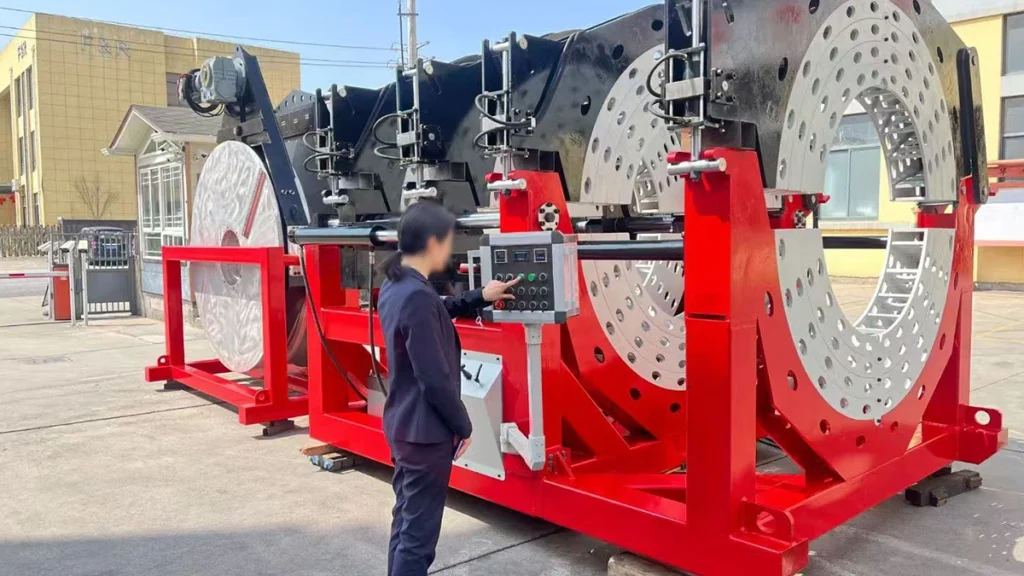
Cite ISO 21307 and DVS 2207 calibration requirements
To ensure pipeline integrity, international standards such as ISO 21307 and DVS 2207 mandate strict performance parameters. A butt fusion welding machine that cannot hold pressure or maintain temperature uniformity is not just broken—it is a liability.
- Calibration Intervals: Standards typically require calibration every 12 months or every 2,000 welds, whichever comes first.
- Accuracy Thresholds: Pressure gauges must be verified to within ±1% of the full scale. Heating plates must demonstrate thermal uniformity within ±3°C across the entire surface.
- Timer Verification: The internal clock that governs soak and cooling times must be validated.
Failure to maintain calibration doesn’t just risk voiding the warranty; it risks the rejection of every joint welded by that hdpe pipe welding machine. If a pipeline fails a hydrostatic pressure test, inspectors will demand the calibration certificates of the equipment used. If those certificates are expired, the contractor faces catastrophic rework costs.
Detail routine maintenance schedules to preserve warranty validity
To keep the warranty active, operators must adhere to a routine maintenance schedule. Manufacturers often require a log of these activities.
- Daily: Clean the heating plate with a lint-free cloth to prevent plastic buildup. Inspect hydraulic hoses for cuts or abrasions. Check the facer for debris.
- Weekly: Check hydraulic fluid levels (typically ISO VG 46 or 68). Grease guide rails and clamp pivots to ensure smooth movement during the drag phase.
- Monthly: Inspect electrical cables for fraying or insulation damage. Verify the sharpness of facer blades.
Using the butt fusion machine’s data logger is also a form of maintenance. By recording every weld, the logger provides a performance history that can be used to substantiate warranty claims, proving that the butt fusion welding machine was operated within its design limits.
Analyze the risk of using non-OEM parts on machine certification
In an attempt to save money, some contractors use third-party spare parts—generic hydraulic valves, off-brand heating elements, or unauthorized data loggers. This practice is dangerous. Butt fusion machines are engineered systems; a generic valve may not hold the specific “drag pressure” required for the cooling phase, leading to weak joints.
Furthermore, installing non-OEM parts immediately voids safety certifications (CE, ISO). If an accident occurs or a pipeline fails, the use of unauthorized parts shifts liability entirely to the contractor. Ekberg emphasizes that the cost difference between an OEM part and a generic substitute is negligible compared to the risk of losing warranty coverage and regulatory compliance.
—
Spare Parts Strategy and Global Logistics Support
Even the most reliable butt fusion machine will eventually require parts replacement. A strategic approach to spare parts inventory is essential for contractors working in remote or international locations.
Develop a “Critical Spares Kit” list for remote project sites
For projects located more than 500km from a service center—such as mining operations in the Australian outback or agricultural irrigation in rural South America—waiting for a courier is not an option. Ekberg recommends purchasing a “Critical Spares Kit” alongside the butt fusion welding machine. This kit acts as a first-aid box for the equipment and should include:
1. Spare Facer Blades: A set of 2–4 double-edged blades.
2. Thermocouple: A replacement sensor for the heating plate.
3. Quick-Couplers: One male and one female hydraulic connector (often damaged by impact).
4. Planar Gear/Chain: Drive components for the facing tool.
5. Electrical Fuses & Relays: Simple components that can immobilize a butt fusion machine if blown.
6. PTFE Cloth: A temporary solution if the heating plate coating is scratched in the field.
Evaluate manufacturer response times and shipping capabilities
When a part is not on hand, the manufacturer’s logistics speed becomes the defining factor of downtime. Buyers should ask for specific dispatch guarantees. A world-class support standard involves dispatching critical spares within 24 hours of the request.
For international buyers, the existence of regional warehouses is crucial. A manufacturer that ships solely from a central factory in Europe or Asia will inevitably struggle with customs delays. Ekberg mitigates this by maintaining strategic stock in regional hubs, ensuring that butt fusion machines on different continents can be serviced rapidly.
Assess the availability of technical schematics and remote troubleshooting
Hardware is useless without the knowledge to install it. High-quality service plans include access to detailed wiring diagrams and hydraulic circuit maps. In the era of Industry 4.0, advanced CNC automatic butt fusion machines now feature IoT capabilities. This allows factory technicians to remotely access the machine’s computer to read error codes, analyze pressure curves, and diagnose faults without traveling to the site. This “tele-medicine” approach for machines drastically reduces repair turnaround times.
—
Manufacturing Excellence, Quality Control & Ekberg Service
The best warranty claim is the one you never have to make. Reliability starts on the factory floor, where rigorous Quality Assurance (QA) protocols filter out defects before they reach the customer.
Describe factory-level Quality Assurance (QA) protocols before shipping
At Ekberg, every butt fusion machine undergoes a battery of stress tests that simulate the harshest field conditions.
- Pressure Holding Test: The hydraulic system is pressurized to 1.5x its maximum working pressure (up to 24 MPa) and held for an hour to detect micro-leaks in seals or castings.
- Thermal Imaging: Heating plates are scanned to ensure temperature distribution is uniform within ±3°C, eliminating “cold spots” that cause weak welds.
- Data Logging Validation: A simulated weld cycle is run to verify that the software correctly records and stores fusion parameters.
These internal records provide a baseline for the butt fusion welding machine. If a warranty claim arises later, technicians can compare current performance against the factory “birth certificate” of the unit.
Outline the global technical support and training infrastructure
Warranty coverage is often contingent on operator competence. Manufacturers frequently require operators to be certified to validate extended warranties. Ekberg supports this through a global training infrastructure that includes video tutorials, multilingual technical manuals, and certified operator courses. This ensures that the person pushing the buttons understands how to treat the equipment, reducing the likelihood of damage caused by misuse.
Explain the refurbishment and retrofitting capabilities
Service doesn’t end when a butt fusion machine gets old. A strong partner offers refurbishment services to extend the asset’s life. This can include overhauling the hydraulic unit with new seals and valves, chemically stripping and re-coating the heating plate with industrial-grade PTFE, and updating the data logger firmware to comply with the latest revisions of ISO 21307. This ability to retrofit older butt fusion welding machines provides a sustainable, cost-effective alternative to buying new equipment for every project.
—
Buyer’s Checklist: Evaluating Vendor Service Agreements
To navigate the complex landscape of SLAs, buyers should use a structured comparison matrix. Do not settle for vague promises of “good service.” Demand specifics.
Create a comparison matrix for Service Level Agreements (SLAs)
When interviewing vendors, use this matrix to uncover the true value of their offering:
Analyze the value of Extended Warranty programs
Is an extended warranty worth the cost? For short-term projects, standard coverage may suffice. However, for long-term infrastructure contracts spanning 2–3 years, purchasing an extended warranty (often an extra 10–15% of the purchase price) is a sound investment. It fixes maintenance costs and insulates the project budget from unexpected repair spikes.
Verify the local distributor network’s repair capabilities
Finally, verify the capabilities of the local agent. Are they a true distributor with a stocked warehouse and a workbench, or are they merely a sales broker? Ask to see their parts inventory. A partner who stocks parts is a partner who can save your project; a broker can only offer sympathy while you wait for shipments.
—
Frequently Asked Questions
Q1: What is the standard warranty period for Ekberg butt fusion machines and what does it cover?
The standard warranty is 1 year for the complete system, covering the HPU, electronics, and facer. The structural chassis carries an extended 3-year warranty. Coverage includes parts and labor for manufacturing defects. We also offer a unique lifetime maintenance policy where labor costs are waived for repairs performed at our factory.
Q2: Does the warranty cover the PTFE coating on the heating plate if it scratches?
No, the PTFE coating is classified as a consumable item. Its lifespan is heavily dependent on operator care (e.g., avoiding metal scrapers or abrasive pads). However, Ekberg offers a professional re-coating service that strips the old layer and applies a new industrial-grade non-stick coating at material cost.
Q3: How often must my butt fusion machine be calibrated to maintain warranty and ISO compliance?
To comply with ISO 21307 and DVS 2207, and to maintain warranty validity, machines must be calibrated every 12 months or after 2,000 welds, whichever occurs first. Ekberg provides calibration services that include a formal certificate required by project inspectors.
Q4: Can I perform my own repairs on the hydraulic unit without voiding the warranty?
You can perform routine maintenance like oil changes and filter replacements. However, opening the sealed hydraulic power unit, modifying the electrical controller, or adjusting internal pressure valves without Ekberg authorization will void the warranty. We recommend using our video support for guided troubleshooting before attempting complex repairs.
Q5: What happens if a machine breaks down in a remote location—how does the service plan help?
For remote sites, we strongly recommend our Critical Spares Kit. If a complex failure occurs, our technicians use remote video diagnostics to identify the fault. If a part is needed, we utilize our global logistics network to air-freight components within 24–48 hours to minimize downtime.
—
Conclusion
Procuring a butt fusion machine is not a one-off transaction; it is the beginning of a long-term operational partnership. The initial purchase price pales in comparison to the potential costs of downtime, missed deadlines, and non-compliant welds. A robust warranty and service plan are essential tools for protecting your profit margins and ensuring project success.
The best equipment is not just defined by hydraulic power or heating precision, but by the support infrastructure that stands behind it. From rapid spare parts availability to expert technical consultation, the right service plan transforms a hdpe pipe welding machine from a potential liability into a reliable asset.
Don’t let equipment failure dictate your project timeline. Contact Ekberg Welding today to discuss our comprehensive warranty packages, request a quote for your next high-performance hdpe pipe fusion machine, and secure the reliability your infrastructure projects demand.