
Butt Fusion Machine Compliance and Safety Guide
Table of Contents
Butt fusion machines that operate outside strict pressure tolerances or temperature windows are ticking time bombs. A single failure doesn’t just mean a leak; it means catastrophic environmental cleanup, rework costs exceeding $50,000 per incident, and severe reputational damage. For pipeline contractors in the US, selecting equipment is no longer a simple purchasing decision—it is a high-stakes exercise in risk management and liability protection.
With the industry coalescing around stringent standards like ASTM F2620 and municipal projects demanding digital traceability, the margin for error in equipment specification has evaporated.
This guide navigates the complex US regulatory landscape, breaking down ASTM and OSHA requirements, the nuances between low and high-pressure fusion, and the safety features that separate compliant machinery from liability traps. We will provide a procurement checklist to verify certifications and explain how integrated data logging is reshaping liability management. By the end, you will possess a solid framework for selecting the right equipment for DN40mm–DN2600 HDPE pipe projects, ensuring you avoid specification errors that could jeopardize project acceptance.

—
The US Regulatory Landscape for HDPE Butt Fusion
Navigating the regulatory environment for HDPE pipeline installation in the United States requires understanding a matrix of voluntary consensus standards and mandatory federal safety regulations. For project engineers and procurement managers, grasping this hierarchy is the first step toward compliance.
Research ASTM F2620 requirements for heat fusion joining of Polyethylene pipe
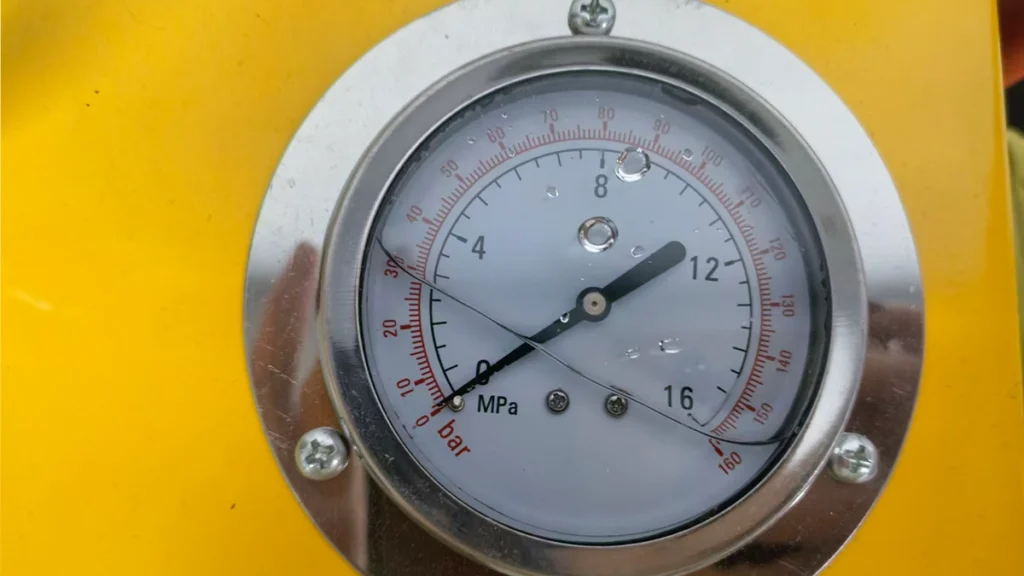
ASTM F2620 serves as the “governing law” for the vast majority of municipal water, gas, and industrial HDPE projects across North America. It dictates the precise recipe for heat fusion joining. Unlike many European standards that favor high-pressure methods, ASTM F2620 focuses on a generic interfacial pressure range of 60–90 PSI (0.41–0.62 MPa).
For a butt fusion machine to be viable in the US, its hydraulic system requires surgical precision within this pressure range. The standard enforces a “bead roll-over” requirement during heating and mandates a specific cooling time under pressure—typically 30 to 90 seconds per inch of pipe wall thickness. Equipment unable to sustain stable pressure during these long cooling cycles will produce joints that fail ductility requirements, leading to immediate rejection by site inspectors.
Analyze the differences between Low Interfacial Pressure (ASTM) vs. High Interfacial Pressure (ISO 21307) standards
Global buyers often stumble over the distinction between ASTM F2620 (traditionally “Low Pressure”) and ISO 21307 “High Pressure” (SHP) standards.
ASTM F2620 generally targets an ideal interfacial pressure of 75 PSI (0.52 MPa). Conversely, ISO 21307 Single High Pressure (SHP) protocols utilize significantly higher pressures to slash cooling times, boosting productivity by up to 30%.
The strategic edge for US contractors lies in versatility. Equipment like Ekberg’s hydraulic series is engineered to master both ranges (0–150 Bar / 0–2175 PSI). A butt fusion welding machine limited to low-pressure hydraulics will falter if a project spec demands ISO standards for a specific industrial application. On the flip side, a plastic pipe welding machine built strictly for European high-pressure use often lacks the fine-tuned control required for the lower end of the ASTM curve. A hydraulic cylinder stroke and pressure relief valves designed for versatility ensure your fleet is ready for whatever the project engineer specifies.
Explain the significance of ASTM F3124 regarding data recording and reporting for butt fusion machines
ASTM F3124, “Standard Practice for Data Recording the Procedure used to Produce Heat Butt Fusion Joints,” has elevated data logging from a “nice-to-have” to a “must-have.” It outlines the exact data required to verify that a joint meets ASTM F2620.
Compliance means the hdpe pipe butt welder must record the operator ID, machine ID, joint number, and the all-important temperature, time, and pressure (TTP) plot. This digital footprint is your proof that the heating plate stayed within the 400°F–450°F (204°C–232°C) window and that fusion pressure held steady during the cooling cycle. Operating without F3124-compliant data logging leaves contractors exposed; without objective evidence, defending the quality of an installation against a leak claim years later is nearly impossible.
List OSHA 1926 subpart V and electrical safety standards relevant to operating welding equipment on US construction sites
While ASTM worries about the pipe, OSHA worries about the people. Specifically, OSHA 1926 Subpart V (Power Transmission and Distribution) and Subpart J (Welding and Cutting) lay out strict electrical safety protocols. Remember, butt fusion machines are high-amperage devices often operating in wet, muddy trenches.
To satisfy federal safety standards, effective grounding is non-negotiable. While Ground Fault Circuit Interrupters (GFCI) are standard for 120V outlets, hardwired 220V hdpe fusion machines need dedicated leakage current protection (typically ≤5mA) and insulation resistance ≥1MΩ. Cables must be rated for heavy-duty outdoor abuse (SOOW or similar) to withstand abrasion in the trench. Ignoring these specs can trigger immediate site shutdowns and hefty fines during an OSHA inspection.
—
Essential Safety Features in Certified Butt Fusion Machines
Paperwork is one thing; physical engineering is another. The build quality of the butt fusion machine directly impacts the safety of the crew in the trench. Buyers need to rigorously inspect three core subsystems: electrical, hydraulic, and thermal.
Investigate electrical safety specifications (GFI protection, grounding, IP ratings) for 110V/220V 60Hz US grid compatibility
The US grid runs at 60Hz, while much of the world uses 50Hz. Plugging a 50Hz motor into a 60Hz US generator is a recipe for disaster—overheating, erratic RPM, and rapid failure of hydraulic pumps and facing tools are the usual results.
Ekberg Welding solves this by providing factory-customized 220V/60Hz motors specifically for the North American market. Connections matter too. Butt fusion machines should feature NEMA-standard plugs (like NEMA 6-50 or L6-30) to avoid dangerous field-rewiring of European plugs. Furthermore, control box electronics need an IP54 rating (dust and splash protection) at minimum to survive the rain and mud typical of a jobsite.
Detail hydraulic system safety mechanisms (pressure relief valves, accumulator functions) in Ekberg machines
The hydraulic system provides the muscle, but uncontrolled muscle is dangerous. A vital safety feature in Ekberg butt fusion machines is the accumulator function. As the pipe cools, it contracts. Without an accumulator or active pressure maintenance, the joint pressure drops, potentially creating voids in the weld.
Safety also demands over-pressure protection. Premium hydraulic units include adjustable pressure relief valves. These prevent the system from crushing the pipe or exceeding the butt fusion welding machine’s structural limits, averting catastrophic hose bursts that could inject high-pressure oil into an operator’s skin—a severe medical emergency. Flat-face quick-connect couplings further reduce risk by preventing oil leaks and blocking dirt ingress that causes sticky valves.
Research heating plate temperature control accuracy requirements (±3°C variance limits) for compliant fusion
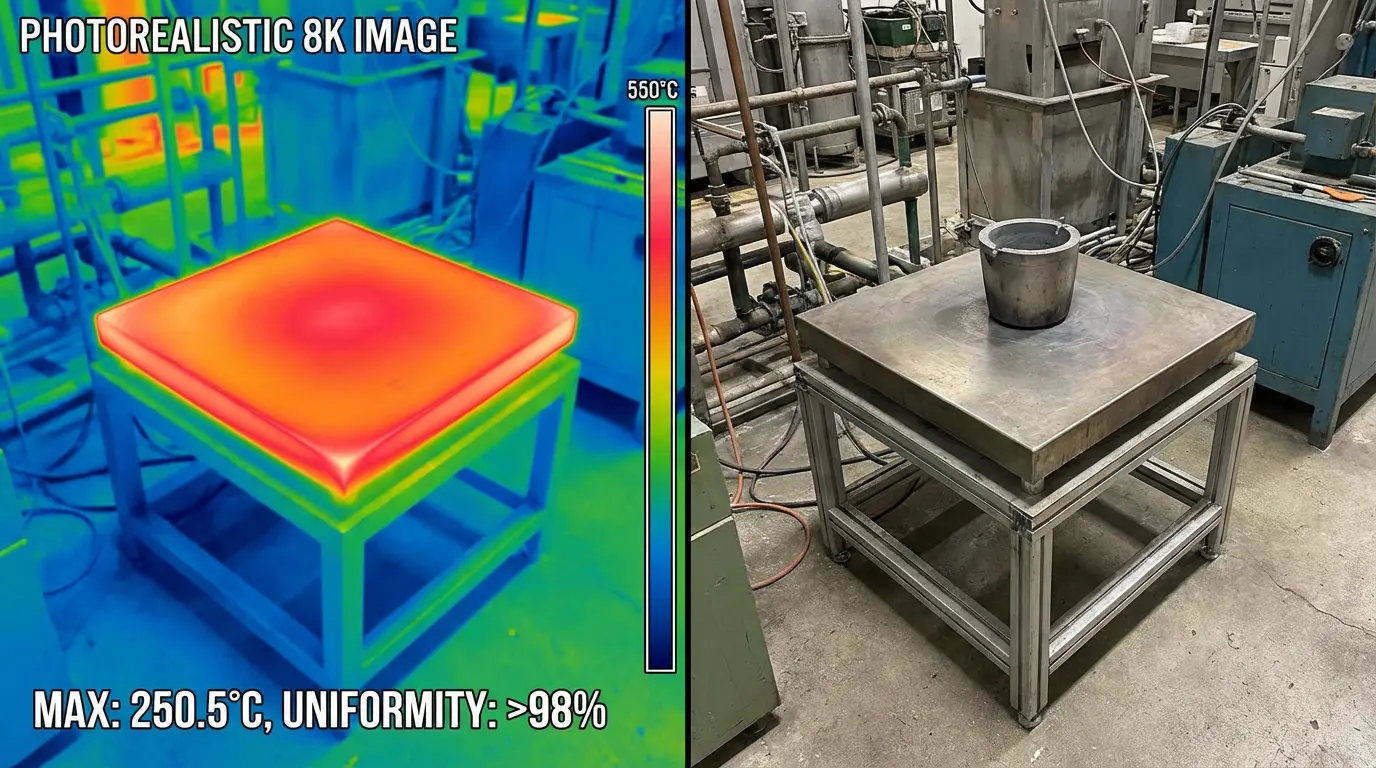
Temperature uniformity is critical. ASTM F2620 demands a surface temperature between 400°F and 450°F. Cheap heating elements often suffer from “hot spots” and “cold spots” with variances exceeding 10°C.
Compliant plastic pipe welding machines must use high-grade aluminum plates with electronic temperature control systems that hold a strict variance of ±3°C (±5.4°F) across the surface. This precision guarantees an even melt. A “cold spot” on the plate leads to a “cold joint”—a weld that lacks inter-molecular fusion. It’s a weak point invisible to the naked eye, but destined to fail under pressure.
Heating plate temperature control on butt fusion machines
Explain the role of physical machine stability and chassis design in preventing trench accidents
Trench safety is paramount. The physical stability of a butt fusion machine is often an afterthought in spec sheets, but it shouldn’t be. Welding large diameter pipes (DN630 and up) requires significant drag force.
HDPE pipe jointing achines with lightweight or narrow frames are prone to tipping or shifting violently when hydraulics engage. Ekberg counters this with a 4-column chassis design, lowering the center of gravity and widening the footprint. This keeps the butt fusion machine planted, even when pulling heavy SDR11 pipe strings. Additionally, safety guards (mesh or metal shrouds) cover moving hydraulic cylinders, preventing operators from accidentally inserting hands or clothing into pinch points.
—
Data Logging and Traceability: The New Safety Standard
In modern infrastructure, a weld without data is treated as a weld that never happened. Data logging provides the forensic evidence required to certify pipeline integrity.
Compare manual data logging vs. automatic CNC butt fusion machines for compliance reporting
Historically, operators scribbled pressures and times into logbooks. This method is riddled with errors—illegible handwriting, misread gauges, and occasionally, intentional falsification to cover mistakes.
Automatic CNC (Computer Numerical Control) automatic butt fusion machines remove these variables. The computer drives the process based on the selected standard (ASTM or ISO) and pipe parameters, automatically calculating drag pressure, fusion pressure, and cooling time. If an operator tries to cut the cooling time short, the machine aborts the record or flags it as a failure. Automation shifts responsibility from the operator’s judgment to a verified algorithm.
Research requirements for ‘Joint Reports’ in US municipal water and gas projects
For US municipal utilities, the “Joint Report” is a deliverable as critical as the physical pipe. A compliant report must list a sequential joint number, operator ID, machine serial number, ambient temperature, and a graphical plot of the fusion cycle.
These reports are often due daily or weekly. Missing reports can freeze payments or force the excavation and testing of buried joints. The data logger acts as the pipeline’s “black box,” recording every parameter to prove the fusion occurred strictly within the ASTM F2620 window.
Explain how Ekberg’s integrated data loggers satisfy ASTM F3124 traceability requirements
Ekberg Welding integrates data logging directly into the hydraulic control unit, avoiding the fragility of expensive third-party add-ons. This system is calibrated specifically to meet ASTM F3124 standards.
It captures the TTP (Time, Temperature, Pressure) plot in real-time, encrypting the data to prevent tampering. Files can be exported via USB or transmitted to a cloud database, allowing project managers to audit weld quality remotely. This integration ensures “As-Built” documentation is generated automatically as work progresses, streamlining final handover to the utility owner.
Discuss the liability protection offered by digital welding records for contractors and utility owners
The true value of digital records is liability mitigation. If a pipeline fails five years down the road, the first question investigators ask is, “Was the joint fused correctly?”
With a comprehensive digital record, a contractor can prove Joint #452 was fused at the correct temperature and pressure. This shifts liability away from workmanship and toward potential material defects or ground movement. For utility owners, these records provide a baseline for asset management, confirming their infrastructure was built to code. It transforms the butt fusion machine from a simple tool into a risk management asset.
—
Machine Selection Checklist: Verifying Certifications and Compliance
Importing or purchasing equipment demands due diligence. A bargain price means nothing if the butt fusion machine fails a safety audit or cannot produce a valid warranty claim.
Define the relevance of CE Marking and ISO 9001 manufacturing certifications for US importers
While CE Marking is a European requirement, it serves as a robust indicator of safety compliance for US buyers, signifying the butt fusion welding machine meets strict mechanical and electrical safety directives.
ISO 9001 certification goes deeper, addressing the manufacturer’s quality management system. It ensures the factory maintains consistent processes for sourcing, assembly, and testing. For a US buyer, ISO 9001 certification is assurance that a pipe welding machine bought today matches the quality of one bought six months ago, with traceable parts and consistent tolerances.
Create a buyer’s checklist for evaluating machine component quality (hydraulics, electronics, facing tools)
When reviewing quotes, use this checklist to verify component quality:
- Hydraulics: Are seals from reputable international suppliers to prevent leaks? Does the cylinder stroke allow for both facing and joining without bottoming out?
- Facing Tool: Are blades double-edged and reversible? Is the motor powerful enough to shave continuous ribbons from heavy-wall SDR11 pipe without stalling?
- Electronics: Are relays and contactors from standard brands (e.g., Schneider, Siemens) available locally in the US for easy replacement?
- Frame: Is the chassis rigid? Look for cast aluminum or heavy-gauge steel rather than stamped sheet metal that flexes under load.
Compare warranty terms and spare parts availability as indicators of long-term safety and reliability
A warranty reflects manufacturer confidence. While standard warranties run for 12 months, Ekberg Welding offers extended options (up to 3 years on main components), signaling trust in equipment longevity.
However, a warranty is useless without parts. US buyers must confirm the manufacturer offers express shipping (DHL/FedEx) for critical spares like hydraulic seals, heating elements, and facing blades. A butt fusion machine sitting idle for three weeks waiting for a $50 part is both a safety hazard and a financial drain.
Analyze the importance of operator training certification compatibility with specific machine models
Even the safest butt fusion machine is dangerous in untrained hands. Buyers should confirm the plastic pipe fusion machine’s operation logic aligns with standard industry training curricula (like those from McElroy University or NAHPI).
The hdpe fusion machine should be intuitive enough that a technician certified on standard US equipment can operate it with minimal transition training. Clear, English-language manuals and video tutorials are essential to ensure safety protocols are understood and followed by the field crew.
—
Operational Safety Protocols for Field Technicians
Safety is dynamic. It requires constant vigilance and strict adherence to routines before, during, and after the weld.
Draft a step-by-step pre-weld safety inspection routine for butt fusion machines (cables, blades, hoses)
Before firing up the generator, the technician must perform a “Circle of Safety” check:
1. Cables: Inspect power cords for cuts, abrasions, or exposed copper. Ensure the ground pin is intact.
2. Hoses: Check hydraulic lines for bubbles, cracks, or weeping oil. A burst hose under 1500 PSI is a projectile hazard.
3. Facers: Unplug the facing tool before checking blades. Verify sharpness and tightness to prevent blades from detaching during rotation.
4. Heater: Check the Teflon coating for deep scratches. Damaged coating causes pipe to stick, creating a hazard when removing the heater.
Research safe handling procedures for large diameter (DN630+) heating plates and facing tools
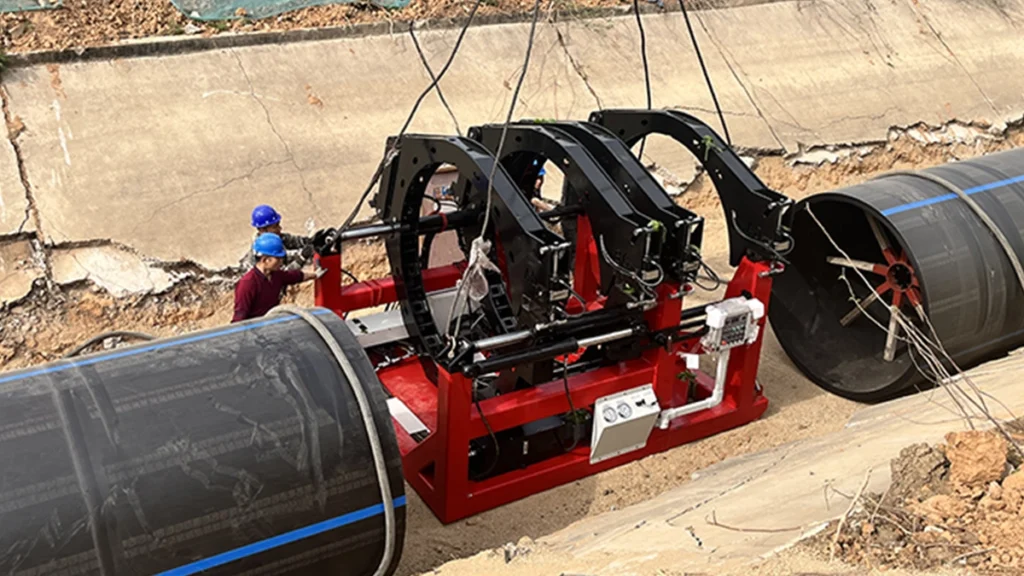
As pipe diameters increase, component weight skyrockets. A heating plate for a 630mm hydraulic butt fusion machine can weigh over 100 lbs (45 kg) and is heated to 425°F. Manual lifting is a leading cause of burns and back injuries.
For large diameter butt fusion machines, mechanical lifting assistance is mandatory. The machine should feature a hydraulic or electric hoist dedicated to moving the heater and facer into the carriage. Operators should never manually position large heaters in the trench. Tag lines are essential to control suspended components in windy conditions.
Identify environmental hazards (rain, wind, extreme cold) and required machine shelters/tents per standards
Moisture is the enemy of a sound fusion joint. Water on pipe ends or the heating plate turns to steam during fusion, creating voids. ASTM F2620 mandates protecting the fusion zone from inclement weather.
Contractors must use welding tents or shelters to block wind, rain, and snow. In extreme cold (below 32°F/0°C), ambient temperature affects the cooling rate. Shelters also protect the operator, reducing fatigue caused by exposure to harsh elements.
Explain emergency shutdown procedures and ergonomic considerations to prevent operator fatigue
Every butt fusion machine needs an easily accessible Emergency Stop (E-Stop) button that instantly cuts power to the hydraulics and facing tool. This button must be large, red, and located on the main control unit.
Operator fatigue is a subtle but dangerous risk. Standing over a hdpe pipe welding machine for a 12-hour shift leads to mistakes. Ergonomics matter—placing the hydraulic control unit on a waist-height stand rather than the ground allows the operator to monitor gauges without hunching, maintaining situational awareness and reducing chronic injury risk.
—
Manufacturing Excellence, Quality Control & Service
Plastic pipe welding machine safety is determined long before the equipment reaches the jobsite—it starts on the factory floor.
Detail Ekberg Welding’s factory testing protocols for hydraulic seals and heating element longevity
At Ekberg Welding, quality control is obsessive. Every hydraulic cylinder undergoes a pressure-holding test, pressurized to 1.5 times its maximum operating rating and held to detect micro-leaks.
Heating plates are subjected to thermal mapping to verify the ±3°C uniformity requirement. Elements are cycled on and off repeatedly to ensure electronic relays can withstand thousands of operational hours. This “torture testing” ensures that when the butt fusion machine arrives in the US, it is ready for immediate, heavy-duty deployment.
Describe the ISO 9001 quality management system applied to every butt fusion machine production line
Ekberg operates under a certified ISO 9001 Quality Management System. Every step—from raw material inspection to final packaging—is documented and traceable. If a batch of hydraulic valves is found defective, the system identifies exactly which serial numbers are affected, allowing proactive customer notification. This traceability is the hallmark of a mature, safety-conscious manufacturer.
Explain the ‘Factory-Direct’ advantage: Customizing voltage (60Hz) and plugs for the US market
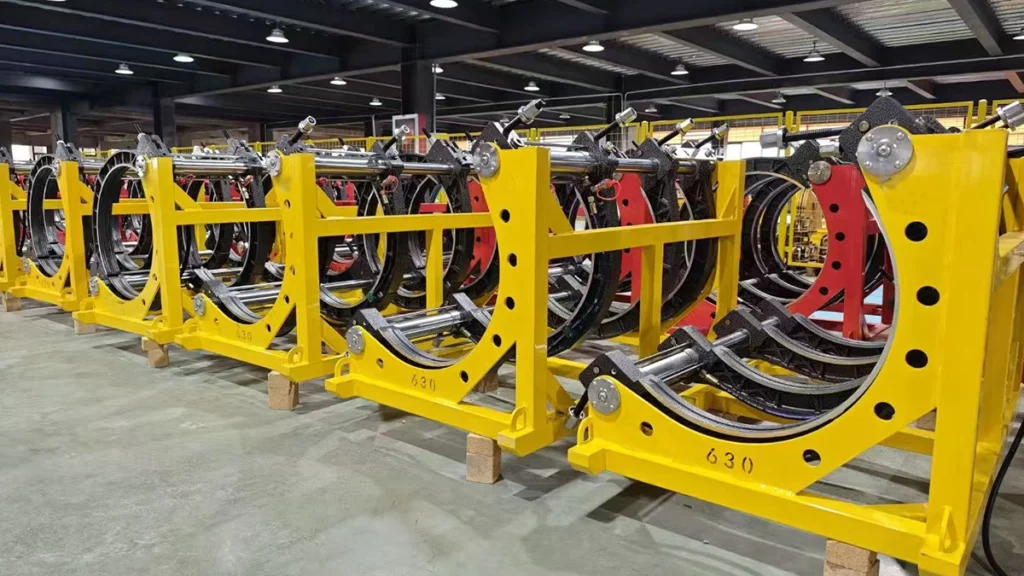
Buying factory-direct from Ekberg offers a distinct advantage: customization. Unlike distributors stocking “one-size-fits-all” models, Ekberg builds to order.
For US clients, this means motors wound specifically for 60Hz performance, ensuring optimal torque and cooling. It means power cords fitted with the exact NEMA plug for your generator. This plug-and-play capability eliminates the safety risk of field modifications, ensuring electrical compliance the moment the box is opened.
Outline the global technical support structure including spare parts shipping to the US
Ekberg knows downtime is expensive. The company supports US clients with a global logistics network capable of delivering critical spare parts via express air freight (DHL/FedEx) in 3-5 days.
Technical support is available 24/7 via online channels for troubleshooting, calibration questions, or software updates. This “always-on” support structure bridges the geographical gap, giving US contractors the confidence that the factory is virtually present on the jobsite.
—
Frequently Asked Questions
Q1: What is the main difference between ASTM F2620 and ISO 21307 welding parameters for butt fusion machines?
The primary difference is pressure and cooling time. ASTM F2620 (US standard) typically requires a “low pressure” range of 60–90 PSI and conservative cooling times. ISO 21307 allows for “High Pressure” (SHP) fusion, using pressures around 75 PSI or higher to significantly reduce cooling times. Ekberg butt fusion machines support both pressure ranges for maximum versatility.
Q2: Do Ekberg butt fusion machines come with data loggers required for US gas projects?
Yes. Ekberg offers integrated CNC data loggers fully compliant with ASTM F3124. These systems record operator ID, joint number, and the critical Time-Temperature-Pressure (TTP) plot. Data is encrypted and exportable for the “Joint Reports” required by municipal gas and water utilities.
Q3: Can Ekberg machines run on standard US generator power (60Hz)?
Absolutely. Ekberg provides factory-customized motors specifically wound for 220V/60Hz US power grids. This prevents overheating and RPM issues common when running standard 50Hz equipment on US generators. We also fit NEMA-standard plugs (e.g., L6-30) upon request to match your site power setup.
Q4: What safety certifications should I look for when importing butt fusion equipment?
Look for CE Marking (indicating compliance with European safety directives for machinery and electronics) and ISO 9001 (ensuring a quality management system in manufacturing). Additionally, verify that the butt fusion machine meets specific electrical safety standards like proper grounding and leakage current protection relevant to OSHA requirements.
Q5: How often do the heating plate and pressure gauge need calibration?
Industry best practice and many utility specifications require calibration every 12 months. The heating plate temperature should be verified with a pyrometer, and the hydraulic pressure gauge checked against a master gauge. Ekberg hdpe pipe welding machines are designed to hold calibration, but annual verification is essential for compliance.
—
Conclusion
The integrity of America’s pipeline infrastructure rests entirely on the quality of the joints connecting it. Adhering to ASTM F2620 standards and utilizing compliant, safety-certified equipment isn’t optional—it is a fundamental responsibility for every contractor and utility owner. The risks of using non-compliant butt fusion machines range from failed pressure tests to catastrophic environmental damage and severe financial liability.
Ekberg Welding offers a strategic balance for US buyers: the manufacturing excellence and cost-effectiveness of a global supplier, combined with the specific regulatory compliance and safety features demanded by the US market. By choosing equipment that offers precise pressure control, integrated ASTM F3124 data logging, and US-spec electrical compatibility, you are investing in the long-term safety and profitability of your operations.
Ready to upgrade your fleet with compliant, high-performance fusion technology?
Contact Ekberg Welding today for a factory-direct quote on US-compliant butt fusion machines and discuss your specific project requirements with our technical team. Ensure your next project is built on a foundation of safety and certified quality.