
Butt Fusion Machine Technology Innovation in PE Pipelines
Table of Contents
Introduction
Global infrastructure is undergoing a massive shift as polyethylene pipeline networks replace aging steel and concrete systems. In parallel, the technology powering butt fusion machines has advanced rapidly to satisfy increasingly rigid safety standards and efficiency targets. The stakes are high: a single failed DN400 joint can easily cost over $15,000 in excavation, repairs, and environmental penalties. Consequently, the margin for error in gas and water distribution is effectively zero. Modern infrastructure projects have moved past relying on operator intuition; today, they demand verifiable data, unwavering fusion parameters, and high-velocity production rates.
This analysis explores the critical transition from manual hydraulic units to fully automated CNC systems and examines how high-pressure welding standards (ISO 21307) are impacting productivity. We will also look at how digitalization is reshaping compliance reporting. By walking through the operational differences in machine tiers, analyzing Total Cost of Ownership (TCO), and providing a technical checklist for Industry 4.0 procurement, this guide offers a clear framework for selecting the right equipment for DN90–DN630 HDPE projects—helping you avoid costly specification errors.
The Evolution of Automation: From Manual to CNC Butt Fusion Machines
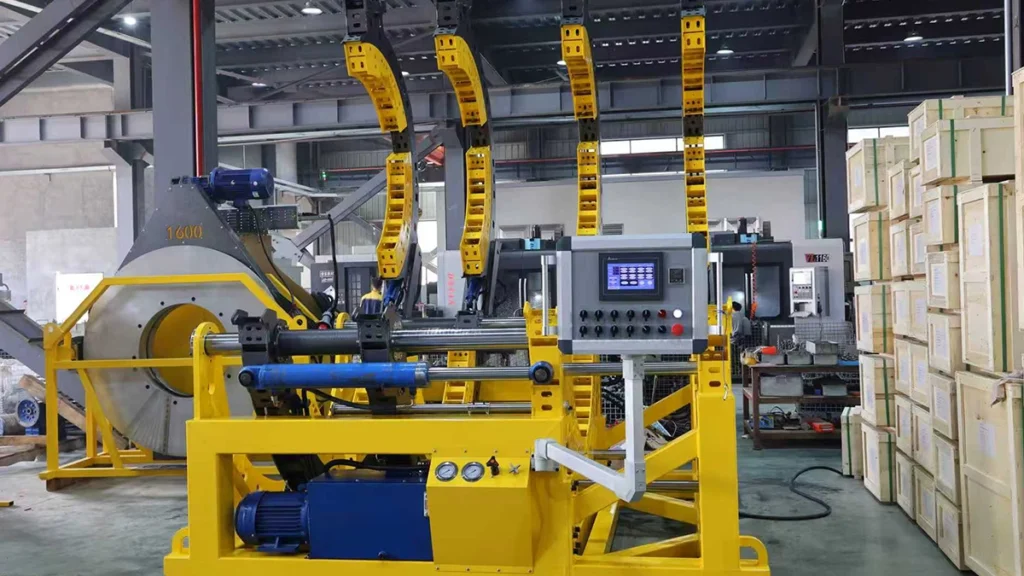
Welding equipment manufacturing has moved steadily away from processes dependent on human skill toward algorithmic control. While manual mechanical butt fusion machines still have a place in small-diameter, non-critical drainage lines, pressure pipes (water, gas, industrial fluids) now require hydraulic semi-automatic or fully automatic CNC (Computer Numerical Control) systems. This isn’t just about convenience; it is about systematically eliminating the variables that cause joint failure.
Research the operational differences between Semi-Automatic and CNC welding cycles
In a semi-automatic setup, the hydraulic unit provides the force, but the operator provides the logic. The technician must manually calculate drag pressure (the force needed to move the carriage), add it to the theoretical fusion pressure, and keep an eye on a stopwatch to time the bead build-up, heat soak, and cooling phases. This introduces substantial risk; a momentary distraction of just 10 seconds during the changeover phase can compromise the entire joint.
Conversely, CNC automatic butt fusion machines remove the operator from the parameter calculation entirely. Once the pipe diameter, SDR (Standard Dimension Ratio), and material grade (e.g., PE100) are entered, the PLC (Programmable Logic Controller) calculates the exact pressure curve required by standards like DVS 2207 or ISO 21307. The machine automatically measures drag pressure before every weld and compensates for it in the final fusion pressure. It strictly enforces heat soak times and cooling cycles; the clamps physically will not release until the calculated cooling time has elapsed, preventing operators from cutting corners to speed up production.
Analyze the impact of closed-loop hydraulic control systems on weld consistency
The defining feature of a high-quality automated welder is its closed-loop hydraulic system. Open-loop systems, common in lower-tier equipment, simply send a signal to the pump to reach a certain pressure without verifying if that pressure is maintained against external resistance.
Ekberg’s CNC butt fusion machines utilize a closed-loop architecture where high-precision pressure sensors provide real-time feedback to the control unit every few milliseconds. If the pressure drops slightly during the cooling phase—perhaps due to a minor hydraulic leak, thermal contraction of the pipe, or shifting soil—the system detects the variance immediately. The PLC commands the pump to compensate, bringing the pressure back to the setpoint within a tolerance of ±0.02 MPa. This dynamic adjustment ensures interfacial pressure remains constant throughout the critical crystallization phase, resulting in a homogeneous weld structure free of voids or stress concentrators.
Compare labor costs and training requirements for Manual vs. CNC machines
For contractors, the economic argument for CNC automation centers on workforce scalability. Operating a manual butt fusion machine on a high-pressure gas line requires a certified, highly experienced technician who understands the “feel” of the fusion process. Such talent is both expensive and scarce.
CNC automatic butt fusion welding machines democratize welding quality. Because the hdpe pipe welding machine handles the physics and the math, operator training can focus on setup, safety, and pipe preparation rather than complex pressure calculations. On large-scale municipal projects, this allows contractors to utilize a broader labor pool while maintaining lower failure rates. Although the upfront capital expenditure for a CNC unit is higher, the reduction in training hours and the near-elimination of cut-out repairs typically yield a lower cost per joint over the lifespan of a 10km pipeline project.
Digitalization and Traceability: Smart Welding and Data Logging
In the era of Industry 4.0, a weld isn’t finished until the data proves it’s compliant. Utility companies increasingly demand “smart” infrastructure where every buried joint has a digital birth certificate. Innovations in data logging and connectivity are transforming butt fusion machines from simple tools into intelligent data nodes within a utility’s asset management system.
Investigate data logger capabilities for compliance reporting
Modern data loggers do far more than print a receipt. They record a comprehensive time-pressure-temperature plot that acts as a forensic audit trail for every joint. Ekberg’s integrated data logging systems record specific parameters mandated by standards like TSG D2002-2006 and ISO 12176.
Key data points include:
- Operator ID and Job Site: Linked via GPS/Beidou coordinates to verify exactly where the weld occurred.
- Environmental Conditions: Ambient temperature is recorded, as extreme cold or heat affects cooling times.
- Thermal History: Heating plate temperature is logged to ensure it remained within the 200°C–230°C range (for PE100).
- Pressure Profile: A granular graph showing pressure maintenance during the bead build-up, heat soak, and cooling phases.
This data is encrypted and exported in tamper-proof PDF formats or CSV files. If a pipeline fails five years later, the utility can retrieve the specific weld report to determine if the failure was due to installation error or a material defect.
Research the role of RFID and Barcode scanning in parameter setup
One of the most persistent sources of error in pipeline construction is mismatched settings—such as welding a PE100 pipe using PE80 parameters or inputting the wrong SDR. To combat this, modern butt fusion welding machines integrate RFID and barcode scanning technologies.
Before the weld begins, the operator scans the barcode on the pipe or fitting. The hdpe fusion machine decodes this data to identify the exact polymer characteristics, diameter, and wall thickness, automatically populating the welding parameters in the CNC system. This “scan-and-weld” workflow prevents the operator from manually overriding safety margins. If the butt fusion machine detects that the inserted pipe does not match the scanned code (e.g., based on drag pressure resistance or clamp diameter), it locks the system and triggers an alarm, preventing a potentially catastrophic mismatch.
Explore remote monitoring and cloud connectivity in welding fleets
The latest generation of welding equipment features Wi-Fi and Bluetooth connectivity, enabling real-time communication with cloud-based fleet management dashboards. This allows project managers to monitor production from the office as it happens.
Instead of waiting for a USB stick to be physically brought back from the field at the end of the week, welding reports are uploaded instantly upon cycle completion. Supervisors can track daily joint counts, monitor utilization rates of specific butt fusion welding machines, and receive instant alerts if a butt fusion machine attempts a weld outside of compliant parameters. For large contractors managing multiple crews across vast distances—such as in mining or agricultural irrigation projects—this remote visibility is crucial for maintaining project schedules and quality control standards.
Hardware Innovations: Heating Elements, Hydraulics, and Chassis Design
While software drives compliance, physical hardware determines durability and field performance. Innovations in metallurgy and mechanical engineering have made modern butt fusion machines lighter, more robust, and more energy-efficient.
Research advancements in PTFE coating technology for heating plates
The heating plate is the heart of the fusion process. Early butt fusion machine generations used basic non-stick coatings that degraded quickly, causing plastic to stick to the heater and creating voids in the weld face.
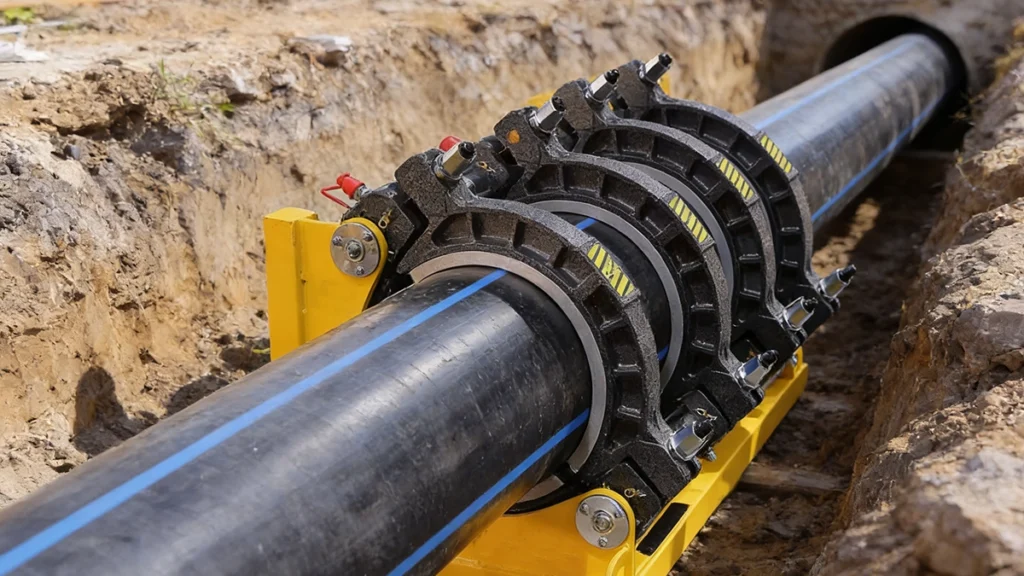
Modern Ekberg butt fusion machines utilize advanced, double-layer PTFE (Polytetrafluoroethylene) coatings applied over aviation-grade aluminum alloy. This combination ensures rapid thermal conductivity and exceptional durability. Crucially, strict manufacturing standards now require temperature uniformity of ±3°C across the entire plate surface. Whether welding a 63mm pipe or a 1200mm main, the temperature at the center of the plate and the outer edge is virtually identical. This uniformity is vital for ensuring even melt depths and bead formation, preventing “cold welds” where the outer rim fuses but the inner wall remains brittle.
Analyze modular chassis designs for difficult terrain applications
Pipeline rights-of-way are rarely flat or easily accessible. Contractors often work in narrow trenches, vertical shafts, or overhead racks. To accommodate these constraints, chassis design has shifted toward modularity.
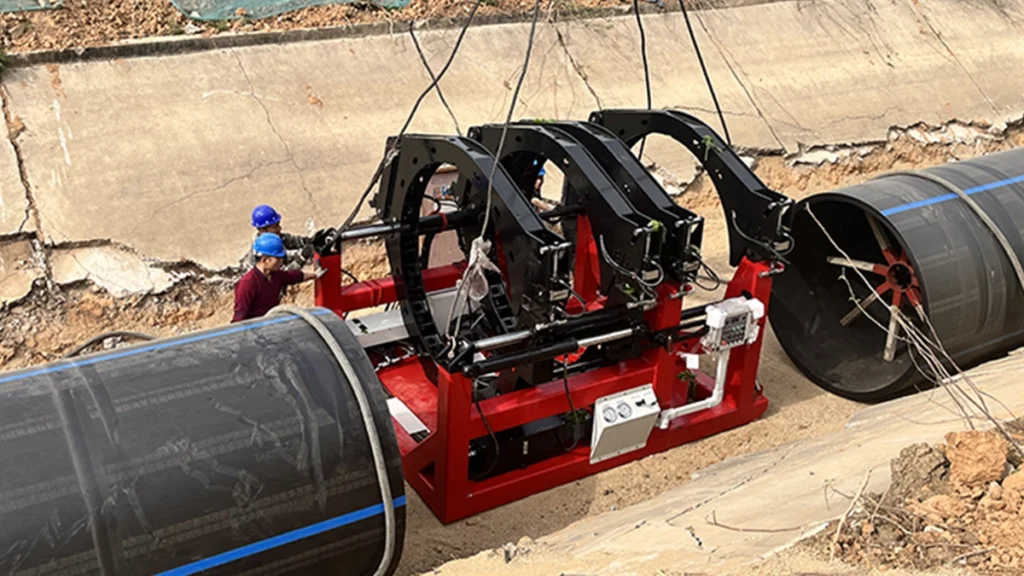
“Split-frame” or separable designs allow the hydraulic unit and electronics to be detached from the carriage body. This significantly reduces the weight and footprint of the unit that must be lowered into the trench. For example, in a tight urban excavation where a full machine cannot fit, the operator can place the carriage around the pipe in the ditch while keeping the hydraulic station and control panel at street level. This flexibility reduces the need for extensive excavation, lowering civil engineering costs and improving safety for the trench crew.
Investigate energy-efficient hydraulic systems and accumulators
Traditional hydraulic power units (HPUs) run the electric motor continuously to maintain pressure, consuming significant fuel when powered by portable generators. New energy-efficient designs incorporate high-capacity hydraulic accumulators.
These accumulators store pressurized hydraulic fluid. During the long cooling phase of a weld—which can last over an hour for thick-wall large-diameter pipes—the motor can switch off or idle while the accumulator maintains the required clamp pressure. This innovation reduces fuel consumption by up to 40% and significantly lowers noise pollution on the job site. Furthermore, it extends the lifespan of the hydraulic pump and motor by reducing thermal buildup and operating hours.
High-Pressure Fusion (ISO 21307) and Productivity Gains
The most significant shift in welding productivity is the adoption of High-Pressure (HP) fusion parameters, outlined in ISO 21307. This standard allows for higher interfacial pressures, which drastically alters the economics of pipeline construction.
Compare Single High Pressure (SHP) vs. Dual Low Pressure (DLP) welding parameters
Traditionally, most polyethylene welding was performed at Low Pressure (SLP or DLP), with an interfacial pressure of approximately 0.15 MPa ± 0.02 MPa. While reliable, this method requires long cooling times to allow the polyethylene crystalline structure to stabilize.
ISO 21307 introduces Single High Pressure (SHP) welding, which utilizes an interfacial pressure of 0.52 MPa ± 0.1 MPa—more than three times the force of standard welding. This higher pressure forces the pipe ends together more aggressively, promoting rapid mixing of the melt flow and allowing for a significantly faster cooling rate under pressure. However, this requires machines with substantially higher clamp rigidity and hydraulic power. A standard butt fusion machine attempting SHP parameters would likely suffer frame distortion or hydraulic stall.
Calculate productivity gains using High Pressure welding on thick-wall pipes
The economic impact of SHP is measurable in hours saved per day.
Consider a project involving DN500 SDR 11 pipe.
- Standard Low Pressure Cooling Time: Approximately 45–50 minutes per joint.
- High Pressure (ISO 21307) Cooling Time: Approximately 25–30 minutes per joint.
By reducing the cooling cycle by roughly 40%, a crew can complete 2 to 3 additional welds per 10-hour shift. Over a month-long project, this equates to hundreds of meters of additional pipeline installed with the same labor cost. For thick-wall pipes used in mining and high-pressure water transmission, the ROI on high-pressure compatible butt fusion machines is often realized within the first few kilometers of installation.
Research Ekberg’s machine compatibility with ISO 21307 standards
To safely execute high-pressure fusion, Ekberg has engineered specific heavy-duty innovations into its HP-compatible series. These butt fusion machines feature reinforced chassis constructed from high-tensile aluminum alloys that resist the immense bending moments generated by 0.52 MPa interfacial pressure.
Additionally, the hydraulic cylinders are upsized to deliver the necessary force without operating at their redline limits. This ensures that the butt fusion machine can maintain stable pressure throughout the cycle without fluctuating, a critical requirement for meeting the ISO 21307 standard. Contractors specifying equipment for SHP projects must verify that the butt fusion welding machine is not just “capable” of the pressure, but engineered to sustain it repeatedly without structural fatigue.
Buyer’s Guide: Selection Criteria for Modern Butt Fusion Machines
Selecting the right equipment requires balancing technical capability with budget constraints. Below is a strategic framework for decision-makers.
Create a checklist for matching machine specs to project requirements
When evaluating vendors, use this checklist to align specs with project needs:
- Diameter Range: Does the butt fusion machine cover your core pipe sizes (e.g., 160mm–315mm) without requiring multiple units?
- SDR Capability: Can the hdpe fusion machine handle the high drag pressures of heavy-wall (SDR 7.4 or SDR 9) pipe?
- Automation Level: Is CNC required for regulatory compliance (gas/water), or is a manual/semi-auto unit sufficient for drainage/irrigation?
- Data Logging: Is it integrated or an expensive add-on?
- Voltage: Does the machine match your site power (110V/220V/440V) and generator capabilities?
- Insert Sets: Are liners for all intermediate sizes (e.g., 200mm, 225mm, 250mm) included in the base price?
Analyze Total Cost of Ownership (TCO) beyond the initial purchase price
The sticker price of a butt fusion machine is only a fraction of its lifecycle cost. A cheap machine that lacks readily available seals or requires frequent recalibration will cost more in the long run.
- Maintenance Intervals: Look for machines using standard industrial hydraulic components that can be serviced locally if necessary.
- Calibration: Budget for annual calibration services, which are mandatory for ISO compliance.
- Spare Parts: Confirm the vendor stocks critical spares like O-rings, trimmer blades, and thermocouples.
- Failure Costs: Factor in risk reduction. A CNC automatic butt fusion machine that prevents one failed weld saves more money than the price difference between it and a manual unit.
Evaluate the importance of safety features in machine selection
Safety is non-negotiable. Ensure the butt fusion machine includes:
- RCD/GFCI Protection: To prevent electric shock in wet trench environments.
- Hydraulic Hose Protection: Burst protection sleeves to shield operators from high-pressure fluid.
- Trimmer Interlocks: The milling cutter should not engage unless it is properly seated in the carriage, preventing amputation injuries.
- Thermal Overload Protection: To save the motor and heater from burnout during generator spikes.
Comparison: Manual vs. CNC
| Feature | Manual / Hydraulic | Fully Automatic CNC |
|---|---|---|
| Operator Skill Required | High (Expert Judgement) | Low (Process Monitoring) |
| Data Logging | Manual / External | Integrated & Automatic |
| Pressure Control | Open Loop (Visual Gauge) | Closed Loop (Sensor Feedback) |
| Weld Consistency | Variable | Near 100% Repeatable |
| Primary Application | Drainage, Irrigation, Non-Critical | Gas, Potable Water, Mining |
Ekberg Manufacturing Excellence, Quality Control & Global Support
At Ekberg Welding, we recognize that our butt fusion machines are the critical link in infrastructure projects. Our manufacturing philosophy centers on precision, durability, and global support.
Detail the factory Quality Control (QC) process for hydraulic seals and electronics
Every Ekberg butt fusion machine undergoes a rigorous QC regimen before leaving the factory. Hydraulic units are subjected to a 24-hour pressure holding test to guarantee zero leaks in the seals or manifold. Electronic control boards undergo thermal cycling tests to ensure they can withstand the extreme heat of desert pipelines and the freezing cold of northern installations without glitching. This “burn-in” process eliminates infant mortality in electronic components, ensuring reliable operation from day one.
Research material standards used in Ekberg machine construction
We utilize high-grade aviation aluminum alloys for our hdpe pipe welding machine bodies. This material offers the ideal balance of lightweight portability and high structural rigidity, essential for maintaining alignment under high fusion pressures. Our trimmer blades are crafted from hardened tool steel, designed to shave continuous, even ribbons of polyethylene even after hundreds of cuts, ensuring perfectly faced pipe ends every time.
Explain the after-sales support and calibration certification services
Equipment is only as good as the support behind it. Ekberg maintains a global network for technical support and spare parts distribution. We provide annual calibration services to certify that your machine’s pressure sensors and temperature probes are reading accurately, issuing certificates that satisfy project auditors and ISO inspectors. Whether you need a replacement set of O-rings shipped overnight or technical advice on welding dissimilar SDRs, our team of engineers is available to keep your project moving.
Frequently Asked Questions
Q1: What is the main advantage of a CNC butt fusion machine over a manual one?
The primary advantage is the elimination of human error. A CNC automatic butt fusion machine automatically calculates welding parameters based on the pipe standard (e.g., ISO 21307) and controls the entire cycle via a closed-loop hydraulic system. This ensures consistent pressure application and strictly enforces cooling times, resulting in a repeatable, high-quality joint that does not rely on the operator’s manual timing or pressure adjustments.
Q2: Can Ekberg butt fusion machines weld different HDPE grades (PE80 vs PE100)?
Yes, Ekberg butt fusion welding machines are compatible with all standard polyethylene grades, including PE80, PE100, and PE100-RC, as well as PP and PVDF. However, the operator must ensure the Melt Flow Index (MFI) of the two pipes is compatible (typically within the range of 0.2–1.7 g/10 min). The CNC system allows users to select the specific material grade to adjust the fusion pressure and heating duration accordingly.
Q3: How often does a butt fusion machine require calibration?
To comply with international standards like ISO 12176 and DVS 2207, butt fusion machines should be calibrated every 12 months. Calibration verifies the accuracy of the pressure sensors, temperature probes, and timer functions. Regular calibration is often a mandatory requirement for contractors working on municipal gas and water projects to ensure the audit trail is valid.
Q4: What is the difference between high-pressure and low-pressure butt fusion?
The difference lies in the interfacial pressure applied to the pipe ends. Low-pressure fusion typically operates at 0.15 MPa, requiring longer cooling times. High-pressure fusion (ISO 21307) operates at roughly 0.52 MPa. This higher pressure forces the melt to mix more rapidly and allows for significantly shorter cooling times, increasing daily productivity. However, it requires a butt fusion machine with a reinforced chassis and higher hydraulic power reserves.
Q5: Does the machine generate a weld report automatically?
Yes, Ekberg CNC automatic butt fusion machines and models equipped with integrated data loggers automatically generate a weld report after every cycle. These reports capture critical data such as operator ID, date/time, ambient temperature, heating plate temperature, drag pressure, and the full pressure curve. Reports can be exported via USB or Wi-Fi in encrypted PDF or CSV formats for quality assurance documentation.
Conclusion
The transition from steel to polyethylene in global infrastructure is accelerating, and the equipment used to join these pipelines must keep pace. The latest innovations in butt fusion machines—specifically the move toward CNC automation, closed-loop hydraulic control, and high-pressure capability—are not just technical upgrades; they are economic necessities. By adopting technology that ensures ISO 21307 compliance and provides transparent digital traceability, contractors can significantly reduce risk, lower insurance liabilities, and increase daily pipe installation rates.
Investing in modern fusion technology is an investment in the longevity of the pipeline itself. When the cost of a single repair dwarfs the price of the equipment, the choice for quality and precision becomes clear.
Upgrade your projects with the latest welding technology. Contact Ekberg Welding today for a factory-direct quote on our advanced CNC and hydraulic butt fusion machines, or request our full technical catalog to find the perfect match for your next project.