
Leading HDPE Pipe Welding Machine Suppliers Guide
Table of Contents
A single failed DN400 gas pipeline joint costs contractors an average of $15,000 in excavation, wasted materials, and rework fees. That is the harsh reality of utility installation. Preventing these catastrophic joint failures comes down to one critical decision: selecting the right HDPE pipe welding machine manufacturer. You need equipment capable of sustaining a strict 220°C heating plate temperature and 0.2 MPa fusion pressure without flinching.
This breakdown cuts through the marketing noise. We will look at essential butt fusion welding machine specifications, mandatory welding parameters like ISO 21307, and the raw financial impact of upgrading to modern automated systems. You will learn how to evaluate hydraulic precision, why DVS-compliant pipe preparation is non-negotiable, and how CNC data logging protects your bottom line. Whether you are fusing DN63mm distribution lines or massive DN2000mm+ PP and industrial HDPE pipes, you will walk away with a clear framework to evaluate factory-direct sourcing models and avoid specification mistakes that derail projects.

The Landscape of Top Industrial Pipe Welding Equipment Brands
Define the Market Tiers
The global market for thermoplastic fusion equipment is heavily stratified. You get what you pay for. Premium manufacturers engineer their hydraulic blocks from solid billet steel. They machine their own chassis for maximum torsional rigidity and apply high-grade PTFE coatings to their heating plates. This mechanical foundation means everything in the trench. When pulling heavy DN630 pipes, a rigid chassis refuses to warp, keeping alignment tolerances strictly under 10% of the pipe’s wall thickness.
Budget workshops take a different route. These low-tier, assembly-only outfits rely heavily on off-the-shelf pneumatic and hydraulic parts. Their HDPE fusion welding machines frequently suffer from pressure drops during the critical cooling phase. If the equipment cannot hold the 0.025 ± 0.002 MPa cooling pressure demanded by ISO 21307 guidelines, micro-voids form within the polymer matrix. That metallurgical failure dictates whether your butt fusion machine survives a decade of brutal fieldwork or dies halfway through a municipal water contract.
Regional Sourcing vs. Global Factory-Direct
When procurement managers search for the best HDPE pipe welding machine manufacturers usa, they usually want three things: rapid technical support, ironclad warranties, and local spare parts. Legacy brands like McElroy have historically owned this regional space. Today, the procurement landscape looks entirely different. Global OEM manufacturers are changing the rules of the game.
Factories like Ekberg Welding, Georg Fischer (Switzerland), and Ritmo (Italy) deliver an unbeatable cost-to-quality ratio through factory-direct models. By cutting out multiple layers of distributor markups, pipeline contractors can secure advanced CNC automatic butt fusion machine for the price of basic manual units. The best global manufacturers bridge the geographical divide by setting up localized distribution hubs. You get the economic advantage of direct OEM sourcing without sacrificing regional spare parts availability or operator training.
Compliance with Global Standards
Top industrial pipe welding equipment brands don’t just treat international regulations as paperwork. For them, compliance dictates the physical engineering of the butt fusion welding machine. Equipment must meet ISO 21307, the standard governing butt fusion jointing procedures, which includes the Dual Low Pressure (DLP) parameters that push heating temperatures to 225–240°C.
Then there is DVS 2207-1. This stringent German benchmark for heated tool butt welding geometry demands exact bead width and height requirements—metrics easily verified in the field via flange calipers. For gas infrastructure, EN 12007 adherence is absolute, requiring zero-leak tolerances and precise traceability. If a manufacturer cannot provide documented validation against these standards, they expose your business to massive liability during third-party weld inspections.
Essential Equipment Categories Every Top Manufacturer Should Offer
Butt Fusion Machines
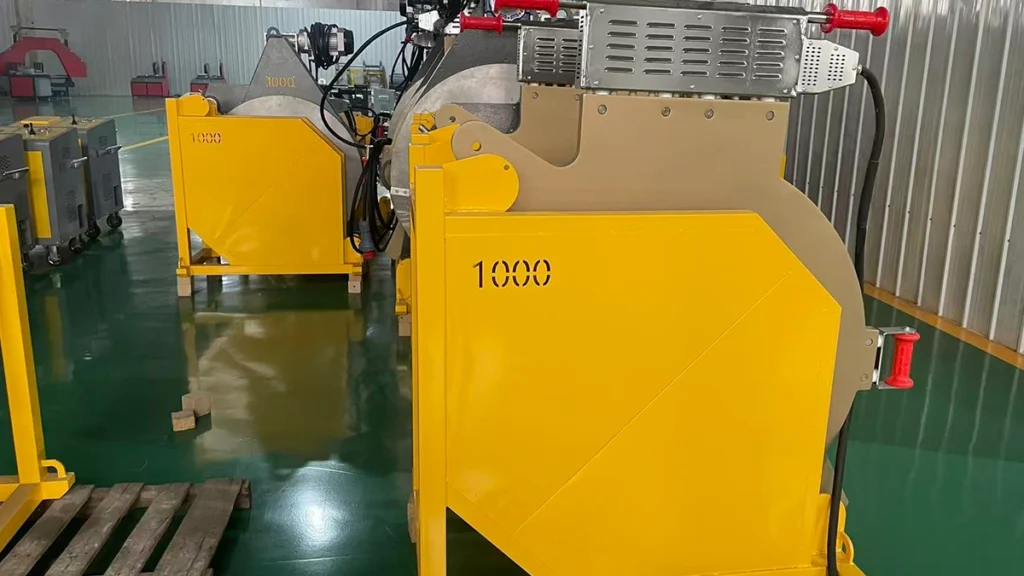
A serious manufacturer provides a complete lineup of butt fusion machines, scaling from manual and hydraulic units to fully CNC-automated powerhouses. Hydraulic cylinder precision separates the elite from the average. Industry benchmarks for large-diameter rigs (like the Georg Fischer Type 500-630) demand maximum operating pressures up to 200 bar just to overcome the immense drag resistance of heavy pipe strings.
Advanced machines rely on proprietary algorithms to nail the exact fusion pressure. Ekberg, for example, defines butt welding pressure using a specific formula: P = (K × S_pipe) / S_cylinder. Here, K represents the material pressure coefficient, S_pipe is the cross-sectional area, and S_cylinder is the total effective piston area. This math guarantees the applied force translates flawlessly to the required 0.15 ± 0.02 MPa interfacial pressure, forcing molecular entanglement across the weld zone.
Electrofusion Welders
Modern electrofusion welders might operate at a standard 40V welding voltage, but they require massive computational power to manage energy delivery safely. Elite manufacturers build barcode scanning directly into the control unit to ensure strict compliance with ISO 12176-3 (Operator ID) and ISO 12176-4 (Pipe Codes).
These units must automatically regulate voltage and tweak cycle times based on ambient temperature sensors. The corresponding electrofusion fittings produced by these experts maintain an ovality of <5‰dn, easily beating national standards. Premium fittings also use a rear wiring process with concealed resistance wires. This design minimizes oxidation and stops the wire detachment issues that constantly plague cheap consumables during melting.
Pipe Preparation Tools
Perfect welds demand perfect surface preparation. True manufacturing experts know this, which is why they engineer specialized pipe cutters and rotary pipe scrapers. When polyethylene pipes sit in the sun, UV light and oxygen create an oxidized surface layer. This layer acts as a physical barrier to molecular fusion.
Stripping away this oxide layer is mandatory for DVS compliance. High-end scrapers peel off a continuous, uniform ribbon of material to expose virgin polymer. At the same time, precision milling cutters (facers) built into the butt fusion machines plane the joining areas perfectly parallel. This guarantees zero-gap contact against the heating plate long before the soaking phase even starts.
How to Evaluate a Pipe Welding Machine Manufacturer (Buyer’s Checklist)
Technical Specifications & Consistency
Engineers evaluating a HDPE pipe welding machine manufacturer must look hard at heating plate temperature control. For HDPE applications, operators strictly control settings at 200~220°C. The plate must hold an accuracy of ±2°C to ±5°C across its entire surface. Cold spots cause incomplete fusion. Hot spots destroy the polymer chains.
Hydraulic pressure stability is equally critical. The HDPE fusion welding machine’s hydraulic accumulator has to hold the exact cooling pressure (e.g., 0.025 ± 0.002 MPa) for long stretches. For thick-walled pipes, this can exceed 45 minutes. If the pump continuously cycles on and off to maintain pressure, it introduces micro-vibrations that can literally fracture the cooling polymer matrix.
Safety and Ergonomics
Trenches are dangerous. Equipment safety features should be a primary metric during your evaluation. Butt fusion welding machines need a crane-lift-friendly chassis with certified lifting eyes that perfectly balance the center of gravity during drops.
Electrical safety is non-negotiable in damp excavations. HDPE pipe welding machine must run on 220V AC mains with aggressive grounding protection. Look for integrated limit switches that physically stop the facer from spinning unless it is locked in place, alongside strategically positioned emergency stop buttons. Ergonomic control panels that let operators stand safely outside the pipe’s drop zone prove a manufacturer actually cares about field safety.
Warranty, Spare Parts, and Total Cost of Ownership (TCO)
Capital expenditure (CapEx) is just the tip of the iceberg. Smart contractors calculate the Total Cost of Ownership (TCO). Butt fusion machine downtime can paralyze an entire pipeline crew, bleeding thousands of dollars a day. You have to evaluate a manufacturer’s after-sales Service Level Agreement (SLA) and spare parts availability.
A solid supplier rapidly deploys critical components like PTFE plates, facer blades, and hydraulic seals. When you map out TCO over a standard 3-year project lifespan, the math becomes clear. Factoring in zero-rework benefits and minimized downtime, investing in premium equipment routinely slashes overall project costs by up to 25% compared to the endless repair cycles of budget butt fusion welding machine.
Buyer Decision Checklist
- Thermal Accuracy: Verify heating plate uniformity (maximum ±5°C deviation).
- Hydraulic Capacity: Ensure the pump easily sustains 200 bar for large diameters.
- Data Logging: Confirm USB/Printer export for unalterable PDF/CSV weld records.
- ISO Compliance: Verify ISO/12176.2-1998 certification on electrofusion units.
- FAT Documentation: Demand proof of Factory Acceptance Tests, specifically displacement and high-bar pressure testing.
The Shift to Automation: Why Automatic Pipe Welding Machine Suppliers are Dominating
Eliminating Human Error in Gas and Water Pipelines
The pipeline industry is undergoing a massive shift. Automatic HDPE pipe welding machine suppliers now dominate procurement specs for major utility builds. Why? Because manual operations rely on operators visually monitoring gauges, calculating drag pressure in their heads, and timing soaking phases with a stopwatch. This introduces massive human error, particularly at the end of a grueling 12-hour shift.
CNC automation wipes out this variability. The hdpe pipe welding machine’s processor automatically calculates the exact drag pressure needed to move the pipe and seamlessly adds it to the baseline fusion pressure. It controls the changeover time with brutal precision—managing the critical seconds between pulling the heater and joining the pipes—ensuring the polymer never cools below its fusion state before contact.
Data Logging and Traceability
Utility inspectors no longer take your word for it. They demand absolute proof of weld integrity before commissioning a pipeline. Automatic butt fusion machines deliver this by generating locked, unalterable PDF or CSV weld records. Every single parameter is logged in real-time: ambient temperature, initial drag pressure, heater temperature, soaking time, and cooling duration.
These systems align perfectly with ISO 12176 standards. Using a barcode scanner or light pen, the system logs the operator’s ID alongside specific pipe batch codes. This creates a permanent digital twin of the physical pipeline. Gas and water companies can pinpoint exactly who welded a joint, the weather conditions at the time, and the exact materials used.
ROI Calculation
Yes, the initial CapEx of a CNC automatic butt fusion machine outpaces a manual hydraulic unit. However, the Return on Investment (ROI) is staggering. Field data consistently shows that upgrading to an automatic CNC pipe welding machine yields a payback period of under 6 months.
Massive efficiency gains drive this rapid ROI. Automated welding cuts dedicated labor costs by roughly 20% while boosting daily joint output by up to 30%. Better yet, CNC automatic butt fusion welding machines trigger a 30% drop in weld defects. When you virtually eliminate the need to excavate, cut out, and re-weld failed joints, the cost savings over a 3-year project lifespan are astronomical.
| Feature | Manual/Hydraulic Welder | CNC Automatic Welder |
|---|---|---|
| Pressure Control | Operator-adjusted via valves | Microprocessor-controlled |
| Time Management | Manual stopwatch | Automated countdown & lock |
| Data Traceability | Handwritten logs | Unalterable PDF/CSV export |
| Defect Rate | High (susceptible to fatigue) | Near-zero (process locked) |
| Typical Payback | 12-18 months | < 6 months |
Application-Specific Solutions Provided by Leading Factories
Municipal Water and Gas Distribution
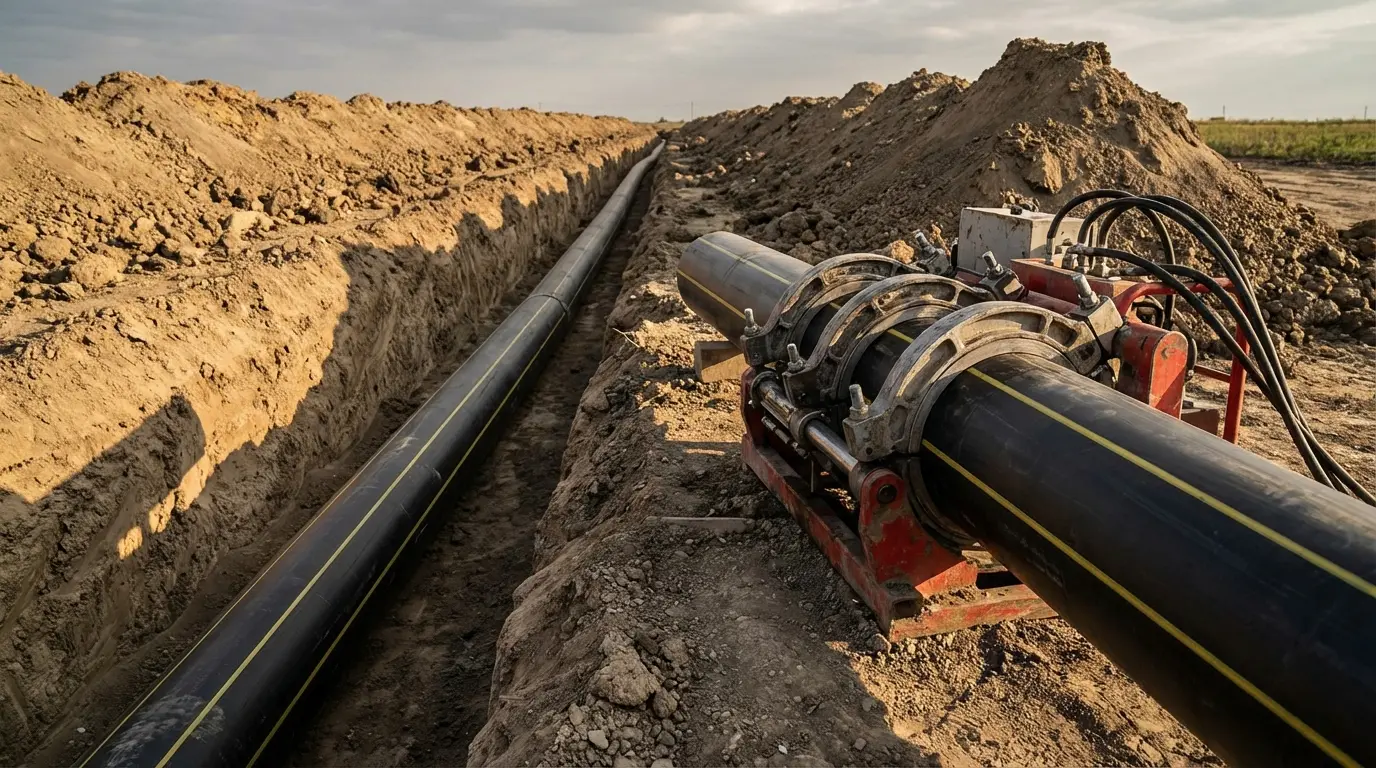
Municipal infrastructure operates under severe zero-leak mandates. Gas companies simply do not allow room for operator interpretation. Top manufacturers build butt fusion welding machines engineered specifically for these unforgiving environments, loading them with tamper-proof data logging and automated parameter locks. If the ambient temperature drops below safe thresholds, or the heating plate fails to hit exactly 220°C, the CNC controller physically locks out the fusion cycle. This hard-stop capability protects the integrity of the entire gas network.
Mining and Slurry Pipelines
Mining sites destroy weak equipment. Slurry pipelines rely on thick-walled HDPE or PP pipes (like SDR 11 or SDR 17) to survive extreme internal abrasion. Fusing these thick walls requires distinct pressure scaling. For example, pipes with a wall thickness >20mm need butt-fusion pressures reduced to 1/6 of the initial value after 10 seconds. Otherwise, you squeeze out the molten material. Leading factories ruggedize their HDPE pipe welding machines for these dusty, high-altitude operations by utilizing sealed hydraulic circuits and heavy-duty dust filters on cooling fans to keep the butt fusion machines running 24/7.
Agricultural Irrigation and Industrial Plants
Mobility is everything for agricultural irrigation installers and industrial plant engineers. Equipment has to cross varied, broken terrain quickly. Manufacturers solve this by building track-mounted hdpe fusion machines and wheeled chassis that can be towed straight to the joint. These hdpe fusion welding machines are also built for generator compatibility. Because remote sites rely on dirty portable power, the equipment features robust voltage regulators that absorb power fluctuations without dropping the heating cycle or wiping the data logger’s memory.
Ekberg Welding: Manufacturing Excellence, Quality Control & Global Support
Factory Capability & Engineering
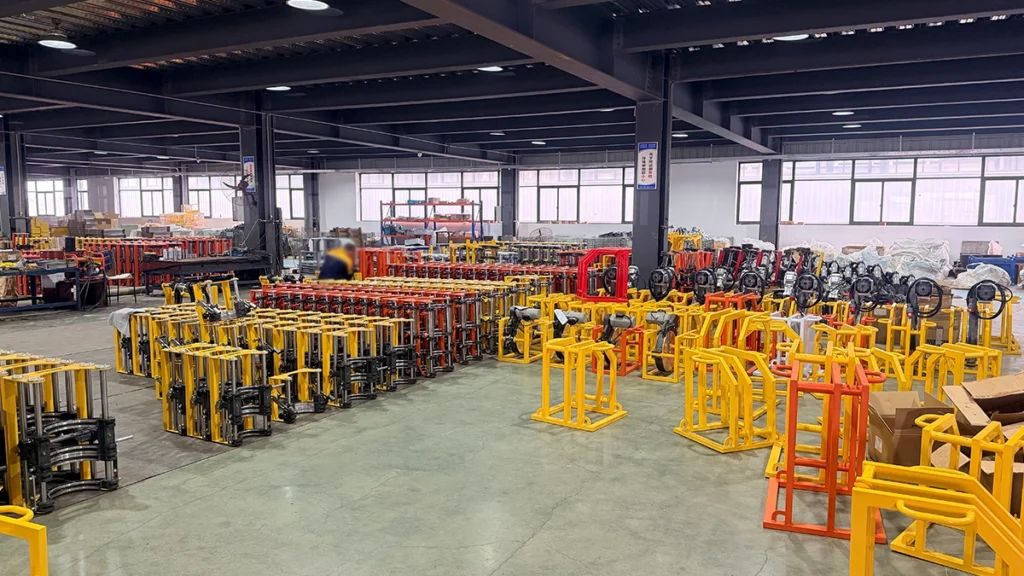
As a premier pipe welding machine manufacturer, Ekberg Welding runs an ISO-certified manufacturing facility that sets the industry standard. They use advanced CNC machining centers to carve hydraulic blocks directly from solid metal. This eliminates the micro-fissures that plague cheap cast components. By sourcing premium raw materials, Ekberg ensures every chassis withstands the brutal pulling forces required for heavy-wall pipe fusion. This engineering obsession also extends to specialized constant-temperature control during the wiring of their electrofusion fittings, slashing contact resistance and preventing premature blowouts.
Strict Quality Control Protocols
You cannot inspect quality into a product. You have to manufacture it. Ekberg forces every plastic pipe welding machine through punishing Factory Acceptance Tests (FAT) before it ever sees a shipping crate. These protocols include high-bar hydraulic pressure testing to guarantee seal integrity under maximum load. They run rigorous electrical safety checks, aggressively testing the 220V AC mains and grounding protection against power surges. Finally, Ekberg maps heating plate uniformity using thermal imaging, proving that the critical 200~220°C temperature range stays perfectly even across every inch of the PTFE surface.
Global Service Network
Even the most reliable pipeline welding machine company knows that heavy machinery eventually needs field support. Ekberg Welding built a comprehensive global service network specifically to maximize contractor uptime. They deploy intensive operator training programs, teaching field crews how to exploit CNC automation and read ISO-compliant joint reports. Backed by rapid-response technical troubleshooting and global distributor support, Ekberg makes sure replacement parts and expert guidance are always within reach, no matter where your project is located.
Frequently Asked Questions
Q1: What certifications should I verify when selecting a pipe welding machine manufacturer?
Always check for CE marking for European safety compliance and ISO 9001 for factory quality management. The butt fusion machine itself must comply with ISO/12176.2-1998 for electrofusion and ISO 21307 for butt fusion parameters. If your project utilizes German engineering standards, verify that the equipment meets DVS 2207-1 compliance for exact bead geometry.
Q2: Are automatic pipe welding machine suppliers worth the higher initial investment?
Absolutely. The long-term ROI easily justifies the initial CapEx, usually delivering a payback period of under six months. CNC automation strips human error out of the equation, creating a 30% drop in weld defects. Because they generate unalterable PDF/CSV data logs, these pipe welding equipments ensure high inspector approval rates and wipe out the massive costs of excavating and reworking failed joints.
Q3: How do I source equipment from the best pipe welding machine manufacturers usa while maintaining budget?
The smartest approach is leveraging global OEM manufacturers that use a factory-direct purchasing model combined with localized distribution. Brands like Ekberg Welding offer the financial advantage of direct manufacturing pricing while maintaining local warehouse hubs. You get fast technical support and spare parts without absorbing multi-tier distributor markups.
Q4: What are the standard lead times for industrial-grade butt fusion machines?
Lead times depend entirely on butt fusion machine size and factory capacity. Local distribution hubs frequently stock standard manually operated or hydraulic butt fusion machines up to DN800mm for immediate deployment. However, massive CNC automatic butt fusion machines (DN63mm-DN630mm) or custom-ruggedized mining builds usually require a 4 to 8-week production and shipping cycle.
Q5: Can top-tier welding machines fuse both HDPE and PP pipes?
Yes. High-end butt fusion welding machines offer precise temperature range adjustability. They easily hit the standard 200-230°C range required for HDPE, while also adapting to the specific melting points of Polypropylene (PP). Advanced hydraulic controls let operators apply precise pressure scaling based on the pipe’s Standard Dimension Ratio (SDR), ensuring perfect interfacial pressure regardless of the thermoplastic.
Conclusion
Selecting a reliable pipeline welding machine company is not a standard procurement transaction. You are choosing a long-term engineering partner. The physical integrity of high-pressure gas networks, municipal water grids, and industrial slurry lines depends entirely on the flawless application of heat and pressure. When you partner with a tier-one pipe welding machine manufacturer, you secure access to heavy-duty chassis engineering, ruthless quality control, and machinery that strictly adheres to DVS and ISO standards.
The future of pipeline construction belongs to CNC automation, locked data logging, and DVS-compliant pipe preparation. Adopting these technologies kills human error, slashes rework costs, and speeds up project timelines. Premium equipment isn’t just an expense; it is an investment that pays for itself in months.
Do not risk your next infrastructure project on substandard budget equipment. Contact Ekberg Welding today for a customized project consultation, detailed machine specifications, and factory-direct quotes to arm your crews with the most reliable fusion technology in the industry.