
Top Pipe Welding Machine Suppliers: Premium Buyer’s Guide
Table of Contents
Your project’s profitability—and the long-term integrity of your pipelines—hinges on one critical choice: your equipment. You need reliable pipe welding machine suppliers capable of guaranteeing ±5°C temperature stability alongside a dead-on 0.15 MPa fusion pressure. Yet, the global market for industrial pipe welding machine brands is notoriously fragmented. Procurement teams often find themselves caught in a maze, trying to separate genuine Original Equipment Manufacturers (OEMs) from low-tier trading outfits.
We built this comprehensive buyer’s guide to cut through the noise. Here, we break down exactly how to spot premier manufacturers by scrutinizing their technical specs, CNC automation capabilities, and lifecycle pricing models. We will walk you through the non-negotiable compliance parameters for ISO 21307 and DVS 2207. We’ll also unpack the industry’s massive pivot toward automated pipe welding equipment manufacturers and lay out a concrete framework for calculating Total Cost of Ownership (TCO). By the time you finish reading, you will have a standardized, foolproof methodology for sourcing the exact butt fusion machine needed for your DN40 to DN2000 high-density polyethylene (HDPE) projects. Armed with this knowledge, you can dodge expensive specification errors, wipe out joint failure rates, and aggressively streamline your next major utility infrastructure buy.
The Landscape of Industrial Pipe Welding Machine Brands
Core Categories of Plastic Pipe Welding Machine
Top-tier manufacturers don’t just build butt fusion welding machines; they engineer targeted solutions for specific field environments. Butt fusion machines do the heavy lifting for municipal infrastructure. These workhorses join HDPE pipes from a modest DN63 all the way up to massive DN2000 diameters. For most contractors, the operational sweet spot sits right between DN50 and DN630. That makes these units absolutely indispensable for main water and gas transmission lines.
Electrofusion welders tackle an entirely different set of operational demands. Running on a stable 380V (50Hz) input with a rated welding current of 50-400A, these highly specialized units thrive in confined spaces. They are the go-to choice for branching operations and emergency trench repairs. Contractors traditionally rely on them for smaller diameters below DN63. However, step up to an advanced 30.3 KVA electrofusion unit, and you can easily handle much larger sizes, depending on your specific fitting requirements.
Finally, we have multi-angle fitting welding machines. Designed strictly for factory fabrication rather than the mud of a trench, these stationary units are a game-changer. They let contractors pre-fabricate elbows, tees, and wyes indoors under tightly controlled conditions. The result? Perfect alignment before the assemblies ever leave for the job site.
Comparing Supply Chain Business Models
Who exactly are you buying from? Understanding your vendor’s business model dictates your long-term supply chain reliability. True OEM manufacturers design, engineer, and build their equipment in-house. When you partner directly with an OEM, you unlock unfiltered technical support, seamless warranty claims, and butt fusion machine built to strict internal engineering tolerances.
Regional distributors play the middleman. Sure, they offer the perk of localized inventory and quicker initial delivery. But their technical chops vary wildly. A single distributor might juggle half a dozen industrial pipe welding machine brands. That broad focus severely dilutes their expertise when you need help troubleshooting complex CNC hydraulic systems or advanced electrofusion data logging.
Then you have trading companies. For infrastructure contractors, these outfits pose the highest risk. They simply slap a new label on generic equipment and mark up the price. You get zero localized R&D. No engineering support. If a heating plate suddenly drops below its mandatory 230°C operating temperature out in the field, good luck. Trading companies rarely have the technical backbone to dispatch replacement parts or diagnose faulty PT100 sensors on the fly.
Compliance with Global Welding Standards
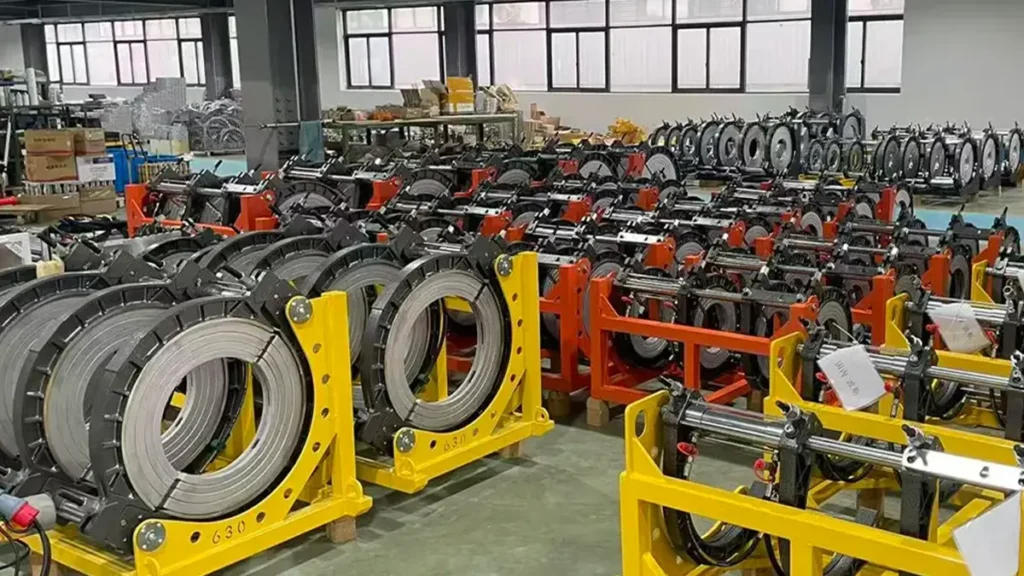
The best pipe welding machine suppliers don’t guess; they engineer their equipment to rigidly match international standards. This guarantees pipeline integrity across diverse regulatory landscapes. Take ISO 21307. As the primary international benchmark for butt welding HDPE pipe, it dictates the exact heating, soaking, and cooling phases used throughout metric countries. If your equipment misses these parameters, you will consistently churn out brittle, failing joints.
When dealing with chemical, mining, or high-pressure industrial piping, DVS 2207-1 rules the industry. This unforgiving German directive demands that butt fusion welding machines hit precise pressure values: an alignment pressure of 0.15 N/mm², a heating-up pressure of 0.03 N/mm², and a joining pressure of 0.5 N/mm². Any top-tier pipe fusion welding machine must automatically calculate and apply these mechanical loads based purely on the pipe’s cross-sectional area.
Electrofusion equipment answers to ISO 12176.2-1998. This standard lays out systematic requirements covering classification, safety performance, and technical indicators. Compliance means the pipe welding machine’s transformer and microprocessors can safely push a 70V rated no-load voltage. More importantly, they must hold a 35% duty cycle without frying the internal circuitry during back-to-back trench operations.
Market Trends Toward Automation
Right now, the infrastructure sector is undergoing a massive pivot toward automated pipe welding equipment manufacturers. Why? Because municipal gas and water utility boards increasingly demand comprehensive traceability for every single joint buried underground. Manual butt fusion welding machines leave everything up to the operator. They have to calculate soak times and stare at pressure gauges. That approach simply cannot generate the verifiable data utilities now require.
Automation butt fusion welding machine completely strips human fatigue out of the equation. Modern CNC systems actively monitor ambient environmental temperatures. They then automatically tweak the heating and cooling parameters to offset freezing weather or blistering heat. Risk mitigation drives this technological leap. A single failed DN400 gas main weld can trigger tens of thousands of dollars in emergency excavation, repairs, and brutal environmental fines.
Key Criteria for Evaluating Pipe Fusion Welding Machine Suppliers
Assessing Equipment Versatility and Working Ranges
Standardizing your equipment fleet means taking a hard look at working ranges. Municipal contractors constantly run into varying pipe sizes on the exact same project. Your butt fusion machines need to adapt on the fly. Sourcing equipment that effortlessly spans a broad spectrum—like DN40 through DN2000+—drastically cuts down the need to haul multiple pipe welding machines to a single site.
Versatility also comes down to the clamping mechanisms. High-quality chassis designs leverage modular reducing inserts. These allow a massive DN630 butt fusion welding machine to clamp down and align a smaller DN315 pipe without losing the central axis. Watch out for cheap inserts, though. If their ovality exceeds <5‰dn, the resulting pipe mismatch will instantly fail rigorous visual inspections and ruin the weld’s internal flow dynamics.
Hydraulic Control System Requirements
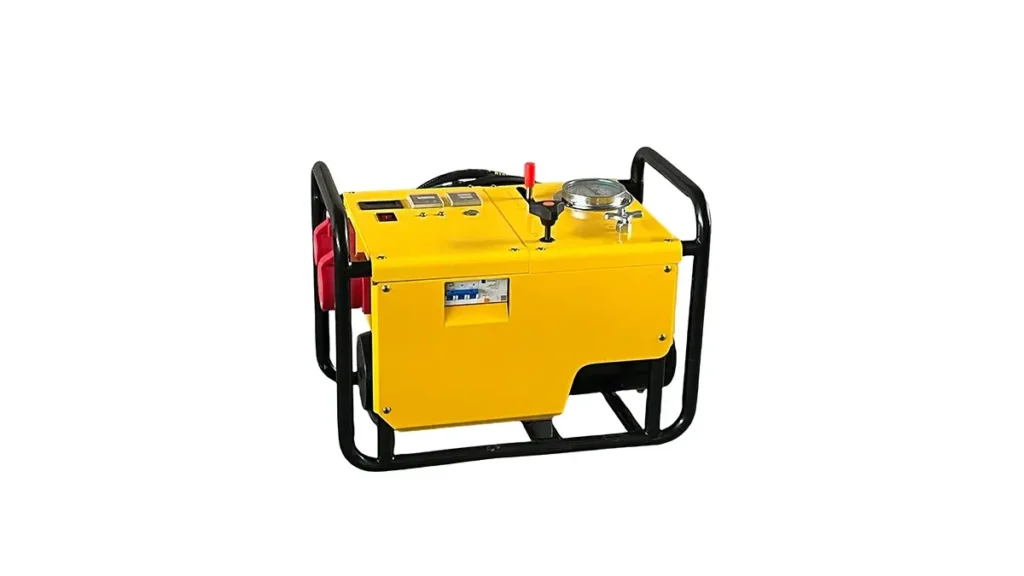
The hydraulic power unit (HPU) acts as the beating heart of any butt fusion machine. Here, precision is absolutely non-negotiable. Say you are welding a DN315 HDPE pipe. The butt fusion welding machine must hold strict drag pressure thresholds right between 0.15 MPa and 0.17 MPa.
What happens if the hydraulic system suffers from internal bypass leaks or relies on cheap, inaccurate pressure transducers? Disaster. The pipe welding machine will either over-pressurize the joint—squeezing out the molten polymer to create a weak “cold weld”—or under-pressurize it, failing to fuse the molecular chains entirely. Procurement teams must verify that all hydraulic cylinders are aggressively stress-tested. They must prove capable of holding sustained joining pressure throughout the entire cooling phase without bleeding off a single bar of pressure.
Heating Plate Temperature Stability
Polyethylene fusion boils down to thermodynamics. Industry standards demand a heating temperature of 230°C for standard HDPE pipe. But simply hitting 230°C is only half the battle. The true test of equipment quality is maintaining that exact temperature uniformly across the entire surface of the PTFE-coated heating plate.
Engineering specs must demand a maximum ±5°C variance across the plate. If cold spots creep in, the pipe ends melt unevenly, creating an asymmetrical bead. To prevent this, high-end equipment leverages advanced PT100 temperature sensors paired with PID controllers to monitor and instantly adjust thermal output. Furthermore, you must control allowable voltage fluctuations during operation to within ±0.5V. Verify this with a True RMS universal meter to prevent sudden, catastrophic temperature drops in the trench.
Analyzing Total Cost of Ownership (TCO)
Reviewing a pipe welding machine supplier price list requires looking way past the initial sticker shock. Sure, basic hand-rotating butt welding machines for PE/PPR might start around $800. Manual hydraulic units generally run from $800 to $2,500. But those numbers only represent baseline acquisition costs.
True Total Cost of Ownership (TCO) factors in the daily realities of trench work. You have to account for energy consumption, preventative maintenance schedules, and the inevitable wear on consumables like rotary scraper blades and PTFE cloth replacements.
Buyer Selection Checklist for TCO Evaluation:
- Labor Efficiency: Can one operator run the butt fusion machine, or does it demand two?
- Consumable Lifespan: Are the cutting blades forged from high-strength, easily replaceable steel?
- Downtime Risk: Will the supplier dispatch spare parts rapidly to keep your trench crews moving?
- Scrap Rate: How many welds fail because of pipe fusion welding machine calibration errors versus simple operator fatigue?
Spotlight on Automated Pipe Welding machine Manufacturers
Eliminating Human Error with CNC Technology
Computer Numerical Control (CNC) automated butt fusion machines have completely upended municipal gas distribution projects. How? By systematically stripping human error out of the trench. In a manual setup, the operator has to calculate the drag pressure, add it to the joining pressure, and then stand there with a stopwatch timing the heat soak and cooling phases.
Automated machines trade that guesswork for algorithmic perfection. The operator just punches in the pipe diameter, the standard (like SDR 11), and the material type. The CNC unit takes over. It calculates the exact DVS 2207-1 parameters, automatically pops the carriage open after the heat soak, extracts the heating plate, and drives home the exact 0.5 N/mm² joining pressure. This automated sequence guarantees identical, bulletproof welds every single time, regardless of whether the operator has twenty years of experience or two weeks.
Traceability and Data Logging Features
Today’s utility companies demand absolute accountability. Fortunately, advanced automated systems come fully loaded with comprehensive data logging capabilities that track every single variable of the fusion process. Before a weld even starts, the system prompts for an operator ID and logs the precise GPS coordinates of the joint.
As the weld progresses, the butt fusion welding machine records ambient temperature, heating plate temperature, applied pressure, and automated cooling times. If any parameter drifts outside the acceptable standard deviation, the butt fusion machine instantly flags the weld as an error. You can compile this data into printable welding parameter record sheets or export it via USB or Bluetooth. This gives contractors indisputable proof of quality when it’s time for hydro-testing sign-offs.
Smart Sensors in Electrofusion Welders
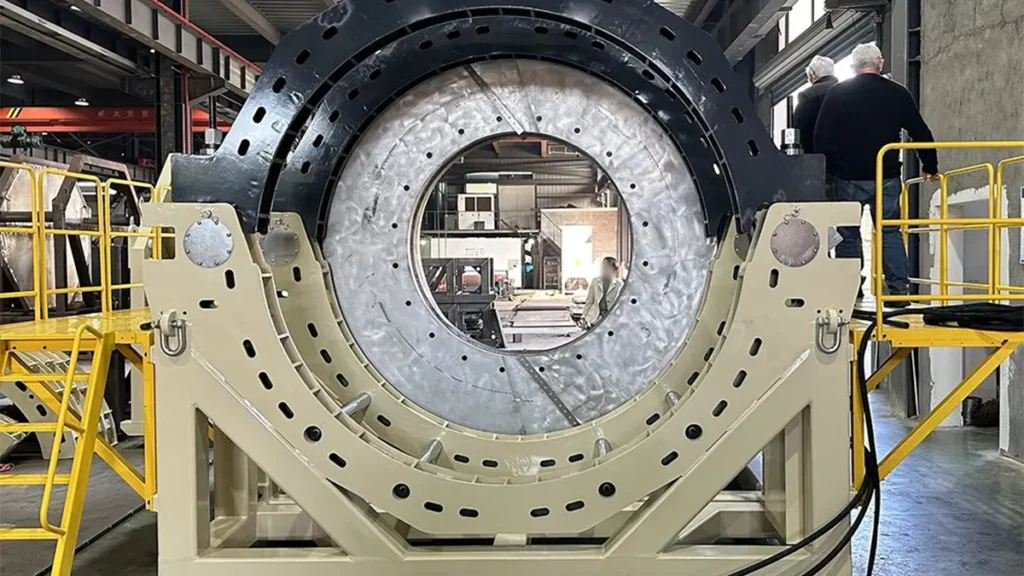
Advanced electrofusion welders deploy highly sophisticated smart sensors to wrangle the complex electrical demands of the fusion process. Pushing a 40V welding voltage, these butt fusion machines rely on optical pen barcode scanners. The scanner reads the fitting and beams the data straight to the control system, locking in the exact current and time required for the job.
Safety mechanisms are hardwired deep into these units. High-end models feature microswitch calibration wells. If molten resin starts overflowing from the fitting, these switches instantly cut the power, preventing dangerous electrical shorts and protecting the operator. The systems can even detect improper pipe insertion depths, halting the process before a defective weld has a chance to form.
Calculating Return on Investment (ROI)
The premium price tag of CNC automated equipment pays for itself astonishingly fast through operational savings. Think about a standard 3-year pipeline project. Manual welding demands constant supervision, heavy overlapping quality assurance checks, and statistically higher joint failure rates.
Manual vs. CNC Automated butt fusion welding machine Comparison
| Feature | Manual Hydraulic Machines | CNC Automated Machines |
|---|---|---|
| Parameter Calculation | Operator dependent (Stopwatch/Math) | Automatic algorithmic calculation |
| Data Logging | Manual written logs | GPS, Operator ID, Digital export |
| Defect Rate | Moderate (susceptible to fatigue) | Near-zero (system-controlled) |
| Labor Requirement | High (constant monitoring) | Low (operator can prep next pipe) |
| Initial Capital Cost | Lower ($800 – $2,500 range) | Higher (Premium investment) |
ROI accelerates dramatically when you factor in the reduction of post-weld finishing, the end of overlapping welds, and slashed labor expenses. A near-zero defect rate means zero costly re-excavations. That protects your project’s profit margins from day one.
Essential Accessories and Pipeline Preparation Tools
The Importance of High-Quality Pipe Cutters
A flawless weld doesn’t start when the heating plate touches the polymer. It starts with the cut. Sourcing high-quality pipe cutters from the same supplier guarantees equipment compatibility and preserves the pipe’s structural geometry.
Whether you use guillotine cutters or specialized rotary models, they must deliver perfectly square, burr-free cuts. If a pipe gets sliced at even a slight angle, the facing tool on the butt fusion machine has to work overtime to shave the ends parallel. That wastes material and burns precious preparation time. Precision cutters ensure the pipe ends hit the facing tool with minimal ovality, making the alignment phase incredibly smooth.
Rotary Pipe Scrapers and Oxidation Removal
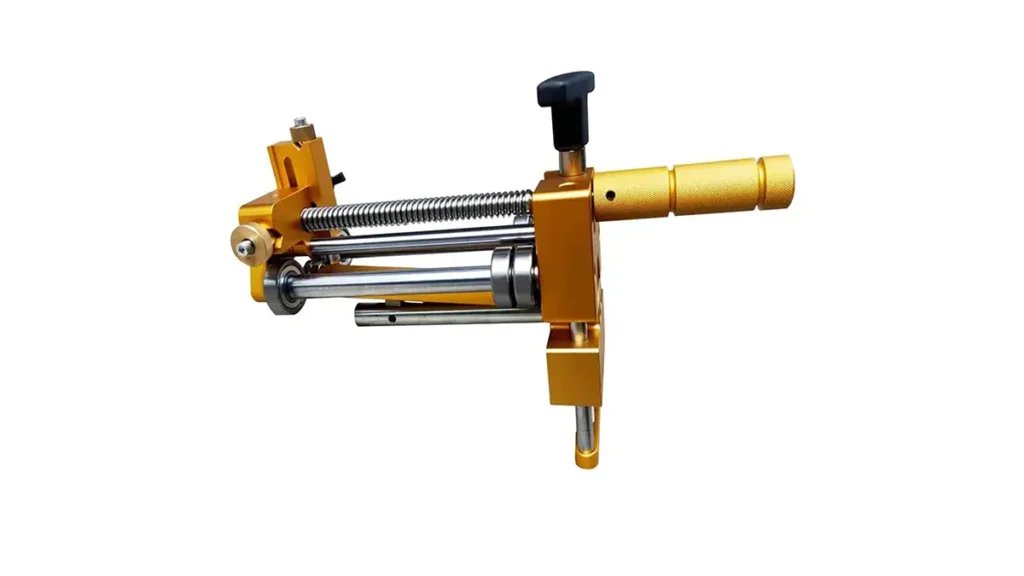
When it comes to electrofusion welding, surface preparation is arguably more important than the actual welding process. Polyethylene pipe naturally develops a tough oxidation layer when exposed to UV light and air. This microscopic barrier aggressively prevents the polymer chains from cross-linking during fusion.
Following strict DVS guidelines, operators must deploy rotary pipe scrapers to peel away a precise 0.1mm to 0.2mm of this oxidation layer. Furthermore, the scraped length must extend exactly 10mm past the pipe insertion depth to guarantee complete fusion zone coverage. *Critical Warning:* If you skip scraping—especially on pipes baking in a laydown yard for months—you will see a massive spike in defective joints. It can easily trigger a 100% welding failure rate. Steer clear of suppliers who don’t offer dedicated, precisely engineered scraping tools.
Comprehensive Tooling Capabilities
Ekberg industrial pipe welding machine brands stand out by providing a complete ecosystem of pipeline preparation tools. A standalone machine is practically useless without the right ancillary equipment backing it up in the field.
Smart procurement teams evaluate a supplier’s ability to deliver custom reducing inserts, flange adaptors, and stub end holders. Heavy pipes also demand height-adjustable supports fitted with chrome-plated steel rollers. These rollers drastically cut drag friction during the alignment and joining phases. Without them, the hydraulic cylinders have to overcompensate just to pull the pipes together, which can easily skew your critical 0.15 N/mm² alignment pressure calculations.
Impact on Stringent Hydro-Testing
Proper pipe preparation makes or breaks a pipeline’s ability to survive punishing hydro-testing and destructive quality checks. Strict bead inspection criteria mandate that the bead height remains perfectly uniform. Curled edges must be sliced off and inspected to verify the internal weld quality.
Pulling this off requires physical space. You need a minimum of 150mm clearance around the pipes down in the trench to maneuver external pipe scrapers and specialized bead removal tools. When contractors use perfectly matched equipment from a single OEM—from the cutter to the scraper directly to the CNC welder—those joints consistently crush high-pressure hydrostatic tests on the very first try.
Factory Capability, Certification & Global Support
OEM Manufacturing Excellence and R&D
Teaming up with established automated pipe welding equipment manufacturers like Ekberg Welding locks in your access to ISO-certified manufacturing excellence. True OEMs bankroll in-house R&D engineering teams whose sole focus is solving brutal field challenges.
You can see this engineering depth in the hardware. Ekberg, for instance, utilizes a highly specialized rear wiring process featuring concealed resistance wires. This clever design minimizes the risk of detachment and rapid oxidation in harsh trench environments. Their proprietary terminal welding process also slashes contact resistance, guaranteeing rock-solid power delivery during the make-or-break heating phases of electrofusion.
Strict 100% Quality Control Protocols
You cannot inspect quality into a product; you have to engineer it in and verify it relentlessly. Leading suppliers enforce brutal 100% quality control protocols long before a butt fusion welding machine ever hits a shipping crate.
These protocols involve punishing hydraulic leak tests under maximum load to confirm absolute zero pressure drop. Technicians meticulously calibrate PT100 temperature sensors against lab-grade standards to lock in that mandatory ±5°C variance. Finally, the machine chassis undergoes intense digital and physical frame stress analysis. This proves the frame won’t warp under the immense clamping forces required to hold DN2000 pipes.
Global Supply Chain and Inventory Efficiency
On massive infrastructure projects, delivery timelines are just as critical as the technical specs. Elite suppliers operate highly efficient global supply chains backed by razor-sharp inventory management systems.
This logistical muscle translates to fast lead times, even when you’re ordering bulk containers for international mega-projects. By stockpiling strategic reserves of critical components—like hydraulic pumps, PTFE-coated heating plates, and digital control boards—OEMs can assemble, test, and ship customized fleet orders at breakneck speed. That keeps pipeline contractors right on schedule.
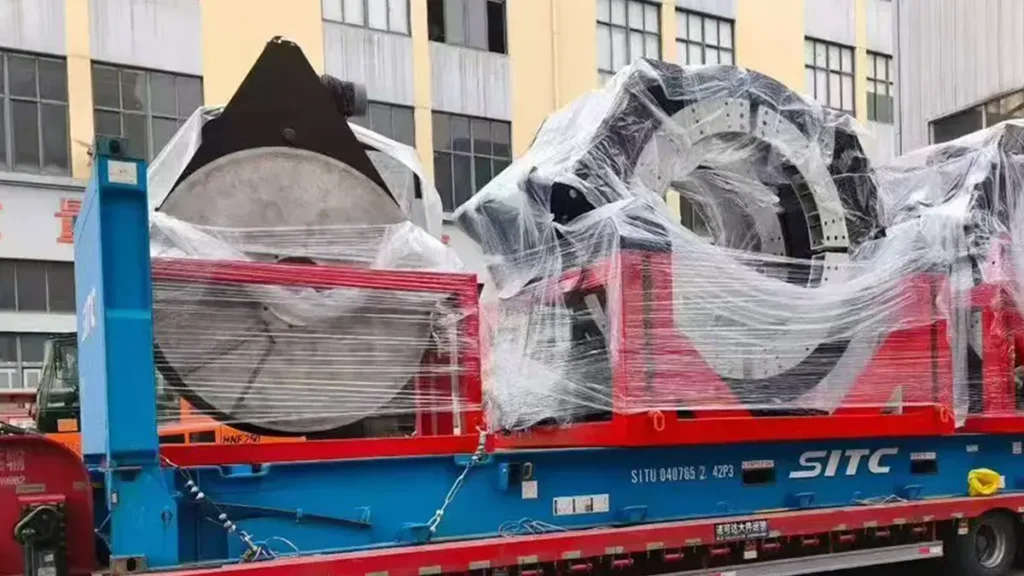
Comprehensive After-Sales Support
A premium supplier proves their real worth after the equipment hits the dirt. Comprehensive after-sales support is the secret to maintaining project momentum. Ekberg delivers streamlined operator training designed to teach electrofusion welding in “six straightforward steps.” This aggressively shrinks the learning curve for green trench crews.
Support also means providing bilingual maintenance manuals and overnighting spare parts. Furthermore, daily verification protocols require operators to check input and output currents. If voltage fluctuations suddenly exceed ±0.5V, you need immediate technical troubleshooting. Having a direct line to OEM engineers for remote diagnostics stops minor electrical gremlins from causing days of agonizing project downtime.
Frequently Asked Questions
Q1: How do I request a customized pipe welding machine supplier price list for a large-scale water project?
To get an accurate pipe welding machine supplier price list, reach out to the OEM directly with your exact project specs. Tell them your required pipe diameter range (for example, DN40-DN630), the material you are fusing (HDPE/PPR), and your preferred technology (manual hydraulic versus CNC automated). The engineering team will crunch the numbers on butt fusion welding machine configurations, necessary reducing inserts, and consumable tooling to hand you a comprehensive, factory-direct quote.
Q2: What are the main advantages of buying direct from automated pipe welding machine manufacturers like Ekberg?
Skipping the middleman and buying direct from an OEM guarantees you uncompromised technical support, rigorous ISO-certified quality control, and factory-direct pricing devoid of bloated distributor markups. OEMs back their gear with comprehensive warranties, promise rapid access to exact-match spare parts, and give you a direct line to R&D engineers to troubleshoot weird field issues. It’s all about ensuring your pipeline projects suffer zero unnecessary downtime.
Q3: Do top industrial pipe welding machine brands offer custom voltage and plug configurations for different regions?
Absolutely. Leading manufacturers engineer their machinery to interface with global electrical standards. Heavy-duty electrofusion units, for example, are usually built for a stable 380V (50Hz) input pushing 30.3 KVA power ratings. OEMs can easily customize transformers, wiring harnesses, and heavy industrial plug configurations to perfectly match your regional power grid or the output of your onsite generators.
Q4: How important is CNC data logging technology for municipal gas pipeline welding projects?
It is non-negotiable. Municipal gas infrastructure demands zero-defect reliability paired with 100% traceability. CNC data logging automatically captures operator IDs, exact GPS locations, ambient temperatures, and precise fusion pressures. This entirely removes human error from parameter calculations. More importantly, it hands you indisputable, digitally exported proof of compliance for every single joint—which is mandatory for surviving regulatory hydro-testing and safety audits.
Q5: What warranty period and technical troubleshooting support should I expect from a leading manufacturer?
The best manufacturers offer ironclad warranties that cover hydraulic systems, digital controllers, and chassis integrity. But the real value lies in immediate technical troubleshooting. If your daily verification protocols suddenly flag voltage fluctuations exceeding ±0.5V, OEM engineers are standing by to remotely diagnose the fault, provide bilingual maintenance steps, and rush replacement components to your site so you can keep digging.
Conclusion
Sourcing the right equipment from top pipe welding machine suppliers isn’t just a purchasing task; it is a strategic move that dictates the safety, longevity, and ultimate profitability of your pipeline infrastructure project. Procurement teams have to look way past the initial sticker price. You must evaluate butt fusion machinery based on its ability to lock in strict technical tolerances—like ±5°C temperature stability and dead-on 0.15 MPa fusion pressures—across massive DN40 to DN2000 working ranges. As the industry rapidly pivots toward automation, teaming up with an OEM that delivers CNC data logging, smart sensor technology, and a full arsenal of preparation tools (like precision rotary scrapers) is the only way to guarantee zero-defect welds.
Partnering with a proven factory means you aren’t just buying metal and hydraulics; you are securing a comprehensive engineering solution backed by ruthless 100% quality control and global after-sales support. Don’t gamble your critical gas and water infrastructure on unverified trading companies. Contact Ekberg Welding today to request a highly detailed pipe welding machine supplier price list. Discuss your exact project parameters with our engineering team, and lock in reliable, factory-direct equipment for your next major installation.