
Butt Fusion Welding Machine Manufacturer: Get a Custom Quote
Table of Contents
When you are deep in the trench, equipment failure is not just an inconvenience—it is a catastrophic blow to your project timeline and profit margins. Sourcing your equipment directly from a premier butt fusion welding machine manufacturer guarantees factory-direct pricing, bespoke engineering, and the rugged reliability required for heavy-duty HDPE pipe joining. Maintaining a highly controlled 0.2 MPa fusion pressure during operations can slash joint failure rates by over 60%. For pipeline contractors and utility providers, bypassing the middleman to partner directly with a proven producer solves both quality control and budget constraints.
This guide breaks down exactly how to evaluate top-tier suppliers and establish rigorous butt fusion machine selection criteria for applications ranging from DN40mm all the way to DN2600mm. We will explore detailed cost breakdowns and the non-negotiable requirements for DVS 2207 and ISO 21307 compliance. Along the way, we will show you how to calculate long-term ROI, weigh different automation levels, and demonstrate exactly why Ekberg Welding stands out as a trusted global partner for industrial fusion requirements.
Read on to build a clear, data-driven framework for selecting the perfect equipment for your next municipal or industrial contract. You will walk away knowing how to avoid costly specification errors, dodge massive distributor markups, and secure the best possible custom quote for your pipeline infrastructure.

Evaluating Top Butt Fusion Welding Machine Suppliers: What to Look For
Assess engineering capability and request a custom butt fusion welding machine quote
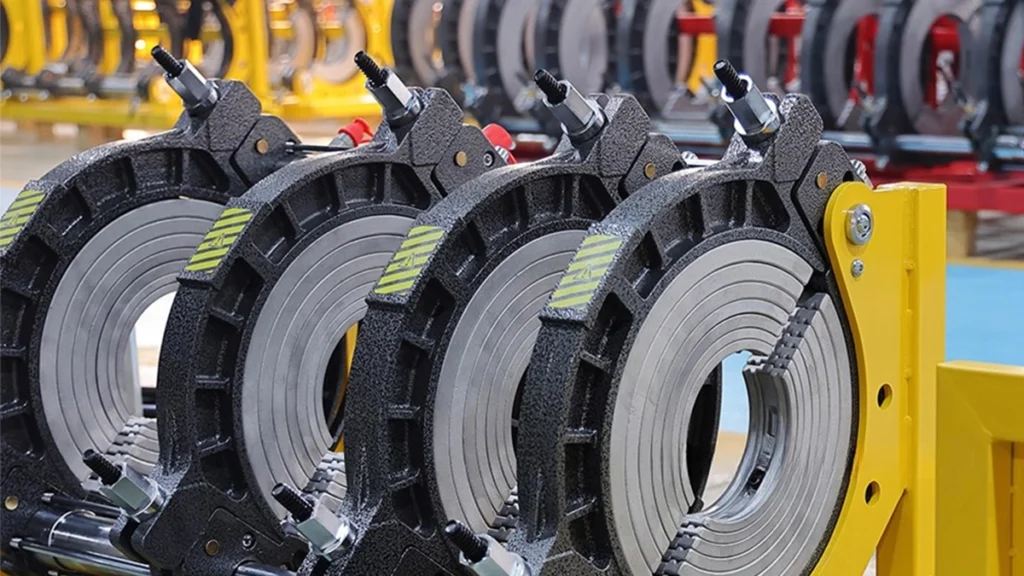
Procuring pipeline machinery goes far beyond buying assembled parts. You need to validate the structural and hydraulic engineering that keeps the system intact under extreme clamping forces. Top-tier suppliers engineer their own chassis and hydraulic systems from the ground up. Ekberg, for instance, leverages high-pressure aluminum die-casting for hdpe fusion welding machine bodies up to 630mm. This ensures zero chassis deflection even when the hydraulic load is maxed out. When you reach out to request a custom butt fusion welding plastic pipe welding machine quote, always verify that the manufacturer has the independent R&D bandwidth to modify clamp configurations or integrate specialized Programmable Logic Controllers (PLCs) tailored to your specific diameter and wall thickness parameters.
Verify strict compliance with international welding standards
Standard compliance is never optional, especially in municipal gas and water distribution. Your equipment must explicitly support the rigorous parameters dictated by ISO 21307, DVS 2207-1, and ASTM F2620. The German DVS 2207-1 standard—a benchmark in the chemical and mining sectors—demands highly precise heat soak times, typically hovering around 10 seconds per millimeter of wall thickness. Meeting this requirement means tightly controlling the heating plate temperature variance. While standard industry acceptable variance is ±5°C, premium manufacturers engineer their heating plates to hold a strict ≤ ±3°C variance. This precision guarantees that the polymer melt flow index remains perfectly stable across the entire face of the pipe.
Evaluate after-sales infrastructure, global spare parts availability, and technical support response times
Trench downtime bleeds thousands of dollars a day. A dependable manufacturing partner delivers a robust after-sales infrastructure, not just a piece of hardware. Look closely at their warranty terms. Ekberg provides up to 3 years of coverage for non-human-induced damage, easily outpacing the industry’s standard 1-year warranty. You also need to verify their global spare parts inventory. Parts for standard models should leave the facility within 24 hours. The best suppliers back this up with 24-hour remote video troubleshooting and, for select large-scale contracts, complimentary annual on-site maintenance.
Compare the long-term value of direct manufacturer pricing versus high distributor markups
Western brands dominate much of the global market, but their reliance on multi-tiered distribution networks routinely inflates end-user prices by 30% to 50%—without adding a single ounce of technical value to the butt fusion machine. Buying directly from a butt fusion welding machine manufacturer completely eliminates these bloated margins. Contractors can then take that saved capital and reinvest it into superior technology. Instead of settling for a manual hydraulic system, direct procurement makes it affordable to upgrade to a fully automated CNC unit featuring RFID barcode scanning, achieving flawless joint traceability for the exact same initial budget.
Machine Selection Checklist: Finding the Right Equipment for Your Project
Define pipe diameter requirements and material compatibility
Finding the right chassis size sets the baseline for your operational flexibility. Machines are categorized by their maximum outer diameter (OD) capacity, running anywhere from DN40mm up to DN2600mm. The most common working ranges include 40–160mm, 90–315mm, 180–450mm, and 630–1200mm. But diameter is only half the battle; material compatibility is equally critical. The machine must be capable of generating the specific interfacial pressures required for PE, HDPE, PP, and PVDF thermoplastics. Welding PVDF, for example, demands a completely different temperature calibration than standard PE100, meaning your machine needs highly responsive, hyper-accurate digital temperature controllers.
Choose the optimal automation level based on project scale
Your choice of automation directly dictates daily weld output and QA/QC consistency.
- Manual Systems: Best suited for low-pressure, small-diameter (under 250mm) agricultural or irrigation jobs where keeping costs low is the primary goal.
- Hydraulic Semi-Automatic: The workhorse for municipal water projects (up to 2600mm). Operators manually punch in the heat and pressure parameters, while the hydraulics take over the heavy physical fusion.
- CNC Automatic Systems: Non-negotiable for high-pressure gas lines and massive mining operations. These units use PLC integration paired with RFID barcode scanning to automatically lock in ISO/DVS parameters. This eliminates human calculation errors and standardizes bead sizes across the board.
Analyze critical operational specs: heating plate precision and milling cutter power
A butt fusion joint is only as strong as the operational specs behind it. For standard HDPE pipe, heating plates are usually calibrated to 210°C ± 10°C. However, the true test of a butt fusion welding machine is its change-over time—how fast the plate recovers that heat the second the pipe is removed. Next, look at the milling cutter’s power output. It needs high-speed carbon steel blades powered by a heavy-duty chain mechanism. It has to shave thick-walled pipes (like SDR 7) simultaneously on both sides, keeping the alignment tolerance strictly under 10% of the pipe’s wall thickness.
Assess environmental adaptability: trench vs. workshop use
Your equipment needs to match where it will actually be deployed. Workshop fabrication benefits from stable power grids and perfectly flat surfaces. Under these controlled conditions, and if the joint is fully supported, cooling times under pressure can sometimes be cut by up to 50% according to updated DVS 2207-11 guidelines. Trench work is a different beast entirely. It demands rugged terrain mobility. Prioritize pipe welding machines with modular designs—separate clamping and operating systems connected via high-pressure quick-connect hoses. This allows your crew to lower the heavy chassis into a cramped trench while operating the hydraulic station safely from ground level.
Buyer Decision Checklist:
- Pressure Gauge: Must be digital and capable of calculating total drag plus interfacial pressure.
- Temperature Variance: The heating plate must maintain a strict ≤ ±5°C threshold.
- Timers: Look for independent dual-channel timers to track heat absorption and cooling separately.
- Hydraulics: Cylinders must be robust enough to handle SDR 7 pipes at the butt fusion welding machine’s absolute maximum diameter.
- Testing: Demand pre-shipment pressure holding validation from the supplier.
Cost Analysis: How Much Do Butt Fusion Machines Cost?
Detail average manufacturer price ranges segmented by pipe size and automation level
Mapping out your capital expenditure starts with understanding the manufacturer’s pricing tiers. When asking how much do butt fusion machines cost, the answers swing wildly depending on capacity and automation. Small manual butt fusion machines designed for 40mm–250mm (≈1.5″–10″) pipes typically range from $500 to $2,000 USD, making them ideal for basic plumbing and light-duty applications. Step up to hydraulic butt fusion machines, which cover a wide span from 40mm to 2600mm, and prices generally fall between $3,000 and $35,000 USD for mid-size units, scaling significantly higher for large-diameter configurations. For high-spec infrastructure projects requiring automatic butt fusion machines (63mm–630mm), capital investments usually start around $15,000 USD and increase further depending on automation level, CNC controls, and data-logging capabilities.
Identify hidden lifecycle costs: maintenance, calibration, and downtime
The sticker price is just the beginning. Hidden lifecycle costs will quickly destroy your project margins if you gamble on cheap, unverified equipment. Substandard hydraulic seals inevitably cause pressure drops during critical phases—like the 13-minute cooling window for a 315mm SDR 33 HDPE pipe. The result? Failed welds that cost an average of $15,000 a pop to dig up and replace. Power consumption is another hidden factor; a 1000mm hydraulic butt fusion machine draws an 8000W power supply, which requires specific, heavy-duty generator sizing. Finally, factor in the mandatory annual calibration of your PLC and pressure gauges to maintain strict ISO compliance.
Calculate long-term ROI: direct procurement vs. equipment rental
Contractors frequently default to renting, but the math heavily favors direct procurement for multi-year projects. Monthly rental fees for mid-to-large fusion rigs sit between $1,000 and $5,000 depending on the diameter. Over a standard 3-year municipal pipeline project, renting a large-diameter butt fusion machine will burn through $180,000. Conversely, buying a large-diameter HDPE pipe welding machine straight from the factory pays for itself in under 8 months. Once that payback period ends, the equipment transforms into a pure profit-generating asset for all future bids.
Explain specific factors that influence custom quotes
Several technical add-ons will shift the final price when you request a custom quote. Integrating smart data loggers to satisfy strict QA/QC inspectors increases the upfront cost but saves your team hundreds of hours in manual paperwork. If you need to weld smaller pipes within a large chassis, specialized reducing inserts must be precision-machined to stop pipe slippage under massive pressure. Custom clamp designs—like narrow clamps built specifically for fitting-to-fitting fusion in cramped pump stations—also require bespoke engineering that will adjust your baseline price.
Core Technologies in Ekberg Butt Fusion Machines
Describe advanced PTFE-coated heating plates for uniform heat distribution
The thermodynamic performance of the heating plate makes or breaks the weld. Ekberg builds its heating plates from a highly corrosion-resistant aluminum alloy designed to hit a maximum temperature of 270°C. These plates are heavily treated with an advanced PTFE (Teflon) coating. This crucial anti-stick layer stops molten polymer from clinging to the metal during the fast change-over phase, effectively preventing micro-voids in the fusion zone. Furthermore, the alloy’s high thermal mass guarantees uniform heat distribution, locking in that strict ≤ ±5°C surface temperature variation required for high-stress industrial applications.
Detail the stability of Ekberg’s hydraulic stations
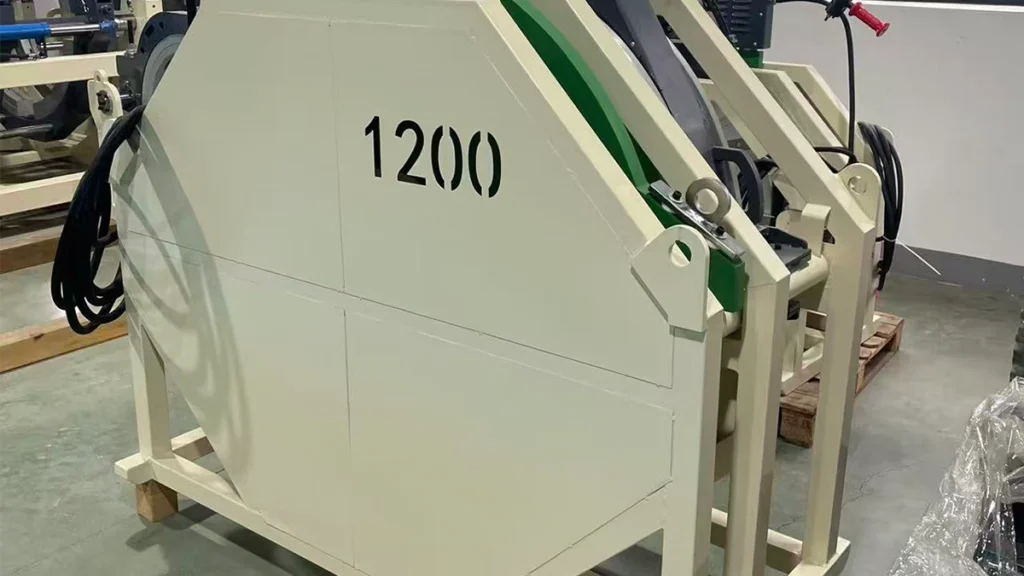
Hydraulic stability is simply non-negotiable. Total welding pressure is a calculation: it is the sum of the drag pressure (the brute force required to move a heavy pipe) plus the theoretical interfacial welding pressure. If a DVS standard calls for 60 bar of interfacial pressure, and dragging a massive 1200mm pipe takes 40 bar, your hydraulic gauge needs to accurately output and hold exactly 100 bar. Ekberg’s hydraulic stations utilize heavy-duty accumulators and ultra-precise valves to lock in this exact pressure during long cooling phases without straining the motor, effectively eliminating joint crystallization issues.
Explain the integration of smart data logging systems for joint traceability
Today’s pipeline infrastructure requires absolute, undeniable traceability. Ekberg hardwires smart data logging systems straight into the hydraulic control units. Powered by PLC technology and RFID barcode scanners, the system works seamlessly: an operator scans a pipe fitting, and the butt fusion welding machine instantly logs the material type, SDR, and diameter. It then automatically calculates the exact heat soak time (for example, 97 seconds for a 9.7mm wall) and the equalization pressure. Every single weld gets a digital signature, generating tamper-proof QA/QC reports that keep municipal inspectors and gas utility regulators satisfied.
Highlight the robust, reinforced chassis design built for harsh trench conditions
Municipal water sectors and mining operations subject machinery to brutal conditions. Ekberg hdpe fusion welding machines are engineered with heavily reinforced chassis built specifically to shrug off mud, water ingress, and heavy mechanical impacts. The clamping frames combine high-strength steel with high-pressure aluminum die-casting. This structural integrity ensures the clamps will never warp, even when applying maximum force to stubborn, out-of-round pipes. Because of this rigidity, the initial bead height during the equalization phase forms perfectly—measuring exactly between 0.5mm and 1.5mm symmetrically around the pipe’s entire circumference.
Factory Capability, Certification & Global Support
Detail Ekberg’s manufacturing excellence and CNC machining
As a premier butt fusion welding machine manufacturer, Ekberg runs its production facility under uncompromising ISO 9001 quality assurance protocols. While many competitors merely assemble cheap, off-the-shelf parts, Ekberg relies on precision CNC machining to forge proprietary clamps, hydraulic cylinders, and chassis elements. This deep vertical integration guarantees that every structural component hits exact engineering tolerances. By co-developing core technologies with Australian engineering teams, Ekberg successfully merges rugged mechanical design with top-tier electronic control systems, rivaling major Western brands at a fraction of the capital cost.
Describe the comprehensive pre-shipment testing protocol
Real quality control happens long after the visual inspection ends. Every HDPE pipe welding machine goes through a punishing pre-shipment testing protocol before it ever leaves the factory. Hydraulic stations face prolonged pressure holding tests to ensure seal integrity under maximum load. Heating plates are subjected to multi-point temperature calibration using advanced infrared thermography, validating the crucial ±5°C variance claim. Finally, technicians run simulated weld tests on actual HDPE pipe samples, cutting into and stress-testing the joints to guarantee the machinery operates flawlessly right out of the crate.
Outline technical training programs and remote troubleshooting support
Putting advanced CNC automatic butt fusion machine in the field requires highly competent operators. To bridge this gap, Ekberg delivers comprehensive technical training programs built specifically for global contractors. This includes in-depth operation manuals that break down ISO 21307 and DVS 2207-1 parameters, step-by-step video tutorials for rapid field setup, and dedicated remote video troubleshooting. For massive project rollouts, Ekberg can arrange factory inspections and on-site training, ensuring your crew knows exactly how to calculate drag pressure, inspect bead uniformity, and leverage the data logging software.
Highlight fast global shipping logistics and OEM/ODM capabilities
In infrastructure, time is your most critical metric. Ekberg maintains a massive, robust inventory of standard 160mm to 630mm models, guaranteeing rapid dispatch and fast global shipping logistics to keep your project on schedule. For specialized distributors or large infrastructure consortiums, Ekberg also provides highly flexible OEM/ODM manufacturing. Whether you need custom branding, specific hydraulic hose lengths, or localized voltage modifications (like 220V/50Hz versus 380V/60Hz), the factory can quickly retool to meet your exact procurement needs.
Frequently Asked Questions
Q1: How can I request a custom butt fusion welding machine quote from Ekberg Welding?
You can request a custom quote right through our technical sales portal. Just provide your project’s pipe diameter range (e.g., DN90–DN315), your material specifications (HDPE, SDR rating), and the level of automation you need (manual, hydraulic, or CNC). Our engineering team will turn around a comprehensive proposal—complete with factory-direct pricing, shipping logistics, and recommended accessories—within 24 hours.
Q2: What is the typical manufacturing lead time for standard versus custom hydraulic butt fusion welders?
We keep standard hydraulic butt fusion welding machines (up to 1000mm) in robust inventory, so they typically dispatch within 3 to 5 business days. Custom orders—which include large-diameter units (1000mm–2600mm), OEM branding, or specialized data-logging integrations—usually require a 15 to 25 day manufacturing lead time. This is followed immediately by our rigorous pre-shipment pressure and temperature testing.
Q3: Are your butt fusion machines fully compatible with DVS 2207 and ISO 21307 welding parameters?
Absolutely. Every Ekberg butt fusion machine is specifically engineered to strictly comply with ISO 21307, DVS 2207-1, and ASTM F2620 standards. Our heating plates maintain an ultra-precise ≤ ±3°C temperature variance, and our hydraulic stations are meticulously calibrated to hold exact interfacial pressures during the critical cooling phases demanded by these international codes.
Q4: Why is it more cost-effective to buy directly from a butt fusion welding machine manufacturer rather than a local dealer?
Purchasing direct eliminates the 30% to 50% markup that regional distributors and local dealers automatically tack on. This direct procurement model frees up your budget, allowing you to invest in higher automation levels, secure customized equipment configurations, and get direct technical support straight from the engineers who built your butt fusion welding machine—all at the lowest possible capital expenditure.
Q5: How much do butt fusion machines cost for large-diameter (over 800mm) municipal water pipeline projects?
For large-diameter infrastructure jobs (1000mm to 2600mm), industrial-grade CNC automatic butt fusion machines generally start around $10,000 USD. The final cost will shift based on your specific project requirements, such as integrated RFID data loggers, specialized reducing inserts, and the custom power supply configurations (e.g., 8000W capability) necessary for heavy-duty trench operations.
Conclusion
Partnering with the right butt fusion welding machine manufacturer directly dictates the efficiency, safety, and ultimate profitability of your pipeline operations. Whether your crew is fusing DN160 pipes for agricultural irrigation or dropping high-pressure DN1200 municipal water mains into the trench, the lifespan of your infrastructure hinges on exact temperature control (≤ ±3°C variance) and rock-solid hydraulic pressure stability.
Relying on rented gear or swallowing exorbitant distributor markups will quickly drain your project budget. Factory-direct sourcing offers the ultimate advantage: you secure access to rugged, CNC-machined technology, smart data-logging systems for ironclad ISO/DVS compliance, and custom engineering capabilities, all at an optimized price point. When you calculate the long-term ROI, buying high-quality fusion equipment outright becomes a strategic move that pays massive dividends across multiple project lifecycles.
Do not compromise on joint quality or trench efficiency. Contact Ekberg Welding today to discuss your specific pipe diameters and standard compliance needs. Get expert equipment recommendations straight from our engineering team, and secure a highly competitive, factory-direct custom quote for your next major pipeline project.