Best CNC Automatic Butt Fusion Machine Manufacturer Guide
Table of Contents
Evaluating top cnc automatic butt fusion machine suppliers is arguably the most critical procurement decision a pipeline contractor will make. Think about the stakes: a single failed DN630 joint welded just slightly outside the strict 0.15 MPa fusion pressure standard can easily trigger upwards of $15,000 in municipal rework. For pipeline contractors, utility companies, and industrial plant engineers, zero-leakage mandates are non-negotiable. Reliable HDPE pipe welding dictates the long-term success of the entire project. When human error or subpar equipment causes a weld to fail, the fallout is swift—catastrophic leaks, massive excavation costs, and severely delayed handovers. Teaming up with a proven manufacturer is the only way to guarantee automated precision, strict DVS/ISO compliance, and absolute weld traceability.
This guide breaks down exactly how to specify the right equipment, decode complex pricing structures, and vet the manufacturing muscle of top vendors. We cover butt fusion machine specifications, critical welding parameters like ISO 21307, scale-based selection criteria, and real-world ROI for contractors. By the time you finish reading, you will possess a rock-solid framework for selecting the perfect equipment for DN63–DN630 HDPE pipe projects. More importantly, you’ll know how to bypass middleman markups and dodge the specification blunders that routinely derail major infrastructure builds.

The Evolution of HDPE Fusion: Why CNC Technology is Now the Industry Standard
Comparing Manual, Hydraulic, and CNC Automatic Butt Fusion Machines
Moving from manual to automated welding isn’t just an upgrade; it’s a total paradigm shift in pipeline engineering. Manual butt fusion machines lean entirely on the operator to gauge pressure and watch the clock. Predictably, this leads to inconsistent bead formation and alarming failure rates, especially once you move past DN160 pipes. Hydraulic machines step things up by introducing mechanized pressure control. This allows operators to hit that crucial 0.15 ± 0.02 MPa initial fusion pressure with much better consistency. Yet, hydraulic setups still leave timing and temperature monitoring in human hands.
CNC automatic butt fusion machines wipe those variables off the table. By leveraging closed-loop control systems, CNC equipment locks in the exact parameters needed for high-density polyethylene (HDPE) fusion without requiring the operator to lift a finger. For massive municipal water and gas installations, this leap in technology ensures every single joint aligns with brutal structural tolerances, handing regulatory bodies the exact traceability they demand.
Here is a brief comparison of fusion technologies:
| Feature | Manual Fusion | Hydraulic Fusion | CNC Automatic Fusion |
|---|---|---|---|
| Pressure Control | Operator physical force | hydraulic valve | Automated closed-loop PLC |
| Temperature Variance | High (±15°C+) | Moderate (±10°C) | Ultra-low (±3°C) |
| Data Logging | None | Optional/External | Integrated (GPS/Beidou) |
| Operator Dependency | Extremely High | High | Near Zero |
| Best Application | Non-critical, small OD | General water piping | High-pressure gas/water utility |
Eliminating Human Error Through CNC Automation
Human error drives the vast majority of premature pipeline failures. CNC automation neutralizes this threat by taking absolute control over the four core phases of butt fusion: bead-up, heating (soaking), changeover, and cooling. The operator simply inputs the pipe specs—often by quickly scanning an RFID barcode—and the CNC system handles the heavy lifting. It calculates the exact parameters required based on the material’s specific melt flow index and SDR rating.
During bead-up, the butt fusion welding machine applies highly precise drag pressure compensation. This guarantees the pipe ends make flawless contact with the PTFE-coated heating plate. Next comes the soaking phase, timed down to the exact second to prevent the polymer chains from thermally degrading. Finally, the cooling phase locks in under a reduced pressure of 0.025 ± 0.002 MPa. The CNC system physically blocks the operator from pulling the pipe before the cooling timer hits zero. This hard lockout completely eliminates the notorious “cold weld” phenomenon that happens when crews try to rush installations.
The Role of Integrated Data Logging and Compliance
Municipal gas and water infrastructure runs on strict regulatory frameworks, leaning heavily on ISO 21307 and DVS 2207-11. These standards don’t offer suggestions; they dictate exact heating plate temperatures (usually 210°C ± 10°C) and mandate specific cooling times based on the surrounding environment. To prove they met these standards, contractors have to hand over tamper-proof documentation for every weld on the line.
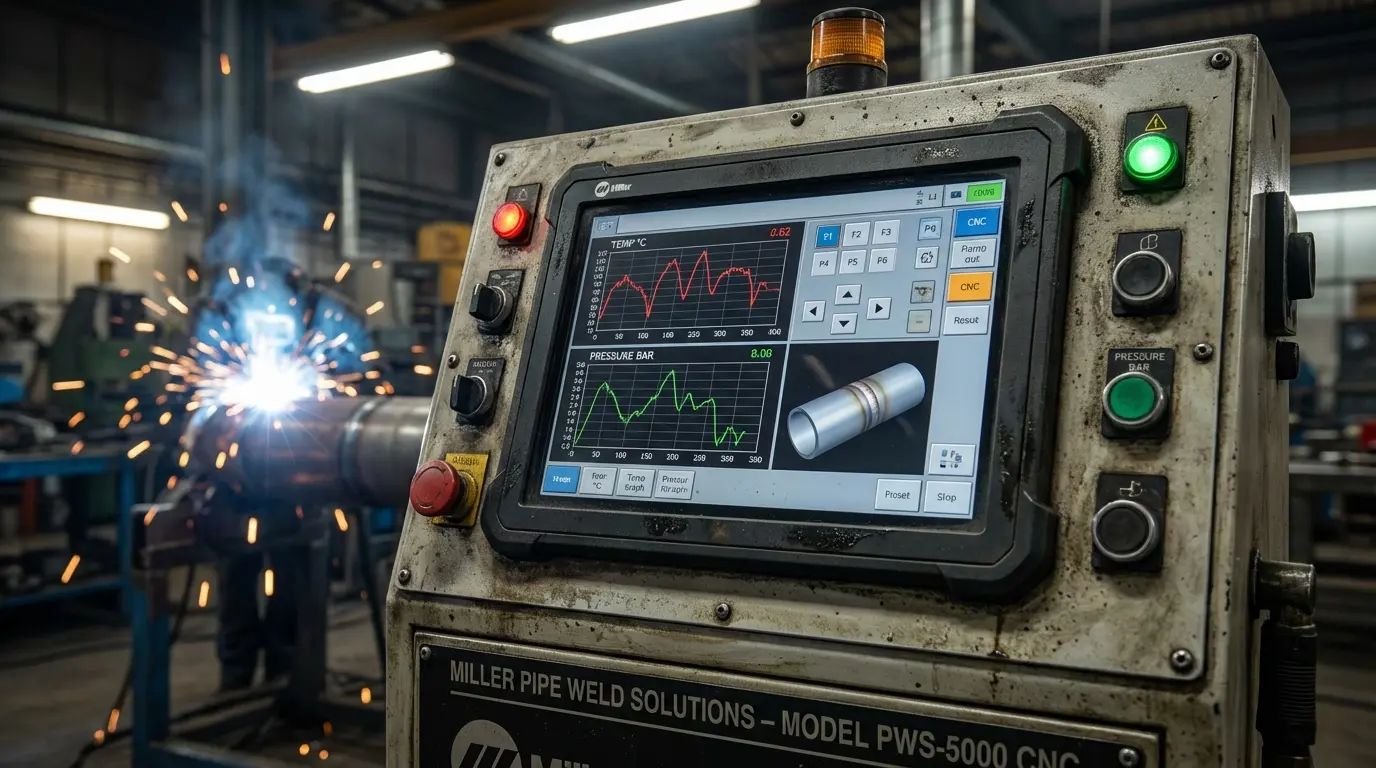
Modern CNC automatic butt fusion machines tackle this by integrating heavy-duty data loggers tied to GPS or Beidou positioning systems. These units capture the exact geographic coordinates of the weld, ambient temperature, operator ID, and real-time pressure and temperature curves. If anything drifts off the programmed standard—say the heating plate dips to 199°C—the system instantly triggers an alarm and aborts the weld. The HDPE pipe welding machine then compiles this data into automated reports, giving utility inspectors undeniable proof that the infrastructure is sound.
Analyzing the ROI of CNC Equipment
Yes, the initial capital expenditure for CNC machinery eclipses basic hydraulic units. However, the Return on Investment (ROI) over a standard 3 to 5-year cycle is massive. The primary financial engine here is the sheer drop in joint failures. Digging up a paved road to repair a single failed large-diameter pipe costs tens of thousands of dollars in labor, fresh materials, and steep municipal fines. Avoid one failure, and the butt fusion welding machine practically pays for itself.
Beyond risk mitigation, CNC equipment changes your labor requirements. Because the butt fusion welding machine’s brain handles the complex phase timing and calculations, you don’t need highly paid, specialized welding technicians at every station. Standard operators can run these HDPE pipe welding machines perfectly after basic training. Add in the accelerated project sign-offs thanks to automated reporting, and the total cost of ownership (TCO) plummets. For serious pipeline contractors, it’s the only financially logical choice.
How to Choose Automatic Butt Fusion Machines: A Contractor’s Selection Guide
Identifying Correct Working Ranges and Machine Sizes
Picking the right butt fusion welding machine size means looking at the dirt you are digging today and the contracts you plan to bid on tomorrow. Equipment is classed by its diameter range (DN/OD). If your crew mostly handles residential water distribution, a CNC automatic butt fusion machine optimized for DN63-160 makes sense. Conversely, municipal trunk main installations require heavy-duty rigs built for DN160-315, DN630pipes.
You also have to factor in power logistics. A 630mm automatic butt fusion machine demands a 220V, 50Hz power supply and pulls a total of 11.45 kW (9.2 kW dedicated to the heating plate, 1.5 kW for the milling cutter, and 0.75 kW for the control box). Buying too much machine for small trenches creates logistical nightmares. Buying too little forces you to rent heavy equipment at punishing daily rates.
Evaluating Heating Plate Temperature Stability
An HDPE weld is only as strong as the thermal stability of the heating plate that melted it. While industry standards tolerate a temperature variance of ±10°C, premium equipment leaves that benchmark in the dust. Ekberg Welding machines, for example, engineer their plates to hold a remarkably tight variance of just ±3°C across the entire 0–270°C control range.
Why does this matter? Uniform heat distribution guarantees the entire circumference of the pipe hits that sweet spot of 200-230°C at the exact same moment. Furthermore, these plates must be cast from corrosion-resistant aluminum alloy and wrapped in premium PTFE (polytetrafluoroethylene). This non-stick coating stops molten polymer from clinging to the plate during the changeover phase. If plastic sticks, it creates surface defects that will eventually compromise the joint.
Assessing Hydraulic Unit Reliability and Pressure Accuracy
Think of the hydraulic station as the muscle behind the fusion process. You need absolute certainty that the system can deliver sustained, unwavering pressure throughout a long cooling phase. Top-tier hdpe fusion welding machines boast a pressure adjustment range of 0–16 MPa. This provides the raw force needed to overcome the heavy drag resistance of massive pipe strings.
Accurate drag pressure measurement is non-negotiable. Right before the heating phase kicks off, the CNC system pulls the pipe to measure the frictional resistance (drag) of the plastic dragging across the earth or trench rollers. The automatic butt fusion machine then automatically adds this drag value to the baseline fusion pressure. If your HDPE pipe fusion machine can’t calculate drag precisely, the actual pressure hitting the melted pipe ends will fall short, leaving you with a weak, non-compliant weld.
Reviewing Structural Importance and Clamp Design
High-pressure fusion puts extreme physical stress on the butt fusion welding machine’s chassis. If the frame bends or the clamps slip while welding, your pipe ends will misalign. The industry standard demands a butt joint deviation of ≤0.2mm. Push past that, and you create a stress riser that is guaranteed to fracture once pressurized fluid hits it.
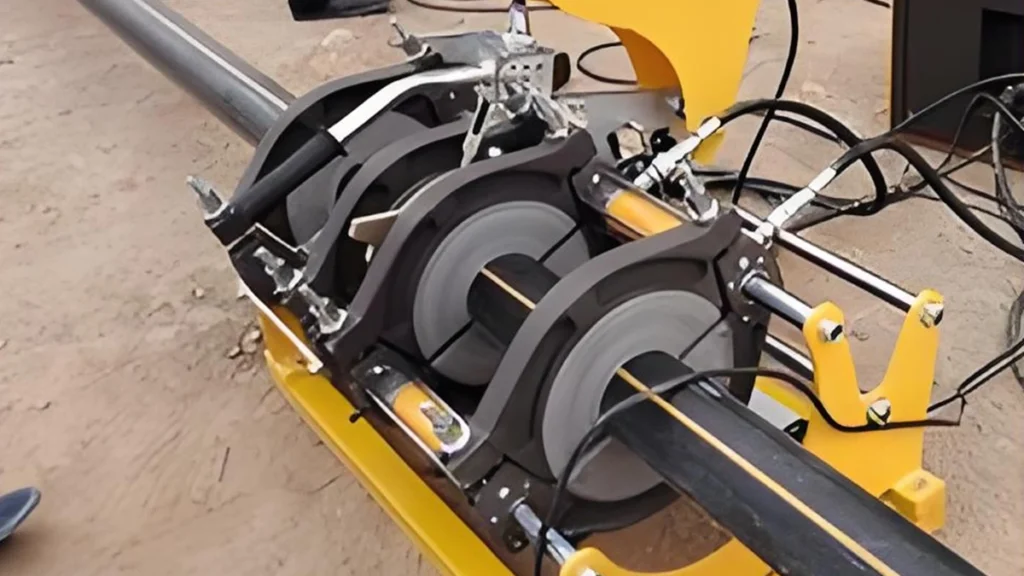
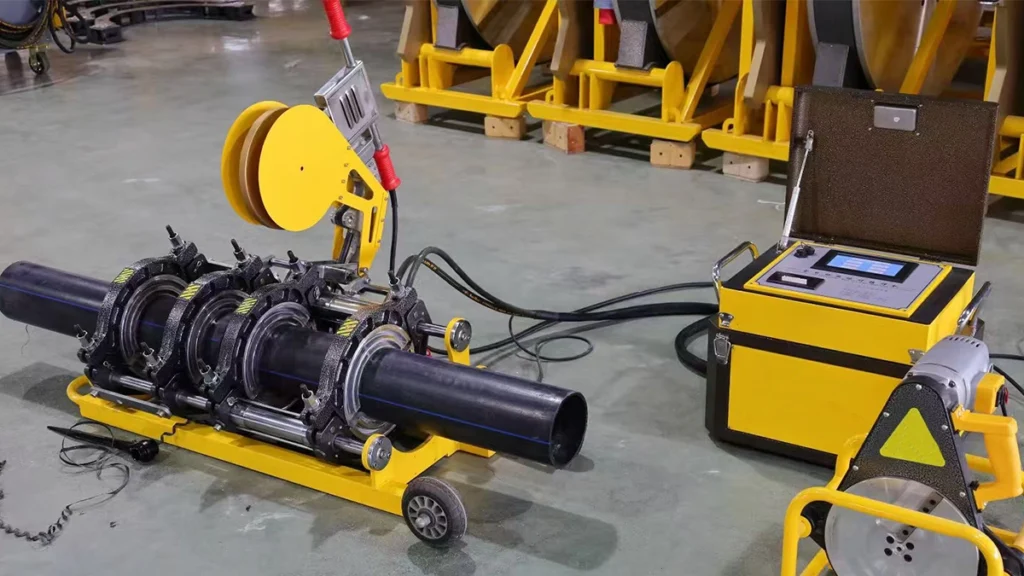
To lock alignment down, seek out hdpe pipe fusion machines built around a heavy-duty four-clamp sleeve structure. The main chassis needs to be fabricated from high-strength steel to maintain absolute rigidity, while the clamp inserts should be precision-machined from lightweight aluminum. This specific build ensures the pipe stays perfectly concentric during the brutal high-pressure bead-up and cooling phases, no matter how terrible the trench conditions get.
Buyer Decision Checklist:
- Verify closed-loop CNC control capabilities (no manual override during cooling).
- Check heating plate temperature variance (demand ±3°C to ±5°C maximum).
- Ensure the hydraulic system features automatic drag pressure compensation.
- Confirm the presence of integrated data logging (GPS/Beidou and DVS 2207 compliance).
- Evaluate chassis rigidity and four-clamp concentricity.
Top HDPE Pipe Fusion Machine Manufacturers: What Separates the Best from the Rest
Trading Companies vs. Direct Manufacturers
The B2B space is absolutely saturated with equipment distributors playing the middleman. Sure, trading companies offer massive catalogs, but they have zero control over manufacturing, quality assurance, or software code. When a complex CNC rig throws a PLC fault out in the mud, a trading company has to play telephone with the original factory. That means massive downtime for your crew.
Real direct manufacturers run their own in-house research and development (R&D) divisions. They design the hydraulic manifolds, write the CNC algorithms, and automatic butt fusion machine the chassis components themselves. When you partner with a direct manufacturer, you get a direct line to the engineers who actually built your rig. This allows for lightning-fast troubleshooting and even custom software tweaks.
Key Indicators of the Best CNC Automatic Butt Fusion Machine Suppliers
Spotting the best CNC automatic butt fusion machine suppliers means looking past the glossy spec sheets. Elite suppliers have serious custom tooling capabilities. They can easily mill specialized clamp inserts if you are running non-standard pipe SDRs. They also run a bulletproof global supply chain, ensuring that the microchips and electronic components powering your PLC systems never get stuck on backorder.
Top manufacturers also back their hardware with aggressive global technical support. We are talking about deploying field engineers to commission your fleet, running comprehensive operator training, and offering rock-solid warranties. If a supplier readily commits to a one-year comprehensive warranty followed by lifetime maintenance, they know their equipment is built to survive.
The Necessity of Spare Parts and After-Sales Service
Industrial equipment takes a beating. The abrasive environments of mining sites and municipal trenches will eventually wear down consumable parts. You need a supplier that holds a massive inventory of critical spares—think high-speed carbon steel milling blades, hydraulic cylinder seals, and fresh PTFE heating elements.
When things break, after-sales response time dictates your project momentum. If a milling cutter motor burns out on a remote site, your supplier must be able to put a replacement on an expedited freight truck that same day. Manufacturers like Ekberg Welding prioritize this exact kind of operational continuity. Post-warranty clients only pay for the raw material costs of the parts, while all other service fees are completely waived.
Certifications and Rigorous Factory Testing
You can’t just assume equipment is reliable; the factory has to prove it through standardized testing. The best manufacturers hold ISO 9001 quality management certifications and ensure every butt fusion welding machine carries the CE mark for European safety compliance.
Before a rig ever hits the shipping dock, it must survive rigorous factory acceptance testing (FAT). This involves brutal 24-hour pressure holding tests to guarantee the hydraulic seals won’t leak. It includes strict temperature calibration mapping to validate that ±3°C variance claim. It requires exhaustive electrical safety checks on the 220V circuits. Butt fusion machines that clear these hurdles will perform flawlessly in the field, whether you are welding in sub-zero winters or sweltering tropical humidity.
Understanding the CNC Butt Fusion Machine Price List: Value vs. Initial Cost
Breakdown of CNC Machine Cost Factors
When you pull up a CNC automatic butt fusion machine price list, you need to understand the engineering choices driving the numbers. Standard CNC units on B2B platforms range from $2,800 for small-diameter setups to well over $60,000 for massive heavy-duty rigs. Look at premium Western models, and you might see price tags crossing the half-million-dollar mark.
Where does the money go? The primary cost drivers are raw materials (high-grade structural steel versus cheap alloys), hydraulic component origins (precision European or Japanese valves versus generic knock-offs), and the processing power of the PLC control systems. Features like built-in data loggers with GPS tracking, RFID scanners, and remote data transmission definitely bump up the initial capital expenditure. However, for compliance-heavy municipal contracts, these features are strictly mandatory.
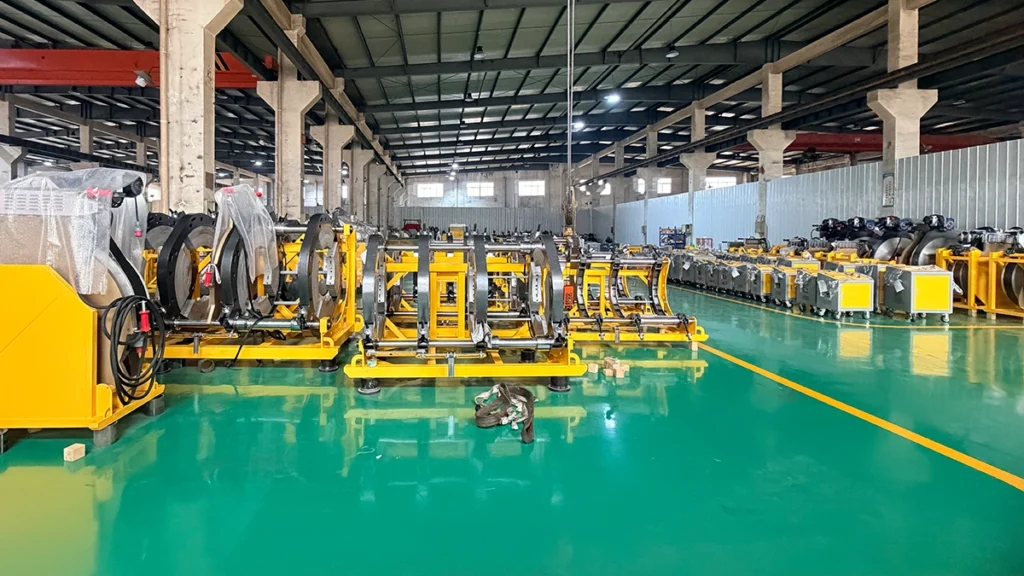
Total Cost of Ownership (TCO): Entry-Level vs. Premium
Procurement teams love to jump at the lowest initial bid. In pipeline construction, this strategy almost always ends in disaster. The Total Cost of Ownership (TCO) for a cheap, entry-level hdpe pipe fusion machine quickly balloons due to hidden operational nightmares. Budget butt fusion welding machines are notorious for blowing hydraulic leaks, suffering from heating plate temperature drift, and dealing with random PLC software crashes.
Premium industrial-grade equipment demands more cash upfront but drastically lowers your TCO over time. By eliminating constant breakdown delays and shedding the power inefficiencies of cheap heating elements, premium rigs pay for themselves. A CNC automatic butt fusion machine that seamlessly drops 30 perfect welds into the trench every day generates substantially more revenue than a budget rig that spends two days a week in the repair tent.
The Hidden Costs of Budget Equipment
The real financial bloodbath with budget equipment comes from failed welds. If a cheap hydraulic system slowly loses pressure and fails to hold that critical 0.025 MPa during cooling, the joint will blow apart during hydrostatic pressure testing. Now you have to excavate the trench, cut out the bad joint, and re-weld the entire section. That mistake costs thousands in labor and materials.
Furthermore, budget machines rarely offer the traceable data logging that utility companies demand. If you cannot hand the municipality a tamper-proof, ISO 21307 compliant weld report, they will refuse to sign off on the line. The result? Frozen milestone payments, breached contracts, and a permanently damaged industry reputation.
The Factory-Direct Advantage of Ekberg Welding
Purchasing factory-direct from a specialized manufacturer like Ekberg Welding completely rewrites the price-to-performance ratio. By stepping around the heavy 20% to 40% markups that regional distributors slap on equipment, contractors secure premium CNC technology at incredibly aggressive price points.
This direct pipeline also guarantees absolute pricing transparency. You get a line-by-line breakdown of the machine’s capabilities, power draws, and included accessories. You won’t find hidden software licensing fees to unlock the data logger, and you won’t get gouged on basic spare parts. Every dollar of your procurement budget goes straight into field performance.
Ekberg Welding Manufacturing Excellence, Quality Control & Service
Advanced In-House CNC Machining Capabilities
Ekberg Welding refuses to compromise on quality, which is why they rely on advanced in-house CNC machining centers. Instead of outsourcing critical structural parts to third-party foundries, Ekberg mills its high-precision four-clamp sleeves directly from solid aluminum billets. This relentless approach to manufacturing guarantees the geometric concentricity needed to hit that ≤0.2mm butt joint deviation standard perfectly.
The facers (milling cutters) are built like tanks. Engineered with high-torque motors and high-speed carbon steel blades, they effortlessly shave down heavy-wall HDPE pipes without stalling out. The heavy-duty steel chassis is welded and stress-relieved right on the factory floor, ensuring it easily absorbs the violent 0–16 MPa hydraulic forces generated during large-diameter fusion without a hint of flex.
Rigorous QA Testing Protocol
At Ekberg Welding, quality assurance is not a random spot-check; every single rig undergoes an exhaustive gauntlet before it ships. The QA protocol kicks off with a 24-hour pressure holding test on the hydraulic station, actively hunting for microscopic leaks in the manifolds or cylinders.
Next, technicians map the heating plates for thermal accuracy. Using high-end thermal imaging and multi-point sensors, they verify that the PTFE-coated plates perfectly hold the promised ±3°C variance across the entire 0–270°C operating window. Finally, the team runs comprehensive electrical safety checks on the dual-channel timers, automated alarms, and 380V power circuits to ensure total operator safety in muddy, wet trench environments.
Global Support Infrastructure and Lifetime Maintenance
A top-tier butt fusion welding machine requires a top-tier support network. Ekberg Welding has engineered a global support infrastructure built specifically for the high-pressure world of pipeline construction. Clients get immediate access to real-time video technical support, letting Ekberg engineers remote-diagnose PLC faults or hydraulic hiccups in minutes.
The HDPE pipe welding machines themselves feature oversized touchscreen displays loaded with intuitive visualizations. These screens provide step-by-step textual guidance throughout the entire welding cycle, essentially acting as an interactive, built-in training manual. Ekberg stands behind its engineering with a one-year warranty covering free replacements for non-human-induced damage, followed by a lifetime maintenance policy where post-warranty clients pay only for raw material costs.
OEM/ODM Capabilities and Customization
Global infrastructure projects rarely fit into neat little boxes. Recognizing this, Ekberg Welding offers deep OEM and ODM customization. Equipment can be heavily modified to handle highly specific regional demands. If you are operating outside standard 380V/50Hz parameters, Ekberg will reconfigure the electrical systems to match your local power grid.
They also offer custom color branding and chassis modifications for large fleet rollouts. Whether a remote mining operation needs heavy-duty steel skids to drag equipment across abrasive granite, or a municipal contractor requires software tweaks to align with local data reporting laws, Ekberg’s engineering team delivers tailored solutions that basic distributors can’t even comprehend.
Frequently Asked Questions
Q1: What is the main difference between hydraulic and CNC automatic butt fusion machines?
CNC fully automates the pressure, temperature, and time calculations based purely on the pipe’s specifications. It actively logs all weld data via GPS/Beidou and physically locks the operator out during critical cooling phases to prevent rushed jobs. Hydraulic butt fusion machines still require the operator to manually manage timers and calculate drag pressure. This leaves the door wide open for human error and lacks the digital traceability required by modern utility standards.
Q2: How often should the heating plate on an HDPE fusion machine be calibrated?
You should calibrate heating plates every 12 months, or right before breaking ground on any major municipal project, aligning with ISO/DVS standards. Calibration verifies that the plate maintains a uniform 200-230°C heat distribution with minimal variance (you want ±3°C). Skipping calibration leads directly to cold welds or the thermal destruction of the polymer.
Q3: Can a CNC butt fusion machine weld both HDPE and PPR pipes?
Absolutely. CNC automatic butt fusion machines are incredibly versatile. As long as you adjust the temperature and pressure parameters in the PLC control system to match the specific material’s melt flow index and SDR rating, the rig will seamlessly weld HDPE, PP, PVDF, and PPR pipes. The wide 0–270°C heating range easily handles various plastic compounds.
Q4: Why is data logging important for utility pipeline contractors?
Data logging generates a traceable, completely tamper-proof digital record of every single joint. It records the exact temperature, drag pressure, fusion pressure, and cooling time. Municipalities and utility boards demand this hard documentation before they will sign off on a project handover. It is also required for safety compliance audits and long-term warranty claims to prove the infrastructure is truly zero-leakage.
Q5: How do I request a CNC butt fusion machine price list from Ekberg Welding?
You can secure a customized, factory-direct quote by reaching out to our sales engineering team through the website. Just provide your required pipe diameter range (for example, DN160-315 or up to DN1000), your material specifications, and a brief overview of your project. We will then recommend the exact power and hydraulic configuration you need to get the job done right.
Conclusion
Securing the right equipment from elite CNC automatic butt fusion machine suppliers is a strategic move that dictates your pipeline integrity, regulatory compliance, and overall profitability. By adopting advanced CNC technology, you guarantee strict adherence to DVS and ISO 21307 standards. You strip away the expensive human errors tied to manual welding, and you gain total peace of mind through integrated, tamper-proof data tracking. When municipal contracts demand absolute zero-leakage guarantees, your fleet must be ready to deliver flawless, highly repeatable results in the worst field conditions imaginable.
Teaming up with a direct manufacturer like Ekberg Welding hands you a massive competitive edge. By cutting out the middlemen, you gain access to premium, precision-engineered machinery—complete with ±3°C temperature variance and relentless 16 MPa hydraulic systems—at transparent, factory-direct pricing. Add in Ekberg’s obsessive in-house quality control and lifetime maintenance support, and you ensure your fleet stays in the dirt making money, project after project.
Ready to elevate your pipeline welding capabilities and stop paying for costly joint failures? Contact Ekberg Welding today for a deep technical consultation, precise equipment recommendations tailored to your SDR requirements, and a customized factory-direct price list.